Home Blog Page 167

Oil, Gas Recruiters Weigh in on the Industry’s Hard-to-Fill Positions

0

Despite the thousands of layoffs that have affected oil and gas workers across the globe this year, the industry still has a need for workers with specialty skills and for specific positions. 

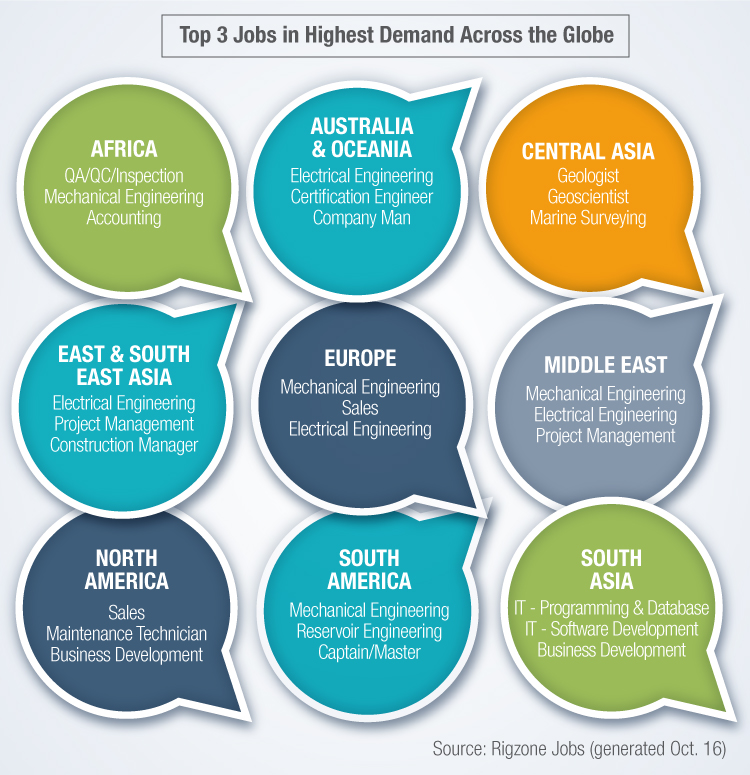
Rigzone’s recent 3Q global hiring survey of almost 300 employers and recruiters revealed that though hiring is down, positions in engineering and science, management/support and maintenance and inspection are the most plentiful, respectively.

While oil and gas professionals who want to remain in the industry are anxiously awaiting on market conditions to improve and hiring to pick back up, aspiring industry newcomers are looking for their opportunity to jumpstart a career in oil and gas. Rigzone spoke with industry recruiters to see where the job opportunities lie and what skills are in high demand in the industry.   
For oil and gas supermajor BP plc, technicians are a hot commodity. According to BP’s Ann-Marie Robson, global operations recruitment director, upstream resourcing, technicians currently represent 70 percent of overall hiring for BP Upstream.

“Hiring technicians in Azerbaijan, Angola and Indonesia is the most challenging for us,” Robson told Rigzone. “We actively support nationalization in these countries through hiring experienced technicians in country and by running apprentice technician development programs.”

Robson said BP is launching a recruitment campaign in Indonesia to hire indigenous people in Western Papua for numerous technician roles. BP teams visit remote villages and support potential technicians through the recruitment process.

“The key challenge at present in these regions and indeed generally is a lack of experienced technicians in the market and the perception that the technician role is ‘low level’ or often perceived as ‘secondary’ to engineers,” said Robson. Actually, “technicians are critical to running safe and compliant operations, which is of paramount importance to BP.”

Robson said the high number of technicians in the market and on paper (CV, resumes and online profiles) look similar.

“At BP, we are looking for excellent technicians with real depth of knowledge and experience,” she said. “Applicants should seek to differentiate themselves by making their CV or resume stand out as much as possible.”   

INDUSTRY SEEKING BALANCED CANDIDATES

The Engineering, Procurement, Construction (EPC) sector of oil and gas is seeing the most movement with a big drive for contract labor among engineering and construction firms, Eric Peters, managing director for oil and gas recruiting company Faststream, told Rigzone.

He added that many of the midstream facilities are being built by the EPCs.

Peters identified roles that are harder to fill being engineers in the LNG facilities as well as technical sales positions within oil and gas service companies.

“Companies are very specific in what they want,” Peters said. “Technical sales people are a bit of a difficult find. Candidates need the technical knowledge – for example, they’ve been out to service the well sites and have worked on the equipment – but, they also have to have the gift of gab to be sales folks. Tangible technical skills are a must.”

Peters has also noticed a trend with international companies seeking experienced U.S. workers.

“The companies are out in Houston, but the work itself is in places like Venezuela, Colombia and Mexico,” he said. “There is a big drive for U.S. assets and expertise, but the work is not just off U.S. coastlines or in the Gulf of Mexico. South America is an area of increased activity for many Houston companies. We’re still seeing a demand for a good technical crew, not just your general able-bodied seamen, but good strong senior engineers, hydraulic technicians and diesel mechanics.”

LEADERSHIP AND EXPERIENCE NEEDED IN THE C-SUITE

What the oil and gas industry needs now is workers with varied functional and geographic experience, said Chad Hesters, senior client partner in the global industrial practice for executive recruitment and talent management firm Korn Ferry.

“I think that across the globe, particularly here in North America, reservoir engineers with multi-basin unconventional expertise are at a premium,” Hesters told Rigzone. “A lot of companies would love to have a team with problem-solving skills that knows the industry from multiple basin perspectives. Getting people that know how to bake a cake a couple of different ways is really helpful.”

This would allow companies to play in multiple basins.

“Globally, people that have expertise in harsh environments or subsea development are in high demand,” Hesters said. “These are technical experts and leaders who know how to and are willing to operate in a harsh environment.”

At the executive level, Hesters stressed the demand for not only experience, but good leadership capabilities.

“At the C-suite level, there’s a very strong demand right now for leaders that have been in senior leadership roles through multiple oil and gas cycles,” he said. “Those who have seen the upside and the downside of commodity prices before will be in demand because of where we are in the crude cycle.”

CEOs and CFOs who have a high degree of comfort and understanding of how a balance sheet works is also important, Hesters added.

“Balance sheet management is at a premium right now,” he said. “It has always mattered, but right now, if you make a mistake, it really shows up.”

The hiring of so many workers in the past five or 10 years who are now in their 20s or 30s is problematic as none of them have experienced a down cycle similar to the one the industry experienced in the 1980s.

“The psychology and emotional intelligence that leadership needs in a down cycle is very important, so the question becomes how do you manage the people in the industry who have never seen this before?” he said.   

One thing that can absolutely be controlled by a job candidate is their mindset and attitude. Hesters suggested that candidates be prepared to work outside of a job description.

“Do what’s needed when it’s needed. That’s what the industry needs right now,” he said. “With hiring freezes and layoffs, companies are putting a high price on employees and newcomers who roll up their sleeves and work hard for the greater good. That is going to be very attractive to employers in this stage of the cycle.”

From a talent standpoint, all levels of an organization – from entry-level to the board of directors – and in all sectors, leadership and attitude matters.

“No matter what role you’re looking for, the opportunity to lead and make a difference is incredibly powerful in times of economic and personal distress,” Hesters said. “It’s a perfect opportunity for leaders to actually lead … because this is an industry that remembers.”


Source

INTERVIEW: Sandvik to Focus on West African and Middle Eastern Markets

0

Sandvik is a global engineering Group that employs 50,000 people commitment to enhancing customer productivity, profitability and safety.

Sandvik’s operations are organized into five business areas responsible for research and development (R&D), production and sales of their respective products.

The company is a developer and producer of advanced stainless steels, special alloys, titanium and other materials.

Subsea World News spoke to Phil Cherrie, Regional Sales and Marketing Manager Oil & Gas, for Europe, Middle East and Africa (EMEA), about company’s current and future projects in the industry.


sswn highlights

Could you introduce your company to our readers?

 
sandvikSandvik Materials Technology, a division of the Sandvik Group, is a developer and producer of advanced stainless steels, special alloys, titanium and other high performance materials. The company is headquartered in Sweden and currently employs 50,000 of which Sandvik Materials Technology employs 7,000.


sswn highlightsWhat subsea companies have you worked with, and do you have any projects that you would like to single out?

sandvik


Sandvik has an extensive offering of products and services and is active from drilling through to completion. The product range includes coiled tubing, umbilical tubing, control lines, wirelines, subsea piping as well as downhole casing and production tubing. A recent example of new product development and application is the first installation of super duplex coiled tubing for IGLS (Inverted Gas-Lift System) in the North Sea. Chosen for its strength and corrosion resistance this is a fixed installation well intervention product used to rejuvenate older wells on Statfjord A platform.


sswn highlightsWhere do you see the most potential on the market right now?

 
sandvikWe see interesting activity in geographical locations such as West Africa, the Middle East, as well as Asia Pacific. We continue to offer our broad portfolio, from drilling through to completion products such as control line and chemical injection line. Due to our advanced material know how and materials for critical and demanding environments, areas such as the Middle East and North Africa, with high H2S environments are particularly in focus.


sswn highlightsDo you plan to launch some new products or cooperations in the near future?

sandvikSandvik had the first trial of its seamless Super Duplex Coiled Tubing in the North Sea last year. Not only a first for the technology but for the industry, globally. The gas lift technology is aimed at the enhanced oil recovery (EOR) market, with the super flex tubing being permanently installed to rejuvenate old fields where corrosion risk has increased over time.
The recent acquisition of Downhole Products (a Varel International Energy Services company), based in Aberdeen, will expand the product portfolio of the company. The collaboration will combine workforces with Sandvik and Downhole Products’ staff working from the same office.

Sandvik also has a long standing alliance with Tenaris, again strengthening the offering of the company. The agreement, for the next five years, will bring together Sandvik’s corrosion resistant alloy tubes and TenarisHydril premium connections with Dopeless technology. Sandvik can offer a complete package and will mean that the alliance will be able to support challenging oil and gas exploration and production environments, such as high-pressure, high-temperature and deep water.


sswn highlightsHas the current market slowdown impacted your company and how?

sandvikSandvik aims to maintain a strategic position across the whole energy sector. Due to the diverse range of sectors in the Sandvik group the current climate has had a larger impact on certain areas compared with others. The company is flexible to adapt and serve changing supply chains with regional stock and stocking points around the globe. This comes at a time where companies are looking to cut costs and streamline processes and Sandvik are supporting our customers in this regard.


sswn highlightsWill we see you at the Offshore Energy 2015 exhibition and conference in Amsterdam?

sandvikSandvik will not be attending the Offshore Energy 2015 exhibition and conference. For the rest of this year, Sandvik will be participating in three conferences in Houston – SPE Annual Technical Conference and Exhibition (ATCE) 2015, Deep Offshore Technology (DOT) International 2015 and Offshore Well Intervention Conference, Gulf of Mexico (OWI) 2015 as well as OTC Brasil.


sswn highlightsWould you like to add something?

 
sandvikIn line with the Offshore Europe conference theme ‘Investing in the next generation’, Sandvik has an established graduate scheme and recently 11 graduates from around the world began their career with the company. In addition to the scheme the company has an alliance with the Royal Institute of Technology in Stockholm.

Sandvik also offers a research and development service and provides facilities for compatibility testing, materials testing and make recommendations from locations around the globe.


Source


Commercial Diving Program

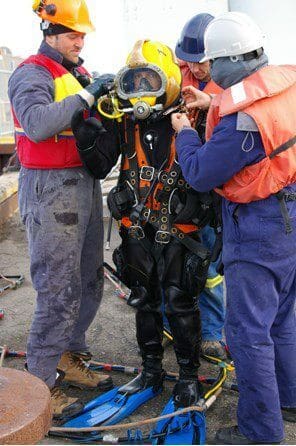
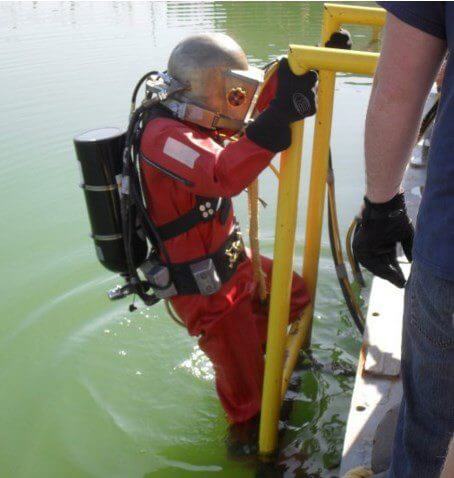
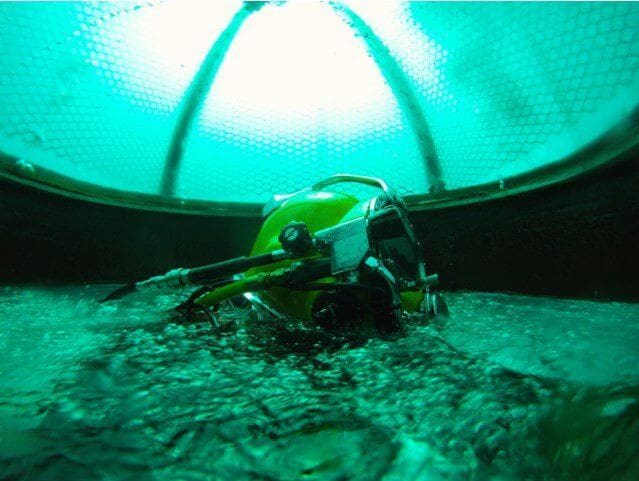
National University Polytechnic Institute (NUPI) offers students the opportunity to train in realistic environments ranging from offshore projects to diving in harbors and from piers. The commercial diving school in San Diego has a state of the art campus, 44,000 gallon dive tank, and multiple off-site diving platforms. Students are provided a relevant combination of skill and knowledge vital to pursuing a career as a commercial diver.   Students in the program will spend a majority of their time becoming proficient at diving with a wide variety of dive helmets, setting up dive spreads, operating and maintaining compressors, working on oil pipe projects, learning how to cut and weld metal both on land and in the water, operating hydraulic tools and lift bags, develop strong underwater welding skills, and experiencing many of the same tasks performed by commercial divers in the industry. Not only does this prepare students for a solid career in commercial diving, it provides them with the confidence and self-esteem to prevail under the most challenging circumstances. Preparing students for a career in commercial diving requires extensive training in underwater construction, inspection, salvage, installation, and underwater welding.  NUPI graduates qualify in surface supplied air diving, mixed gas diving, commercial scuba, underwater welding, underwater construction, and specialize in either, or both, diving medicine or non-destructive testing.

Curriculum


Source

Commercial Diving Regulations

Just like any industry that involves hazardous working environment, choosing a career in commercial diving entails compliance to regulations implemented by particular agencies to ensure that safety is given utmost priority. The Diving at Work Regulations (DWR) of 1997 does not only cover the commercial divers performing the job but also applies to their employers.

The DWR states that a commercial diver is responsible for having industry approved qualifications, certification of being physically fit and competence to complete assignments safely prior to undertaking dive jobs.

In the UK, the Health and Safety Executive is the regulatory body that process approvals for diving qualifications. Different diving projects call for different approved qualifications as per HSE. Dive works include the following:

  • Offshore diving, oil and gas industry
  • Inland diving
  • Scientific diving
  • Media diving
  • Police diving
  • HAZMAT Diving

A comprehensive list for these various qualifications can be found here.

HSE regularly assess diving competences for the following skills:

  • SCUBA Diving
  • Surface Supplied Diving
  • Surface Supplied Top Up Diving and;
  • Close Bell Diving

If a candidate was refused to be given qualification despite completing the program, he/she has 28 days to make an appeal so that the agency can review the assessment.


Mixed Gas Surface Supplied Diving Program

At the International Diving Institute we offer a 16 week, 640 hour comprehensive course which includes everything you need to become a commercial diver. At IDI we focus on the quality and safety of the training we give our students. We recognize different people have different learning styles, so we keep our class sizes small to allow for more direct interaction between students and instructors.

There is no prior diving or welding experience required. We teach you basic concepts all the way through advanced techniques. The core curriculum includes:

Diving Physics, Physiology, and Dive Medicine

Decompression and Treatment Tables

Hyperbaric Chamber Operations

Underwater Tools and Equipment

Engines and Compressors

Topside Welding and Cutting

Underwater Welding and Cutting

Dive Operations Plannning

Offshore Oilfield Diving

Inland Diving

Mixed Gas Diving

Ship and Sea Salvage Operations

Ship Husbandry

Hydraulics and Pneumatics

Dive Helmet Maintenance 

Rigging and Seamanship

Survival


IDI is a member of the Association of Diving Contractors International (ADCI) and trains to the standards published by the Association of Commercial Diving Educators (ADCE), and the American National Standards Institute (ANSI). 

Whether you plan to dive on shipwrecks, weld underwater on a nuclear reactor, or go to the depths of the gulf, IDI will prepare you with the skills to be successful in a variety of diving jobs. This is accomplished through IDI’s training philosophy of small class sizes as well as equal amounts of classroom time and hands on real world experience.

Industrial Divers may be called to work in:

  • Archaeological investigation

  • Bridge structure inspection

  • Demolition and Salvage

  • Fish Farming

  • Nuclear Power Plant maintenance

  • Professional Recreational Services

  • Rescue Services

  • Scientific data collection & Observation

  • Search recovery and survey

  • Television and Film making

  • Underwater Civil Engineer

  • Offshore wind farms


Source

Australia Flags Concerns on $35B Halliburton Bid for Baker Hughes

0

Australia’s antitrust regulator raised concerns on Friday about Halliburton Co’s proposed $35 billion buyout of rival Baker Hughes Inc, in another setback for a deal that has already hit competition snarls in the United States. Delaying its final ruling for a third time, the Australian Competition and Consumer Commision (ACCC) said joining the world’s No. 2 and No. 3 oilfield services firms to eclipse the current No. 1, Schlumberger NV, “may create conditions that would facilitate coordinated behaviour in the market”.

“The ACCC is concerned that the acquisition would result in the merged entity being one of only a small number of suppliers that could service the relevant markets,” ACCC Chairman Rod Sims said in a statement, which described the companies as “close competitors across a broad range of oilfield goods and services in Australia”. “The ACCC is particularly concerned in relation to the supply of complex or high-risk projects, such as off-shore drilling projects,” Sims added.

The regulator will give a final ruling on Dec. 17, but the remarks signal the hurdles the companies face as they try to push through a deal first announced 11 months ago as a way to cut costs amid an oil price downturn. The two firms have already committed to selling businesses to appease U.S. authorities, but the ACCC’s Sims noted that authorities in Europe, India and China are also looking at the deal.

The deal originally had a deadline of Dec. 16, but the two companies, which both provide services, technology and systems to the oil and gas industry globally, have more recently said it may not close until 2016. The ACCC initially said it expected to give a decision by July 9 but postponed that twice to collect extra information from both companies.

The regulator said it has requested more information by a deadline of Nov. 12. The ACCC on Thursday also postponed a final decision on Royal Dutch Shell’s $70 billion takeover of BG Group by a week, its second delay for a ruling on that deal, amid a flurry of M&A activity in the global energy sector that ias increased its workload. 


Source

IMCA and ICES Take Further Steps to Improve Offshore Surveying

0

Two recent events have highlighted how the International Marine Contractors Association and the Chartered Institution of Civil Engineering Surveyors (ICES) are working closely to promote the importance of hydrographic and civil engineering surveying in the marine environment and the competency of their members.

Under the terms of the 2014 Memorandum of Understanding (MoU), signed by both organisations, offshore survey personnel who have completed competence portfolios based on the IMCA framework can use this as a demonstration of their competence for membership of ICES.

Likewise, IMCA will promote recognition of the competence of ICES members to its international offshore contractor membership where companies have competence management schemes in place based on the IMCA model.

“Working together to improve levels of competence, a vital step to ensuring there are enough trained and competent people to undertake important projects, was a major factor in the signing of the MoU. Indeed, it provides members of each of our organisations with something of a win-win situation. We are now taking things a step further,” explains IMCA’s newly appointed Technical Director, Richard Benzie.

“We have recently seen two important milestones in the cementation of the IMCA-ICES relationship. On September 2, ICES spoke about its professional qualification route for offshore surveyors at the IMCA Competence & Training Seminar in Aberdeen, and in early October an ICES representative addressed IMCA’s Offshore Survey Committee in Aberdeen. We are also exploring a number of other areas where there may be opportunities for further fruitful cooperation.”

ICES Chief Executive Officer, Bill Pryke, commented: “I am delighted that both organisations have already acted on our MoU. ICES has tremendous respect for the work IMCA does in promoting standards and competence in the offshore survey industry. By working together to support individuals and contractors, we can ensure all those involved in offshore survey are competent and operate within a professional environment that recognises and nurtures their skills.”

Although the MoU talks primarily about surveyors, as Richard Benzie explains, other roles covered within IMCA’s competence frameworks are not excluded. “Typical examples would be those of geophysicists and data processors. Ed Danson, a much respected offshore survey industry figure, a former member of our Offshore Survey Committee and former president of ICES, has mapped IMCA’s survey competence frameworks against the requirements for technical membership of ICES and has found a positive level of synergy between each organisation’s approach to competence assessment.”

Moody’s: Oil & Gas Not Making the Grade

0

Nobody shoots for the B-list. Not actors. Not friends. And not oil and gas companies.

But oil and gas companies are more and more appearing on the B3 negative list, according to Moody’s Investors Service.

In fact, of the 41 companies added during the last three months, 19 – 46 percent – are oil and gas companies. It’s the persistently low commodity prices that exacerbate liquidity stress, especially on exploration and production (E&P) companies, as well as those in the oilfield services sector. The majority of the names added to the B3 Negative list this year have come from the energy sector. Companies with a B rating are considered speculative and high-risk on the universal long-term rating scale.

Historically, oil and gas makes up 8.6 percent of the list, but as 53 of 223 companies, the sector has reached an all-time high for the sector of 24 percent

The number of companies on Moody’s B3 Negative and Lower Corporate Ratings List increased to 223 as of Oct. 1, an 8 percent increase from three months ago and an almost 27 percent surge from the same time last year. It was April 2010 when the list last exceeded 220 companies.

At 223, the list is a fraction of its all-time high of 291 companies in April 2009, but it’s also up substantially from its lowest count of 146 companies listed in March 2013.

“Many of these oil and gas companies, particularly exploration and production companies, are under liquidity pressure and have seen their ratings downgraded,” said Moody’s Associate Analyst Julia Chursin. “With this pressure remaining, we expect the number of energy issuers on the list to keep growing.”

The list is composed of all U.S. non-financial companies with a probability of default rating of B3 negative or lower.

According to the report, for the third consecutive quarter most companies left the lists through default rather than upgrades. More than half filed for bankruptcy. 

As Chursin told Rigzone, more and more E&P companies and oilfield services companies have become downgraded through distressed exchanges or they’ve filed for bankruptcy.

“Whatever defaults we saw in the oil and gas industry, those were distressed exchanges. They were not bankruptcies yet, but if commodities prices remain low as they are now, they can magnify credit risk for high yield E&P companies and oilfield services with limited financial flexibility, drying up their liquidity and lowering their borrowing bases which are re-determined every six months,” she said. “The expectation is [bankruptcy] has been staved off and we haven’t seen so many bankruptcies in the industry yet, but once they roll off [the list], it might be [because of] an increase of default in the sector.”


Source

C-Innovation Boosts Its ROVs with Sonardyne SPRINT

0

C-Innovation, a provider of deepwater ROV services within the oil and gas sector, has placed an order for SPRINT Inertial Navigation Systems (INS) from Sonardyne International.

SPRINT is an acoustically aided inertial navigation system for subsea vehicles.

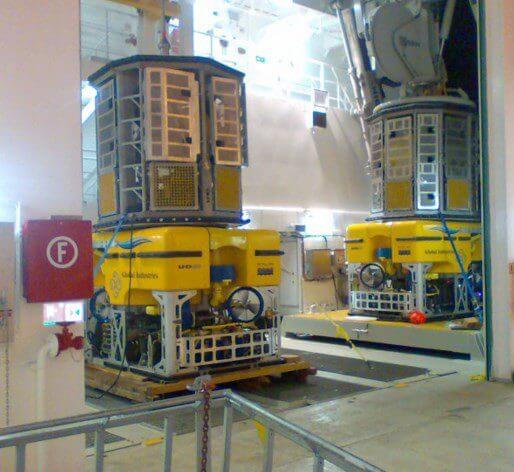
SPRINT has been fully integrated into UHD ROVs, FMC Technologies Schilling Robotics supplied to C-Innovation. Schilling Robotics took on the 18-months job to upgrade all (11) of C-Innovation’s first-generation UHD ROVs to increase offshore efficiency, available horsepower, reliability, and automated features for advanced project handling.

Malik Chibah, INS Group Manager at Sonardyne, said: “As a unique manufacturer of USBL, LBL and now DVL systems whose data outputs are required for aiding of the inertial navigation solution running inside SPRINT, we were pleased to work with C-Innovation and Schilling Robotics to provide an INS system to match the specific operational requirements of their UDH ROVs.

“This SPRINT integrated system will provide the best possible guidance and automatic station keeping capability for the UDH ROV seamlessly at any point in the water column from near surface, down to the seabed.”

Richard Bourque, General Manager of C-Innovation, said: “The capabilities of the Sprint INS system will allow for us to provide clients with more detailed information on installations, surveys and many other tasks we perform for subsea operations.”


Source

Hurricane Patricia, One Of strongest Ever Storms, Set To Hit Mexico

0

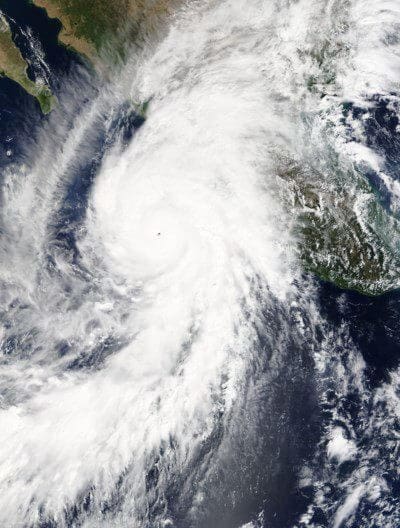
Mexico scrambled on Friday to prepare as Hurricane Patricia, one of the strongest storms ever recorded, bore down on its Pacific Coast, prompting the evacuation of thousands of tourists and residents and a mad rush for emergency supplies.

The U.S. National Hurricane Center said the Category 5 storm was the strongest ever recorded in the Western Hemisphere, and the World Meteorological Organization compared it to 2013’s Typhoon Haiyan, which killed thousands in the Philippines.

The storm was expected to make landfall on Friday afternoon or early evening, the NHC added. In its path lies a patchwork of exclusive getaways favored by tech billionaires and pop stars, as well as package vacation resorts, a major cargo port and modest fishing villages.

Ramping up their warnings as the storm drew closer, Mexican officials said the unprecedented hurricane could wreak catastrophic damage.

“The hurricane is so strong that it could cross the country’s two Sierra Madre mountain ranges, the two most mountainous regions, and come out the other side of the country along the Gulf of Mexico and head to the United States,” said Roberto Ramirez, the head of federal water agency, Conagua.

Loudspeakers along the shore of the resort of Puerto Vallarta, popular with U.S. and Canadian tourists, blared orders to evacuate hotels as a light rain fell and a slight breeze ruffled palm trees. The streets emptied as police sirens wailed.

Hotel workers in Puerto Vallarta said efforts had begun to start evacuating guests, but others said they were still waiting to be told where to send them. When Reuters visited one of the city’s designated shelters, a dilapidated-looking building in a low-lying area, there were still no evacuees to be found.

Aristoteles Sandoval, the governor of Jalisco state, expected 15,000 people to be evacuated from Puerto Vallarta.

Despite the looming mega-storm, by mid-morning a few people could still be seen swimming in the resort’s long bay, and some chose to adopt a more philosophical outlook.

“It’s natural to be worried, and then you breathe and it’s gone,” said Carolyn Songin, 52, a California resident visiting her friend Judith Roth, who owns a nearby yoga retreat.

Roth, a 66-year-old California native, said she would ride out the storm at Songin’s “bunker-like” apartment.

“We’re set up, we have our food and water, and we’re just going to be in meditation and sending prayers for the area,” Roth said.

MEGA STORM

The government warned that ash and other material from the volcano of Colima, about 130 miles (210 km) from Puerto Vallarta, could combine with massive rainfall to trigger “liquid cement”-style mudflows that could envelop nearby villages.

Puerto Vallarta’s airport and port were closed on Friday, while the major cargo port of Manzanillo was also shut. State oil company Pemex said service stations would stop selling gasoline in the hurricane-watch area.

Local schools were also closed and some business owners were busy boarding and taping up windows. The Federal Electricity Commission (CFE) said it was planning electricity shutdowns around 1 p.m. in the states of Colima, Jalisco and Nayarit.

Long lines of traffic stretched out of Puerto Vallarta en route to the major city of Guadalajara, around a 5-hour drive inland.

“Everyone is running, all the grocery stores are already sold out,” said Ramona Delgado, an administrator of a condominium close to the beach in Manzanillo, who planned to shelter at home with her children. She said waves were already rising up to 3 meters (9.8 feet), though it was only drizzling.

The storm grew at an “incredible rate” in the past 12 hours, the World Meteorological Organization said, and the NHC reported on Friday morning maximum sustained winds of about 200 miles per hour (321 km per hour) as it moved north at 10 mph (16 kph).

“The winds are enough to get a plane in the air and keep it flying,” WMO spokeswoman Clare Nullis told a U.N. briefing in Geneva, likening it to Typhoon Haiyan.

Haiyan killed more than 6,300 people and wiped out or damaged practically everything in its path as it swept ashore on Nov. 8, 2013, destroying around 90 percent of the city of Tacloban.

The strongest storm ever recorded was Cyclone Tip which hit Japan in 1979.

Patricia was last located about 125 miles (201 km) southwest of the port of Manzanillo.

The U.S. government issued an advisory urging its nationals to steer clear of beaches and rough seas and to take shelter as instructed by Mexican officials.

None of the major installations of Mexican state oil company Pemex lie in the projected path of the storm, but the company said it was taking measures to protect its installations at ports in Manzanillo and Lazaro Cardenas in Michoacan state.


Source