Home Blog Page 166

What Is Scientific Diving?

In 1975, in response to numerous accidents in the commercial diving sector, the United Brotherhood of Carpenters and Joiners of America, supported by the AFL-CIO, petitioned the Federal Government urging a development of commercial diving standards applicable to all professional diving operations. Given the employee-employer nature of the relationship between scientists and students and their universities, these standards would have impacted most scientific diving activities associated with academic and research institutions.

The American Academy of Underwater Sciences (AAUS) was formed by a handful of institutions long conducting scientific diving activities to voice community concerns that the impact OSHA’s Commercial Diving Standards presented to institutional scientific diving activities.

The AAUS submitted arguments to OSHA sighting the communities self-regulation and promulgation of consensual standards for more than 20 years as well as an accident incidence rate lower than the Commercial Diving Industry. Following extensive negotiation and Congressional Hearings, a final ruling was issued in November 1982, granting a scientific exemption.

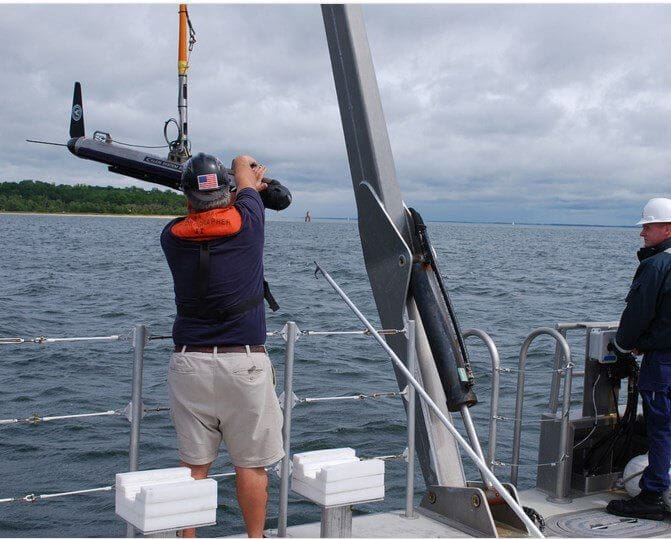
OSHA has defined scientific diving (29 CFR Part 1910.402) as diving performed solely as a necessary part of a scientific, research, or educational activity by employees whose sole purpose for diving is to perform scientific research tasks.  Tasks usually associated with commercial diving such as but not limited to: placing or removing heavy objects underwater; inspection of pipelines and similar objects; construction; demolition; cutting or welding; or the use of explosives, are generally not considered exempted diving.

OSHA’s exemption for scientific diving from commercial diving regulations is further outlined in  CFR 29 Part 1910 Subpart T Appendix B:

  • The Diving Control Board consists of a majority of active scientific divers and has autonomous and absolute authority over the scientific diving program’s operations.
  • The purpose of the project using scientific diving is the advancement of science; therefore, information and data resulting from the project are non-proprietary.
  • The tasks of the scientific diver are those of an observer and data gatherer.  Construction and trouble-shooting tasks traditionally associated with commercial diving are not included within scientific diving.
  • Scientific divers, based upon the nature of their activities, must use scientific expertise in studying the underwater environment and therefore, are scientists or scientists-in-training.
  • In addition, the scientific diving program shall contain at least the following elements (29 CFR Part 1910.401):
    1. Diving safety manual which includes at a minimum: procedures covering all diving operations specific to the program; procedures for emergency care, including recompression and evacuation; and criteria for diver training and certification.
    2. Diving control (safety) board, with the majority of its members being active divers, which shall at a minimum have the authority to: approve and monitor diving projects; review and revise the diving safety manual; assure compliance with the manual; certify the depths to which a diver has been trained; take disciplinary action for unsafe practices; and, assure adherence to the buddy system (a diver is accompanied by and is in continuous contact with another diver in the water) for SCUBA diving.

The AAUS produces and promulgates consensual standards for the training and certification of scientific divers and the operation of scientific diving programs.  

The Scripps Institution of Oceanography is a founding member of the AAUS and remains an organizational member in good standing.
Gazprom Signs Memorandum with OMV on Possible Oil Supplies

0

Russia’s Gazprom said on Friday it had signed a memorandum of understanding with Austrian energy group OMV on the supply of oil.

The document reflects the intention of the parties to consider the possibility of organizing the supply to OMV of oil from the Gazprom Group’s portfolio, Gazprom said in a statement. 


Source

ROVOP Names New Director

0

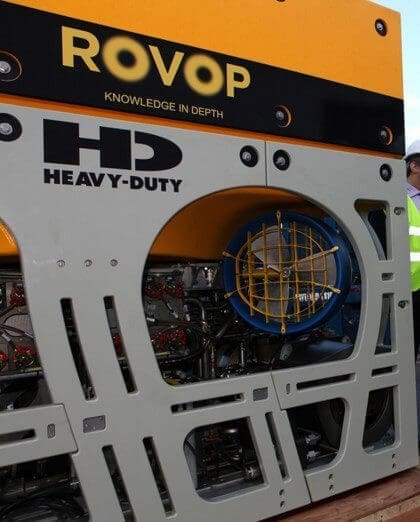
Aberdeen-based ROV services provider, ROVOP, has appointed new commercial director to its senior executive team and Board.

Euan Tait joins ROVOP from professional services firm KPMG LLP having spent his career in a variety of roles within corporate finance and oil and gas companies.

Steven Gray, ROVOP CEO, said: “Euan brings more than 10 years of commercial experience to ROVOP. His network, knowledge of the industry and blend of energy and structured thinking will undoubtedly strengthen our senior team and add value for our clients.”

ROVOP’s previous commercial director, Moray Melhuish, has moved into a full-time client facing role as business development director.

Tait’s appointment follows a number of contract wins across the oil, gas and offshore wind sectors totalling more than £2.5m.

In addition, ROVOP revealed it has recently agreed an exclusive three year Master Services Agreement (MSA) with an unnamed North Sea operator to provide ROV services and personnel for drill support on all its North Sea assets.

Keppel to Cooperate With Brazilian Authorities Over Petrobras Contracts

0

Keppel Corp. Ltd. refers to an earlier announcement Feb. 9 in relation to allegations made by Pedro Jose Barusco in Brazil that illegal payments were made by an agent in connection with contracts entered into by certain Keppel entities with Petroleo Brasileiro S.A. (Petrobras) and/or Sete Brasil.

On Oct. 22, the Comissao Parlamentar de Inquerito (CPI) ( i.e., the Parliamentary Commission of Inquiry) voted in favor of various recommendations by its rapporteur. These recommendations included the indictment of agents, lobbyists and intermediaries of certain companies and political parties and former officers of Petrobras and Sete Brasil. In addition, the CPI recommended the deepening of investigations into 10 companies involved in transactions with Petrobras and Sete Brasil, which included Keppel FELS Brasil. Keppel intends to extend its full cooperation to the authorities if approached.

Keppel reiterates its zero-tolerance stance against any form of illegal activity, including bribery and corruption, involving its employees or associates, and will take all necessary steps to eradicate such conduct if discovered.

We are unable to comment further in view of the ongoing investigations in Brazil.


Source

Van Oord Wraps Up Foundation Installation at Gemini

0

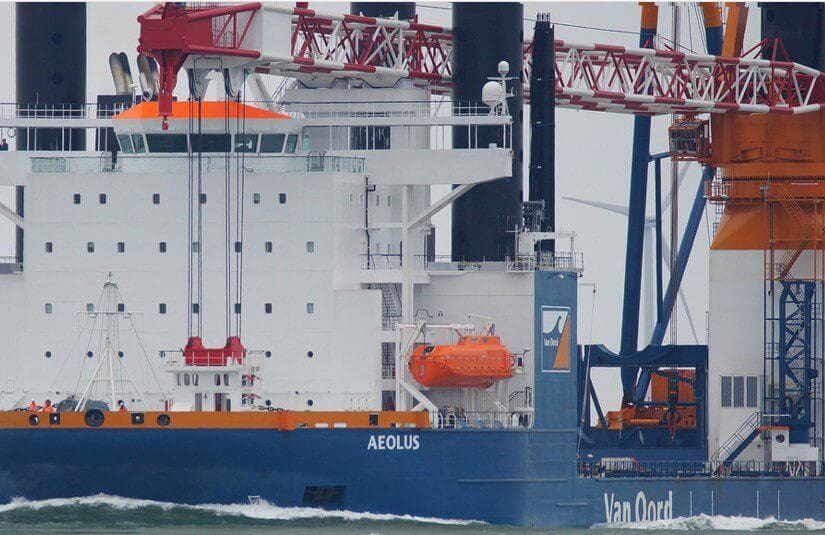
Van Oord has completed the installation of the 150th foundation at the Gemini offshore wind farm.

On July 01, 2015, Van Oord’s installation vessel Aeolus, together with Swire Blue Ocean’s Pacific Osprey, started installation and the last foundation was installed on October 17.

The installation of the foundations was completed one month earlier than scheduled, the company informed.

On February 01, 2016, both vessels will return to the project, completely modified for the installation of the 150 wind turbines.

They will sail from Esbjerg in Denmark, where the wind turbines are produced and stored at Siemens, directly to the Gemini wind farm.

EMGS Inks $7M Deal Extension for 3D EM Data Acquisition Off East Malaysia

0

Norway’s Electromagnetic Geoservices ASA (EMGS) reported Wednesday that the Company has signed a contract extension worth approximately $7 million with an oil company in Malaysia.

As announced Aug. 7, EMGS received a letter of award for a contract worth approximately $4.2 million for 3D electromagnetic (EM) data acquisition over the oil company’s operated area in Malaysia. The acquisition was completed Oct. 9.

The vessel BOA Thalassa will commence the extension of the survey today, Oct. 21, and expected duration of the survey is approximately one and a half month. The survey is located off East Malaysia.


Source

IMT, SA Navy Conduct AUV MCM Experiment

0

The Mine Counter Measures (MCM) division of South African Navy conducted an experiment in reviving the MCM capabilities in the Mine Warfare Squadron from October 05-09, 2015.

In the last few years, the Mine Warfare capability has experienced a steady decline in both skilled personnel and equipment, SA Navy wrote.

The experiment’s main objective was to find a contingency operational capability of the MCM with the existing system.

The Institute for Maritime Technology (IMT) assisted the SA Navy to plan and execute the experiment.

The main contribution of IMT was the provision of the Autonomous Underwater Vehicle (AUV).

Once programmed, the AUV surveys a designated area autonomously, passing back limited information to the survey team.

On completion of the survey the vehicle is recovered and the survey data downloaded. The main sensor of interest to MCM is the AUV’s side scan sonar. With it, an image of the sea bottom is created in enough detail to detect mine-lite objects, SA Navy explained.

The survey covered an area of approximately 800x400m and took roughly 2.5 hours to complete. All objects that had been placed in the survey area were detected.

The data was processed to be displayed on a Geographical Information System (GIS), showing position and images of the detected objects.

On the 2nd day the survey was performed in deeper water at 30m depth.

Spectrum to Report Lower Revenue

0

Norwegian multi-client seismic data specialist, Spectrum, said it expects to report net revenues of approximately USD 18 million for the quarter, compared to USD 53 million same time last year.

Based on preliminary figures for Q3 2015, Spectrum expects a positive net cash-flow of USD 13 million in Q3 2015, a cash balance of USD 30 million and secured net interest bearing debt of approximately USD 45 million as of September 30, 2015.

As a reminder, in the second quarter of 2015, Spectrum generated revenue of $34.7 million, compared to $44.6 million in the corresponding period in 2014.

Second-quarter net profit was at $5.3 million.

Spectrum CEO, Rune Eng, said: “Despite the enlarged library and increased sales effort the revenue in Q3 was a disappointment. Ongoing negotiations for late sales were pushed into Q4 and due to reduced Q3 MC investments the early sales recorded was low. The major part of sales in Q3 is late sales. Based on the ongoing discussions with Oil Companies and the normal Q4 seasonality Spectrum expects an improvement in late sales during Q4 2015.”

Oil Down As Dollar Offsets China Move; Glut Hits Prompt US Crude

0

Oil fell on Friday, erasing early gains as traders dismissed a rate cut by China to focus on a surging dollar and weaker spot prices for U.S. crude as a glut weighed on prompt supplies.

A rally in U.S. stocks, however, bolstered risk appetite across financial markets, limiting the downside in oil.

Brent crude oil settled down 9 cents, or 0.2 percent, at $47.99 a barrel, after falling as much as 63 cents earlier.

U.S. West Texas Intermediate (WTI) crude finished down 78 cents, or 1.7 percent, at $44.60, after hitting a three-week low at $44.20.

Both Brent and WTI lost about 5 percent on the week, sliding for a second straight week.

Earlier on Friday, oil prices rose about 1 percent on expectations the Chinese rate cut might prompt the No. 1 energy consumer to import more oil.

Gains, however, faded as the dollar index hit two-month highs, making oil, copper and a host other commodities , less affordable for holders of other currencies.

“It’s terrible price action considering China’s rate cut,” said Scott Shelton, energy broker and commodities specialist for ICAP in Durham, North Carolina. “It shows this is not the solution the market is seeking for crude demand.”

A stubborn global oil glut, partly due to record pumping by the biggest producers in OPEC, has prevented crude prices from staging a meaningful rebound despite a few sharp intermittent rallies since early September.

Growing U.S. crude stockpiles have also added more pressure on WTI than on Brent, with the transatlantic spread <CL-LCO1=R> settling at its widest in two weeks at $3.33 a barrel.

The front month U.S crude contract also hit its deepest discount in five months to the nearby contract <CL-1=R> as weak spot prices pushed traders to store more crude for later delivery.

The discount, known as contango, has been widening since Wednesday and hit 91 cents, its deepest since May 15.

U.S crude inventories have risen for four straight weeks amid reduced refining activity during the autumn maintenance season.

“We’ve had massive builds. The whole spread curve in WTI is getting weaker, encouraging people to put oil into storage,” said Tariq Zahir, trader in crude oil spreads at Tyche Capital Advisors in Laurel Hollow, New York.

U.S. oil drillers also slowed the pace of rig cuts this week, idling just one rig, the smallest cut in eight weeks suggesting they may soon return to the well pad with hopes of rising crude prices in the future.


Source

Siem Extends Delivery of Siem Daya 1 Until November

0

Siem Offshore (SIOFF) has extended the delivery of Siem Daya 1 vessel to Daya Materials until November 16, 2015, with November 30 as cancelling date.

SIOFF informed that other terms and conditions of the agreement will remain valid and in full force and effect.

As reported earlier, SIOFF has agreed to sell Siem Daya 1 to Daya for USD 120 million.

In addition, SIOFF is entitled to a 60/40 profit share in SIOFFs favour based on the profit Daya makes on the vessel limited to an additional USD 10 million.

The Siem Daya 1 is designed for subsea operation duties such as construction and installation work, inspection and maintenance. The 120.8 meters long vessel is of VARD design and built in 2013.


Source