Home Blog Page 165

EMGS Continues Malaysia Campaign

0

Norway’s Electromagnetic Geoservices (EMGS) has inked a contract extension worth approximately USD 7 million with an undisclosed oil company in Malaysia.

As announced on August 7, 2015, EMGS received a letter of award for a contract worth approximately USD 4.2 million for 3D EM data acquisition over the oil company’s operated area in Malaysia.

The acquisition was completed on October 9, 2015.

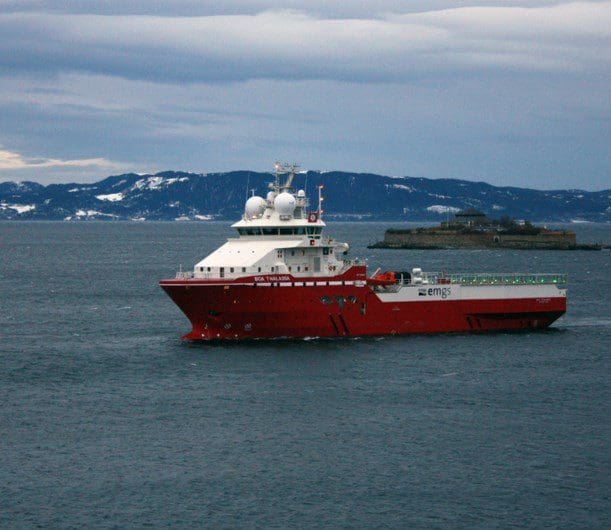
The vessel BOA Thalassa will begin the extension of the survey today, October 21, and expected duration of the survey is approximately one and a half month.


Source

UXO diver training for the renewables industry

Commercial divers will be trained to detect unexploded bombs in a new partnership between explosives disposal experts Ramora UK and the Professional Diving Academy, Dunoon.

The partnership means the Professional Diving Academy is fully accredited by Ramora UK to enhance its existing commercial diver training courses with a bolt-on module in unexploded ordnance (UXO) surveying, detection and identification.

The possibility of the presence of unexploded ordnance is a very real threat during the construction phase on many offshore windfarm projects in North West Europe, and that threat has to be managed.

As well as vessel based-magnetometer and high frequency side-scan sonar surveys, commercial divers and ROV’s are also required to identify suspicious items on or around production platforms or turbine locations and cable routes during the pre-construction phase.

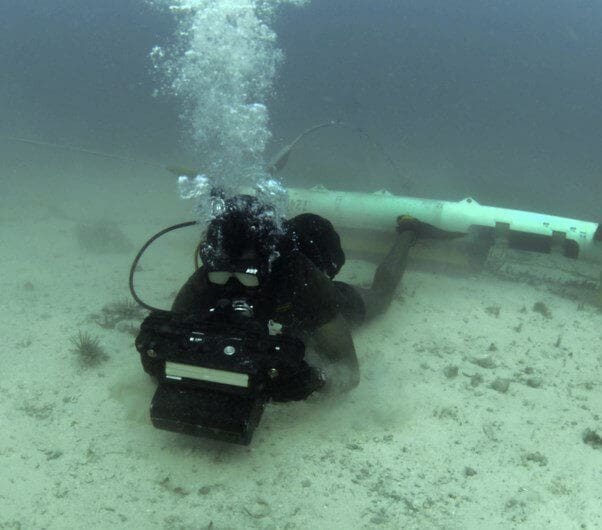
Major operators such as e.on have stipulated that divers who wish to participate in this area of work must first have undergone a suitable training course. The course will focus on awareness and identification of unexploded items and will include the use of diver-operated magnetometers.

The Aquascan DX 300 Magnetometer has been chosen for this purpose, as it is arguably the most commonly used in this field. The DX300 is a highly-sensitive detection tool which can pinpoint the location of suspect items underwater, even when buried.

The course content draws on Ramora UK’s world-renowned expertise in explosives detection and disposal. The PDA, which has a global reputation for delivering high-quality, internationally recognised training for divers, will offer this course as a bolt-on within its Premier Career Package, or alternatively as a two-day standalone course for divers who wish to expand their skills.

David Welch, Managing Director at Ramora UK, said: “We are delighted to be entering into this strategic partnership with the Professional Diving Academy.

“As leaders in our respective fields we see this as a perfect fit, combining Ramora UK’s expertise in explosive ordnance disposal with the PDA’s leadership in diver training.

Neil MacMillan, Training Manager at the Professional Diving Academy, said: “For commercial divers, this is an area that has not been covered in great detail by traditional training courses and this partnership ensures that divers trained by us can now be given proper awareness in UXO surveying, detection and identification.

“It also cements the Professional Diving Academy’s reputation as a worldwide leader in recognising the current trends of the diving industry and delivering the required training courses that enable divers to achieve competence in their field of operations.”

Ramora UK, based in Hampshire, operates a round-the-clock emergency helpline with immediate response to incidents by specialist Bomb Disposal teams. The company’s highly-experienced ex-military experts also offer explosives-related training services to governments, corporations, military and law enforcement agencies around the world.

The Professional Diving Academy is based in Dunoon, Scotland and delivers HSE accredited (IMCA recognised) offshore commercial diver training.

By Jake Frith

ZPMC to Take Legal Action Against Petrofac Over Contract Termination

0

Shanghai Zhenhua Heavy Industries Co. (ZPMC) informed that it will take legal actions to protect its interest in the case of termination of shipbuilding contract by Petrofac.

Earlier this month Petrofac terminated the contract for building of JSD 6000, deepwater multi-purpose offshore vessel.

“ZPMC will actively take all legal measures to defend its legitimate rights and interests, and will pursue the liability borne by Petrofac,” the company said in a statement.

The JSD 6000 was planed as a customised ULSTEIN SOC 5000, developed by Dutch design company Ulstein Sea of Solutions.

The vessel, according to its design, would integrated the J-Lay, S-Lay and derrick functions suitable to serve deepwater and SURF markets.

The reason for termination of the contract, according to Petrofac, was due to issues with ZPMC’s performance in respect of the construction of the proprietary design Petrofac JSD 6000.

Regarding this, ZPMC said: “Analysts believe that the true reason of more and more contract termination arising is mainly caused by low oil and gas price which lead to offshore global market downturn.”


Source

Gulf of Mexico Oil Rig Worker Dies in Accident

0

A crew member on a Gulf of Mexico oil rig contracted by Chevron Corp was killed in an accident, the company said on Tuesday. “The cause of the incident is being investigated,” Chevron said in a statement. It said the death occurred while the rig, called the Pacific Santa Ana, was operating in waters off Louisiana.

Chevron contracted the rig from Pacific Drilling, a company that also supplied the crew. The U.S. Bureau of Safety and Environmental Enforcement said work on the rig was shut down and that the agency and the Coast Guard had begun an investigation.

“There were no other injuries reported and personnel remain on the drill ship,” BSEE said. There was no reported pollution. Pacific Drilling did not immediately return questions about the incident. 


Source

Helix Expects Challenging Q4

0

Offshore services player, Helix Energy Solutions, has seen its net income slide to $9.9 million, or $0.09 per diluted share, for the third quarter of 2015 compared to net income of $75.6 million, or $0.71 per diluted share, for the same period in 2014.

Nevertheless, the Houston-based company bounced back in black after a net loss of $(2.6) million, or $(0.03) per diluted share, in the second quarter of 2015, and managed to beat analysts’ predictions of $0.08 EPS for Q3.

Net income for the nine months ended September 30, 2015 was $26.9 million, or $0.25 per diluted share, compared with net income of $187.1 million, or $1.77 per diluted share, for the nine months ended September 30, 2014.

The well intervention and robotics specialist generated revenue of $182.5 million in the period, slightly off $186.3 million, predicted by analysts, and down from last year’s Q3 revenue of $340.8 million.

Adjusted EBITDA was $51.5 million for the third quarter of 2015 compared to $35.7 million in the corresponding period in 2014.

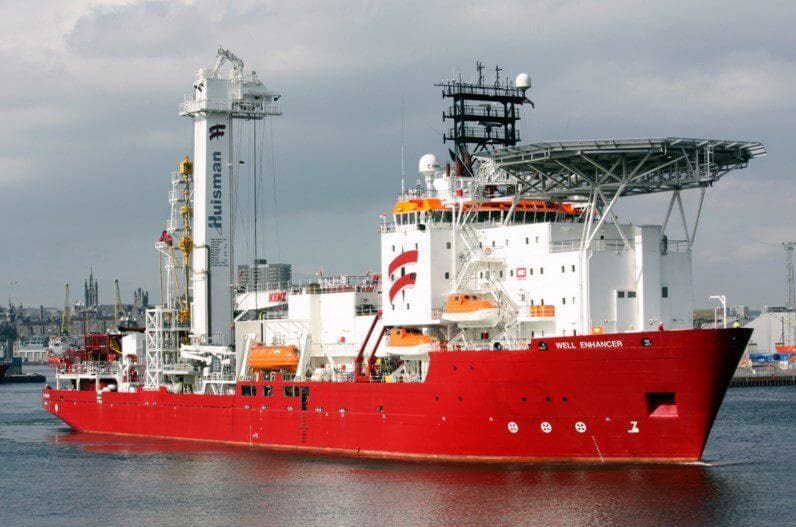
Owen Kratz, President and Chief Executive Officer of Helix, said: “Improved activity levels in our robotics segment plus strong utilization for the Well Enhancer and Skandi Constructor well intervention vessels led the way for the improved quarter over quarter results. However, industry conditions continue to remain challenging, and we expect Q4 results to be impacted by normal seasonal factors in the North Sea as well as a continuation of the weak industry environment.”

Q3 over Q2

Helix reported that its Well Intervention revenues increased 11% in the third quarter of 2015 as compared to revenues in the second quarter of 2015, reflecting a greater number of utilized days in the quarter for two of our North Sea vessels.

Robotics revenues increased 11% in the third quarter of 2015 from revenues in the second quarter of 2015. Vessel utilization increased to 87% and ROV asset utilization was marginally lower, quarter over quarter. The increase in vessel utilized days was the primary driver in higher revenue and gross profit for the quarter.


Source

US Oil Output Slide Looms as Shale Firms Hit Productivity Wall

0

Stagnating rig productivity shows U.S. shale oil producers are running out of tricks to pump more with less in the face of crashing prices and points to a slide in output that should help rebalance global markets.

Over the 16 months of the crude price rout, production from new wells drilled by each rig has risen about 30 percent as companies refined their techniques, idled slower rigs and shifted crews and high-speed rigs to “sweet spots” with the most oil.

Such “high-grading” helped shale oil firms push U.S. output to the loftiest levels in decades even as oil tumbled by half to less than $50 a barrel and firms slashed rig fleets by 60 percent.

But recent government and private data show output per rig is now flatlining as the industry reaches the limits of what existing tools, technology and strategies can accomplish.

“We believe that the majority of the uplift from high-grading is beginning to wane,” said Ted Harper, fund manager and senior research analyst at Frost Investment Advisors in Houston. “As a result, we expect North American production volumes to post accelerating declines through year-end.”

Drillinginfo, a consultancy with proprietary data, told Reuters well productivity has fallen or stabilized in the top three U.S. shale fields – the Permian Basin and Eagle Ford of Texas and the Bakken of North Dakota – since July or August.

The U.S. Energy Information Administration, whose benchmark drilling productivity index is based in part on Drillinginfo data, forecasts next month’s new oil production per rig in U.S. shale fields to stay at October levels, which it estimates at 465 barrels per day (bpd).

The big challenge of shale oil work is that well output drops off quickly – often more than 70 percent in the first year alone. So producers need to keep squeezing more oil out of new wells drilled by the currently deployed rig fleet just to offset steep declines in what existing wells produce.

OLD WELL DRAG

If that is no longer possible and firms remain reluctant to add rigs because of low crude prices and an uncertain outlook, overall production is set to sink. (Graphic: http://link.reuters.com/jem85w)

Chip Davis, managing partner at energy venture capital firm Houston Ventures, says the downward pull of declining output from older wells is getting stronger.

In the Eagle Ford, production from so-called legacy wells fell by 145,485 bpd last month, a drop that was 23 times larger than the 6,293 bpd lost in September of 2010, before the fracking boom brought thousands more wells online.

“The boulder that is decline is much bigger in size and rolling much faster than before,” Davis said. “We’ve got very few rigs to buttress the rate of decline.”

That growing drag suggests the fall in U.S. output could be sharper than a 10 percent drop the EIA sees between a peak of 9.6 million bpd in April and next August, when it expects production to bottom at 8.66 million bpd before starting to recover.

Producers’ coping strategies with the worst cash crunch in years could be also hurting productivity of new wells.

To save money, many have started drilling shorter and cheaper vertical wells. They have also cut back in some cases on the size of multi-million dollar hydraulic fracturing jobs for long horizontal wells. Both factors can hurt the average amount of oil being added by new wells.

Analysts say it is hard to predict how much U.S. output will fall and whether it will undershoot official forecasts because lower production could lift prices and that in turn might prompt producers to redeploy idle rigs to pump more.

But for now, most companies are budgeting less next year for new drilling work and the U.S. rig count has tumbled to 595, according to Baker Hughes.

Analysts at Bernstein Research have said that productivity gains so far in this downturn have come from improved efficiency rather than fundamental leaps in technology.

Yet such advances, which are hard to predict, would be necessary to boost productivity again because analysts say shale firms seem to have fully exploited techniques such as drilling multiple wells from one location, drilling longer horizontally, and more intensive fracturing along a well bore.

Initial production rates for new wells in major oil basins also appear to be slowing, Bernstein analysts said, citing their analysis of peak rates dating back to 2009.

“Shale efficiencies will be unable to overcome rig count collapse, leading to a roll in production which is bullish for oil price,” they said.


Source
Update: Subsea Cable Fault Shuts Horn Rev 2 OWF

0

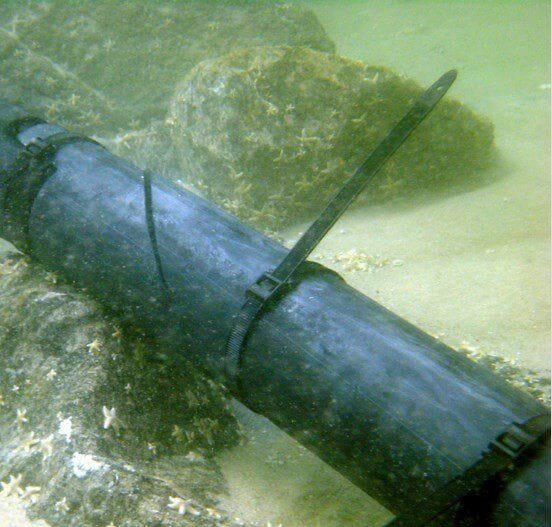
A fault in subsea cable has shut down DONG Energy’s Horns Rev 2 offshore wind farm, Energinet.dk informed.

Transmission operator of Horns Rev 2, Energinet.dk, said that the error on the cable connecting the wind farm to land occured on October 19 at 01:56.

As soon as the exact location of the fault is found the company will start the repair works.

Energinet.dk also said that it is too early to say how the error occured and when the cable is going to be operational again.

The subsea cable is linking offshore transformer platform in the North Sea to the onshore grid. The cable is 42km long and has a landing point in Blåbjerg north of Henne.

Update 20.10.2015.

Energinet.dk informed that the error on Horns Rev 2 occurred approximately 800 meters from the offshore transformer platform.

The transmission operator said that the wind farm will be offline until at least November 25. The cause of the fault in subsea cable is still unknown.


Source

Big Oil is a Buy as Cutbacks Pave Way for Price Recovery at Last

0

Energy companies are finally starting to come back into favor.

After enduring the longest oil-price collapse in more than a decade, crashing profits and an investor exodus, Europe’s biggest producers are regaining fans as analysts bet earnings bottomed last quarter and will now start to recover.

While Total SA, the region’s second-biggest oil company, will probably post the worst quarterly performance since 2009, it also has the highest proportion of buy ratings in a year, according to analysts surveyed by Bloomberg. Despite similarly bleak forecasts, Royal Dutch Shell Plc, Europe’s No. 1, has the biggest share of buy recommendations since mid-2012 while BP Plc has the most since February.

The ratings show faith in the producers’ ability to weather the commodities rout, which has seen Brent crude tumble by 40 percent in a year and company valuations shrink to at least three-year lows. More analysts now believe that the industry’s sweeping spending cuts, job losses and shuttered output will be sufficient to bolster oil prices and foster profit growth.

“It is possibly a case of being darkest before the dawn,” Lydia Rainforth, a London-based analyst at Barclays Plc, said by e-mail. A pullback in production and delays to projects “make some form of recovery inevitable” in the oil market, she said.

Shell’s B shares, the most widely traded, have increased 15 percent this month, heading for the best performance since April 2008, after previously falling 30 percent this year. Total has gained 12 percent, while BP is up 13 percent, the biggest jump since October 2011. Energy companies are the best performers on the MSCI World Index this month after languishing at the bottom for most of the year. 

SPENDING CUTS

The rebound comes after the companies made spending cuts to help them ride out the downturn. Drillers have reduced investments in exploration and production by a record 20 percent this year, International Energy Agency Executive Director Fatih Birol said Oct. 6. Companies also have divested assets, scrapped staff incentives and renegotiated contracts to lower costs.

“Across the board, we see companies working very hard to cut capital and operating expenditure levels and the speed at which this is going is very high,” Occo Roelofsen, Amsterdam-based leader of the oil and gas practice at consultants McKinsey & Co., said by phone Oct. 15. “A lot of business units are starting to cope with the new situation relatively fast as they start to adjust to the new normal.”

While the cutbacks help to buoy balance sheets and cash flow, they hamper explorers’ ability to add oil resources. Shell’s reserves and production have dropped in three of the past four years, while BP’s output has declined about 18 percent since the 2010 Gulf of Mexico oil spill that forced the company to sell assets to pay for the damages. 

DEFENDING DIVIDENDS

As cuts bite, companies are making dividends a priority over production growth. Shell Chief Executive Officer Ben Van Beurden said this month he’s “pulling out all the stops” to safeguard shareholder payouts that Shell has maintained since the end of the Second World War.

Oil’s 16-month dive has been brutal, wiping out $397 billion from the value of the 23 companies in the Stoxx Europe 600 Oil & Gas index and driving down earnings.

Total will post adjusted profit of $2.5 billion in the third quarter when it reports on Oct. 29, according to the average of five analyst estimates compiled by Bloomberg. That’s the lowest since the fourth quarter of 2009. Profit at BP, reporting Oct. 27, will drop to $1.3 billion, the lowest in at least five years, while Shell will report $3.3 billion, near the lowest since 2013, analyst estimates show.

Results will subsequently improve, said Ahmed Ben Salem, a Paris-based oil analyst with Oddo & Cie. As a result of spending cuts, the oil companies’ break-even price — the level at which they can make a cash profit — is at about $80 a barrel and will fall to $60 by 2017 from $100 last year, he said, without giving an oil-price forecast.

“Oil companies are doing the job and adjusting to this lower-price situation,” Ben Salem said. “They’re resetting their companies to be leaner and more cost-effective, which will only benefit them in the future.”


Source

Ashtead Supports US Airship Subsea Wreckage Exploration

0

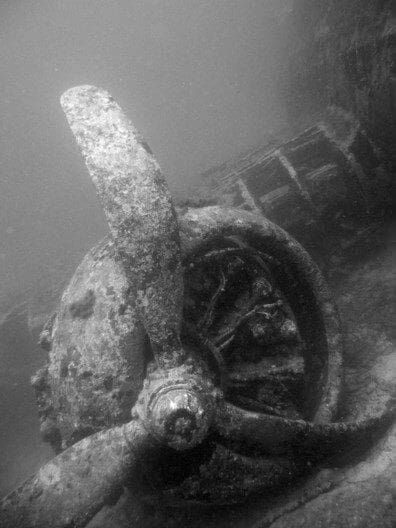
Ashtead Technology has been supporting attempts to explore the wreckage of the USS Macon, the United States Navy’s last flying aircraft that sunk to the bottom of the Pacific Ocean.

Designed for long-range scouting, the airship crashed off the coast of California in 1935 when it was returning to the Moffett Federal Airfield following a successful exercise over the Channel Islands, Southern California. A storm caused extensive damage to the airship, control was lost and the USS Macon sunk to the bottom of the Pacific Ocean.

The tragic incident led to the death of two crew members and ended the Navy’s quest to use airships as long-range scouts for the fleet, Ashtead wrote.

The recent expedition was led by archaeologists from the National Oceanic and Atmospheric Administration (NOAA), the Naval History and Heritage Command’s Underwater Archaeology Branch, and Ocean Exploration Trust to piece together a clearer map of the wreck site and to study how the remains of the airship were being consumed by the sea.

Ashtead provided subsea inspection equipment to study the wreckage and carry out an in-depth corrosion analysis on the aircraft to monitor deterioration.

The technology supplied by Ashtead included a Polatrak Deep C Meter 3000, which allowed researchers to measure the gradual corrosion of the aluminium materials and sample the conditions for metallurgical study.

The 12 hour expedition revealed that the wreckage is corroding faster than expected, the company said in a press release.

Chris Echols, Vice President of Ashtead Technology in Houston said: “It’s been an honour to help answer some of the questions that have surrounded the tragedy and have been able to build up an accurate picture of the USS Macon and its current state.

“Earlier explorations of the site in 1991 and 2006 photographed and identified the engines, fuel tanks, ovens, tires, and the four biplanes, all of which were still relatively intact, however with new advances in technology, we can help researchers delve deeper and gather more meaningful data from the site.

“They were able to gain a better understanding of how long the wreckage will remain intact and document exactly what they encountered at the bottom of the ocean.”

The exploration team used Ashtead’s Polatrak Deep C Meter alongside the Ocean Exploration Trust’s Nautilus ROV to take a 360-degree video of the site, assess corrosion and measure how much sediment had built up since 1935.

“The aim of the mission was to monitor and preserve the wreck site to the best of our ability. The remains of the USS Macon will continue to deteriorate, but we want to continue to document its condition now and into the future. We’re really extending the life of the airship and documenting the past 80 years she spent under water, where the majority of her life has been spent,” said NOAA archaeologist Megan Lickliter-Mundon.

“We already had a good understanding of how materials from older shipwrecks – wood, iron, copper alloys – react to their underwater environment. However, with 20th Century materials like aluminium alloys, we still haven’t quite figured out as a discipline how to best conserve the material, or how those materials react with their environment and with other materials. This was an opportunity to learn through the samples that we collected about the rate of corrosion and how to best help preserve them going forward.

“There are great environmental challenges associated at 1,400 feet below the sea surface and without the help from Ashtead, we wouldn’t have been able to preserve and document artefacts for future generations.”

Sercel Introduces GeoTag Underwater Positioning Solution

0

CGG announced that Sercel has launched GeoTag, the acoustic positioning solution for seabed seismic acquisition.

GeoTag can be used to accurately position all types of Ocean Bottom Cable (OBC), Ocean Bottom Node and Transition Zone cable systems for seabed seismic surveys in water depths down to 500 meters, the company said.

GeoTag solution operates with the smallest acoustic positioning transponder available on the market. The transponders are attached to the seabed seismic equipment and interrogated by a vessel-based transceiver. The transponders can also be stored on a reel and deployed mechanically when used with OBC systems.

GeoTag is fully scalable for use on small to large seabed crews deploying up to 10,000 acoustic positioning devices, the company wrote in a press release.

Pascal Rouiller, Sercel CEO, said: “This new product capitalizes on our proven experience in acoustic positioning. It answers the need in the industry for more accurate positioning of seabed seismic equipment, particularly for 4D operations.”