Home Blog Page 443

New Diver Trainer – The Underwater Centre

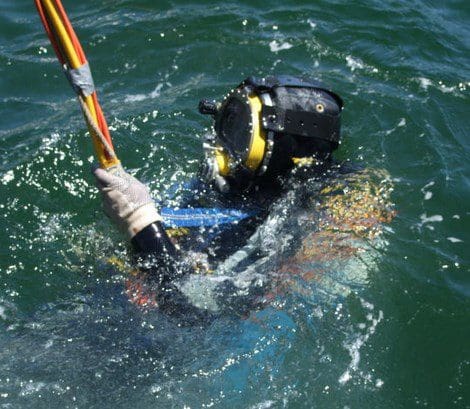
Commercial diving is a booming industry making it one of the most sought after careers in the energy sector today. The need for diver trainers also becomes more apparent with the rising number of commercial diver aspirants.

The Underwater Centre, Tasmania announced that a new Diver Trainer will be joining their team. David Loudon was a workshop manager from Gilbert Diving PTY Limited. He is PADI master SCUBA trainer/technical diver and ADAS qualified which will certainly be beneficial to dive trainees especially in the fields of safety and health regulations. He also took Supervisor Training and Certificate IV TAE in Training and Assessment to expand his people handling skills. His knowledge and experiences in this particular field will contribute greatly in the effort to produce globally competitive commercial divers.

David’s experiences range from maintenance jobs in dams, pipelines, piers including repair and inspection. He will be able to share his vast technical knowledge to the students regarding several assignments they may encounter. He said, “My new role at The Underwater Centre is training our students to be ADAS qualified commercial air divers, which will involve working very closely with them to ensure they have the knowledge and skills required. I am most looking forward to working with and helping students achieve their goals, imparting some of my knowledge and experience to assist them to become safe, competent and effective working divers.”

The center is offering commercial diving training for either air or saturation diving and ROV pilot technician courses. The company caters the need for expert commercial divers in the South East Asia region and provides internationally recognized Australian Diver Accreditation Scheme certification.


Storms Prompt Mexico’s Pemex To Evacuate 15,000 Workers From Gulf

0

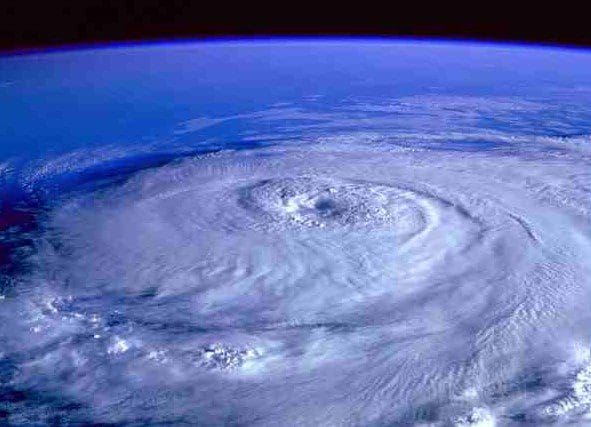
Mexico’s state oil company Pemex said on Tuesday it was evacuating 15,000 workers from installations in the Gulf of Mexico because of bad weather, adding the evacuation would have only a minimal impact on crude oil output. Pemex gave no immediate details on what minimal impact meant in terms of barrels of oil.

The evacuation from over 60 platforms in the Bay of Campeche was a precautionary measure and was carried out in accordance with the company’s emergency response procedure, Pemex said via its Twitter account. The employees were evacuated from platforms in the Bay of Campeche, Pemex said.

The U.S. National Hurricane Center said there is a 40 percent chance of a cyclone formation in the area, where there are currently thunderstorms and showers. The port of Cayo Arcas, one of Mexico’s three main oil exporting ports in the Gulf of Mexico, was closed on Tuesday morning.

Source

NASA Scientist: Arctic Drillers Can Learn from Space Program

As the oil and gas industry intensifies its exploration efforts in the Arctic, it could benefit from exploration of another kind – outer space, Dr. Omar Hatamleh, NASA’s assistant chief scientist, told attendees at the recent Houston Consular Forum in Houston, Texas.

The space program and drilling in extreme environments have some surprising similarities, Hatamleh said. 

“What are the advantages of working with NASA? During the peak of the Apollo program in the 1960s, it took about 400,000 people from different industries, academia and the government to produce this great endeavor. That was a huge cost in personnel, and wouldn’t be allowed in today’s environment,” Hatamleh said. “Experts estimate that by 2050, total energy demand is going to be about 80 percent higher. We need to put together our collective intellect to start thinking about better ways to attack these problems and move forward,”

The space station took about 20 years to build, but has provided a significant amount of invaluable information, Hatamleh said. It is a useful model to extrapolate information about working in the Arctic.

“When we started thinking about it, there is so much in common. We both incur challenges involving working in extreme environments and exploratory environments, and the technologies developed for one can be applied to the other, as well,” he said.

One example of how technology could offer solutions to the challenges of performing in hazardous conditions would be to use humanoid robots, Hatemleh said. This could require artificial intelligence to enable the robot to perform without input from human workers.

Both the energy industry and NASA make use of Big Data, Hatemleh said. 

“For the oil and gas industry, there is better seismic, better drilling, better production techniques and there is a significant amount of data collected every day. It’s the same with us [at NASA],” he noted. Considering the human factor in areas such as the sleep cycle and the effect of lighting can have significant effects on workers, NASA learned.

To ensure the health of workers, the infrastructures must be considered, Hatemleh added. Not every part can be taken in outer space, just as not every part can be taken to the Arctic. However, using a 3D printer, Arctic workers could receive a file and print what part is needed.

“We can work together to develop technologies as a group,” using synergistic partnerships, and team and joint resources. “Together, we can reach new heights,” he said.

OPPORTUNITIES FROM DRILLING IN ARCTIC

“There is too much energy to leave in the Arctic sea bed,” Pete Olsen, a Republican congressman representing Sugar Land, Texas, told attendees at the event.

Olsen and Gene Green, a Democratic congressman from Houston, gave the keynote speeches at the Forum, which was hosted by the University of Houston Energy Initiative, the City of Houston, and the OTC’s Arctic Technology Conference. Political leaders and executives from leading energy companies that are drilling in the Arctic spoke at the event.

While long-timers in the oil industry look back fondly at the 1970s, when the industry was in its hay-day, the industry is actually doing much better now, noted Green, who observed that “this is the best economy that I’ve ever seen.”

 As an indication of the strength of the industry today, Green noted that here are currently five crackers and five refineries in East Harris Country in Houston.    

While Olsen and Green talked about their support for the oil and gas industry, and that “more American energy” was necessary and only an “all of the above approach” – including drilling in the Arctic – would provide the energy necessary to support growing demand, the speakers turned quickly to the challenges posed by working in the harsh climate of the Arctic.

Statoil’s Jason Nye, senior vice president of U.S. Offshore, explained that the Arctic can be divided into three different operational areas, or categories:

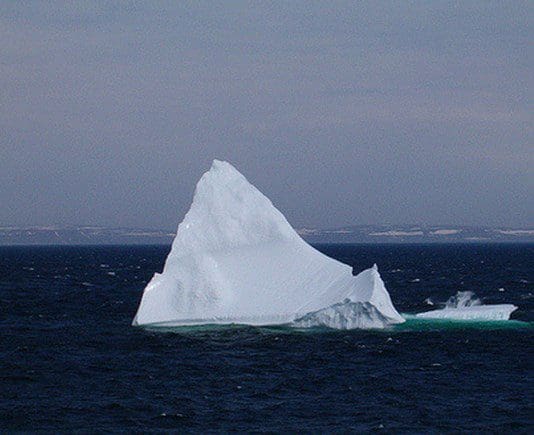
  • Workable Arctic – there is little or no sea ice or icebergs. So, there are solutions that can be carried out with today’s technology; an example is drilling offshore of Newfoundland
  • Stretch Arctic – there is significant ice that inhibits operations or floating structures for much of the year. How exploration and development is likely to take place can be visualized, but the industry is some ways away from realizing key technologies and capabilities needed for commercial feasibility; an example is northwest Greenland
  • Extreme Arctic – areas where there is continuous or nearly continuous ice coverage. This is where solutions are hard to visualize and require a long-term focus in investment and technology; an example is Greenland

“Why is an industry like ours still willing to take on this large task,” Nye asked. “The answer is twofold. First, we believe the Arctic’s resources will be a critical source of energy for a growing world. Economic growth and rising standards of living will result in a more than 30-percent increase in global energy demand over the next thirty years. Also, we have been producing more energy than we have discovered each year since the early 1980s. We see great resource potential in the region.”

CHALLENGES IN ARCTIC

Climatic conditions represent the greatest challenge to those working in the Arctic, Nye and other speakers said. Exploration and production activities in the region require the proper rigs, equipment and clothes. Also, there are challenges imposed by having to work in darkness for half the year, and by the remoteness of working in a far-off region of the world.

Presenter Peter Lundgren, MD PHD at UMEA University in Sweden, is a medical advisor for the Swedish Armed Forces, and the Swedish Mountain Rescue Services. He noted that in the extreme climatic conditions of the Arctic, there are two keys to meeting the challenges:

  • Basic knowledge – this includes knowing how to main the proper heat balance when the extremities lose blood flow and heat, as well as how to prevent hypothermia
  • Need for more research – what to do in unexpected circumstances, such as when clothing becomes wet in extreme cold

Knowledge within the entire organization and further research are the two main keys to remaining healthy and being able to work in hostile environments in the Arctic, Lundgren said.

Mitch Bloom, vice president of the Canadian Northern Economic Development Agency, discussed how countries could work together to develop the North and overcome the challenges of the area. The climate and resource protection are important in working in the Arctic, and the melting of the permafrost from climate change poses risks to infrastructure. Because of its comparatively small population, Canada, Boom said, has undertaking socio-economic development while building partnerships. 

“So much of what Canada is trying to do is diversity of the economy. We’re trying to get different components of it working together. Because the population of Canada is so small, so many of these economic opportunities are based upon fly-in, fly-out workforces. So, there is not a strong connection [from transient workers] in many cases.”

There is “everything” there in the Arctic, Bloom said. In terms of oil and gas, there are huge volumes up there. However, it can only be developed on a world-class basis.

“There are lots and lots of opportunities. However, the capital costs are so immense. You have to build your own port, your own roads, and your own airstrip. But if we’re not going to see our people benefit from this, why do it?”

All things considered, the Arctic offers a lot of opportunity, but collaboration and finding people with the right skills are necessary. And even then, Bloom noted, “it’s not for the faint of heart.”

Source
Subsea Tech Helps in HMS Erebus Search

Early in September, a team of Canadian underwater archaeologists discovered the wreck of the HMS Erebus in the eastern stretches of the Queen Maud Gulf off the coast of Canada. As part of the search, the team used an array of state-of-the-art technology, including advanced sonar devices, remotely operated vehicles and autonomous underwater vehicles, to at first locate and then capture images of the vessel.

The Erebus, alongside the HMS Terror, was one of the ships of the doomed Franklin Expedition that set out to traverse the last unnavigated section of the Northwest Passage in 1845 – before becoming trapped in ice in the Canadian Arctic, resulting in the death of expedition leader Captain John Franklin and 128 men.

Sonar images of the shipwreck were initially captured by the Klein System 3000, a towed side-scan sonar device deployed alongside the Parks Canada survey vessel Investigator. The sensor was housed in a tow body, or towfish, that trailed behind the Investigator close to the seabed on a 200 metre armoured tow cable. The 3000 series Side-Scan Sonar System is a simultaneous, dual-frequency, single-beam, digital side-scan sonar for use in general seafloor survey applications.

Following the discovery of the exact location, the search team deployed a Falcon Seaeye remotely operated vehicle, to obtain real-time video images of the Erebus. Attached by fibre optic cables to a control unit piloted by senior underwater archaeologist Ryan Harris, the ROV, which is capable of operating at depths of up to 300 metres with a 14 kilogram payload, used a high resolution colour camera on a 180° Tilt Platform to capture the footage.

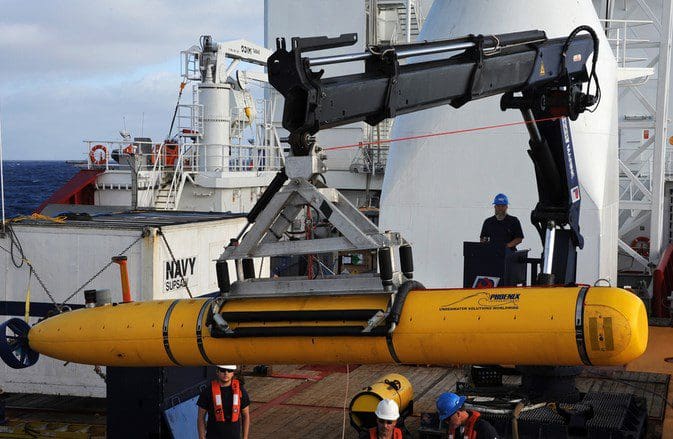
A key technology used in one of the other search areas was the Arctic Explorer, a seven metre long Autonomous Underwater vehicle (AUV) that Defence Research and Development Canada (DRDC) used to scan the seabed in the vicinity of the lost ships.

Originally developed by British Columbia-based company International Submarine Engineering (ISE) to map the Arctic seabed in support of Canada’s claim under Article 76 of the United Nations Convention on the Law of the Sea, the AUV is a modular vehicle that can be pre-programmed to carry out missions beneath the surface of the sea without any physical connection or communication with a control station. It consists of a forward free-flooding section, full diameter pressure hull and a free flooding aft section.

During the Franklin Expedition search the on-board technology included an ultrahigh-resolution AquaPix Interferometric Synthetic Aperture Sonar (INSAS) produced by Kraken Sonar Systems, which enabled the team to capture high-resolution images at longer ranges than those possible using conventional side-scan
sonar.

“The Arctic Explorer dove several times leading up to the pinpointing of the downed vessel that was spotted. With the vessel in such shallow waters, the imagery that was disseminated to the masses by government was taken with another towed body device holding a side-scan sonar,” said Linda Mackay, Marketing & Communications Manager at ISE.

“Where ice is the challenge, you can see the advantages of the AUV’s capability to be pre-programmed and to manoeuvre under ice,” she added.

Source

Summit Broadband Connects to Allied Fiber

0

Allied Fiber, the United States’ first open-access, integrated, network-neutral colocation and dark fiber superstructure, has announced that Summit Broadband, a regional service provider headquartered in Orlando, Florida, a subsidiary of Cable Bahamas, has executed a 20-year Indefeasible Right of Use (IRU) agreement and lease for dark fiber and neutral colocation to expand its Florida network between Miami and Jacksonville.

Summit Broadband will leverage Allied Fiber’s dark fiber network and neutral colocation facilities in Florida to interconnect its own internal network elements as well as provide access to its entire network in the state to meet customer demands for greater capacity and more efficient and cost-effective service offerings. By establishing a presence in the Allied Fiber colocation facilities on the East Coast, Summit Broadband will provide its customers with a direct, physical layer access point into their regional dark fiber and high capacity transport network connecting its service areas. Summit Broadband will also leverage the Allied Fiber network to Miami through Boca Raton where they will connect to the submarine cable system network of their parent company, Cable Bahamas.

“The agreement with Summit Broadband is a perfect fit and completely consistent with our mission of linking the submarine cable systems in the United States while also providing direct, physical access for all local communities along the way,” said Hunter Newby, CEO of Allied Fiber. “Local communities in Florida are demanding reliable, high speed broadband infrastructure for businesses and consumers and by connecting to the Allied Fiber superstructure, Summit Broadband is able to offer its retail, enterprise and wholesale customers greater reliability and faster connectivity to homes and workplaces.”

“Strategic partnerships with industry leaders like Allied Fiber allow us to expand broadband service offerings to our valued customers,” said Richard Pardy, CEO of Summit Broadband. “The dark fiber network spanning from Miami to Jacksonville will improve the connection capabilities for thousands of our customers along the east coast of Florida.”

Source

Chatham Rise Mining Might Impact Marine Mammals, Report Says

0

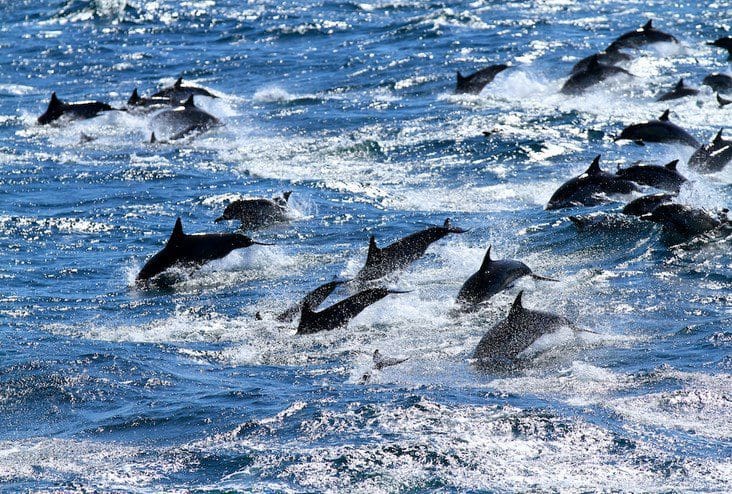
Mining phosphate on the Chatham Rise, off the east coast of New Zealand’s south island, could potentially have many impacts on marine mammals like whales and dolphins, the Environmental Protection Agency was told today.

Whale expert, University of Otago’s Associate Professor Liz Slooten, gave evidence on behalf of Greenpeace, Kiwis Against Seabed Mining (KASM), and the Deep Sea Conservation Coalition (DSCC) at the Environmental Protection Authority’s (EPA) hearing into the Chatham Rock Phosphate Ltd (CRP) application for seabed mining in 450 metre deep waters to mine phosphates on the Chatham Rise entered its fifth week.

Professor Slooten told the EPA there were many potential impacts on marine mammals, including permanent or temporary hearing impairment, behavioral response, compromised ability to communicate and orient, including to hunt for prey, potential direct impacts on marine mammals that may come into contact with the plume of sediment from the mining and pollution from uranium.

Despite these potential threats, the company had carried out no visual or acoustic surveys to establish what whales were in the vicinity, and there was no empirical data on noise that would be generated by the mining. Instead, CRP contractors had constructed a model extrapolating noise from a shallow-water mining operation, a model that, for example, did not take into account noise from pipes taking sediment 450 metres up to the ship – or back down.

“There are a number of potentially serious impacts on marine mammals. More rigorous environmental impact assessment would be needed to assess the severity of the impacts of this development,” said Slooten.

Marine mammal species known to use the Chatham rise area include blue whales, bottlenose dolphins, common dolphins, dusky dolphins, false killer whales, humpback whales, killer whales, minke whales, pilot whales, sei whales, southern right whales, sperm whales and NZ fur seals, plus the species group beaked whales, according to Slooten.

However, there was also a need to understand the number of any of these marine mammals in this area, which simply hadn’t been studied properly.

“From a scientific point of view, three years of baseline monitoring is the minimum required to collect baseline data on distribution and abundance of marine mammals and this is also the minimum to provide a realistic chance of detecting effects on other species,” she said.

None of this work had been done by the company.

Source

Shell Strikes Sales Deals For Nigerian Assets

0

Royal Dutch Shell has signed sales agreements for all the Nigerian oil assets it put up for sale following a 2013 review of its business in the West African country, a spokesman said on Tuesday. The Anglo-Dutch oil major, like many of its peers, is carrying out a major cost-cutting drive. It has opted to move away from Nigerian onshore oil production, which is plagued by massive oil theft, security problems and oil spills and is also becoming a major source of legal liabilities.

The assets include Shell’s 30 percent stake in oil mining leases (OML) 18, 24, 25, 29 and the Nembe Creek Trunk Line (NCTL), the country’s main onshore pipeline. The company also said that, together with its partners Total and Eni, it had signed an agreement to sell their 45 percent stake in OML 18 to a consortium led by Canadian oil and gas company Mart Resources. The remaining share of the oil field is owned by Nigeria’s national oil company.

Mart confirmed it had entered into an agreement for the acquisition of OML 18, whose production it said ranged between 20,000 to 30,000 barrels per day from around 30 wells. The value of the deals was not disclosed. In August, the Financial Times reported that Shell was close to selling the oilfields for about $5 billion to domestic buyers. The sale process “has not yet fully concluded but we can confirm that we have now signed sales and purchase Agreements for these Oil Mining Leases and the NCTL”, a Shell spokesman said. “Nigeria remains an important part of Shell’s portfolio, where we will continue to have a significant onshore presence in oil and gas, and which has clear growth potential, particularly in deep-water and onshore gas,” he added.

In March, Reuters reported that Nigerian firms Taleveras and Aiteo had made the highest bid of $2.85 billion for OML 29, the biggest of the four oil fields. A senior Nigerian oil executive said a consortium headed by Pan Ocean Oil Corporation had bid for OML 24 at a price of about $1 billion. Shell’s shares were up 3.073 percent at 2,613.5 pence at the close of London trading.

Source

Statoil Finds More Oil in Grane Area

0

Statoil has together with PL169 partners proved new oil resources in the D-structure in the vicinity of the Grane field in the North Sea.

Well 25/8-18 S, drilled by the rig Transocean Leader, proved an oil column of 25 meters in the Heimdal Formation. The estimated volume of the discovery is in the range of 30-80 million barrels of recoverable oil.

“We are pleased with having proved new oil resources in the Grane area,” says May-Liss Hauknes, Statoil vice president for exploration in the North Sea. “Near-field exploration is an important part of Statoil’s exploration portfolio on the NCS. It provides high-value barrels that are important for extending the production life of existing installations.”

The D-structure is located on the Utsira High, just 7 km north of the Grane field and in the immediate proximity of the Grane F oil discovery made by Statoil in 2013. The D-structure was originally penetrated in 1992 by well 25/8-4, which encountered just one meter of oil corresponding to about six million barrels.

The Grane oil is transported through a 212 kilometre long subsea pipeline to Statoil’s Sture terminal in Øygarden, west of Bergen.

“Well 25/8-18 S appraised the D-structure and proved substantial additional oil volumes in an excellent sandstone reservoir. This is a result of a recent re-evaluation of the area done by the partnership. New seismic and improved subsurface mapping have given us new confidence in the D-structure and allowed to mature it towards a drilling decision”, says Hauknes.

“Tie in to the nearby Grane field is one of the development solutions that will be evaluated for the discovery”, according to Gro Aksnes, Statoil vice president for area development in Operations West.

Exploration well 25/8-18 S is located in PL169 in the North Sea. Statoil is operator with an interest of 57%. The partners are Petoro AS (30%) and ExxonMobil Exploration & Production Norway AS (13%).

Source

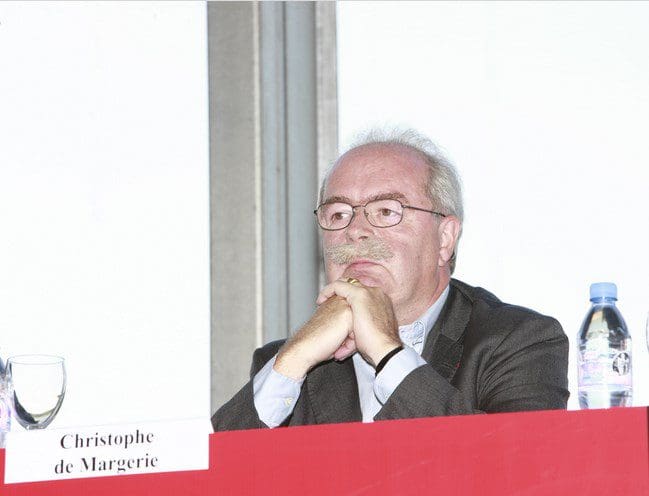
Airport Spokeswoman: Total CEO de Margerie Killed in Moscow Plane Accident

The chief executive of French oil major Total, Christophe de Margerie, was killed in an airplane collision with a snow plow at Moscow’s Vnukovo International Airport, airport spokeswoman Elena Krylova said on Tuesday. “Tonight, a plane crashed when it collided with a snow-clearing machine. Three crew members and a passenger died. I can confirm that the passenger was Total’s head de Margerie,” she said.

The collision occurred during takeoff of the Dassault Falcon business jet in which de Margerie was a passenger late on Monday, just minutes before midnight Moscow time, an airport statement said. The plane was due to travel to Paris. A Total source in Moscow confirmed de Margerie died in a plane crash but offered no further details.

De Margerie, 63, was on a list of attendees at a Russian government meeting on foreign investment in Gorki, near Moscow, on Monday. With his distinctive bushy moustache and outspoken manner, he was one of the most recognizable figures among the world’s top oil executives.

De Margerie, a graduate of the Ecole Superieure de Commerce business school in Paris, became chief executive officer of Total in February 2007, taking on the additional role of chairman in May 2010, after previously running its exploration and production division.

De Margerie said in July that he should be judged based on new projects launched under his watch, such as a string of African fields. He also said then that Total would seek a successor from within the company rather than an outsider.

Philippe Boisseau, head of Total’s new energy division, and Patrick Pouyanne, who was tasked with reducing the group’s exposure to unprofitable European refining sectors, have long been seen as potential successors.

A staunch defender of Russia and its energy policies amid the conflict in Ukraine, de Margerie told Reuters in a July interview that Europe should stop thinking about cutting its dependence on Russian gas and focus instead on making those deliveries safer.

Total is one of the majors most exposed to Russia, where its output will double to represent more than a tenth of its global portfolio by 2020.

A TOP INVESTOR IN RUSSIA

Total is one of the top foreign investors in Russia, but its future there grew cloudy after the July 17 downing of a Malaysian passenger airliner over Ukrainian territory held by pro-Russian rebels worsened the oil-rich country’s relations with the West and raised the threat of deeper sanctions.

Total said last month that sanctions would not stop it working on the Yamal project, a $27 billion joint venture investment to tap vast natural gas reserves in northwest Siberia that aims to double Russia’s stake in the fast-growing market for liquefied natural gas. De Margerie said then that Europe could not live without Russian gas, adding that there was no reason to do so.

Total is the fourth largest by market value of the western world’s top oil companies behind Exxon, Royal Dutch Shell and Chevron. Russia accounted for about 9 percent of Total’s oil and gas output in 2013.

The oil company had forecast in April that Russia would become its biggest source of oil and gas by 2020 due to its partnership with Russian energy company Novatek and the Yamal project.

Total SA is France’s second-biggest listed company with a market value of 102 billion euros.

Like other big oil companies, Total has been under pressure from shareholders to cut costs and raise dividends as rising costs in the industry and weaker oil prices squeeze profitability.

Source

Ofgem to Assess Five Potential Subsea Links

0

Ofgem has announced the names of five new interconnector projects that could be built in the future. Together with the ElecLink and Nemo projects that Ofgem has already assessed, these seven projects could lead to investment of up to £6 billion and provide up to 7.5GW of additional electricity capacity in GB.

Ofgem has decided that all five of the projects submitted meet the minimum eligibility criteria. The applications follow Ofgem’s decision to extend the cap and floor regime to electricity interconnectors that can connect to the network by 2020. The proposed new interconnectors, if approved, would connect GB’s electricity network to France, Ireland, Norway and Denmark and would improve security of energy supply.

They will now move to the Initial Project Assessment (IPA) stage of the process. Ofgem will assess the impact of the projects, how the projects interact, and whether they are likely to be in the interests of GB consumers and deliver value for money. If successful, work on some of the projects could start as early as 2016.

Martin Crouch, Ofgem’s senior partner for transmission, said: “It’s excellent to find our new approach to interconnector regulation has attracted such interest. These five new projects, if approved and then built, could provide real benefits to consumers. They can help to lower electricity supply prices, lower the cost of delivering security of supply and support the decarbonisation of energy supplies.”

Source