Home Blog Page 444

Group effort pulling cars from watery grave in Merrimack River

Well, you can say this about the Merrimack River: It has been, historically, a practically perfect place to dump a car. Water the color of black coffee. Dozens of secluded access points, especially along a wooded trail that runs beside the banks from Lowell to Lawrence.

In this state, with its grand tradition of boosting cars and committing insurance fraud, you’d be hard pressed to find a better spot to vanish a ride. So far, crews have found nearly 80 on the river bottom, cars that long ago passed from transportation to evidence. Even as car theft rates have fallen, you can find in the mud of the Merrimack a calcified reminder of the state’s mid-70s run as the Car Theft Capital of America.

And so it was that on Tuesday, a group of guys stood on the muddy banks of the Merrimack in Andover, watching excitedly as a tow truck hauled the latest catch ashore.

“There’s nothing like car fishing!” Chris McNulty exclaimed as the winch pulled the car — which was essentially an aquarium at this point — ashore on its hood and flipped it over onto its wheels. Or at least what you imagine were its wheels. It looked more like a car made out of mud by a 3-year-old.

Rocky Morrison approached triumphantly and wrote the number 53 on its door.

In the seven years that the Clean River Project has been pulling cars from the Merrimack River, Tuesday was a big day. They passed the 50-car milestone, and they were coming close to finishing. Or at least finishing the ones they can actually get out of the river.

There are about 20 other cars called “crispies” in there, cars so rusted you can put your finger right through the metal. When they try to pull them out, the cable usually rips the car in half, so the crews take the engines and maybe the axles and leave the rest behind as hibernation spots for fish.

The Clean River Project has an official name now, but it started in the most offhand of ways. About 13 years ago, Morrison, who grew up near the banks across the water in Methuen, organized a scavenger hunt to pick up trash. Very informal. Just a couple of guys, a couple of boats, a couple of beers, and points for everything they picked up. Tires were the key to winning.

But as that scavenger hunt became an annual event, the scope of the pollution became impossible to ignore, so Morrison formalized a non-profit about 10 years ago, organized cleanups along the banks — toys, washing machines, 1,700 tires in Haverhill alone — until one day the water level was lowered to repair a dam.

That’s when they saw them. Cars. Everywhere.

“Every 15 feet, you would see a bright object on the bottom,” Morrison said, and so they began going after them, for two reasons. The first is simply to get them out, because the Merrimack, which provides water to about 400,000 people, is the only major river in New England that serves as a direct source of drinking water.

The second is for public relations. “When people see big objects, they can relate,” Morrison said. “It’s really an eye-opener to the pollution and (the)problem that’s been going on for years.”

Getting decades-old cars out of a pitch-black river is no easy feat. First, crews have to find them, which they do by feel, with the help of divers.

“Basically, I swim until I bang my head into them,” said Michael Nalen, a commercial diver who has been working with the project. “It’s black water. Zero visibility. You can’t see them until you hit them.”

After the cars have been found, crews tie a buoy to them, then go back and spend hours and hours under water blasting them with water jets to free them from the mucky bottom. Airbags are then inflated to float the cars up off the bottom, then they are moved to a spot where a tow truck can get access and yank them ashore.

Some of the cars are in seemingly impossible spots, far from shore, because if the windows were up when they were first dumped, the cars would float a bit. Others were probably driven out to the middle on ice.

Once the hulking chunks have been towed to land, Keith Gagnon, the “fisherman,” goes about removing the headlights, digging around in the engine, pulling off the interior panels, all to find the small fish that burrow into the mud. He’ll find dozens of bluegill and hornpout and smallmouth bass and toss them back into the river in a cascade of confused, flapping fish.

They hose the car out some more with a water jet because even the tow truck can’t lift it with all those tons of muck. A cleaner car also means that the State Police trooper who is watching can confirm that there are no dead bodies inside.

Then they clean the VIN number off with ether spray — at this point, if they rubbed the metal plate, the numbers would often just disappear — and the trooper runs it through the system.

Number 53 is a 1988 Mercury Topaz, reported stolen in 1989.

There is a well-earned sense of accomplishment with each car. Considering where the Clean River Project started, as a couple of boys with toys looking for trash, it has grown to a fleet of five boats custom-built by Morrison, corporate partnerships with 3M, Siemens, Keurig, and Stanley Tools — many of whom send employees out to get filthy in the muck — and a grant from the Massachusetts Environmental Trust to pay for the divers. (The car insurance companies foot the tab for the towing and disposal.)

Their next task is to put boulders near the river access points, and work with cities and towns to install gates, so that no future cars can go swimming.

As the sun gets low in the sky, the crew pulls its eighth car of the day, No. 54 in total — a 1991 Dodge reported stolen in Salem, N.H., in 1997 — and start packing it in for the year.

It’s approaching fish hibernation season, and the little guys will burrow inside, out of the current for the winter. So if there are any more dead cars down there, they’ll spend this winter just as they have in years past — sleeping with the fishes.
Source

Engineers as divers a unique asset for Appledore

Work for an engineering company and, it goes without saying, you are certified and trained as an engineer.

But work for Appledore Marine Engineering, and you’re not only an engineer, you’re a certified underwater diver both in the use of self-contained air tanks and surface-supplied air.

“All our engineers are divers,” said Appledore president Noah Elwood. “We make the effort to hire the best engineers, then we invest heavily in training them as divers.”

It’s one of the features that sets Appledore apart from other engineering firms as the company embarks on a $10 million, 5-year contract at Portsmouth Naval Shipyard that includes expanding the capabilities of the dry docks so the yard can accommodate the larger Virginia class submarines.

The firm also will work on assessing the needs to repair and rehabilitate existing piers and wharfs. It also will do a study to assess the feasibility of a berth to increase the capabilities of the Navy to moor vessels there.

Elwood said the company, which has contracts across the country and around the world, is thrilled to have the contract essentially in its back yard.

“It doesn’t get any closer than that,” said Elwood, smiling at the prospect. “It’s a good size contract for us, and it’s really important to us.”

According to Elwood, a good portion of the company’s business is with the federal government, doing projects for the U.S. Navy and U.S. Coast Guard.

The company started in 1987 in Newmarket as Appledore Engineering with a division that specialized in marine engineering. That division was spun off in 2004 as Appledore Marine Engineering and moved to 600 State St., where it remains today.

“We did that to be better focused on our core clients,” Elwood said. “We focus exclusively on underwater construction.”

Their skills as engineers and their skills as divers combine to give them expertise marine-related projects out of and in the water. Elwood said about 80 percent of Appledore’s engineers are graduates of the University of New Hampshire. Women engineers make up a third of the dive teams.

According to Elwood, the engineers/divers work in teams of four, with a supervisor above water who’s in charge of communication and the safety of the dive team, a lead diver and a back-up diver. In a scuba team, the fourth member of the team is a second engineer diver in the water assisting. In the surface supplied air team, the fourth member manages the diver’s umbilical topside while the back-up diver is suited up topside and ready for deployment if needed.

To assess the structural soundness of pilings that might be used in the construction of a new pier, for example, the dive team will do an initial visual assessment — a “swim by,” as Elwood called it.

Then they’ll get underwater to clean the marine growth (algae, barnacles, oysters, for example) from sections of the pilings to do a closer visual inspection, then assess the strength of the pilings by using instruments to measure the thickness of the steel or get core samples if the pilings are wood or concrete.

Information is communicated via two-way radio to personnel on the land. They have a system to take notes on iPads that was developed during an Employee Exploration and Enrichments Day, a quarterly event set aside for workers to talk of a subject of their choosing to better themselves as employees or better the company.

Conditions in the field can be challenging, according to Elwood. He told the story of a project the company had at a U.S. Air Force base in Greenland, 750 miles north of the Arctic Circle. The Air Force had a pier it used to bring in supplies and the good-weather window to do the work was only eight weeks, with the water temperature about 30 degrees.

Each job, said Elwood, is its own lab.

“They see a lot of what works and they see a lot of what doesn’t work,” said Elwood, who has been company president since 1994 and is also an engineer diver.

The company leadership consists of Elwood, Robert Snover, PE, vice president and Lawrence Wagner, PE, vice president. Appledore has a total of 22 full- and part-time employees and 10 of them are professional engineer divers. The remainder consist of engineer tech divers and administrative support staff.

The team members rotate among themselves to form new teams, so the experience of what worked and what didn’t from different jobs is ultimately shared among everyone.

There are a number of factors to take into account as Appledore begins its work at the shipyard. Included among those factors is the fast-moving current of the Piscataqua River as it empties and fills the Great Bay estuary with every tide. “The loads can be tremendous,” Elwood said.

He said he and his partners worked hard to get the shipyard contract in a competitive process with other engineering firms.

An Appledore engineer assigned to a project stays with it from beginning to completion, according to Elwood.

There’s no risk that something might be lost or missed in the transfer of information from one engineer to another.

“Whenever you hand something off, you lose something,” Elwood said. “Something can get lost in the translation.”

The value his engineers bring to a contract such as the shipyard, said Elwood, is that their quality work will keep the project costs under control and on budget.

“It means a lot,” he said of securing the shipyard contract. “It fully galvanizes our relationship with the shipyard for the next five years.”


Source

Ocean Rig, Petrobras Agree To 3-Year, $1.1B Drillships Lease

0

Cyprus-based Ocean Rig UDW Inc said on Monday that it signed a $1.1 billion three-year contract with Brazil’s state-run oil company, Petroleo Brasileiro SA, to extend a lease on two ultra-deepwater drilling ships. Petrobras, as the Brazilian oil company is known, will get the ships, the Ocean Rig Corcovado and Ocean Rig Mykonos, for 1,095 days, Ocean Rig said in a statement. The period and price translate into an average rate for each of the vessels of $502,283 per day.

The Corcovado was expected to earn an average day rate of $464,800 and Mykonos $459,700 in the second half of 2014, according to Ocean Rig’s second-quarter financial statements. Ultra-deep water is considered water deeper than 1,500 meters (4,921 feet). Petrobras is trying to secure drilling equipment to execute one of the world’s largest corporate expansion programs. Much of the company’s five-year plan to invest $221 billion by the end of 2018 will be focused on drilling in new fields, which is expected to help the company’s oil and natural gas liquids output in Brazil rise 53 percent to 3.2 million barrels a day.

In September, Petrobras said it had 39 drill-rigs operating in waters deeper than 2,000 meters. Petrobras officials did not respond to requests for comment. Nicosia, Cyprus-based Ocean Rig, which operates 13 offshore, ultra-deepwater drill rigs, is 59 percent owned by DryShips Inc , a ship-leasing company based in Maroussi, Greece. On Monday Ocean Rig also said it had provided DryShips with a $120 million short-term loan to help it pay $700 million of 5 percent convertible notes due Dec. 1, 2014.

The Petrobras agreement boosts the company’s expected future ship-lease revenue to $5.5 billion, Ocean Rig’s Chief Executive Officer George Economou said in the statement. The Corcovado and Mykonos are both so-called “sixth-generation” drill ships capable of drilling wells while floating in waters up to 10,000 feet deep (3,048 meters) deep. They were built by Samsung Heavy Industries Shipyard in Korea and launched in 2011. Ocean Rig also said in the statement that it extended the date by which France’s Total SA can agree to one-year renewals of its lease of the Ocean Rig Olympia, now working in Angola, to Feb 27. It can seek a second one-year renewal up to a year after agreeing to the first extension.

Additionally, Ocean Rig said it will pay investors a 19 cent per common share dividend, to be paid on or about Nov. 11 for the quarter ending Sept. 30. Olympia is a sister ship of Corcovado and Mykonos. 

Source

Halliburton Nets $1.2 Bln in Q3

0

Halliburton has recorded $1.2 billion in net earnings or $1.41 net income per share. This compares to income from continuing operations for the second quarter of 2014 of $776 million, or $0.91 per diluted share and $706 million or $0.79 per share a year earlier.

Halliburton’s total revenue in the third quarter of 2014 was a record $8.7 billion, an 8% improvement compared to $8.1 billion in the second quarter of 2014, and a 16% improvement compared to $7.5 billion in the third quarter of 2013. Adjusted operating income was $1.4 billion in the third quarter of 2014, a 21% improvement compared to operating income of $1.2 billion in the second quarter of 2014 and a 24% improvement compared to adjusted operating income of $1.2 billion in the third quarter of 2013. Reported operating income was $1.6 billion in the third quarter of 2014 and $1.1 billion in the third quarter of 2013.

During the third quarter of 2014, Halliburton reduced its existing loss contingency for the Macondo well incident by $100 million and recorded $95 million for an expected insurance recovery related to the settlement, for a total $195 million positive adjustment to operating income.

“I am pleased with Halliburton’s third quarter results. Once again, we delivered industry-leading revenue and operating income growth, both sequentially and year over year, compared to our primary peers,” commented Dave Lesar, chairman, president and chief executive officer.

“In North America, third quarter revenue increased 9% and operating income was up 15% compared to the second quarter of 2014, outperforming a 3% increase in the United States land rig count. Service intensity levels surged to unprecedented levels, as completion volumes per well were up more than 50% compared to the third quarter of last year, and we expect this level of activity to continue. More importantly, our exit rate margins for North America were in excess of 20%.

“In the Eastern Hemisphere, activity continues to steadily expand. Sequentially, Eastern Hemisphere revenue grew 4% and operating income grew 6%, leading our peer group. This growth was driven by activity improvements in Saudi Arabia, Oman, Angola and Continental Europe, as well as seasonal increases in Russia and the Caspian. Despite geopolitical headwinds in Russia and the Middle East, we continue to forecast full-year Eastern Hemisphere revenue expansion in the low double-digits.

“In Latin America, revenue increased 16% sequentially, while operating income more than doubled compared to the second quarter, primarily as a result of increased project management, consulting and software revenue in Mexico. We also experienced higher testing and directional drilling activity in Brazil, as well as increased workover and stimulation activity in Venezuela,” concluded Lesar.

Additionally, Halliburton’s board of directors has approved a 20 percent increase in its quarterly dividend.

Source

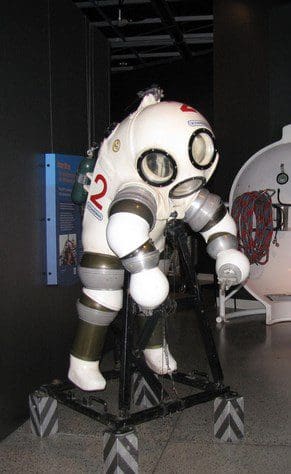
Inside an Exosuit

Danik Forsman, a scientific and commercial diver shares his rare experience inside a state-of-the-art Exosuit ADS (Atmospheric Diving System). Mr. Forsman started out his career with Woods Hole Oceanographic Institution as a temporary employee and became a full time assistant to dive safety officer Edward O’Brien a couple of years ago.

Woods Hole Oceanographic Institution is a company specializing in the recovery of artifacts from ancient shipwrecks. The suit was bought by J.F. White Contracting Company for maintenance and construction purposes and lent the suit to WHOI for a specific assignment in Greece. Mr Forsman got the chance to try out the suit after the team finished the assignment and he describes the experience as one of a kind. He said “I was hoping I could get into the suit. I knew I would be the last in line, and to do it was a great experience.”

Regular diving gears require divers to halt at 100 feet for almost 10 minutes so that the body can adjust to the pressure. Deeper and lengthy dives also require decompression chambers upon emerging from the water to prevent bends and nitrogen accumulation in the blood. The Exosuit allows divers to go between 300 to a thousand feet underwater which is far deeper compared to the depth regular diving suits can reach. Decompression is also not necessary with each dive. According to Mr. Forsman, being inside the suit perhaps might be comparable to how an astronaut space walks but in his case, hundreds of feet in the abyss. 

“I was so amped and ready with all this technology, adrenaline pumping. You have to be calm and collected because the armor is bulky.” he added.

The suit has a seat in the middle and condensation occurs inside because of breathing. The suit arms only have two-pronged claws that is used for gripping objects. It has a built-in oxygen tank and controls located in the helmet. A fibre optic umbilical cable connects it to the surface. It can be bent at the knees and the foot thrusters allow the diver to move at various directions.

The suit was manufactured by Nuytco Research Ltd, in British Columbia. Divers using it has approximately 50 hour life support and emergency batteries.

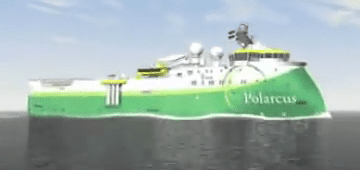
Polarcus Inks Another West Africa Deal

Dubai based, Polarcus has signed a Letter of Intent (LOI) with an undisclosed client for a 3D marine seismic acquisition project offshore West Africa.

The project, subject to the execution of a service contract, will start in Q4 2014 and is expected to run for approximately 2 months.

Previous to this LOI, the company has also announced a 3D marine seismic acquisition project offshore West Africa, subject to the execution of a service contract, that will begin in Q4 2014 and is expected to run for approximately 3.5 months.

Polarcus operates a fleet of 3D seismic vessels that conduct seismic surveys and multi-client projects worldwide and employs over 500 professionals.

Source

Bumi Armada’s CEO Eyes FPSO Opportunities in India

0

Malaysia-listed Bumi Armada Berhad’s CEO Hassan Basma sees potential demand for as many as 30 floating production, storage and offloading (FPSO) vessels off India, as state-owned Oil and Natural Gas Corporation Ltd. (ONGC) ramps up cluster developments of oil and gas fields. Hassan described India as “a good address” for FPSO contractors with numerous “clusters of small fields” in ONGC-operated offshore blocks waiting to be commercialized.

PROMISING FPSO MARKET IN INDIA

Subject to regulatory approvals, the Bumi Armada CEO expects about 30 FPSOs will be required off India in the next five years. Without identifying specific field locations, he flagged three FPSO requirements already on the horizon – one for gas and condensate production and two others separately for a gas development and an oil project.  

ONGC is understood to have already reached out to Bumi Armada and other FPSO contractors for at least one production floater to be tendered out soon under the phased development of field clusters in Block KG-DWN-98/2 in the Krishna Godavari basin off India’s east coast.

Block KG-DWN-98/2 is home to 11 discoveries including eight gas fields – A1, D-1, E-1, G-4, N-1, R-1, U1 and W1 – and oil finds, G-2, Kanakadurga, Padmawati and G4-6. A field development plan (FDP) has been submitted for a phased development aiming at first gas in 2018 followed by oil in 2019, ONGC officials were reported as saying in Indian press.

Regulatory greenlight for the FDP is projected for 2015.

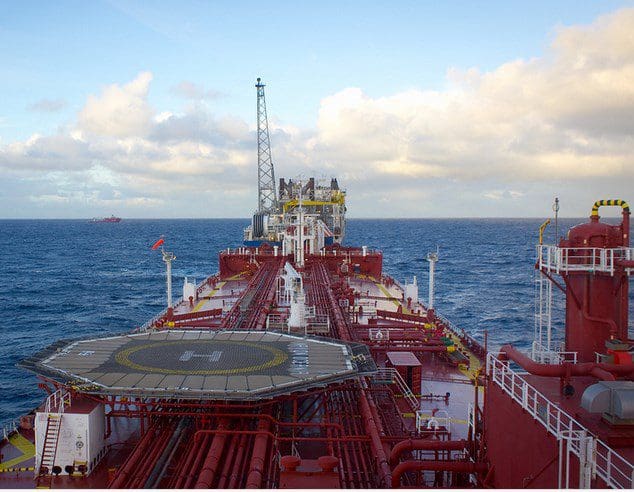
The FPSOs in the pipeline for India’s offshore developments will likely be similar in scale to the Armada Sterling II FPSO due to sail away within weeks from Singapore’s Keppel Shipyard for the Cluster-7 oil and gas project off India’s west coast, according to Hassan. The newly converted Armada Sterling II FPSO, which is equipped to produce 26,500 barrels of oil per day (bopd) and store up to 510,000 barrels of crude, also boasts 60 million cubic feet per day of gas compression capacity.

Most of the gas extracted will be exported to shore with minimal volumes set aside for re-injection, according to Hassan.Armada Sterling II is the first FPSO to be installed with an internal turret fully engineered in-house at Bumi Armada. The delivery of the internal turret put Bumi Armada on par in terms of technical capabilities with the top three FPSO contractors in the world, Modec International Inc, SBM Offshore NV and BW Offshore, Hassan said.

Set to go on a nine-year fixed term lease plus options for seven annual extensions at the Cluster 7 field development comprising the B-192, B-45 and WO-24 discoveries, Armada Sterling II is Bumi Armada’s second FPSO off India. Its first FPSO off India, Armada Sterling I, is now producing 30,000 barrels per day of crude and ramping up to 40,000 bopd of output at ONGC-operated D-1 field development, according to SP Armada, a joint venture between Bumi Armada and Indian conglomerate, Shapoorji Pallonji Group. 

Bumi Armada has in turn, returned to Keppel Shipyard Limited for the conversion of the two FPSOs.

The conversion of Armada Sterling II called for fabrication of over 6,000 tons of topsides modules, which were partially carried out at Dyna-Mac and Asia Offshore in Singapore.

Bumi Armada has recently contracted Keppel to convert two further FPSOs for Eni S.p.A.’s Block 15/06 East Hub and Enquest plc’s Kraken projects off Angola and the United Kingdom, respectively.

BUMI ARMANDA’S BID PIPELINE

Bumi Armada has several FPSO contracts in its bid pipeline that could be potentially awarded prior to the scheduled deliveries of the East Hub and Kraken FPSOs in 2016.

The Malaysian FPSO contractor is reported to be among the final shortlisted bidders for two floaters destined for Eni’s Etan and Tullow Oil plc’s Kudu FPSOs off Nigeria and Namibia. While decision-making could be slow due to an election in Nigeria, project watchers expect Tullow Oil to make a call soon on the Kudu FPSO contract.

Bumi Armada has a third bid lined up against Modec International Inc. and Yinson Holdings Berhad for Eni’s Sankofa-Gye Nyame FPSO off Ghana.

With greenfield developments slowing down as oil companies reduce exploration and production expenses, Hassan expressed optimism that Brazil will buck the trend and press on as state-owned Petrobras has announced an ambitious target to more than double oil production to 5 million barrels per day by 2023.  

Bumi Armada was edged out by a small margin in a joint bid with Brazil’s UTC Engenharia S.A. for Petroleos Brasileiro S.A.’ Libra FPSO contract against an Odebrecht Oil & Gas-Teekay Offshore Partners L.P. consortium, but Hassan hinted the firm will submit competitive bids in upcoming Brazilian FPSO contracts.

CHALLENGE OF LOCAL CONTENT

As in Indonesia and Mexico, international FPSO contractors are obliged by local content or cabotage requirements to team up with domestic players to qualify for bid rounds in Brazil. Hassan warned international FPSO contractors risk losing their relevance in the next 10 to 15 years, having been gradually squeezed out by domestic players in countries with increasing stringent local content policies.

“You will have to compete with the locals: the Mexicans will control Mexico and Brazilians, Brazil,” he elaborated.

On the domestic front, Bumi Armada had already been contending with at least four other what Hassan termed as “cabotage players”, M3nergy Berhad, TH Heavy Industries Berhad, Yinson Holdings Berhad and MISC Berhad.  The only way to compete with such “cabotage players” in the longer run is to develop “integrated technology and move up the value chain”, Hassan opined.

Besides developing in-house engineering capabilities for turret mooring systems, Bumi Armada has also earmarked $61.4 million (MYR 200 million) from a recent rights issue on the Malaysian bourse to acquire two new subsea umbilicals, risers and flowlines (SURF) vessels.  

“We have offered and are willing to offer SURF installation services,” Hassan said.

Bumi Armada has already carried out SURF installation associated with the provision of a leased FPSO for Hoang Long Joint Operating Company’s Te Giac Trang oilfield development as well as the Armada Sterling FPSO supplied to ONGC.

The integrated oilfield services provider is also set to install the SURF package for the Madura BD FPSO recently awarded by Husky-CNOOC Madura Limited. Bumi Armada secured a letter of intent for a fixed term charter of 10-years plus options of five annual extensions from HCML for the supply of a leased FPSO.

Source

INTECSEA and OPC Team Up on R2M Concept

0

OPC has formed an alliance with INTECSEA and signed an MOU that brings together the subsurface expertise of OPC and the subsea facilities, pipeline and topside engineering expertise of INTECSEA/Worley Parsons Group to offer a fully integrated Reservoir to Market (R2M) concept.

The R2M model aims to remove the communication barriers that often exist between the subsurface and subsea areas and will improve concept selection at a pre-FEED field development stage through the sharing of knowledge and respective expertise.

The alliance and MOU were announced at the INTECSEA Field Development Open House event at the Society of Chemistry, London on 2nd October 2014.

Riley Smith, Business Development Manager for OPC, said: “The purpose of the alliance with INTECSEA is to develop an integrated reservoir to market (R2M) model aimed at improving concept selection at a pre-FEED field development stage through the sharing of knowledge and respective expertise. The integrated approach allows us to incorporate all reservoir uncertainties and subsurface data allowing us to bring into consideration the full range of development options.”

Source

Woodside Posts 46.4% Increase in Sales Revenue to $1.95B for 3Q 2014

0

Australia’s Woodside Petroleum Ltd. posted a 46.4 percent increase in sales revenue to $1.95 billion for the third quarter of 2014 (3Q 2014) compared to the previous year, with the gain attributed to additional oil volumes sold primarily from the Vincent oil field and higher realized prices for Pluto liquefied natural gas (LNG) volumes sold during the period.

Production volumes rose 15.1 percent to 25.2 million barrels of oil equivalent (MMboe) in 3Q 2014, up from 21.9 MMboe a year ago, while sales volumes climbed 17.2 percent to 24.5 MMboe from 20.9 MMboe, with the increase predominantly due to higher LNG reliability at the North West Shelf (NWS) and Pluto gas fields and the restart of the Vincent FPSO in late 2013.

On development projects, Woodside has concluded a key basis of design documentation for the proposed Browse floating LNG (FLNG) Development offshore Western Australia. The firm is progressing engineering and non-technical activities to be in a position to make a recommendation on entering front-end engineering and design late in 2014. In NWS, Woodside indicated that it is continuing key design activities for the Persephone Development ahead of a final investment decision scheduled for 2H 2014.

The project, which is the next major gas development for the NWS Project, involves a subsea tieback to the North Rankin Complex. Meanwhile, subsea installation and topside modifications is still in progress at the Greater Western Flank Phase 1 project, with subsea installation expected to be completed by 4Q 2014 and project on track for an early 2016 start-up. 

Source

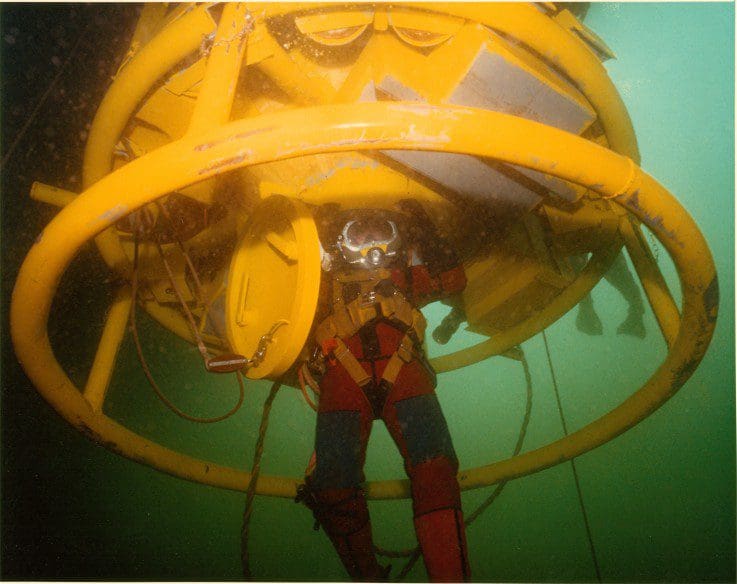
Diving Bell Smashes the Bottom

We came across this blog shared on our Facebook page by Francis Hermans. We find the story interesting and would like to re-share it. In the past, we heard a lot of stories, read news and watch videos of some dangerous activities in Commercial Diving. If ever you want to know what happened with the Commercial Diver in the story, take time to read and feel free to give your comments about it.

Here you go…

In 1976 I signed a contract with COMEX HOULDER to be a sat diver on the jet barge CREEK, which belonged to the Santa Fe Company.

The work season started in May and until October the barge worked in the North Sea to dig many miles of pipelines.

I had started my offshore freelance diver career one year earlier and had  already worked with British (and Scottish) on the L.B.27, but now I was a bit more anxious because I was going to make a saturation with them and therefore was afraid to not always understand their terrific accent.

The first days in sat were very difficult and more than once I had to ask my mates to write on a piece of paper what they wanted to tell me.

But fortunately for me it didn’t take too long to get used to their Donald Duck voices.

At the same time, I suppose that my English was more pure than theirs, because more than once, the chamber operator came to me to ask what the other guys in the chamber wanted.

Since the beginning of the working season, I was making a team with Tiny Gulliver.

He was at least twice as strong as me and the pair of us looked a bit like Stan Laurel (me) and Oliver Hardy (him).Nevertheless, we made a perfect team and I liked working with him.

As on every jet barge, our main task was to install the huge claw over the pipe and then make an inspection dive of the trench and the sledge about every six hours.

In fact a relatively well paid, easy job with a lot of boring moments between each dives.

The only problem when you work on a jet barge is, if we except the dive made to install the claw, that most of the time, the inspection dives are made with zero visibility.

This is due to the fact that the water pumps and the airlifts of the jet machine are stopped at the very last moment, just a few seconds before the diver leaves the bell.

On the 19 of august 1976 the sea was really bad on Ninian field but nevertheless the barge continued to pull the jet sledge over the pipe and it was time for Tiny and me to dive for the inspection of the trench.

It was my turn to dive so Tiny went into the bell to make the checklist.

Once completed I joined him in the bell and we were ready to be send down.

During the translation of the bell to the stern of the barge we could see through the portholes that the sea was quite raging and we could feel a big swell.

The entry in the water was a bit rough but after a few meters the bell stabilised and we could now be lowered to the bottom without being shaken like a plum – tree.

As usual the bellman announced the depths every 10 meters.

“60 meters»

“90 meters»

“120 meters»

“145 meters»

“145 meters” replied the supervisor, “we lower the bell slowly now.”

At 150 meters the bellman announced “door open” and as usual, we decided to lower the bell 3 to 4 meters more so as to be closer to the seabed.

We were now stabilized at 154 m and the supervisor told me that I could get equipped.

Tiny fixed the bail out, the hot water and finally the KMB 16 and I was now ready to go.

Me: Surface how do you read me?

Surf: Loud and clear Francis. Ok everything is stopped, you can leave the bell.

Me: Ok ready to leave the bell.

So I straightened my arms on the hub to ease the passage of the 1er stage reducer and gently let myself go through it, when suddenly Baouhhmm !!!  The bell smashed onto the bottom and I was there, standing on the seabed in the middle of the bell.

–        Me: Surface up at the bell quickly.

–        Surf: say again.

–        Me: Up Up at the bell quickly we hit the bottom.

–        Surf: Roger, up at the bell.

Baouhhmm !!!, with the swell, the bell hit the bottom again with violence. I was still in the middle of the hub, trying to find a grip somewhere to avoid passing under the bell what would probably have been fatal for me.

Luckily for me, Tiny also had understood what was happening and this time before the bell hit the bottom for the third time he grasped the top of my helmet and pulled me completely out of the water.

Wouah! My neck I screamed but at least I was now save in the bell.

The bell smashed the bottom once more, but then we heard the supervisor shout at us that he was coming up at the bell for 5 meters.

When everything was stabilised, the supervisor asked me if I was OK and able to continue the dive or preferred to abort it.

Although this dive could have been my last one if I had started to dive a few seconds earlier I preferred to continue immediately before my mind realised the consequences of the situation.

So again, I slipped in the water and search for the guide line which was to bring me to the sledge.

In fact what had happened? It seems that the pneumo installed on the jet was a bit faulty and therefore had given a false depth reading.

But the other cause of the near miss was that we dived with a very big swell, which made the bell have vertical amplitude of about 5 meters.

Luckily for us the ballast weight release system of the bell had been modified some time before and the fact that we hit the bottom several time didn’t drop them off accidentally as it happened some years before to another stranded bell.

Conclusion:

–        If you have to make a bell (or wet bell) dive in zero visibility always measure the distance between the hub and the seabed with a measuring tape or rope before leaving it to be sure that the bell is not too close of the bottom.


Papy One