Home Blog Page 421

Fugro’s Engineers Recognised with Two Awards

0

Two members of Fugro’s geoconsultancy team have won prestigious international awards. The one was recently presented in London, UK and the second in Regina, Canada.

The first to receive good news was Dr Kokkuen Lee, Principal Engineer at Fugro Advanced Geomechanics (Fugro AG) who received the David Hislop Award from the Institution of Civil Engineers (ICE). His paper “Bearing capacity on sand overlying clay soils,” published in ‘Géotechnique’ and co-authored with Winthrop Professor Mark J. Cassidy and Winthrop ProfessorMark F. Randolph, both of the Centre for Offshore Foundation Systems (COFS) at the University of Western Australia (UWA), was selected by the ICE award panel as the best offshore engineering paper published in their suite of journals in 2013. Kokkuen attended a ceremony at the ICE in London on 17th October to accept the award.

Dr Zack Westgate, Consultant Engineer at Fugro GeoConsulting Inc. in Houston, USA (formerly of Fugro AG) was the next to receive good news. He and his co-authors from COFS at UWA, Winthrop Professor Mark F. Randolph and Winthrop Professor Dave J. White, Shell EMI Chair in Offshore Engineering, won the 2014 R.M. Quigley Award for the best paper published in the Canadian Geotechnical Journal in 2013. The award was for their paper “Modelling the embedment process during offshore pipe-laying on fine-grained soils,” which represents the culmination of Westgate’s PhD research at COFS. Westgate travelled to Regina in late September to accept the award at the Canadian Geotechnical Society’s GeoRegina conference. Congratulations are also due to Mark Randolph and Professor Susie Gourvenec of COFS, both of whom consult through Fugro AG, who co-authored the runner up paper.

“These are significant achievements by two very talented engineers. We congratulate Kokkuen, Zack and their co-authors,” said Dr Phil Watson, Director at Fugro AG and Fugro’s Global Service Line Manager, GeoConsulting.

Source

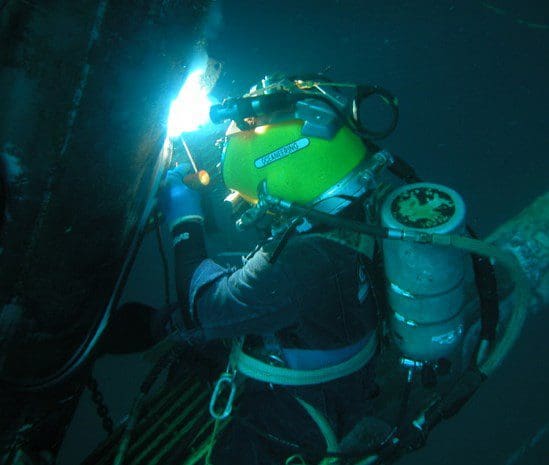
Taking the Plunge A Guide to Starting an Underwater Welding Career

0

A Special Report from the American Welding Society

CryoGas International examines the many ways the industrial gas industry works with water. The demand for highly sophisticated underwater procedures and technologies is increasing, driven by deep sea oil and gas development and by marine infrastructure development and repair around the world. In this article the American Welding Society (AWS) looks at careers in underwater welding.

For prospective underwater welder-divers, the American Welding Society Subcommittee on Underwater Welding provides answers for nine commonly asked questions in “Taking the Plunge: A Guide to Starting an Underwater Welding Career,” (copyright ©AWS). This article summarizes that report.

This article was prepared by the American Welding Society’s D3B Subcommittee on Underwater Welding.

  1. What skills are prerequisite to entering the field of underwater welding?
    • A welder-diver is a certified welder and commercial diver, capable of performing tasks associated with commercial sub sea work, weld set up and preparation, and who has the ability to weld in accordance with the AWS D3.6M, Underwater Welding Code, wet or dry, and perform other weld-related activities.
  2. I am a certified surface welder; what other training do I need to qualify as a welder-diver?
    • The majority of work performed by an average welder-diver involves executing the tasks that lead up to and follow the actual welding activities. In most cases, a welder-diver must possess both certified welder skills and commercial diving skills. 

      If a welder has no prior commercial diving experience, attending a recognized commercial diving school is required. Expect to begin your career as a diver tender (apprentice diver). The average time that this phase takes for most candidates is two years. Most diving contractors will require that you achieve sufficient skill in wet and/or dry underwater welding to pass qualification tests and be certified in accordance with the requirements of AWS D3.6M, Underwater Welding Code.

  3. I am already a certified diver; what other training do I need to qualify as a welder-diver?
    • We recommend the specifications described in AWS D3.6M as a reference for weld procedure and welder qualification. If you are already certified as a “commercial diver,” contact companies that offer underwater welding services and train to their requirements. Underwater welding is a skill you have to master once you obtain the basic commercial diving skills. 

      If you are certified as a “scuba diver” (e.g., NAUI, PADI, etc.), please note that sport dive training does not include the safe use of commercial diving equipment, offshore commercial work environment/safety, and other education as recommended by the Association of Diving Contractors Consensus Standards for Commercial Diving Operations.

  4. Where can I obtain the further training I need to get started in this field?
  5. What are the age limitations of a welder-diver?
    • There is no age restriction on commercial welder-divers, but it is recommended and generally required that all commercial divers pass an annual dive physical.
  6. What is the availability of work for an entry-level welder-diver?
    • There are a number of diving procedures that serve the various types of underwater industrial requirements, each of which have different underwater welding needs. Like many professions, work availability is subject to supply and demand, the economics of a given industry, whether you are free to relocate outside your place of residence (including overseas), what other related skills you have in addition to diving and welding, etc.
  7. What salary can I expect to make as a welder-diver?
    • Salaries for welder-divers cover a wide range, from $100,000 to $200,000 per year. The majority of welder-divers are paid on a project-by-project basis and salaries are subject to the same variables as work availability. In addition, other factors such as depth, dive method, and diving environment affect pay rates.
  8. What other skills are recommended to supplement my qualifications as a welder-diver?
    • Welder-diver qualifications vary from project to project. Possessing the skills that are common to underwater welding operations, in addition to welding and diving, are recommended. These skills include: underwater cutting; fitting and rigging; inspection and nondestructive testing; drafting; and underwater photography. The most desirable underwater welder-divers are qualified to assist the diving contractor in pre-job planning; be able to cut, clean, rig, install, and fit up the sections they will weld; and work with personnel responsible for inspecting the completed welds. Formal training is recommended and maintaining qualifications is important.
  9. What future career opportunities are there for an experienced welder-diver?
    • There are a number of career opportunities for experienced welder-divers. Industry has and will continue to demand higher quality standards for underwater welds and more certification of underwater welding systems and personnel. These demands will challenge the underwater welding community to meet more complex technical specifications, safety standards, welding criteria, inspection methods, environmental factors, and other considerations. Many welder-divers go on to become engineers, instructors, and diving operation supervisors, and superintendents fill management positions, qualify as AWS Certified Welding Inspectors (CWI), and serve as consultants for underwater welding operations and other related fields.

Please note: the answers to the questions presented in the article are not intended as recommended practice or as endorsement of any definitive means of pursuing underwater welding as an occupation.

For more information on careers in welding, or to learn more about the new D3.6M:2010, Underwater Welding Code, visit the AWS website at www.aws.org or call 305-443-9353.

Source

Israel Must Improve ‘Erratic and Unclear’ Oil, Gas Regulations

0

The state of Israel still has to do a lot of work in order to improve “erratic and unclear” regulations if it is to produce stable conditions for the oil and gas industry to flourish. This was the key message that came out of Wednesday’s Universal Oil & Gas 2014 conference, which is being held at the country’s Dead Sea resort this week.

Speaking on the subject of environmental regulations, Dr. Ruth Dagan – head of law firm Herzog Fox & Neeman’s environment and climate change practice – said:

“The situation is very unstable. The regulations are very erratic and unclear at this point, and there is a lot of work to be done to clarify this.”

Dagan explained that until 2011 Israel had relied on a petroleum law that dated from 1952 and that the regulations that were established as a result of this law were “silent” on anything related to environmental issues.

“All we had were some very general conditions that were set in leases and licenses. That was pretty much it. There was actually no regulatory oversight of any kind of environmental aspects of these activities,” Dagan said.

“Fast forward to 2014 and we have a completely different situation. It’s not much clearer but there is quite a lot more going on. What we have is a mix and array of regulators – with everyone wanting to have a say about what’s going on in terms of environmental aspects of oil and gas activities, both onshore and offshore.

“There isn’t enough order in this industry in terms of the regulator and not enough oversight of any kind of risk from these activities to the environment.”

Dagan also noted that there is a lot of interest in Israel from the general public and non-governmental organizations (NGOs).

“What we’ve been seeing is quite a few petitions to the Israeli High Court of Justice on issues relating to location of [onshore] reception sites for natural gas and issues relating to oil shale activities onshore. There are a lot of demonstrations going on relating to these issues and public support in general is very strong for protection of the environment in anything concerning oil and gas activities,” she said.

“There is no doubt that this state of mind affects the way regulators choose to move forward on various regulatory issues.”

Dagan conceded that the oil and gas industry had to take into account that the regulators had been “thrown into this situation” after the discovery of large gas reserves in the Tamar and Leviathan fields in the eastern Mediterranean in 2009 and 2010 respectively.

“In fact, in early 2011 they realized that they needed to regulate the environment aspects of these activities and everything began very swiftly, so they too had three-and-a-half years to come to this point – which is a very short time to create a proper, stable and clear regulatory system for such a complex issue. They have been learning as they go along. The technical staff have been learning as they go along – the inspectors and so on.”

Dagan called for the government to simplify and consolidate the regulations and aim to remove overlaps and contradictions. “These exist a lot right now,” she said, explaining that there were situations in which as many as five separate public participation processes were running concurrently to decide how to move forward with a particular project.

“Actually, they need to take place one after the other and not simultaneously,” she said. “These can cause major delays and they make no sense because they just repeat each other.”

As well as calling for a reduction in the time taken for regulators to make decisions about oil and gas projects, Dagan said that oil and gas firms looking to enter Israel must be prepared for “serious dialogue” with regulators about the views of the public and NGOs. “They are a very, very important actor and can significantly influence the regulator’s state of mind,” she said.

Also speaking at UOG 2014 on regulatory matters was Gal Herschkovich, the former Director of Budgets at the Israeli Ministry of Finance.

Herschkovich accepted that the government and regulators had been surprised after the discovery of large amounts of gas offshore Israel late in the last decade.

“We are not ashamed to say: ‘OK. We made mistakes’,” he said. “It took us time to learn from the mistakes but at the end of the day you need to regulate this market because you need a reasonable tax system. Nobody thought that there would be gas in Israel, so no taxation system on the gas sector existed.”

However, Herschkovich insisted that today “there are not too many things that need to be done in order to finalize the whole regulation picture”.

Source

Gazprom, Petrovietnam Discuss Oil and Gas Cooperation

0

The Gazprom headquarters hosted a working meeting between Alexey Miller, Chairman of the Gazprom Management Committee and Nguyen Xuan Son, Chairman of the PetroVietnam Oil and Gas Group (PVN) Board of Directors.

The parties addressed the future cooperation in the oil and gas sector. In particular, they touched upon the joint actions offshore Vietnam as well as within gas production projects in Russia. It was pointed out that the jointly developed Moc Tinh and Hai Thach fields located on the Vietnamese shelf would reach their full capacity by 2016 and would produce nearly two billion cubic meters of gas per year.

The meeting participants also discussed the prospects for cooperation in LNG supply from Gazprom’s portfolio to Vietnam as well as boosting the partnership in the NGV sector in the Republic.

Special attention was given to the cooperation in the oil refining and supply businesses. In particular, the parties pointed out the positive dynamics of the talks on Gazprom’s possible entry into the project for upgrading the Dung Quat oil refinery in Vietnam.

Background

Gazprom and PetroVietnam Oil and Gas Group entered into the Agreement on Strategic Partnership in 2009. In line with the document, the parties will continue jointly operating in Vietnam’s offshore blocks and studying further prospects for cooperation in vacant licensed blocks of the Republic. The Agreement also contemplates a pro-active interaction between Gazprom and PetroVietnam in oil and gas projects across Russia, Vietnam and third countries within Gazpromviet.

Vietgazprom, joint operating company of Gazprom and PetroVietnam, is engaged in exploration activities in blocks No. 112, 129, 130, 131, 132 located in the continental shelf of Vietnam. In October 2013 Gazprom and PetroVietnam launched commercial gas production from the Moc Tinh and Hai Thach fields of licensed blocks 05.2 and 05.3 offshore Vietnam.

In October 2013 Gazprom and PetroVietnam signed the Agreement on the basic principles of the joint venture activities under a project for natural gas use as a vehicle fuel in the Republic of Vietnam. The document stipulates promoting the cooperation between the companies in converting public transport in Ho Chi Minh City to natural gas.

Dung Quat, Vietnam’s only oil refinery, has an output of 6.5 million tons per year.

Source

Bermuda Subsea, Carimin Team Up

0

Carimin Engineering has on November 19, 2014 entered into a collaboration agreement (COA) with Bermuda Subsea.

Carimin Engineering has experience and expertise on HUC, topside facilities maintenance of oil and gas platforms while Bermuda Subsea has been predominantly focusing in underwater services for Remotely Operated Vehicle (ROV) and Diving Services.

According to the release, Carimin Engineering and Bermuda Subsea want to combine their resources and expertise in order to pursue selective opportunities involving HUC, topside and subsea services which are often executed simultaneously in the Malaysian market subject to the terms of the COA.

Bermuda Subsea is currently bidding for the provision of underwater inspection, repair and maintenance services projects.

Should Bermuda Subsea be successful in the bids, it will consider support from Carimin Engineering to provide the project financing support in terms of marine assets and equipment such as DP2 Diving Support Vessel (DP2DSV), Saturation & Air Diving Services, Light Work Class ROV and other underwater tooling/services. For the avoidance of doubt, Carimin Engineering is not obliged to provide project financing.

Both companies will where possible continue to collaborate in joint tender bidding activities; predominantly Bermuda Subsea will continue to support Carimin Engineering to complement the underwater services requirements and vice-versa Carimin Engineering to get support from Bermuda Subsea for underwater services requirements within HUC projects.

Carimin Engineering on best effort basis shall ensure the offshore support vessels acquired to support HUC projects will be upgraded/ enhanced to qualify for underwater services requirements as much as possible. Both parties will share resources on the DP2 vessel technical specifications during the design stages to ensure the capability of the support vessel will cover both HUC, topside and subsea services requirements.

The joint collaboration on the design stages shall transform Carimin Engineering vessel into a DP2 Multi-Purpose Support Vessel which will be sufficient to support HUC and other topside requirements as well as for underwater services requirements.

The COA has taken effect on 19 November 2014 and will continue to be valid and binding until the expiry of a period of one year. The companies also agreed that the COA can be terminated or extended upon mutual agreement.

Source

Apache to Sell $1.4B in Non-Core US Assets

0

Apache Corp. will sell non-core oil and gas assets in southern Louisiana and the Anadarko Basin in two transactions valued at approximately $1.4 billion as the company focuses on growing its North American onshore liquids production. The Houston-based company will sell its working interest in approximately 90,000 net acres of mature fields in southern Louisiana. Production from these fields, which have high decline rates and short reserve lives, produced around 21,000 barrels of oil equivalent per day – of which 62 percent was natural gas and natural gas liquids (NGL) – net to Apache during this year’s third quarter.

Apache will retain its 275,000 mineral acres in southern Louisiana. In the Anadarko Basin, Apache will sell approximately 115,000 net acres in part of its Stiles Ranch field in Wheeler County, Texas, and in its Mocane-Laverne and Verden fields in western Oklahoma. Net production from these properties averaged 26,000 boepd in the third quarter of 2014; 83 percent of this production was gas and NGLs. The transactions, which have an effective date of Oct. 1, are expected to close in this year’s fourth quarter.

Apache now forecasts 2015 North American onshore liquids growth of 12 to 16 percent following the sales, and 2015 North American onshore production growth of 8 to 12 percent, assuming a preliminary North America onshore capital budget of around $4 billion. These rates are in line with Apache’s five-year compounded annual production growth outlook for onshore North America liquids. Apache will use the sale proceeds to fund its 2014 leasehold acquisition program, which has added significant acreage within Apache’s primary focus areas, said Apache Chairman, Chief Executive Officer and President G. Steven Farris, in a Nov. 20 press statement. This year, Apache has added more than 300,000 acres of leasehold in key growth plays, and has substantially increased its Eagle Ford and Canyon Lime drilling inventories in Texas to over 3,000 and 800 locations respectively.

“We are excited about our 2015 drilling plan, which will focus on projects that generate high rates of return and competitive growth, even in today’s lower oil price environment,” Farris said. The asset sales announced Thursday are the latest in a series of sales the company is conducting as part of its focus on North American shale. In September, Apache said it was looking to sell some assets in western Canada as it sought to narrow its portfolio of international assets.

In July, it said it planned to sell interests in two liquefied natural gas projects in Canada and Australia as part of its focus on developing North American shale fields. In May, Apache said it would sell interests in two development projects and 11 deepwater exploration blocks in the Gulf of Mexico as part of its focus on North America shale. In February, the company said it would sell its operations in Argentina for $800 million in cash and $52 million in bank debt.

Source

MacArtney in Longest Subsea Water Pipeline Project

0

MacArtney has provided the underwater connectivity solutions for various instrumentation systems mounted on the transnational water pipeline between Turkey and Cyprus, currently under construction.

MacArtney has supplied SubConn® connectors to interconnect 145 cables of approximately 1000 metres length which will be attached to the water pipe.

At 1000 metre intervals, MacArtney have built special interconnect ‘T’ assemblies to interface the ends of the cable and to attach sensors for measuring water pressure and other parameters.

In addition to the cable interconnects and assemblies, MacArtney also provided 50 water blocked SubConn® penetrators moulded to pipe-attached transponders intended to warn submarines of the presence of the pipeline.

In the first such project in the world, Turkey will soon be able to pump water directly to northern Cyprus with the help of an 80-kilometre water pipe running under the Mediterranean Sea at a depth of up to 280 metres.

The pipe will be buried for the first 3 km, lay on the bottom for the next 5 km, be suspended offshore for 65 km, lay on the Cyprus-side seafloor for 3.5 km and then be buried again for 1.6 km.

Symbolically named ‘Baris Su’ (Peace Water), the project will bring 75 billion cubic metres of fresh water a year from the Turkish river of Anamur to Cyprus. About half of the water will be used for agricultural development and the other half as drinking water.

Source

Opus in Expansive Mood on First Drillship Delivery

0

With the delivery of its first deepwater drillship on the horizon, Opus Offshore’s chief executive Vern Westerhout said the Singapore-based start-up is ready to embark on further expansion to at least double its fleet to eight new drilling floaters by 2019.

SPOTL“My vision is to own and operate eight to 12 new drilling floaters capable of operating in up to 7,500 feet of water,” Westerhout said.

Opus has invested an additional $20 million mainly on extra risers to high-grade the rated water depth of its first drilling floater, Tiger-1 (DW drillship), to 5,000 feet, up from 3,000 feet.

The high-grading of Tiger-1 is in line with the decision of Opus management to focus on the deepwater belt, where “vast majority of drilling activity” is taking place, according to Vice President of Technical David Smallwood.

OPUS KEEN ON ACQUIRING ORION’S SEMISUBMERSIBLES

Opus will be eyeing the acquisition of up to four semisubmersible drilling units of which China’s equipment manufacturer Honghua Group Ltd. was commissioned to build for U.S.-based Orion Engineering, Inc. in Qidong, China.

The drilling start-up has picked up the option to either purchase or bareboat charter the semisubs through a project management contract for the rig construction, Westerhout said.

The newbuild contract between Orion and Honghua is for one firm semisub (Orion Honghua Semisub TBN1) plus individual options for up to three additional semisubs. Delivery of the first semisub is targeted for the second quarter of 2017.

Among others, Opus is looking at, raising equity to fund the fleet expansion through an initial public offering, which Westerhout suggested, is being tabled for as early as late 2015.

The firm has so far counted on capital injections from the cash-rich Reignwood Group to finance the milestone payments for the construction of its four Tiger design drillships in Shanghai.

The drilling outfit reached out to the bond market in early 2014 to raise $90 million for the acquisition of Songa Offshore’s seasoned semisubmersibles, Songa Venus (mid-water semisub) and Songa Mercur (mid-water semisub).

The acquisition of the Songa semisubs also saw the management team pump in cash for a 30 percent stake in Opus, with Reignwood retaining the other 70 percent interest.

Westerhout said Venus and Mercur will serve as “forerunners to the new Tiger rigs” to allow Opus to access Songa Offshore’s operational crew and track records with the oil majors for deepwater drilling.

Rated to operate in 1,500 feet and 1,800 feet of water depths respectively, the two semisubs are fitted with “the class of work we want to do”, he added.

The two semisubs are managed by a joint venture newly set up between Songa and Opus.

The partners are exploring among others, contracts in Bohai Bay and South China Sea for Venus during three available winter windows outside of the 2015 through 2017 summer drilling program committed with Russia’s OAO Gazprom. 

Mercur is ready-stacked off Malaysia, according to Rigzone’s RigLogix database, after coming off a charter with Mubadala Petroleum. The second Songa semisub on Opus’ rig fleet is understood to have been pitched for work off Mexico and Africa.

OPUS ON LEAN TIGER DESIGN DRILLSHIPS

The acquisition of Venus and Mercur and the joint venture with Songa Offshore to operate the two semisubs lay the groundwork for marketing the four Tiger design drillships scheduled for delivery from the first quarter of 2015 through the first quarter of 2017.  

Smallwood describes the Tiger design drillships as a cross between a “reduced specification ultra deepwater drilling unit” and a “high specification mid-water drilling floater”.

Unlike most other newbuild rig projects, Opus has decided from the start to “put things we need instead of what we want” into the Tiger drillships.

Such “pathological focus on specifications” contributes to a decision to go for a 1,000 ton derrick against the average 1,250-ton on ultra deepwater drilling units currently being built in South Korea.

Opus also shaved off $150 million by going for a moored, non-dynamic positioning drilling unit in Tiger-1, according to Smallwood.

By taking full control of the specifications without any third party influence, Westerhout said the newbuild cost for Tiger-1 was controlled at $268 million, just within the $270 million budget.

The lower capex on Tiger-1 translates to a lower break-even point easily $200,000 per day off that of a sixth-generation ultra deepwater drilling unit, Smallwood said.

Smallwood believes the competitiveness of Tiger-1 drillship will be further bolstered under an environment of sub-$100 a barrel oil prices.

With oil trading at around $80 a barrel, even the supermajors “had to relook at what it costs to deliver the wells”, he added.

TIGER DRILLSHIPS MARKETED FOR WORK GLOBALLY

The core design brief for the Tiger drillship was based on operations in the Andaman Sea.

Field operators including PTTEP have struggled to muster sufficient drilling activity to justify hiring multiple drilling units to drill in near-shore to deep-water reservoirs off Thailand and Myanmar.

Opus aims to fill the gap by providing “a single drilling solution” for non-DP drilling across a wide range of water depths in the remote Andaman Sea.

The Tiger drillships are particularly well-suited for PTTEP-operated Block M-11 off Myanmar, according to Westerhout.

In absence of any immediate well requirements off Myanmar, however, Opus is evaluating five possible “options” spanning from one to five years in duration, for Tiger-1’s maiden charter.

The five options comprising mostly exploration drilling requirements, include a possible term charter with Petroliam Nasional Berhad (Petronas) off Sabah or Sarawak, Malaysia.

Opus has a standing memorandum of understanding with PTTEP, although the Thai state-owned field operator does not have any immediate drilling campaigns suited for the Tiger drillships.

Smallwood flags India as an attractive market particularly for the first two Tiger rigs. India offers opportunities for 3 to 5 year charters, providing stable cash flows to generate investor interest in a new start-up like Opus.

The Opus vice president of technical also views Mexico as a highly potential market, with state-owned Petroleos Mexicanos (Pemex) “looking at solutions for work in water depths well-suited for the Tiger drillships”.

The Tiger drillships will serve as an ideal bridge with the appropriate age profile for Pemex to graduate from jackup to the ultra-deepwater operating environments, he opined.

The four Tiger design drillships are built to identical specifications, translating to economies of scale that comes with repeat production.

No additional engineering was performed on Tiger-2 and this in turn shaves off 15 percent from the man-hours spent on the rig construction as compared to Tiger-1, according to Smallwood.

Tiger-1 will be fitted with a five-ram 15,000 psi blow-out preventer (BOP) supplied by Cameron and this is due to arrive at the Chinese yard in late December. The drillship will set sail for sea trial later this month. 

Smallwood said the delivery of Tiger-1, previously scheduled for late 2014, was subject to delivery of long-lead items including the BOP.

Opus has a dedicated team of about 65 engineers managing the construction of the Tiger drillships at the Shanghai Shipyard.

Source
Normand Vision Bags Delta House Gig in GoM

0

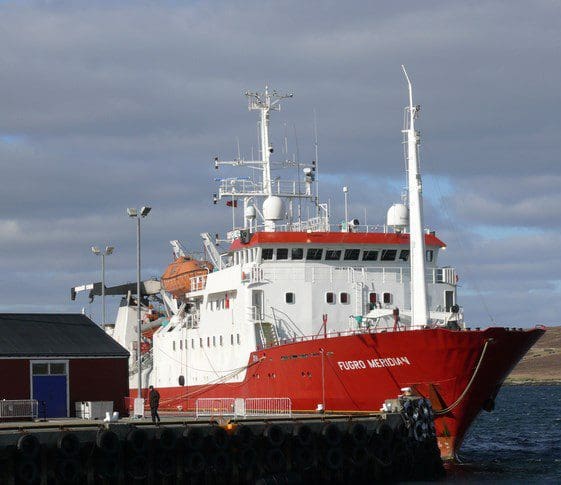
Ocean Installer has been awarded a contract for an umbilical installation project with Oceaneering for LLOG on the Delta House project.

The project is located in the Mississippi Canyon Area. This marks the construction support vessel (CSV) Normand Vision’s first SURF contract in the Gulf of Mexico (GoM).

The scope of work includes umbilical transpooling, pre-lay survey, installation of umbilical with dynamic and static sections and umbilical pull-in to the semisubmersible. Normand Vision will use the 1800te carousel on the back deck of the vessel to install the umbilical for the Son of Bluto 2 discovery in approximately 2000m water depth.

The offshore installation will kick off approximately 15th of January 2015. The project management and engineering is located in Ocean Installer’s Houston Office.

Source

Sea Trucks Scoops Another Nigeria Job

0

Sea Trucks’ Nigerian business, West African Ventures has been awarded a second installation contract for a development in Nigeria.

The new contract is further to an announcement made last week of Afren contract win for installation of 60 km pipeline, PLEM, flexible riser and spool pieces as well as transportation and installation of jacket, piles, bridges and topside, ranging between 240 t and 480 t.

The contract has been awarded by Oriental Energy Resources Limited, Afren Exploration and Production Nigeria Alpha Limited and Addax Petroleum (Nigeria Offshore) Limited, and it consists of the subsea installation work in the Okwok Field, installation of 13 km pipeline, fabrication and installation of tie-in spools as well as transportation and installation of topside modules, ranging between 475 t and 600 t.

Sea Trucks will use two of its DP3 pipelay construction vessels to undertake the work. A number of  the Group’s marine support vessels and barges will also be deployed in the project.

Source