Home Blog Page 420

IADP – A New Voice For Diving Professionals Worldwide

0

A new organisation has taken up the challenge of representing dive professionals worldwide and across all agencies. The International Association of Dive Professionals (IADP), founded by dynamic dive entrepreneur Henri Hemmerechts, is a non-profit organisation that represents the interests of all diving professionals, regardless of country or affiliation.

IADP will act as the united voice of all diving professionals, promoting the industry as a whole without fear or favour.  It also intends to provide tangible benefits for members such as insurance, legal advice and business consulting.  IADP plans to set up cross-agency quality standards for diving businesses, to create a long term ecologically-sustainable industry.

“I am delighted that IADP is finally taking shape,” says Henri Hemmerechts, who has spent several years developing the Association.  “The diving industry is so diverse, with hundreds of different agencies – some of them very small – that often don’t speak to each other.  Professionals need a cross-agency organisation to represent everyone in the industry, to share best practices and raise standards internationally – and to challenge bad businesses.  IADP will provide that.”

IADP’s first initiative will be to send a survey to all those who have expressed an interest in the organisation – over 4,000 people so far – to take the pulse of the industry.  Other surveys will follow in the coming months and years, so that IADP can keep abreast of changing circumstances and opinions within the industry.  In order to achieve this and its other aims, IADP will be running a crowd-funding campaign during 2015.

IADP will be represented at DEMA by Paul Dollar, who can be contacted at [email protected] or by phone on +1 707 495 2159.

For more information email [email protected].

Source

Fugro Lands Hornsea Geotechnical Survey

0

DONG Energy has awarded a contract for one of the largest seabed investigation campaigns in the history of the offshore wind industry to a UK company.

Worth £13 million, the contract has been won by Wallingford-based Fugro GeoConsulting, part of the Fugro Group, the integrator of geotechnical, survey, subsea and geoscience services with a global workforce of over 12,500 employees.

It covers geotechnical investigation work in preparation for Hornsea Project One, scheduled to go into operation by 2020 when it will become the world’s first gigawatt scale far from shore wind farm. The park is located 120km off the Yorkshire coast and, when completed, will be able to meet the electricity needs of around 800,000 UK homes.

Hornsea Project One is being developed by Smart Wind – a consortium of Mainstream Renewable Power and Siemens Financial Services (SFS) – and DONG Energy. Currently awaiting a development consent decision, Hornsea Project One is one of three projects for which DONG Energy was awarded Financial Investment Decision Enabling Contracts for Difference by the Government in April this year.

Benj Sykes, DONG Energy Vice President Wind Power UK and Co-Chair of the UK’s Offshore Wind Industry Council, said: “We are delighted to award this important contract to Fugro GeoConsulting who have been selected following an extremely competitive tender process.”

“DONG Energy is committed to increasing the UK supply chain content in future offshore wind farm projects and this contract represents an important step in the right direction. It will also help us make significant progress on the journey to reduce the cost of electricity produced by offshore wind farms,”he added.

Andy Kinsella, Chairman of Smart Wind, and CEO of Mainstream Renewable Power’s offshore wind business, said: “I am delighted that DONG Energy and Fugro will be taking forward this significant project. SMartWind has had a framework agreement with Fugro since 2011 and we have worked closely together through the early stage development programme in the Hornsea Zone. Our work with Fugro is part of a wider initiative aimed at ensuring that, where possible, we have partnered with UK companies through the development process to maximise local supply chain benefit.”

Daniel Deen, Senior Project Manager at Fugro GeoConsulting, said: “We are very pleased to bring our skilled team and specialist resources to this significant renewable energy project. Our geotechnical vessels will undertake seabed cone penetration testing and borehole drilling as part of the detailed site investigation. Subsequent soil testing at our laboratory facilities will also support development of the project infrastructure at this site.”

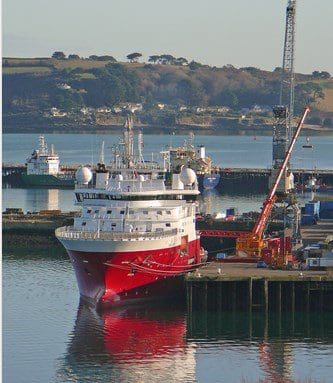
Fugro GeoConsulting plans to use two of the largest and best equipped geotechnical vessels available on the market – M/V Greatship Manisha and M/V Bucentaur – to undertake the investigation work which will begin this month.

Source

WOMEN IN COMMERCIAL DIVING: SMALL, CONFIDENT, AND SMART!

0

Construction is clearly a male-dominated career path, and underwater construction, on a large scale, may seem even more so. But actually, there are no real physical barriers separating men from women in many of the various career paths offered by commercial diving, and in some, there are advantages. Mandy Buchmeier,  who also spent five years rappelling out of helicopters fighting forest fires, is now a DIT Scuba and Inland Diving Instructor, a 2009 DIT graduate, and has worked many construction projects on inland dives. She takes time to discuss some thoughts about her work and on women in commercial diving.

LG: What kind of commercial diving have you done and what do you love about it?

Mandy: As an inland diver, my work has consisted of a little bit of everything. Hazmat, inspection, salvage and underwater construction — dry dock extensions, drilling in anchors and installing mooring systems for the Vancouver float plane terminal. I loved this aspect of my job; not knowing what my next project was going to be and being able to constantly problem solve. It’s like being an underwater MacGuyver — you are constantly dealing with problems for the first time and coming up with the best solutions. I’ve also been a Scuba diver since 2005 and have worked as a Dive Master on a yacht on the Great Barrier Reef, traveling and diving in Australia, New Zealand and Thailand.

LG: What do you have to say about the role of women in diving?

I think that many women are intimidated by the idea of working with a bunch of men, but the main real barriers to the career affecting female divers are the same as those that affect male divers — having a job with an unpredictable schedule, long hours, hard work, and time away from family.

Ultimately the biggest challenges are the ones you give yourself. Being a female there are obvious differences. As a part of a dive team you learn to pee in a bucket or by hanging out the side of a boat, get changed discreetly, and to be part of a team. If there isn’t money in the budget for your own hotel room, you share a room just like everyone else. The challenges are only as tough as you make them.

On the other hand, being a woman, we often think smarter, not harder…. I’ve been able to work alongside men moving as much weight and accomplishing jobs by thinking my way through them, unlike many of my fellow counterparts who try to muscle their way through. I think a task through, use mechanical advantage, and utilize the skills I’ve learned while working in the industry. As a diver you are constantly learning through trial and error. Being smaller can have advantages too, like fitting through tighter spaces.

However, harassment is something else that comes with working an in environment with few women and a lot of men. The biggest way to deal with that is to communicate and stop it before it’s a problem. Let them know that you are uncomfortable with a comment, gesture etc. and 9 times out of 10 they are unaware that they are being offensive, and will change their behavior. Confidence, a good work ethic and an eagerness to learn will help anyone make it in this industry. If you don’t have confidence that you can accomplish a task, you won’t be on that dive. If you want to be a diver, do it! Its an amazing career where you get to do things on a whole new level. And it’s fun!

LG: What kind of person do you think would make a good diver?

Mandy:   Someone with a good work ethic, who is positive and gets the most out of each dive or job, who is confident and a team player.  Also, if you enjoy working with your hands, problem solving and a job that is always changing, you’ll love commercial diving. Try it!

Source

Report: Bird Needs 3-Mile Buffer From Drilling

0

A government study with significant implications for the U.S. energy industry says the breeding grounds of a struggling bird species need a 3-mile or larger buffer from oil and gas drilling, wind farms and solar projects. That’s a much larger protective zone for the greater sage grouse than some states and federal agencies have adopted as the Obama administration weighs new protections for the bird. The ground-dwelling bird ranges across 11 Western states. Its population dropped sharply in recent decades due to disease, pressure from the energy industry, wildfires and other factors.

Monday’s finding from the U.S. Geological Survey comes as state and federal officials scramble to come up with conservation measures to protect the grouse ahead of a court-ordered September 2015 decision on protections. The USGS report represents a compilation of scientific studies aimed at seeing what it takes to protect the bird. It was requested by the U.S. Department of Interior’s Bureau of Land Management, the federal agency that oversees millions of acres of sage grouse habitat and also regulates the energy industry across much of the West.

It said a buffer of at least a 3.1-mile radius around sage grouse breeding sites known as leks would provide considerable protections for the bird. That radius would equal a circle around the leks covering 30 square miles. By comparison, Montana and Wyoming have adopted management plans for the bird that call for a buffer of six-tenths of a mile around leks in key sage grouse habitat.

That’s an area of less than 4 square miles. The USGS did not recommend specific management recommendations. But survey scientists said it should help the Interior Department as it crafts a conservation strategy for the birds. Carol Schuler, USGS senior science adviser, said that land managers also need to take into consideration local conditions across the grouse’s sprawling, 257,000-square-mile habitat.

“The buffer distances in this report can be useful in developing conservation measures, but should be used in conjunction with conservation planning that considers other factors,” she said. A related bird, the Gunnison sage grouse of Utah and Colorado, received federal protection as a threatened species on Nov. 12. 

Source

Dolphin’s Polar Empress Gets Its Helideck

0

The newest edition to Dolphin’s fleet, high-capacity purpose-built vessel M/V Polar Empress, owned by GC Rieber Shipping, had its helideck installed this week.

The seismic company Dolphin Geophysical has contracted the vessel for a fixed period of five years, and the high end vessel will enter this contract directly upon delivery from the yard in March 2015.

The ST-324 XT Design is to be delivered from Kleven Maritime’s Myklebust Yard in Norway.

The advanced seismic vessel will have ice-class 1A, which enables it to navigate in and out of ice infested areas. The vessel will be 113 meters long and 21.5 meters wide, and will have the capacity to accommodate 70 people.

The vessel will be equipped with the capacity to tow 22 streamers.

Earlier in Q3, Dolphin secured an attractive lease terms offered for complete streamer seismic equipment package for Polar Empress, effectively reducing capital expenditure from USD 70 million to USD 40 million.

Despite the challenging seismic market, Dolphin’s increased 3D vessel capacity has seen revenues rise in the third quarter to $128.5 million, versus the $70.1 million same period last year.

Source

Draft Law: Germany to Leave Door Ajar for Fracking

0

Germany’s government plans to stop short of an outright ban on the controversial technique of fracking for gas, bowing to pressure from industry, according to the latest draft of a law from the environment ministry seen by Reuters. Fracking or hydraulic fracturing to extract gas and oil has transformed the U.S. energy market, boosting domestic supplies. The process is banned in France on environmental grounds. It is allowed in Britain but has strict environmental and safety guidelines.

German industry is concerned that its competitiveness is being hurt by rising energy costs at home compared to lower prices in the United States which has seen a fracking boom. A deterioration in ties with Russia over the Ukraine crisis has also raised pressure on Europe, especially Germany, to cut its reliance on Russian gas and fuelled the fracking debate.

Germany is drawing up new fracking rules, and has promised strict environmental audits and a ban on drilling in areas where water is protected due to possible environmental damage. Environment Minister Barbara Hendricks said the new law would set the bar very high for fracking for gas. “With this we are setting out the strictest rules for fracking that there have ever been,” Hendricks said. But the draft makes clear that in exceptional cases commercial fracking could be allowed after successful test drilling and the approval of a special committee.

This marks a slight shift from draft guidelines outlined in the summer, where fracking would have been completely banned until 2021 apart from test drilling for scientific purposes. About 10 percent of Germany’s gas comes from domestic sources and fracking has been used in the country for deep-lying or “tight” gas but there has been a de facto moratorium on new permits in the last few years due to environmenal issues.

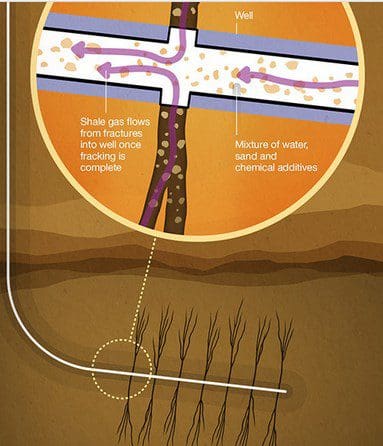
In their coalition deal agreed a year ago, Germany’s ruling parties promised to set a legal framework for fracking, saying it had significant potential for risk and rejecting the use of chemicals. The technique involves pumping water and chemicals at high pressure through drill holes to prise open rocks containing gas. 

Source

Tocardo, Manx Chosen for Isle of Man Tidal Developments

0

Tocardo has been appointed by the Isle of Man Government as one of two preferred partners to supply tidal turbines for a major new renewable energy initiative.

The announcement is part of the Isle of Man Government’s renewable energy initiative, including the development of a wind farm and installation of tidal power generation within the 12-mile limit of its territorial sea. Alongside Tocardo, the government named Manx Tidal Energy Ltd as its other preferred supplier of tidal energy technology.

Ken Milne, Isle of Man Government says: “I am delighted that Tocardo Tidal Energy has been selected as one of our preferred partners for tidal power developments in the Isle of Man territorial waters. We look forward to seeing the future development of this low carbon technology on the island.”

“We are extremely pleased to be appointed by the Isle of Man Government and to be part of a new and exciting project which will bring sustainable, low carbon technology to the island,” says Hans van Breugel, CEO Tocardo.

“As one of only two preferred suppliers we are well placed to deliver turbines on time and to specification. The shores off the coast of the Isle of Man are an ideal geographic location to develop tidal turbines. We are at the forefront of tidal and in-stream power generation development and one of only a few tidal energy companies commercially producing tidal energy turbines. Our technology is proven and we have been able to demonstrate our capabilities and reliability with projects we have implemented in the Netherlands and Nepal where we are producing commercial T1 and T2 turbines.”

Tocardo has been active in Scotland since 2009. The Netherlands-based company has closed deals to sell its technology in Nepal and to install tidal turbines in UK, Canada & South Korea with a total capacity of well over 50 MW.

The offshore energy hub is one of the key strategies Vision2020, the Isle of Man Government’s long term plan to grow the island’s economy. It estimates that leasing parts of the seabed for renewable energy generation will boost the public funds by at least £5 million a year and create more than 50 new local jobs.

Source

Ineos Plans $1 Billion Investment In UK Shale Gas

0

Swiss chemicals group Ineos announced on Thursday plans to invest $1 billion in shale gas exploration in Britain as efforts to emulate the U.S. shale boom ramp up.

The potential investment, which is subject to the company winning all the government exploration and development licences it has bid for, could make Ineos one of Britain’s biggest player in a burgeoning industry that faces fierce opposition from environmental activists.

“I want Ineos to be the biggest player in the UK shale gas industry. I believe shale gas could revolutionise UK manufacturing and I know Ineos has the resources to make it happen,” the company’s Chairman Jim Ratcliffe said.

A vast majority of the onshore licences Ineos has bid for are in Scotland and northern England, it said.

“Substantial further investment would follow if the company moved into development and production,” it added in a statement.

Ineos already owns two shale licences in Scotland covering more than 120,000 acres.

Britain is in the early stages of extracting shale gas resources to lower its dependence on energy imports, but exploration to see whether the resources are commercially viable has been slow in the face of local opposition to hydraulic fracturing, or fracking.

Critics say the fracking extraction process – injecting chemicals, sand and water into rocks at high pressure – can pollute water supplies and trigger small earthquakes. Advocates say it has a strong safety record and point to countries like the United States, where extensive fracking has driven down energy prices.

The British Geological Survey estimates Britain could have shale gas reserves of 49.4-134.6 trillion cubic feet, but it is unclear how much of this could be recovered.

Source

VIDEO: Search for MH370 Carries On

0

Over 6,900 square kilometres of the seafloor have been covered so far in the search for the lost Malaysia Airlines plane along with 239 people on board.

In addition to locating the aircraft, the underwater search aims to map the MH370 debris field in order to identify and prioritise the recovery of specific aircraft components, including flight recorders, which will assist with the Malaysian investigation.

The ATSB has utilised the data from the bathymetric survey work to prepare the initial plan for the underwater search, to be followed and referred to by all parties involved. The plan includes search timings, methods, procedures, safety precautions and the initial search areas for the various vessels.

The latest news on the search vessel movement tells us that Fugro Discovery departed the underwater search area on November 18 to transit to Fremantle for resupply. The vessel is expected to arrive on November 23 and depart again for the search area on November 24.

Fugro Equator’s mobilisation for the underwater search has been postponed due to delays in the supply of equipment.

While the equipment is being freighted to Australia from the USA, the Australian Transport Safety Bureau (ATSB) has taken the opportunity to conduct further bathymetric survey work. Fugro Equator departed Fremantle on 16 November for the search area. The vessel is expected to arrive in the search area on 20 November and will undertake bathymetric survey work to broaden the survey coverage in the current underwater search area.

Wath the video here

Source

Technip introduces Deep Explorer diving support vessel

Technip has unveiled the name for its latest newbuild Diving Support Vessel (DSV), currently being built by Vard.

The state-of-the-art vessel will be known as the ‘Deep Explorer’.

The high-specification vessel will be equipped with the latest technology in terms of navigation (Dynamic Positioning class 3) and will feature a 24-man saturated dive system. With her large deck area, working moonpool, work-class ROVs and a 400Te offshore crane, she will also be able to deliver diverless construction activities.

Technip’s commitment to investing in the new vessel was announced in April 2014.

Following the detailed engineering and design phase, construction of the ship’s hull commenced at Vard Tulcea in Romania a few months ago. On completion of the hull, the vessel will be towed to Vard Langsten in Norway for final equipment outfitting and commissioning. She is scheduled to join the Technip fleet in 2016.

Purpose-designed for the demanding requirements of the North Sea and Canadian markets, the Deep Explorer will be capable of working in extreme weather conditions. Her potential area of operations remains global.

Knut Boe, senior vice- president of Technip’s North Sea Canada region, said: 
“Technip has a long history in the diving industry and we are very pleased to extend our long-term commitment to diving and to the oil and gas industry with the development of this important new vessel. At delivery, the Deep Explorer will be the most advanced DSV in the world.”

Source