Home Blog Page 32

Trading Houses Predict Cautious Rise In Oil Prices

0

Oil prices have probably bottomed out and will rise from now on though the recovery will be slow due to a huge stocks overhang, some of the biggest oil trading executives said on Tuesday.

“The downturn in oil markets is behind us … The trend is now up … But rebalancing will take time. We will probably continue to build stocks for some time,” Torbjorn Tornqvist, the head of Gunvor, told the FT Commodities Summit.

“We have seen the bottom,” said Jeremy Weir, chief executive of Trafigura, predicting that supply and demand would be in balance by the third or fourth quarter of this year. Marco Dunand, the head of Mercuria, said he saw prices at above $50 per barrel next year.

Oil prices have dropped to as low as $27 per barrel – in January – from as high as $115 in mid-2014, forcing producers to cut spending by hundreds of billions of dollars and capping output growth in the United States.

“Low oil prices cannot last long as current prices do not allow many producers to recover costs … As of today it appears that we will be able to overcome the global oversupply within two years,” said Igor Sechin, head of Kremlin oil major Rosneft .

Russia and OPEC are close to clinching a deal to freeze output growth to help the market rebalance quicker but the head of oil at trading house Glencore, Alex Beard, said on Tuesday he did not believe this will help clear the glut fast.

“I can’t see a huge opportunity for positive surprises (from the Doha OPEC/non-OPEC meeting). A freeze doesn’t change the market dynamic,” Beard said.

BP chief economist Spencer Dale said oil markets would likely see overall supply levels unchanged this year with increases in Iranian output offset by drops in production in other parts of the world.

Most traders said Iran’s output increase would be slower than expected because of banking and legal complications despite the lifting of international sanctions in January.

“Getting capital in to do what they need to do won’t be easy so I think it will be slower than they hoped,” said Vitol chief executive Ian Taylor.


Source

PGS and EMGS Settle Patent Disputes

0

Two Norwegian seismic players, Electromagnetic Geoservices (EMGS) and Petroleum Geo-Services (PGS) have entered into an agreement to settle the two companies’ patent disputes.

In 2013 and 2014, EMGS filed a lawsuit in the UK and Norway against PGS for patent infringement relating to PGS’ Towed Streamer EM technology and EMGS’s “Refracted Wave Patent”

Furthermore, in March 2015, PGS filled a complaint in U.S. Court alleged that the EMGS, by their survey activities in the Gulf of Mexico and on the U.S. outer continental shelf and by their interactions with U.S. customers, infringed PGS-owned patent titled “Detection of Subsurface Resistivity Contrasts with Application to Location of Fluids”.

The disputes have now all been settled through the settlement agreement which grants PGS a license to the EMGS patent for operation of its towed streamer EM system.

EMGS is similarly granted a license to the PGS patent. Both licenses are royalty free and valid world-wide for the validity period of the relevant patent.

The agreement also opens up for joint EM and seismic surveys in the future. Both companies will cover their own legal costs.


How To Get A Job As A Commercial Hardhat Diver

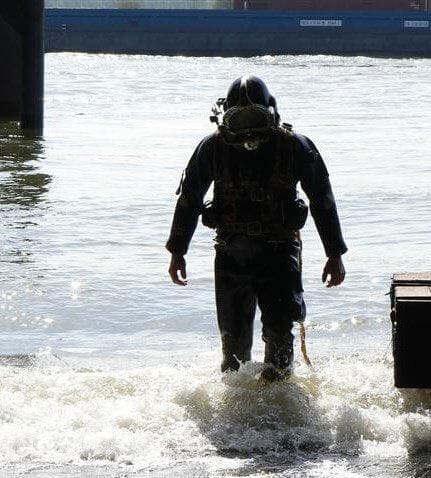
Hardhat divers earn good money but work long hours in dangerous conditions. You should first know the risks. Commercial diving or hardhat diving is one of the world’s most challenging and dangerous professions. Honestly it is not for everybody but for those that are able to complete a commercial divers course and are able to handle the work, one can easily make ten years of the average person’s salary in one year.

Do You Have What It Takes To Become A Hardhat Diver?

 
Determine if you are physically able to withstand the pressure (both mental and atmospheric) and long hours underwater of commercial diving. You should be in excellent health and have no inner ear problems, asthma, heart or lung disorders, etc. Working at commercial diving depths the pressure on your body will be several times what it is at the surface.


You should be good at complex problem solving, have mechanical aptitude and a strong personal need to succeed. A “get ‘er done” attitude is a must since the projects you may be working on, such as repairing underwater structures, pipelines or cable anchors will be grueling, tedious work. Discipline and work ethic are extremely important. Good candidates include ex Navy Seals, Rangers and Marines among others.

Locate a commercial diving school in your area or if there are none make arrangements to relocate to an area temporarily while you attend one. Some, such as the Commercial Diving Academy have a dorm type facility.

Where Does Most Commercial Hardhat Diving Work Occur?

The answer is anywhere there is water and industry together. In the Gulf Of Mexico there is quite a lot of underwater work related to oil and gas drilling. This goes for anywhere there is offshore drilling and where the work is too “shallow” to justify using remote operated vehicles. Pipeline inspection, underwater welding type hardhat diver jobs are found all over the world. Ship hull inspection and repair jobs can be found all over the world as well. Hardhat diving is a highly sought after skill and one that is transportable. You may find it easy to get a visa for overseas oilfield work as a hardhat diver.

Where Are Commercial Diving Schools Located?


There are commercial hard hat diving schools in Houston such as
Ocean Corporation, Jacksonville Florida (Commercial Diving Academy) and Morgan Louisiana (Louisiana Technical College) among others. Compare tuition rates with services and certifications provided and inquire about placement services. Many commercial diving schools will offer a free, lifetime placement service that will help you find a job.


Source

DEME Takes Small Stake in Tidal Power Scotland

0

Atlantis has agreed to sell a minority stake in its Scottish tidal development company, Tidal Power Scotland Limited (TPSL) to DEME for cash consideration, subject to satisfaction of certain conditions precedent which are scheduled to be achieved during the coming weeks.

Reportedly, DEME has agreed to pay Atlantis £2 million in cash consideration for a 2 per cent stake in TPSL and a right to contribute equity funding to the Sound of Islay project. As part of the transaction, Atlantis and the DEME are said to intend to develop a partnership for offshore construction works to draw on DEME’s experience and expertise in the offshore renewables sector for the benefit of the Atlantis’ Scottish portfolio build out.

This follows TPSL’s agreement with ScottishPower Renewables in December 2015 to acquire the 10MW Sound of Islay project and 100MW Ness of Duncansby project in exchange for a 6% shareholding in TPSL. Following the completion of the DEME and SPR transactions, Atlantis will retain a 92% stake in TPSL.

The DEME group has a fleet of over 90 major construction vessels and the group’s turnover in 2015 was €2.35 billion. GeoSea NV, as DEME’s specialist offshore construction arm, has over 35 years of experience in complex offshore construction projects. The DEME group is an existing investor in marine energy projects through DEME Blue Energy NV, a partnership between DEME and PMV (ParticipatieMaatshappij Vlaanderen).

Tim Cornelius, CEO of Atlantis, said: “We are excited to welcome DEME as a strategic investor into the TPSL portfolio. As a respected global leader in offshore renewable energy installation, DEME brings a wealth of expertise and we are particularly excited to work closely with them to help deliver our Scottish project pipeline.”

Alain Bernard, CEO of DEME group, commented: “This transaction is a vital move for the DEME group in fulfilling its ambitions to be at the forefront of the growing tidal energy industry. Moreover, it consolidates the company’s presence in the UK as DEME’s involvement in the UK offshore business dates back to the early years of offshore wind. We look forward to working alongside Atlantis and SPR as shareholders in TPSL to develop and construct this unrivalled portfolio of projects.”


Why diving contractors don’t need to fear safety audits

Commercial diving businesses should always push for better safety, but sometimes learning the truth about their safety compliance can be tough. The Association of Diving Contractors International is a key resource for companies hoping to identify problem points, as their official audits can help businesses find ways to improve.

However, operators that aren’t familiar with the audit process could be concerned, or even nervous, with what the auditor will find. In the latest issue of Underwater Magazine, Diving Consultant Captain Jon Hazelbaker offered reassurance, explaining that the audit is not a “pass/fail” process but a complex assessment of a company.

“A contractor isn’t risking anything,” Hazelbaker said. “They’re only going to benefit from this because they’re going to come away from it with full disclosure on exactly what part of their administration or personnel may be deficient and lacking compliance with ADCI, OSHA and USCG regulations with absolutely no downside to it.”

“The audit is not a ‘pass/fail’ process.”

In addition to an audit, dive managers can also consult the International Consensus Standards For Commercial Diving And Underwater Operations. Available online, this document features a description of the three different audit types the organization allows: self-audits, diving contractor audits and the saturation diving inspection and checklist protocol.

As the names imply, the latter two audits require an outside party for proper assessment, while the first can be done internally. The reports focus on aspects of professional diving with different degrees of specificity, concerning not only the state of equipment, but also the certification level of divers and supervisors.

Just as divers look to professionals for a proper audit, they can also work with companies that know insurance for commercial diving intimately for a better likelihood that they get the policy they need.


Source

LNG Backers Face Comatose Market as Oil Shows Signs of Life

0

As oil markets look for the green shoots of a price recovery, LNG participants are hunkering down for a long winter.

The most influential executives, investors and traders in the liquefied natural gas market will gather in Perth, Australia, this week for the industry’s biggest conference. While Brent oil has surged about 50 percent since hitting a 12-year low in January amid the worst energy crash in a generation, LNG continues its downward slide.

For crude, two years of spending cuts have throttled output and begun to ease an unprecedented period of oversupply. In the LNG markets, where projects cost billions of dollars and take years to build, a backlog of developments sanctioned when prices were higher are bringing supply online faster than demand can soak it up.

“It looks like we’re entering the down cycle for LNG rather than coming out the other side,” Jeff Brown, president of consulting firm FGE, said by phone from Singapore. “For the spot market in the next several years, it looks like there’s going to be a lot of LNG out there chasing buyers.”

Oil and LNG prices have historically been linked because traditional long-term contracts priced the gas in relation to crude. That correlation held through 2014 and 2015, as prices for both fuels tanked amid a global glut.

Opposite Directions

The two are now heading in opposite directions. Spot LNG in Singapore slipped to $3.954 per million British thermal units the week of April 11, the lowest since Singapore Exchange Ltd. began assessing it in September 2014 and extending its decline into a fifth month. Brent, meanwhile, recovered from its early-year crash to post its best first quarter in four years. The global oil benchmark rose 1.6 percent to $42.62 a barrel by 10:23 a.m. New York time.

Oil production comes from a mixture of short-, medium- and long-term drilling projects, while LNG output only comes from years-long efforts to build liquefaction plants and export terminals, said Trevor Sikorski, an analyst with Energy Aspects Ltd. in London. In the U.S., where shale suppliers can go to production from drilling within months, producers have cut about 600,000 barrels a day of output since a June peak.

“In oil, the big thing is the loss of production, as drilling activity around the world has dropped off and that’s balancing the market,” Sikorski said. “LNG is going to continue to throw gas at the world as major projects come on stream and need to recover their big costs. It’s a perfect storm of stuff to keep the spot market low.”

Liquefaction Action

LNG export complexes cool the fuel to minus 256 degrees Fahrenheit (minus 160 Celsius) to shrink its volume so it can be shipped aboard ocean-going tankers. As U.S. and Australian companies boost output an international gas market is emerging akin to the long-established one for the more readily transportable crude oil.

About 42 million tons a year of liquefaction capacity is expected to come online this year, boosting global supplies by 14 percent, according to the International Group of Liquefied Natural Gas Importers. The majority of the new capacity will be in Australia, where Chevron Corp. recently shipped the first cargo from its $54 billion Gorgon project.

The new supply was drawn by expectations of rampant demand growth in Asia that failed to materialize. South Korea and Japan, the world’s two largest consumers, each reduced LNG shipments by about 4 million tons in 2015 because of slow economic growth, mild weather and increased use of alternative fuels, according to the importers group.

Market Deficit

The oversupply may only last a few years as low prices force the cancellation of some projects, setting the market up for a potential shortage the next decade. Woodside Petroleum Ltd. and partners including Royal Dutch Shell Plc and BP Plc last month scrapped plans to develop the $40 billion Browse venture in Australia citing an “extremely challenging” market.

There may be a deficit of 75 million metric tons of LNG per year by 2025, which would require $250 billion in investment through 2020, Sanford C. Bernstein & Co. estimated in November. However, the market is well-supplied to 2018 and possibly to the end of the decade, it said.

“This imminent supply surge has been well known for some time, and developers built in anticipation of high Asian demand,” said James Taverner, a Tokyo-based energy analyst for IHS Inc. “Demand fundamentals have turned bearish and the LNG market faces oversupply for at least the next few years.”


Source

VIDEO: Juniper Tree Lands on Trinidad and Tobago

0


The video above shows one of the 5 Juniper subsea trees, weighing about 76 tonnes, arriving at the Piarco International Airport via a cargo aircraft.

The Juniper project is bpTT’s first subsea field development, located 50 miles off the south east coast of Trinidad. The Juniper facility will take gas from the Corallita and Lantana fields located in water-depth of approximately 110 meters.

All five subsea trees required for the Juniper project have arrived to Trinidad and Tobago.

The trees were assembled and tested at the OneSubsea fabrication plant in Johor, Malaysia, and are among the largest and heaviest ever built.

After being offloaded at the Labidco yard for testing, the trees will move to the offshore location for the bpTT Juniper field.

Drilling of the five Juniper subsea wells began in 2015 and was completed in March 2016.

According to bpTT,  Juniper will have a production capacity of approximately 590 million standard cubic feet a day (mmscfd) of gas. First gas from the facility is expected in 2017.


Source

Marathon Oil Signs Deals To Sell $950M Of Assets

0

Marathon Oil Corporation said on Monday it had signed agreements to sell non-core assets for $950 million, bringing its total sales through divestitures to about $1.3 billion since last August. The oil and natural gas producer, which did not identify the buyers, said it will divest all of its Wyoming upstream and midstream assets for $870 million, excluding closing adjustments.

The Wyoming properties, mainly waterflood developments in the Big Horn and Wind River basins, averaged 16,500 barrels of oil equivalent per day in first quarter 2016 production. The deal, expected to close in mid-2016, also includes a 570-mile pipeline.

Marathon said it will also sell its 10 percent working interest in the Shenandoah discovery in the Gulf of Mexico, operated natural gas assets in the Piceance basin in Colorado, and certain undeveloped acreage in West Texas for a total of about $80 million.

Chief Executive Lee Tillman said the company had surpassed its targeted range of $750 million to $1 billion in total non-core asset sales. With oil prices having fallen 60 percent since mid-2014 to around $40 a barrel, companies are using a mix of asset sales and financings to weather the down market. 


Source

China Rebuffs Vietnam Criticism of Oil Rig Move

0

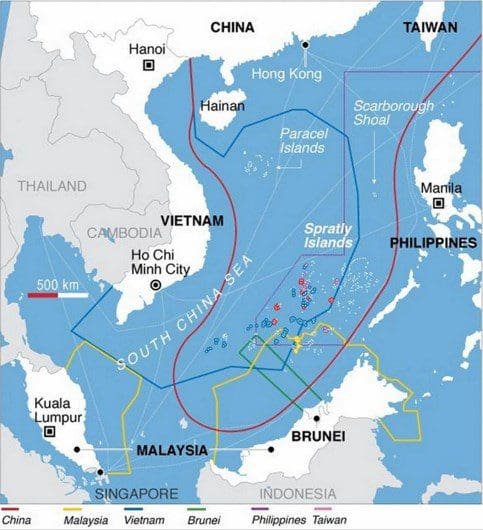
China’s Foreign Ministry on Friday rebuffed Vietnam’s second demand this year to move a controversial oil rig and drop plans to drill in South China Sea waters where jurisdiction is unclear, saying it was engaging in normal exploration activity. The $1-billion rig, which was at the centre of a fierce diplomatic stand-off between the countries in 2014, had moved into an area of the Gulf of Tonkin over which, Vietnam said, the two countries were still “executing delineation discussions”.

“The relevant work is in undisputed Chinese waters, and it is normal commercial exploration,” Chinese Foreign Ministry spokesman Hong Lei told a daily news briefing. “We hope the relevant party takes an objective and reasonable view on this.” He did not elaborate. China claims most of the resource-rich South China Sea amid rival claims by Brunei, Malaysia, the Philippines, Taiwan and Vietnam.

Two years ago, China parked the rig, the Haiyang Shiyou 981, for 10 weeks in waters Vietnam considers its exclusive economic zone, triggering their worst row in decades and an outcry among Vietnamese nationalists. Many experts call the move a miscalculation by Beijing that played into the hands of the United States. Since the row, Vietnam has become closer to Washington than ever before.

Vietnam closely tracks the movement of the oil rig, which has operated as far away as the Bay of Bengal, and has been close to disputed waters several times since 2014. Both of Vietnam’s protests this year against the rig’s activity have coincided with leadership changes in Hanoi. Vietnam swore in a new prime minister on Thursday and a new president last week.

Its previous complaint about the rig was in January, two days before the start of its Communist Party’s five-yearly congress. Vietnam has also criticised China’s decision to start operating a lighthouse on one of its artificial islands in the Spratly archipelago, saying it violated Vietnam’s sovereignty and was illegal. Hong said the lighthouse was a matter for China, but it had been built to improve navigational safety for all users of the South China Sea. 


Source

Polarcus in Indonesia Shoot

0

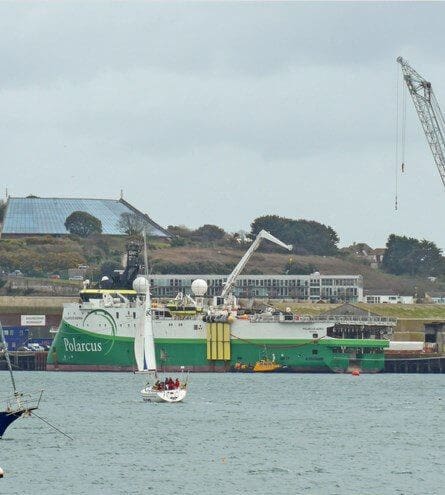
Seismic player Polarcus has received a letter of intent (LOI) from an undisclosed client for a 3D marine seismic deal in Indonesia.

The survey will be acquired by utilizing Polarcus’ XArray technique, the company said in Oslo Stock Exchange filing on Tuesday.

Cameron Astill, senior vice president Asia Pacific, said: “It is a significant milestone to be awarded our first project in Indonesia. We look forward to deliver our client a high quality and efficient survey with the Polarcus XArray(TM) technique utilizing our triple-source configuration.”

The project is scheduled to start in the third quarter of 2016 and should run for approximately two months.


Source