Home Blog Page 31

Dive Into the World of Underwater Welding

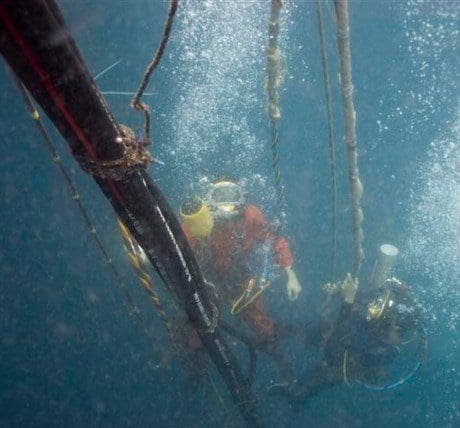
It’s not every occupation that can say “Barracudas like to watch.” Described by some as exciting, strenuous, and dangerous, underwater welding is one of the most difficult branches of welding to be a part of. As diver-welder John Quilici puts it,“ You’re underwater, playing with electricity. It doesn’t seem like a  good combination, but it works quite well.” The History Channels “Modern Marvels” series did an episode on welding, spending a few minutes on the dangerous life of underwater diver-welders.


So you’ve watched the video, and you are still interested in being an underwater diver-welder. Where do you begin?

Underwater Diver-welder Definition

The American Welding Society (AWS) defines a welder-diver as :

A certified welder who is also a commercial diver, capable of performing tasks associated with commercial subsea work, weld setup and preparation, and who has the ability to weld in accordance with the AWS D3.6, Specification for Underwater Welding Specification for Underwater Welding (i.e., wet or dry), and other weld-related activities.


Underwater Diver-welder Requirements

At the most basic level, you should already be well experienced in two areas: commercial diving and welding.

With commercial diving, being able to swim is not the only requirement, you should have thorough knowledge of the equipment used for commercial diving, the types of dangers you may face when diving and how to deal with them, knowledge of diving physiology, etc.

If you are already a certified welder, the AWS suggests that you complete training at a commercial diving school. Some schools require that applicants complete a diving physical and written exam before acceptance. Whether a physical is required or not, it is advised that you complete one to make sure you are of good physical health to pursue this career path. Below are a list of schools recognized by the Association of Commercial Diving Educators (ACDE) as offering high-quality programs in underwater diving:


ACDE Member Schools in the United States

Santa Barbara City College – Santa Barbara, CA

National Polytechnic College of Science – Wilmington/San Diego, CA/ Honolulu, HI

Ocean Corporation– Houston, TX

Diver’s Academy International– Camden, NJ

Louisiana Technical College – Morgan City, LA

Commercial Diving Academy – Jacksonville, FL


Age Requirements?

There are no age requirements to be a commercial underwater diver-welder, but there are physical requirements. Annual dive physicals are often required to continue work as a diver-welder. Though the requirements vary by company (and sometimes country), the Association of Diving Contractors (ADC) “has an industry-accepted dive physical format that is used by many of its members in the United States and other countries. . .”

For more information about entering the field of underwater welding, read “Taking the Plunge: A Guide to Starting an Underwater Welding Career” from the AWS.

What are you’re thoughts on underwater welding? Exciting? Fun? Dangerous? Crazy?
 

PLOCAN Sends Underwater Glider on Oceanographic Mission

0

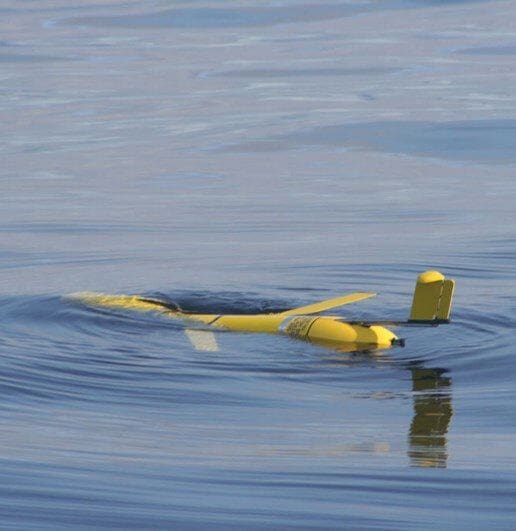
An underwater glider has been put into operation in Madeira archipelago waters by a group of technical specialists from PLOCAN, in collaboration with scientists and technicians from Madeira Ocean Observatory (OOM) and Instituto Hidrográfico Portuguese Navy on board the ship NRP-Zaire of the Portuguese Navy.

The initiative is framed into the EU-project AtlantOS-H2020, which PLOCAN participates as a partner, as regional contribution to international programs and the European Strategy on Atlantic Ocean Observation, fostered through the Macaronesian Marine-Maritime Monitoring Network (R3M).

The main goal of the mission is to collect biogeochemical data of seawater through sensors of temperature, salinity, dissolved oxygen, pigments (chlorophyll) and particulate matter (turbidity) between the surface and the first thousand meters deep of the water column, along a section of approximately 500 nautical miles that elapses between the archipelagos of Madeira, Salvagens and Canary Islands.

The data, expected to be collected during the mission, should help to improve the characterization of the oceanic water masses in the study region, which at the same time will increase the quality forecasting models of ocean circulation and its derived products for all institutions and government agencies as final users, such as the Spanish Institute of Oceanography (IEO), Everyone’s Gliding Observatories (EGO), among others.

The mission can also be followed in real time through the PLOCAN glider portal.


Indonesia’s Pertamina Plans To Develop South China Sea Border Areas

0

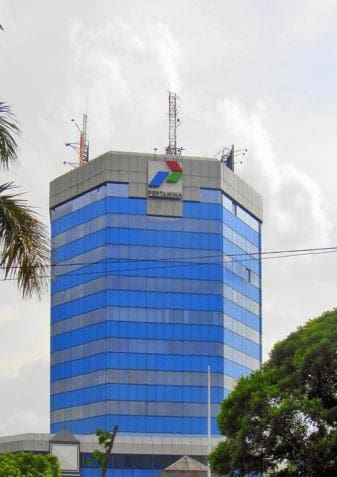
Energy company Pertamina plans to explore for oil and gas in areas close to Indonesia’s maritime border in the South China Sea to assert the country’s territorial rights, the upstream director of the state-owned company said.

“The government needs to have activities around the borders and one of Pertamina’s strategies is to support this,” Syamsu Alam told Reuters in an interview on Monday.

He said Indonesia had lost sovereignty over two disputed islands in the past because it was not developing those areas.

“So, like the South China Sea and the borders in North Kalimantan, we need to have some activities there,” he said.

China claims 90 percent of the South China Sea, which is believed to be rich in oil and gas, with overlapping claims from Brunei, Malaysia, the Philippines, Vietnam and Taiwan.

Its reclamation of rocky outcrops and development of infrastructure there has caused alarm around the region.

Indonesia is not a claimant and has projected itself as an honest broker in the dispute.

However, there is concern in Jakarta that Beijing believes its maritime territory – demarcated by a u-shaped nine-dash line – includes areas around the Indonesian-ruled Natuna islands.

After an incident last month involving an Indonesian patrol boat and a Chinese coastguard vessel and fishing boat in what Indonesia said were its waters, Jakarta said it “felt sabotaged” in its efforts to maintain peace in the South China Sea.

China has said that it recognises Indonesia’s sovereignty over the Natuna Islands.

Chinese Foreign Ministry spokesman Lu Kang said he was not aware of Pertamina’s plans.

“China and Indonesia do not have a territorial dispute,” he told a daily news briefing.

Alam did not spell out Pertamina’s plans for development in the South China Sea, but asked about security, he said: “Of course, we have to have support from the military.” He did not elaborate on what role the military might play.

He said Pertamina has a three-year timeline for a technical and commercial evaluation of the East Natuna gas field, working with Exxon Mobil, Thailand’s PTT and Total .

The company also has interests in other blocks close to Indonesia’s other border areas, he added, referring to the Masela and Babar Selaru blocks next to its border with Australia and the Nunukan, Simenggaris and Ambalat blocks in areas next to Malaysia.

Indonesia and Malaysia have been embroiled in a long-running dispute over the oil-rich Ambalat area, off Borneo, while the area between Indonesia and East Timor and Australia contains huge gas reserves.

The International Court of Justice ruled in 2002 that the Sipadan and Ligitan islands off northeastern Borneo belonged to Malaysia, based on evidence that Kuala Lumpur was doing more on the islands to indicate its authority.

Alam said Pertamina has a budget of up to $2 billion for mergers and acquisitions in oil and gas assets this year, and is looking to buy into projects in Iraq, Saudi Arabia and Russia among other countries.

Pertamina plans to increase output through mergers and acquisitions by 14,000 barrels of oil equivalent per day (boepd) this year, and by 117,000 boepd in 2017, he said.

Indonesia’s crude production, which peaked in 1981, dipped below 1 million barrels per day (bpd) in 2011 and is set to fall towards 600,000 bpd by 2020. The country currently has less than 13 years of reserves.

Among the assets Pertamina is eyeing domestically are the East Kalimantan and Rokan oil and gas blocks operated by Chevron , whose contracts are due to expire in coming years.

A spokesman for Indonesia’s foreign ministry was not immediately available for comment.


Source

DONG Energy Hires Hughes SSE for OWF Subsea Inspection

0

DONG Energy has signed a contract with a UK-based Hughes Sub Sea Engineering (Hughes SSE) for the undertaking of a subsea inspection campaign.

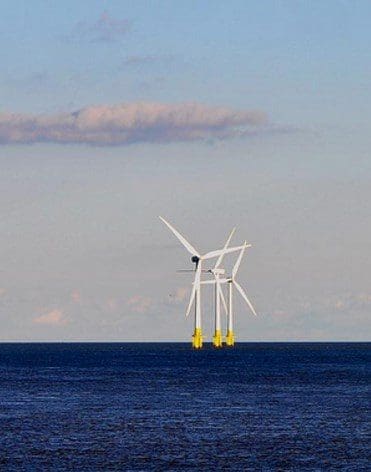
Merseyside-based firm will conduct a subsea inspection, examining various components of offshore wind turbine foundations and cabling at DONG Energy offshore wind farms located in Denmark and Germany.

The campaign will comprise a general visual inspection, examining the transition pieces, monopile and boat landing components, located at the foot of offshore wind turbines, as well as inspection of the cable route connecting each turbine to the onshore substation. Work on the campaign will start this month and is expected to last until September later this year.

A spokesperson from Hughes SSE said: “We’re very pleased to sign this contract with the world’s leading offshore wind company. Our engineering expertise in the offshore industry has been honed in the past decade. As UK offshore wind has grown, we have thrived as a company, able to undertake a whole manner of tasks for the industry. This is now an exciting opportunity for us to take these skills to projects across the continent and expand our business.”

The offshore wind farms Hughes SSE will be servicing are Gode Wind 1 and 2 and Borkum Riffgrund located off the north west coast of Germany in the North Sea; and the Anholt offshore wind farm off the north east coast of Denmark.

As part of essential operations and maintenance of offshore wind farms, each project is required to have structural inspections of its foundations undertaken in order to identify any potential maintenance work. Subsea inspection campaigns are routine work and occur every year.


Mexico Has $13.6 Billion Surplus to Pay Debt, Boost Oil Fund

0

Mexico will use $13.6 billion from a central bank surplus to pay down debt and boost its rainy day fund, shoring up finances as it prepares a support plan for the beleaguered state oil company Petroleos Mexicanos. The Finance Ministry will spend 167 billion pesos ($9.5 billion) of the transfer to buy back debt and reduce bond issuance this year, while 70 billion pesos will go to boost the nation’s budget revenue stabilization fund. A plan to help Pemex will be released in coming days, the ministry said in a statement released after the central bank disclosed the surplus.

The government’s response comes after Pemex reported a record $32 billion-loss for 2015, which prompted Moody’s Investors Service to cut its credit rating two notches in March. Finance Ministry officials have repeatedly said that they could give Pemex a capital injection once the company presents a credible business plan. “What is important is not the funds that you transfer to Pemex, but the quid pro quo for receiving those funds,” said   Alberto Ramos, the chief Latin America economist at Goldman  Sachs Group Inc., in a telephone interview.

“If that leads to a leaner and meaner company, I think that’s understandable. Pemex needs to adjust to the new oil price reality and to the more competitive sector.”   By boosting its rainy day fund, Mexico could have the flexibility to add gasoline prices to its oil hedge program next year if the nation decides to remove set prices for fuel, the Finance Ministry’s chief economist, Luis Madrazo, said in an interview last week. Adding fuel to the program wouldn’t necessarily expand the size or cost of hedging as Mexico may even reduce the price tag by using more self-insurance in place of some hedging, he said.

Led by Governor Agustin Carstens, Banxico said earlier Monday it will transfer funds from exchange rate gains on its international reserves to government coffers. It will use the remaining 139 billion pesos in profits it earned last year to boost its capital and to protect its international reserves from an appreciation of the peso against the dollar Mexico is permitted to use 70 percent of the central bank’s transfer from exchange rate gains to pay down national debt and 30 percent for other purposes such as investments. 


Source

Sonardyne’s Positioning Technology for RV Neil Armstrong

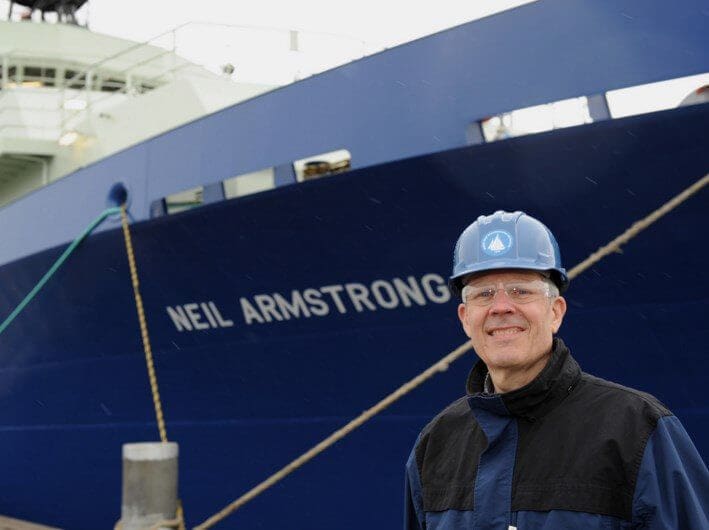
Sonardyne’s deep water acoustic positioning system, Ranger 2 USBL, has been selected for the U.S Navy’s new oceanographic research vessel, RV Neil Armstrong.

The ship is operated by the Woods Hole Oceanographic Institution (WHOI) on behalf of the Navy and replaces the recently retired RV Knorr, which had been in operation since 1970.

With an endurance of 40 days at sea and accommodation for 20 crew and 24 scientists, Neil Armstrong is equipped to carry out mapping, sampling and sustained observation missions around the world.

Sonardyne’s Ranger 2 USBL (Ultra-Short BaseLine) acoustic positioning technology will support the vessel’s work by enabling science teams to precisely monitor the position of underwater targets deployed from the Neil Armstrong. These will include ROVs, AUVs, towfish and seafloor landers, Sonardyne wrote.

Kim Swords, Senior Applications Engineer at Sonardyne, said, “We are honoured that our Ranger 2 USBL technology has been selected for the nation’s most advanced research vessel. With the system now installed, we look forward to supporting WHOI through the commissioning phase of the contract and then seeing the results from its first expeditions later this year.”


Top Five Tips for Commercial Divers

When you graduate from commercial diving school and begin your first job, you need to be ready to do the job well. Whether you’re diving offshore or inland, you have to impress your coworkers from the minute you show up to work.

Here are our top five tips for commercial divers heading to their first job. Of course, these tips also apply when you’re at diving academy too!

1. Listen and Follow Instructions

In commercial diving, every job and every dive is unique. This is one of the best parts of the job. But it also means you need to follow strict protocols and listen to instructions so you can carry out tasks correctly. Respect your coworkers and bosses, and never assume you know everything or you might miss a vital step. In commercial diving, mistakes can cost millions.

2. Know Your Knot

Commercial diving and welding jobs are very technical and challenging, because they take place deep under water. You need to move quickly and accurately at all times. A good commercial diver will know which knot to use in any task, without even thinking. Divers Academy teaches students to tie knots blindfolded and under pressure!

3.Think One Step Ahead

Commercial divers, tenders and underwater welders always need to know what’s coming next. Remember the routines and maintenance for dives, so jobs can go smoothly. The experience offered at Divers Academy will teach you to anticipate what happens in any situation, and which piece of equipment you’ll be using, from rigging and welding tools, to looking after your diving gear.

4. Look Professional

Commercial diving is a thrilling career. Sometimes you just don’t know what you’ll see on your next dive. But whether you’re doing a salvage operation, a river dive, or Hazmat dive, you need to look the part. Turn up to every job on time and well-dressed. Bring all the gear and tools you’ll need for the job, cover any tattoos and piercings, and provide photocopies of all your paperwork. That way, your boss knows you mean business and you’ll be ready to go.

5. Be Professional

Divers Academy demands high standards of professionalism from students, and that’s exactly what employers are looking for. Divers, tenders and welders need to look professional, but they also need to be professional. Commercial diving is a tight community, so honesty and integrity are really important for getting ahead. Proving that you’re reliable and know your stuff will give you a great advantage for a long and successful career in commercial diving!


Source

Fugro Nets ROV Gig Off India

0

Fugro has been awarded a contract by Indian oil and gas company, ONGC, for the provision of ROV services on board the drillship Sagar Vijay.

The contract, which was signed at ONGC’s offices in Mumbai, involves providing support for deepwater drilling operations off the east coast of India, in depths up to 900 metres.

A range of tasks will be performed by Fugro’s FCV ROV, including seabed surveys, monitoring of subsea drilling operations, guideline cutting and reinstallation, remote intervention and AX/VX ring gasket installation. Services also include setting up regular fluid injection, drilling re-entry, bullseye checks and routine video monitoring, inspection and cleaning on and around the BOP.

Fugro will also provide drill support tooling during the 18-month project, which is expected to start in May 2016.


Woodside to Supply LNG to Pertamina for 15-20 Years

0

Australia’s Woodside Petroleum Ltd. reported Wednesday that its unit Woodside Energy Trading Singapore Pte Ltd. has signed a Heads of Agreement (HOA) with Indonesia’s national oil company PT Pertamina (Persero) to supply approximately 0.5 to 1.0 million tons of liquefied natural gas (LNG) a year from the firm’s LNG portfolio for a period of 15 to 20 years.

“The HOA remains conditional upon the negotiation and execution of a fully termed LNG sales and purchase agreement and obtaining all necessary approvals (including the relevant Woodside and Pertamina board approvals),” Woodside said in a press release.

Indonesia’s domestic energy consumption rose 43 percent between 2003 and 2013 and the government intends to raise natural gas’ share of the energy mix to around 22 percent by 2025, according to the U.S. Energy Information Administration.


Source

WorleyParsons Nets EPCm Contract for BP’s Caspian Assets

0

WorleyParsons has been awarded a five year contract for Engineering, Procurement and Construction Management (EPCm) services for BP-operated assets in Azerbaijan, Georgia and Turkey.

Under the agreement, WorleyParsons will provide EPCm services primarily to BP-operated Sangachal Terminal and pipeline systems in Azerbaijan, Georgia and Turkey.

The Sangachal terminal receives, processes, stores and exports crude oil and gas produced from all currently operated BP assets in the Caspian basin.

The oil and gas from the offshore fields flow through the subsea pipelines into the terminal and they stretch across the entire length of the terminal. There are eight different pipelines entering the terminal from offshore locations and eight leaving it.

According to WorleyParsons, the services under the contract will be provided by a its Improve Team in Azerbaijan.

“We are pleased to continue our long standing relationship with BP and to have the opportunity to demonstrate the value proposition of our Improve offering on these assets,” said Andrew Wood, Chief  Executive Officer of WorleyParsons.