Home Blog Page 33

Teledyne Buys CARIS

0

Teledyne has aquired CARIS, a developer of geospatial software designed for the hydrographic and marine community.

The companies did not disclose the terms of the transaction. The closing of the transaction, which is subject to customary conditions, is anticipated to occur in the second quarter of 2016.

“By providing powerful data processing, mapping and geospatial imaging software, CARIS ideally complements both our marine instrumentation and digital imaging businesses,” said Robert Mehrabian, Chairman, President and Chief Executive Officer of Teledyne. “CARIS immediately extends our marine capabilities, advancing the delivery of imaging and information from Teledyne’s broad portfolio of marine sensors and systems. Furthermore, we believe that CARIS will help Teledyne further improve our software and real-time processing tools across our sonar and bathymetric and topographic LIDAR businesses.”

“The combination of CARIS with Teledyne is a positive development for the company’s owners, employees, and customers,” said Dr. Salem Masry, C.M., Founder, President and Chief Executive Officer of CARIS. “I am pleased to see CARIS continue its name and operations, including its presence in Fredericton, the Netherlands, the U.S., the U.K. and Australia, while offering employees additional opportunities for collaboration and advancement across Teledyne.”


Sanders Wants Nationwide Fracking Ban

0

Saying it’s a danger to the air and water supply, Vermont Sen. Bernie Sanders upped his rhetoric on hydraulic fracturing Monday by calling for a nationwide ban on fracking.

In a statement to the press, Sanders – running against former Secretary of State Hillary Clinton for the Democrat’s nomination for the 2016 U.S. presidential election – drew a stark contrast between his position and those of his opponent. During a March debate in Michigan, Clinton said she supports fracking that meets certain criteria when it is favored by the communities in which it would occur.

“If we are going to leave this planet in a way that is healthy and habitable for future generations, we need bold action now,” Sanders said.

According to the statement, oil and gas lobbyists have “bundled thousands of dollars for Clinton’s campaign directly.”

Actress and longtime activist Susan Sarandon features prominently in a TV ad released April 11.

“Bernie Sanders is the only candidate for president who opposes fracking everywhere,” she said in the 30-second spot, “No Fracking Anywhere.”

Sanders and Clinton have sharpened their attacks in the days leading up to the debate April 14 in New York, a state that banned fracking in 2014.


Source

US Shale Oil Firms Feel Credit Squeeze As Banks Grow Cautious

0

Nearly two years into an epic oil rout, U.S. shale drillers that have upended global energy markets are finally feeling a credit squeeze as banks make their biggest cuts yet to their loans.

Every six months, oil and gas producers and their banks negotiate how much credit they should be given based on the value of their reserves in the ground.

In previous reviews, banks were willing to offer borrowers some leeway, encouraged by producers’ hedges against falling prices and their ability to keep cutting costs in step with crude’s slide that began in mid-2014.

This time, with many companies’ hedges largely gone and crude prices used in the reviews as much as 20 percent lower than six months earlier, banks are getting tough.

Just a few weeks into the current round of talks more than a dozen companies have had their loans cut by a total of $3.5 billion, equivalent to a fifth of available credit, according to data compiled by Reuters. (Graphic:http://tmsnrt.rs/1S9304F)

At that rate, $10 billion more of bank credit will disappear as a remaining $50 billion or so of credit lines come under scrutiny in talks that stretch into May.

Companies and bankers contacted by Reuters declined to comment beyond their public statements due to the sensitive nature of the talks.

The squeeze puts further pressure on the shale industry to sell assets, cut jobs and drilling and shrink capital spending. It also raises the risk that more companies will tip into bankruptcy.

Banks are also under more pressure now from regulators to limit their energy-related risks as the downturn drags on.

The next credit review in the autumn could take an additional toll if oil prices, now below $40 a barrel, do not rebound.

“Any company that does not have a widely profitable base at this current price is going to find it very, very hard,” said Christian Ledoux, senior portfolio manager at South Texas Money Management.

About 36 percent of some 150 energy companies with speculative grade debt will probably default on their obligations by the end of next year if oil holds around $35 a barrel, said Tarek Hamid, senior U.S. credit analyst at JPMorgan Chase & Co.

More than 50 North American oil and gas producers have entered bankruptcy since early 2015, according to a Reuters review of regulatory filings and other data.

Anti-Hoarding

Oil and gas producers rely on revolving credit to finance day-to-day operations and cuts force them to looks for cash elsewhere.

Clayton Williams Energy Inc, for example, which had its credit line slashed to $100 million from $450 million, borrowed the difference from Ares Management LP, an alternative asset investor that charged triple the rate of the banks.

Fearing that falling crude prices and reserve values could push many companies into default, companies and bankers have been also renegotiating financial performance tests and claims on assets while resetting the borrowing limits.

Some companies, including Eclipse Resources Corp and California Resources Corp, have disclosed that banks have agreed to loosen, or even suspend, minimum financial requirements to give them more flexibility.

Sometimes banks rewrite clauses that might have allowed lower classes of lenders to throw borrowers into default and suddenly trigger repayment requirements and cause bankruptcies, according to lawyers and analysts tracking the talks.

“Typically bank lenders don’t want second- and third-lien lenders to have that first bite at the apple,” said Lindsay Sparks, a partner at law firm Paul Hastings LLP.

To the alarm of banks, some highly indebted companies, such as Linn Energy LLC, drew heavily on their credit lines ahead of their loan talks, lawyers and analysts said.

A spokesman for Linn declined to comment.

“This defensive measure has emerged as a somewhat surprising-and troubling-trend with broad ramifications for lenders,” said FBR & Co analyst Chad Mabry.

In response some banks have insisted on “anti-hoarding” provisions that would give them more say over what companies do with cash and other assets that could go toward repaying the loans.

In February, Phil Rykhoek, chief executive of Denbury Resources Inc told investors after loan talks with a syndicate of banks, that lenders agreed to easier financial tests in exchange for accepting such a provision.

The “anti-hoarding” provision limits how much cash Denbury can hold before drawing more on its credit line. It was not directed at Denbury, Rykhoek said, as much as it was a new defensive by banks in response to seeing other companies draw on their lines to take lender cash with them as they approached bankruptcy.

“It was very important to them,” Rykhoek said.


Source

Italian Navy Minesweeper Inspects Destroyer Wreck

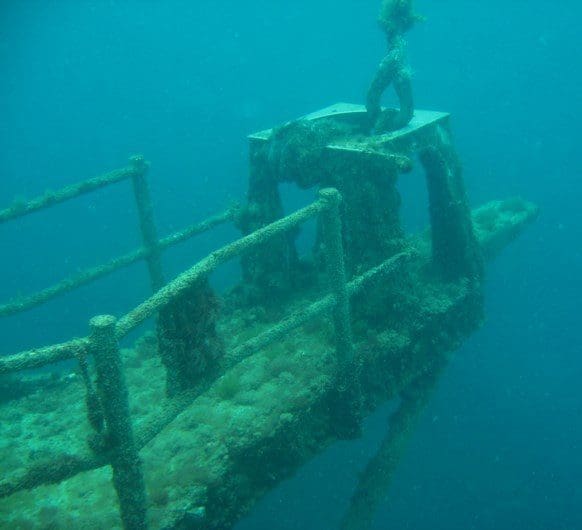
Italian Navy’s minesweeper Gaeta has conducted an underwater research on the wreck of the Oriani-class Destroyer Vincenzo Gioberti.

The ship sank in August 1943, during the WWII, west of Punta Mesco (La Spezia).

It was sunk by a British submarine, the HMS Simoom, which blasted the ship with two torpedoes, breaking it into two pieces.

The research by the minesweeper Gaeta has been conducted in partnership with Ministry of Cultural Heritage and Activities and Tourism (MiBACT), as well as Ministry of Economic Development (Italy) and the Italian Ministry of Education, University and Research (MIUR).

According to the Italian Navy, the ship used a wire-guided underwater vehicle from Gay Marine to aid the research.

The aim of the research was to get to know more about the national underwater cultural heritage.


Source

Maritime Laws for Commercial Diving Accidents

Perhaps one of the most dangerous of the maritime industries is commercial diving. A 2013 article provided a shocking set of statistics related to the field, and said that, “Commercial divers are dying at a rate that is 40 times greater than all other workers, according to the Centers for Disease Control and Prevention,” (Thomas, 2013). Because the work is not officially categorized as hazardous, there is also a bit of laxity and lack of formal regulations.

However, there are some laws in place to protect anyone harmed during commercial diving accidents. Known as the Jones Act and under other federal maritime laws, these protections guarantee compensation to any worker who is injured (or to their surviving dependents) if the issue is caused by negligence.

Because there are some weaknesses in the rules around commercial diving, it can be tough to prove that a problem occurred due to negligence, and this is why anyone harmed in a commercial diving accident must seek a maritime lawyer as soon as they can.

What Can a Maritime Lawyer Do After a Commercial Diving Accident?

It is important to remember or keep in mind that, although there is a perceived weakness in the regulations, there are indeed federal standards that a vessel owner or employer has to follow. Groups like OSHA as well as the Coast Guard have rules for commercial diving operations, and if these are proven to have been ignored or somehow broken, then it becomes negligence.

Remember too that any of the standards for any maritime industry will still apply to a commercial diving operation. The need for adequate training before going to work, the need for seaworthy vessels, and the need for properly maintained and repaired gear and equipment are also essential. Should the vessel owner or the employer fail to perform these basic duties, they are likely to be seen as negligent.

Additionally, you are supposed to have obtained a certain level of expertise and certification before being hired to do certain work. If your employer fails to enforce these standards, it is negligence on their part. It is also negligence if they did not ensure that you had all of the basic training, like CPR or first aid. No dives are to be done without a qualified team of supervisors and technicians as well, and they too have to be fully certified and experienced.

As you can see, there are many ways that an employer may fail to meet the most basic safety standards and be deemed negligent under the laws. When this is the case, they must compensate those who were injured during the performance of their duties – or they must compensate the surviving dependents.

Whether working on an oilrig, on the docks, in a shipyard, or in any other maritime setting, these laws and safety standards apply. Working in the maritime industry alone is risky, but adding further challenges by working beneath the waters and relying on complex equipment to breathe and do your work is quite enough. Being asked to take on further risks by working without proper training, support, or functional gear is irresponsible, illegal and negligent.

For those who know they have been harmed in a commercial diving accident due to negligence, or even if they feel it may have been a case of negligence, it is imperative to meet with a maritime lawyer to discuss the case. A knowledgeable legal expert can provide victims with clarity and support and can help them obtain the compensation that is rightfully theirs under the established laws.

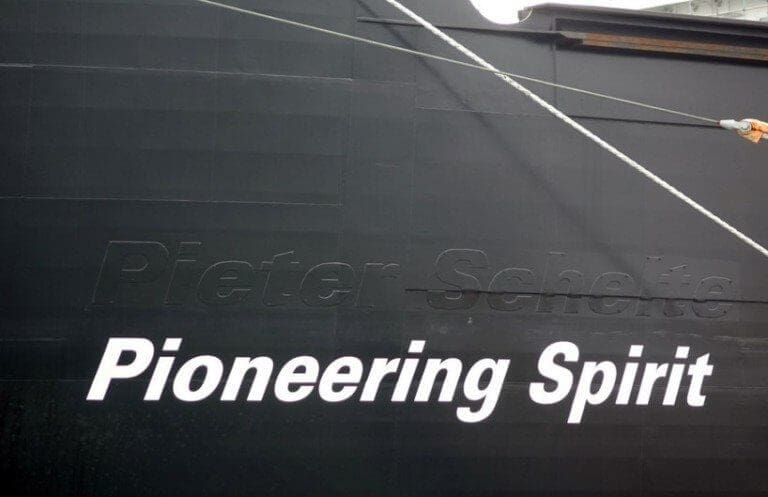
Pioneering Spirit Stinger Completed

A 150-meter steel structure that weighs about 4,200 tonnes was recently loaded out at Vlissingen yard.

The structure is a stinger, a frame that will hang behind the “world’s largest” vessel the Pioneering Spirit.

The stinger is used to lead the pipe to the bottom of the sea during the installation phase.

Smulders was responsible for the production and assembly of the stinger. It was constructed at Iemants in Belgium and assembled in Vlissingen. Including the transition frame to be suspended between the hull and the stinger, the pipelaying unit will be 210 metres long.

Pioneering Spirit’s pipelay tension capacity will be 2,000 t, doubling the capacity of Allseas’ Solitaire and thereby surpassing it as the world’s largest pipelay vessel.

The vessel is expected to start offshore operations in summer of 2016, with removal of the Yme topsides in the Norwegian North Sea.


Source

DNV GL Introduces Offshore Leak Detection Systems Guidance

0

DNV GL has launched globally applicable guidance for leak detection systems for offshore fields.

The Recommended Practice (DNVGL-RP-F302) is based on the findings of a DNV GL led joint industry project (JIP) completed in 2015 with 19 companies, including Eni, Lundin, Petrobras and FMC technologies, and industry regulators as observers.

It covers all the lifecycle phases of a field development for planning, design, integration and operation of leak detection technology in offshore hydrocarbon productions. A thorough process has been defined where the key stages are functional requirements, design requirements, technology selection, detailed design, function testing and operation, DNV GL wrote.

“Until now, there has been no guidance for operators covering selection and operation of offshore leak detection systems for an entire field, including both subsea and surface. Having an optimized leak detection system provides key decision support in limiting the impact of an oil spill, reducing response time and reducing costs from recovery operations,” said Jock Brown, Head of Section Environmental Technology Advisory, DNV GL – Oil & Gas.

“This RP is based on industry experience and provides a robust approach that will support the industry in reducing its footprint and minimizing environmental risks from their operations,” added Brown.


Underwater Welding Dangers

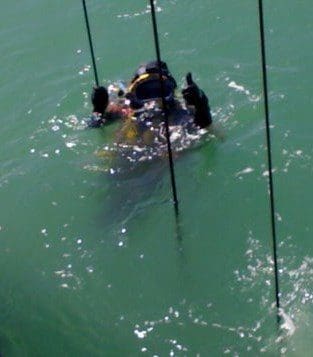
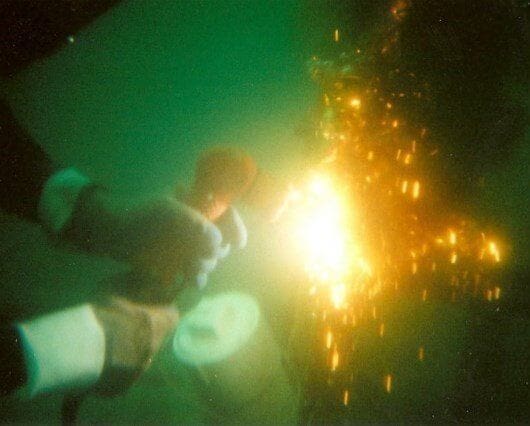
Underwater welding is indeed a very unique and a rewarding career, but it involves a number of risks. Here’s a bit about the dangers involved in underwater welding.
Quick Fact
In 1932, a Soviet engineer, Konstantin Konstantinovich Khrenov invented underwater welding technique, and it was widely applied by the Soviet Navy at the time of World War II.

Underwater welding is a technique that is employed in various marine engineering projects, wherein welding is carried out under the surface of the water. Underwater welding is generally performed on steel, and needs special diving skills on the part of the welder. The functions of an underwater welder include repairing pipelines, offshore oil platforms, ships, and other structures, which are submerged under the water. Considering that taking the entire structures out of water in order to repair them, is not only a herculean task, but also a very expensive one, it seems rather advisable to work on such structures, keeping them in situ. Underwater welding reduces the cost of the company by directly mending the damages under the water, thus saving time and a lot of money. The repairing is done by specialized welders, trained for the job.

Underwater welding can be divided into two main types – dry welding and wet welding. Both these, come under the category of ‘hyperbaric welding, a high pressure welding method. In dry underwater welding, the area which is supposed to be mended is enclosed in a chamber and the water is completely pumped out from that area. The underwater welder, then, performs his repairing work inside this specially prepared chamber, which is totally dry even though it is under the water. Wet welding, on the other hand, takes place in a setting which is completely wet.

Dangers of Underwater Welding

A whole lot of regulations have been framed, so as to ensure that the underwater welder can be as safe as possible in the aquatic environment. Nevertheless, no set of regulations can be foolproof, especially when a person goes underneath the surface of the water, and works with electric equipment. Following are some of the risk factors involved in the process of underwater welding:

Danger of an Electric Shock

The underwater welders, as we know, dive into the water in order to do their job. In spite of all the safety precautions that they may take, they are still quite exposed to the risk of getting an electric shock inside the water. This might happen, especially when the welding equipment that is used is not adapted to work under the water. It is therefore advisable to get the equipment tested properly, and also to confirm that it is well-insulated and that a waterproof electrode is connected to it. This will minimize, if not completely nullify, the risk of underwater electrocution. It is also necessary to switch off the electric current immediately after the work is done.

Possibility of an Explosion

Underwater explosion is another major risk that the underwater welders may have to face. The chances of such explosions are more in processes, wherein both, hydrogen and oxygen are involved, and may lead to the formation of numerous gas pockets. Especially, within the enclosed chamber, during dry hyperbaric welding, the formation and combination of hydrogen and oxygen pockets is dangerous because they are explosive, when ignited. This underwater explosion can be extremely lethal.

Decompression Sickness

Decompression sickness, also known as ‘diver’s disease’, is a condition, wherein a diver (underwater welder in this case) happens to inhale certain harmful gases such as nitrogen, when he dives quickly from a high pressure zone to a low pressure zone. If the welder dives too fast to the surface of the water, the possibility of nitrogen bubbles entering his bloodstream is immense. These bubbles, then spread inside the diver’s body, and start showing numerous adverse symptoms. Decompression sickness may lead variably to rashes, joint pain, paralysis or even death of a person. Decompression chambers and extra divers are provided to the welders as precautions for this kind of danger.

Breakdown of Dental Amalgam

Underwater welders often complain regarding a sort of a metallic taste in their mouth, which seems to be the result of the breakdown of their dental amalgam. Recent studies have shown that in the process of electric welding and cutting under the water, a magnetic field with alternating current gets created. This magnetic field, in turn, induces a secondary current in the oral tissues of the welders, due to which their dental amalgam breaks down.

Musculoskeletal Issues and Hearing Impairment

The underwater welders are prone to certain problems pertaining to their musculoskeletal system, in the long run. Complaints may range from joint pain and muscle stiffness to back or neck pain. Added to this, it has been reported that many of the underwater welders suffer from various kinds of hearing impairments ranging from temporary hearing loss to a permanent one.

Cognitive Problems

Several underwater welders also complain of an impairment of their cognitive functions. These include problems such as partial loss of memory, lack of the ability of verbal reasoning, etc. In some cases, sudden occurrence of clinical personality change has also been witnessed. Some of the cognitive problems in underwater welders occur also due to the decompression sickness that they might be suffering from.

Other Dangers
Underwater welders may sometimes, face hazards of drowning due to equipment failure.
They may also suffer from lung, ear or nose damage, because of the high pressure that is exerted underneath the water.
Dangers that are posed by the marine animals, cannot be ignored.
The underwater welders are, however, constantly in contact with their team members who are on the surface, in case they need any help. Immediate assistance is provided to them in cases of risks or if they happen to face any kind of trouble under the water. The underwater welders are also provided with sufficient air supply from the standard scuba breathing apparatus.

Underwater welding can be a promising career for people, who love adventure and going to virtually inaccessible places. However, proper and adequate training is required in order to ensure the safety of the welder, and also to make sure that nothing goes wrong while the work is in progress and even after it is done.


Source

EU Regulators Resume Scrutiny of Halliburton, Baker Hughes Deal

0

EU competition regulators have resumed their scrutiny of U.S. oil industry services group Halliburton Co’s plan to acquire smaller rival Baker Hughes, a deal which U.S. authorities say is uncompetitive and wants to block. The European Commission, which halted its investigation into the $35 billion deal last month while waiting for more details from the companies, will now decide by Aug. 11 whether to clear or veto the takeover.

“Once the requested missing information is provided the Commission restarts the clock,” Commission spokesman Ricardo Cardoso said in an email. The EU antitrust authority has previously expressed concerns that the deal may reduce competition and innovation.

Halliburton has said it is willing to sell assets from both companies with a combined 2013 revenue of $5.2 billion but has yet to make a formal offer to regulators. The U.S. Justice Department filed a lawsuit last week to stop the merger, valued at $35 billion when it was first announced in November 2014, saying it would leave only two dominant suppliers in 20 business lines in the global well drilling and oil industry construction services industry, with Schlumberger NV being one of the two. 


Source

Damen Equips Nautilus’ Mining Vehicles

0

Damen Dredging Equipment has delivered dredge pumps and valves, fitted on the remote operated deep sea mining vehicles, which will be deployed on Nautilus Minerals’ Solwara 1 project offshore Papua New Guinea.

The UK-based company, Soil Machine Dynamics (SMD), designed and built three Seafloor Production Tools (SPTs) for the project.

The first machine, the Auxiliary Cutter, has been fitted with the electrically driven dredge pump type BP45-1100, plus a number of dredge valves.

For the second machine, the Bulk Cutter, Damen delivered another dredge pump and dredge valve. The third machine, the Collecting Machine was supplied with a customized cutter unit, 3 electrically driven dredge pumps type E-BP2320 as well as a number of dredge valves.

The three SPTs were shipped in early February to a test site in Oman, where all systems will undergo wet testing. The first mining operations on the Solwara 1 are scheduled for 2018.


Source