Home Blog Page 34

RAN Inspects Sunken Japanese Midget Submarine

The Royal Australian Navy (RAN) has revisited the final resting place of a Japanese midget submarine M24 as part of a program to preserve the Second World War wreck.

Involved in the attack on Sydney Harbour which resulted in the sinking of accommdation ferry, HMAS Kuttabul, the location of the submarine was a mystery for 64 years until 2006.

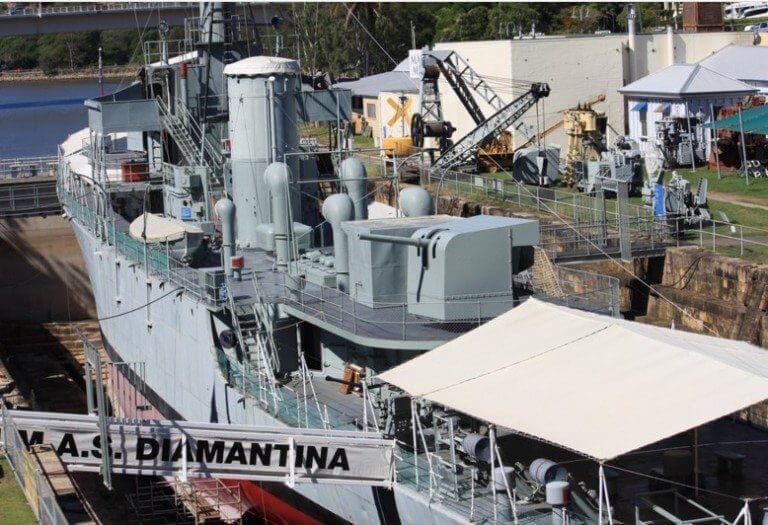
Recently minehunter, HMAS Diamantina, visited the wreck in support of a request from the New South Wales Office of Environment & Heritage to carry out the inspection of the submarine.

Commanding Officer of HMAS Diamantina, Lieutenant Commander Iain Hutchins said:

“As a Minehunter, our primary role is to locate and dispose of mines in order to keep Australia’s sea lanes open for business, tourism and commerce. However we can just as easily put these skills to use in locating M24 which is why we were more than willing to help the New South Wales Office of Environment & Heritage.”

Using the camera on the ship’s remotely operated vehicle, Diamantina was able to inspect the hull which revealed the submarine remains half buried in surrounding sediments on a shelving sand plain.

Lieutenant Commander Hutchins said his crew were honoured to be tasked with this inspection.

“It is a particularly delicate operation to inspect the submarine because it is likely the crew remains are within the hull and there are scuttling charges which pose a risk.
“The wreck is also of great heritage value to the Japanese government, which is another reason why preservation of the M24 site is important,” he said.

The submarine was discovered by a group of recreational divers, following the detection of a seabed anomaly using an echo sounder, the wreck lies just off Bungan Head, Newport, at a depth of approximately 50 metres.

Working with maritime archaeologists from the New South Wales Office of Environment & Heritage, the inspection confirmed the wreck was that of M24, one of the three Type ‘A’ Imperial Japanese Navy midget submarines which attacked Sydney on the night of May 31, 1942.


Marine Industry Looks To Cruise Ships, Wind Farms To Weather Oil Slump

0

Marine and offshore engineering companies are turning to cruise ships, fishing vessels or even sea-based wind farms to keep their earnings afloat as weak oil prices slash new spending by big energy companies.

Many companies that have focused on building or chartering vessels to support offshore drilling and exploration have seen orders and charter rates tumble following a two-thirds drop in oil prices since mid-2014, pushing them to diversify.

Singapore-listed Vard Holdings last month signed a letter of intent to build four luxury expedition cruise ships for French company Ponant. The vessels are designed to carry thrill seekers to the polar regions and remote ports that are inaccessible to most ships.

Vard has over the last few years mainly catered to the energy sector, but wants to grow its non-oil business that includes research and naval vessels.

“We need to – and we want to – reactivate that and make that a much bigger part of the business, now that the oil and gas market is down,” said Holger Dilling, an executive vice president at Vard, which is majority-owned by Italian ship builder Fincantieri.

Oil and gas made up 80 percent of the business over the past five years, but this could fall to 40 percent over the next two years, Dilling said.

Another problem for the industry is a glut of offshore supply vessels (OSVs) that serve oil rigs.

The number of such vessels rose 83 percent between January 2008 and June 2015, whereas the number of drillships, jackups and semisubmersibles increased only 38 percent, IHS Energy data shows.

The global OSV fleet will rise by another 9-18 percent this year, on top of the 4,400 ships already operating, according to ship broker Banchero Costa.

Charter rates have dropped by two-thirds for some vessels in the last two years, from between $17,000-$20,000 a day in March 2014 to around $6,000 now, according to shipping services firm Clarkson.

With so many vessels lying idle, three Australian companies, including shipbuilding project management firm Silverstar Marine, have partnered to convert some into luxury explorer vessels complete with a helideck in order to target well-heeled customers.

Clean Energy

“It’s very important for (firms) to diversify, given that most industry players are expecting lower-for-longer oil prices,” said Joel Ng, an equity analyst at KGI Fraser Securities.

“It will not be enough to offset the losses from oil and gas, it will just cushion a bit.”

The offshore renewables industry is also fast becoming a target market as countries such as China boost their clean energy capacities.

Singapore-based Ezion Holdings, which owns service rigs and liftboats used in offshore construction and maintenance projects, signed a joint venture in February with a Chinese state-owned enterprise to support offshore windfarms.

China plans to increase its installed offshore wind capacity to 30 gigawatts by 2020 from just 2.5 gigawatts at present, according to brokerage DBS Vickers Securities.

The broker said a liftboat could help install 200 megawatts of offshore wind capacity a year, meaning that up to 30 liftboats could be required over the next five years.

Windfarm support vessels and a luxury river cruise vessel are among new contracts won by Triyards Holdings, which has branched out since its listing in 2012 when its order book was almost 100 percent from oil and gas clients.

“It has always been our strategy to have a diversified pipeline of new building projects,” Triyards, majority-owned by oilfield service firm Ezra Holdings, said in an email.

It is one of many shipbuilding and offshore support firms that operate out of hub Singapore. Output from the marine and offshore engineering sector dropped 21 percent to S$19.6 billion ($14.5 billion) in 2015, preliminary data from the Economic Development Board shows.

“Singapore firms face competition from other contract hungry shipyards and operators that already have orders to build and provide ships to wind farm projects,” said Ralph Leszczynski, head of research at ship broker Banchero Costa in Singapore.


Source

Baker Hughes: U.S. Drillers Cut Rigs for 3rd Week to Nov 2009 Lows

0

U.S. energy firms cut oil rigs for a third week in a row to the lowest level since November 2009, oil services company Baker Hughes Inc said Friday, as energy firms keep slashing spending despite crude futures prices jumping roughly 50 percent since hitting a near 13-year low in February.

Drillers cut 8 oil rigs in the week to April 8, bringing the total rig count down to 354, Baker Hughes said in its closely followed report.

The number of U.S. oil rigs currently operating compares with 760 rigs operating in the same week a year ago. In 2015, drillers cut on average 18 oil rigs per week for a total of 963 for the year, the biggest annual decline since at least 1988 amid the biggest rout in crude prices in a generation.

Before this week, drillers cut on average 13 oil rigs per week for a total of 174 so far this year. Energy firms have sharply reduced oil and natural gas drilling since the selloff in crude markets began in mid-2014. U.S. crude futures collapsed from over $107 a barrel in June 2014 to a near 13-year low around $26 in February.

U.S. drilling services company Patterson-UTI Energy Inc said it had 64 drilling rigs in operation in March, compared with 142 during the same month in 2015.

But with U.S. crude futures trading around $40 a barrel, up about 50 percent since hitting the February low, some analysts think the rig count will rise later this year and next year as prices increase.

Looking forward, U.S. crude futures were fetching around $42 a barrel for the balance of 2016 and about $44 for calendar 2017.

With the decline in oil rigs this week and an increase of one natural gas rig , total U.S. oil and gas rigs fell for a 16th week in a row, down seven to 443, the lowest since at least 1940, according to Baker Hughes data going back that far.

Analysts at Cowen & Co, a U.S. financial services firm, this week estimated the number of active U.S. natural gas and oil rigs would slide from an average 559 in the first quarter to 411 in the second quarter and 401 in the third quarter before rising to 415 in the fourth quarter.

In Texas, meanwhile, land rigs fell below 200 to 195 for the first time since at least 2000.


Source

Skandi Açu Pipelay Vessel Christened

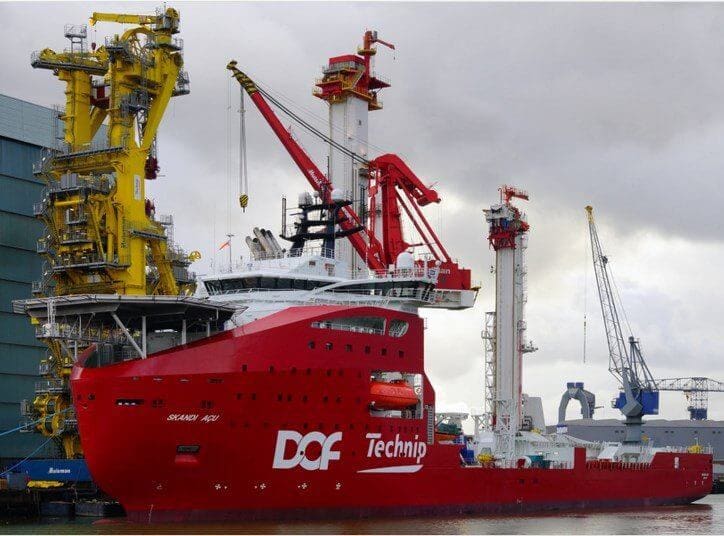
Huisman, together with VARD, DOF Subsea and Technip celebrated the christening of a pipe lay support vessel (PLSV), Skandi Açu, the Dutch specialist in lifting, drilling, and subsea solutions informed through its social media on Monday.

The PLSV, equipped with Huisman’s 650mt flex-lay system and the 2,500mt and 1,500mt underdeck carousels, is designed for installation of umbilicals, flexible flowlines and risers in Brazil.

The Skandi Açu was designed and built by VARD for DOF Subsea and Technip. Together with three other PLSVs, the building of Skandi Açu represents the largest order in VARD’s history.

VARD secured an order of USD 1.1 billion in August 2013 to build the four PLSVs.

The first two sister vessels Skandi Açu and Skandi Búzios, with length of 146 meters and accommodation capacity for 120 persons, are capable of operating in up to 3,000 m water depths.

The other two PLSVs, the Skandi Olinda and Skandi Recife will be fit to operate in water depths of up to 2,500 meters.


Source

TGS to See Revenues Drop More than 60 Pct

0

Geophysical contractor TGS said it expects net revenues for the first quarter of 2016 to be approximately USD 64 million.

This compares to net revenues of USD 172 million in the first quarter of 2015, which represents a decrease of close to 63 per cent.

In addition to the undrawn revolving credit facility of USD 75 million, TGS reported cash balance of around USD 210 million.

The Oslo-listed company said that for 2016 it expects multi-client investments of approximately $220 million (more than 50 per cent lower than last year), of which 45 to 50% should be pre-funded. This financial guidance has not changed since January 7, 2016.

“This last quarter has arguably been the most severe of this down cycle with many customers focusing on cost and headcount reduction resulting in a significant pull back from exploration spending. TGS will continue our strong focus on cost control, cash flow and maintaining a healthy balance sheet in this challenging market,” said Kristian Johansen, CEO, TGS.

TGS said it will release its Q1 2016 earnings report on April 21, 2016. The company posted net loss of USD 121.5 million in Q4 2015.


Source

Diving as a profession

Almost every one of us has at least dreamed about turning our beloved diving hobby into a career. For us it makes perfect sense: when sitting behind an office desk 9 to 5, turning your favourite avocation into vocation might start to sound like something you should have done years ago. But before you get too excited about the idea of making those diving highlights your everyday life, we recommend you keep on reading. Being a professional diver not only requires great physical fitness, but also fearless attitude towards working often under challenging conditions. The main question is, what do commercial divers and professional recreational dive professionals actually do and what does it take to become one? Take a look at our blog post about the world of professional divers and how to become one!

Recreational diving is a big business, and being a qualified diving instructor allows you to work anywhere around the world. Being a professional diving instructor may sound like a dream job: your work is probably located in some tropical holiday resort, and you get paid for diving – it couldn’t get any better, right? However, before you start writing any resignation letters, it’s good to keep in mind that working as a recreational dive professional is not physically but also mentally quite demanding. As an instructor, you are the one responsible for everyone’s safety, and in case any blunders happen, you are the first in line. But after all, being able to dive all day every day and getting paid for it, sounds good to us!

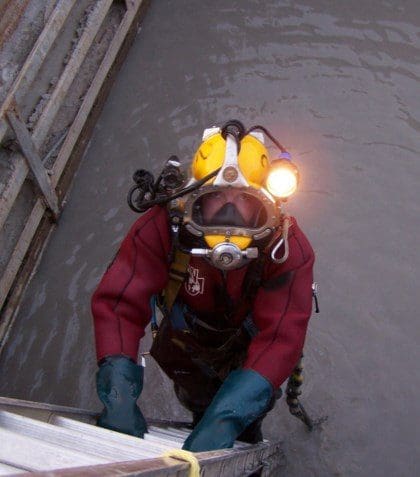
If you are looking for more rugged working environment, commercial diving might be a better career choice. Commercial diving covers a wide range of different activities, although it’s mostly associated with offshore oil industry. In reality, there are many inland commercial diving professions, varying from being a nuclear reactor diver to maintaining and cleaning underwater structures such as bridges, dams or water tanks. Regardless of the field of specification, commercial diving requires a skill set unlike any other – and in case you wondered, being an enthusiastic recreational diver is not quite enough (but it helps, though).

Offshore vs. Onshore diving

Recreational diving professionals can work anywhere around the world. Most of us probably associate recreational diving with warm waters and tropical destinations, but diving instructors can be located even from the coast of Greenland. If you are more into offshore working and hanker after being at the sea, a job on a cruise ship might be the most suitable solution for you. Being a diving instructor on a private yacht or cruise ship is an awesome opportunity to see the world, but it is also hard work: you will have off days onboard, but unlike on onshore diving jobs, you probably won’t be able to exit your workplace. Furthermore, despite the luxurious interior these ships typically have, crew’s cabins might be a completely different world. On the other hand, if you are cruising around the Caribbean, who stays inside their cabin anyway? 😉

Commercial diving on the other hand can be roughly divided into two major categories, which are offshore and onshore. If you are looking for a career in offshore diving, be prepared for great adventures at sea and long working periods: offshore commercial divers usually work for 4-6 weeks in a row, even more than 12 hours a day and then stay inland around two weeks. Offshore is popular among commercial diving novices since it is a perfect opportunity to experience exhilarating new offshore adventures and become a part of a tightly knit team. And it’s a great chance to see the world too: you can find offshore diving jobs from the Gulf of Mexico all the way to the coast of northern Europe. 

For prospecting commercial divers who prefer more steady working hours and appreciate the ability to go home after a day at work, a career in onshore diving might be the best solution. The job description consists of tasks similar to offshore counterpart, like welding and repairing underwater pipelines – the working environment and schedule are quite different, though. If you are after some real onland adventures and working hazardous dark liquids does not cause shivers down your spine, then so-called HAZMAT diving might be your thing. Those toughies work in environments like nuclear plants and septic tanks, wearing pressured and completely sealed suits to avoid any contamination. The wetsuits in our webshop can offer you a good protection during your normal dive, but they might not be protective enough for conditions like these…

Requirements

It might not be a huge surprise for you that in order to become a professional diver, you need to have good swimming skills and be in good physical health. Besides being in good shape, age is one of the physical factors you might need to consider too (especially after reaching your so-called mature years). There is no certain age limit for professional diving, but most divers are restricted from deep diving for physiological reasons after age 45. This might be the reason that many prospective employers prefer hiring professional divers aged between 18 and 35. However,  if making a career out of diving is your dream, we say go for it no matter your age – take your cue for example from Mr. Ray Ives, who worked as a commercial diver at the honorable age of 75!  

Professional diving, like many other physically challenging professions are often seen as a “man’s world”. Even though majority of professional divers are men especially on commercial side, there aren’t any real physical barriers for women to pursue a career in the field. More important than your gender is your eagerness to learn and ability to adapt yourself to almost constantly changing working environment.

If you want to make a career especially out of commercial diving, we strongly recommend you also learn at least some basic mechanics. Knowing how to use a screwdriver will come in handy at some point in most diving jobs, whether you are a diving instructor or an underwater welder. This does not mean you need to be an expert handyman in order to pursue a career in diving, but having some sort of mechanical inclination will definitely help. Maybe even more important than the knowledge of basic mechanics is a strong problem-solving ability: as commercial diver you will probably face a lot of tricky situations underwater where you need to find the little MacGyver inside you. As you might already know, underwater situations rarely go by the book, which is why some creative thinking is often required.

Basic education

As we said before, in order to become a competent professional diver you need a little more than just passion for diving (even though it obviously makes the job more pleasant). The educational requirements for becoming a professional diver are not overly difficult to pass: a high school diploma or equivalency are enough to start from. Diver education varies depending on the career field you are pursuing, but all the courses and training programs contain three components: classroom studies, confined water or pool training and open water training.

As you divers might already know, becoming a recreational dive professional requires passing multiple education levels, progressing from scuba beginner to advanced, then rescue diver and dive guide, finally becoming a certificated dive instructor. This basic education path is used by main recreational diving organizations, such as PADI, SSI, CMAS and NAUI and offers a solid ground for your future career as a dive instructor. To put it briefly, a diver certification or C-card in your wallet is the best guarantee for prospecting employers of your competence to work as a diving instructor.

When it comes to training, striving commercial divers have a lot to choose from: there is a wide range of different commercial diver training programs available around the world, which will take something around two to 12 months to complete. All these courses have one factor in common, that is to say commercial diver certification – to be eligible to work as a commercial diver, you should hold a valid certification. Since there are many certifications known worldwide, a general rule is that you must be certified in the country where you are employed. Once you hold the right certification in your back pocket, you are ready to start job-hunting!

Career in professional diving might not be the easiest one, but in our opinion it can be more rewarding and thrilling than any other – why not see for yourself, right? 😉 We hope this shortish representation about different fields of professional diving provided you some useful information in your possible career planning (or just interesting new information). If this text raised any questions, feel free to ask us – our Divestock crew is always happy to help!

Happy diving! 🙂

Divestock crew


Source

India Echoing Pre-Boom China As New Center Of Oil Demand Growth

0

In the energy world, India is becoming the new China.

The world’s second-most populous nation is increasingly becoming the center for oil demand growth as its economy expands by luring the type of manufacturing that China is trying to shun. And just like China a decade ago, India is trying to hedge its future energy needs by investing in new production at home and abroad.

India may have one advantage its neighbor to the northeast didn’t. While China’s binge came during a commodity super-cycle that saw WTI crude reach a high of $147.27 a barrel in 2008 — due in no small part to its demand — India’s spurt comes during the biggest energy price crash in a generation. While oil has tumbled more than 50 percent from mid-2014 levels, the South Asian nation spent $60 billion less on crude imports in 2015 than the previous year even while buying 4 percent more.

“In addition to the boost from low oil prices, structural and policy-driven changes are under way which could result in India’s oil demand taking off in a similar way to China’s during the late 1990s, when Chinese oil demand was at levels roughly equivalent to current Indian oil demand,” said Amrita Sen, chief oil analyst for Energy Aspects Ltd. in London.

In 1999, China’s economy was less than a 10th of its current size of more than $10 trillion, and bicycles vied for space with taxis and buses on crowded streets in major cities like Shanghai. In the ensuing 17 years the economy, spurred on by foreign investment in manufacturing, grew from the seventh largest in the world to No. 2. Vehicle sales surged and oil demand has nearly tripled since then, positioning the country to overtake the U.S. as the world’s largest crude importer this year.

Buying Spree

China’s thirst for energy sent its companies on an unprecedented buying binge on every continent (except Antarctica), scooping up $169 billion worth of energy assets overseas in the past 10 years, according to data compiled by Bloomberg.

India’s rise dovetails with a reopening by Iran, once the second-biggest producer in OPEC until sanctions choked output and investments. Indian Oil Minister Dharmendra Pradhan will lead a delegation this month to the country, he said in an interview. India is working with the Persian Gulf state to develop a port in Chabahar, near Iran’s border with Pakistan and about 800 kilometers from India’s west coast. The two countries are also discussing economic zones and joint projects on fertilizer plants and petrochemical projects, Pradhan said.

“Our engagement with Iran will be multi-dimensional,” Pradhan said.

India Rising

India appears to be in the same position China was at the start of its growth binge. Asia’s third-biggest economy consumed 4 million barrels of oil last year, according to the International Energy Agency, and is expected to surpass Japan as the world’s third-largest oil user this year. It will be the fastest-growing crude consumer in the world through 2040, according to the IEA, adding 6 million barrels a day of demand, compared to 4.8 million for China.

Just like China’s ascent, the growth is being driven by manufacturing. Indian Prime Minister Narendra Modi’s “Make in India” campaign aims by 2022 to create 100 million new factory jobs and increase manufacturing’s share of the economy to 25 percent from about 18 percent when he took office in 2014.

Manufacturing drives oil use both by increasing the amount of goods that need to be moved around on ships and trucks, and by raising living standards of workers. Rising wages allowed Indians to purchase a record 24 million new vehicles in 2015.

On The Road

“In a growing economy, where there is so much of emphasis on manufacturing, naturally the demand for energy will grow,” B. Ashok, chairman of Indian Oil Corp., the nation’s largest refiner, said in an interview. “The emphasis on manufacturing and infrastructure building contributes a lot to increasing the employment potential, besides bringing in a lot of investments. There is bound to be a lot of more movements on the roads, in terms of goods and services and passengers.”

India already relies on imports for 80 percent of its oil and products needs, so it is also following China’s game plan of investing in energy-producing assets. Indian companies pledged $3 billion in asset purchases outside the country in the fourth quarter of 2015, the highest level since 2012, according to data compiled by Bloomberg. Firms have proposed paying $5 billion toward Siberian oil and gas fields, which would make their equity share about 250,000 barrels a day, compared with total domestic output of 760,000.

Cash Ready

The timing for such investments is fortunate because low energy prices have made many global majors wary of pouring money into oil and gas fields, said Vikas Halan, Moody’s Investors Service lead analyst for oil and gas companies in South and Southeast Asia. In the past, Indian companies would be elbowed out of the way of such acquisitions by deeper-pocketed competitors, including Chinese oil companies.

“What is happening now is that a lot of companies, who were in competition earlier, are not able to compete,” Halan said. “It is effectively a free run for companies who have been sitting on cash, like the Indian ones.”

India is also developing its own energy resources. State-owned explorer Oil & Natural Gas Corp. recently approved $5 billion more to develop a field off the country’s east coast, even as oil firms worldwide delay more than $380 billion of projects. The development could add about 10 percent to India’s oil production and 18 percent to its natural gas output, data compiled by Bloomberg show.

“Economic expansion is priority for the Modi government, and energy is a key part of that story,” said Virendra Chauhan, a Singapore-based oil analyst for Energy Aspects Ltd. “Indian energy companies will be strategic in their buying. With prices where they are, it makes sense.”


Source
WHOI Welcomes RV Neil Armstrong

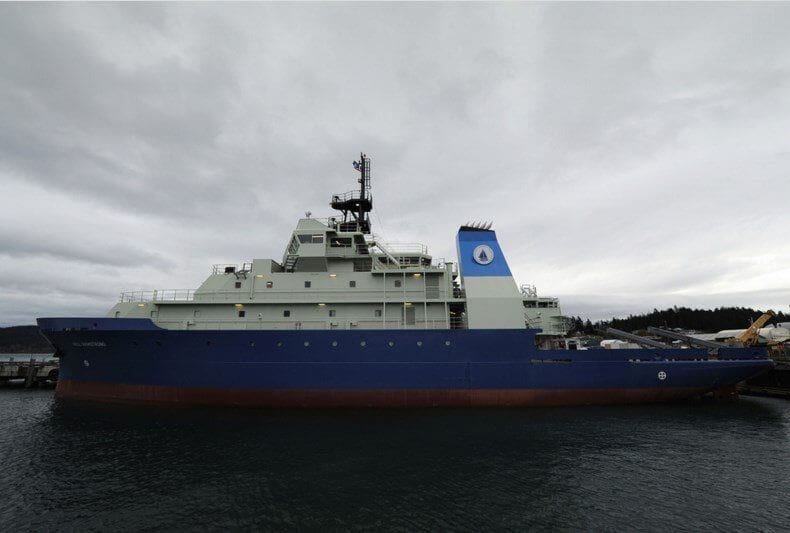
The research vessel Neil Armstrong arrived to its home port for the first time at the Woods Hole Oceanographic Institution (WHOI) dock Wednesday, escorted by the WHOI coastal research vessel R/V Tioga, two Coast Guard boats and fireboats from neighboring towns.

“What a wonderful day for Woods Hole, for the Commonwealth of Massachusetts, for Woods Hole Oceanographic Institution, and the entire ocean science community,” said WHOI President and Director Mark Abbott. “We’re very proud to have been selected by the Office of Naval Research to operate the Neil Armstrong. It is an enormous honor and a great responsibility.”

Six years ago, the U.S. Navy announced plans to construct two ships in a new Ocean Class of research vessels and in 2010, awarded WHOI the no-cost lease to operate the first of the ships. Two years later, the Navy announced the first ship would be named Neil Armstrong and its sister ship, to be operated by Scripps Institution of Oceanography, would be named Sally Ride. The 238-ft. Neil Armstrong is the newest ship in the U.S. academic fleet, and one of just seven in that fleet capable of accessing all but ice-covered areas of the global ocean.

The Neil Armstrong emerged over the horizon between Martha’s Vineyard and Naushon Island at approximately 9:45 a.m. Wednesday, having completed a weeklong expedition that started in Norfolk, Va., to test some of the vessel’s research capabilities.

The Neil Armstrong is the most recent in a long string of ships operated by WHOI since 1930, including Atlantis, the nation’s first vessel constructed specifically to carry out oceanographic research. The Armstrong replaces the R/V Knorr, which served ocean science for 44 years. Many of the Armstrong’s crew, including Captain Sheasley, served together aboard the Knorr.

Technology Advances

The R/V Neil Armstrong is the most technologically advanced ship in the U.S. academic fleet. The ship contains two multi-beam echo sounders designed to operate at different depths, making Neil Armstrong and, when completed, Sally Ride, the only ships in the UNOLS fleet equipped to conduct high-resolution seafloor surveys almost anywhere the ship can sail.

The ship’s three acoustic Doppler current profilers (ADCPs) can scan the water column at different frequencies to reveal the invisible structure of water at varying depths and resolutions, and a multi-beam, multi-frequency echosounder, the EK-80, can not only detect the presence and abundance of marine life beneath the ship, but also offers the potential to differentiate among species of fish and other marine life hidden beneath the surface.

From an engineering standpoint, as well, the ship is state-of-the-art. In addition to clean-burning diesel-electric generators, variable-frequency DC propulsion means less wear-and-tear on critical components and higher efficiency. The new ship’s integrated controls provide access to virtually every critical system, from propulsion and navigation to electrical load to heating and air conditioning to ballast, on touch screens in the engine room and bridge. The navigation system can be monitored and diagnosed from shore.

The R/V Neil Armstrong can accommodate 24 scientists and a crew of 20 at sea for up to 40 days. Throughout the spring and fall the ship will continue to conduct more so-called science verification cruises to test everything from the layout of the ship’s lab to its equipment handling systems to its collection of high-tech sensors.

Source: WHOI


GE’s Oil Unit Seen Finding `Missing Piece’ With Baker Hughes

0

General Electric Co. could become one of the top players in the oil services and equipment industry if it decides to bid for Baker Hughes Inc.

A Justice Department lawsuit filed this week against Halliburton Co. to stop the merger of the world’s second- and third-largest oilfield service companies could soon put Baker Hughes back in play, with GE seen as the most likely bidder. Halliburton and Baker Hughes have said they plan to contest the government’s case, which could delay the timing of any future takeover offers. In December, GE was said to be exploring bids for various assets Halliburton was marketing in an attempt to secure antitrust approval for the deal.

“This is one way you could really accelerate yourself in the oil and gas industry,” J. David Anderson, an analyst at Barclays Plc, said Thursday in a phone interview. “Buy Baker to fill in the gap and all of a sudden, you’re one of the more dominant oil service companies out there.”

GE has expanded its oil and gas business in recent years through more than $10 billion in acquisitions, making it the company’s fourth-largest division. Yet, within the world of oilfield services and equipment manufacturing, the company ranks 11th, according to Tulsa, Oklahoma-based consultant Spears & Associates. Among GE’s four largest business units in the oilfield sector, none rank larger than third for market share. A large acquisition would vault GE into the top tier.

“If they buy Baker Hughes, they’re immediately in the top 3,” Anderson said. “This is sort of the big missing piece.”

Melanie Kania, a spokeswoman for Baker Hughes, and David Lurie, a spokesman for GE, declined to comment.

Central Focus

Oil and gas has become central to GE as Chief Executive Officer Jeffrey Immelt focuses operations on industrial manufacturing. He is selling the bulk of GE’s finance arm and its home-appliances unit while expanding divisions making drilling equipment, gas turbines and jet engines.

With the oil market slumping, GE is likely to be opportunistic as it explores potential acquisitions, said Deane Dray, an analyst with RBC Capital Markets. “They are interested, but they’re going to be very, very discerning on the valuation because they’re in the driver’s seat.”

GE has a budget target of about $10 billion for dealmaking in the next few years. While the company could go well over that for the right acquisition, a large purchase may be difficult for some investors to stomach since that could conflict with GE’s stock buyback plans, Dray said.

Even small bolt-on deals could set up GE’s oilfield equipment-making unit to cash in on a return to industry growth in a couple years, Anderson said. Providing offshore services and equipment to the oil industry looks “dead” until about 2018, he said.

Regulatory Status

In addition, the timing of a large, single acquisition could be slowed by the overhaul of GE’s lending operations, said Scott Davis, an industrial-company analyst with Barclays. After agreeing to sell more than $160 billion of assets over the past year, GE last week submitted an application to U.S. regulators to drop its designation as a too-big-to-fail financial firm.

Until GE is freed from the classification — and the regulatory restrictions that come with it — the company is unlikely to pursue larger deals that would require adding significant leverage to its balance sheet, Davis said.

“Anything $6 billion, $7 billion in size or less, I think they would do without hesitation,” he said. “Anything above that and you start to get a little more risky.”

Baker Hughes rose 3.9 percent to $43.56 at 11:09 a.m. in New York, while GE climbed 0.8 percent to $30.88.

While it makes sense on paper for GE to make a play for Baker Hughes, a deal may never happen, said Andrew Cosgrove, an analyst at Bloomberg Intelligence. Getting bigger in oilfield services doesn’t mean getting better, especially in a world where crude is not forecast to climb back to $100 a barrel anytime soon, he said.

A large acquisition in the oil and gas business would not be “a big part of that margin-uplift story that GE’s trying to achieve,” he said.

Even if GE is interested in a deal, Baker Hughes may not be ready right away. Its merger agreement with Halliburton has made it harder for Baker Hughes to cut more of its costs during the downturn, Brian Ulhmer, an analyst at GMP Securities in Houston, said in an interview.

“You cut all those costs out, you slim it down, then I think you’re positioning yourself for a sale,” Anderson said.


Source

EMGS Records Lower Vessel Utilization in Q1 2016

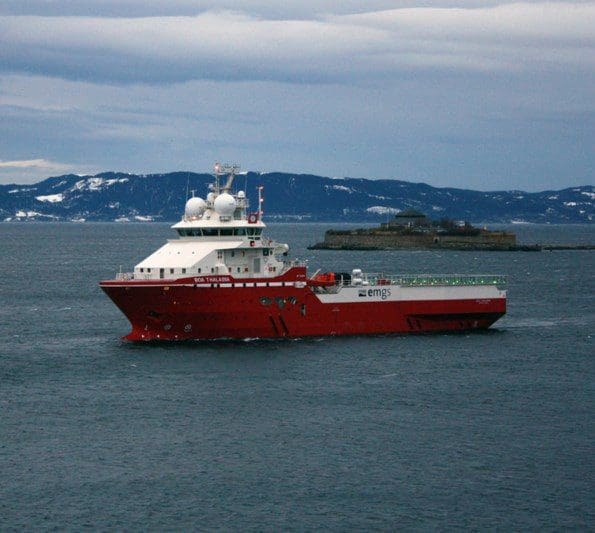
Norway’s Electromagnetic Geoservices (EMGS) reported vessel utilization for the first quarter 2016 at 55% compared with 76% for the first quarter 2015.

In the first quarter of 2016, the vessels were allocated 29% to contract and 26% to multi-client projects.

EMGS had two vessels in operation in the first quarter 2016.

The BOA Thalassa started contract work in India in January 2016. The project was completed a month later. Following the contract work in India, the vessel began a multi-client project west of India in March, and the completion of the project is planned for April. The vessel’s utilization for the first quarter was 73%.

EMGS’s second vessel, the Atlantic Guardian was idle in January and off hire on a planned yard stay from January 31 until March 05.

In addition, the vessel started a multi-client project in the Hammerfest Basin on March 10. The project is expected to be completed in the first part of May. The vessel’s utilization for the first quarter was 38%.

The EM Leader has been laid up since May 15, 2015.

EMGS stated that it expects to record zero multi-client revenues in the first quarter 2016.