Home Blog Page 275

Polarcus, NAMCOR Ink MoU

0

Polarcus and the National Petroleum Corporation of Namibia (NAMCOR) have signed a Memorandum of Understanding (MoU) that aims to assist with the exploration and development of Namibia’s offshore petroleum resources.

Under the terms of the MOU, Polarcus will provide 3D/4D marine seismic acquisition and processing services together with its geoscience expertise to help promote industry investment offshore Namibia.

Commenting on the agreement, Stephen Doyle, SVP Multi-Client Polarcus, said: “Namibia has an extensive yet still relatively unexplored shelf and we are excited at the opportunity to collaborate with NAMCOR on several initiatives to assist in realizing Namibia’s full potential. The country has seen an upturn in exploration activity over recent years with encouraging results that justifies further exploration and development to unlock Namibia’s petroleum resources.”

NAMCOR’s Acting Managing Director Ludwig Kapingana said: “The accord provides an opportunity for the national oil company to get much needed technical support, which I am confident will strengthen NAMCOR’s participation in future hydrocarbon exploration activities in Namibia.”

Drone Inspection Firm Sky Futures Wins New Investment

0

Oil and gas inspection firm Sky Futures has received an investment of up to $1 million from San Francisco-based Airware that it will use to improve its drone-based inspection technology for the oil and gas sector.

Airware has set up a Commercial Drone Fund that is designed to invest in companies that are developing technologies that Airware believes are “critical to scaling the use of drones across a variety of commercial applications”. The fund is making investments of between $250,000 and $1 million in early-stage companies involved in commercial drones and will focus on five key areas: sensor hardware, software applications, cloud-based aerial data analysis tools, drone-based services and complete solutions for specific industries.

It is in this last category that Sky Futures qualifies for Airware’s investment as it focuses on using drones equipped with high-tech cameras and sensing devices to deliver inspection services for oil and gas companies. 

Sky-Futures’ drones collect high definition video, stills and thermal imagery data, which is analyzed in a proprietary data platform and delivered to clients as a technical report. The London-headquartered business currently delivers drone inspection services in the North Sea, the Middle East, South East Asia and North Africa, and has recently opened an office in Houston, Texas to serve clients in the Gulf of Mexico.

“While the commercial drone industry is evolving rapidly, we still see gaps in the ecosystem. The Commercial Drone Fund will identify and boost the rising stars that are advancing important drone-related initiatives, such as powerful new sensors, intelligent analytics, or innovative field services,” Airware CEO Jonathan Downey said in a statement.

Sky Futures CEO James Harrison added:

“We’re excited to be working with Jonathan Downey and the Commercial Drone Fund to shape the future of commercial drone technology to save time, cut cost, and improve safety for industry.

“Our solutions are already in use with over 35 of the biggest oil and gas companies globally. Investment from the Commercial Drone Fund will speed up the delivery of our technology roadmap and create more valuable data to our existing client base faster.”

The investment is the second achieved by Sky Futures this month. The firm announced on May 11 that venture capital fund MMC Ventures agreed to put $3.8 million into the business. 


Source

Huisman Buys into Fistuca

0

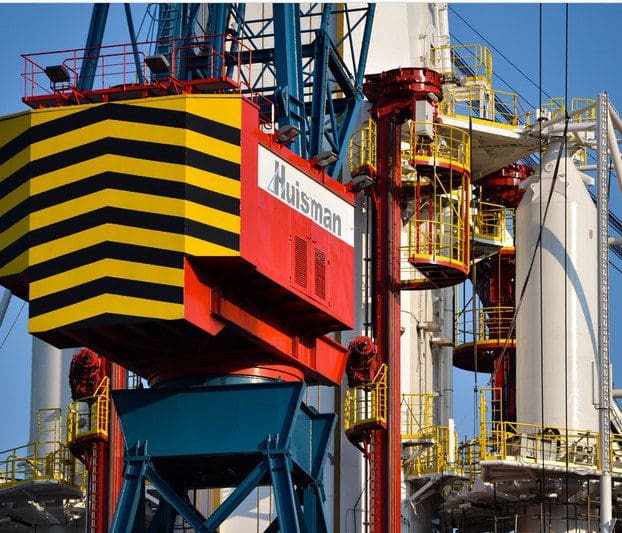
Huisman and the management of Fistuca BV have reached an agreement on the participation of Huisman as shareholder and investor in Fistuca BV.

Fistuca is developing, according to the company, a revolutionary new pile driving technology, BLUE Piling Technology.

Fistuca believes that this new technique will allow silent installation of large piles offshore and that it’s expected to significantly reduce the foundation installation costs for offshore wind turbines.

The technology uses a large water column to drive a pile in the soil whereas conventional hammers use a steel ram. A combustion throws up this water column and under force of gravity it falls back on the pile, hereby delivering two blows. This cycle is repeated until the pile reaches its desired depth.

Jasper Winkes, Director of Fistuca BV, said: “We are very pleased to welcome Huisman on board as a new shareholder. Huisman’s in-depth knowledge of the offshore industry, and their outstanding expertise on offshore equipment, promises a very positive collaboration with Fistuca. The investment from Huisman, combined with a large innovation credit by the Dutch government, will enable us to leap forward in our ambitious growth strategy.”

Joop Roodenburg, CEO of Huisman: “I see great potential for this technology, using our knowledge of the offshore industry, combined with the innovative drive of this young company will be the key to building a successful business. We see a large market in both the offshore wind industry as well as the oil & gas industry and large civil constructions.”

In Questionable Financial Times, Profits Are Still Possible In Africa

0

As oil prices continue to fluctuate and leave industry players in limbo, many are looking for new investments that will still allow for profitable returns in an uncertain market.

While many shale and some deep water plays have been put on hold until oil prices begin to rebound – a process some speculate will take one to two years – a new area on the globe is yielding promise.

A handful of shallow oil and gas fields in Africa could not only be profitable to international operators, but oil fields in particular could prove lucrative for many indigenous African companies looking to grow and provide wealth for their own countries.

“Now is the time to plan for investments in sub-Saharan Africa,” said Sunny Oputa, CEO of Energy & Corporate Africa, a Houston-based agency that provides consulting and training for energy companies investing in Africa, to Rigzone.

Energy & Corporate Africa was the organizer of the Eighth Annual Sub-Saharan Africa Oil & Gas Conference April 29 to 30 in Houston at which a host of speakers outlined avenues for investing in the continent. The conference gathered national and international oil companies, financial institutions, investors and stakeholders for knowledge sharing and business optimization.  

“We need to help expose the African market and give investors the right to have good business dealings there,” Oputa said. “The conference is a good platform for investors to understand what foreign investment in Africa entails, and we work with countries there to help explain what foreign investors expect.”

A NEW PLAN OF ATTACK

Recent layoffs and mergers have made for a “bumpy ride” in the industry, as operators have worked to stay afloat in the market’s choppy waters, said Andrew Hayman, director of E&P Africa for Drillinginfo, which provides comprehensive oil and gas data and predictive and prescriptive analytics.

However, Hayman said exploration costs are expected to decrease in the next couple of years, if not sooner. In the meantime, Eni SpA’s January kickoff for production of the Nene Marine Field off the small stretch of the Congo coast could serve as inspiration to operators in this interim period.

“This is a pre-salt play in shallow water. It’s cheap and easy to develop,” Hayman said.

Angola also has shallow oil fields ripe for development.

With many porous and permeable reservoirs on the continent, “there is a lot of money to be made on the shores, the shorelines and in deep water,” said Emma Woodward, a senior analyst for Drillinginfo.

While some operators prefer to keep their eyes on larger fields, smaller fields in Africa could prove lucrative, especially for indigenous companies, which lack the capital and technology for deep sea drilling.

“There is a huge inventory of already-developed small fields, but many of these small fields have been wrongly developed,” explained Keith Millheim, CEO of Atlantis Offshore Limited. “They’ve opened the valves and turned them loose. But production has not been well managed in the small fields. You can make these fields work.”

As a result, Millheim said this has created a “huge” market for indigenous oil and gas companies.

“Fifty or 60 dollars a barrel can still be profitable. The prize is pretty good.”

GAS IN THE MAKING

Investing in gas in Africa also could be an opportunity. Although the United States is a significant exporter of gas to the continent – a fact that can be credited to the shale gas boom – there is a need for African countries to produce their own gas and bring more power to their people.

With the recently completed gas pipeline that runs from the towns of Atuabo to Aboadze in Ghana – roughly 70 miles – gas discovered by Tullow Oil Ghana in the Jubilee Field now feeds into a gas fired power plant to generate electricity. It is reported that the introduction of gas to power will save the country more than $500 million a year – money that otherwise would be used to purchase crude oil and source natural gas from Nigeria.

More countries are looking to bring power to their citizens and are looking to the United States for help, said Carl Fleming, an associate at Akin Gump Strauss Hauer & Field.

By partnering with private investors to bring 20,000 megawatts of power to Africa, the United States is currently working with Ghana in addition to Liberia, Nigeria, Kenya, Tanzania and Ethiopia in a program called Power Africa.

The source of the power must come from responsibly developed new resources, Fleming explained.

“The U.S. government recognizes that Africa has the potential to achieve universal electricity access by 2030 – that’s the goal,” he said.

Gas fields discovered near Namibia more than 40 years ago are simply awaiting a pipeline to take the resource to shore, said Michael Brownfield, a geologist emeritus with the U.S. Geological Survey and who oversaw the agency’s 2012 Sub-Saharan Africa assessment, to Rigzone.

“Both Namibia and South Africa can use gas for power needs.”

MAKING BUSINESS WORK

While some operators might be skeptical investing in resource plays in African countries that have reputations for corruption and unfair dealings, Fleming said business relations are improving and noted several ways to make partnerships work. He suggested working with countries that have:

  • Rational policies in place with long-term benefits
  • Legal frameworks that are responsive
  • Credible regulatory bodies
  • Functional judicial systems that employ the due process of law

“Other governments’ goals don’t always align with your goals. A lack of clear, national policy with corresponding market incentives can be a challenge,” he said. “There is often a disconnect between the project developers and the financial community on how to make these deals bankable.”

Often times, helping a country with local content issues can be the key to a successful play, Fleming explained.

“How much human capacity is on the ground?” he asked.

Forming local partnerships and/or joint ventures, and bringing innovative technology to local markets can help make or break a deal.

“Some companies are afraid to invest in gas, but Senegal needs power,” said Joseph Medou, promotions director for Petrosen, the national oil company of Senegal.

Medou explained that few grids connect West African countries. As countries become connected via infrastructure, gas discoveries will be essential to providing power to many people, he said.

Noting the recent discoveries in the Sangomar offshore block in Senegal, Woodward said that many farm-ins are currently taking place. For other African nations wanting to lure international investors, her advice is straightforward: “Streamline the decision-making process and make sure that contracts are clear and transparent.”

Oputa said many countries, namely Nigeria, seeking to become competitive are coming around. At the top of his list of safe places to invest are Ghana, Equatorial Guinea and Senegal.

As oil prices start to rebound, Oputa said Africa will be a prime target for investment: “There is a bright light at the end of the tunnel.”


Source

U.S. Orders Plains to Clean Up Oil Spill

0

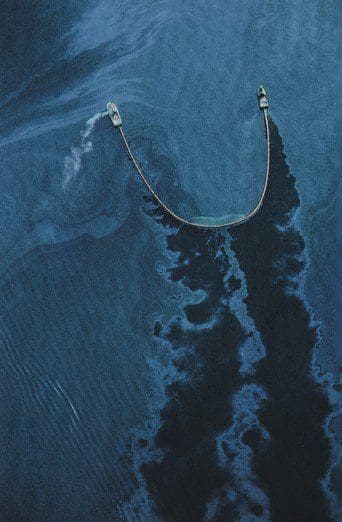
The U.S. Environmental Protection Agency (EPA) and the U.S. Coast Guard issued a joint federal Clean Water Act order to ensure the cleanup of heavy crude oil leaked from a pipeline near Refugio State Beach, Santa Barbara County, Calif.

The order requires Plains Pipeline, the pipeline owner and operator, to continue its cleanup work inland, beachside, and in the ocean, to contain the oil and prevent further shoreline contamination.

Today’s order establishes federally enforceable timelines and cleanup requirements for the long-term response action that will be required to clean up the largest coastal spill in California in the last 25 years.

“Our action today is to make sure the oil response work continues until the Santa Barbara County coastline is restored,” said Jared Blumenfeld, the EPA’s Regional Administrator for the Pacific Southwest. “Working closely with our local, state and federal partners, we will see this cleanup through to the end.”

“The Coast Guard will maintain its course to completion,” said Capt. Jennifer Williams, Unified Command Federal On-Scene Coordinator. “While this defines Plains Pipeline as the responsible party, federal and state agencies will continue to work alongside the responsible party and maintain our priority of safety of the public, personnel and the environment.”

Since the 24-inch pipeline ruptured on May 19, with an estimated 105,000 gallons of heavy crude inside, trained cleanup crews have been working to capture and remove oil that has leaked from the pipeline, seeped into the soil, and reached the shoreline and ocean. The Coast Guard and EPA mobilized immediately after notification of the spill and integrated into a Unified Command with California Department of Fish & Wildlife’s Office of Spill Prevention and Response and Santa Barbara County’s Office of Emergency Management.

Nearly 1,000 people have participated cooperatively under the Unified Command. On the ocean, 2240 feet of hard boom and 1840 feet of sorbent boom have been used, and 10,060 gallons of oily water have been recovered from skimming operations. Crews on land have removed 310 cubic yards of oiled vegetation, 760 cubic yards of oiled sand and 2,610 cubic yards of oiled soil.

According to EPA, the compliance order requires Plains to:

– Continue oil removal and site control operations currently underway until a work plan is approved;

– Submit to the Coast Guard and EPA and by June 6 a written work plan for response activities, including plans for sampling and analyzing air, water, rocks and soil;

– Ensure no more oil is released into the environment;

– Clean up all remaining oil and petroleum contamination at the release and oil-impacted areas;

EPA and the U.S. Department of Transportation’s Pipeline and Hazardous Materials Safety Administration said it will be investigating the cause of the pipeline failure, and will continue to investigate the environmental impacts of the spill with its federal, state and local partners.


Source

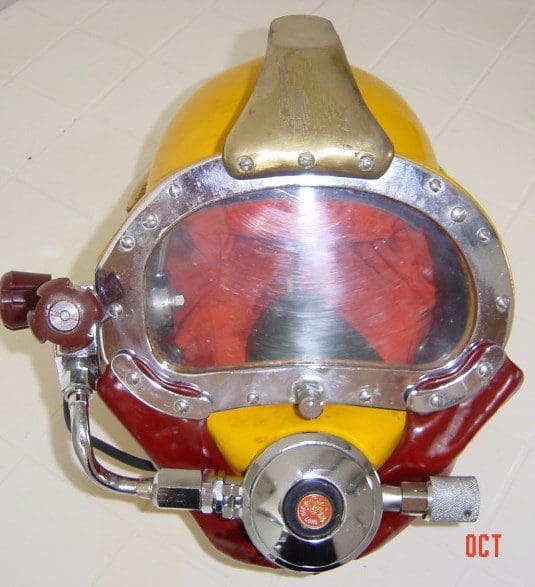
How to Become an Underwater Welder

Offshore Industry offered a very good remuneration which make people choose their profession to work on the industry. Anyone who want to join offshore should be a healthy, hard work also has a particular expertise as required in the offshore industry.

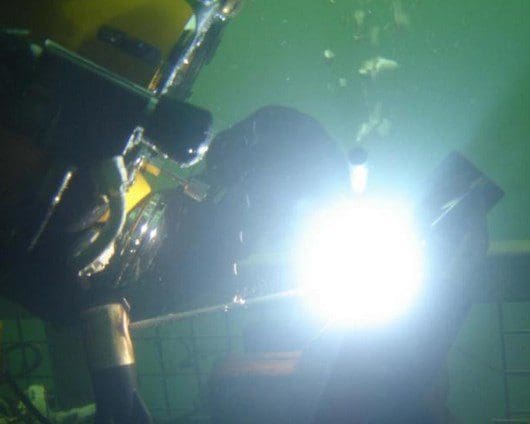
One of the daring profession is underwater welder, Underwater welding salary ranges from $25-300K+ based off of experience, location and a few risky endeavors that some divers undergo.

While a career as a commercial diver and underwater welder can be rewarding, it is not for everyone. The industry demands total commitment, long hours, extensive travel, a great attitude and superior work ethic.  If you’re interested in becoming a commercial diver and underwater welder then it’s important that you be ready for a physically and mentally challenging career.

These are the minimum requirements you will need to possess:

High school Diploma or GED

Ability to swim

Mechanical aptitude

Commercial Diving Certification

AWS Certified Welding Training


Here 7 tips, which can help you to become an underwater welder.

1. Prepare to spend a substantial amount of money for your education and certification. 

2. Become a certified commercial diver.   It’s not enough to have SCUBA diver certification, because sport dive training doesn’t include education      on the safety and environment of offshore commercial work and the safe use of commercial diving  equipment you need.

3. Take a dive physical, even if the commercial dive school you apply to doesn’t require one. 

4. Get certified as a welder. Completing the Certified Welder program from the American Welding Society (also known as A.W.S.) .

5. Attend an underwater welding school.  The length of time required for underwater welding training varies between schools, but can last as little     as 6 months or as long as 2 years.

6. Apply to a company who hires underwater welders for an apprenticeship, or what’s known as a “diver tender,” to learn the trade and gain on-the-job training. Most dive contractors require that you have enough knowledge in dry and/or wet welding to pass qualification tests and have the required certification from the A.W.S and American National Standards  Institute (ANSI) before beginning work.

7. Acquire specific skills required by the underwater welding company that employs you. These skills can vary and the A.W.S recommends formal training to learn the required skills.


Shen Neng 1 Owners Go to Court over GBR Damage

0

The Commonwealth of Australia has taken legal actions in the Federal Court against Shenzhen Energy, after its ship Shen Neng 1 run aground on the Great Barrier Reef, causing a severe damage to the reef.

The proceeding has been listed for trial for 15 days starting in April 2016 in Brisbane.

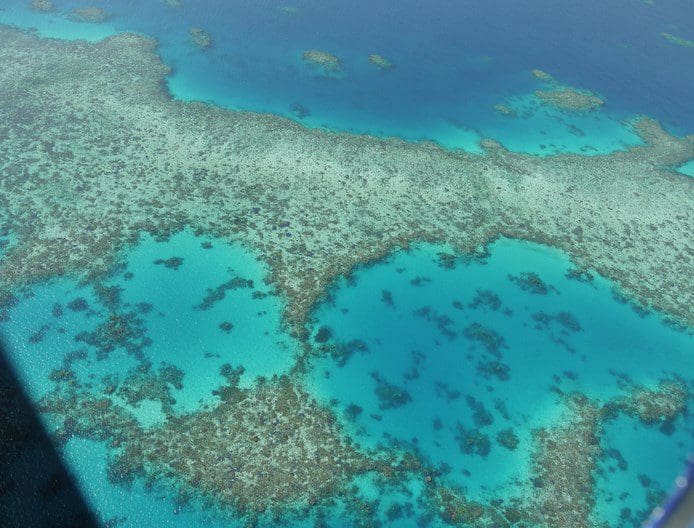
On April 3, 2010, the Chinese-registered bulk carrier Shen Neng 1 caused the largest known direct impact on a coral reef by a ship grounding.

When the ship ran aground at Douglas Shoal, north-east of Gladstone, it damaged an area covering 0.4 square kilometres — of which 115,000 square metres of the shoal were severely damaged or destroyed.

It also left toxic anti-fouling paint on the reef and on substantial areas of loose coral rubble created by the grounding.

However, despite ongoing attempts to have the ship’s owner pay for damages, the Commonwealth was unsuccessful in securing funds from the ship’s owner or its insurer to clean-up and remediate the site.

The Commonwealth is seeking damages from the ship’s owner for the cost of remediation of the shoal or, as an alternative, orders requiring remediation of the shoal by the ship’s owner.

GBRMPA has continued to closely monitor the state of the shoal and to assess what is required for recovery of the shoal.

GBRMPA’s first priority in remediating the shoal would be to attempt to remove the remaining anti-fouling paint and residue. This would allow some natural recovery processes to begin.

Learning More About Commercial Diving Schools

Commercial diving is a type of diving where a diver is paid for his/her work. A professional is usually paid to go underwater to do specific tasks. If you wish to become one, the first step that you should take to become a successful diver is to join a good commercial diving school. There are many commercial diving schools available, which offer intensive world class programs that will help you unlock your sea career. There are those that have a global reputation for delivering first-class commercial diver training and those that don’t. The certifications these maritime schools issue after the end of the course are globally recognized, creating worldwide opportunities for graduates, in the lucrative sub-sea career full of challenge, interest as well as excitement.

Basic Entry Requirements

Commercial diving schools usually do not require previous diving experience; rather they train students from scratch as long as they are competent swimmers. You can join any good school without ever having any scuba diving experience at all. However, a diving medical examination from a qualified doctor is a must. Also, many of these schools operate as higher learning institutions and due to this, a high school diploma or certificate is usually another key requirement for admission. Costs for the training vary widely from country to country and may range from $5,000 to $20, 000, more or less.

Programs Offered In Commercial Diving Schools

Upon fulfilling all the necessary admission requirements, you will be ready to start your course. The curriculum for this training covers a wide range of subjects since this career field entails a wide variety of tasks. There is/are:

1) Classroom subjects-Some of the broad concepts usually taught in training programs include;

  • Commercial diving technology.
  • Diving physics.
  • Industrial as well as offshore safety concepts.
  • Prevention and treatment of diving-related diseases and injuries.
  • Decompression procedures.

2) Hands-on Training

Upon having a background in practical and theoretical concepts, learners can proceed on to more hands-on training. Here, they are trained how to use or operate diving equipment and tools. They also gain a practical experience in many different areas including but not limited to;

  • Underwater photography.
  • Dangerous waste operations and emergency response.
  • Marine engine, compressor maintenance and repair.
  • Seamanship and rigging.
  • Hyperbaric chamber operations.
  • Blueprint drawing and report writing.
  • Operations planning.
  • Welding and cutting.
  • Altitude diving.
  • Dry suit diving.
  • Shark Diving.
  • Navigation.
  • Enriched Air Nitrox (EAN) -this subject teaches aspiring scuba divers everything they need to know about the EAN concept.
  • Night and Limited Visibility.

3) Practical Experience

Normally, great programs will also present opportunities for learners to gain experience honing their skills in a real-world environment within on-site training pools which simulate actual marine settings.

4) Specialized Training

  • Good commercial diving schools usually offer great opportunities to students who may wish to pursue more specialized training once they have completed the general program. Some of the common specialties are;
  • Dive medicine.
  • Underwater nondestructive testing.

What Tasks Do Commercial Divers Do?

These professionals are the most luckiest when it comes to employment opportunities because they can work anywhere in the world. They are experts in underwater inspection and installation, underwater salvage and recovery, underwater welding and many other tasks which may be done under water .Their services are usually required by shipping, engineering, construction, oil and many other companies.

Choosing the Right Commercial Diving School

As mentioned before, training to become a professional in this field for instance a scuba diver is available from a variety of commercial diving schools and even though they all offer certifications, there are many significant differences in their certifications. It is usually quite tricky to decide which school offers the best package that works for you. You need to ask yourself these questions before making that critical choice;

  1. What is the training environment and schedule like, and how much hands-on experience will I gain?
  2. When can I begin training, and what is the training duration?
  3. What additional certifications will I receive besides the regular commercial diver certification?
  4. Is the school accredited?
  5. Are there additional costs besides the tuition?
  6. Will I be prepared for a career change in case need arises, and how will the college help me find a job once I am done?
  7. Finding an answer to each one of these questions should help you to pick a good commercial diving school from the multiple choices that may be available to you.


Source

US Rig Count Stops Hemorrhaging, But For How Long?

0

For the first time in six months, the onshore U.S. rig count is showing signs of life.

Up by a scant three rigs – each designed for onshore horizontal oil – the increase is small but significant, analysts at Raymond James said in an industry comment Tuesday.

“It is symbolic in the sense that most service companies we speak with feel that ‘the bottom is in’ for U.S. drilling,” RayJa said. “Which raises an interesting set of questions.”

In particular, the analysts said, questions of whether the United States has hit a “rolling bottom” in the rig count, will it increase more, what about production and completion activity are all issues of concern.

“There isn’t much historical precedent for a flat rig count – it’s usually moving higher or moving lower. A steady state is a theoretical signpost one passes on the way from one extreme to the next. That said, it’s difficult to envision a ‘V-shaped’ recovery motivated by sub-$60 crude … Formally, our estimates had forecast bottoming in mid-June followed by a painstakingly slow recover until mid-to-late fall, at which the recovery pace picks up modestly,” the analysts said.

At a recent Mergermarket Energy Forum in Houston, mergers and acquisitions panelists–as well as their audience, which was close to 100 people – agreed the market recovery had more of a ‘W’ shape. In their view, the recovery was beginning, but it could drop again before making a significant climb.

Analysts at Gold Sachs said in a recent research note that the recent rig count improvement occurred in the Eagle Ford and Niobrara shales.

“We believe that should [West Texas Intermediate] prices remain near $60 per barrel, U.S. producers will ramp up activity given improved returns with costs down by at least 20 percent,” Goldman said. “Last week’s rig count is a first sign of this response and suggests that producers are increasingly comfortable at the current costs/revenue/funding mix.”


Source

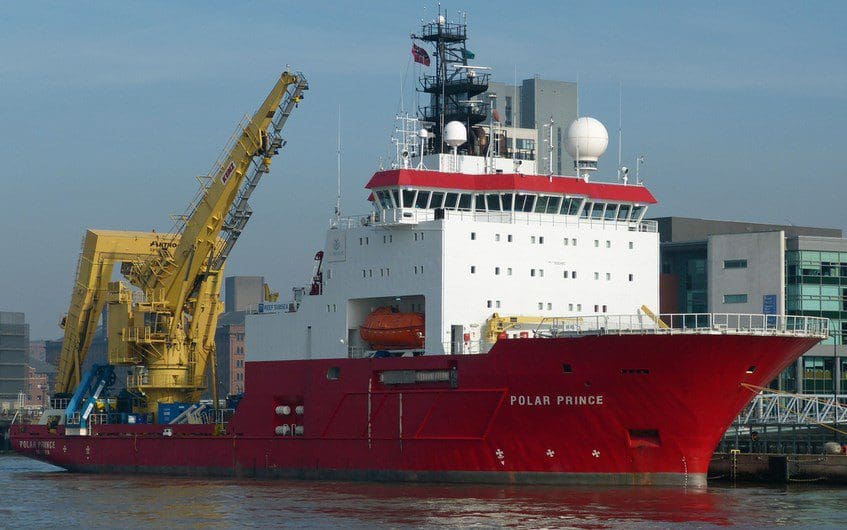
GC Rieber Sells CSV Polar Prince

GC Rieber Shipping has entered into an agreement to sell its multi-functional DP2 construction support vessel CSV Polar Prince.

The vessel is designed in-house and was built by the Norwegian Flekkefjord Yard in 1999.

The 94 meters long vessel has since its delivery been used for inspection, maintenance and repair duties (IMR) on subsea installations.

It is equipped with 150mt crane, an ROV and a moonpool, has a 900 square meters deck area and can accommodate 70 persons.

According to the company’s filing to Oslo Stock Exchange, the transaction will provide GC Rieber Shipping with an accounting gain of approximately NOK 10 million and the vessel is expected to be delivered to the new owner early June.

GC Rieber did not disclose the name of the buyer.


Source