Home Blog Page 274

Europe’s Top Oil Firms Jointly Call for Carbon Pricing

0

Europe’s top oil and gas companies urged governments around the world to introduce a pricing system for carbon emissions, as governments meet in Bonn, Germany, on Monday to work on a U.N. deal to fight climate change.

Criticised for not doing enough to tackle climate change, the chief executives of BG Group, BP, Eni , Royal Dutch Shell, Statoil and France’s Total said carbon pricing “would reduce uncertainty and encourage the most cost-effective ways of reducing carbon emissions widely.”

In a joint statement, the companies acknowledged “the current trend” in greenhouse gas emissions is too high to meet the United Nation’s target for limiting global warming by no more than 2 degrees.

“Our industry faces a challenge: we need to meet greater energy demand with less CO2. We are ready to meet that challenge and we are prepared to play our part,” the leaders of the six companies said.

“We firmly believe that carbon pricing will discourage high carbon options and reduce uncertainty that will help stimulate investments in the right low-carbon technologies and the right resources at the right pace.”

U.S. oil majors ExxonMobil and Chevron chose not to take part in the initiative, an industry source said.

The letter was first published by the Financial Times on Sunday.

Climate Group, a non-profit advocacy, urged the world’s biggest economies to respond positively to the initiative.

“This is a symbolic moment, and demonstrates an important if not universal shift. It reflects a growing realisation within influential sectors of the fossil fuel industry of a need to adapt to both market and climate realities,” Mark Kenber, Climate Group chief executive, said in a statement.

Setting a price for each ton of carbon that emitters produce is meant to encourage companies to adopt cleaner technologies and shift away from using fossil fuels, primarily coal.

China is the world’s biggest carbon emitter.

The U.N. and World Bank have been strong advocates for policies that shift the responsibility to polluters to pay for carbon emissions.

“Business used to wait for governments for policy perfection, they are no longer waiting. They are moving forward, providing support and encouragement to national and international actions, because addressing climate change is their best policy for business continuity,” Christiana Figueres, head of the U.N. climate change secretariat, said at a carbon market event in Barcelona last week.

According to a report published by the World Bank last week 40 nations and over 20 cities, states and regions now have a price on carbon dioxide (CO2) emissions, covering around 12 percent of annual global greenhouse gas emissions, or the equivalent of nearly 7 billion tonnes of CO2.

The value of global schemes to price carbon, including trading schemes and taxes, totalled almost $50 billion as of April 1, the World Bank said.

Governments from more than 190 nations from June 1 to June 11 will work towards streamlining a draft text of a U.N. deal to fight climate change due to be agreed in Paris in December.


Source

Ezra to Raise $300 Mln for Debt Refinancing

0

Singapore’s Ezra has announced plans to raise up to $300 million through a combination of rights issue and convertible bonds in order to refinance its debt.

The offshore O&G contractor said it expects to raise approximately US$150 million from the rights issue which will be primarily applied to the redemption of the S$225 million fixed rate notes.

Furthermore, Ezra intends to raise approximately S$200 million (approximately US$150 million) of convertible bonds, out of which S$150 million should go to repay perpetual securities.

Credit Suisse has been appointed as the sole financial advisor, global coordinator and lead manager of the rights issue and the sole bookrunner of the convertible bonds issue.

The Singapore DBS Bank and Credit Suisse (Singapore) have been appointed as joint underwriters of the rights issue.

The company said that trough this refinancing strategy, plans to deleverage its balance sheet and position the itself to tap on future growth opportunities.

At the end of the second quarter, Ezra reported backlog at approximately $2.3 billion, the majority of which the company expects to be executed over the next 24 months.


Source

Dutch Court Rejects Request to Cut Gas Output at Eemskanaal

0

A Dutch court on Friday rejected an application to have gas production halted at Eemskanaal due to concerns that continued extraction is causing earth tremors, saying complainants had not proved that stopping output would improve their safety. The provisional decision by the court, the Council of State, is the second to be made in two months regarding complaints over continued production from Groningen, Europe’s largest gas field, which has been blamed for an increasing incidence in recent years of small earthquakes which have damaged homes and buildings across the region. The Eemskanaal region of the gas field is named after a nearby canal, which is already being strengthened for better earthquake resistance.

The court’s ruling noted that production was already reduced by 23 percent from 2013 levels in 2014, and that did not lead to fewer earthquakes. The Eemskanaal section of the field produced around 2 billion cubic metres (bcm) of gas in 2014, or a little more than 5 percent of the total 39.4 billion cubic metres theoretically allotted for the entire Groningen gas field this year.

The actual amount Groningen produces will almost certainly be much lower, as Economics Minister Henk Kamp is due to review production on July 1 under strong political and legal pressure to lower the cap. In February Kamp ordered production from Groningen to be cut back to an annualised rate of 33 bcm for the first half of 2015 after the country’s Safety Board said gas companies, regulators and the government had all failed to take the threat of earthquakes seriously enough. That move sent gas prices surging in Northern Europe. Point Carbon analyst Oliver Sanderson said regional prices did not move after Friday’s court decision.

Even if Eemskanaal had been ordered shut, production could be made up from other areas to keep Groningen’s entire production at between 30 and 35 bcm in 2015, he said. A majority of Dutch parliament members have said they oppose any production above current rates, implying annual production of no more than 33 bcm. Regardless of Kamp’s decision, challenges to his plans at the Council of State – a court that hears citizen complaints about government decisions – are set to continue.

The court will review a provisional stoppage ordered at nearby Loppersum, as well as its denial of the complaint at Eemskanaal, after the case gets a full hearing, scheduled for Sept. 10-11. 


Source

Reach Subsea Slumps to Loss

0

Norwegian contractor, Reach Subsea, has plunged to a loss in the first quarter 2015 as its results were hit by weak market and low vessel utilisation.

The Oslo-listed company booked a net loss of NOK 9.2 million ($1.2 million) for the period, compared to profit of NOK 3.8 million (approx. $0.5 million) in the first quarter 2014.

This result was reflected mostly due to low utilization for Edda Fonn and the ROV-systems on board Dina Star and Stril Explorer, during the first part of the quarter, and overall industry slowdown.

Reach generated higher revenues during Q1 2015 by having five vessels in operation compared with three vessels in Q1 2014. The company’s Q1 2015 turnover came at NOK 86.6 million compared with NOK 47.9 million in the corresponding period in 2014.

“REACH has-experienced a quite cold winter season compared to last year, though not as cold as budgeted. Many spot fixtures have been done with existing and new clients. However, the rates have been low in a weak market with oversupply of tonnage in most segments,” the company said in its Q1 2015 report.

In addition, Reach announced expansion to other regions than the North Sea by entering into a co-operation agreement with a local partner in a West African country.

Furthermore, Reach said it is in the process of restructuring its charter commitments in a way that will create further flexibility in the business model, and strengthen the company’s ability to exploit opportunities in the market.

The company had five vessels in operation at the end of the quarter: Normand Reach, Edda Fonn, Dina Star, Stril Explorer and Viking Neptun as well as all six WROV-systems and offshore personnel.

At the end of the quarter Reach Subsea reported backlog, close to NOK 400 million and the value of outstanding tenders close to NOK 1 billion.

Wildfire Intensifies Near Two Alberta Oil-Sands Sites

0

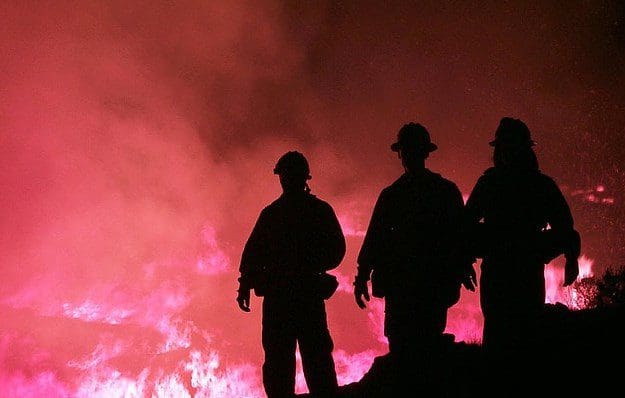
An out-of-control wildfire, burning near two major oil sands projects in the key crude-producing region of northern Alberta, grew in size on Friday, although firefighters were hopeful cold weather moving into the region would help tackle the blaze. Around 233,000 barrels per day of production, roughly 10 percent of Alberta’s total output crude output, was shut in as a result of wildfires across the province, which is the largest source of United States crude imports.

The biggest fire was roughly 15 kilometres from Cenovus Energy Inc’s 135 bpd Foster Creek project, and 25 kilometres away from Canadian Natural Resources Ltd’s Primrose oil sands facility, according to Janelle Lane, a wildfire information officer for the Alberta government. It grew to 27,500 hectares on Friday morning from around 20,000 hectares on Thursday afternoon.

Neither Cenovus nor Canadian Natural, both of which shut in production and evacuated workers over the weekend as a precaution, had any updates on the status of operations Friday. Another 3,300-hectare fire that forced MEG Energy to evacuate non-essential staff from its Christina Lake oil sands project also remained out of control. Lane said although the fire had grown, lower temperatures and higher humidity were helping firefighters, with a cold front moving into Alberta over the weekend.

“We are going to be expecting some rain for most of the province going into the weekend; whether or not it hits these two fires, we are not 100 percent sure,” she said. 


Source

IMCA Marks 20th Anniversary

0

Over 120 members and guests attended the reception celebrating the 20th anniversary of the International Marine Contractors Association (IMCA) last week (19 May).

The reception followed IMCA’s ‘Allocation of risk in challenging current market conditions’ seminar organised by the association’s Contracts & Insurance Workgroup.

Welcoming guests, IMCA’s Technical Director and Acting Chief Executive, Jane Bugler explained that IMCA was formed in spring 1995 through the merger of the Association of Offshore Diving Contractors (AODC, founded in 1972) and the Dynamically Positioned Vessel Owners Association (DPVOA, founded in 1990).

At its birth IMCA had around a hundred members. “I believe that the most important aspect of the last 20 years has been that IMCA has become a truly global association with now over a thousand members in more than 60 countries worldwide,” Bugler explained.

“In addition in the process of becoming international we have developed a regional structure – with active sections in the 5 IMCA geographical regions of Asia Pacific, Central & North America, Europe and Africa, Middle East and India and South America – all of whom meet regularly and can attract over a hundred members at their meetings.

“As well as seeing a considerable grown in membership, the past 20 years has also led to a considerable growth in the recognition and use of IMCA’s wide-ranging documentation – providing good practice guidance to help other members and others to undertake safe and efficient marine operations which is picked up and used by oil companies and regulators alike,” she added.

“In the current economic climate it is important that IMCA remains relevant to our members and delivers value,” she explained. “We are currently undertaking a review of the management and governance of IMCA to ensure that IMCA is structured appropriately to deliver our vision and strategy so that we can to continue to provide support to our members, bring sustainability and take the marine contracting industry forward for the next 20 years.”

Different Gases used for Diving

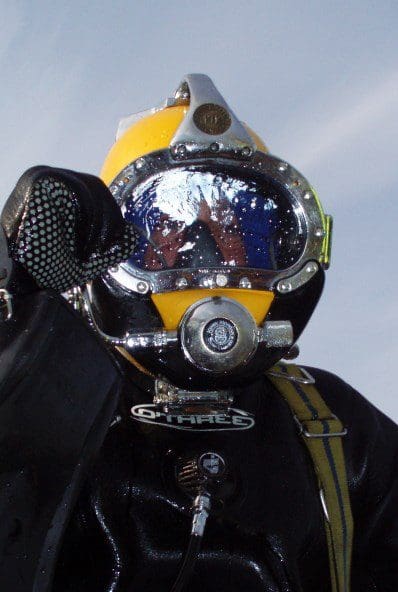
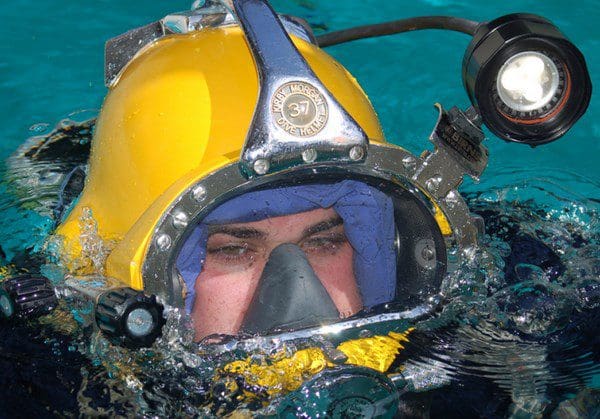
Many non-divers believe that the cylinders that we use contain pure oxygen. Once you have completed your Open Water level course you will learn that this is not true, our cylinders are filled with natural air unless we are specially trained to dive with other gasses. So what are these other different gasses used in diving? And why would we need to use them?

Nitrox
Enriched air nitrox (EANx), or simply called Nitrox is the second most commonly used gas in diving after air. When we dive our bottom time is limited by two main factors, our gas consumption and our nitrogen loading. Nitrox is simply a blend of Oxygen and Nitrogen that has higher levels of oxygen than air does. Common mixtures are 32% oxygen 68% Nitrogen, or 36% Oxygen 64% Nitrogen, although for recreational diving you can find nitrox levels with oxygen levels varying from 22% to 40%. By reducing the amount of nitrogen we breathe while diving we allow ourselves to stay longer at depth, however because of the increased levels of oxygen we cannot dive as deep as we would be able to with air.

Diving with nitrox requires special training, a gas analyser and someone to correctly and accurately blend your desired gas. Nitrox is commonly used on Liveaboards, where the customers and dive guides may be completing five or six dives in a day, for over a week.

Trimix
Trimix is a mixture of Nitrogen, Oxygen and Helium used to increase depth limits. There are three main types of Trimix: Normoxic, Hypoxic and Hyperoxic. Normoxic means that is has similar or the same level of oxygen in the mix as air. This means that the diver is limited to the same depths as air. Hypoxic means that there is less oxygen in the mix than there would be in normal air, this allows the diver to go deeper than they could on air, but it also means it may not be suitable to breathe at the surface, therefore needed a ‘travel gas’ to get to a depth when the diver would switch onto the hypoxic Trimix. Hyperoxic (also called ‘Helitox’) contains more oxygen than standard air, which means the diver cannot dive as deep as they could be able to for air.

Hellium is used in the breathing mix because unlike nitrogen, it isn’t narcotic. This means a diver could use Trimix to dive to depths of 100 + metres and still be clear headed. As a diver descends over 100 metres using a helium based breathing gas, they may get ‘High Pressure Nervous Syndrome’ (HPNS) which causes the diver to shake uncontrollably while at depth. Helium conducts heat six times faster than air, so if used while drysuit diving it could potentially lead to hypothermia.

Helium based breathing gasses such as Trimix are only used by serious technical diving who use it to either go deeper than air would allow, or to stay ‘sober’ while completing complicated dives at depths greater than 30 metres, such as long cave/wreck penetration, or scientific research.

Heliox
Heliox is another helium based breathing gas, but unlike Trimix it does not contain nitrogen. It is used for the same reasons as Trimix, so it is only ever encountered in the worlds of technical and commercial diving.

Oxygen
Oxygen is the key to life, without it we would die within minutes. However under pressure oxygen can be toxic, therefore oxygen is only used by technical divers who use it to accelerate their decompression. Oxygen is also highly reactive and can make other substances burn with very high intensity. Proper training and special equipment is required to work with pure oxygen.

Despite its dangers, a cylinder of pure oxygen is an essential piece of a first aid kit for divers. Usually this cylinder will have a different valve on it, and be clearly marked so it is not accidently taken underwater. It is used in a variety of emergencies such as near drowning or cardiac arrest, and it is the primary first air for divers surfacing with signs and symptoms of ‘Decompression Illness’ (DCI)

Argon
Argon is used for diving, however it is not used as a breathing gas. Argon is an inert gas and is far more narcotic that Nitrogen, so is not suitable for use. There is a gas mix called Argox which is composed of Argon and Oxygen, which is being used for decompression research. The main use for Argon while scuba diving is for dry suit inflation by Trimix divers because it offers good thermal insulation.

Hydrogen
Most people believe hydrogen to be an explosive dangerous gas, which it can be. However a gas mixture of less than 4% hydrogen will not burn, and with more than 75% in air (94% in oxygen) will also not burn. So 100% is safe, as long as it is contained. If it leaks however, and there is an ignition source, it can be very explosive (remember the Hindenburg disaster)

So what use could it have in diving? As we descend to depth the gas we breathe becomes denser, making it harder to breathe. As we start to go really deep we use helium as it is much less dense than air, therefore easier to breathe, but what happens when we go so deep that even helium becomes difficult to breathe due to pressure? We move to the only gas that is lighter than helium, hydrogen.

Trimix has allowed commercial divers to descend to 686 metres however a hydrogen-oxygen-helium mixture has beaten that record with 701 metres! Unlike helium, hydrogen is narcotic, although less so than nitrogen. The difference is that the effects of narcosis from nitrogen is somewhat like mild alcohol intoxication, whereas hydrogen has effects similar to that of LSD when used at great depths. Some divers have even claimed out of body experiences while conducting deep dives using a hydrogen based mix, which is the last thing you want while working deeper than 600 metres underwater!

The Future?
For recreational diving the future will stay the same as it is now. Most divers will simply use air, and some may choose to use Enriched Air Nitrox. It is the technical and commercial diving world that will see changes in the gasses used.

Helium is becoming more and more expensive as the years go by, and there is one reason for that. We are running out of it, and we are expecting to fully deplete our stocks within the next 25 to 30 years. It is not just used for diving, but it is very important for hospitals, who use it in liquid form to cool MRI scanners, and anti-terrorist authorities who use it in radiation monitors.

Hydrogen could become a serious contender in gas selection for deep diving in the not too distant future, or maybe other exotic gasses could be used. Let’s just make sure we don’t fill our scuba cylinders with Nitrous Oxide!

‘Different Gases used for Diving’ was written by Mike


Source
Go Phoenix to Pull Out from MH370 Search

The search for missing Malaysian Airline MH370 has now covered more than 48,000 square kilometers of the seafloor.

The search area has been expanded beyond the original 60,000 square kilometre search area to cover up to 120,000 square kilometres and has been modified to enable continuous search operations during winter.

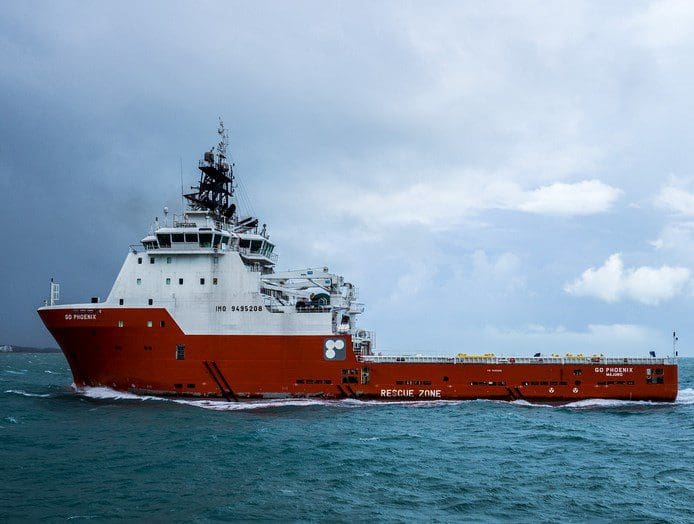
According to the Australian Transport Safety Bureau (ATSB) operational update, the vessel GO Phoenix which departed from Fremantle on May 21, and arrived back in the search area on May 26. will cease search operations and is expected to transit to Singapore, upon completion of the current swing.

No reason was given for withdrawing the vessel from the search.

Other two vessels Fugro Discovery and Fugro Equator arrived back in the search area from Fremantle and are undertaking search operations.

Earlier this month, Fugro Supporter has withdrawn from search operations as the deteriorating weather has brought sea conditions which are beyond the safe launch and recovery limitations of the autonomous underwater vehicle (AUV). Fugro Supporter arrived at the port of Fremantle where the AUV was offloaded and stored and the survey team demobilised.

Malaysia Airlines Flight MH370 disappeared on 8 March 2014 en route from Kuala Lumpur to Beijing with 239 passengers and crew on board.


Source

Relocating Underwater Sites with Acoustic Beacons

Attempting to relocate underwater objects in a low visibility environment can be a difficult and time consuming task. Underwater search equipment manufacturer JW Fishers says acoustic pingers and transponders solve this problem. Not long ago these devices were expensive pieces of equipment used primarily by the military, oil and gas industries and oceanographic institutions. Today these underwater locating beacons are being employed by a wide range of users including commercial diving companies, public safety dive teams, universities, environmentalists and companies in the energy industry. 
 
One organization employing these acoustic locators is EGS Asia in the Philippines. EGS is an international group of companies with offices in Europe, the Americas, Asia and Australia. The company started in the near-shore environment doing port projects, reclamation work and pipeline laying. Today EGS offers a broad range of technical services to the oil, gas, telecommunications, energy and marine infrastructure markets. As part of a recent project EGS Asia had to deploy an Acoustic Doppler Current Profiler (ADCP) which measures water current velocities over a depth range. To ensure the ADCP could be recovered when it was time to retrieve the stored data, EGS’s Roberto Ruiz attached a JW Fishers MFT-1 transponder. The transponder stays dormant saving battery power, until activated by a gun-like device called an Interrogator which causes it to begin transmitting an acoustic signal. The interrogator can be carried by a diver or deployed from a boat. Once the transponder begins sending a signal, the interrogator detects it and displays direction and distance to the target. Ruiz reports, “We attach a MFT-1 to the tripod holding the ADCP before deployed in 15 to 35 meter water depth. Using the interrogator the device can quickly be relocated and recovered.”
 
Ireland’s seabed territory is 10 times larger than its land mass. The Ocean Science and Information Services Marine Institute was established to undertake and assist in marine research, to promote economic development, create employment opportunities and protect the ocean environment. The institute provides scientific and technical information that helps the country’s legislators make sound policy decisions to support and sustain Ireland’s valuable marine resource. Routine monitoring and measuring of the ocean environment is essential to gather the data needed to provide the best advice. The work is carried out by a team of scientists and technicians that scrutinize any variations in marine chemistry or changes in the benthic environment. To ensure their oceanographic monitoring instruments can easily be recovered, the institute is using JW Fishers MFT-1 transponders and DHI-1 interrogator. 
 
Helping to relocate underwater sites and oceanographic equipment is not the only use of these acoustic devices. Propipe Ltd in the United Kingdom designs and manufactures pipeline pigs for the oil and gas industry. These “pigs” perform various maintenance operations inside the pipe, and “pigging” is generally done without stopping the flow of material through the pipe. This is accomplished by inserting the pig into a “launching station”, an oversized section of the pipe that then narrows to the normal diameter. The pig is moved along by the pressure of the product moving through the pipeline, and is then removed at a receiving station, the “pig catcher”. To ensure the pig’s movement can be tracked, and its exact location determined should it become stuck, an acoustic pinger is attached. Propipe has acquired several of JW Fishers PR-1 pinger receivers so they can track their pigs and be sure they are safely recovered.


Mighty Aphrodite: Offshore Cyprus

0

The Aphrodite gas field located off the coast of Cyprus in the Mediterranean Sea represents a lucrative opportunity for the country, which has run into financial hardship over the last few years. Here, Rigzone takes a look at how the project is set to develop.

Discovered in 2011 in Block 12 of Cyprus’s Exclusive Economic Zone (EEZ), results from drilling evaluation work indicate that Aphrodite has an estimated gross resource range of between 5 to 8 trillion cubic feet (Tcf), with a gross mean of 7 Tcf.

The majority stake in Aphrodite is held by Texas, U.S.-based energy firm Noble Energy Inc., which controls a 70-percent portion of the find. Noble also drilled the initial Cyprus A-1 well at the site using its Noble Homer Ferrington (DW semisub). Delek Drilling and Avner Oil Exploration, both of which are subsidiaries of Israel’s Delek Group, each hold 15 percent of Aphrodite.

WHERE WILL THE GAS END UP AND WHEN?

Increasing consumption and declining production has led to an energy shortage in Egypt, which has opened the door to a potential energy partnership between one of the most populous Arab countries and Cyprus.

Cyprus and Egypt signed a memorandum of understanding on energy cooperation back in February 2015 and the two countries are aiming to reach a deal on Egyptian imports of Cypriot gas by August 2015, according to the Egyptian Prime Minister’s office. Egyptian Oil Minister Sherif Ismail didn’t expect any prices to be discussed during this time, however, he believed that these “will be negotiated after the expiration of the six months.”

Daily News Egypt recently reported that the Egyptian Natural Gas Holding Company (EGAS) is looking to import approximately 700 million cubic feet of gas per day from the Aphrodite site. In a statement to the independent Egyptian newspaper, EGAS Chairman Khaled Abdel Badie stated that a marine pipeline linking the two regions would be completed within 2-and-a-half to 3 years and that Cypriot gas will be sent to Egypt by 2017.

Reports have suggested Jordan to be another potential buyer of Cypriot gas and the recent Nicosia Declaration – signed by leaders of Cyprus, Egypt and Greece, and which looks to promote economic cooperation between the countries – could suggest that Cypriot gas may eventually end up in Europe via Cyprus’ Mediterranean neighbor. There is no absolute confirmation yet that Jordan or Greece will be looking to buy Cypriot gas from the Aphrodite site, so it’s difficult to predict a delivery timeframe for these regions right now.

POTENTIAL PROBLEMS

One of the potential problems for the Aphrodite project is a Turkish claim of ownership. Turkey invaded Cyprus in 1974 and since then, the country has experienced a politically tense divide. The northern part of the region is controlled by Turkey and the remaining zone is operated by Greek Cypriots.

Turkish Energy Minister Taner Yildiz recently declared that revenues generated from drilling should be shared between the Turkish section of Cyprus and the Greek zone. Turkey has even threatened to take action against energy firms involved in drilling for hydrocarbons within the EEZ region, although companies have progressed with drilling plans despite the threats and there have, so far, been no altercations.

Following Yildiz’s charged declaration, the Cypriot government has stated that it has a right to explore for natural resources on its own territory and will continue to do so. In an effort to tone down political tension between the two regions, Cyprus’ President Nicos Anastasiades has suggested that offshore gas finds such as the Aphrodite zone could pave the way to a deal to reunify the country, although no formal arrangements have developed since this view was expressed.

LIKELY OUTCOMES

The lack of concrete information surrounding 9the potential export of gas from Aphrodite to Greece and Jordan means it is unlikely that these countries will be receiving anything from Cyprus’ precious find in the near future. Having said that, it would be unwise to rule out some sort of deal between these regions happening at some point. Egypt on the other hand looks almost certain to start pumping gas from the Block 12 region and EGAS Chairman Khaled Abdel Badie’s timeframe prediction of 2017 looks to be realistic.

Turkey may eventually act on its threat to take action against companies associated with Aphrodite, but the fact that nothing has happened since the field was discovered in 2011 suggests that imminent repercussions are doubtful. Taking into account Cyprus’ turbulent past with Turkey, it doesn’t seem likely that the two countries will make good on Anastasiades’ offer of unification in the near future either.

Aphrodite looks set to be the subject of much media interest within the next couple of years and Rigzone will be covering every major development along the way – check back for updates.


Source