Home Blog Page 276

GE’s Electrical Conversion System for Paimpol-Bréhat Project

0

GE Power Conversion is finalizing the electrical conversion system, a part of Paimpol-Bréhat tidal energy project,that will be deployed off France in summer 2015.

The development of the tidal demonstrator farm kicked off under the leadership of Electricité de France S.A. (EDF).

Two OpenHydro 16-metre turbines will be connected to a common subsea converter that will transform the current to high voltage direct current (HVDC) to provide 1MW of electricity. The power will be transmitted to the onshore station and eventually feed into the electrical grid. GE Power Conversion is undertaking development of the subsea converter as well as the onshore station.

The converter will be delivered to Brest and be installed by DCNS on the foundation designed by OpenHydro, which supports both the convertor and the 16-meter turbine, GE explained.

The turbine comprises four key components: a horizontal axis rotor, a direct-drive permanent magnet generator, a hydrodynamic duct and a subsea gravity base foundation.

GE’s MV3000 low voltage drive will enable the low voltage alternating current, generated by the Open-Centre Turbines to be transformed into HVDC. The electrical current will then be transported through the 16km subsea cable to the onshore station.

“Reliability is of the utmost importance in this project; once the equipment is installed on the seabed it has to run in full autonomy for a minimum of 5 years duration,” said Régis Baudet, Project Manager, EDF. “We have full confidence in GE Power Conversion to design and build a reliable and robust system that will allow continuous power generation and other operation requirements.”

The MV7000, once installed in the onshore substation, converts HVDC back to HVAC which is compatible with the French grid.

“GE Power Conversion’s advanced engineering coupled with customized solution brings optimized power conversion efficiency,” said Frédéric Navarro, Project Director, GE Power Conversion. “While 1MW power output transmitted over 16km distance seems modest, GE’s engineering design for this project sets the foundation for future applications with higher power and longer distance transmission.”

Furthermore, GE’s subsea converter also has the potential for future upgrades, as its design leaves the possibility of connecting with two additional turbines, the company added.

“As one of the first tidal farms of its kind to soon start operation, it is a big step forward for GE to position itself in the growing tidal market,” said John Chatwin, Power & Industry Segment Leader, GE Power Conversion. “Bringing its robust and innovative products and systems built on proven technology, GE is committed to unlocking the huge potential of tidal energy to power the world.”

No. 2 Offshore Oil Driller Seadrill Sees Industry Pain Through 2016

0

Seadrill, the world’s second biggest offshore oil driller, predicted years of pain for the global rig market on Thursday as energy companies continue to pare spending despite a recent lift in oil prices. The company, part of shipping tycoon John Fredriksen’s business empire, said charter rates are down, most contract talks are about renegotiating existing deals and the market’s depression will likely last through 2016, leading to lower utilisation and scrapping.

It reported first-quarter core earnings, or EBITDA, of $711 million, beating expectations for $638 million. But its stock fell nearly 5 percent, reversing a positive trend that made it one of the best performing offshore rig stocks in the past three months. “Drillers are in a something like three-years recession and they are not at the bottom of their earnings trend yet,” Nicholas Green, a senior analyst at Bernstein Research said. “What we need to see is demand improve and we’re not seeing that,” he said.

“The fundamental story here is that we need to see demand come further up, but it’s not going to come up for probably another 18 months and therefore the outlook for the drillers continues to be very tough.” Despite Thursday’s fall, Seadrill’s stock is up 15 percent over the last quarter, outpacing top rivals like Nobel and Ensco. But its 56 percent drop – 66 percent in dollar terms – over the past year is one of the biggest in the sector, having knocked the firm off its perch as the world’s biggest rig firm by market capitalisation.

Seadrill, which has appointed Mark Morris, the former chief financial officer of Rolls-Royce as its new CFO, said its cost savings programme, started in 2014, has already saved around $250 million and it expects 2015 savings to exceed the previous year’s figure as it delays or cancels spending. But the outlook was also muted as its order backlog dropped to $15.4 billion from $17.2 billion three months ago and second quarter EBITDA would be around $70 million less than in the first quarter, it said.

“Most oil companies are not looking towards adding rig capacity at this point,” Seadrill said. “It is likely that capacity utilization will drift lower as the year progresses and a significant number of ultra-deepwater rigs are likely to be stacked by the end of 2015.” 


Source

Fugro Inks DeepOcean Fleet Positioning Deal

0

Fugro has been awarded a contract by subsea contractor DeepOcean for the provision of precise satellite positioning for their entire fleet.

The contract is valid for three years and also includes the new vessels in DeepOcean’s continuously expanding fleet.

Under the contract, Fugro will supply DeepOcean with three completely independent decimetre Global Navigation Satellite Systems.

In addition, Fugro’s new Starfix.G2+ system, which has a 3D accuracy approaching that of GNSS RTK systems, and Fugro’s Starfix.G4 satellite correction service are part of the contract delivery.

The DeepOcean fleet will be equipped with hardware and software developed by Fugro, providing independent positioning solutions on each vessel.


Source

At Least 3 Injured After Tornado Hits Texas Gas Drilling Rig

0

At least three people were injured on Wednesday when a tornado hit a natural gas drilling rig in northern Texas, the Hemphill County sheriff and a hospital official said. One victim sustained minor injuries, the second had non-life-threatening injuries to the face, and the third suffered “an impalement to the abdomen,” Hemphill County Sheriff James Pearson said in a statement.

Two of the more seriously injured were transported to a hospital in Amarillo and one was treated at Hemphill County Hospital in Canadian, Hemphill Hospital Chief Executive Christy Francis said. The patient who remained at Hemphill County Hospital was in stable condition, Francis said. The drilling rig is near Canadian, a town of nearly 3,000 residents that is about 100 miles (160 km) northeast of Amarillo in the Texas panhandle.

Pearson said highways were closed due to debris from downed trees and flooding. There was no word on the rig’s operations but Pearson said there was “extensive damage to the doghouses,” the general-purpose rooms adjacent to the rig floor. Storms have battered Texas this week, killing at least 15 people in weather-related incidents, including six in Houston.

The death toll in the state was expected to rise, with about a dozen people still missing and a new round of thunderstorms pelting the already flooded cities of Houston and Austin. 


Source

RV Sonne in Pacific Deep-Sea Campaign

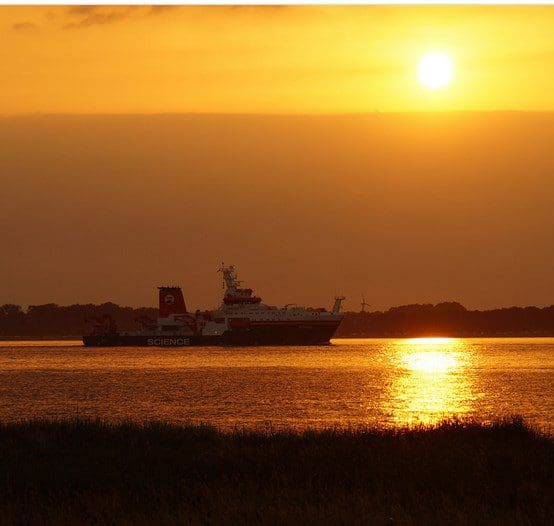
A team of scientists from the Alfred Wegener Institute (AWI) are currently with the German deep-sea research vessel SONNE in the Pacific.

Together with partners of the University of Bremen, Jacobs University, as well as the BGR, researchers are examining the ocean floor at a depth of 4,000 meters.

There are a lot of subsea mountains which have oxygen-rich water circulating in their basaltic crust.

Sabine Kasten, AWI-geo chemist, leads the team, which together with their colleagues wants to find out how this sea water circulation in the crust affects the geochemical signatures and bio-geochemical processes in the overlying sediments.


Source

Oceanteam Posts Q1 Loss

0

Norway’s Oceanteam has booked a net loss of $0.4 million for the first quarter ended March 31, 2015, as the revenues dropped on lower demand.

The Oslo-listed company, comprised of two operating segments, Oceanteam Shipping and Oceanteam Solutions, generated $14.3 million in operating revenues, down approximately 5% compared to the same period last year.

Oceanteam Shipping recorded $6.6 million in operating revenues, while Oceanteam Solutions had an operating revenue of $7.7 million.

EBITDA from operations is positive $6.9 million (EBITDA margin 48%), an increase from $6.7 million (EBITDA margin 44%)  in the corresponding period in 2014.

“The more volatile environment for oil prices and activity, has created significant market challenges for our industry. There is considerable uncertainty as to how long it will take before demands picks up. The Company is still positive and believes in the long-term fundamentals of the relevant markets and regions it operates in to remain strong and that its diversification strategy supports this,”Oceanteam said in a statement.

Hundreds More Oil Sands Staff Evacuated On Alberta Fire Threat

0

Statoil ASA, MEG Energy Corp and Cenovus Energy Inc evacuated hundreds of workers from three oil sands projects in northeastern Alberta on Tuesday as wildfires raged through the key crude-producing region.

The latest evacuations are in addition to project shutdowns by Cenovus and Canadian Natural Resources Ltd over the weekend, as companies rushed to remove staff from potential danger.

At least 233,000 barrels per day of oil sands production, 9 percent of Alberta’s total oil sands output, have been suspended because of the fire risk, though none of the projects have been damaged.

The Alberta government said there are 70 forest fires now burning in the province, with 20 considered out of control. Lightning storms are forecast for Tuesday evening, increasing the risk of more fires, a government spokesman said.

Cenovus evacuated all 90 staff from its Narrows Lake oil sands project on Tuesday, which is not yet producing crude after construction was deferred last year.

The company also shut down its Birch Mountain natural gas plant northwest of Fort McMurray.

Statoil evacuated around 110 non-essential employees from its 20,000 bpd Leismer project as a precaution, although production is unaffected and the company does not anticipate shutting down operations. About 75 employees remain on site for now.

“We will evacuate and pare down even further by Friday and keep the bare minimum of people on site,” a Statoil spokeswoman said.

MEG said in a statement that there was no safety risk yet, but it suspended operations at its 80,000 bpd Christina Lake oil sands project and halted work on a planned maintenance shutdown.

“As soon as we have safety clearance regarding fire hazards, we will resume normal operations,” the company said.

The production shut-ins could impact economic growth, Bank of America Merrill Lynch warned in a research report, forecasting that if wildfire disruptions persist there could be a 0.1 percent to 0.3 percent hit to second-quarter annualized growth.

Several small towns threatened by fires have been evacuated in other parts of the province.

Over the weekend, Cenovus and Canadian Natural halted output at two sites as a precaution against a fast-spreading fire in the Cold Lake oil sands region of Alberta.

Both companies on Tuesday said there had been no changes to the status of those projects.

Husky Energy Inc said its operations in the Cold Lake region have not been affected by the blaze, though it suspended operations at its Muskwa natural-gas processing plant and its Overlea compressor facilities in north central Alberta due to other fires. Six employees were evacuated from the sites.


Source

Huawei Marine to Develop MCT Subsea Cable System

0

Huawei Marine has signed a system design and construction agreement with a consortium comprising Telekom Malaysia Berhad, Symphony Communication and Telcotech to build the Malaysia-Cambodia-Thailand (MCT) submarine cable system.

Spanning approximately 1,300 km, the MCT cable system will provide connectivity between Cherating in Malaysia and Rayong in Thailand with a branching unit connecting from the main trunk into Sihanoukville in Cambodia. Access to neighbouring counties such as Laos and Myanmar will be achieved through further connection to terrestrial based networks. The MCT cable system adopts the 100G technology with a total design capacity exceeding 30 Tbps. The system will be commissioned and ready for commercial service by the end of 2016.

The signing event was witnessed by Prak Sokhonn, the Cambodian Minister of Post and Telecommunications, senior Cambodia government officials and other distinguished guests. It marks a milestone for Cambodia, which will benefit from its first landing of a large capacity, high-speed submarine cable system.

Huawei Marine will deploy its innovative optical amplifier that supports up to 6 fiber pairs and utilizes a slim-line titanium housing to greatly reduce the operational costs associated with system deployment by allowing for simultaneous lay and burial beneath the seabed.

According to Huawei Marine, this new cable system will provide Cambodia and its surrounding countries with significantly increased international bandwidth, which will enhance data intensive internet-based applications and the end user experience for both individuals and businesses alike.

Ma Yanfeng, Vice President, Huawei Marine, said: “We’re honored to partner with our customers and start working on the development and construction of the MCT optical superhighway to deliver state-of-the-art infrastructure which will contribute to the economic growth and development of the Indochina region.”

OPEC Seen Backing Saudi Arabia’s Plan to Keep Supplies Elevated

0

When Saudi Arabia argues next week that OPEC should keep up production to fight the rise in U.S. shale oil levels, prices will be on its side.

Crude plunged for eight of nine weeks prior to group’s November gathering, when the kingdom faced down opposition from the majority of fellow members, who advocated output reductions to tackle a global glut. With oil companies around the world cutting investment, U.S. output peaking and prices up, Saudi Arabia’s strategy will be extended at OPEC’s semiannual meeting on June 5, say Societe Generale SA and Bank of America Corp.

Oil prices have recovered more than 40 percent from a six-year low in January as U.S. production eases from the highest in more than four decades. The rebound will help vindicate the approach taken by Saudi Arabia as it steers the Organization of Petroleum Exporting Countries to favor market share over prices in a bid to drive out high-cost producers.

“The Saudis probably feel their strategy is working and rightly so,” Francisco Blanch, Bank of America’s head of commodities research, said by phone from New York. “There’s a major decline in the U.S. rig count, and a huge reduction in capex spending. That’s a sign the strategy is working.”

LINGERING RESISTANCE

At OPEC’s Nov. 27 meeting, Saudi Arabia, the United Arab Emirates, Kuwait and Qatar rebuffed objections from the other eight members — in particular Iran, Venezuela and Algeria — to their plan. While there may be resistance at the June 5 conference, all but one of the 34 analysts and traders surveyed by Bloomberg said OPEC will maintain its daily production target of 30 million barrels, ratifying the Saudi strategy.

“The fact that prices have recovered somewhat, and we appear to be past the bottom, that’s something the Saudis will be able to point to in their discussions,” Mike Wittner, head of oil market research at Societe Generale, said by phone from New York on May 19. “And the other thing they’ll be able to point to is that U.S. production has topped out.”

Brent futures tumbled 33 percent from last summer’s peak of $115.71 a barrel by the start of OPEC’s November meeting and extended the loss to $45.19 on Jan. 13. It settled at $63.72 on May 26. Bank of America forecasts the grade averaging $62 a barrel this year, while Goldman Sachs Group Inc. sees it slipping to $51 in six months.

OPPOSITION QUASHED

U.S. shale oil — extracted by blasting underground rock with liquids at high pressure in a process known as hydraulic fracturing — poses a more serious threat to OPEC than previous forms of new supply because it can be restarted more quickly, according to Goldman Sachs. The number of wells that have been drilled but are waiting to be fracked — known as the fracklog — could help add an extra 500,000 barrels a day by the end of the year if prices remain at $65, according to Bloomberg Intelligence.

“Because of the fast-cycle nature of shale — meaning it can be turned on very quickly and turned off very quickly — it should be the marginal barrel,” said Jeff Currie, head of commodities research at Goldman Sachs in New York. “It neutralizes OPEC.”

While the members who opposed OPEC’s November decision criticized it again early this year, the most recent comments from ministers signal the group will hold steady.

CONSTANT PATH

It’s “unlikely” OPEC’s output ceiling will change, Iranian Oil Minister Bijan Namdar Zanganeh said on May 24, according to Mehr news agency. The organization will “stick with” its present strategy, Abdulmajeed Al-Shatti, a member of Kuwait’s Supreme Petroleum Council, said on May 12. Venezuelan President Nicolas Maduro, who in January urged the group to consider supply cuts, said on May 23 only that he is working with OPEC to raise prices.

Amid reduced oil revenues, Venezuela’s foreign currency reserves have plunged 26 percent in three months to less than $18 billion, the lowest level since 2003, according to central bank data as of May 13. Nigeria’s authorities have already borrowed more than half the amount budgeted for all of this year because of a “cash-flow crunch,” Finance Minister Ngozi Okonjo-Iweala said on May 5.

“It is true that a number of non-core OPEC countries like Venezuela, Iran, Nigeria and Algeria are suffering from a lower price environment, as are non-OPEC producers,” said Harry Tchilinguirian, head of commodity markets strategy at BNP Paribas SA in London. “But Saudi Arabia has led the strategy, and the others have followed.”

DEAL DOUBTFUL

Ali Al-Naimi, oil minister of Saudi Arabia, the group’s biggest and most influential member, has stressed that OPEC would only cut output if other producers shared the burden of balancing the market.

While Russian Energy Minister Alexander Novak will attend an event hosted by OPEC in Vienna two days before the ministerial gathering, a meeting between Russia, Mexico, Venezuela and Saudi just before OPEC’s November conference ended without agreement to cooperate on managing supplies. The refusal of non-OPEC nations to participate in production cuts is unlikely to change, according to Giovanni Staunovo, an analyst at UBS Group AG in Zurich.

The absence of a broader deal won’t concern OPEC’s richest Gulf-based members, as their current approach is showing early signs of success in taming rival supplies, according to Bank of America and Societe Generale.

U.S. drillers have idled more than half of the country’s oil rigs since October, according to data from Baker Hughes Inc. Global investment in oil production might fall by $100 billion this year, according to the International Energy Agency, which has curbed forecasts for non-OPEC supply growth to 830,000 barrels a day this year, down from a projection of 1.3 million a day in November.

“Why on earth would the Saudis change course now their strategy is just starting to bear fruit?” said Societe Generale’s Wittner. “Will there be opposition within OPEC? Most definitely yes. Will it make a difference? Most definitely no.”


Source
HullWiper to Clean for Statoil

0

GAC EnvironHull has signed a contract with Statoil to provide underwater hull cleaning services for its vessels operating in Scandinavia, the Middle East and the Far East.

From the second quarter of 2015, GAC EnvironHull, part of global shipping, logistics and marine services provider GAC Group, is using its pioneering HullWiper technology to remove fouling from the Statoil fleet of long term chartered vessels to enhance efficiency and reduce fuel consumption, whilst also preserving and protecting the delicate maritime environment.

As mentioned earlier, HullWiper is a diver-free underwater hull Remote Operated Vehicle (ROV) which uses high pressure water jets to remove marine fouling.

GAC EnvironHull’s agreement with Statoil ASA comes after the Norwegian-based company used HullWiper to clean the hull of one of its chartered vessels at Fujairah in the United Arab Emirates.

Simon Doran, Managing Director of GAC EnvironHull, says: “The energy industry focuses on minimising the impact of their operations on the environment and HullWiper meets their high green standards and eliminates the risk to human life.

“This contract represents an important milestone for GAC EnvironHull, as it further strengthens our steady position in a market with growing demands for cost efficient and eco-friendly technology.”