Home Blog Page 27

JFD Boosts Diving Systems Support Service

0

JFD, part of James Fisher and Sons, has launched a new Service+ global support capability.

Service+, according to JFD, is designed to support customers with all aspects of dive system asset works whilst maintaining optimal operational efficiency, providing a cost effective mechanism for maintaining and enhancing the capability and safety of all diving systems.

The service covers systems and equipment, from rebreathers and scrubbers, diving bells, Environmental Control Units (ECUs) and Hyperbaric Reception Facilities (HRFs), through to complex modular and integrated dive systems.

Through Service+, JFD offers support with all aspects of maintaining the safe operation of dive systems including equipment servicing and repairs, survey and inspection, calibration, system conditioning, re-commissioning, class certification, training, and full-system life extension programmes.

Giovanni Corbetta, managing director, JFD, said: “Operating subsea, often in extreme environments, carries significant risk for divers in the commercial and defence markets, and it is critical that systems and equipment are fully functional in order to safeguard their lives. The comprehensive support services we provide to our customers on a global basis are key to ensuring that the capabilities of our extensive range of innovative equipment, systems and services are maintained and the highest standards of safety and quality are upheld.

“Service+ enables us to build on our existing service offering, consolidating it into a formalised, flexible and comprehensive support capability which delivers a cost effective and responsive solution.”

The Service+ announcement follows shortly after the launch of JFD’s COBRA, a new bailout rebreather system, which extends the supply of emergency breathing gas. JFD was also recently awarded a multi-million pound contract for the design and manufacture of Self-Propelled Hyperbaric Lifeboats (SPHL) with Flash Tekk Engineering.


Source

WATCH: Building a Typhoon MK2 ROV

0


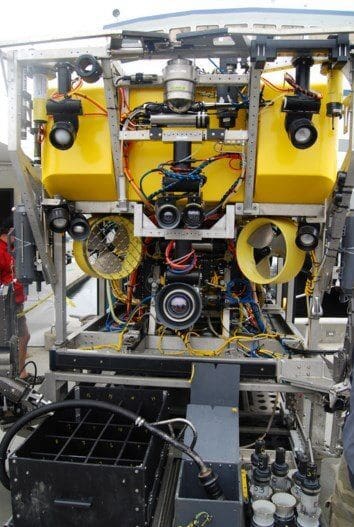
A time-lapse video above shows Total Marine Technology (TMT) building its Typhoon MK2 remotely operated vehicle (ROV) in Bibra Lake, Western Australia.

TMT is an Australian-based designer and manufacturer of work class ROVs and intervention tooling for the offshore drilling and production industry.

There are two types of Typhoon MK2 ROVs. The Typhoon MK2, capable of operating at depths of up to 2,000 metres, and Typhoon MK2 150 with operational depth of 3,000msw. Both ROVs are 150HP heavy work class weighing about 5,000 kg.

The Typhoon MK2 150 ROV systems are the newest addition to TMT’s fleet, and represent a part of the company’s most significant jobs of delivering 12 of these units to work on pipe lay support vessels (PLSVs) offshore Brazil.

The PLSVs are operated by Sapura Navegação Marítima (SNM) and will be working for Petrobras. The first two Typhoon MK2 150 ROVs left TMT in late 2013 and were installed onto the PLSV Sapura Diamante at the IHC shipyard in Rotterdam. The last two Typhoons were set up on board the PLSV Sapura Rubi earlier this year. They should begin working with the other five vessels in Brazil by June 2016.

Subsea World News Staff; Video: TMT


Source

Big Oil’s `Rock Star’ in Congress Runs Rig Tours for Support

0

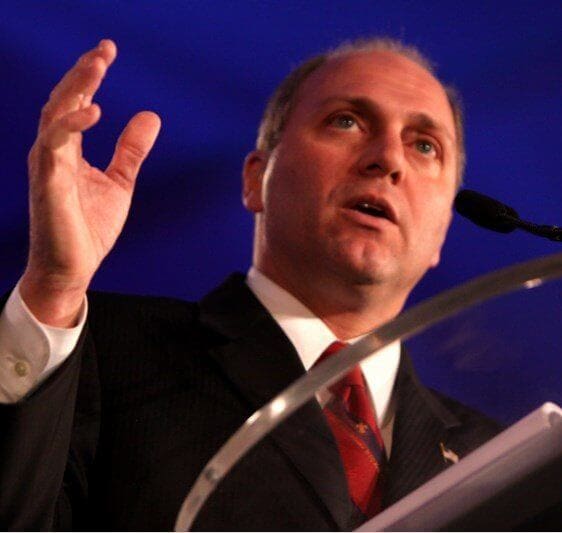
Congressman Steve Scalise leaned over the railing of the Chevron Corp. oil platform floating in inky blue waters 250 miles off the Louisiana coast and marveled to a cluster of lawmakers that it produces 75,000 barrels of crude every day.

Scalise is one of the oil industry’s busiest tour guides in Congress. Eight times, he’s lured colleagues onto helicopters bound for remote drilling rigs and production facilities in the Gulf of Mexico. His motive: to persuade even Democrats to overturn Obama administration rules that will add costs to offshore drilling.

“Some bureaucrat in Washington that’s never drilled before comes up with this standard and says ‘This is how you drill every well in the Gulf,’” Scalise told his colleagues. “It makes absolutely no sense.”

For oil and gas companies plumbing Gulf waters, Scalise is an evangelist of growing importance. First elected in 2008 to finish the term of Bobby Jindal, who became Louisiana’s governor, Scalise climbed the Republican leadership ladder and has emerged as the oil industry’s leading congressional ally — a role that’s taken on new significance in an uncertain presidential election year.

‘Special Interest’

Republican presidents are usually reliable supporters of the oil industry, but the party’s 2016 front-runner, real estate developer Donald Trump, has disparaged the sector as a “special interest.” Democratic challengers Hillary Clinton and Bernie Sanders, meanwhile, have courted environmentalists with promises to block offshore drilling in the Arctic and Atlantic.

Scalise, 50, the third most powerful Republican in the House, represents a southeastern Louisiana district that encompasses the full chain of oil and gas development — from upstream production to downstream refining, and the pipelines and terminals that connect the two. Energy interests have helped fund Scalise’s legislative career, with the industry giving $204,750 to his 2016 re-election bid so far, according to the Center for Responsive Politics, a Washington campaign watchdog.

The biggest of those donors are employees, lobbyists and political action committees associated with Hess Corp., Pioneer Natural Resources and Koch Industries Inc.

‘Rock Star’

“He’s a rock star on our stuff, there’s no question about it,” said Stephen Brown, vice president of federal government affairs for Tesoro Corp., which refines and markets petroleum products. “He’s probably your go-to person for the oil and gas industry. If he can’t be for it, it’s not going to happen.”

Scalise’s rise was almost derailed two years ago after the disclosure of a 2002 speech to a white supremacist group, an episode that could have sunk any lawmaker’s career. But he said that making the speech had been a mistake and was able to persevere, now serving in a Republican leadership team headed by House Speaker  Paul Ryan.

That’s turned out to be good news for the oil industry at a time when it can use some friends in Washington.

On April 14, the Obama administration issued sweeping new regulations on offshore drilling, imposing tough requirements for coastal wells and the emergency equipment meant to keep them in check. The new rule comes almost six years after the blowout of a BP Plc well in the Gulf triggered an explosion that killed 11 workers and unleashed the worst oil spill in the U.S.

Exxon Mobil Corp., Chevron, Anadarko Petroleum Corp. and other oil companies had lobbied against the mandates, warning they would impose potentially tens of billions of dollars in new costs and may pare drilling in the Gulf of Mexico, which accounts for about 17 percent of U.S. crude production.

Drilling Rules

Back in Washington, Scalise coordinated a congressional attack on the rules by enlisting Republican committee chairmen to hold hearings and send a letter insisting the regulations be proposed anew. Now that the Obama administration has rebuffed the request, they’re ready to fight.

After the rule was published, Scalise minced no words in blasting it as an “overly-prescriptive” regulation “that will increase costs and threatens to decrease safety and kill thousands of jobs.” Scalise said “everything is on the table” for chipping away at it in Congress, even as oil companies and industry trade groups mull their own legal attack.

Now that rule is out, they will still be looking ” to move forward with legislation, including riders in our appropriations bills, to reverse it.”

Scalise’s job as the House majority whip requires him to build support for Republicans’ legislative priorities, counting votes and cajoling colleagues to back individual bills. That allowed him to play a major role helping the oil industry secure a monumental legislative victory in 2015: the repeal of a decades-old ban blocking crude exports.

Export Ban

Scalise was an ambassador for the measure in meetings with House leaders, including Ryan, a Wisconsin Republican. He collaborated with Texas Representatives Joe Barton, a Republican, and Henry Cuellar, a Democrat, to lure supporters.

“Scalise, from his leadership job, was assembling whip meetings on the Hill, and he wasn’t just bringing in Republicans, he was bringing in Democrats,” said Louis Finkel, executive vice president of the American Petroleum Institute.

Scalise doesn’t use the bombast and arm-twisting that were hallmarks of some of his predecessors, including former House Majority Whip and Speaker Tom DeLay of Texas, nicknamed “the Hammer” for his demanding insistence that fellow Republicans fall in line.

Avoiding Conflict

In fact, some oil industry leaders say Scalise isn’t combative enough.

“If you’re Steve Scalise, and your entire social network — lobbyists, staffers and fellow members — all tell you to avoid conflict, you’re going to avoid conflict,” said Michael McKenna, a Republican strategist and lobbyist for Koch Companies Public Sector, Suez and other clients. “The thing that DeLay and Newt Gingrich got instinctively is this is the game we’re in. We’re in the conflict game.”

At least one of Scalise’s ideas has provoked conflict: a non-binding resolution asserting that a carbon tax would be “detrimental” to American families and businesses. The measure, which could reach a floor vote later this year, is supported by nearly two dozen free-market advocacy groups but is viewed warily by Exxon Mobil Corp. and the API.

Floating Platform

Some lawmakers undertake fact-finding missions to the beaches of Cuba and Thailand, but the seven joining Scalise in April had a decidedly less glamorous destination: Chevron’s 75,000-ton Jack/St. Malo production facility. For just over a year, the platform has been sucking crude from rock 27,000 feet under the surface of the sea.

As a Sikorsky S-92 helicopter thudded over canals snaking through once-lush green marsh on the 90-minute trip to the platform, Scalise ticked off the benefits of offshore drilling. Salt water is eating away at Louisiana’s coastal wetlands and driving the disappearance of a football field worth of land every hour, he said. The state has vowed to dedicate its share of federal revenues from offshore oil and gas development to coastal restoration.

“Drilling in the Gulf of Mexico actually will help us restore these wetlands,” Scalise told his colleagues.

Once on the platform, where lawmakers donned hardhats and ear plugs, Scalise outlined the dangers of managing offshore drilling from Washington.

“When they’re drilling, things change dynamically; you want to be able to respond to it on the spot, you don’t want to be worried that you’re violating some federal regulation that’s unmanageable,” he said. “In the meantime, you get a blowout, and they’re going to blame you, and you say ‘Look, I’m trying to comply with the stupid rule.’”

Warm Crude

The issue might have been theoretical for some of the lawmakers who accompanied Scalise offshore. But cradling an 8-ounce vial of warm, freshly extracted crude oil — and touching the top of the 24-inch pipeline that will ferry it 137 miles (220 km) away for refining — brought it into focus.

“It’s different than just hearing about it. Actually coming to see it gives me a completely different perspective,” said Representative Marc Veasey, a second-term lawmaker from Texas and one of two Democrats on Scalise’s excursion. “To see what these guys do each and every day really makes you appreciate that we can go put gas in our tank and turn on the lights –- and the work that goes into making sure we have those things.”

Visiting oilfields and processing facilities is as valuable for freshman lawmakers from non-producing areas as it is for congressional veterans with major energy businesses in their districts, API’s Finkel said.

“When you better educate these folks who have been generally supportive, they become great ambassadors and can tell other members they’ve been there, they’ve seen it,” Finkel said. “The more members that are getting that first hand, practical life experience of seeing this stuff, that really carries a lot of weight when members are talking to one another.”


Source
Commercial Diver

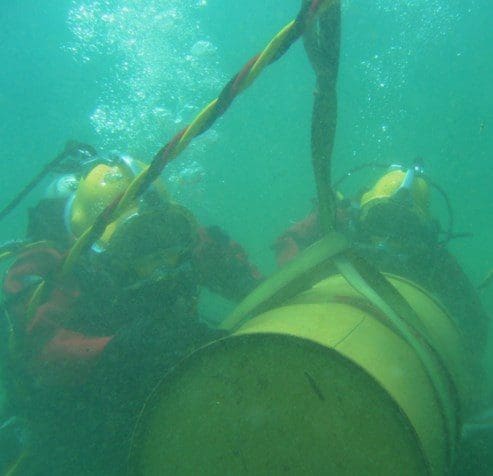
A commercial diver is someone who has been trained as an advanced diver and is able to perform a wide range of tasks related to underwater industrial construction. They use scuba gear to go below the surface of the water to inspect, repair, remove or install equipment and structures. They may use a variety of power and hand tools and may conduct tests or experiments, rig explosives, or photograph structures or marine life.

Commercial divers work in one of two types of categories and environments (although some may spend time dabbling in both). Working offshore takes place in oceans; usually encompassing jobs related to oil platforms, exploration and salvaging, and pipelines; and is widely considered the more dangerous and demanding area of commercial diving. Working inland takes place in non-ocean locations like rivers, lakes and harbours; generally involving more engineering-related tasks, such as building or repairing bridges and dams; and can allow for more flexible and less stressful work schedules.

EXPLORING THE DEPTHS


Freddy Lemoine
COMMERCIAL DIVER

What does your job entail?  I am a commercial diver. During the summer months I dive for scrap metal from modern shipwrecks, and for two weeks of the year I dive out my allocated perlemoen quota. However, my real passion lies in the challenge of researching and hunting for treasure from shipwrecks.

Why did you choose this profession?  My mother will tell you that I was a water baby as a toddler. I grew up in Sea Point, so spent a lot of time in or near the sea. I often boogie boarded, and began diving and snorkelling at the age of 12. I am very comfortable in the sea and have always loved exploring its depths.

What training did you undergo?  At the age of 16, I completed my first Open Water I scuba diving course at the Dive Centre. I then ventured to the South of France and sailed around the Mediterranean for two years. Upon my return to South Africa, I completed an amateur marine archaeology course at the Maritime Museum that deepened my passion for the sea and sparked my interest in the conservation of ancient underwater relics, as well as in the quest for finding treasure. Yes, it is possible to feel passionate about both! I strongly believe in the preservation of artifacts for the sake of history and art, but also enjoy the challenge and prospect of seeking a potential fortune.

What type of personality makes a good diver?  You need to be passionate about the sea and her endless mysteries. It is also important to enjoy history and searching for clues, and have endurance and drive; you’ll spend countless days at the archives just trying to find one clue! You also have to be physically fit and have good sea legs in order to withstand choppy waters when on a boat.

Is experience as important as formal training?  Formal training is fundamental and the only starting point. But experience gives one the opportunity to find out if you actually have the sea legs.

Describe a typical day  As a commercial diver (perlemoen, metal and treasure) I have to prepare the night before for an early start the next morning: diving gear packed, safety equipment verified, permits and documents on hand, boat fuelled, aqualungs filled with air. We are usually a team of three people: one skipper to man the boat and two divers.

What do you love the most about your work?  Escaping the daily humdrum into a world of serene beauty.

Is there anything you don’t like?  The freezing-cold water in the summer months.

Tell us a future goal  I dream about finding a treasure ship laden with coins!


WHAT QUALIFICATIONS DO I NEED?

Certification is required to work as a commercial diver. There are certain entry requirements that pertain to most of the diver training courses. A National Senior Certificate is a prerequisite for some training courses. It is recommended to have a Recreational Scuba Diver ticket and a certificate from a designated medical practitioner indicating a pass on a medical examination. It is also recommended to have completed a sport scuba course and have a minimum of 10 scuba dives. It is important to ensure that the training programme you then follow is accredited and registered with the Department of Labour, and is recognised by the IMCA International Diving Division, in order to successfully pursue certification upon graduation.


WHERE CAN I STUDY?

Professional Diving Centre
Diving Training Courses
www.professionaldivingcentre.com

Seadog Commercial Diving School
Various Scuba and Commercial Diving Certificates
www.divingschool.co.za

South African Navy
Diving Training Courses
www.navy.mil.za

Ollava
Scuba Instructor Course
www.ollava.co.za

B.S. Divers
Commercial Diving Courses
www.bsdivers.co.za

Scuba.co.za
PADI Courses
www.scuba.co.za 


WHERE CAN I GET MORE INFO?

IMCA International Diving Division – www.imca-int.com
South African Oil and Gas Association – www.saoga.org.za
South African Navy – www.navy.mil.za


Source

Kimmeridge Limestone Projects Could Generate up to 5,600 jobs in the UK

0

Future Kimmeridge Limestone oil production projects over the UK’s Weald Basin could generate between approximately 1,000 to 5,600 jobs in the UK per year on average during their lifetime, according to a report from advisory services firm EY, which was commissioned by UK Oil & Gas Investments plc.

The report predicts that the gross value added to the UK economy as a result of the ventures could range from $10 billion (GBP 7.1 billion) to $74.6 billion (GBP 52.6 billion) and stated that future peak oil production from these projects could provide around 4 to 27 percent of the UK’s 2014 daily oil demand. Under a ‘low’ scenario, the report indicates that total production from the lifetime of the projects would be around 140 million barrels. This figure would rise to 560 million barrels in a ‘mid’ scenario, and 1.1 billion barrels in a ‘high’ scenario.

Peak oil production in the mid and high scenarios is around 170,000 and 330,000 barrels per day, according to the report, which states that its production scenarios are “conservative” and highlighted that the results of recent extended flow testing of Kimmeridge Limestone Oil were “far above expectations”.

Commenting on the potential benefits of Kimmeridge Limestone Oil on the UK economy, the EY report states:

“The development of Kimmeridge Limestone Oil in the Weald Basin, assuming it can be extracted from a development site at the volumes projected by UKOG, has the potential to generate significant economic value to the UK economy, partially off-set the decline in oil production from UK fields, support employment, and generate significant tax benefits to the exchequer.

“These benefits will be maximized via the development of a UK-based supply chain, and through a series of targeted policies and initiatives to appropriately mitigate potential barriers to development.

“Conceptual studies and oil in place estimates previously conducted suggest a significant opportunity for the UK to secure a proportion of its energy from the Weald Basin.”

UKOG’s Executive Chairman, Stephen Sanderson, commented in a company statement:

“This report confirms UKOG’s view that the development of Kimmeridge Limestone oil in the Weald Basin can make a very significant contribution to the economy, employment and energy security of the UK.

“The report’s conclusions are given credence by the recent results of the highly successful Kimmeridge Limestone flow tests at the Horse Hill-1 oil discovery. The tests demonstrate that significant volumes of high-quality light oil exists within the Kimmeridge Limestones and can flow naturally to surface at commercial rates.

“The unexpectedly high aggregate flow rate of over 1,365 barrels per day from Horse Hill’s two Kimmeridge Limestones far exceeds the study’s modelled peak flow rate of 400 bopd per horizontal well. It is, therefore, possible that the overall economic impact of Kimmeridge Limestone oil could be significantly higher than this initial report describes.”

EY’s analysis builds on the successful oil flow tests from the Kimmeridge Limestones at the Horse Hill-1 oil discovery and utilized the company’s internal assumptions on production rates for a multiple horizontal well production site, together with Xodus Group’s conceptual multi-well site development study and Nutech’s calculated oil in the ground and likely oil recovery factors. The assumptions on individual production well performance were made prior to the HH-1 flow test results, which were first announced Feb. 16.

The report is solely in relation to the potential extraction of oil from the two main Kimmeridge Limestones over the entire Weald Basin and is not an assessment of the company’s own 11 individual license interests in the Weald. 

In a separate statement released Monday, UKOG announced that it has acquired all of Angus Energy Holdings UK Limited’s remaining 7.8 percent interest in onshore Weald Basin licenses PEDL137 and PEDL246.

As a result of the deal, which cost UKOG $2.5 million (GBP 1.8 million), the company has increased its net working interest in the licenses from 19.968 percent to 27.3% percent. The licenses, covering an area of 55 square miles, contain the new Horse Hill-1 Portland sandstone and Kimmeridge Limestone oil discoveries north of Gatwick Airport.

UKOG’s Executive Chairman, Stephen Sanderson, described the transaction as an “important and entirely logical step” for the energy firm in a company release.

“It provides us with a far more material interest in the exciting HH-1 Portland and Kimmeridge limestone oil discovery, and importantly, is part of our ongoing strategy to consolidate and expand our license position in the new and potentially significant Kimmeridge Limestone oil province,” said Sanderson in a UKOG statement.

“With our increased interest in Horse Hill we will be looking hard at translating the commercial flow rates seen from the Kimmeridge and Portland flow tests at Horse Hill-1 towards commercial production. To this end, further long-term production tests of all zones are now planned by the Horse Hill License holders within the next year, subject to regulatory approvals. These tests are planned to be followed, by a number of horizontal Kimmeridge Limestone side-track wells, 3D seismic and a new stand-alone Portland appraisal/development well,” he added.


Source

VIDEO: Statoil Unveils New Subsea Concept

0

Norway’s Statoil has presented a new subsea concept at the Barents Sea Conference in Hammerfest, designed to reduce cost and increase efficiency.

The new concept, called Cap-X, is estimated to cut costs by as much as 30% compared with conventional technology.

According to Statoil’s video, which further explains the concept, this could be the standard for the next-generation subsea solutions.

This technology brings Statoil one step closer to a “plug & play solution” on the seabed.

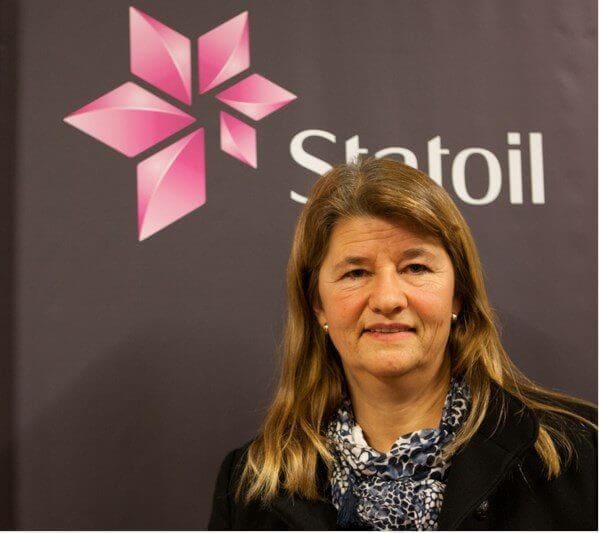
The Cap-X was presented by Margareth Øvrum, executive vice president for technology, projects and drilling in Statoil.

She said: “Once again we aim to drive subsea technology development on the Norwegian continental shelf together with our industry partners. The potential for increased efficiency and reduced costs can make this the next standard within subsea templates.” 

The Cap-X is based on a suction anchor technology which facilitates the installation on the seabed. It is ¼ the size of today’s subsea templates and enables more operations from vessel instead of rig, the company explained.

The technology has been pioneered by Statoil, Shell and the Norwegian Geotechnical Institute. The development of Cap-X was initiated in 2013 to increase commerciality of potential resources in the Barents Sea.

Subsea World News Staff; Video: Statoil


Source

Norway’s Oil Firms, Unions Seek Opening of Arctic Islands to Exploration

0

Oil firms and trade unions in Norway made a joint call on Monday for the opening of a pristine Arctic archipelago to oil exploration as soon as possible to counter an expected decline in offshore production. Oil exploration off the Lofoten islands has been suspended for the life of the current minority government since it relies on the support of two small parties, one of whose preconditions was that no oil firm can explore there.

But trade unions and energy firms, including the largest operator of platform off Norway Statoil, are keen to reopen the debate ahead of the next parliamentary elections in September 2017 to keep up existing production levels. The seas off the Lofoten could contain up to 1.3 billion barrels of oil equivalent, according to a 2010 report by the Norwegian Petroleum Directorate.

“These areas have a known geology, a large resource potential and are expected to be technically easy to explore and develop,” said the report, released on Monday. It was co-written by the lobbies representing the oil companies, the Norwegian industry, the shipping sector and the two biggest unions in the energy sector.

The report calls for an impact assessment of the area, which is the first formal step needed to allow firms to explore for oil and gas, to take place “as soon as possible”. Environmentalist groups are opposed to oil exploration as the waters off the Lofoten are home to one of the world’s largest cod stocks and to unique cold-water reefs. 


Source

OGA Invites Tenders for UK Govt Funded Seismic Surveys

0

The Oil and Gas Authority (OGA) has issued an invitation to tender (ITT) for the 2016-2017 UK Government funded seismic acquisition and processing.

According to OGA, the recipients of the contract will be required to survey areas over South West Britain including the Celtic Sea, Western English Channel, Irish Sea and the East Shetland Platform.

Furthermore, a separate ITT for legacy seismic data reprocessing will be issued in due course.

This follows the seismic survey of the Rockall Trough and Mid-North Sea High areas completed in 2015, which delivered approximately 40,000 km of new and legacy data.

In addition, three separate ITTs are open for regional and field support engineering services, subsurface studies and reservoir evaluation services and geoscience project services. These contracts will replace the current Oil & Gas Maximising Recovery Programme (OGMRP) contracts and will be three years in duration.


Hurricane Energy Finds New Investor to Finance North Sea Exploration

0

Hurricane Energy has found a new investor in private equity fund manager Kerogen Capital which is injecting 44.1 million pounds ($62 million) into the company for a nearly 30 percent stake, showing some rare appetite in oil deals amid weak prices. The share placement is also raising another 8 million pounds from existing shareholders Crystal Amber and Marlborough Fund Nominees, whose company ownerships will change to 15.1 percent and 1.3 percent, respectively.

The placing price of 15 pence per share was a 46.3 percent premium to Friday’s closing price. “(This) places Hurricane in a position to drill, test and evaluate two new wells on Lancaster this year,” said Hurricane Chief Executive Robert Trice in a statement, referring to the company’s North Sea concession. Shares in Hurricane were up 29 percent at 0709 GMT, against a 3.2 percent drop in the European oil and gas index.

Hurricane plans to use the funds to finance the drilling of two wells at Lancaster and for general corporate purposes, it said. The first well is expected to be spud early in the third quarter and oil could start flowing in 2019, it added.

Weak oil prices have meant energy buyers and sellers have struggled to agree on asset valuations, bringing deals in the sector to a near standstill. High costs in the North Sea have also meant exploration has fallen to a 45-year low, making investments in new wells a rarity. Hurricane also said it was in talks with “several parties” about bringing in a farm-out partner.


Source

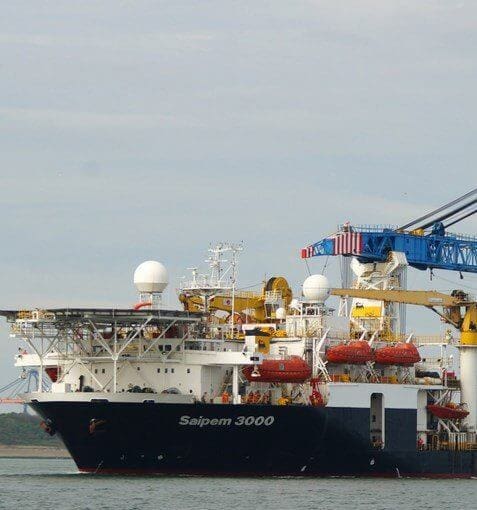
Saipem Bags USD 487M Worth of Contracts

0

Italian contractor Saipem has been awarded new E&C (Engineering & Construction) contracts valued at approximately €430 million ($487 million).

The first is a contract with Statoil, for the lift and mating operations of offshore floating wind turbines for the Hywind Scotland project. The 30 MW project is the first floating wind farm being built by Statoil off the Scottish coast.

The wind farm will consist of five, 6 MW floating turbines operating in waters exceeding 100m of depth.

In addition, Saipem secured additional works related to the installation of multi-phase pipelines in the Caspian Sea. The company did not disclose the name of the project.

Furthermore, the company recently announced contract for the offshore section of the Trans Adriatic Pipeline project. The contract involves the installation of a gas pipeline between the coastlines of Albania and Italy, across the Adriatic Sea. The work is expected to start in 2016.

“Most of the recent awards are related to gas and renewables infrastructure, highlighting Saipem’s exposure to activities that are not directly impacted by the oil price, where the company is able to leverage its diversified portfolio of assets and know-how,” Saipem said in a press release.