Home Blog Page 26

Korea and Japan welcome the first methanol-fueled ocean-going vessels

0

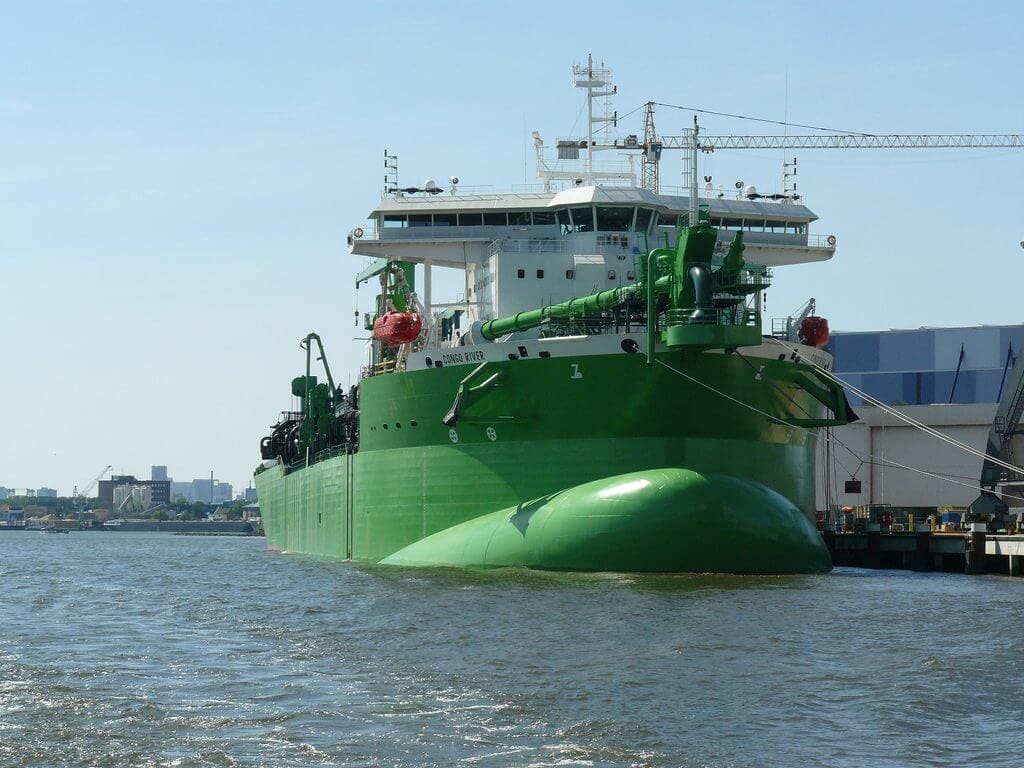
Waterfront Shipping Company Ltd. (WFS), Marinvest/Skagerack Invest (Marinvest), Westfal-Larsen Management (WL), and Mitsui O.S.K. Lines, Ltd. (MOL) were proud to attend the traditional ship naming ceremonies and take delivery of the first Korean and Japanese built methanol-fueled ocean tankers, the Lindanger, Mari Jone and Taranaki Sun.

Hyundai Mipo Dockyard hosted the Korean ship naming ceremony, while Minaminippon Shipbuilding Co., Ltd. hosted the Japanese ceremony; where all three of these 50,000 dead weight tonne vessels were built.

The vessels are built with the first-of-its kind MAN B&W ME-LGI 2-stroke dual-fuel engines that can run on methanol, fuel oil, marine diesel oil, or gas oil. The engine was developed by MAN Diesel & Turbo and is based on the company’s proven ME-series, with its approximately 5,000 engines in service. “When operating on methanol, the ME-LGI significantly reduces emissions of CO2, NOx and SOx. Additionally, any operational switch between methanol and other conventional fuels is seamless,” states Ole Grøne Senior Vice President, Head of Marketing and Sales, MAN Diesel & Turbo.

Lindanger and Mari Jone were named in honour of long-service WFS employees: Linda Bowles dedicated 23 years to WFS and passed away in 2013, and Jone Hognestad has led WFS as President for 17 years. Taranaki Sun was named after Methanex’s New Zealand production facility where it has produced methanol in the Taranaki province for approximately 30 years. The vessels’ names also incorporate the long standing naming traditions of the ship owners, emphasizing the close cooperation and joint efforts making this innovative vessel design a reality.

“Celebrating the naming of these vessels with our partners and my family is an honour,” stated Jone Hognestad, President, Waterfront Shipping. “I’m proud to add these sustainable vessels to our fleet and have my family name displayed.”

With the growing demand for cleaner marine fuel to meet environmental regulations, methanol is a promising alternative fuel for ships that can meet the industry’s increasingly stringent emissions regulations. Methanol is a biodegradable, clean-burning marine fuel that significantly reduces smog-causing emissions such as particulates, sulphur oxides and nitrogen oxides.

“This is just the beginning of our investment in this clean, innovative marine technology. We’re excited to explore fuel diversification and provide our customers with options through dual-fuel engines,” states Patrik Mossberg, Chairman, Marinvest. “We are pleased to be in Korea for its first methanol-fueled ship naming ceremony. We are not only welcoming a new vessel but also a groundbreaking innovative technology to the shipping industry,” added Rolf Westfal-Larsen, President and CEO, Westfal-Larsen Management.

“Having the delivery of the tanker with the first dual-fuel engine take place in Japan is a landmark. This is a revolutionary initiative that will move the shipping industry forward and in the right direction,” states Yoshikazu Kawagoe, Managing Executive Officer (Technical), Mitsui O.S.K. Lines, Ltd.

 

Source

Oil’s Magic Number Becomes $50 a Barrel for Promise of Recovery

0

The new magic number in the oil industry is $50.

BP Plc, rig-owner Nabors Industries Ltd. and explorer Pioneer Natural Resources Co. all said in the past 24 hours that prices above $50 will encourage more drilling or provide the needed boost to cash flow. With oil bouncing close to $45 a barrel, an industry that has been shaving costs to stay competitive is ready for signs of stability at a price level less than half of 2014’s average.

At an average price of $53 per barrel of oil means the world’s 50 biggest publicly traded companies in the industry can stop bleeding cash, according to oilfield consultant Wood Mackenzie Ltd. Nabors, which owns the world’s largest fleet of onshore drilling rigs, said it has already been talking with several large customers about plans to boost work in the second half of the year if prices rise “comfortably” above $50.

“It’s not just about touching $50,” Fraser McKay, vice president of corporate analysis at Wood Mackenzie in Houston, said Tuesday in a phone interview. “It’s about touching, maintaining and having the perception of future prices above $50 a barrel before you start sanctioning projects that are economic at $50 a barrel.”

Spending Cuts

The global oil industry slashed more than $100 billion in spending last year and is in the midst of further cuts this year to survive what Schlumberger Ltd. has called the industry’s worst-ever financial crisis. In North America alone, spending is expected to drop by half from last year.

Prices have rebounded by about two-thirds from a 12-year low, with Brent, the international crude benchmark, trading above $45 a barrel Tuesday. The rally has explorers from BP to Pioneer looking ahead to an eventual recovery as they release first quarter earnings this week. Next year, BP will be able to balance cash flow with shareholder payouts and capital spending at an oil price of $50 to $55 a barrel, down from a previous estimate of $60, the London-based explorer said. Pioneer expects to add as many as 10 horizontal drilling rigs when oil reaches $50 and the outlook for supply and demand of crude is positive, the company said Monday in its earnings statement.

For every $5 that oil prices climb, above a baseline of $37, Continental Resources Inc. adds another roughly $200 million in revenue, Chief Operating Officer Jack Stark said last month in an interview in New Orleans. By the time oil prices reach $52, the Oklahoma City-based explorer would probably look at adding more rigs, he said.

“We won’t chase price spikes,” Stark said. “We’re committed to being patient.”

Failed Rally

Yet even talk of ramping up again is bringing a stinging reminder of last year’s failed attempt to restart activity too quickly after oil prices rose.

“We got out ahead of ourselves — bit of a head fake there,” Tony Petrello, chief executive at Nabors, told analysts and investors Tuesday on a conference call. “We’re going to be a little more guarded here.”

Exactly when oil prices hit that level and how long they need to stay there is a question no one can say for sure. Nabors said the activity could start up in the middle of the third quarter or into the final three months of this year. Continental estimated that supply and demand could be nearing balance later this year and be “absolutely in balance” or in need of more oil next year.

“The absolute timing may be off a bit,” Stark said, “but ultimately it’s going to happen.”


Source

Maersk Oil awards four year contract for Culzean Development

0

Maersk Oil has awarded leading information management specialist – Datum360 – with a four year contract to implement Software as a Service (SaaS) solutions for the Culzean development in the UK North Sea.

The key component of the solution – PIM360 – will be at the centre of Culzean’s engineering data management.

Datum360 software has been used for the issuing, maintenance and creation of a tagging and numbering specification together with the matching of these to specific documents which will capture work completed on all the platforms and vessel.

Using an integrated solution is the smartest and most economically advantageous way that owner operators should work.  Not only does it enhance the consistency of data, but it also increases overall productivity and creates a more structured approach to managing vast amounts of project information.

As well as implementing Datum360’s DMaaS (Data Management as a Service), Maersk has also used the company to advise its data control centre on processes and software and currently to train staff on engineering information systems.

Speaking about the contract win, Steve Wilson, CEO and co-founder of Datum360 said: “We are delighted to have been awarded this contract and to work with a progressive company that is very reactive to pressures faced in the oil and gas industry. As such, Maersk is really driving to increase its efficiencies and implement improvements to their engineering information management, which will play a significant role in reducing costs and saving the company time.

“It is estimated that up to 60% of an engineer’s time can be spent moving and organising data on major assets like offshore oil platforms and vessels.  If the systems they use are cobbled together, ineffective and or simply don’t interlink then this time is completely wasted.

“We pride ourselves on the speedy deployment of off the shelf SaaS solutions that can be operational within days and cost as much as ten times less than the fees that owner operators have previously had to budget for.  In the current oil and gas climate we are acutely aware of the need to add value, build trust and ultimately do more for less and at Datum360 we are very proud that this has always been at the heart of our business – delivering efficiencies, experience and first class SaaS technology that delivers every time.”

Datum360 is based in Middlesbrough and Aberdeen with offices located around the world including Kuala Lumpur and Houston. The company works with four of the top-six super major international oil companies.


Source

Russia and Norway Use Saudi Oil Strategy in Europe’s Gas Market

0

(Bloomberg) — Europe is awash with low-priced natural gas, thanks to Russia and Norway using a Saudi-like tactic to hold market share.

Utilities from EON SE to Centrica Plc are beneficiaries as Europe’s two biggest gas suppliers provided a record amount of the fuel in the first quarter, according to Societe Generale SA. The glut discouraged cargoes of U.S. liquefied natural gas and contained growth of imports from Qatar.

There are parallels with the global oil market where Saudi Arabia, the biggest producer, boosted output last year to fend off U.S. shale drillers as crude prices collapsed. Gas in the U.K., the region’s biggest market, fell 38 percent in the past year and the plunge couldn’t have come at a worse time for Cheniere Energy Inc., which just started exports of U.S. LNG and has so far sent one tanker to Europe.

“There is a threat of price wars and every competitor is getting ready,” said Valery Nesterov, an analyst at Sberbank CIB in Moscow with more than four decades experience in energy. “They will have to work hard to keep — let alone increase –their market shares, including through policies that can be borrowed from the oil industry.”

Saudi Policy

Russian gas is competitive and Gazprom PJSC’s market share is rising naturally amid declining European production, Sergei Kupriyanov, a Gazprom spokesman, said by e-mail.

Statoil ASA, Norway’s state-controlled producer, sells to where it gets the best price and market share “is a consequence of this approach, and not a goal,” Elin Isaksen, a spokeswoman, said by e-mail.

As a global oil surplus accumulated in 2014, Saudi Arabia chose to keep pumping and defend its market share. That strategy pushed crude down and pressured producers such as those in the U.S. to reduce their output.

The Doha talks among crude producers on April 17 didn’t result in an output freeze after the Saudis insisted that Iran join any deal. The kingdom showed it doesn’t want to cede market share, said Ed Morse, head of global commodity research at Citigroup Inc.

European gas demand has been sluggish since the 2008 crisis. The region has just come out of a winter with the mildest U.K. temperatures since 1772, leaving supplies in storage above the five-year average.

This probably means less demand for stocking up before next winter. Fitch Group Inc.’s BMI Research forecasts prices may slide 28 percent to as low as 20 pence a therm ($2.88 per million British thermal units) this summer.

Dominant Shippers

Russia and Norway have been dominant suppliers to the region since the first  pipelines were laid more than four decades ago. Their combined first-quarter shipments rose 18 percent from a year earlier, according to Bloomberg calculations based on data from Gazprom and Gassco AS, Norway’s network operator. Together they provide more than half the region’s natural gas, according to Eurogas.

Gazprom, the world’s biggest producer, has an incentive to maintain market share and maximize revenue in dollars after the ruble plunged, Zach Allen, president at Pan Eurasian Enterprises in Raleigh, North Carolina, said by e-mail. Last year Gazprom sold fuel worth about $39 billion to Europe.

Norway, Europe’s second-biggest supplier, is playing catch-up. Troll, the nation’s biggest field, got a permit to produce 10 percent more gas in the year from Oct. 1. The country also plans to boost capacity at the Kaarstoe and Kvitebjoern facilities.

While Russia has said sales to Europe will probably reach a record this year, Norway expects a level similar to last year’s record.

“They are trying to defend market shares because they see — like everybody else — that failure to do so is going to allow more LNG — not just U.S. LNG but any LNG — to displace their pipeline supplies,” Jonathan Stern, chairman of the gas research program at the Oxford Institute for Energy Studies, said by e-mail. “European utilities are winning because this is the surplus cycle and prices look like they will go even lower as we approach the summer.”

Utilities have been enjoying lower costs for the fuel, which is used at power plants and for heating homes. Centrica’s British Gas unit reported a 31 percent jump in earnings last year and cut household tariffs about 5 percent from March. EON negotiated a price deal with Gazprom, which will boost profit this year.

Europe has been absorbing LNG as Asian demand weakened. It has liquid markets, infrastructure and a political incentive to diversify energy sources. Europe’s LNG imports, dominated by Qatar, rose 16 percent last year, according to the International Group of LNG Importers.

But if gas falls further, LNG would be priced out because pipeline-shippers Norway and Russia have lower costs,  Tor Martin Anfinnsen, Statoil senior vice president for marketing and trading, said in an interview.

“Both Russia and Norway are protecting market share against anyone seeking to take it away from them, not just the U.S.,” Allen said.

–With assistance from Elena Mazneva, Mikael Holter, Rachel Morison and Grant Smith. To contact the reporter on this story: Anna Shiryaevskaya in London at ashiryaevska@bloomberg.net To contact the editors responsible for this story: Lars Paulsson at lpaulsson@bloomberg.net Dan Stets.


Source

Reach Subsea agrees to restructure

0

Reach Subsea has agreed on a comprehensive restructuring of its charter agreements, which will enable Reach to move forward with market based charter- in rates. Solstad Offshore and Østensjø Rederi will as part of the restructuring become new shareholders of Reach Subsea.

Although the details of the agreement are confidential between the parties, we can convey that Reach Subsea will be well equipped to handle a prolonged period of weak market conditions. A significant reduction in charter commitments will provide Reach with a competitive and flexible total cost base. Reach Subsea is now positioned to exploit opportunities in the market, and create shareholder value.

The immediate financial implications for Reach Subsea are:

  • Reach’s total off-balance sheet bank guarantees of NOK 87m will be cancelled.
  • Leasing debt will be reduced by NOK 26m, while bank debt will increase by NOK 20m.
  • As compensation, the total restricted cash deposits of NOK 53m will be released and paid out.
  • Reach will issue 15m shares, subscribed at NOK 2 per share, to major shareholders, board members, key employees and the ship owners.

As a result total debt, including bank guarantees, and adjusted for restricted cash deposits, will be reduced from approximately NOK 140m to approximately NOK 95m. The company’s working capital and cash position is unaffected by the restructuring, and remains robust. In particular in light of the reduced and flexible cost base going forward.

The Board will shortly summon the AGM and will as part of this propose the issuance of 15m shares, all of which have been subscribed for at NOK 2 per share. 5m shares will be issued to each of Solstad and Østensjø, while 5m shares will be issued to major shareholders, board members and key employees. In addition, the Board will propose that 4m options with strike price NOK 3 per share are issued to Solstad Offshore.

Jostein Alendal, CEO of Reach Subsea, says: “We are pleased to have achieved a mutually acceptable solution that is adapted to the current market climate. This will enable Reach to continue working with ship owners known for quality and reliability – a necessity in our line of business. We are now equipped to face a prolonged period of poor markets, and will continue to deliver services of the highest quality.”

Source

National Oilwell Varco Lays Off Another 520 Staff In Norway

0

U.S. oilfield equipment maker and service provider National Oilwell Varco Inc will cut its Norwegian workforce by another 520 people after low oil prices resulted in fewer orders, the company said in a statement on Friday.

The latest round of cuts will reduce the company’s staff in Norway to less than 2,000, down from almost 5,000 at the height of the oil industry’s boom two years ago.

“The uncertain market situation means that we cannot say how extensive the downsizing process will be in the long run,” NOV said.

The cuts announced on Friday were all permanent jobs, the company added.

(Reporting by Terje Solsvik; editing by Gwladys Fouche)


Source

Damen Shiprepair Amsterdam completes maintenance programme for fallpipe vessel Flintstone

0

The fallpipe vessel Flintstone has departed from Damen Shiprepair Amsterdam, part of Damen Shiprepair & Conversion, following a six-week programme of maintenance and repairs together with her first Special Survey. Owned and operated by the Tideway group of companies, a division of the Belgian dredging, environmental and marine engineering group DEME, the 155-metre, 20,000 tonne DP2 Flintstone is the flagship of the Tideway fleet. Her equipment includes an active heave compensated ROV with state-of-the-art survey equipment and a 200 kW mass flow excavation tool for the removal of seabed materials.

The Flintstone underwent a comprehensive programme of maintenance, surveys and testing in the run-up to her Special Survey, spending a total of 28 days in drydock at Damen Shiprepair Amsterdam (DSAm). Of the many activities that took place, the most complex with regard to the vessel itself was the refurbishment of the moon pool doors. These were lowered and supported on the floor of the drydock in order to undergo extensive maintenance, including the replacement of the main bearings. The unexpected and large scale of the machining work required made this a very challenging job to carry out within the original time allowed.

Other activities included the overhaul of all the thrusters together with the forward anchor winches and a wide range of other tasks relating to the water lines, fall pipes, ROV transport and storage, and other equipment.

While in DSAm the Huisman crane and tower were overhauled by the manufacturer. The yard provided full support including machining and supplying various components, and provided a berth for the extra time required to complete the project.

Project manager Arnold Bregman commented, “This was a very challenging project given the extent of additional works that became apparent as we progressed. However, Damen Shiprepair Amsterdam was the ideal location for this with all the necessary facilities available on site. We were also able to allocate additional manpower and schedule extra shifts. That, together with excellent communication and cooperation between all the parties concerned, ensured that we were able to complete our part of the project within the original time specified.”

Bas Peeters, Vessel Manager at Tideway, added: “Damen Shiprepair Amsterdam provided us with the skills, cooperation and flexibility that we seek in a repair yard for a vessel like Flintstone.”


Source

ITF-facilitated JIP enters trial phase to provide clearer understanding of subsea faults

0

A joint industry project established through The Industry Technology Facilitator (ITF) has entered a trial phase with the support of oil and gas operators.

A new technology system designed to address a common problem in the subsea industry is undergoing a shallow water trial at Portishead Quays marina. The system will help to identify the location of electrical faults on subsea installations and will enable field operators to better plan for repair or replacement of failed components which could save the industry millions of pounds in halted production.

The system, known as V-IR, has been developed by Viper Subsea with the support of Total, BP, Shell, and Chevron.

The shallow water trial will run in phases and could last up to 12 months. The initial trial will take three months, during which time the V-IR technology suite will undergo communications and performance testing in a sea water environment that includes the use of 2km of subsea cable which has been deployed onto the bed of the marina.

Although a shallow water trial, the main components are already designed for 3000m water depth. Following the shallow water trial there will be a period of further equipment qualification before the system is fully commercialised later in the year.

ITF CEO, Dr Patrick O’Brien said: “It is encouraging to see that one of our JIPs is nearing the latter stages of deployment with this trial. Identifying the exact location and why the failure occurred is time consuming and difficult with existing technology, meaning that the recovery and repairs of cables is risky and very expensive. Viper’s V-IR system has the potential to provide substantial savings in time and costs to the industry.”


Source

JFD Develops New System to Improve Diving Safety

0

JFD, the subsea operations and engineering company, part of James Fisher and Sons, has launched a new Compact Bailout Rebreathing Apparatus (COBRA) for commercial divers.

According to the company, the bailout system, designed and developed by JFD as part of its Divex range of rebreathers, extends the duration of the supply of emergency breathing gas, delivering 45 minutes of emergency life support at a depth of 120 meters.

The system is designed to be smaller than most bailout systems, ensuring COBRA does not impact on the operations of the diver.

COBRA is a mechanical system, operated via a single turn activation and can be tested prior to its use without affecting its functionality.

Giovanni Corbetta, managing director at JFD, said: “Modern diving operations bring significantly more risk, and continuing to use systems which can only provide a few minutes of emergency gas puts lives in danger. The COBRA system has been rigorously tested and has a proven ability to significantly extend the provision of emergency life support without impacting the operations of diver, allowing them to carry out their duties with minimal risk. Our entire focus and commitment as a company is founded upon improving diver safety and setting new benchmarks within the industry.”


Source

Norway’s Arctic A Bright Prospect In Crisis-Hit Oil Sector

0

While the oil industry continues to cut jobs, projects and costs amid low crude prices, one region is making a surprise comeback after years of declining activity, company executives and officials say: the Norwegian Arctic.

The search for oil and gas in mature offshore areas in the North Sea is being axed this year due to tighter budgets, but the number of exploration wells in the Norwegian part of the Barents Sea is increasing to 10 in 2016 from seven last year.

Adding to this, the government will hand out new drilling permits by the end of the second quarter, in an oil licensing round set to open unexplored acreage in the Barents Sea, near Norway’s offshore border with Russia.

Oil major Statoil said it was seeking a rebound in exploration activity offshore Norway in the next few years with a focus on the Arctic..

“We’re looking to the 23rd round to trigger an uptick in activity for us,” Statoil’s head of exploration for Britain and Norway, Jez Averty, told Reuters on the sidelines of an industry conference, referring to the government’s ongoing process.

The head of Norway’s Petroleum Directorate, Bente Nyland, said: “There have been both downturns and upturns in the Barents Sea, but now we are definitely on an upturn.”

After years of delay, Italy’s Eni has finally begun production at Goliat, the first oil-producing field in the region. And this week Statoil said it would be able to cut development costs further at its Johan Castberg oilfield, a key project.

“I am very optimistic for the Barents Sea … When Statoil announced their work on Castberg and said they have reduced the cost of the development to such low levels, it was a huge signal to the rest of the industry,” the deputy leader of trade union Industri Energi, Frode Alvheim, told Reuters.

Swedish oil firm Lundin Petroleum and Austria’s OMV reported progress in the development of two significant oil discoveries, the Alta/Gotha and Wisting.

Challenges remain, however. Higher costs and a lack of infrastructure to transport oil and gas from the fields are a big hurdle, so oil firms are more reliant on collaboration to develop projects in tandem.

And even though the Petroleum Directorate believes half of Norway’s undiscovered resources lie beneath the Barents seabed, the geological uncertainty is higher and knowledge of the acreage lower than in mature areas.

Shell withdrew its application from the 23rd licensing round earlier this month, while other majors such as ExxonMobil, Eni and Total did not apply, partly because they are searching for larger discoveries in other parts of the world.


Sourcebulb