Home Blog Page 25

Oilfield umbilical market growth driven by deep sea activities at 3.66% CAGR to 2021

0

The market for umbilical is forecast to grow at a CAGR of approximately 3.66% during 2016 – 2021, on account of increased deep sea activities for discovering new oil and gas fields along with rise in production from existing offshore reservoirs, according to a new report titled “Global Umbilical Market (By Type, By Region, By Country): Opportunities and Forecasts (2016-2021) – (By Type- Hydraulic, Electro Hydraulic, Electro-Fiber Optical Hydraulic, Electro Hydraulic & Electro-Fiber Optical with Medium Voltage Cores; By Region- N. America, S. America, Africa, Europe, Middle-East and APAC)”.

Continuous rise in the demand of oil especially from the transport sector, coupled with the increase in deep water explorations to increase oil productivity has further accelerated usage of Umbilical in the oil and gas production projects. Decline in crude oil prices, depleting oil reserves and global economic slowdown has presented fresh challenges to explore undiscovered reservoirs. Also the focus is towards the subsea production, rising market for subsea equipment including Umbilical in Oil and Gas industry. This would cause the Umbilical Market to rise at a slow pace during 2016 – 2021 owing to the delay of E&P activities in the region.

With the high demand for energy in the American and Asian regions, there has been an increase in oil and gas deep sea development activities leading to growth in the market for Subsea equipment along with Umbilical. The report speaks about the rise in the marine explorations drive the market in the offshore oil and gas industry. The percentage share of the offshore market is anticipated to rise until the year 2021. Prolonged fluctuating crude oil prices and depleting reserves have limited the exploration activities and also contributed to the growth of umbilical market to increase productivity from deep water oil wells.

In terms of segmentation, market is categorized By Type (Hydraulic Umbilical; Electro Hydraulic Umbilical; Electro- Fiber Optical Hydraulic Umbilical and Electro Hydraulic and Electro- Fiber Optical Hydraulic Umbilical with medium voltage cores) and North America, South America, Africa, Europe, Middle East and Asia Pacific are being covered in the regional segmentation.

This recently published report has analyzed the umbilical market and provides statistics and information on market size, shares and trends. The report intends to provide cutting-edge market intelligence and help decision makers take sound investment evaluation. Besides, the report also identifies and analyses the market entry strategies for various companies, emerging trends along with major drivers, challenges and opportunities in the global umbilical market.

 

Source

Falcon Outlines Drilling Plans for its Australia’s Beetaloo Basin Assets

0

Ireland’s Falcon Oil & Gas Ltd. provided Thursday the following technical and operational update for its operations in the Beetaloo Basin, Northern Territory, Australia.

2015 Drilling Program – Technical Results

The results from the in-depth shale evaluation program and petrophysical analysis of the three wells drilled in 2015 confirm the following:

  • The Middle Velkerri and Kyalla shales offer stacked play fairways with continuity over a large proportion of the Beetaloo Basin and in various maturity windows (dry gas to liquid)
  • Three pervasive, organic rich shale intervals were identified and characterized within the Middle Velkerri formation with excellent reservoir and completion quality. The identified “B” and “C” shales have thickness in excess of 131 feet (40 meters) each
  • Amungee NW-1H, the first horizontal well in the program landed in the Middle Velkerri “B” shale encountering excellent gas shows and represents a highly prospective candidate for multi-stage hydraulic fracture stimulation
  • Core analysis confirmed that the Middle Velkerri shale is organic rich, with average Total Organic Content (TOC) of 3 percent – 4 percent and is gas saturated
  • Diagnostic Fracture Injection Test (DFIT) data revealed that the Middle Velkerri shale is 20 percent – 25 percent overpressured, which is encouraging from both a volumetrics and reservoir productivity perspective
  • Favorable geomechanics indicates good frackabability within the Middle Velkerri shale
  • Estimated gas in-place density ranges within the Middle Velkerri shales are comparable to successful North American shale plays

2016 Drilling and Testing Program – Objectives

The objectives of the 2016 Beetaloo drilling and testing program comprise:

  • Testing gas productivity of the Middle Velkerri shale from the horizontal Amungee NW-1H well by means of a multi-stage hydraulic fracture stimulation program
  • Proving the areal extent of the Middle Velkerri shale gas play towards the southern part of the Beetaloo Basin, through the drilling and testing of the vertical Beetaloo W-1 well, which is to be located approximately 53 miles (85 kilometers) south of the Kalala S-1 and Amungee NW-1H wells; and some 22 miles (35 kilometers) south of the Shenandoah S-1 well
  • Testing of the shallower, condensate rich gas mature sections of the Middle Velkerri shale on the northern basin flank through drilling the second vertical well in 2016, located approximately 22 miles (35 kilometers) north of the Kalala S-1 and Amungee NW-1H wells within exploration permit (EP) 98
  • Characterization of the Kyalla shale as a secondary target could provide upside and enhanced liquids potential

2016 Drilling and Testing Program – Operational Schedule

Preparations for the joint venture’s 2016 drilling, testing and hydraulic stimulation program are progressing and on schedule:

  • Rig 185, commissioned from Saxon Energy Services Australia Pty. Ltd., has remained “warm stacked” at the Amungee NW-1H wellsite since November 2015 in order to commence operations as soon as weather conditions permit. Recomissioning of Rig 185 is expected to commence in mid-May 2016
  • Re-entering the horizontal Amungee NW-1H well is scheduled for mid-June 2016, followed by a multi-stage fracture stimulation program to test the Middle Velkerri “B” shale reservoir
  • Civil works at the Beetaloo W-1 vertical well are expected to commence mid-May 2016 with spudding expected in the third quarter of 2016
  • The regulatory approval process for the drilling of the second vertical well within EP-98 is ongoing with spudding scheduled to commence immediately post drilling Beetaloo W-1 well

Philip O’Quigley, CEO of Falcon commented:

“I am delighted to update the market on the results of the in-depth shale evaluation program and petrophysical analysis carried out of all the technical data gathered on the three wells drilled during 2015. The results confirm early indications, as previously communicated, that this is a highly prospective basin.”

“Falcon’s shareholders can look forward to another exciting year of exploration activity which has the potential to transform the value of your company. Falcon remains fully carried throughout 2016 by our partners Origin and Sasol.”


Source

Statoil sends help for helicopter crash

0

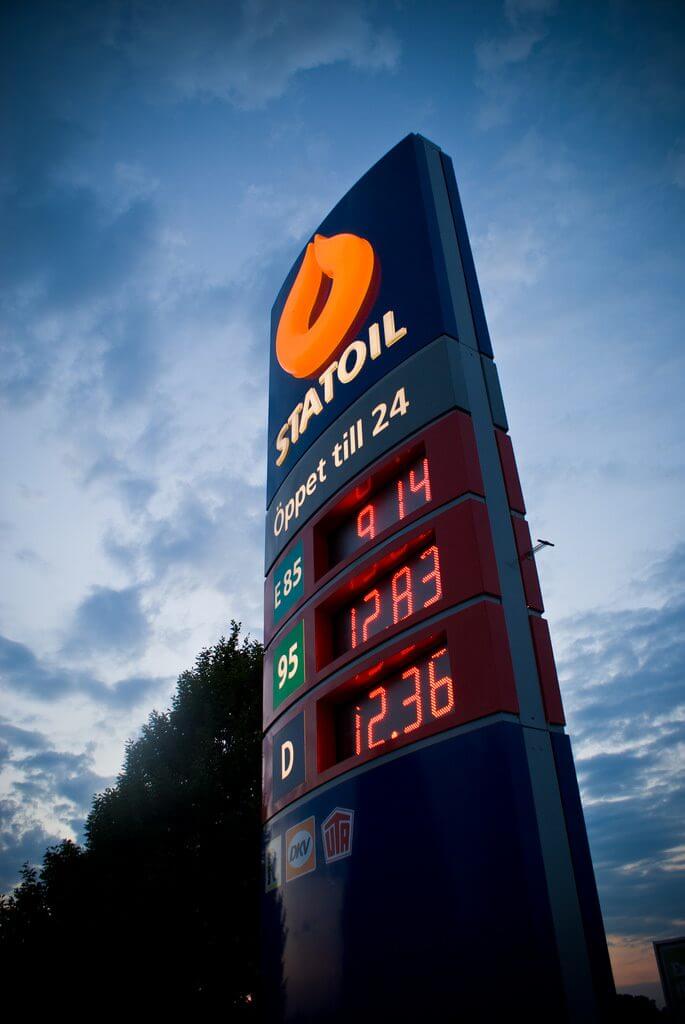
The oil and gas major Statoil, was notified of a helicopter crash in Norway at 12.20pm today. The crash has happened west of the Norwegian city of Bergen and is thought to have 13 people on board.

It is not yet known of any survivors, although there have been reports from rescue officials that people were seen in the sea. However, the impact of the crash has been so severe that the helicopter appears to have been totally destroyed, with thick smoke showing in photographs taken from the crash site.

Statoil has confirmed that it has mobilized its emergency response organization and grounded all CHC Helicopters.

Source

Sources: Saudis To Push Oil Output Higher But Won’t Flood Market

0

RIYADH, April 29 (Reuters) – Saudi Arabia’s oil output will edge up close to record highs in coming weeks to meet summer demand for power but is unlikely to be pushed to the limit and flood global markets, Saudi-based industry sources said.

Production may rise to around 10.5 million barrels per day (bpd) during summer, the sources said. Supply in April has held steady to slightly lower at about 10.15 million bpd, said three industry sources who monitor Saudi output.

The predictions may help ease market fears that Saudi Arabia could steeply add to a global glut after production-freeze talks in Qatar this month collapsed following Riyadh’s refusal to sign the deal without participation by Iran.

Days before the meeting, Saudi Arabia’s top oil official, Deputy Crown Prince Mohammed bin Salman, said the kingdom could boost output immediately to 11.5 million bpd and go to 12.5 million in six to nine months “if we wanted to”.

Some analysts said the comments signalled a new phase in a battle for market share with Iran, which is ramping up its own exports after the lifting of international sanctions.

But Saudi-based industry sources told Reuters that Riyadh does not plan to dump more oil into the market if there is no demand.

They said the comments by Prince Mohammed were made to highlight the theoretical ability of the kingdom to raise output rather than its immediate plans.

“Eleven million bpd? No, I don’t see it,” one source said.

The sources said production would likely stay at 10.2-10.3 million bpd and could rise by some 200,000-300,000 bpd in the hot summer months to around 10.5 million.

Production often rises briefly in summer, when the kingdom burns more than 800,000 bpd to generate power as demand for air conditioning surges.

State oil giant Saudi Aramco has a stated production capacity of 12 million bpd and maintains 1.5-2.0 million bpd as a cushion in case of any global supply disruption.

But production has never reached 11 million bpd. The kingdom pumped 10.56 million bpd, a record, in June last year. It kept output in March steady at 10.22 million bpd and has yet to disclose figures for April.

Earlier this month, Aramco sold 730,000 barrels for June loading to Chinese refinery Shandong Chambroad Petrochemicals, one of about 20 independent refineries nicknamed “teapots”.

This was Aramco’s first spot sale to a teapot plant, but Saudi-based industry sources said such a deal should not be viewed as an escalation of any battle for market share.

“It’s not unusual to sell spot,” one of the industry sources said. “It’s basically pure demand-driven.”

(Additional reporting by Reem Shamseddine in Khobar; Editing by Dale Hudson)

Source

Kemp: Rising Oil Prices Throw Lifeline to Shale Producers

0

Brent prices for 2017 ended trading above $50 per barrel on Wednesday for the first time since mid-December following the largest and most sustained rally in prices since the oil slump started.

The average for the 12 futures contracts expiring in 2017, called the calendar strip, has risen by 34 percent from its recent low of $37.45 on Jan. 20 to $50.26 on April 27 ().

Spot prices, represented by the nearest futures contract, dominate the headlines and are of most interest to analysts and financial investors.

Most hedge funds and other money managers concentrate on nearby futures contracts because they are the most liquid.

Calendar strips for future quarters and years are far less prominently reported in the media and analyst commentaries.

But the majority of crude producers and consumers such as airlines rely on calendar strips to hedge future sales and purchases.

For producers struggling to meet debt payments and avoid breaching the terms of loan covenants, rising prices are a chance to lock in future revenue and reduce downside risks.

Many producers, especially in the U.S. shale industry, must be hoping prices continue to rise in the second half of 2016 and through 2017 as the oil market rebalances.

But the calendar strip has already risen to the point where it is line with the average price forecasts for 2017 made back at the start of March.

At that point, half the respondents to a broad price survey expected prices to average between $45 and $55 per barrel in 2017.

By remaining unhedged, producers have the chance to benefit from further price increases. But any pull back could put their very survival at risk.

For many shale producers, the difference between an average price of $35 and $50 per barrel is the difference between insolvency and survival.

Prudence counsels most shale producers should protect part, if not all, of their production for 2017 at current price levels against any reversal.

In early 2015, many producers missed the opportunity to lock in higher prices when spot prices rallied between January and May to more than $65 per barrel and then suffered grievously when prices retreated to fresh lows.

Given the fragility of market rebalancing, and the financial exhaustion of many U.S. onshore oil producers, the safer course now is to start locking in at current prices, even at the risk of giving away some upside.

Many shale producers have already begun to lock in a large share of their 2017 projected production, according to recent earnings updates and investor presentations.

Hedging should enable at least the stronger and better capitalised companies to protect their core operations through the uncertain period until the cycle enters a proper upswing.

(Editing by David Evans)


Source

Top Oil Service Firms Mull North America Retreat As Losses Mount

0

(Bloomberg) — Two of the three largest oil rig operators and frackers are considering pulling back from the North American market as losses mount.

Schlumberger Ltd. — after posting its first North American operating loss since at least the turn of the century, according to Barclays Plc — is evaluating whether it’s worth temporarily shuttering its business in the region. Baker Hughes Inc. said Wednesday it has decided to limit its exposure to unprofitable onshore fracking work in North America because of the “unsustainable pricing.”

It’s the first time in at least a decade that those companies and  Halliburton Co., the big 3 in oil services, all lost money in the region during the first three months of the year, according to Bloomberg Intelligence.

“Activity is coming down to basically critical-mass type of levels,” Schlumberger Chairman and Chief Executive Officer Paal Kibsgaard told analysts and investors Friday on a conference call. “What’s the benefit of taking the losses versus shutting down and then making the investments later on to start back up again?”

Even FMC Technologies Inc., the largest provider of subsea equipment to the industry, said Wednesday the amount of lost work in the region was surprising.

Job Cuts

The oil service and equipment companies were the first to feel the pain since crude prices began falling in 2014, and they’ve contributed the largest share of the more than 250,000 jobs cut during the downturn.

“It’s a pretty dire situation right now in the oil services market,” J. David Anderson, an analyst at Barclays in New York, said Wednesday in a phone interview. “The next step here is literally shutting down operations.”

As companies report first-quarter results, laments about the “unsustainable” business in North America is a common refrain among service providers.

“We’ve been hearing one version or another of that word for some time now, and I think a lot of people just dismissed it,” Barclays’ Anderson said. “Companies are forced to take these losses right now. Otherwise, when this eventual recovery happens, they’re not going to be able to respond. That’s what they have to weigh.”

‘Unsustainable Market’

Jeff Miller, president of Halliburton, was one executive using the word this past week to describe operations. “My definition of an unsustainable market is one where all service companies are losing money in North America, which is where we are now,” he said Friday in a statement in which the Houston-based company reported an operating loss margin of 2.2 percent.

The market for hydraulic fracturing, which blasts water, sand and chemicals underground to free trapped hydrocarbons, is seen as a proxy for oilfield service activity in North America, where producers in the shale plays use the technique to produce crude.

More than half of U.S. fracking equipment, measured at a total of 17.5 million horsepower, is unused, according to consultancy IHS Inc. Prices charged for fracking are estimated to have fallen as much as 40 percent since the downturn began in the third quarter 2014, Caldwell Bailey, senior consultant at IHS in Houston, said Wednesday in a phone interview.

“They can’t cut costs any more,” Anderson said. “You’re at the muscle and the bone. If I cut from here, I’m impairing myself on the upside.”


Source

The Underwater Centre Adds New Modules to Diving Courses

0

The Underwater Centre has added new modules to its commercial air diving courses.

The ‘Premium’ and ‘Construction’ diver training packages will now include commercial enriched air nitrox course, MJI 21 hydraulically tensioned subsea bolted connections course, IMCA diver medic training (DMT) and IMCA assistant life support technician (ALST) training.

Steve Ham, The Underwater Centre’s Commercial Director, said: “These courses are being included now because they have been highlighted as important by industry and they will make important additions to our students’ CVs when it comes to looking for a job as a commercial diver.”

Chris Barratt, Senior Trainer at Stork, who will be delivering the MJI 21 course, added: “The one day subsea bolt tensioning course, or more commonly known as the MJI 21 Course, is a fundamental skill required within the commercial diving industry. Developed from the ECITB technical training standard, the course has been specifically designed with the diving industry in mind due to the lack of any robust training in subsea bolt tensioning, for divers and deck crew.

“Delivering the course at The Underwater Centre in Fort William allows a concentrated focus in familiar surroundings for divers; ensuring individuals are trained and knowledgeable in subsea bolt tensioning when they graduate from their diving course.”


Source

Atlas Oil Company chooses the FuelNOW Network for real time fuel delivery insights

0

Atlas Oil Company is excited to announce its newest investment in the FuelNOW Network (FNN), a cloud-based platform that automates the supply chain and streamlines the fuel delivery process. Utilizing FNN, Atlas has complete visibility into key delivery metrics and accurate business insights that can be accessed from any device, at any time day or night.

The petroleum industry is often categorized as mature, with many manual processes and disparate systems to manage the fuel distribution process.  Carriers across the country trust FNN, developed by Vixta Solutions, LLC to proactively manage their bottom line.  As a fully integrated solution, FNN provides Atlas real-time delivery monitoring and automated reconciliation and customer invoicing. It is also a single source platform for Atlas to manage all of their fuel deliveries including those that are fulfilled through their comprehensive network of third party carriers. “The ability to manage our carrier network efficiently under one platform is revolutionary, creating major efficiencies in freight validation and customer satisfaction,” said Bob Kenyon, EVP and Chief Operating Officer at Atlas Oil.

“We’ve been able to speed up our order-to-cash cycle and eliminated many manual processes by digitally capturing our delivery documents,” Kenyon added.  “Our team fulfils thousands of deliveries per month and we’re significantly more accurate in our billing and inventory management under the FNN platform.” As an innovative national fuel supplier, Atlas Oil is committed to investing in zero customer sacrifice technology enhancements.

About Atlas Oil Company

Headquartered in Taylor, Mich., Atlas Oil is a premier national fuel supply, logistics and services company delivering comprehensive solutions to customers throughout the distribution lifecycle, from crude oil E & P companies to refineries to commercial end users nationwide, 24/7/365.

With operational excellence and industry leading safety standards, Atlas is engaged in all areas of transportation, logistics and fueling, including bulk, fleet, event, onsite, emergency services and transloading.  The company is highly active in real estate, including the purchase and sale of locations.

The company leverages a team of nearly 500 professionals, a fleet of state-of-the-industry equipment and a national network of premium third-party relationships, guaranteeing a seamless, consistent and industry-leading experience at every touch point.

About Vixta Solutions, LLC

Vixta Solutions is a fast growing startup focused on “Digital Innovation” for the mid-market and legacy industries. Vixta is delivering “game changer” platforms in multiple industries including fuel distribution, political campaigns, modular construction, automotive, and family office investments. Vixta delivers innovation through a combination of digital platforms, smart enterprise solutions and management consulting practices.

The Digital Solutions practice helps create the next digital enterprise with our ground breaking ideas for building platforms and networks. Our Smart Enterprise practice helps clients deliver smart offerings for their customers by converting data into competitive value and manage ecosystems for the digital world. Our management consulting practice helps clients profit from market disruption, creating and executing a “break-through” approach to strategy.

Source

Subsea Global Solutions Sets Up Texas Office

0

Subsea Global Solutions (SGS), an underwater repair, maintenance and marine solutions provider, has opened a new office in Texas.

The office, in Webster, Texas, near Houston, should put SGS in a good position to support demand for its services on the Gulf Coast, and in the Houston and Galveston areas.

SGS said that the newly set up base would provide trained personnel and specialized equipment to deliver cost-effective maintenance and repair solutions.

“2016 will be a pivotal growth year for SGS as we continue to expand our services in the oil and gas industry, as well as the commercial shipping industry, in the U.S. and globally. In addition to our new office in Webster, Texas, we also expect to add more locations in North America in 2016, as well as additional international locations,” said Paul Peters, chief executive officer at SGS.

Subsea Global Solutions is a corporation consisting of the assets and personnel of Miami Diver LLC, Miami Diver Panama, Miami Diver International, Parker Diving Service LLC and Trident BV.


Source

Statoil reports adjusted earnings of USD 857 million in the first quarter of 2016.

0

“Our financial results were affected by low oil and gas prices in the quarter. We delivered strong operational performance across all business areas, high production efficiency and results in line with expectations from liquids trading and refining. The guidance for 2016 is maintained,” says Eldar Sætre, President and CEO of Statoil ASA.

“The industry is facing challenges. However, I am pleased to see progress consistent with the priorities we presented in February. We have a firm plan to improve efficiency and make faster and deeper cost reductions. We are radically improving our project break evens and we are on track to re-set costs and thereby impact the parameters that we can control”, says Sætre.

Adjusted earnings were USD 857 million in the first quarter compared to USD 2,945 million in the same period in 2015. The reduction was primarily a consequence of significantly lower liquids and gas prices, partially offset by good operational performance and reduced underlying operating costs. Adjusted earnings after tax were USD 122 million in the first quarter, down from USD 902 million in the same period last year.

IFRS net income was USD 611 million in the first quarter compared to a net loss of USD 4,571 million in the same period of 2015. Net impairment reversals of USD 308 million before tax in the first quarter of 2016 positively impacted the IFRS results compared to net impairment charges of USD 5,935 million before tax in the same period last year.

Statoil delivered equity production of 2,054 mboe per day in the first quarter. The underlying production growth in the quarter, after adjusting for divestments, was 2% compared to the first quarter last year. Production from the Norwegian continental shelf (NCS) grew 2% in the first quarter of 2016 compared to last year, adjusted for divestments. Equity production outside of Norway was 734 mboe per day, in line with the first quarter last year, adjusted for transactions. In the first quarter Statoil made two small discoveries on the NCS. As of 31 March 2016, Statoil had completed seven wells, with four wells on-going. Adjusted exploration expenses in the quarter were USD 280 million, down from USD 351 million in the first quarter of 2015.

Cash flow from operations amounted to USD 2,205 million in the first quarter compared to USD 3,740 million in the same period last year. In light of the low liquids and gas prices in the quarter, Statoil maintained a strong capital structure, and net debt to capital employed at the end of the quarter was 28.1%. Organic capital expenditure was USD 2.4 billion in the first three months of 2016.

The board of directors has decided to pay a dividend of USD 0.2201 per ordinary share for the first quarter. Subject to approval of the proposed scrip dividend programme at the annual general meeting on 11 May 2016, shareholders will get the option to receive the dividend for the first quarter in newly issued shares in Statoil at a 5% discount. Further information on the scrip dividend programme for the first quarter will be published in due course.

The serious incidents frequency indicator was revised as from 2016, and caters now for Safety and Security incidents with an actual serious consequence. The twelve month average Actual Serious incident frequency (Actual SIF) was 0.21 per 31 March 2016, compared to 0.20 in the same period last year.

As from the first quarter 2016, Statoil changed its presentation currency to USD. For information purposes certain key figures are available in NOK in the Supplementary section to the total quarterly report.

Key events since fourth quarter 2015:

Drilling of the first of a total of 35 wells for the first phase of the Johan Sverdrup field development commenced early March

Statoil announced the acquisition of 11.93% of the shares and votes in Lundin Petroleum, increasing Statoil’s exposure to core field development projects and growth assets on NCS, including Johan Sverdrup and Edvard Grieg

In the Awards in Predefined Areas (APA) round 2015, Statoil was awarded interest in 24 licences on the NCS, the highest number of licences since 2005

In April, Statoil entered the German offshore wind market, through a 50% acquisition of the Arkona offshore wind farm, providing renewable energy for up to 400,000 households in Germany


Source