Home Blog Page 24

Mermaid CFO Leaves

0

Mermaid Maritime, a provider of subsea and drilling services to the offshore oil and gas industry, notified that Nha-Vinh Julien Nguyen has resigned his position as the company’s chief financial officer.

Reportedly, Nguyen leaves in order to pursue another career opportunity in a different industry.

Nguyen, was appointed as CFO in Januray 2016. His resignation will be effective Jun 17, 2016.

In that respect, Mermaid has appointed Phiboon Buakhunngamcharoen as an acting CFO. He will be responsible for the overall finance and accounting function of the company.

Buakhunngamcharoen was named director, Compliance & Internal Audit of Mermaid Maritime in March this year. Prior to that position he was the company’s director of finance & accounting for more than two years.


Source

Saudi Spot Oil Deal In China Seen By Citi A ‘Dramatic’ Shift

0

Saudi Arabia made its first sale of oil to a small, independent Chinese refiner. What’s more significant to markets is that the world’s biggest crude exporter broke from its usual practice of selling via long-term contracts, according to Citigroup Inc.

The world’s biggest crude exporter sold a spot cargo to teapot refiner Shandong Chambroad, said people with knowledge of the deal who asked not to be identified as the information is confidential. The 730,000-barrel shipment is expected to load in June from state-owned Saudi Arabian Oil Co.’s leased storage tank in Japan.

“News that Saudi Arabia is selling a cargo on the spot market to Asia may mark the turning of a dramatic new chapter in the Saudi playbook,” the bank’s analysts including New York-based Ed Morse said in a April 25 report. “What is unusual is that the sale is spot rather than the initiation of a new term contract. Spot sales are about the only way the Kingdom can gain new market share in a world in which chunky buyers are interested in securing incremental purchases via spot rather than term arrangements.”

Oil Politicization

Brent crude is almost 40 percent lower than in November 2014, when Saudi Arabia led a decision by the Organization of Petroleum Exporting Countries to keep pumping to defend market share in the face of swelling global inventories. Aramco will complete the expansion of its Shaybah oilfield by the end of May to maintain the level of its total production capacity, two people with knowledge of the plan said this week. This summer, the Kingdom may be targeting an additional 500,000 barrels a day of sales, boosting daily production to 11 million barrels as power-generation demand peaks, Citigroup estimated.

Saudi Arabia’s output reached a record 10.57 million barrels a day last July, helping to send Brent lower for a third year. Prices rallied from a 12-year low in January amid the potential for agreement between major oil producers to cap output. Futures for June settlement on the London-based ICE Futures Europe exchange traded up 0.6 percent at $44.76 a barrel at 1:24 p.m. Singapore time.

Doha Failure

However at a meeting between 16 producing countries in Doha on April 17, Saudi officials quashed an accord to freeze output as Iran refused to participate in a move that analysts at BMI Research call the “creeping politicization” of oil. As tension between the two Middle East nations intensify, Saudi Arabia is handicapped by its restrictive long-term oil contracts at a time when competitors including Iran are extending larger amounts of open credit to buyers for longer periods, according to Citigroup.

Saudi Aramco has long shunned spot sales of its oil, a strategy that worked well in maintaining the bulk of its 7 million barrels a day of sales, said the bank’s analysts. With the Shandong Chambroad deal, it should “lay any doubts to rest” about the company’s ability to use its logistical system and spot sales to boost market share, they said.

“It remains to be seen whether in the new oil environment, in an effort to gain greater control over market share and market pricing, the Kingdom will move more aggressively to allow resale of its crude and truly re-establish Saudi Light crude oil as the global benchmark,” said Citigroup.

Source

OTC 2016: BP Says Oil Price Not Lower Forever

Oil prices will eventually rebound, BP’s Upstream Chief Executive Bernard Looney told attendees during a presentation at the Offshore Technology Conference in Houston.

“Is it lower for longer or lower forever? At BP we don’t think it’s lower forever,” Looney assured oil and gas industry delegates during the first day of the global conference.

“You hear people questioning the future of oil and gas … The world needs this industry; half the world still lives in poverty…these people deserve the same opportunities we  take for granted and oil and gas has [the potential to deliver that],” he added.

BP’s Energy Outlook (EO) forecasts that energy consumption will increase by 34 percent between 2014 and 2035, as a result of the expected growth in the world economy. What’s more, a rising global population is projected to increase by around 1.5 billion people to almost 8.8 billion people by 2035.

The energy firm said fossil fuels will remain the dominant source of energy, providing around 60 percent of the increase in energy and accounting for almost 80 percent of total energy supplies in 2035. Demand will further increase to around 2.5 trillion barrels of oil and gas by 2050, according to BP’s Technology Outlook report, which stated that the sector will be able to meet this challenge using current upstream technology.

Looney championed driving productivity in the sector among the ways in which the industry can help itself during the current market downturn. He said the process is the best insurance.” He also promoted collaboration within the industry, but warned that such processes will need to continue when the oil price eventually recovers.

Looney informed delegates that it the company may save around $10 billion on its Mad Dog Phase 2 project, offshore in the Gulf of Mexico, through collaboration practices. The project’s costs were originally scheduled to be around $20 billion.

In his presentation, Looney said that the industry needs to change some of its practices in order to prosper. The BP frontman said that costs associated with the sector must stop being shaped by the oil price and called for a steady decrease in prices.

“We need to challenge what we’re doing and learn to adapt,” said Looney.


Source

Harkand Loses Two Vessels

0

Nordic Trustee ASA and Harkand Finance Inc. have exercised their rights to terminate the internal bareboat charters for the dive support vessels Harkand Da Vinci and Harkand Atlantis.

The two vessels were scheduled to deliver subsea support services for Maersk Oil’s Flyndre development.

Nordic Trustee is acting as bond trustee for the bond issue where Harkand Finance Inc. is the issuer. In 2014, Harkand completed a USD 230 million senior secured bond issue with maturity in 2019 used to finance (in part) the purchase price of the vessels.

In March this year, Nordic Trustee has exercised its rights to replace Harkand’s board of directors and its two subsidiaries Harkand Atlantis Inc. and Harkand Da Vinci Inc. after its bonds had been declared to be in default.

Later that month, Harkand informed that interest payment which was due March 28, 2016 will not be paid due to insufficient liquidity.

Nordic Trustee said it has for now not declared the bonds to be due for immediate payment.

In an email statement for Subsea World News, Harkand’s chief executive officer, John Reed, said: “Market conditions within the global oil and gas industry remain extremely challenging. Harkand is taking proactive steps to secure its financial position in order to emerge from the downturn with a robust global business.

“We are working closely with our investors and financial institutions in order to provide a sustainable platform from which to develop the company and continue with our strategic growth plans.”


Source

Seabird awarded North Sea contract

0

SeaBird Exploration Plc (“SeaBird” or the “Company”) is pleased to announce that the Company has signed an agreement to supply one source vessel for an upcoming survey in North West Europe during this coming summer season.

The project is due to commence during Q2-2016 and will run for approximately 2 months.

SeaBird will be using the Osprey Explorer for the work.


Source

Five Jobs Set to Grow in Oil, Gas

0

The downturn in the oil price that began in late 2014 prompted companies across the world to cut large numbers of their direct employees as well as contractors. Some estimates put the number of oil and gas jobs lost in 2015 alone as high as a quarter of a million.

Prospects for many people still employed in the industry still look tenuous, with further predictions of job losses for the sector. For example, UK government advisor and former Wood Group chief executive Sir Ian Wood, warned in March that a total of 45,000 jobs in the UK North Sea sector could go during 2016.

Yet, the future holds the promise of employment growth in certain areas of the industry. Largely driven by developments in technology, many of these jobs require new skills – or skills currently used in other industries. Indeed, the continuing challenge presented by the new low oil price environment is encouraging some companies to actively seek these new technologies, and the people who can work with them, to boost profit margins.

Rigzone offers a four-part series to examine employment and in this first article, take a look at how the Internet of Things and Big Data will create job opportunities in the upstream sector.

The Internet of Things

In simple terms, the Internet of Things can be described as the network of physical objects – such as machines, buildings and vehicles – that are embedded with electronics so that data can be collected and shared with other objects. Just as humans have for many years had the ability to connect with each other via the internet, everyday machines are increasingly “talking” to each other.

In the oil and gas sector the “digital oilfield” is already a reality according to BP, which has stated that sensors installed across topsides, downhole and in the subsea arena already producing huge volumes of data that can be used to support decision making. Initiatives such as BP’s Field of the Future, Chevron’s i-field and Shell’s Smart Fields are likely to further boost the prevalence of smart devices in oil and gas fields around the world.

But according to strategic consultancy McKinsey’s June 2015 report, “The Internet of Things: Mapping the Value Beyond the Hype,” today less than 1 percent of the data generated by the 30,000 sensors that exist on a typical offshore oil rig is currently used to make decisions. This shows the data collected right now is used mostly for anomaly detection and control, not optimization and prediction – where it can add the most value.

The Internet of Things promises a scenario in which oilfields become fully automated, so that several fields have their production entirely controlled by a remote central operations site. Of course, wells in these fields would need round-the-clock monitoring for pump failures and other issues. A pump failure can cost $100,000s per day in lost production.

While automation will take many hands-on engineers and technicians out of the field, there will be opportunities for other IT-savvy engineers. Such an engineer will sit in an office, perhaps thousands of miles away, monitoring equipment at several fields and will be able to direct maintenance teams when alerted to any issues at a particular field.

Indeed, equipment supplier GE Oil & Gas – a keen proponent of the ‘Industrial Internet’ – already has three iCenters located in Florence, Kuala Lumpur and Houston, where engineers remotely monitor turbomachinery used by its customers around the world. And Chevron operates a ‘Machinery and Power Support Center’ that monitors thousands of pieces of rotating equipment on six continents. Other firms operate similar remote monitoring stations.

Five Jobs Set to Grow in Oil, Gas
The GE Oil & Gas iCenter in Florence, Italy

Job Opportunity: Internet of Things Engineer

The industry is likely to need specialist engineers who can not only build smart devices, but who will know how to apply them to equipment used in the upstream sector.

An example of this kind of job was advertised by a major oilfield services firm during the last year. The company was looking for an engineer who had software skills, familiarity with networking technologies, experience of embedded systems prototyping (such as familiarity with the Arduino electronic prototyping platform) and experience with a range of Internet of Things-related message protocols (e.g. MQTT, RabbitMW and CoAP).

Big Data

Data is not new to the oil and gas industry. Seismic data and data gleaned from wells have long been subject to analysis and visualisation. But major advances in sensor technology and data storage means the industry now has more data than it can handle from many different parts of the upstream business.

Norway’s DNV GL, a consulting firm to the offshore sector, is sharing how Big Data could transform efficiencies.

“We’ve been doing a lot of industry surveys and … what we’re finding out is that a key factor in driving Big Data is technological advancements,” DNV GL Senior Consultant Nada Ahmed told Rigzone in a recent interview.

“The platforms that are coming online now are equipped with thousands more sensors, which are being used to collect a lot more data. There’s also better connectivity, as well, which means you can easily transmit large amounts of data onshore from offshore facilities. So, the Internet of Things is leading to more data for the oil and gas industry to use.”

DNV found that the volume of data available to companies is no longer at the gigabyte or terabyte level, but is now measured in petabytes – that’s a “1” with 15 zeros after it. So some industry players are taking a proactive approach to how they manage data, such as establishing innovation and technology centers that focus on the management and interpretation of data. But not all are engaged, which according to DNV, is indicative not just of a recession in the oil and gas sector, but also a lack of clarity on the cost-saving potential of digital technologies in the industry.

However, Ahmed told said, “We definitely do see a trend in that market growing because of the size of the data, because that’s increasing and the industry is becoming more curious about how to use that data … We are seeing a few early adopters who are hiring people with data analytics skills, developing centers of focus to try to see how to use the data they have and then also referring to consulting companies who have expertise in that and how they can better use the data.

“Companies that have traditionally served the utilities and power industry are now looking on to the oil and gas industry to take advantage of the large amount of data being generated. [They] are ahead of the curve in using large amounts of data coming off their grids more efficiently to manage the electricity supply and demand. Techniques used in such parallel industries can be applied to the oil and gas industry to start reaping the benefits of big data.”

Job Opportunities: Big Data Scientists, Big Data Software Engineers

So what are the employment opportunities that Big Data is generating in the oil and gas sector?

“Everyone is very cautious … Even if they do see value in it, right now they are not making any major changes in their workforce other than downsizing,” Ahmed told Rigzone. “But we see the downturn as an opportunity right now to build up your competence in analytics. This is because once the industry does pick up there will be a big need for data scientists. They will be in high demand and I don’t think there are enough data scientists out there today.”

Although Big Data in the oil and gas sector is still in its early days, there are a few jobs being advertised by oil and gas firms right now. Typically, the industry is looking for graduates, especially those with doctoral degrees with a science, engineering or mathematics background, coupled with an understanding of complex data and the ability to interpret large volumes of data. Software development experience – particularly in Java, Python, C, C++ – appears to be a must, also.

Recruiters are not hung up about oil and gas experience. One stated that one-to-five years’ work experience in the oil and gas industry would be helpful, but not required. Another explicitly pointed out that oil and gas experience was not required, but candidates are expected to understand and apply statistical techniques and analytical processes such as Markov, Hilbert, Bayes, Fourier, Gauss, Kernel Tricks and Bootstrapping.

Source
Akastor Plunges Deeper into Red

0

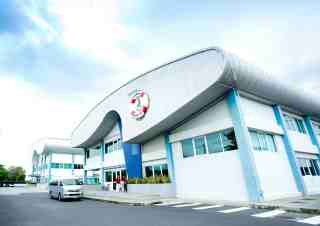
Oilfield services investment company, Akastor, has booked a first-quarter 2016 loss on sharp decline in revenues caused by the weak market.

The Oslo-listed company recorded loss of NOK 366 million ($45.4 million) for the first quarter 2016 compared to loss off NOK 251 million ($31.1 million) in the corresponding quarter in 2015.

Akastor, as a group, generated 44 per cent lower revenue (NOK 2.56 billion) in the first quarter from the same quarter one year earlier. The lower revenue level has resulted in capacity costs impacting the overall EBITDA for the quarter.

EBITDA was NOK -12 million for the first quarter, down from NOK 177 million in 2015 first quarter. EBITDA in the quarter was impacted by restructuring costs of NOK 109 million, which were mostly related to downsizing in MHWirth. Depreciation, amortization and impairment amounted to NOK 281 million.

The company has six reporting segments: MHWirth, Frontica Business Solutions, AKOFS Offshore, KOP Surface Products, Fjords Processing and Real Estate & other holdings.

MHWirth and KOP have suffered the most due to the market slowdown. Personnel reductions throughout 2015, and into 2016, have been announced, leaving the Group with roughly 2 570 employees at the end of Q1 2016.

In addition, AKOFS Offshore, a provider of vessel based subsea well construction and intervention services to the oil and gas industry, had revenue of NOK 159 million in the first quarter compared to NOK 168 million a year earlier. The company employs 93 people.


Source

How Can Feds Help Oil, Gas Industry? Stay Out Of It, Insiders Say

As U.S. oil and gas continues its “lower for longer” path, the question arises of whether a bailout – such as the one granted to the automotive industry at the end of the 2000s – has become part of the national discourse.

The automotive industry’s rescue amounted to a bill of $9.3 billion once the government was reimbursed for its effort; even with the multi-billion dollar cost, Treasury leaders said it was worth it.

“The government’s actions not only saved GM and Chrysler but they saved many businesses up and down the supply chain,” the Treasury Department said in a statement. “The decision to rescue the American auto industry helped the economy recover from the financial crisis and enabled the auto industry to come roaring back.”

But the same approach to the oil and gas downturn wouldn’t likely have the same impact. To begin, the industry itself doesn’t want it. But what’s more, the circumstances are very different, said economist Ray Perryman, president and CEO of The Perryman Group in Waco, Texas.

Ray Perryman
Ray Perryman, President & CEO, The Perryman Group
President & CEO,
The Perryman Group

“The auto industry involved a few very large companies and hundreds of thousands of jobs, and loans that were repaid with interest. While there are large firms in the oil industry, they are primarily diversified energy companies that have other interests (including refining, which is doing well). The oil industry has large numbers of smaller firms in oil and gas whose assets can be absorbed by others,” he told Rigzone. “The industry structure was quite different.”

The key difference between the woes of the auto industry and those of energy is that the automotive industry needed a structural fix that was decades in the making. Meanwhile oil and gas is experiencing the downside of its cycle, he said.

When commodity prices were high, many oil and gas companies took on substantial debt for exploration and production (E&P), which left them highly leveraged. Some now face restrictive covenants and investor expectations. Still, Perryman doesn’t expect a major federal bailout of the industry, nor does he believe one will be needed.

But there are steps the government could take. Allowing exports was one move the federal government took that will assist the industry, and tweaking bankruptcy law might also be worth considering. In addition, some forbearance on regulations and requirements that add to the industry’s expense and resources during this difficult time could be palatable, Perryman said.

But, as happens in many industries as they go through challenges, there will be some companies that don’t survive. That will be an opportunity for those with significant cash reserves to grow through purchasing those assets and leases, Perryman said.

“This pattern is difficult for those who cannot sustain their operations, but [it] is inevitable and a part of the way in which capitalist economies progress. There will be some reshuffling, but the industry will endure,” he said. “Some accommodations to ease the pressures would be beneficial, but any wholesale changes to meet a cyclical phenomenon would not be appropriate.”

Sending Out an SOS

In January 2016, John Kilduff, a partner at investment management fund Again Capital, penned a piece for CNBC in which he laid out the case for a government bailout of the oil industry.

“It is time to send out an SOS, before it’s too late,” he wrote. “This time, SOS stands for ‘Save Our Shale’ industry.”

Kilduff proposed a potential “windfall” profits tax on energy companies during prosperous times, which would be used to supplant financial assistance that the U.S. industry could tap when prices drop. Among his other proposals:

  • Pay producers not to produce, but maintain wells “just like we do to protect our farmers and agricultural industry”
  • Offer oilfield workers enhanced unemployment benefits
  • Enable a federal agency to buy drilled-but-uncompleted wells (DUC) to create a secondary Strategic Petroleum Reserve

In the short term, such an assist could be helpful, Bill Schrom, CEO of Houston-based Geotrace Technologies, told Rigzone. However, he added, it would be “very bad” in the long-term.

“It creates false economies. Holding on to old assets causes new technology launches to be slowed. A tax starts off nice but the proceeds often get deflected to protect other deficiencies in other areas of government spend[ing] and taxes always go up,” he said.

Bill Schrom
Bill Schrom, CEO, Geotrace Technologies
CEO,
Geotrace Technologies

The government already provides certain subsidies to oil producers, a fact not lost on groups that oppose the fossil fuel industry. And many oil and gas advocates say that much more intervention from the government could drift into over-reach. Dozens of pending regulatory measures, including one currently in litigation to limit hydraulic fracturing, may create a greater burden on the struggling industry, Dan Naatz, senior vice president of government relations and political affairs for the Independent Producers Association of America (IPAA), told Rigzone.

“I think the real key is to let our members, who are driven by the free market, do [business],” he said. “You have really seen a testament to the free market [through] what’s happened with American oil and gas in the last 10 to 15 years.”

Dustin Childers, an industry analyst currently working with the downstream business unit at Exxon Mobil Corp., said the ideal arrangement would be for the industry to self-regulate.

“It might be slightly different from a global standpoint, but from a North American or U.S. standpoint, the biggest burden that you’re going to see with companies right now is the regulations the (Environmental Protection Agency) is trying to implement,” Childers told Rigzone.

To be sure, many in the industry are skeptical of the motives behind government intervention. Naatz explained that once a regulatory environment becomes too onerous for operators, producers will have to leave the industry.

Dan Naatz
Dan Naatz, Senior VP of Government Relations and Political Affairs, IPAA
Senior VP of Government Relations and Political
Affairs, IPAA

“We can have a discussion on whether that’s the environmentalists’ real goal, but there is a very heavy effort to keep [fossil fuels] in the ground and the administration sees the regulatory process as a way to achieve that goal without a frontal assault,” he said.

Rather, the government’s approach, Naatz said, should be “First, do no harm.”

“If you look at this incredible renaissance that’s happened with the shale revolution, that’s really the free market at work. You won’t run into any member of ours that doesn’t say the government has a role in that. The government has a role to protect health, safety and the environment … while at the same time, allowing companies to get out, explore and operate.”


Source

State-of-the-art vessel Navigator Aurora to deliver ethane to Borealis in Stenungsund, Sweden

Borealis, a leading provider of innovative solutions in the fields of polyolefins, base chemicals and fertilizers, has signed a contract with Navigator Gas for the long-term time charter of the vessel Navigator Aurora. The naming ceremony took place at the Jiangnan Shipyard in Shanghai, China, on 3 May 2016. The vessel was christened by Irene Giner-Reichl, Austrian Ambassador to the People’s Republic of China.

New vessel will ensure long-term, reliable ethane supply to Borealis production facilities in Sweden

After its commissioning in the fourth quarter of 2016, the new vessel will be the world’s largest ethane carrier. The agreement plays a crucial role in ensuring the cost effective, safe and reliable transport of ethane to Borealis production facilities in Stenungsund, Sweden.

Borealis has entered into this long-term time charter agreement with Navigator Gas, owner of the Navigator Aurora and operator of the world’s largest fleet of handysize liquefied gas carriers. With a length of 180 m, the newly-built Navigator Aurora has a total cargo tank size of 35,000 cubic metres (cbm) and can hold ethane loads of up to 20,000 tonnes, making it the biggest ethane-capable vessel serving the global market.

Commercial operations are scheduled to begin in the fourth quarter of 2016. The vessel will sail between the Marcus Hook refinery in Pennsylvania, US, and Stenungsund. As a dual-fuel vessel, it can run on both diesel fuel and liquefied natural gas (LNG), meaning it can meet increasingly stringent environmental regulations and take advantage of the current low prices of natural gas.

“This state-of-the-art vessel is key to our efforts to secure a safe, cost-efficient and reliable supply of ethane for Borealis operations over the long term,” states Markku Korvenranta, Borealis Executive Vice President Base Chemicals. “We are pleased to have gained such an experienced partner with Navigator Gas. This project and the related investments underline our commitment to further strengthen our monomer position in Europe.”

In the meantime, the currently ongoing, multi-million investment in the cracker upgrade and the construction of an ethane storage tank in Borealis’ location in Stenungsund is proceeding according to plan. The commissioning of a new unloading and storage facility will begin in the fourth quarter of 2016.

Borealis is a leading provider of innovative solutions in the fields of polyolefins, base chemicals and fertilizers. With headquarters in Vienna, Austria, the company currently has around 6,500 employees and operates in over 120 countries. Borealis generated EUR 7.7 billion in sales revenue and a net profit of EUR 988 million in 2015. The International Petroleum Investment Company (IPIC) of Abu Dhabi owns 64% of the company, the remaining 36% belonging to OMV, an international, integrated oil and gas company based in Vienna. Borealis provides services and products to customers around the world in collaboration with Borouge, a joint venture with the Abu Dhabi National Oil Company (ADNOC).

Building on its proprietary Borstar® and Borlink™ technologies and more than 50 years of experience in polyolefins, Borealis and Borouge support key industries with a wide range of applications in the areas of energy, automotive, pipes, consumer products, healthcare, and advanced packaging.

The Borouge 3 plant expansion will make Borouge the world’s largest integrated polyolefins complex. Once fully ramped up in 2016, the additional 2.5 million tonnes of polyolefins capacity will yield a total Borouge capacity of 4.5 million tonnes, and a combined Borealis and Borouge capacity of 8 million tonnes.

Borealis offers a wide range of base chemicals, including melamine, phenol, acetone, ethylene, propylene, butadiene and pygas, servicing a wide range of industries. Borealis also creates real value for the agricultural industry, selling approximately 5 million tonnes of fertilizers. Technical nitrogen and melamine products complement the portfolio with applications ranging from mono-nitrogen oxide (NOx) abatement to glues and laminates in the wood working industry.

Borealis and Borouge aim to proactively benefit society by taking on real societal challenges and offering real solutions. Both companies are committed to the principles of Responsible Care®, an initiative to improve safety performance within the chemical industry, and work to solve the world’s water and sanitation challenges through product innovation and their Water for the World™ programme.

Source

Cambodia Terminates Petroleum Agreement for CPHL-Held Offshore Block D

0

irach Energy Ltd. referred Thursday to its annual report dated April 1, and full year results announcements dated Feb. 29 and March 23; as well as the announcement dated Aug. 6, 2015 in relation to Cambodia Offshore Block D (Block D), held by our associate company CPHL (Cambodia) Co. Ltd. (CPHLC).

We had subsequent to our annual general meeting held today received a letter from the Ministry of Mines and Energy (MME) of Cambodia.

MME noted in the letter to CPHLC that it had terminated the Petroleum Agreement of Block D with immediate effect.

Notwithstanding it also mentioned that MME would hold Block D for CPHLC for a six month period and will not allow any other investor to bid on Block D. CPHLC is given priority to apply for a new petroleum agreement for Block D on certain terms and conditions, including that of getting new investment partner(s) to bid for Block D under a joint venture.

As CPHLC were only notified of such a decision today, the Company and its associate would explore and discuss the options viable for the Company before making a decision on the steps to be taken going forward.

The Company will update shareholders on the outcome of negotiations with MME as it develops.


Source