Home Blog Page 23

New contract for Olympic Delta

0

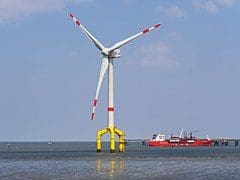
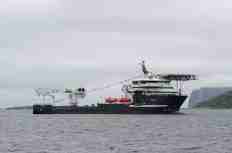
Olympic Shipping have contracted Olympic Delta to an international client. The vessel will be employed within renewable energy. Commencement of the contract will be from August and has a fixed period of 120 days plus options potentially extending the period to more than 200 days.

Stig Remøy: “For many years we have focused on offering our environmental friendly operations also within the renewable energy market. We have had a number of vessels employed in this segment and this contract confirms that the Olympic fleet of vessels is attractive in several markets”.

The Olympic Challenger contract with Technip is extended with 2mnths until october 2016.

Source

Oil Ends Steady Near $50; Best Monthly Gain in Brent in 7 years

0

Oil prices ended steady on Friday after hitting 2016 highs but finished April trading about 20 percent higher, with Brent crude having its best monthly gain in seven years. A weaker dollar and optimism that a global oil glut will ease have lifted crude futures by more than $20 a barrel since they plumbed 12-year lows below $30 in the first quarter. Brent futures settled just a penny lower at $48.13 a barrel, after reaching a 2016 peak at $48.50. It rose 21.5 percent in April, its largest monthly advance since May 2009. U.S. crude futures closed 11 cents lower at $45.92 a barrel, after hitting a year-to-date high at $46.78. It gained 20 percent in April, the biggest monthly gain in a year. With prices less than $5 away from $50 a barrel, investment bank Jefferies said the market “is coming into better balance” and would flip into undersupply in the second half of the year. But others warned that the rally was driven by investors holding large speculative positions, while oil stockpiles were still high, with a Reuters survey showing OPEC output in April rising to its most in recent history. “The issue is that we haven’t seen price rallies … correlate with fundamentals,” said Hamza Khan, senior commodity strategist at ING. “The fundamentals – high stocks, high production – haven’t changed.” Technical analysts said crude could cruise to $50 a barrel but stiffer resistance before $55 could spark profit-taking on the market’s biggest rebound in two years. Analysts polled by Reuters raised their average forecast for Brent in 2016 to $42.30 per barrel, the second consecutive month of increases. Bank of America Merrill Lynch said in a note that “non-OPEC oil supply is indeed hanging off a cliff”, and estimated that global output would contract year-on-year in April or May for the first time since 2013. The OPEC survey aside, Saudi oil output was expected to edge up by 350,000 barrels per day to around 10.5 million bpd, sources told Reuters, as tankers filled with unsold oil floated at sea seeking buyers. The discount in spot U.S. crude to the next trading month meanwhile whittled to its smallest since January, reducing the advantages of storing oil in the United States for later delivery.

Source

EC225LP Helicopters Grounded in UK, Norway after 13 Killed in Crash

0

Norwegian police have confirmed that 13 people on board a CHC Super Puma helicopter that crashed Friday near Bergen are presumed dead, according to an update on Statoil’s web site Saturday. Statoil also confirmed that one of its employees was aboard the aircraft, as well as personnel from Halliburton, Aker Solutions, Schlumberger, Welltec and Karsten Moholt. The helicopter’s passengers had been working on an assignment for Statoil at the Gullfaks B platform in the North Sea and were on their way to Bergen, when the aircraft went down outside the municipality of Turøy in Fjell. The media in Scotland is reporting that a 41-year old man from Aberdeenshire, Scotland is among the dead. Meanwhile, the UK Civil Aviation Authority has issued instructions to stop any commercial passenger flights by UK operators flying Airbus EC225LP helicopters following similar action taken by the Norwegian CAA. Norwegian television footage showed what appeared to be a rotor blade falling from the helicopter before it crashed. Airbus Helicopters said it was in agreement with the decision taken to put all commercial EC225LP passenger flights on hold, in a statement issued April 29. The firm also stated: “At this point in the investigation, we do not have any information that allows us to understand the causes of the accident that involved the aircraft’s rotor being detached, nor to make any links to events that have occurred previously.  “Airbus Helicopters is participating in the on-going investigation and two technical experts are currently on their way to Norway to provide their assistance to the local authorities. In the frame of the investigation, information related to the background of the aircraft is being gathered. The preliminary elements of the inquiry should become available in the coming days.”


Source

Name of Statoil employee released

0

At 06:11 today, the Norwegian police confirmed that Ole Magnar Kvamme was killed in the accident at Turøy Friday 29 April.

He was a passenger on the helicopter en route from Gullfaks B to Bergen which crashed outside Turøy in Fjell municipality.

Ole Magnar Kvamme (born 1955) was educated as an electrical engineer. He had been a Statoil employee since 1988, and most recently worked with plant integrity on Snorre, Gullfaks A and Gullfaks B. He had more than 10 years of operational experience from offshore operations. Ole Magnar Kvamme is survived by three adult children.

“Our thoughts are first and foremost with Ole Magnar Kvamme’s family and close friends, who have lost their loved one in this terrible tragedy,” says chief executive Eldar Sætre.

“There are employees in Statoil that have lost a dear friend and colleague, but all of us share the family’s grief and we express our deepest sympathies during this difficult time.”

In addition to Ole Magnar Kvamme 12 other persons working on behalf of Statoil are also confirmed dead. 7 of these have been named: Arild Fossedal and Odd Geir Turøy (Aker Solutions), Michele Vimercati (CHC), Iain Stuart, Behnam Ahmadi and Otto Mikal Vasstveit (Halliburton) and Kjetil Wathne (Karsten Moholt AS).

The tragedy will be marked across Statoil Monday 2 May at 13:00 CET with a minute’s silence, and flags will be flown at half-mast all day.

Source

Midstates Petroleum, Ultra File for Bankruptcy Amid Weak Oil Price

0

Oil-and-gas producers Midstates Petroleum Co Inc and Ultra Petroleum Corp have filed for Chapter 11 bankruptcy protection, joining several companies that have been unable to meet debt obligations after a steep decline in energy prices. Oklahoma-based Midstates and Houston-based Ultra have a combined $5.8 billion in debt, according to court documents filed in Houston’s U.S. Bankruptcy Court over the weekend. The two join dozens of U.S. oil and gas producers that have filed for bankruptcy since the start of 2015. After years of using junk bonds to fuel a frenzy of shale drilling, energy prices began to decline in late 2014 and left many exploration and production companie unable to service their obligations. Both companies entered bankruptcy as banks are conducting regular six-month reviews of their lending to energy producers. There are signs that banks may take a tougher line this spring, deepening the financial crisis for many producers. Midstates said it had reached agreements with significant groups of creditors to cuts its $2 billion of debt by more than $1.8 billion. Ultra said in court filings it planned to engage creditors to reduce $3.8 billion in debt, all of which is unsecured. Midstates went public in 2012, raising nearly $500 million. Its shares were down 34 percent at about 19 cents in early over-the-counter trading. Its stock was trading at more than $70 per share when energy prices began to fall in 2014. Shares of Ultra were halted at 31 cents. Ultra produced 290 billion cubic feet of natural gas in 2015, and operates in Wyoming, Utah and Pennsylvania. Midstates operates in Texas, Louisiana and Oklahoma and produced 12 million barrels of oil equivalent in 2015. Despite the pace of energy-producer bankruptcies, to date there has been little impact on U.S. energy production, undercutting some analysts’ expectations for a sudden output decline. Some producers that entered bankruptcy are beginning to emerge, but even those that eliminated all of their debt may struggle to grow again.


Source

Technip Posts Profit Rise

0

French oil services provider, Technip, posted net income of €114.4 million for the first quarter 2016 compared to €86.1 million in the same period last year.

Adjusted revenue for the first quarter was €2.76 billion, down 4.2 percent from €2.88 billion a year ago.

In addition, the company reported a record 82% vessel utilization rate in the subsea segment, backed by West African offshore campaigns.

Thierry Pilenko, chairman and CEO, said: “At the start of the year, Technip set out to execute our projects, sustain our balance sheet strength, reduce our costs and progress our strategy – all in response to the harsh and prolonged downturn in our industry. The first quarter shows that our teams are following through on these objectives.”

During first quarter, the company’s order intake was €930 million, down from €1.5 billion a year earlier.

At the end of first quarter 2016, Technip’s backlog was €14.9 billion, compared to €17.0 billion at the end of fourth quarter 2015 and €20.6 billion at the end of first quarter 2015.

Pilenko added: “Our views on the market outlook are unchanged compared to mid-February. With a low and volatile oil price and their cashflows under pressure, our clients are more than ever focused on cutting their capex and costs to substantially below 2014 levels. Project awards are therefore being postponed and even cancelled, putting visible strain on some parts of our industry. Overall, we are seeing continued interest worldwide in investing, revamping and upgrading downstream, but upstream – even if we may see momentum on a few strategic developments – will be less resilient with front-end work only gaining momentum from late 2016 into 2017.”


Source

Lundin Petroleum acquires an additional 15 percent interest in the Edvard Grieg field

0

Lundin Petroleum AB (Lundin Petroleum) is pleased to announce that Lundin Petroleum and its wholly-owned subsidiary Lundin Norway AS (Lundin Norway) have entered into agreements with Statoil ASA (Statoil) and its wholly-owned subsidiary Statoil Petroleum AS (Statoil Norway) under which Lundin Norway will acquire Statoil Norway’s entire 15 percent interest in the Edvard Grieg field in PL338, offshore Norway and all associated assets including a nine percent interest in the Edvard Grieg oil pipeline and a six percent interest in the Utsira High gas pipeline. The effective date of the acquisition of these assets is 1 January 2016.

In consideration for the acquisition of the assets, Lundin Petroleum has agreed to issue to Statoil 27,580,806 new shares of Lundin Petroleum (the Consideration Shares) based upon an agreed average share price of SEK 138 per share and a SEK/USD exchange rate of 8.098. In addition, Lundin Petroleum will transfer 2,000,000 shares held in treasury (the Treasury Shares) and issue 1,735,309 new shares (the New Shares) to Statoil in exchange for a cash consideration based upon a share price of SEK 145.66 per share (the ten day volume weighted average closing share price prior to and including the date of signing). Statoil currently owns approximately 37.1 million shares of Lundin Petroleum, representing 11.93 percent of the current issued and outstanding shares of Lundin Petroleum. Following completion of the transaction, including issuance of the Consideration Shares and New Shares and the transfer of the Treasury Shares, Statoil will own approximately 68.4 million shares of Lundin Petroleum, representing 20.1 percent of the then issued and outstanding shares of Lundin Petroleum. Following the transaction Lundin Petroleum will have 340,386,445 shares outstanding.

Benefits of the Transaction

For Lundin Petroleum this transaction secures access to additional high quality reserves, production and cash flow in the Utsira High core area. The Edvard Grieg field was discovered by Lundin Norway in 2007, and the Company is confident that the strong start-up performance of the field from both a facilities and subsurface perspective will continue in the years ahead. Following this transaction, Lundin Petroleum’s platform to grow and mature its resource base becomes stronger than ever allowing the Company to continue maximising value for all of our stakeholders. Following the transaction, Statoil will further increase their indirect exposure to world class assets such as Edvard Grieg, Johan Sverdrup and an industry leading exploration portfolio. As a consequence of the transaction, Statoil will equity account their interest in Lundin Petroleum.

The two companies will continue to operate independently, and act as separate entities in all licences on the NCS. Statoil remains supportive of Lundin Petroleum’s management, its Board of Directors and strategy.

Alex Schneiter, CEO and President of Lundin Petroleum comments:
“I am pleased to say that this transaction was the initiative of Lundin Petroleum. We saw a unique win-win opportunity to acquire a direct interest in a world class asset such as Edvard Grieg for an increased shareholding in Lundin Petroleum by Statoil. Increasing our resource base, production and cash flow at the bottom of the cycle will, in my view, lead to Lundin Petroleum emerging stronger than ever as an independent company, and continue to build upon the transformational growth already well under way, creating greater sustainable long term value for our shareholders in the process.”

Impact on Market Guidance

Assuming the transaction completes by 30 June 2016, production in the second half of 2016 will increase by 10,000 boepd resulting in an increased full year 2016 production guidance of 65,000 to 75,000 boepd (from 60,000 to 70,000 boepd). Full year 2016 development capex guidance will increase by USD 35 million to USD 970 million.

The 2P net reserves to Lundin Petroleum will increase by 30.9 million boe (1 January 2016) to 716.2 million boe.

Ian Lundin, Chairman of Lundin Petroleum comments:

“This acquisition further consolidates Lundin Petroleum’s position in the Utsira High, an area which has provided the cornerstone for Lundin Petroleum’s production and resource growth over the last decade. I am confident that the unique knowledge and expertise our Norwegian team has in this area will further enhance the value of Edvard Grieg, a world class asset, and as such this is a very positive move for the Company. The Lundin family remain as committed as ever to Lundin Petroleum and growing our business in Norway as a fully independent company. The increased cash flow and production that comes with this transaction will ensure Lundin Petroleum remains the leading independent E&P company in Europe.”

Conditions and Structure

The transaction remains subject to customary approval of the Norwegian government authorities. In addition, as a result of Statoil’s current shareholding in Lundin Petroleum, this transaction including the issuance of the Consideration Shares and New Shares and the transfer of the Treasury Shares, requires Lundin Petroleum shareholder approval at a general meeting of shareholders. Lundin Petroleum will convene an extraordinary general meeting of shareholders (EGM) to be held 30 May 2016.

The transaction has received the unanimous approval of the Lundin Petroleum Board of Directors. Entities related to the Lundin family (the Lundin Entities) hold approximately 97.8 million shares of Lundin Petroleum, representing 31.4 percent of the current issued and outstanding shares of Lundin Petroleum. The Lundin Entities have confirmed that they will vote in favour of the transaction at the EGM.

Statoil has no intention of increasing its shareholding in the Company or proposing any changes to the corporate governance of the Company.

Source
OTC 2016: Cambodia Decision on First Oilfield Development by Year End

0

Cambodia is expected to make a decision on the development of the country’s first oilfield project at offshore Block A in the Gulf of Thailand, which is being developed by Singapore-based KrisEnergy Ltd., by year end, Dr. Men Den, deputy general director of the General Department of Petroleum (GDP) in the Ministry of Mines and Energy (MME) told Rigzone Monday on the sidelines of the Offshore Technology Conference (OTC) 2016. The government is holding off on a decision on Block A as it is currently in the midst of setting up a national authority to oversee the domestic energy sector, including oil and gas, Dr. Men Den said. He said the process is likely to take around four months, with another month required to set up the regulatory body. The new organization will perform the role similar to that of Malaysia’s national oil company Petroliam Nasional Berhad (PETRONAS), one of Southeast Asia’s more successful stated-owned petroleum companies. “We expect a decision on Block A by the end of this year,” Dr. Men Den said, adding that the delay in approving the project is not expected to have a huge impact given the low oil prices currently. KrisEnergy took over operatorship of Block A, after acquiring Chevron Corp.’s 27.5 percent stake for $65 million in August 2014. The company has already submitted the development plans to the government and have reached an agreement on its fiscal and technical terms. KrisEnergy indicated March 9 that first oil is expected 24 months after the final investment decision. Just last week, the MME terminated a petroleum agreement with CPHL (Cambodia) Co. Ltd. to explore and develop offshore Block D, which the associated firm of Singapore-based Mirach Energy Ltd. had held since 2006. While attention is currently focused offshore, Dr. Men Den said Cambodia’s onshore petroleum acreages appears to hold larger potential than its offshore blocks. Citing seismic data, he said onshore assets hold 3 times more than potential petroleum resources than offshore blocks.


Source

Oceaneering Profit Down 64% in Q1

0

Oceaneering reported net income of $25.1 million, or $0.26 per share, on revenue of $608 million for the three months ended March 31, 2016.

During the corresponding period in 2015, Oceaneering reported net income of $69.5 million (approx. 64 per cent higher), or $0.70 per share, on revenue of $787 million.

For the fourth quarter of 2015, Oceaneering reported net income of $27.5 million, or $0.28 per share, on revenue of $722 million.

Revenues for the first quarter of 2016 were 23% lower than the corresponding period of 2015 and 16% lower than the immediately preceding quarter.

Consequently, compared to the first quarter of 2015, quarterly earnings were down as a result of lower demand and pricing for all Oceaneering’s oilfield service and product lines. Sequentially, quarterly earnings declined due to a lower level of offshore activity, resulting from further weakening market conditions, seasonality, and higher unallocated expenses.

M. Kevin McEvoy, Oceaneering’s CEO, stated: “While our results for the first quarter reflect the challenging times we face in this low oil price market environment, we are pleased that each of our operating segments remained profitable, and our EBITDA margin of 17% held up relatively well when compared to others and our own full year 2015 EBITDA margin of 20%.”


M. Kevin McEvoy“Compared to the first quarter of last year, quarterly ROV operating income was down substantially on 33% lower revenue, resulting from 28% fewer days on hire and a 7% reduction in revenue per day on hire. Our fleet utilization decreased to 56% from 73% a year ago. During the quarter, we put four new ROVs into service and retired one. At the end of the quarter, we had 318 vehicles in our ROV fleet. Our drill support market share during this period was 57% of the 193 floating rigs under contract, compared to 58% a year ago. In spite of the current shrinking available market, we remain focused on maintaining our market share of ROVs on contracted rigs and high specification third party vessels.
“Subsea Products operating income decreased 19%, primarily due to reduced demand for tooling and installation and workover control systems. Our Subsea Products backlog at
quarter-end was $576 million, down $76 million from December 2015. Subsea Products operating margin of 21% was flat compared to the first quarter of 2015 and was a function of executing backlog orders priced prior to the significant downturn in the industry. We expect margins to weaken throughout the year, as we process backlog that more closely reflects the current market environment.

“Subsea Projects operating income dropped mainly due to lower deepwater vessel demand and pricing, the drydock of the Ocean Alliance for regulatory inspection, and low demand for survey services. Asset Integrity operating income continued to fall on lower global demand and pricing for inspection services. Advanced Technologies operating income was lower, due to completing certain commercial programs and other theme park projects at low margins on previously disclosed execution and contracting issues.


In addition, Oceaneering declared a regular quarterly dividend of $0.27 per common share. According to the company, the dividend is payable June 17, 2016 to shareholders of record at the close of business on May 27, 2016.


Source

Ulstein introduces high capacity, high efficiency cable lay vessel

0

The patent pending ULSTEIN Cable Arch system, in combination with open top vessel design, results in an unprecedented total of 12,500 t of power cable that can be laid as one single piece. The system is implemented in an LX109 design, a high capacity, highly efficient cable lay vessel with compact dimensions.

Visit ULSTEIN at our OTC Houston stand #5235 and see a working ULSTEIN Cable Arch.

A unique feature is the ULSTEIN Cable Arch connecting the forward and aft turntables, allowing to load and lay one continuous cable of up to 12,500 tonnes. This capacity was made possible by positioning the turntables into the hull instead of their conventional location on deck, improving vessel’s stability. A feature also applied by Ulstein on a rock installation vessel currently under construction. This approach resulted in a slim vessel that can transport and lay cable much more efficient than conventional vessel designs with larger beams.

Locating the a-symmetrical bridge aft, with the cable passing underneath, provides clear and unobstructed views on the cable lay work deck and cable stingers aft and the turntables forward. Furthermore the vessel features a large hangar with ROV moonpool and workboat storage. In combination with the well-known X-BOW® and X-STERNTM hull features, this results in a very cost efficient, safe and comfortable platform with superior operational uptime and transit speed compared to more traditional cable lay units.

“With this design we like to bring the cable lay market to the next level,” says Edwin van Leeuwen, Product Management Leader at Ulstein Design & Solutions. “Using the ship and equipment knowledge available in the Ulstein Group, resulted in a revolutionary, truly integrated design, based on existing technologies. By focusing on a dedicated vessel for cable lay projects, we have been able to dramatically improve on project economy, seakeeping behaviour and fuel economy.”


Source