Home Blog Page 134

Quiet Gulf Hurricane Season End Leaves Oil Drowned in Oversupply

0

Oil bulls can say farewell to another quiet Atlantic hurricane season in the Gulf of Mexico, which ends Monday without a storm-induced price rise to lift crude from its once-in-a-generation slump.

Barely an oil worker was evacuated from the Gulf of Mexico and the biggest storm this year — the strongest hurricane ever in the Western Hemisphere, actually — tore through the Pacific. The subdued June-November season overlapped with a four-month stretch of oil prices averaging less than $50 a barrel, the longest run since the global financial crisis. As well, the epicenter of U.S. production has moved onshore to shale fields spanning North Dakota and Texas.

“Once upon a time we would have been watching very closely to what’s happening in the Gulf of Mexico,” David Lennox, an analyst at Fat Prophets in Sydney, said by phone. “We’ve seen a few disasters from hurricanes, but the shale phenomenon has really taken the sting out of lost Gulf production.”

Aided by shale oil developments, U.S. production is at such a rate that oil stockpiles are more than 100 million barrels, or about one-third, above the five-year average, buffering the impact from hurricanes. While prices surged 44 percent in 2008 after Hurricane Ike struck, markets barely blinked four years later after Hurricane Isaac hit and curbed more than 90 percent of crude output in the Gulf of Mexico.

The Gulf of Mexico accounted for 16 percent of domestic production in 2014, down from 27 percent in 2003, according to data from the Energy Information Administration. A combination of horizontal drilling and hydraulic fracturing has unlocked supplies from shale formations including the Permian and Eagle Ford basins in Texas and the Bakken in North Dakota.

Eleven storms, including two major hurricanes, were recorded during this year’s Atlantic hurricane season, which runs from the start of June to the end of November, according to the U.S. National Hurricane Center. Tropical Storm Bill was the only system to trouble the Gulf of Mexico when it struck in June.


Source

ABB’s Subsea Link to Deliver Power for Goliat FPSO

0

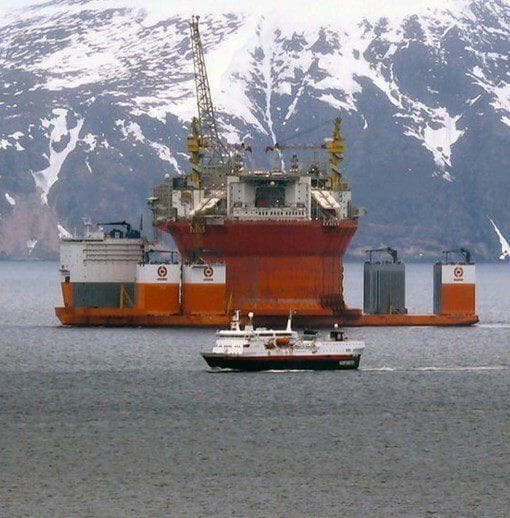
ABB has commissioned a subsea power link for oil and gas company Eni Norge, that will supply power from the Norwegian grid to the new Goliat Floating, Production, Storage and Offloading unit (FPSO).

The Goliat field, located in the Barents Sea, Norway, is the northernmost oil field in the world. It will process up to 100,000 barrels of oil a day and store nearly a million barrels of oil, which will then be transferred to shore by tankers.

ABB’s high-voltage alternating current (AC) three-core cable system includes a 104-km long static cable section on the sea floor, and a 1.5-km long dynamic cable section. The 75-megawatt (MW), 123 kilovolt (kV) capacity link will supply about 50 percent of the platform’s electricity needs from shore, cutting carbon dioxide emissions by half as a result of reduced fossil fuel consumption in the gas turbines. ABB’s solution includes the design, engineering, supply, installation and commissioning of the cable system, the company explained.

“Reliable shore supplied power from the mainland grid will help to reduce the Goliat platform’s environmental impact, and ensure a safe and efficient operation,” said Patrick Fragman, Managing Director of ABB’s Grid Systems business, a part of the company’s Power Systems division. “This is another example of ABB’s constant quest for innovation and reinforces our position as a global leader in high-voltage cable technology.”

Ezra Names New Independent Director

0

Singapore-listed offshore Oil & Gas contractor, Ezra Holdings, has appointed Tan Cher Liang as the company’s new independent director effective November 27, 2015.

Tan Cher Liang, age 63, served as managing director and finance director of Boardroom Limited from September 2000 to 31 March 2013, to later act as an adviser to the company and its subsidiaries until March 2016.

He is currently an independent director of Vibrant Group Limited, Kingsmen Creatives Ltd, Wilton Resources Corporation Limited and Jumbo Group Limited.

“The designation and composition of the audit, nominating, remuneration, enterprise risk and executive committees of the company remain unchanged,” Ezra said in a statement.

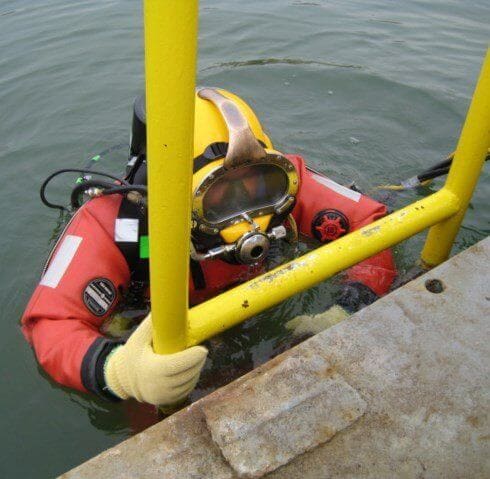
Commercial divers solve complex tasks, often in deep waters. But what exactly do they do?

Divers come in many shapes and sizes. Strictly speaking, we can divide them into four types: recreational, technical, professional and commercial divers. Recreational divers make up the majority of the group, and are typically trained to dive up to 130 feet with scuba gear. Technical divers can go beyond 130 feet, and will utilize other types of gear than scuba, such as rebreathers. Professional divers are divemasters, dive guides, dive instructors and course directors. These people guide or train the other two groups, and all three belong to an organization such as PADI, SSI or NAUI.

Commercial divers, however, are in a completely different category. They dive not to train recreational divers, but to complete job-related tasks, and require specific job training in addition to dive training. This training typically takes place at schools that are dedicated to commercial diving, and which are organized under national boards for commercial diving. But what kind of work does can a commercial diver do? Four of the most typical careers for commercial divers follow.

Construction
Construction divers work in harbors, on bridges, or in other situations where large-scale construction must be built or maintained in water. They also do underwater surveys, work on coastal protection, and work on laying, inspecting and maintaining underwater cables and pipelines. Diving in these conditions requires commercial-dive training using both types of scuba units and surface-supported equipment, as well as training with a range of tools and techniques, such as welding. Divers can descend up to 200 meters/600 feet, which requires extended decompression times. Saturation diving, wherein divers spend great times at depth, is often used, as once their tissues have become fully saturated with nitrogen, their decompression time does not increase (unless they move to a greater depth). After their shift is done (and these can last 12 hours or more), divers are brought to the surface and decompressed in a chamber.

Offshore
Offshore divers are usually associated with gas or oil platforms, and may work on the construction and maintenance of rigs, as well as the actual drilling process, where they may inspect the drill and make any repairs needed. They can also perform visual inspections of underwater equipment. These types of dives are usually done with surface-supported equipment, and may also be done as saturation dives for deeper projects. Offshore commercial diving is often cited as one of the most dangerous jobs in the world.

HAZMAT
HAZMAT is shorthand for HAZardous MATerials, and HAZMAT diving takes place where there is significant risk of exposure to pollutants that are hazardous to human health, which can be anything from raw sewage to radiation-contaminated waters. Tasks can include repairs to filters, valves, or other mechanical equipment, to surveying and sampling contaminated water. This form of diving, in addition to commercial-diving training, requires HAZMAT training and specialized equipment, including a HAZMAT drysuit, as many chemical pollutants can penetrate the material of traditional drysuits.

Salvaging
Commercial divers also find their trade in salvaging. Salvage divers sometimes work independently, searching for wrecks, flotsam or jetsam, which they subsequently claim, salvage, and try to sell for a profit. Other salvage divers work as subcontractors to commercial shipping companies or governments, salvaging goods lost or, as in the case of the Costa Concordia cruise ship which ran aground in Italy, to salvage and remove a wreck that is deemed to pose a threat to the environment or a problem for ship routes.

There are many other jobs that commercial divers might undertake, in particular within rescue services, the police and the armed forces, but the above are the main fields within the private sector. Ever thought about becoming a commercial diver? Share your story!


Source


Biggest Oil Buyers Pick Themselves as Winners From OPEC Meeting

0

Oil buyers in Asia are sure of one thing as OPEC prepares to meet: They’ll emerge as winners from the group’s rift over production.

Members of the Organization of Petroleum Exporting Countries will gather Dec. 4 in Vienna, where Iran has said it will announce plans to boost production by 500,000 barrels a day. That may further lift the 12-member group’s output, which has exceeded its target for 17 months. The increase in volumes would exacerbate a global glut and benefit the biggest oil- consuming region’s refiners, which are seeking cheaper sources of crude.

OPEC is forecast to stick with its strategy of defending market share by maintaining output and driving down higher-cost production elsewhere, according to analysts and traders surveyed by Bloomberg . That’ll leave members including Saudi Arabia free to continue pumping even amid calls from Iran to make room for its extra supply after international sanctions over its nuclear program are lifted.

“This is probably the best time we’ve ever had as a buyer,” said Kim Woo Kyung, a spokeswoman for SK Innovation Co., South Korea’s largest refiner. “We are enjoying an overflow of oil.”

OPEC has exceeded its output target of 30 million barrels a day since June 2014 as it pumps near record amounts of crude, boosted by increases from its biggest members, Saudi Arabia and Iraq. The group’s strategy to defend market share has helped lift refining margins for Asian processors, who have been treated to a steady flow of cheap cargoes from the Middle East to Mexico, Nigeria and Russia.

Profits from turning crude into naphtha, which is used to produce gasoline as well as petrochemicals, surged to $9.42 a barrel this month, the highest level since at least May, data compiled by Bloomberg show. Purchasing costs for refiners have slumped. Japan, Asia’s second-biggest oil consumer, spent an average of $51.22 a barrel in September for supplies, down from $113.47 in January 2014, according to data from the nation’s Ministry of Finance.

While oil’s decline has spread to fuels such as gasoline, the pace of crude’s slide has been faster. Spot prices of the motor fuel loading from Singapore have fallen about 37 percent over the past year, compared with a slump of about 45 percent in Dubai crude, a benchmark for shipments to Asia. Additionally, cheaper fuel has boosted consumer demand for the supplies that refiners sell.

“Refining margins in Asia have stayed very strong, certainly much stronger than in 2014, largely because feedstock prices have dropped significantly,” Victor Shum, a vice president at IHS Inc., an Englewood, Colorado-based industry consultant, said by phone from Singapore.

Brent crude, the benchmark for more than half the world’s oil, has dropped about 21 percent this year after falling by almost 50 percent in 2014. Futures in London traded near $45 a barrel on Friday. West Texas Intermediate, the U.S. marker, was near $43 a barrel, down about 42 percent from 12 months earlier.

The Asia-Pacific region will consume 31.87 million barrels a day of oil in 2015, exceeding demand of 31.28 million barrels from the Americas, the International Energy Agency said in a report on Nov. 13. China, India, Japan and South Korea will be among the biggest users of oil, according to the Paris-based IEA.

“For six months to a year, I see markets flush with supply,” said Naveen Kumar, general manager for international trade and supplies at Hindustan Petroleum Corp., an Indian state-run processor. “As a refiner, low crude prices are benefiting us, so we would continue to hope for prices to remain low.”

Oil prices may drop to as low as the mid-$20s a barrel unless OPEC takes action to stabilize the market, Venezuelan Oil Minister Eulogio Del Pino said on Nov. 22. The Latin American nation and Algeria are among OPEC states most affected by crude’s slump and have long urged fellow members to curb output. Saudi Arabia, the world’s largest crude exporter, led the group to switch its strategy in November 2014 to focus on pressuring competitors.

“It is obvious that everyone will continue with their output because they have to sustain their economies,” said H. Kumar, managing director of India’s Mangalore Refinery & Petrochemicals Ltd. “If they reduce, their revenues will come down to that extent. So, this era of everyone sustaining output will continue and this is good for refiners.”


Source

PHOTO: Fuel Extraction from Oleg Naydenov Wreck

0


The Photos above show the extraction of fuel from the vessel Oleg Naydenov at a depth of 2,700 meters and the final sealing of existing leaks.

The Russian trawler sank on April 14, after Spanish port authorities decided to tow the ship out to sea following the fire incident onboard the vessel, on April 11, when it was moored at Las Palmas port.

Oleg Naydenov sank with nearly 1,500 tonnes of fuel approximately 24 kilometers off the southern coast of Gran Canaria island.

In total 528 cubic meters of oily waste was collected from both, surface operations, carried out by anti-pollution vessels, as well as submarine operations.

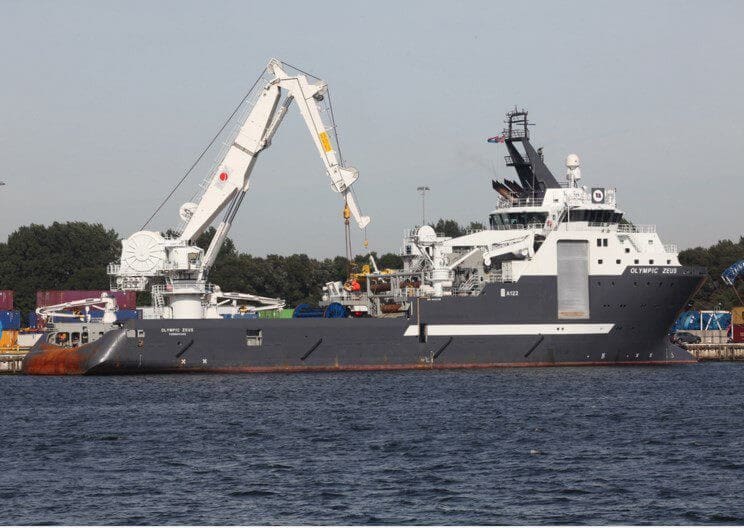
The MPSV Olympic Zeus was used as the base to monitor and control the fuel-extraction ops. Three ROVs were utilized.


Source

Wärtsilä’s Propulsion for Two New Research Vessels

0

Two new marine geological research vessels under construction in China will feature Wärtsilä engines and propulsion equipment. 

The new vessels are being built at the Shanghai shipyard of CSSC (China State Shipbuilding Corporation) and the COSCO shipyard in Guangdong, on behalf of the Qingdao Institute of Marine Geology and the Guangzhou Marine Geological Survey respectively.

The first vessel for the Qingdao Institute of Marine Geology has a length of 79.8 metres and a deadweight of 4400 tons. For this ship Wärtsilä will supply four 9-cylinder and one 4-cylinder in-line Wärtsilä 20 engines, two transverse thrusters and two sets of Wärtsilä Enviroguard Seals and Bearings. Delivery to the yard is scheduled for July 2016.

The second vessel for Guangzhou Marine Geological Survey has a length of 75.8 metres and its deadweight is 3300 tons. This ship will be powered by three 6-cylinder in-line Wärtsilä 26 engines, one 4-cylinder in-line Wärtsilä 20 engine, two WST-21 thrusters and two WTT-11 transverse thrusters. Equipment deliveries will start in spring 2016.

“We at Wärtsilä are proud to have once again been selected to provide the propulsion equipment for these important research vessels. Our reputation for providing reliable and efficient propulsion solutions that are compact in size, fuel efficient, and environmentally friendly has given us a leading position in this market in China. We also give added value through having the industry’s most complete global service network to provide fast and efficient support wherever the vessels may be,” says Hans Laheij, Sales Director, Middle East & Asia, Wärtsilä Marine Solutions.


Source

UK Uses New Powers to Rule on Cuadrilla Shale Gas Permits

0

Britain will use new powers to determine whether to allow shale gas firm Cuadrilla Resources to carry out fracking at two sites in northwest England, overruling local planning decisions.

Britain is estimated to have substantial amounts of shale gas trapped in underground rocks and Prime Minister Cameron has pledged to go all out to extract these reserves, to help offset declining North Sea oil and gas output.

Yet fracking applications have struggled to find approval from local communities, concerned about noise and environmental impacts, and to address this the government has changed planning rules to make its own decisions on shale gas appeals.

Local government minister Greg Clark has informed Lancashire County Council of the minister’s intention to himself determine Cuadrilla’s appeal on two rejected permits in the area in northwest England.

“Ministers have decided to recover Cuadrilla’s appeals for shale exploration in Lancashire,” the government said in a letter to the council dated Nov. 26.

Cuadrilla’s wells in Lancashire would be the first British shale gas wells where fracking is applied since hydraulic fracturing at a separate project near Blackpool, in Lancashire, triggered an earth tremor that resulted in an 18-month ban on the technology in 2011.

John Williams, senior principal consultant at the consultancy Poyry Management said a decision on the appeal could be made by the second half of 2016 but rules requiring the company to monitor water supplies at the site for 12 months before fracking can start would delay any gas extraction.

“We could see some drilling in the second half of 2017 but they still have to determine whether there are reserves that can be extracted economically and it would likely be 2018 at the earliest before a decision to move into full production would be taken,” he said.

A spokesperson for Cuadrilla said if the projects are given approval the company would begin water monitoring at the sites as soon as possible.

Britain changed its planning rules in August to allow government intervention to approve or reject shale gas drilling permits and give priority to appeals involving shale gas projects.

Lancashire Council earlier this year rejected two Cuadrilla applications for fracking, or hydraulic fracturing, underscoring some local community concerns about the technique.

Cuadrilla appealed against the rejections.

“If Cuadrilla is given permission to frack in Lancashire, it will be against the wishes of its residents, and its council, both of which have made their views against this risky process very clear,” said Donna Hume, senior energy campaigner at environmental group Friends of the Earth.

British Finance minister George Osborne on Wednesday confirmed the creation of a shale wealth fund that would receive up to 10 percent of tax revenue from shale gas developments for investments in communities affected by the projects.


Source

Havila Harmony to Search for MH370

0

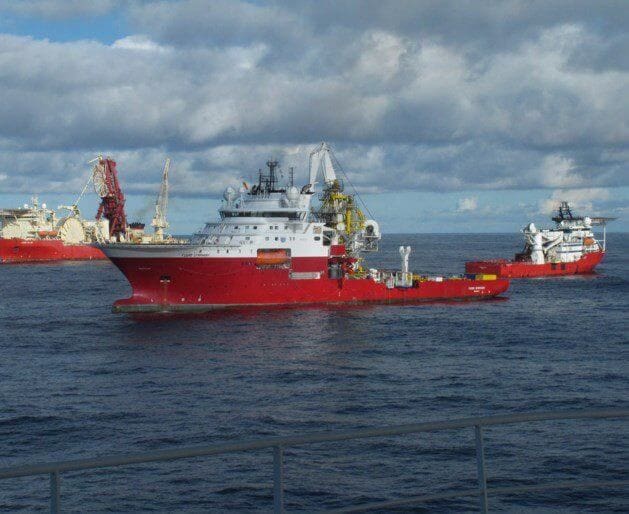
Fugro is providing an additional vessel, the Havila Harmony, to join the search for the missing flight MH370 in the southern Indian Ocean.

From the 93-metre multi-role vessel, Fugro will deploy the Echo Surveyor VII autonomous underwater vehicle (AUV). Echo Surveyor VII was used earlier this year in search operations, however, it was withdrawn  when sea conditions deteriorated beyond limitations for the safe launch and recovery of the AUV.

The AUV will again be used to scan the most difficult portions of the search area that cannot be searched as effectively by the deep tow systems on the other search vessels. The deepwater system is a Hugin 1000, specifically designed for high resolution and efficient survey operations in water depths to 4,500 metres. With a 75 kHz side scan sonar and a dual-head Kongsberg 2040 multibeam echosounder, its configuration is the same as the systems deployed from the other vessels in the search, the Fugro Discovery and Fugro Equator. The AUV is also equipped with an underwater camera.

After calibration trials off the coast of Fremantle, Havila Harmony and her international crew of 40 will head to the search area where she is expected to begin search operations on December 3.

Fugro Gets Survey Job for Ophir Off Equatorial Guinea

0

Fugro has won a contract with Ophir Equatorial Guinea (Block R) for the provision of survey services for the development of large scale assets and infrastructure offshore Equatorial Guinea.

Under the contract, Fugro will deploy three of its specialist vessels Fugro Searcher, Fugro Scout and Fugro Frontier to perform autonomous underwater vehicle (AUV) surveys as well as geotechnical, environmental and metocean surveys.

The significant survey programme will take place at the Fortuna Project to the west of Bioko Island, where Ophir is planning a large FLNG installation and associated subsea structures.

With the surveys beginning in November, the offshore operations are scheduled for completion in January 2016.