Home Blog Page 133

Norway’s Offshore Shipping Sector Faces Bleak Year As Oil Price Pain Deepen

0

Norwegian companies that provide supply ships and drilling rigs to the global oil industry face a bleak year ahead as contracts disappear and financing options dwindle in the face of weak global crude prices.

They could increasingly be forced to sell or write down the value of assets, cut jobs and tap shareholders for cash to weather the downturn, according to industry experts.

This would herald more pain for Norway, where the overall oil sector accounts for about a fifth of the economy and unemployment is rising, especially in the oil capital Stavanger and its environs on the west coast.

Oil firms like Statoil, which offshore shipping companies rely on for business, have slashed costs and projects to cope with a 60-percent plunge in crude prices since June last year.

The offshore shipping sector provides complex services and equipment for oil and gas companies such as platform supply vessels and anchor-handling tug supply craft which tow oil rigs and assist in their positioning. It employs around 17,000 people, according to the Norwegian Shipowners’ Association.

The Norwegian oil services sector stock index has lost more than half its value since Brent reached its peak in June 2014. (Graphic: http://reut.rs/1lUcSH9)

The effects of the oil price drop have been underlined by supply ship owners in recent weeks. Last month Deep Sea Supply said it had taken 10 platform supply vessels out of service – out of its total fleet of 39 ships. Days later, World Wide Supply had said it would not be able to make a scheduled debt interest payment.

And the industry’s predicament could deepen next year, when oil investments in Norway are expected to fall even further . Several supply ship companies also have bond debt maturing in 2016, with more cash-raising options limited.

ROUGHER WEATHER

“We expect rougher weather in the oil and gas sector, especially in OSV (offshore support vessels) and rigs, and we will see the (asset) impairments increasing in 2016,” said Terje Turnes, chief risk officer with Norway’s top bank DNB.

“For OSV in 2016, we believe this will be the most challenging year – we see many companies that need to go through restructuring,” he said, adding that rig firms would face their toughest times in 2017.

Hans Kjelsrud, head of shipping with rival bank Nordea , said it also expected turbulence ahead. “If oil prices remain at this level a few years ahead, there will be some companies who encounter problems,” he said.

At 4.6 percent, unemployment in Norway is still low by international standards. But any further job cuts are likely to further hit Stavanger and its region, which account for 72 percent of the country’s rise in unemployment over the past year as oil firms and their suppliers have cut costs.

“Unless there is a political event to disrupt supplies, at least 2016 will be bad for oil and the offshore industry, which will impact negatively the offshore (supply shipping) market,” said Basil Karatzas, head of New York ship finance consultancy and brokerage Karatzas Marine Advisors & Co.

Sturla Henriksen, head of the Norwegian Shipowners’ Association, said 100 offshore vessels – out of a total of 630 – had been taken out of service this year, including 10 rigs. He said an additional 10 rigs could be laid up by next summer.

“We have the world’s largest and most advanced fleet, so when there are big changes, it hits us directly,” he said.

Deep Sea Supply, one of the leading offshore supply ship firms, has also acknowledged the industry faces tough times ahead and said it was likely to mothball even more vessels.

“No improvement in the market situation for OSVs is expected in the short to medium term,” it said last month. “The contract coverage for 2016 for the company is not satisfactory.”

RIGHTS ISSUES?

Norway’s debt capital markets are increasingly tough for offshore shipping companies to tap, given the weak outlook for the industry.

The amount of bonds raised by offshore supply shipping firms in the Norwegian market has slid to 1.3 billion Norwegian crowns this year from 32.5 billion crowns in 2014 and 33.5 billion crowns in 2013, according to Nordea.

“Investors are very cautious, and that is because some investors have lost a lot of money on high-yield bonds in this segment … and then one is careful to borrow money for new things,” Nordea’s Kjelsrud said.

As a result companies struggling to access the bond market will have to raise money differently.

“There is a likelihood of further right issues, as it becomes increasingly more challenging for service companies to access debt markets,” Goldman Sachs analysts said in a note to clients.

“Some companies will need to consider further asset disposals/capacity rationalisation if they are to adapt to the new oil order.”

Henriksen, of the Norwegian Shipowners’ Association, said the outlook for the industry was beyond their control.

“There is little we can do in this situation,” he said. “We cannot affect oil prices or offshore investments.”




Source

Wood Group Boosts Specialist Vibration Services Team

0

Wood Group has appointed three senior engineering specialists who will lead a new team of up to 20 people in the UK to further build Wood Group’s capability in vibration, dynamics and noise.

This follows the acquisition of BETA Machinery Analysis, a Calgary-based engineering consultancy specializing in advanced vibration analysis, and will include the opening of a Southampton office in January 2016.

Mark Hutchinson will become operations manager of Wood Group’s UK vibration team, Jonathon Baker joins as sales and business development manager and Rob Swindell will take on the role of R&D and technical authority.

These appointments bolster Wood Group’s integrity management capability by adding subsea vibration and fatigue experience to its onshore expertise. This is the first step towards building a comprehensive vibration service in the UK, with plans to recruit up to 20 people over the next 12 months.

The UK-based team will be an extension of the BETA organization, which operates under Wood Group Kenny and is geographically focused on the US, Canada, China and South East Asia. Wood Group aims to grow its vibration, dynamics and noise specialist service line in other key global locations.

Bob MacDonald, CEO of Wood Group Kenny, said: “The acquisition of BETA in June this year complemented Wood Group’s existing all-of-facility integrity management capability. Developing a dedicated team in the UK strengthens the investment we have made in our recent acquisition as part of a long term strategy to expand this technical service line globally.

“Fatigue failure due to vibration and other dynamic effects is an important element of a holistic integrity management capability, both at the design stage and on operational facilities. There are a number of synergies with other parts of the business including piping and renewables. We are enhancing key capabilities to sustainably grow our business.”

OPEC Rivals Become Unwitting Allies in Push for Oil-Market Share

0

Almost by accident, OPEC adversaries Saudi Arabia and Iran are about to work as a team.

When the Saudi kingdom decided last year that OPEC should keep pumping to counter a surge in U.S. shale oil, Iran spearheaded resistance to the idea, saying output cuts were needed to buoy prices. Still a critic, Iran is nonetheless poised to amplify the strategy as it ramps up crude exports with the end of sanctions.

“Iran’s return is effectively the Saudi policy on steroids,” said Mike Wittner, head of oil-market research at Societe Generale SA in New York. “The policy is that low-cost Middle East crude should be gaining market share, and that it’s shale and other expensive non-OPEC supply that should be cut. So to use the Saudis’ own logic, as far as Iranian production goes — bring it on.”

By rebuffing calls to cut supply, the Organization of Petroleum Exporting Countries has sought to protect its market share by battering other producers with lower prices. That’s paying off, according to the International Energy Agency, as some U.S. shale drillers scale back and global oil majors slash investment, leaving OPEC to fill the gap. The 12-member group is likely to keep its output policy unchanged when it meets in Vienna on Dec. 4, a Bloomberg survey shows.

IRANIAN AMBITIONS

OPEC’s rivals may face renewed pressure next year as Iran revives shipments constricted by three years of sanctions over its nuclear program. Iranian Oil Minister Bijan Namdar Zanganeh has called on other member states to pare output to accommodate its return, and insists the country will restore production regardless of the impact on prices. While Venezuela and Algeria have also called for cuts to quotas, the Saudi-led organization is likely to stay the course, according to all 30 analysts and traders polled.

“The additional barrels will help in the strategy of keeping prices low enough to lead to the postponement or cancellation of investment in projects elsewhere,” said Harry Tchilinguirian, head of commodity-markets strategy at BNP Paribas SA in London.“It plays into the strategy course that Saudi put OPEC on.”

Curbs on Iranian oil sales to Europe and Asia will be lifted once the country dismantles atomic equipment in line with the terms of a deal struck with world powers in July. That could happen around the end of the first quarter, Societe Generale estimates. Iran can expand output by 500,000 barrels a day — from about 2.8 million currently — within a week of restrictions being removed, and by 1 million barrels a day within six months, according to state-run National Iranian Oil Co.

OIL SLUMP

Global markets are already contending with a surplus that the IEA estimates is the biggest in 17 years. Benchmark Brent crude has tumbled more than 40 percent in the past year and OPEC’s rivals are feeling the pressure. U.S. oil production is projected to shrink in 2016 for the first time in eight years, according to the agency.

Iran’s Zanganeh said in October that “OPEC should decide to manage the market by reducing the level of production.” The nation will continue to disavow the Saudi plan because prices are too low for it to attract the foreign investment needed to rehabilitate its oil industry, according to Paolo Scaroni, deputy chairman of NM Rothschild & Sons Ltd. and former Eni SpA chief executive officer. “Iran will oppose the strategy because they cannot survive with this price,” he said.

The Islamic Republic is seeking at least $100 billion of oil investment from international companies, according to Zanganeh.

GRADUAL RESUMPTION

It’s possible that Iranian supply will gather pace slower than forecast, tempering the damage to rival producers, according to Antoine Halff, a senior fellow at the Center on Global Energy Policy at Columbia University in New York. With so much oil around, the nation will only resume exports gradually, rather than pushing discounted shipments on buyers, he said.

“The rather slushy market will constitute a constraint on Iran’s capacity to ramp up,” Halff said. “Iran’s return might not be a game changer.”

The country’s re-emergence will only harden Saudi Arabia’s resolve to maintain production and protect market share, according to Commerzbank AG. The kingdom won’t make room for its political antagonist as they take opposite sides in regional battlegrounds such as Yemen and Syria, the bank said.

If Iran’s resurgence amplifies OPEC’s strategy, it also increases competition between members, both for customers and overseas partnerships, according to Citigroup Inc.

“Iran will need to rekindle its own industry and go about securing market share in the same fashion as every other member,” said Seth Kleinman, London-based head of energy strategy at Citigroup. “They all need to chase the same strategy. They may all be on the same page, but it intensifies competition for market share.”


Source

DOF Subsea Sells Skandi Protector to Australian Authorities

0

DOF Subsea has entered into agreement for the sale of Skandi Protector to the Commonwealth of Australia.  

Delivery to new owners is expected in Q1 2016 and the sale will release approx. NOK 300 million in liquidity after repayment of debt, the company informed.

Skandi Protector, of Aker ROV 06 design, was built in 2007 and served under contract with the Australian authorities from 2010 to end of 2014. In 2015, the vessel has been operated as a subsea project vessel for the Asia Pacific region.

Mons S. Aase, CEO, said: “DOF has for many years appreciated its very good working relationship with the Australian authorities, and this is the second vessel which has been sold to the Commonwealth of Australia. After delivery of Skandi Protector to the new owners, DOF Subsea will allocate another subsea project vessel to the Asia Pacific region in order to operate under existing and new contracts.”

Fixing a Waterfall

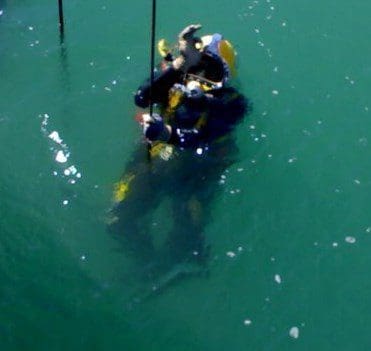
It’s not often that you get to say “We fixed a waterfall today at work.” Let’s face it, that’s not within the normal parameters of most occupations. But this summer, that’s exactly what we did! I’ve mentioned before, working as an inshore diver means that you have a lot of different jobs that come up, all with their own challenges, whether it’s lifting a boat off the bottom, or more mundane tasks like pounding bolts in a marina extension. And like most jobs, this one had its own quirks that made it memorable. The job itself was for a housing community in Osoyoos, at the very southern most tip of the Okanagan Valley in British Columbia. In a power outage several weeks previously had left the pump in a bad way, and it ceased pumping water to the waterfall. As a modified water feature, the result was a hold algae build up over the trickle that was the waterfall, and a growth spurt of weeds. Our job was to replace the pump, and get the works started again.

After loading up our gear and getting a safety brief, we were on the way. It was a long drive to the site, so we brought everything we thought we would need. On arrival, we recce’d the site, and determined that we would need to modify our plan a bit. The water was quite shallow, only about 2.5 or so metres, and warm, but because of the lack of flow in the water, visibility was poor. The biggest issue was that the pump was in a caisson, on an odd angle, and plumbed in a manner that made sense from an installation standpoint, but made it challenging to access. Because of the nature of the job, we engaged a full lockout, eliminating the power and making the area safe to operate in. Then we got down to business.

Harley was diver one, and he splashed first, entering the tepid water and taking on the near contortionist act needed to release the very well secured pump. Then it was my turn to hit the water, wading in with a metal bar that we used to lift the unit out of its caisson and bring it over to the surface. Once cleared, we had to attach the new power cables to the old ones, and then pull them through the duct that was made for the originals. During our surface interval, we also had to devise a new plumbing plan that would allow us to easily install the new pump, and in case of future maintenance requirements, remove it. After some experimentation on land, we got it and it was back into the water with the new pump while the rest of the power line was pulled through.

Surrounded by particulate, we marched the new pump out and placed it into position. At which point we moved to our individual tasks. Harley was working on getting it all attached, while I commenced searching for a large and expensive wrench that had been lost earlier in the day. In all reality, I never thought my mine awareness training would come in handy as a diver, but it was what I had to use to search for the wrench, since visibility was too poor to spot it. After about ten minutes of feeling my way along through the weeds and algae, I found the wrench, and returned it to a happy boss on the surface. At which point Harley surfaced and asked for assistance with attaching the pump. Between the two of us, we managed to wrangle it into position (which ultimately saw me floating upside down to get the right angle on the ring clamp) and then replaced the filter grill over it. The power was switched back on, and the waterfall started up again.

It was a long drive and a surprisingly challenging job, but we got it done, and best of all, we left the place with an improved system and instructions on what to do in the event of another power outage. Dive wise, it was very simple, after all, we had, for all intents as purposes, a bottom time limited only by the number of cylinders we brought. The water was warm, we had lots of water, and we had a plan. But dealing with unexpected, such as a sunken caisson and a bizarre plumbing system, is part of being a commercial diver, and more so when you’re working inshore!

Atlantas Marine Names New Sales Coordinator

0

Atlantas Marine, specialists in the supply of equipment to the commercial marine industry, have appointed Sam Rolfe as Sales Coordinator.

Sam will be responsible for continuing the growth of sales across the UK and Ireland, the company said.

Commenting on his appointment, Sam said: “I am delighted to join Atlantas Marine, an organisation with a great reputation within the industry, and one that is ambitious in its plans for the future. I’m looking forward to being a part of the growth of this company”

Charlie Foll, Managing Director, added: “We are delighted to welcome Sam to the team. His experience will be invaluable in strengthening the sales function. His appointment is testament to Atlantas’ continued expansion”

60 Second Interview: How To Become A Commercial Diver

Looking for something different from the traditional 9-5 job, the chance to travel and work with your hands?

Commercial diving could offer all of these things plus a unique work environment… underwater!

We caught up with Ali MacLeod, Air Diving Manager at the Underwater Centre to find out how to be a commercial diver, what skills you need and the kinds of work they do, plus the excitement of diving for your day job.

What kinds of work does a commercial diver do?
Commercial diving work usually involves manual labor, but your work site is underwater.

As an inshore diver, you would mainly be involved with civil engineering projects (e.g. bridges and tunnels) and offshore diving work is mainly for the oil and gas industry, although fish farms and even the film industry employ divers too.

The renewable energy sector and offshore wind farms have also created lots of diving work.

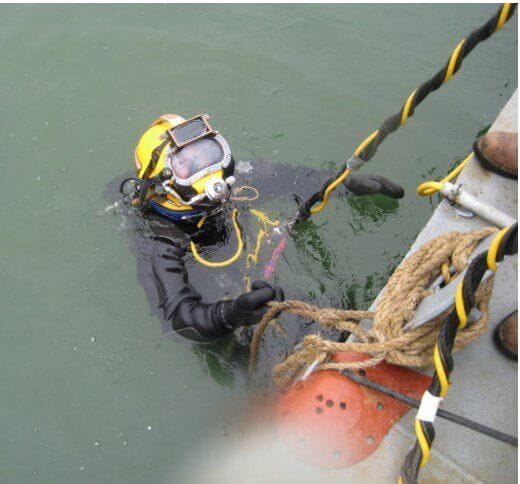
As a diver, your work could involve underwater welding, video inspections and photography, pipeline repairs and bolting, pouring concrete underwater, inspecting vessels and underwater structures for corrosion or using lifting bags to move objects underwater.

A lot of salvage work takes place too. Recently the Costa Concordia salvage employed a large team of divers, as did the recovery of casualties from the ferry that sank in South Korea in 2014. Divers may be expected to be involved in the recovery of aircraft too as well as ships.

Check out the Underwater Centre’s case studies to see what diving course graduates have gone on to do. 

What skills do I need to be a commercial diver?
You’ll need the ability to problem solve and work as a team, a professional attitude, good awareness of safety and reliability. A bit of a sense of adventure helps too. If you enjoy working with your hands or tinkering with things like bikes and cars then diving could suit you. Some jobs are specialised, but most involve working with tools just as you would on mechanical or construction jobs on land.

How do I get started?
To become a commercial diver you must attend a commercial diver training school. A leisure diving qualification isn’t suitable for 99% of the work that’s done underwater. It can cost several thousand pounds to train as a diver and the training lasts about 2 – 3 months.

Before starting a course you’ll also need a medical certificate of fitness to dive. You don’t have to be an athlete, but you must be reasonably fit to pass and looking after your health is certainly a good idea if you want to be a diver.

Diving courses involve both theoretical and practical training but mostly practical as this is what will really prepare you to become a successful diver. At the Underwater Centre, we teach the principles of diving physics, decompression theory and diving related illnesses including how to avoid them and manage them in the rare event something goes wrong.

We teach about the equipment and the tools you’ll use underwater too. Once you’re qualified and have a certain number of working dives in your logbook, you can then train to become a saturation diver. This technique allows you to dive deeper, using helium and oxygen breathing gas mixtures. As a saturation diver, you would be expected to live under pressure in a decompression chamber for up to 28 days on a job.

Divers can train from 16 years old, but it’s unusual to find work that young and you must be at least 18 to work as an offshore diver.


What other skills do I need?
If you want to become an inspection diver, for example, you might need to learn photography and understand faults found in metal such as corrosion and weld faults. For other roles, concrete inspection, underwater welding and cutting skills are often required too. Because divers can work very remotely and live in chambers where it takes days to decompress back to the surface, they may have to learn some medical skills including setting up I.V. fluids and taking care of a casualty who has been injured on the seabed. As with any offshore work you will need an offshore survival qualification and depending on the job, the company you work for might require you to do extra safety training.

What are the best parts of the job? 
The satisfaction of having done a good days work in an environment that most people never get a chance to experience and working together as part of a  team. Diving can take you anywhere in the world and travel is likely to be a big part of your career. Diving also pays pretty well especially if you work offshore in the oil and gas industry or in deeper saturation diving.

What are the challenges?
It’s not a 9-5 job with weekends off, so you may be expected to be away from home for weeks at a time. Sometimes there may be times when you are out of work longer than you’d like to be, for example when the winter comes in the UK there aren’t as many diving projects taking place due to the weather, although many divers work in other parts of the world too. 12 hour shifts when the weather is miserable in the winter isn’t as much fun as working during a long hot summer!

What’s the most exciting or unusual job you’ve worked on in your career?
Most jobs are pretty exciting in their own way. One of the first jobs I supervised many years ago involved measuring the amount of energy that tidal flow can produce. The device sank so we had to salvage it. It was right in the experimental stages of renewable energy too and it was fun to be involved in those early days. I also helped plan a job using an experimental lifting device underwater. There’s something exciting about trialling new things for the first time. I’m due to be involved with some training for the Russian Navy soon so that’ll be a new experience. I’ve also assisted the police on a couple of projects, which is quite different to regular commercial diving. I was recently involved in a film shoot for a television advert which was a lot of fun!

Any advice for people starting out?
If you want to be a commercial diver then get involved in work that gets you using tools and working with your hands, like at a local garage, a building site, or farm. Keep studying in school too as most diving related courses involve theoretical training including physics and anatomy.

When it comes to looking for work, you’ll not see diving jobs in the local press or job centre. Most work is found through networking and it’s often whom you know along with your experience that gets you work, although some jobs are advertised online. There’ll be some chasing around to begin with, but once their foot’s in the door then most divers will find the work, especially if they’re willing to travel.


Source


Oil Bulls Brace for Repeat of OPEC’s Bearish Blow at Meeting

0

Hedge funds are betting this week’s OPEC meeting will deliver another bearish blow to crude.

A year ago, Saudi Arabia led the Organization of Petroleum Exporting Countries in keeping production quotas steady, exacerbating a global glut and sending prices tumbling. Analysts surveyed by Bloomberg expect a repeat this year when the group meets on Dec. 4 in Vienna. Iran has said it will announce plans during the meeting to expand its output.

“Without the Saudis nothing is going to happen and it’s pretty clear they aren’t about to cut,” said Mike Wittner, head of oil-market research in new York at Societe Generale SA. “It’s hard to even come up with scenario where there would be an agreement for a cut.”

Money managers’ net-long position in West Texas Intermediate crude fell 20 percent in the week ended Nov. 24, the biggest drop since July, data from the U.S. Commodity Futures Trading Commission show.

WTI has declined 39 percent in the past year and was trading at $41.92 a barrel at 12:14 p.m. Singapore time. Futures advanced 5.4 percent during the report week to $42.87. 

OPEC’s decision to keep the spigot open has compounded a worldwide surplus of crude. The 12-member organization pumped 32.121 million barrels a day in November, the 18th straight month above its target of 30 million, according to a Bloomberg survey of oil companies, producers and analysts. U.S. stockpiles stand at more than 488 million barrels, the highest for this time of year since 1930.

The group’s effort to defend its market share is slowly paying off. Shale drillers have idled rigs and cut spending by $40 billion in the first nine months of this year, according to data compiled by Bloomberg on 61 independent U.S. producers. The country’s production has remained flat in 2015 after three consecutive years of adding 1 million barrels a day.

“U.S. production is coming down, but at a very slow rate, which is bearish,” Wittner said. “The market is very much in wait and see mode right now. There’s no expectation for OPEC to take any action this week.”

Speculators’ net-long position in WTI fell by 24,311 contracts to 96,521 futures and options combined, the lowest since August, CFTC data show. Shorts increased by 6.4 percent to 164,102, the most since March. Longs declined by 5.2 percent to 260,623.  

Hedge funds boosted their net-long position in London- traded Brent crude by 12 percent to 177,945 contracts, according to data from ICE Futures Europe. Brent gained 5.9 percent to $46.12 a barrel during the period and was at $44.77 on Tuesday.

In other markets, net bearish wagers on U.S. ultra low sulfur diesel increased by 16 percent to 45,372 contracts, the most in records dating back to 2006. Diesel futures advanced 2.3 percent to $1.3997 a gallon in the report period. Speculators flipped back to a net-long position in gasoline, adding 16,463 contracts to 15,189. Gasoline futures climbed 12 percent to $1.3902 a gallon.

The gasoline buying “at least matched up with the strength in the market,” Tim Evans, an energy analyst at Citi Futures Perspective in New York, said by phone. “Gasoline has been the strongest energy market.”


Source

Solstad Bags Chevron Contract in Thailand

0

Norway’s Solstad Offshore (SOFF) has secured a multi-year contract for its Derrick Lay Barge “DLB Norce Endeavour” to work on Chevron’s installation and construction program offshore Thailand.

According to Oslo-listed firm, the DLB Norce Endeavour will be utilized to install multiple new wellhead platforms and subsea pipelines in the Gulf of Thailand.

The work is expected to start in 2016 and extends for 4 years fixed term with 3 one year options.

Mobilisation for the 2016 season will start in January. The vessel is expected to be utilized for around 200 days.

Furthermore, “The number and configuration of wellhead platforms and subsea pipelines to be installed in subsequent years is not fixed and will vary depending on Chevron productions requirements,” the company said in its Tuesday’s Stock Exchange filing.

DLB Marine Projects group in Singapore will provide project management, engineering, procurement and logistics to support the DLB installation and construction scope of work.

Solstad said that the financial terms remain confidential between the parties.


Source

Anadarko Ordered To Pay $159.5M Fine For 2010 Gulf Spill

0

A federal judge ordered Anadarko Petroleum Corp to pay a $159.5 million civil fine reflecting its stake in the Gulf of Mexico well whose 2010 blowout caused the largest U.S. offshore oil spill. In a decision on Monday, U.S. District Judge Carl Barbier in New Orleans said Anadarko was not at fault for the spill.

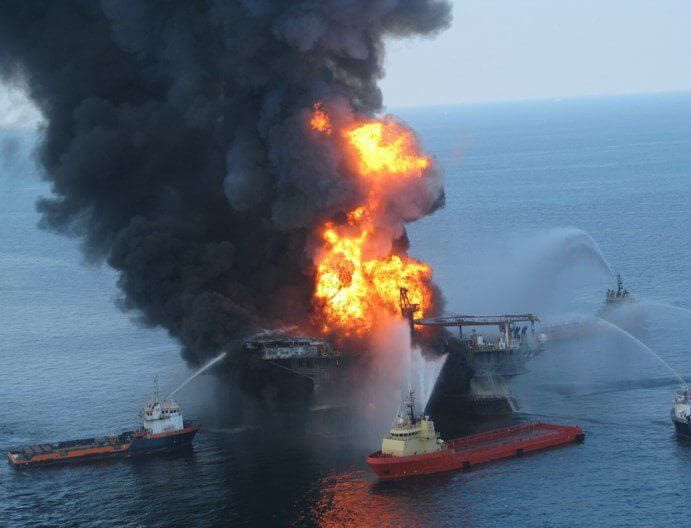
But he said the company’s 25 percent ownership stake in the Macondo well made it part of the “polluting enterprise” responsible for the April 20, 2010 disaster, which included the explosion of the Deepwater Horizon drilling rig and killed 11 workers. The penalty equates to $50 per barrel of oil spilled, well below the maximum $1,100 per barrel, or $3.51 billion, penalty that Barbier could have imposed under the Clean Water Act. A $159.5 million fine “strikes the appropriate balance between Anadarko’s lack of culpability and the extreme seriousness of this spill,” Barbier wrote in a 34-page decision.

In Tuesday morning trading, Anadarko shares were up $1.02, or 1.7 percent, at $60.92. The payout may resolve the last major legal uncertainty that Anadarko, which is based in The Woodlands, Texas, faced over the spill. BP Plc owned 65 percent of the Macondo well, while Mitsui & Co’s MOEX Offshore 2007 LLC owned 10 percent. In 2011, Anadarko agreed to pay BP $4 billion to help cover victim claims and cleanup costs.

BP later reached a $20.8 billion settlement with the U.S. government and five Gulf states. The government had sought a penalty for Anadarko below $3.51 billion but “significantly above $1 billion,” reflecting the seriousness of the violation. Anadarko said no fine was justified. In a statement, Anadarko said it is pleased that the fine is “far less” than the government sought.

It also said it may appeal, and maintained that “penalizing a non-operator for events beyond its control is inconsistent with the intent of the Clean Water Act.” The case is In re: Oil Spill by the Oil Rig “Deepwater Horizon” in the Gulf of Mexico, on April 20, 2010, U.S. District Court, Eastern District of Louisiana, No. 10-md-02179. 


Source