Home Blog Page 440

Enhanced Oil Recovery: Prospects for CO2-based EOR

0

In an era of increasing global energy demand, high sustained oil prices, ageing oil fields and a dearth of conventional oil finds, it is unsurprising that enhanced oil recovery techniques are now receiving a great deal of attention. As companies seek to make the most of their existing reserves, they are increasingly turning to thermal, gas and chemical enhanced oil recovery (EOR) solutions to maximize recovery rates.

In this first of three articles, we look at the prospects for CO2-based EOR.

CO2 EOR IS USED TO PRODUCE 300,000 BPD IN US

Carbon dioxide (CO2) EOR is not a new technology; it has been successfully utilized in the United States for more than 40 years, sweeping residual oil from ageing fields and thus helping to prolong their life. The rapid development of the industry in the United States during the 1980s came as a result of the discovery of large quantities of naturally occurring CO2 in underground formations in New Mexico, Colorado and Mississippi. Though natural sources continue to dominate the market, industrial (anthropogenic) CO2 sources are growing rapidly and could soon become the dominant supplies for CO2 EOR projects.

CO2 EOR has produced around 1.5 billion barrels of oil in the United States over the past 25 years, while there are now close to 4,000 miles of pipelines transporting CO2 to production sites. Approximately 68 million tons of CO2 is used to produce 300,000 bpd, with the majority of production located in the Permian Basin. The rest of the world remains far behind the U.S. at present, predominately due to the lack of naturally occurring CO2 sources outside of the United States. However, a number of countries are in the process of establishing or expanding their CO2 EOR sectors in the aim of increasing oil production and prolonging the lives of ageing fields.

SHALE OIL REVOLUTION COULD THREATEN CO2 EOR PROSPECTS

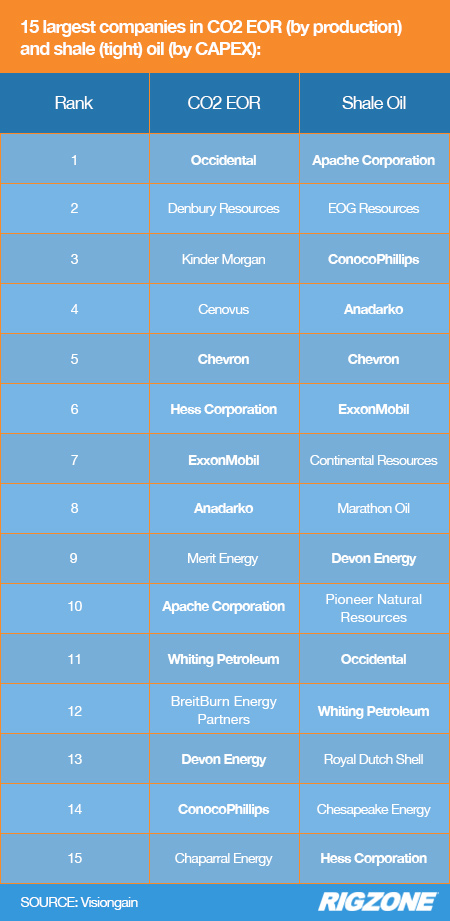
The shale (tight) oil revolution is an under-discussed threat to CO2 EOR prospects. The table below shows the 15 largest CO2 EOR producers in North America ranked alongside the 15 largest spenders in the shale oil market in 2014; the table shows there is significant overlap with companies involved in both endeavors. Shale oil development has lower start-up costs and quicker returns than CO2 EOR projects. Consequently, investors and company executives are likely to prioritize their shale oil asset development at this present time.

Occidental – by far the largest CO2 EOR company in terms of production with 30 percent of the U.S. total – plans to keep CO2 EOR production in the Permian Basin flat through 2016 while increasing production from its shale oil assets in the region, according to the company’s most recent presentation.
Hess To Form MLP For North Dakota Oil, Gas Transport Assets
15 largest companies in CO2 EOR (by production) and shale (tight) oil (by CAPEX: Source: Visiongain

GROWTH PROSPECTS FOR U.S. CO2 EOR ARE OVERSTATED

In addition to the five naturally-occurring sources of carbon dioxide used for CO2 EOR in the United States (McElmo Dome, Jackson Dome, Bravo Dome, Doe Canyon and Sheep Mountain), the country also has ten anthropogenic CO2 sources in operation and a further 13 potential anthropogenic sources that could come online by 2020 supplying CO2 to EOR projects.

Though this extra supply presents opportunities for increasing CO2 EOR production, and could lead to anthropogenic sources overtaking naturally-occurring ones within the next decade, it is easy to overstate the potential growth of the market. A report produced earlier this year from the DOE’s National Energy Technology Laboratory (NETL) suggested that CO2 EOR production could more than double to 615,000 bpd by 2020, while other sources have produced even more optimistic forecasts.

Although a CO2 EOR pure play company such as Denbury Resources could achieve 10-percent per year production growth (in a best case scenario), the market as a whole is unlikely to grow at this rate in the medium term. The optimistic forecasts for CO2 EOR production have tended to focus on the availability of new CO2 sources and pipelines, without paying enough attention to the plans of CO2 EOR producers and outside factors influencing the market.

PROSPECTS FOR CO2 EOR ARE MORE FAVORABLE IN CHINA, BRAZIL AND MIDDLE EAST

It is estimated that the North Sea holds between 15 and 35 billion barrels of technically recoverable oil equivalent, with at least 3 billion barrels able to be extracted through CO2 EOR methods in UK waters alone. In particular, there is considerable interest in linking carbon capture and sequestration projects with EOR to achieve the joint goals of reducing CO2 emissions and recovering more oil.

However, a number of evaluations of EOR in the North Sea have concluded that the costs for the conversion of offshore installations for CO2 injection are too high, while the lack of availability of sufficient and cheap volumes of CO2 and disappointing CO2 EOR yields in some places are also a potential stumbling block. The economics of CO2 EOR in the North Sea are expected to remain unfavorable for much of the coming decade, though rising oil prices and an improving regulatory environment could lead to stronger growth after 2020.

Prospects are more favorable in China, which has large industrial CO2 sources and a significant quantity of oil found in geologies favorable to CO₂ flooding. China is investing in CO2 EOR as part of its “all-of-the-above” energy strategy, with PetroChina having set up projects in a number of oil fields, though the costs remain high.

In South America, Brazil is leading the way having set up a CO2 EOR project at the Lula field. In this project CO2 is separated from the crude stream onboard an FPSO and re-injected back into the field to boost production. The project includes EOR as part of the original design, which has the obvious economic benefit of not having to subsequently retrofit production systems for CO2 capabilities. If the pilot project is successful Petrobras plans to use the technology on the entire field.

The Middle East may also present opportunities for CO2 EOR with the UAE, Kuwait and Saudi Arabia all in the process of planning projects.

KEY FACTORS FOR SUCCESS

In the U.S. setting, the shale oil boom will hinder growth prospects for CO2 EOR throughout the rest of the decade, though the availability of new CO2 sources and the determination of some companies to invest in the technology will ensure solid production growth. However, as the return on shale oil investments begins to decline (and assuming the maintenance of oil prices in excess of $80 per barrel) CO2 EOR production could see significant increases in the early part of the next decade, potentially exceeding 450,000 bpd by 2024. 

The CO2 EOR market outside of the U.S. faces a number of challenges, particularly in the offshore setting, deriving primarily from the availability and cost of CO2, lack of project experience, unsupportive regulatory environments and competition from other technologies (including other EOR methods). Nonetheless, in an environment of ageing oil fields and few new major discoveries, the prospect of recovering more from existing fields is an attractive proposition, while high oil prices will also help to ensure that CO2 EOR projects continue to be established throughout the world.

Source

Statoil Suffers Loss in Q3

0

Statoil’s third quarter 2014 net operating income was NOK 17.0 billion, a decrease from NOK 39.3 billion in the third quarter of 2013.

Net income was negative NOK 4.8 billion mainly due to impairments. Adjusted earnings were NOK 30.9 billion, a decrease from NOK 40.4 billion in the third quarter of 2013.

“Statoil’s quarterly earnings were negatively impacted by lower oil and gas prices and our decision to defer gas sales to enhance value. Our negative net income in accordance with IFRS relates to quarter-specific items. We delivered strong operational performance and cash generation in the quarter,” says Eldar Sætre, Statoil’s acting president and CEO.

“We are progressing well on our efficiency improvement program. We continued to produce with high regularity on the Norwegian continental shelf and execute our projects as planned, remaining on track for our 2014 production guiding,” says Sætre.

Statoil’s adjusted earnings were NOK 30.9 billion in the third quarter. The decrease from the third quarter of 2013 was mainly a result of lower oil and gas prices, reduced ownership share from divestments, higher depreciation due to investments in producing assets, new fields coming on stream and a larger share of oil in the production mix.

Statoil’s reported net income for the third quarter in accordance with IFRS was negative NOK 4.8 billion due to quarter specific accounting charges of NOK 13.5 billion. These charges were mainly related to an impairment of the Kai Kos Dehseh asset in Canada, triggered by the postponement of the Corner field development, as well as impairments of exploration assets in the Gulf of Mexico and Angola. In line with practice to reflect the underlying performance, certain quarter-specific items are not included in the adjusted earnings.

“Our cash flow from operations so far this year is NOK 168 billion before tax. We have a strong balance sheet, and will pay a dividend of NOK 1.80 per share for the quarter,” says Sætre.

At the end of the quarter, Statoil’s net debt to capital employed was 19%. Organic capital expenditure was around USD 15 billion year-to-date, and the guidance of around USD 20 billion for 2014 remains.

The board of directors appointed Eldar Sætre as acting president and CEO on 15 October. “Statoil’s strategy remains firm. Safe and efficient operations are our top priorities, and we continue developing the business according to plan,” says Sætre. Statoil’s board of directors has established a sub-committee which has started the search for Statoil’s next CEO.

Source

Norway’s Fred. Olsen Energy Sees Tough Rig Market Ahead

0

Norway’s Fred. Olsen Energy said the global rig market would struggle with lower demand and oversupply as it reported third-quarter profits below expectations on Tuesday. Rates in the offshore rig market have fallen from a 2013 high as oil companies cut spending and as newly built rigs enter the market, creating overcapacity.

“(There is) continued low contracting activity in all market segments,” the firm said in presentation material. “An increase in number of idle rigs is seen, predominantly in international mid water and deepwater markets … As a result, dayrates have decreased in all market segments.” Rival Maersk Drilling, a unit of Danish conglomerate A.P. Moller Maersk, said on Monday one of its brand new drillships would only charge a day rate of some $377,000.

Day rates for the most advanced ultra-deepwater rigs peaked around $650,000 last year. Fred. Olsen Energy’s third-quarter earnings before interest, taxes, depreciation and amortisation (EBITDA) fell 3 percent to $151 million, missing expectations for $164 million in a Reuters poll. Operating profit plunged more than 80 percent to $15.4 million, missing forecasts of $88.4 million as the firm took an impairment charge on a rig that has been idled and cold stacked.

Shares in Fred. Olsen Energy were down 3.41 percent at 94.85 Norwegian crowns as of 0806 GMT. The shares are down by 65 percent over the past year, lagging an Oslo benchmark index up 7.4 percent over the same period.

Source

ABB Bags Butendiek OWF – SylWin Alpha Subsea Cabling

0

ABB has won an order from TenneT to design, engineer, supply and install an Alternating Current (AC) power transmission cable system that will connect Butendiek, an offshore wind farm in the German North Sea, to the HVDC converter platform SylWin alpha.

The cable will link the AC platform of the Butendiek offshore wind farm to the HVDC converter platform SylWin alpha. The Butendiek wind farm is situated around 30 kilometers (km) off the island of Sylt. The cable system to be supplied is a 3-core 155 kilovolt (kV) AC submarine cable, approx. 38 km long. It is scheduled to be installed and commissioned in 2015. The high voltage cable originally destined for this project was lost in an incident in the Mediterranean Sea in July and ABB was requested to step in and help to support the project schedule.

The cable system will have a capacity to transmit 144 megawatts (MW) of wind power, enough to meet the electricity needs of approximately 150.000 German households. The use of clean, renewable wind energy as an alternate source is equivalent to the abatement of almost 750,000 tons of carbon dioxide emissions per year that could have resulted from fossil fueled generation.

“Germany is among the world’s leading proponents of renewable energy and continues to push for lowering environmental impact”, said Claudio Facchin, Head of ABB’s Power Systems business. “We have a vast array of technologies and considerable experience in this domain and are pleased to support TenneT with this fast track project.”

Butendiek is the sixth offshore wind connection project in Germany awarded to ABB by TenneT. ABB is presently executing the Sandbank AC cable link, which also connects an offshore wind farm to the SylWin alpha HVDC converter platform.

Source

Faster ROPs behind Launch of New Drillbit Technologies

0

The desire for quicker rates of penetration (ROP) in oil and gas drilling is spurring innovation and new development in drillbits. Greater drilling efficiency was behind UK-based Tercel Oilfield Products’ development of the MicroCORE drillbit, which the company officially launched at the Society of Petroleum Engineers’ Annual Technical Conference and Exhibition (ATCE) in Amsterdam this week.

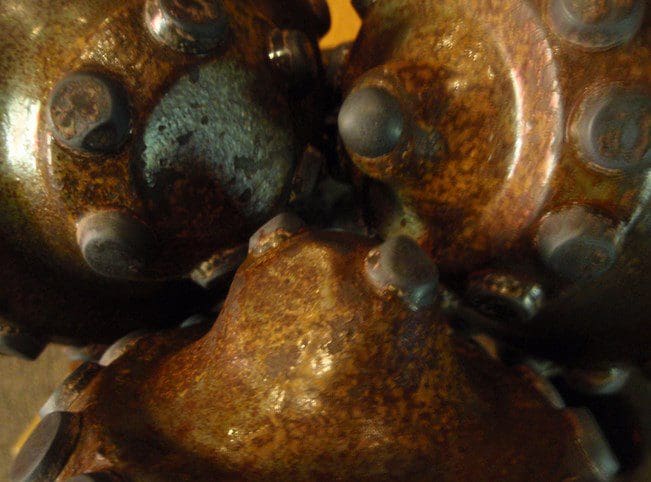
Normally, drillbits have point loading on the leading edge of the main blade. By removing the point loading, the weight of the drillbit is more equally distributed across the bit face, allowing for better efficiency with faster ROPs and less money spent on drilling. A side effect and second benefit of this design is that it can provide better geologic data by allowing for the recovery of more complete cuttings, Ian Pollock, vice president of TD Solutions, told Rigzone in an interview at the show. The bit can be made specifically for ROP improvement or cutting generation depending what the client wants.

The company has been playing with the drillbit’s concept for the past few years, and developed the PDC drill bit in collaboration with Total. Tercel officials say they have seen in general 20 to 25 percent improvements in ROPs from the drillbit in their worldwide operations, but have seen improvement as high as 80 percent. The bits are also coming out of the hole in good shape, meeting the need for durability, particularly with companies starting to rent PDCs versus buying them, as in the case of the North Sea market.

MicroCORE is setting new benchmarks in ROP in drilling, delivering 778 feet per hour in South Texas and 103 feet per hour for 98 hours and drilling over 10,159 feet in a single run in Wyoming, the company said in a statement.

Founded in 2010, Tercel now has nearly 500 employees globally. Its background is total depth (TD) solutions, which are geared towards helping clients reach TD. The company also offers drilling enhancement tools.

ROPs and the desire to save time and money by drilling faster is also behind Baker Hughes’ Kymera FSR directional drill bit, which works in conjunction with the company’s AutoTrak eXact high build rotary steerable drilling service. Kymera improves borehole quality by reducing wear on cutters to maintain higher ROP than individual PDC and tricone bits, provides better face control and boosts efficiency, said Baker Hughes. 

Drilling the curve through challenging carbonates typically takes two or more bits when using individual polycrystalline diamond compact (PDC) or tricone roller cone bits. The hybrid design allows energy to be streamlined, and reduces the liability that comes with vibration downhole by redirecting energy away from vibration and into cutting bedrock, Ahmed Alessa, global marketing manager for directional drilling at Baker Hughes, told Rigzone at ATCE. This allows for faster drilling in comparison with a PDC bit.

While PDC bits drill quickly, they create reactive torque that can, in turn, send the bottomhole assembly (BHA) off its intended trajectory, Baker Hughes said. That excessive vibration can also influence downhole tool failure, increasing the odds of additional trips, part repair and non-productive time.

Schlumberger‘s Smith Bits unveiled at the ATCE conference its StingBlade conical diamond element bit Monday. StingBlade bits increase run length and ROP while delivering improved steering response in directional applications.

“In the continuous drive for increasing efficiency and lowering costs while drilling, our customers expect that each section is drilled from shoe to total depth with one drill bit at a high rate of penetration,” said Malcolm Theobald, president of Bits & Advanced Technologies at Schlumberger, in an Oct. 27 press statement. “StingBlade bits have greater durability in hard and inter-bedded formations when compared to conventional PDC bits, enabling an increase in the frequency of drilling an entire section with one drill bit.”

StingBlade bits use Stinger conical diamond elements optimally placed across the bit face. The conical shape of Stinger elements, with improved impact and wear resistance, induce high point loading on the formation, enabling increased run lengths and higher sustained ROP. In directional applications, the new drill bits cut with lower torque than conventional cylindrical cutters and achieve higher build rates with less toolface variation, Schlumberger said.

One customer was able to increase interval length by 97 percent and ROP by 57 percent with the StingBlad bit in the Browse Basin offshore Australia, saving five days of drilling time. The bit was used to drill a 12 ¼-in vertical section through a formation known to cause premature impact damage to conventional PDC bits.

In an onshore field trial in South Texas, two curves were drilled to compare the steerability of a StingBlade bit to a conventional PDC bit, Schlumberger said. Under identical conditions, the StingBlade bit achieved 23 percent higher build rates with less torque and toolface angle variation, reducing corrections required by directional drillers enabling them to stay on target.

Source

Aker Wayfarer to Get Rolls-Royce Handling System

0

Rolls-Royce has signed a contract to supply a complete module handling system to the subsea construction vessel Aker Wayfarer.

The $38.7 million (£24 million) contract marks the largest single subsea vessel project ever undertaken by Rolls-Royce.

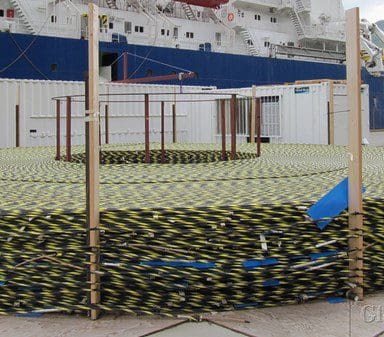
The Rolls-Royce automated handling system consists of a complete tower structure, skid system, deepwater lifting system as well as power units and controls. The deepwater lifting system is a Fibre Rope Deployment System (FRDS), based on our patented Cable Traction Control Unit (CTCU) technology. The equipment is due for a delivery in the first quarter of 2016.

John Knudsen, Rolls-Royce President Commercial Marine, said: “This a very important contract for Rolls-Royce and it shows that the offshore industry has taken yet another step in accepting the superior performance of synthetic fibre ropes for lifting operations in deep and ultra-deep waters.”

A similar system was installed by Rolls-Royce in 2009 onboard the AKOFS operated subsea equipment support vessel Skandi Santos, which has now been on contract with Petrobras for nearly five years. The vessel has successfully installed and retrieved subsea trees and modules in water depths up to 2300 meters.

Geir Sjøberg, CEO of AKOFS Offshore, said: “Skandi Santos has been rated by Petrobras as one of their top performing vessels. Its track record makes us confident in the decision to install the handling system from Rolls-Royce on Aker Wayfarer.”

Source

Subsea Vision Expands ROV Fleet

0

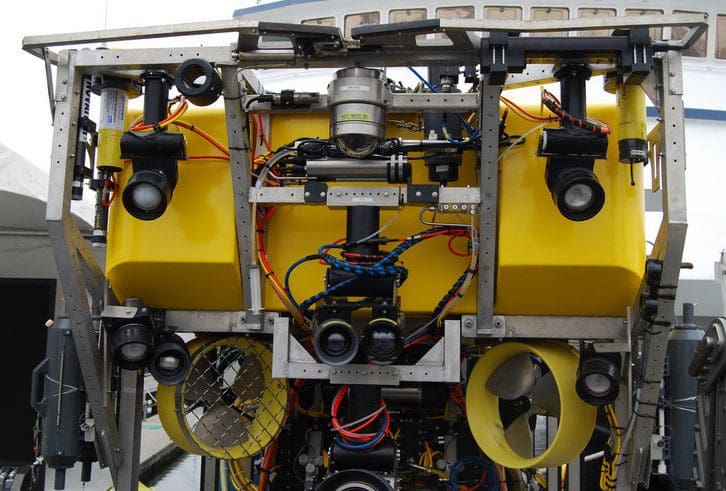
Subsea Vision has added another Saab Seaeye Cougar XT Compact to its ROV fleet. The compact concept is especially suited for working in strong currents and where the spread of equipment is small enough to need little deck space. The addition to their fleet follows expanded opportunities coming to the company since joining the James Fisher Group and linking with Fendercare Marine’s diving resources.

Chris Bryant, managing director of Subsea Vision, says the slim profile compact Cougar is ideal for working in constrained spaces around FPSOs and platforms, and in high current areas.

“It’s a phenomenal vehicle that has great power and easy tooling integration for a wide spectrum of work – and can undertake long excursions,” Bryant commented.

He sees the exceptional inspection capability of the Cougar fleet, alongside Fendercare’s diving operations, as “opening more doors around the world” and the company taking on a more primary contractor role.

Designed especially for working in shallow waters and in tight situations, the low-profile Cougar XT Compact minimises the effect of current with its reduced frame size, buoyancy and weight – and a thinner 17mm tether cable that reduces the effect of drag.

The power and manoeuvrability of the vehicle comes from its six thrusters, four vectored horizontal and two vertical, each with velocity feedback for precise control in all directions, and interfaced to a fast-acting control system and solid-state gyro for enhanced azimuth stability.

Source

Chevron Starts Gas Production from Bangladesh’s Bibiyana Expansion Project

0

Chevron Corp.’s subsidiary in Bangladesh commenced natural gas production from the onshore Bibiyana Expansion Project in the northeastern part of the country, the company reported Tuesday.

The expansion project will boost Chevron-operated natural gas production capacity in Bangladesh by more than 300 million cubic feet per day to 1.4 billion cubic feet per day, while the company-operated natural gas liquids production capacity will rise by 4,000 barrels per day to 9,000 barrels per day.

“The Bibiyana expansion represents Chevron’s commitment to developing new resources to meet energy demand in Asia … The expansion is one of a slate of projects across the region that will deliver on Chevron’s strategy to grow profitably in core areas,” Jay Johnson, senior vice president, Upstream, Chevron Corp. said in a press release.

Facilities for the Bibiyan Expansion Project included an expansion of the existing gas plant to process increased natural gas volumes from the Bibiyana field, additional development wells and an enhanced gas liquids recovery unit.

“As the leading international investor in Bangladesh, Chevron values its partnership with the people of Bangladesh in support of the nation’s energy security and long-term economic development. The Bibiyana Expansion Project is a further example of our commitment to invest for the long term and create value for our partners and the communities that we serve,” Melody Meyer, president, Chevron Asia Pacific Exploration and Production, added in the press statement.

In July 2012, Chevron revealed plans to spend around $500 million to raise production from Bangladesh’s largest gas field. The firm’s Bangladesh subsidiary has a 99 percent working interest in the Bibiyana development.

Source

Technip Lands Kraken Job for EnQuest

Technip has been awarded a large engineering, procurement, installation and construction (EPCI) contract by EnQuest for the Kraken development located in the North Sea, 400 kilometers North-East of Aberdeen and 130 kilometers East of Shetland, at a water depth of approximately 120 meters.

Technip’s operating center in Aberdeen, United-Kingdom, will execute the contract.

A number of vessels from the Technip fleet will be utilized for the offshore campaign, including Technip’s Deep Energy, one of the largest pipelay vessels ever built.

The contract covers various project management engineering and installation works, which include:

– fabrication and pipelay of approximately 50km of rigid pipe – 25km of metallurgically clad pipe and 25km of HDPE lined;
– installation of 3 umbilicals totaling 14km;
– installation of 7km of flexible risers and jumpers;
– template and manifold installation at three drill centers;
– diverless tie-ins to pipelines and manifolds;
– pipeline flooding, hydro testing and leak testing.

The Group’s spoolbase in Evanton, United-Kingdom, will weld and load-out the rigid pipe and Technip Umbilicals, Technip’s wholly-owned subsidiary in Newcastle, United-Kingdom, will manufacture the umbilical. All construction work on the project will be undertaken via diverless construction methods.

Bill Morrice, Managing Director of Technip in the UK, said: “We are delighted to have been awarded this contract which builds upon our excellent relationship with EnQuest. Our vast experience in the delivery of efficient, cost-effective solutions for our clients has been recognized once again and we look forward to supporting EnQuest to maximize production from the Kraken field, currently one of the largest developments in the UK North Sea.”

Source

Oil Price, Industry Costs Dominate Debate at SPE Amsterdam Meet

0

The oil price and need for the energy industry to reduce costs dominated debate at the opening session of the Society of Petroleum Engineers’ Annual Technical Conference and Exhibition in Amsterdam Monday. The session, titled “Affordable Energy”, included panelists from the International Energy Agency (IEA), ExxonMobil, PEMEX and Technip.

The recent fall in the price of oil – with Brent Crude plunging below $85 per barrel – prompted questions among an audience of hundreds of SPE delegates as to the viability of many oil and gas projects around the world. Chris Besson, senior energy analyst at the IAE, believes it is important not to exaggerate the effect of this recent fall. “Demand is still expected to continue to grow over the next year and in the following years. And supply is increasing by about the same amount,” Besson said, conceding that estimates of a reduced increase in demand for oil over the next year may have been enough to send signals in the market that have prompted the current drop in oil prices. 

“But if you look at the longer term, oil demand is going to continue to grow. It’s not going to grow as fast as in the past, but there’s no doubt that it will continue to grow. And on the supply side, the regions that are thought to be able to increase during the next few years will probably come to a saturation point – in maybe 10 years. And so, sooner or later, the market is going to become tense again and we should not forget that.

“Even during this period of lower prices… investment should continue. It’s absolutely critical because of the long timescale in the industry. By the time projects really start to deliver – I can tell you the market’s going to be tight again.”

When asked what the greatest challenge was facing the oil and gas industry Neil Duffin, President of ExxonMobil Development Company, commented:

“We see an increased requirement in energy of 35 percent by 2040. And that’s a major challenge for our industry. The costs of projects have been going up and we need more access to other areas to develop our projects. And so I think our real focus is on becoming extremely capital efficient so we can deliver these [projects] on time, on budget and put our capital to its best use.”

The subject of drilling costs was a major talking point at the session. Technip President and Chief Operating Officer Phillipe Barril noted that deep-water drilling has come a long way. 

“The end of easy oil is near, so we have to make a technological investment in that field,” Barril said.

PEMEX Exploration & Production Director General Gustavo Hernandez commented that drilling costs have become a major issue for exploiting unconventional oil and gas, and that these drillings costs might be reduced through better use of logistics.

On the issue of deep-water drilling, Duffin said:

“If you look at some of these big deep water projects, the drilling costs are a significant part of the total investment. So, it’s really important that we invest in the technology. When you look at where this industry has come from in 30 years, it’s quite remarkable the depths we’re going to, the pressures we’re going to. And that’s through innovation and technology.”

Duffin also cautioned that spending large amounts on the cost of drilling facilities is a “double-edged sword”, noting that expensive facilities may be efficient from an operational standpoint but a loss of control over the capital costs at the beginning of a project can make it uneconomic when you depreciate these costs over the life of the asset. 

Other subjects touched upon during the session included how the oil and gas industry can attract young people into the sector, and how companies can best retain employees.

Duffin commented: “The young people coming in now, we’re giving them early opportunities to get out to the sites – which is a real learning opportunity. Where that’s becoming a little difficult is that some countries are blocking young people from entering [the industry]. They want more seasoned people which makes it more complex to train these folks for the future. So, we’re working with some of these countries to open up more opportunities for their folks to learn.

“If you go back a few years a lot of people were worried about what this younger generation of recruits would be like coming into the workplace. But there are some who are absolutely outstanding and I’d say we’ve got a real opportunity to set this industry up for the future by continuing to recruit and by continuing to build links with universities.

“One area we’ve got to do a really good job on is the whole STEM [science, technology, engineering and mathematics studies] issue because there’s a distinct shortage, particularly in North America, getting folks into engineering.”

On employee retention, Barril said: “It’s fair to say in the past few years we’ve seen quite a turnover in the workforce. People moving from one side to the other. And I think there could be a case for the industry to be a little bit more disciplined about that, and coming back to their training plans and investing in people.”

Source