Home Blog Page 432

Oil Ends Down Again as Supply Worry, Dollar Strength Weigh

0

Oil markets fell on Thursday after a one-day spike as worries about high supplies returned to haunt traders, while the dollar pressed on with its rally which weighed on commodities priced in the currency.

Benchmark Brent and U.S. crude, however, ended off the day’s lows as stocks on Wall Street hit record highs in late afternoon trade, lending some optimism to oil.

At the close, Brent’s front-month was down 9 cents at $82.86 a barrel, compared to its 90 cent-fall earlier in the day. U.S. crude finished down 77 cents at $77.91, after tumbling as much as $1.56 during the session.

Prices rose a day ago after rumors of a Saudi pipeline blast and data showing U.S. crude inventory builds at just a fifth of levels forecast last week. Brent finished Wednesday’s session slightly higher while U.S. crude jumped nearly 2 percent.

On Thursday, oil prices came under renewed pressure after OPEC’s insistence that it was “not panicking” over the near 30 percent fall in Brent’s value since June. Traders took that to mean there will be no output cuts at OPEC’s Nov. 27 meeting.

The dollar rallied to a more than two-year high against the euro after the European Central Bank kept interest rates at record lows. The greenback was also boosted by data showing fewer filings of new U.S. unemployment benefit claims in the previous week.

“We don’t seem to have any ability by any oil producer to cut production,” said Gene McGillian, senior analyst at Tradition Energy in Stamford, Connecticut. “But we have fears of an European recession, lower-than-expected Chinese growth and strong U.S. recovery that is boosting the dollar.”  

“We may look oversold on oil but until we get the factors for a sustained rebound, I don’t think we have hit bottom.”

Oil traders were also wary about the possibility of an Iranian nuclear agreement soon that could ease sanctions on Tehran’s crude exports, adding to global production.

U.S. Secretary of State John Kerry said on Wednesday a deal between Iran and six world powers would be harder to achieve after a Nov. 24 deadline, suggesting a degree of urgency ahead of planned talks in Oman next week.

Samuel Ciszuk, senior adviser on supply security at the Swedish Energy Agency, told the Reuters Global Oil Forum on Wednesday he gave a 50-50 chance for a deal or compromise being reached on Iran.

Not everyone is gloomy with their oil outlook though.

North Dakota oil producer Continental Resources is among the few betting on a rally.

“We have elected to monetize nearly all of our outstanding oil hedges, allowing us to fully participate in what we anticipate will be an oil price recovery,” Harold Hamm, chief executive at the firm, said.

Source

Acta Marine Deploys Coastal Chariot on Cable Laying Project

0

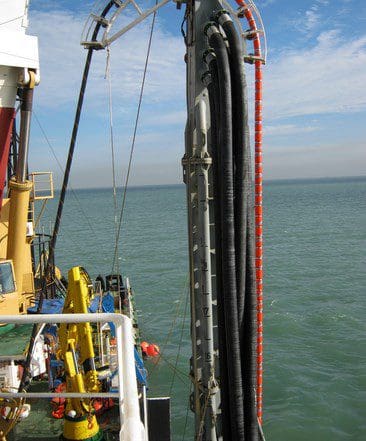
Acta Marine’s latest fleet addition, the DP1 Multi purpose vessel Coastal Chariot, has completed a cable lay project in the UK.

The vessel was deployed for the cable lay of various fiber optic cables in shallow waters. Acta Marine didn’t disclose the name of the Client.

Coastal Chariot is the fourth unit within Acta Marine’s fleet of 40 workboats that is equipped with Dynamic Positioning.

It is capable of conducting projects in Dredging, Geotechnical and Offshore Wind farm construction.

The other Acta Marine DP Multicats also continue to be deployed around the world on various marine projects.


Source

Statoil Suspends 2 New Rigs Due to Overcapacity

0

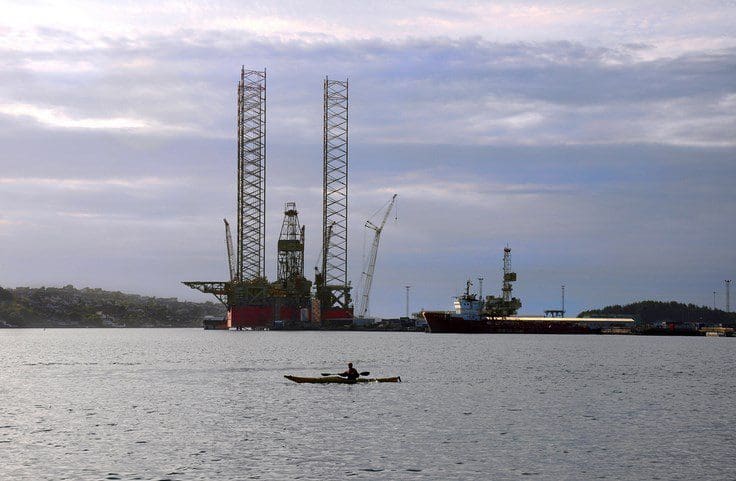
Norwegian oil major Statoil reported Thursday that it will be suspending two new rigs due to overcapacity in the company’s rig portfolio. Statoil said that the Transocean Spitsbergen (DW semisub) and the Songa Trym (mid-water semisub) will be suspended through the rest of 2014 and that the suspension period may be extended. Currently the Spitsbergen rig is in the Barents Sea, where it is involved in completing the Saturn well and will soon cut and retrieve the wellhead in the Mercury exploration well.

Then, in around mid-November, the rig will be suspended for the rest of the year. Statoil said the suspension is the result of overcapacity in the firm’s rig portfolio and unsuccessful attempts to find alternative assignments for the rig. Statoil Chief Procurement Officer Jon Arnt Jacobsen commented in a company statement: “The exploration program has been highly efficient. Transocean Spitsbergen drilled the last seven wells 40-percent faster than the industrial average in the Barents Sea.

This allowed two more wells than originally planned to be drilled. We are very pleased with the work performed for us by Transocean. Unfortunately we are now in a situation of overcapacity, at the same time as the industry is facing high costs and lower profitability.” Songa Trym will be suspended after the rig has completed plugging a well on the Oseberg field in the North Sea. This job is also scheduled to be completed in mid-November. “Songa Trym has delivered well on efficiency and safety, and we would have liked to use the rig also for the rest of the year.

We have tried to find new assignments for the rig, but our attempts to realize the identified options have not been successful. We are now together with our partners maturing identified drilling assignments for both rigs for 2015,” Jacobsen added. After the two rigs are suspended Statoil will have 13 rigs in activity on the Norwegian Continental Shelf. 

Source

Bourbon Revenues Rise

0

French vessel owner and provider of marine and subsea services Bourbon has noted a rise in revenues for the third quarter of the year as expanded fleet and higher average day rates were offset by lower utilization rates.

Bourbon generated $426.3 million (€340.8 million) over the three months to 30 September, up 5% compared to the $406.1 million (€324.6 million) in revenue booked during the third quarter of 2013.

The company has recorded increased day rates in most segments and regions, owing in part to newer, higher day rates for larger vessels and also rate improvement on some contract renewals and extensions.

Revenues from the subsea services for the quarter increased 5.2% versus the same period last year, owing to the removal of 3 smaller vessels (two transferred to Shallow water segment and one sold) and the delivery of 3 new, larger vessels. This accounts for both the increase in average daily rate and the increase in revenues. The reduced utilization rate resulted from a combination of lower level of activity and higher number of drydocks than in the 3,d quarter 2013.

Christian Lefevre, Chief Executive Officer of BOURBON, commented: “In the short term, we are entering a period in which the market will be more complex, taking into account cost reductions by clients and the decrease in the price of oil per barrel”. In this context, BOURBON remains focused on excellence in client service execution and on continued cost control. However, structurally the supply and demand for oil & gas will require recovery in the level of investment in the future.” 

Source

Registration Open for Underwater Intervention

0

The annual event for commercial diving contractors, remotely operated vehicles, manned submersibles, and all other aspects of the underwater operations Industry is to take place at the Morial Convention Center in New Orleans, LA, USA, from 10 to 12 February 2015. Registration for the event now is open.

New categories are available for military personnel, federal agency personnel, and public safety personnel.  Uniform, department badge, and/or department ID will be required onsite when delegates making use of these facilities pick up their registration materials. The registration for Unterwater Intervention is available online.

Underwater Intervention’s sponsoring organizations are non-profit, membership supported professional organizations. By supporting Underwater Intervention, delegates and companies are supporting and giving back to the industries and communities represented at Underwater Intervention. Proceeds from the annual conference go back into member driven programmes that support education and training, provide scholarships and support safety initiatives throughout the underwater operation industries.

Source

Alcatel-Lucent Wraps Up Optoplan Acquisition

0

Alcatel-Lucent’s subsidiary Alcatel-Lucent Submarine Networks has closed the acquisition of Optoplan AS, a provider of 4D permanent reservoir monitoring (PRM) solutions used in offshore oil and gas production.

Based in Trondheim, Optoplan has developed a 4D PRM technology for seismic surveys of oil or gas reservoirs. Combined with ASN’s leadership in submarine optical fiber systems and marine capabilities, this acquisition will enable ASN to deliver first-to-market a fully integrated offer in this field.

Optoplan is a Norwegian a company that has pioneered optical fiber sensing within oil and gas applications over the past 30 years.

Optoplan was a subsidiary of Weatherford International and Wavefield Inseis, which was acquired by the CGG Group in 2009. Since then, Optoplan is fully owned by Sercel, a subsidiary of the CGG Group, a fully integrated geosciences company.

Source

New chief executive at Red7Marine

0

Fast-growing offshore company Red7Marine Offshore has appointed its first chief executive.

Martin Myhill Sisley joins the UK’s leading independent air diving provider as its new specialist vessel, Red7 Alliance, arrived at its Great Yarmouth base.

The vessel – part of the company’s £25m investment in equipment this year – sailed into Great Yarmouth harbour on Sunday heralding the ambitious company’s expansion into saturation diving and bringing more jobs to the town.

With 25 years’ offshore industry experience, Mr Sisley, 43, is looking to expand the Great Yarmouth and Aberdeen-based company further, developing its expertise, fleet and services, exploring further in-roads into the oil and gas industry.

The company – whose turnover has increased 10-fold since its formation in 2008, from £5.5m to more than £50m this year – works in the offshore diving and support services market and in the renewables industry.

Mr Sisley’s appointment comes after Red7Marine Offshore was established earlier this year to run Red7Marine Group’s growing range of offshore and subsea services to the oil and gas and renewables industries.

He joins the company – which is soon to announce key on and offshore job opportunities and services for the Red7 Alliance as well as other career opportunities – from Ocean Installer in Aberdeen where, as managing director, he was its first UK-based employee, building a staff of 70 and a turnover of £25 million.

Source

Japan Rethinks LNG Approach, Hurt by High Import Costs

0

Hurt by high energy import costs, particularly for liquefied natural gas (LNG), Japan is rethinking its approach to the fossil fuel. Adverse circumstances had compelled the country to switch to LNG for power generation following the Fukushima Daiichi nuclear plant disaster, which was triggered by an earthquake and a tsunami that struck Japan’s east coast in March 2011.

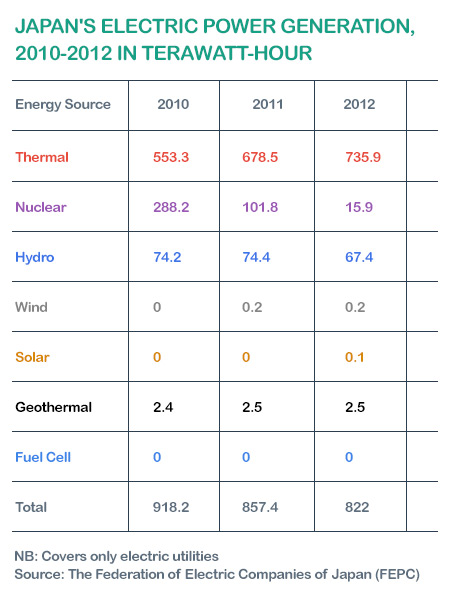
Prior to the 2011 nuclear incident, Japan had one of the most balanced power generation fuel mix among the world’s top electricity consumers. No single fuel source accounted for more than 30 percent of the total energy mix in a country that has 286 gigawatts (GW) of totaled installed electricity generating capacity in 2011, according to Japan Electric Power Information Center (JEPIC).

HIGH LNG IMPORT COSTS HURTS JAPAN

Nuclear power plants accounted for nearly 32 percent of Japan’s electricity power generation in 2010, JEPIC figures indicated, while statistics compiled by the country’s Ministry of Economy, Trade and Industry (METI) revealed that nuclear power’s share of the energy mix has declined to zero since April. 

“To substitute for the shutdown in nuclear power plants, thermal power ratio, which includes LNG and oil, has increased to approximately 90 percent with LNG accounting for about half of our power generation,” Tatsu Nishimura, deputy director of Oil & Gas Division in METI told the Sixth World LNG Series Asia Pacific Summit in Singapore last month.

Japan, which was the world’s largest LNG importer even before the Fukushima incident, further entrenched its pole position as an importer when it purchased more foreign cargoes to compensate for the loss or production due to the shutdown of nuclear power plants. Increased imports lifted Japan’s share of the global LNG market, which stood at 37 percent in 2012, the United States Energy Information Administration (EIA) said in a July report.

“Our LNG import volume has increased from 71 million tons per annum [Mtpa] in 2010 to 88.9 Mtpa in 2013, which is 24 percent increase in imports,” Nishimura added.


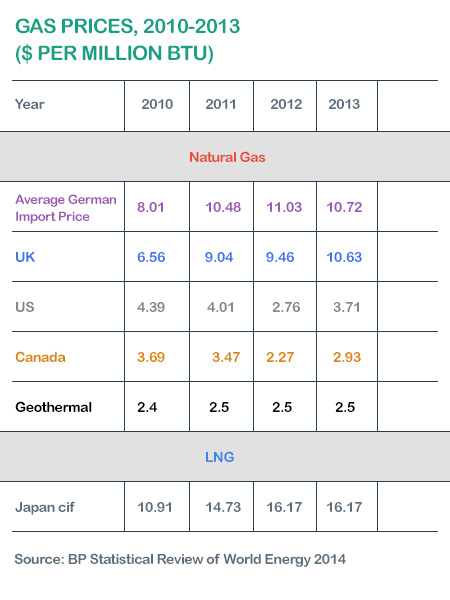
Japanese LNG import cost rose in tandem with the surge in domestic gas demand following the Fukushima disaster, with the 2012 average LNG price reaching a peak of $16.75 million British thermal unit (MMBtu) compared with $10.91 MMBtu in 2010, data from BP Statistical Review of World Energy 2014 showed.

While increased demand has contributed to the surge in Japan’s LNG import cost, higher crude oil prices exacerbated the funds flowing out of the country. With benchmark Brent crude oil futures staying mostly above $100 a barrel from March 2011 to early September this year, the country has to pay more for LNG imports as they are linked to crude oil prices. As a result, Japan recorded its first trade deficit of $31.4 billion (JPY 2.5 trillion) in 2011, the first in 31 years.

“LNG prices in 2012 was 50 percent more than in 2009 … Lowering import cost, especially LNG import cost, has been one of the most urgent task for our government,” METI’s Nishimura emphasized.

SEARCH FOR MITIGATION MEASURES

BP plc estimated that the average LNG import price in Japan fell 3.4 percent to $16.17 MMBtu in 2013, but the country, which had paid more for the fuel from 2009 to 2012, is taking steps to deal with the financial strain felt by the country since 2009.

Effectively, this means reducing Japan’s LNG demand and restarting nuclear power plants despite public opposition following the Fukushima disaster. METI pointed out that the Japanese government had stated in its strategic energy plan in April that nuclear power will provide an important base load source in domestic power generation.

Twenty of Japan’s 48 nuclear power plants are now under review for restart by the Nuclear Regulation Authority (NRA) and two units – Sendai 1 and 2 – in the southern Kyushu Island have received approvals last month to resume operations. 

“This is a large step forward and continue to work for a restart of nuclear power plants,” Nishimura added.

METI believes that the return of nuclear power is likely to reduce Japan’s LNG demand in the near term, complementing other measures such as the switch to coal power generation and greater use of energy-efficient technology. In the medium term, domestic resource development such as methane hydrate is expected to lower the country’s LNG demand.

Already, some Japanese utilities plan to switch to coal as an alternative to nuclear power and LNG. These firms will favor coal if the existing price differential between coal and LNG persists, Yasushi Sakakibara, chief representative of Tokyo Gas Co. Ltd.’s Asia Pacific Regional Office remarked at the industry conference in Singapore. 

ENHANCING LNG SUPPLY SECURITY

Japan intends to tap on potential LNG supply to Asia from the United States, where eight projects – with an overall production capacity of 80 Mtpa – have received export approval from the Department of Energy. Of these, Japanese utilities and trading houses have secured 17 Mtpa of LNG supplies – which METI estimated is equivalent to one-fifth of Japan’s annual LNG imports or around half of Asia’s current consumption of 160 to 170 Mtpa.

Last month, the U.S. Federal Energy Regulatory Commission (FERC) approved construction of Dominion Resources Inc.’s LNG export project in Cove Point, Maryland, making it the fourth to receive the green light after Cheniere Energy’s Sabine Pass LNG development, the Freeport LNG Development project and Sempra Energy’s Cameron LNG liquefaction-export facility.

Japan plans to further enhance the security and stability of its supply sources by capitalizing on the “paradigm shift” in the global LNG industry arising from the potential large U.S. supply to the region. 

One of the measures Japan plans to take is to expand the proportion of LNG imports from Organization of Economic Cooperation and Development (OECD) countries under a three-step approach, which include:

  • Step 1: U.S. Gulf Coast
  • Step 2: Canada, Australia
  • Step 3: Alaska, Mexico and U.S. West Coast

In this regard, Australian LNG exports to Japan are set to double within 5 years. Prime Minister Shinzo Abe visited Canada in 2013 and Mexico in July to discuss potential LNG exports from these countries to Japan. In September, METI and the State of Alaska signed a memorandum for mutual cooperation on Alaska’s LNG project, which they hoped would be operational by early or mid-2020s.

“Other ideas could be to increase imports from countries with geopolitical proximity. Another could be to import LNG from politically stable countries in the area,” Nishimura added.

JAPANESE BUYERS HOLD OUT FOR BETTER LNG DEALS

Recent developments in the global gas industry have induced Japanese utilities and trading companies to become bystanders amid expectations of lower LNG prices. After all, there are potentially 80 Mtpa of LNG supplies available for exports from the U.S., a development that encouraged Asian buyers to hold out for better prices.

In addition, the landmark Russia-China gas agreement signed in May, after nearly two decades of negotiation, could signal a major change in Asia’s LNG industry. Under the agreement, Russia will pipe 1.34 trillion cubic feet (Tcf) or 38 billion cubic meters (Bcm) of gas annually from OAO Gazprom’s East Siberian fields into China from around 2020. 

The Russia-China deal is likely to set a new benchmark price, presumably below the cost that Asian consumers are currently paying for LNG. As a result, “new [LNG] projects with higher cost structure or even higher target price set by seller would face difficulties convincing buyers to be involved,” according to Masahiro Nakamura, general manager of LNG Business, Fuels Department at Chubu Electric Power Co., Inc.

However, many of “Japan’s existing LNG contracts that date from the 1970s and 1980s are expiring, forcing Japan to renegotiate term contracts or locate shorter-term supply. Some industry analysts suggest this is driving Japanese firms’ interest in acquiring equity stakes in foreign liquefaction projects, in an effort to guarantee future supply,” the EIA said.

To deal with a changing global industry landscape, firms like Tokyo Gas have modified its LNG procurement strategy. The firm is targeting a three-pronged approach, Sakakibara explained. 

Firstly, Tokyo Gas will diversify its supply source to include Asia Pacific, Middle East, U.S., Canada, Africa and Russia as well as considering procuring gas through pipelines. Secondly, the firm will negotiate for improved contract terms, comprising the introduction of LNG market price-linked mechanism and an enlargement of liquidity through destination flexibility. Finally, Tokyo Gas is considering participation in the Atlantic Ocean, and not just Asia Pacific, market for inter-regional trade in its quest for global LNG market unitization.

In September, Russia reportedly submitted a plan to Japan to build a natural gas pipeline from Sakhalin, linking its gas fields in the country’s Far East, to Hokkaido in northern Japan, the Nikkei newspaper reported, citing diplomatic sources.

So far, it appears that Japanese LNG buyers are content waiting on the sidelines, confident that abundant gas supplies would be made available to Asian consumers in the near future.

“However, [LNG] suppliers would argue that these new supply projects require vast amounts of capital and in reality will not be launched without firm, long-term commitments by buyers … This potentially creates a stand-off in which, if buyers hold decisions while they wait for prices to fall, projects will be delayed,” Katsumi Kuroda, vice president and general manager of BG Group’s Japan Office commented in his Oct. 9 blog post.

Source
EMGS Scores New 3D EM Gig in Asia

Norway based provider of high-quality marine controlled-source electromagnetic (CSEM) data, Electromagnetic Geoservices ASA (EMGS) has received a letter of intent worth $7.0 million from an undisclosed oil company.

The letter of intent is for 3D EM data acquisition in Thailand and Myanmar.

Giles Denby, President Eastern Hemisphere of EMGS, said: “This is the first time we operate for this customer and also the first time we operate in Thailand and we are of course pleased to demonstrate the value of our EM technology to this company.”

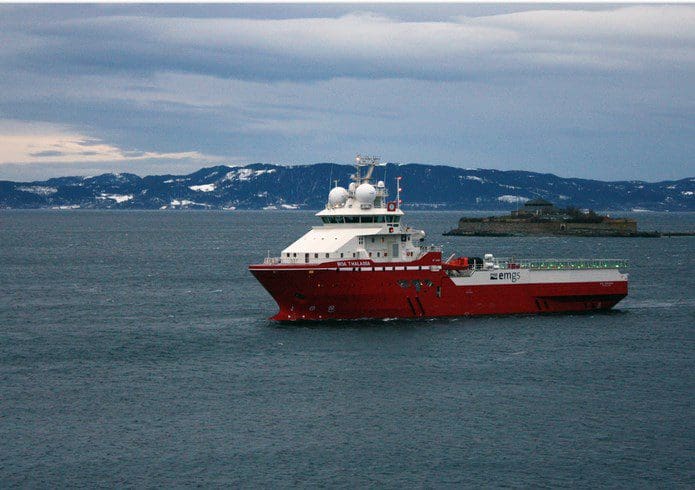
The survey will be done using the vessel BOA Thalassa and is expected to start directly after the completion of an ongoing survey in Malaysia.

BOA Thalassa is a purpose-built 3D EM vessel with the capacity to carry 200 receivers. It is equipped with parallel source systems, including winches, cranes and hydraulic feeds.

Source

Subsea Microphones to Follow OWFs Impact on Marine Life

0

Offshore wind farms will allow renewable energy to be generated with little or no carbon dioxide emissions, but little is known about how they impact the marine species living and migrating along the coast.

A new study led by the University of Maryland Center for Environmental Science will help State and Federal decision-makers better understand where whales, dolphins and porpoises occur along the coast off of Ocean City, and how they use this habitat. This information will assist in determining the best way to develop wind farms in order to minimize disruption or harm to marine life in the area.

“Determining patterns of marine mammal occurrence is a critical first step in order to determine any potential effects that offshore wind energy development might have on the behavior and ecology of resident or migratory species,” said the study’s lead scientist Dr. Helen Bailey.

Beginning this fall, underwater microphones will be affixed on buoys anchored to the ocean floor to continuously record sounds produced by large whales and other marine mammals. This will allow scientists to track their geographic distribution and assess their abundance, and densities along the coast. The study will collect two-years of baseline data that can be used to inform the design of wind farms, how to minimize the impact of construction noise and environmental impacts, and how to facilitate ocean planning in the area.

“A critical element of wind energy planning is developing projects in such a way that we avoid or minimize negative environmental impacts those installations may cause,” said Tom Miller, director of the University of Maryland Center for Environmental Science’s Chesapeake Biological Laboratory.“Making these decisions requires a year-round understanding of the species that frequent the area, particularly for protected species that are sensitive to sound, such as marine mammals.”

The U.S. Department of the Interior’s Bureau of Ocean Energy Management (BOEM) and the State of Maryland have facilitated the identification of areas on the Atlantic Outer Continental Shelf that appear most suitable for wind energy activities while minimizing environmental and human user conflicts, including an area of about 94 square miles approximately 10-27 miles from Ocean City, Maryland.

The acoustic monitoring devices will record both ambient and marine mammal sounds from a broad range of sources and species. Large whales tend to vocalize at low frequencies, while dolphins and porpoises produce high-frequency echolocation clicks, as well as a variety of other sounds. These species all produce sounds that are used for critical ecological functions, such as communication, navigation, and finding food. Ambient sound, consisting of both natural and man-made sources, is an important component of marine habitats. It also determines when other sound signals may be detected by marine species, which can affect their ability to communicate and navigate.

Marine mammals are protected under the Marine Mammal Protection Act, and those that are known to occur in this region include several large whale species listed as endangered under the Endangered Species Act, such as the North Atlantic right whale, fin whale, and humpback whale. There are also minke whales and small cetacean species frequently present, such as bottlenose dolphins, short-beaked common dolphins, and harbor porpoises.

The Maryland Department of Natural Resources secured the funding for this project from the Maryland Energy Administration’s Offshore Wind Development Fund and BOEM.

Source