Home Blog Page 429

UK Opens Onshore Oil, Gas College as Boffins Question Shale Promise

0

The UK’s Department of Energy & Climate Change announced Wednesday that it had given the go-ahead for the first national UK shale colleges, which are designed to train a generation of onshore oil and gas specialists. But academics from the London-based UK Energy Research Centre also said Wednesday that they would caution against the promise of UK shale gas as they released a report, noting that the country’s shale gas industry is still in its infancy and an exploration program is required to assess prospects for commercial development.

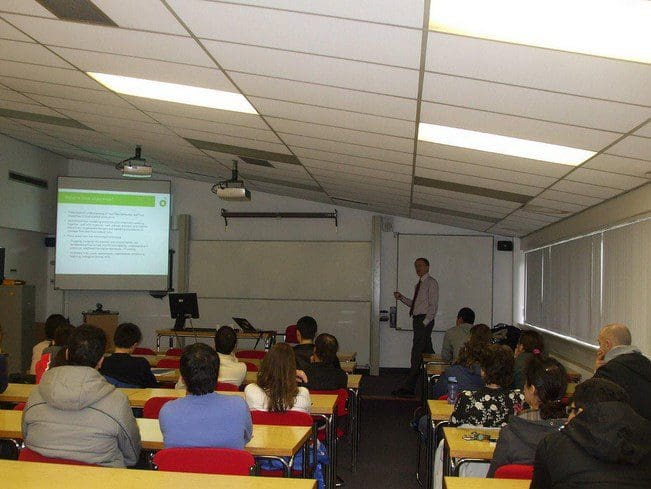
DECC said that the National College for Onshore Oil and Gas will be headquartered in Blackpool, in the northwest of England, and linked to colleges in Chester, Redcar, Glasgow and Portsmouth.

Business, Enterprise and Energy Minister Matthew Hancock commented in a statement released by DECC:

“Shale gas is an enormous opportunity for the UK and one that we simply can’t afford to miss out on. Imagine if we had passed up a similar opportunity to go into the North Sea some 50 years ago. What if we’d let that oil and gas stay in the ground? What if we’d said it was too difficult or too controversial?

“The whole country would be poorer, finance would account for an even greater share of our economy; Aberdeen would be a seaside resort rather than a regional powerhouse. I am not prepared to pass up a once-in-a-generation economic opportunity, with the potential for industry to invest up to GBP 33 billion [$52.5 billion] in the next 15 years or so.”

Meanwhile, Ken Cronin, the CEO of the UK Onshore Operators Group, added:

“We are excited by the prospect of a National College and that it will be headquartered in Blackpool. Onshore oil and gas could provide major economic and energy security benefits to the UK, but it will only do so if there are skilled employees trained for the key roles in all parts of the industry. The National College will be crucial to developing those skills, and we look forward to working with industry on the next phase of its development.”

However, in its report – called “The UK’s Global Gas Challenge” – the UKERC’s researchers stated:

“A proper assessment of UK shale gas production potential requires further research, but at present we would caution against assuming that domestic shale gas can make a contribution to UK gas security until well into the 2020s. The bottom line is that the industry in the UK is still in its infancy and a two-to-three year exploration program is required before we can even begin to answer key questions about flow rates and prospects for commercial development at scale.”

The UKERC report also noted that the possibility of domestic shale gas production in the UK has become a contentious issue in spite of “there being very little prospect of significant commercial production until the 2020s” and that UK policy makers “need to pay much greater attention to international developments, because in a globalizing gas market events as far away as in Japan can have a major impact on how the UK sources its gas imports”.

Source

Subsea Coal Found Under Firth of Forth

0

Cluff Natural Resources has announced an initial JORC resource estimate of 335 million tonnes of coal of which 247 million tonnes is measured and indicated, within its 100% owned Kincardine Licence in the Firth of Forth, Scotland.

This initial resource estimate is a key step towards building the UK’s first deep offshore Underground Coal Gasification (UCG) demonstration project.

CNR’s Chairman and Chief Executive, Algy Cluff, said: “This report supports the Company’s UCG licence selection and forms the basis for future investment in Scotland while proving the performance of the deep UCG process in a UK context. The development of UCG at the Kincardine Licence Area would result in the creation of new jobs, help protect existing industry as well as create significant supply chain benefits. The emerging UCG industry has a significant role to play in unlocking the UK’s most abundant indigenous energy resource which, with the imminent closure of the last deep coal mines, is now otherwise effectively beyond reach.

“The deep offshore UCG projects being undertaken by CNR have significant environmental, safety, and when combined with carbon capture and storage, climate change benefits compared with coal mining and coal-fired power generation. We believe that UCG will help provide a cleaner energy, diversity of supply and energy security for the UK, and we look forward to updating the market on our developments at our Kincardine Licence area with respect to this.”

CNR will work closely with residents, local authorities, regulators and other stakeholders throughout the site selection and planning process to ensure that adequate controls and oversight are in place to give the public confidence in the UCG process. It is expected that the above ground footprint of the demonstrator, and future commercial scale developments, can be located on existing industrial or brownfield sites adjacent to the Firth of Forth with no material adverse impacts on local residents. All actual gasification of coals will take place hundreds of metres beneath the Firth of Forth itself and therefore not anticipated to materially impact the onshore area.

The Kincardine Licence is located in a heavily industrialised region of central Scotland and is adjacent to a major petrochemical complex at Grangemouth, the Longannet coal-fired power station and a number of other energy-intensive industries which could benefit from a new low cost source of fuel gas and petrochemical feedstock.

Stuart Haszeldine, Professor of Carbon Capture and Storage at the University of Edinburgh said:“CNR’s offshore deep UCG is a bold and innovative proposal, which could help to regain energy security and value through low-carbon production of fossil fuel. Domestic coal resources exist which are sufficient to supply many decades of secure energy production and feedstock. But those resources will remain inaccessible until new extraction technology is deployed such as UCG, and unless the produced carbon is captured after use.”

“Fuel and feedstock extracted from coal by underground gasification will be much cleaner than importing coal because most of the engineering occurs deep below ground offshore. Underground gasification will have less impact on the public than other forms of unconventional gas extraction.”

“Carbon capture is essential to link, and balance between, carbon production and carbon storage. Positioning underground gasification in Central Scotland gives easy and unique access to well understood transport pipelines and reliable sites for CO2 storage deep beneath the North Sea.”

Source

DNV-GL Certifies CPNL’s Cable Protection System

0

CPNL Engineering received a DNV-GL status confirmation for its belmouths, monopile entry system and the regular cable protection system.

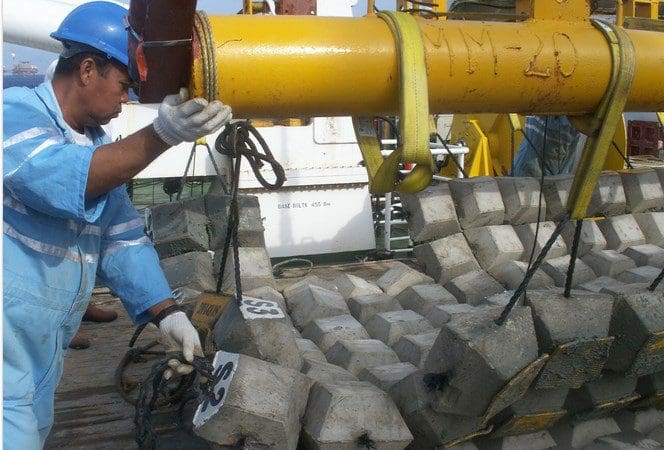
This system used in 295MW Nordsee Ost offshore wind farm and nine other offshore projects has been reviewed by certification entity DNV-GL, based on the recently obtained test results at the University of Exeter and the subsequently performed calculations and simulation related to worst site conditions of 7 offshore wind farms.

CPNL is the first global supplier to receive this certification on its systems, based on independent input.

DNV-GL has confirmed that the design, the calculations on construction parts, cable pull-in loads and stresses on the cable, hydrodynamics and structural integrity analysis are according to their standards.

“CPNL emphasises product integrity and capabilities. The fact that we can reproduce each test and outcome is to show our consistency; a match between product claims and reality. To receive additional confirmation by DNV-GL is an invitation to other suppliers to do the same,” Ton Tuk, director CPNL Engineering recalled. “It is time to stop assuming that a system is good, based on only a reference list.”

“In the recently performed dynamic test, CPNL has  identified 4 test scenarios of which one was extreme (axial load 20-80 kN and headstock movement of +/- 28 degrees), the articulated pipe did protect the provided cable as it should. The cable was still functional after performing all test scenarios, which equalled 155,000 movements,” Marloes Tuk, commercial manager, commented. “Recent rumours about our system can go straight into the bin.”

Source

The Shark Shield: Australian Navy issues amazing new electronic device that ‘annoys’ sharks

A new electronic device that ‘annoys’ away sharks and prevents attacks has been approved for use by the Australian Navy.

The Shark Shield, which weighs 13.5 ounces (380 grams) and is small enough to fit into an adult’s palm, was invented after an Australian Navy diver was attacked last year.

Able seaman Paul de Gelder lost his right hand and right leg in an attack in Sydney Harbour in February 2009.

The Australian Navy has now approved use of the device for its divers following seven months of tests.

The device works by sending out electronic impulses that annoy sharks, effective to a range of eight metres.

Sharks have electro-receptors in their snouts which detect minute electrical impulses emitted by living creatures in the sea.

The Shark Shield emits pulses of greater intensity. The closer a shark moves towards the device the stronger the muscle spasms they experience – enough to stop their attack.

Once the shark leaves the vicinity it suffers no long-term effects.

The device is attached to a six-foot ( two-metre) antenna.

Grant Price, chairman of Adelaide-based Shark Shield, said: ‘The Navy tested our product under a variety of conditions for seven months and has found it meets all criteria to improve the safety of its divers.

‘Australia is known to have some of the most shark-populated waters on the planet, so what is seen to work here must have some international credibility.’

The company that manufactures the device, which is also called Shark Shield, hopes other commercial divers will now use it.

It is also on sale for members of the public to buy.

It costs £460 for divers and the surfboard version costs £360.

Source

Surge in Petroleum Engineering Increases Energy Focus at Univ. of Wyoming

To better promote the oil and gas industry as a place to work, and to better prepare students for an energy career, the University of Wyoming (UW) is ramping up its energy-related offerings, and has recently acquired a new oil and gas rig simulator to train students on, the school said.

UW joins a growing list of colleges and universities that realize the importance of a strong energy sector and are expanding their curriculum in oil and gas-related programs and coursework. At UW, the focus on energy is an outgrowth of the increased collaboration between industry and academia as oil and gas companies work to develop a pipeline of qualified students, particularly those with an educational background in the STEM (science, technology, engineering and math) disciplines

One of the proposed changes in the way energy is presented to students at UW is to separate the school’s Department of Petroleum Engineering from the Department of Chemical Engineering, making each a stand-alone department, Dr. Vladimir Alvarado, associate professor of Chemical and Petroleum Engineering, told Rigzone.

Hess To Form MLP For North Dakota Oil, Gas Transport Assets
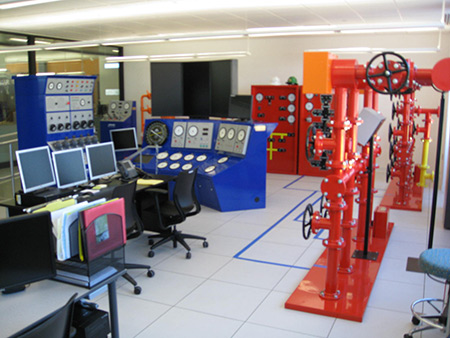
The University of Wyoming’s Drilling Simulator Source: University of Wyoming

The department has been through the same cycles as the industry itself, Alvarado said.

“The Petroleum Engineering Department was once the largest department in the College of Engineering and Applied Science at UW, but it was merged with chemical engineering when enrollment fell due to a slow-down in the industry. Finally, the undergraduate program was shut down,” Alvarado said.

When the energy industry began to be revitalized through the combination of horizontal drilling and hydraulic fracturing, it made sense to offer an undergraduate program in petroleum engineering again. So, it was restarted, and again shared a department with chemical engineering, Alvarado said.

“At the time, we had about 40 students in petroleum engineering. Eight years later, we have about 400 undergrads, and about 40 graduate students in petroleum engineering. Now, petroleum engineering dominates in terms of enrollment. With the growth, it now needs its own identity. Making it a separate department will allow each department to grow its own focus and gain more of an identity.”

Another change that UW made to help prepare the growing number of energy students at the university was to acquire a new DrillSIM-5000 drilling and well control simulator. The simulator, which is in the Drilling Simulator Teaching Lab in the university’s new Energy Innovation Center, is expected to help students become familiar with an oil and gas rig’s mechanical operation. It also helps prepare students to handle well blow-outs and other potentially dangerous situations, according to the WyoFile, a non-profit news service focused on Wyoming.

The drilling simulator was funded in part by a $1 million dollar donation from WPX Energy Inc., and by $1 million in matching funds from taxpayer money.

“We received donations from companies that wanted to contribute, including WPX. They wanted to know what the best way to contribute to the energy department was. We decided the best way would be to enhance the school’s drilling courses. We need to train good engineers. The drilling simulator will allow us to give students the closest experience to a real field situation, so they are not only better engineers, but also become more aware of the health, safety and environmental demands.” Alvarado said.

Still another energy-related change at UW is the organization of something called the Engineering Initiative, which is still being developed, Alvarado said.

“The Engineering Initiative is not finalized yet, but it will have some indicators in several aspects of engineering, such as research, publications, graduate student programs, funding, and other areas. It is organized to create drivers in niche areas, including energy, energy conversion, computational science and engineering, and a few other niche areas. This will lead to research clusters that are intended to be multi-disciplinary, allowing for growth through the synergy of the various disciplines. There will be three clusters in energy, and one in computational science, as well as some other focus areas,” he said.

THE SCHOOL OF ENERGY RESOURCES

UW’s School of Energy Resources (SER) is funded by the state of Wyoming, and by the private sector. The mission of the SER is to “promote development of the human resources and know-how required to solve critical energy challenges faced by society,” the school said. The SER places a strong emphasis on fossil fuels.

The three core objectives of the SER are:

  • To provide nationally competitive undergraduate and graduate instruction in energy-related disciplines, particularly those of importance to develop Wyoming’s energy resources
  • To advance state-of-the-art, Wyoming energy-related science, technology and economics research
  • To support scientific and engineering outreach though dissemination of information to Wyoming’s energy industries, companies, community colleges and governmental agencies

One of the focus areas of the SER is to exploit unconventional reservoirs that contain oil and gas resources that do not flow at economic rates, or that do not economically produce adequate volumes without stimulation or other recovery processes.

CHALLENGES FOR ACADEMIA AND INDUSTRY

While the energy industry has recovered from the recession and is now achieving record or near-record production levels, the academic institutions that educate students about the industry face challenges, Alvarado said, adding that despite the push to do cutting-edge research, the school must remember its core function.

“It’s a real balancing act between conducting research and educating the students. We’re strong in terms of research and funding, but we have to have the time to prepare undergrads to become the next strong generation of engineers. We cannot neglect this mission. Teaching is not just an instructional thing. We need to teach students to become ethical engineers, so they can make decisions that are safe for people and the environment, not just because the law requires it, but also because the students become aware of the need of having what we call sustainable development,” Alvarado said.

It’s not about being philosophical, but rather, pragmatic, Alvarado said.

“For example, the idea that we can produce a zero footprint is unrealistic, but what we are trying to do is to have economic projects while also restoring as much as we can. We have to think in terms of our own communities and our own environment, and making them as safe as possible, while being aware that there are always risks. We need to help students to keep all these considerations in mind. It is difficult to do that, and to also increase the attention of the students, but we need this, so they can become self-learners and realize what they need to do when they join the workforce.”

The rapid growth in the oil and gas industry has created some challenges for the industry, too, Alvarado noted.

“The growth in the industry was hard to predict. It has been explosive. I hope it’s sustainable. Having the high enrollment helps the industry, but there is still a gap in experience, and some of the more experienced workers in the industry are needed to stay on and help train and mentor the new workers,” he said.

UW places a high priority on sustainability and leaving a small footprint, Alvarado said. The way the oil and gas industry is presented to students “is not all driven by a mindless bottom line. When we simulate a blowout, it’s not just teaching about the limits of technology. It’s also about people, the infrastructure and the environment. Doing the minimum that the law requires is not acceptable; we want the students to do more than that when they’re out in the field.”

Source

Scientists Study Subsea Asphalt Off Angola

0

More than two thousand mounds of asphalt harbouring a wealth of deep-water creatures have been discovered up to two kilometres deep, off the coast of Angola.

In a study, scientists at the National Oceanography Centre (NOC) have been examining the images and data captured at the site to build an intriguing picture of the life and geology of this underwater area.

The naturally-occurring asphalt mounds are made up of the same substance that covers our roads. They range in size from single football-sized blobs to small hills several hundred metres across. It is the first time that these seabed asphalt mounds have been found on this side of the Atlantic – until now these features had only been seen in the Gulf of Mexico and off the coast of California. These deep-sea ‘slow tar volcanoes’ are associated with flows of oil from within the sediment and are formed from hydrocarbons migrating around subsurface salt structures.

Researchers have also discovered that the vast array of mounds is home to at least 21 types of deep-water creatures, including large sponges, soft-corals, octopus and fish. Many more common deep-water animals, such as the blobfish and sea cucumbers also live near the mounds. This is a greater number of species than had previously been thought and important information for scientists when predicting biodiversity levels in similar areas of ocean.

The distinct mounds of asphalt were discovered by the oil company BP, who were carrying out exploration for oil reserves off Angola. Their initial surveys of the seafloor of these areas of huge oil reserves revealed some unusual surface features, which were subsequently investigated using underwater robots. In the area of seabed investigated, which was around the size of the Isle of Wight, a total of 2254 mounds were identified by side-scan sonar, covering a total area of 3.7 square kilometres of seafloor, about the area of a small town.

BP technical experts subsequently sent the deep-sea images to scientists in Southampton as part of a long-running collaboration between the oil industry and marine scientists at NOC.

Lead author of the study, Daniel Jones from NOC, said: “This exciting discovery was a great example of collaboration between oil companies and marine scientists. By working together as a team, we used the industrial data and expertise to get a much better understanding of these important systems, which will be of great value both to the scientists, but also to the BP environmental management teams.”

The scientific study was jointly authored by NOC, BP and their subcontractor, Fugro. The data for the paper were provided by BP Exploration (Angola) Limited as the operator of block 31 and associated partners.

It is the first time that asphalt mounds have been studied in such detail and the study’s findings will help with future predictions of seabed patterns, rock types and habitat in similar areas of ocean.

Source

Maersk CEO Says Company Is Ready To Invest In Oil Fields

0

Danish shipping and oil group A.P. Moller-Maersk on Tuesday reported a third-quarter net profit above forecasts and kept its full-year profit guidance.

Chief Executive Nils Smedegaard Andersen made the following comments in a conference call with Danish media:

About Overall Development:

“We are very pleased with the results. It is better than what we have hoped for and cash flow is so strong we feel further confirmed that we are very well prepared for future competition.”

About Falling Oil Prices:

“In general, in times with tougher competition and pressure on competitors’ earnings, opportunities to buy assets may arise. This could for instance be an oil field. We think it is cheaper to buy oil fields than to undertake exploration. That’s why we have reduced oil exploration. In addition other options could come up such as investment opportunities in ports as we are always looking for.”

“Some oil projects are more challenged than others. Challenged means that we need to talk to government partners and work very closely with suppliers. There is for example the deepwater Chissonga project in Angola. It’s just a fact that there are relatively high production costs and projects like this is challenged by oil price of $80.”

“We only want to go on with the projects if we feel comfortable in having a limited risk and if we are likely to get a reasonable return from investment.”

“We have for some time expected the oil price to go down to $80 to $90 dollar per barrel and it is also a level that we see as reasonable – both for the oil industry and the transportation industry.”

About Maersk Line:

“Our strong earnings in Maersk Line means that we are among those who can continue with a high level of investment – even in difficult times. It means that we can continue to modernise our fleet, invest in more fuel-efficient ships, focus on customer service and focus on the long-term.”

Source

Fukushima Radioactivity Turns Up Off West Coast

0

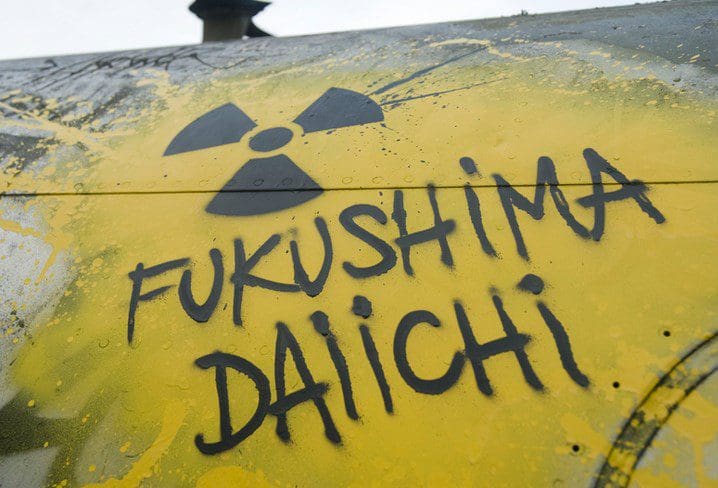
Monitoring efforts along the Pacific Coast of the U.S. and Canada have detected the presence of small amounts of radioactivity from the 2011 Fukushima Dai-ichi Nuclear Power Plant accident 100 miles (150 km) due west of Eureka, California.

Scientists at the Woods Hole Oceanographic Institution (WHOI) found the trace amounts of telltale radioactive compounds as part of their ongoing monitoring of natural and human sources of radioactivity in the ocean.

In the aftermath of the 2011 tsunami off Japan, the Fukushima Dai-ichi Nuclear Power Plant released cesium-134 and other radioactive elements into the ocean at unprecedented levels. Since then, the radioactive plume has traveled west across the Pacific, propelled largely by ocean currents and being diluted along the way. At their highest near the damaged nuclear power plant in 2011, radioactivity levels peaked at more than 10 million times the levels recently detected near North America.

“We detected cesium-134, a contaminant from Fukushima, off the northern California coast. The levels are only detectable by sophisticated equipment able to discern minute quantities of radioactivity,” said Ken Buesseler, a WHOI marine chemist, who is leading the monitoring effort.“Most people don’t realize that there was already cesium in Pacific waters prior to Fukushima, but only the cesium-137 isotope. Cesium-137 undergoes radioactive decay with a 30-year half-life and was introduced to the environment during atmospheric weapons testing in the 1950s and ’60s. Along with cesium-137, we detected cesium-134 – which also does not occur naturally in the environment and has a half-life of just two years. Therefore the only source of this cesium-134 in the Pacific today is from Fukushima.”

The amount of cesium-134 reported in these new offshore data is less than 2 Becquerels per cubic meter (the number of decay events per second per 260 gallons of water). This Fukushima-derived cesium is far below where one might expect any measurable risk to human health or marine life, according to international health agencies. And it is more than 1000 times lower than acceptable limits in drinking water set by US EPA.

Scientists have used models to predict when and how much cesium-134 from Fukushima would appear off shore of Alaska and the coast of Canada. They forecast that detectable amounts will move south along the coast of North America and eventually back towards Hawaii, but models differ greatly on when and how much would be found.

“We don’t know exactly when the Fukushima isotopes will be detectable closer to shore because the mixing of offshore surface waters and coastal waters is hard to predict. Mixing is hindered by coastal currents and near-shore upwelling of colder deep water,” said Buesseler. “We stand to learn more from samples taken this winter when there is generally less upwelling, and exchange between coastal and offshore waters maybe enhanced.”

Because no U.S. federal agency is currently funding monitoring of ocean radioactivity in coastal waters, Buesseler launched a crowd-funded, citizen-science program to engage the public in gathering samples and to provide up-to-date scientific data on the levels of cesium isotopes along the west coast of North America and Hawaii. Since January 2014, when Buesseler launched the program, individuals and groups have collected more than 50 seawater samples and raised funds to have them analyzed. To date, all of the coastal samples tested in Buesseler’s lab have shown no sign of cesium-134 from Fukushima (all are less than their detection limit of 0.2 Becquerel per cubic meter).

The offshore radioactivity reported this week came from water samples collected and sent to Buesseler’s lab for analysis in August by a group of volunteers on the research vessel Point Sur sailing between Dutch Harbor, Alaska, and Eureka, California. These results confirm prior data described at a scientific meeting in Honolulu in Feb. 2014 by John Smith, a scientist at Fisheries and Oceans Canada in Dartmouth, Nova Scotia, who found similar levels on earlier research cruises off shore of Canada. Buesseler and Smith are now working together on a new project, led by Jay Cullen at the University of Victoria, Canada, called InFORM that involves Canadian academic, government and NGO partners to determine and communicate the environmental risks posed by Fukushima for Canada’s Pacific and Arctic coasts and their inhabitants.

Buesseler believes the spread of radioactivity across the Pacific is an evolving situation that demands careful, consistent monitoring of the sort conducted from the Point Sur.

“Crowd-sourced funding continues to be an important way to engage the public and reveal what is going on near the coast. But ocean scientists need to do more work offshore to understand how ocean currents will be transporting cesium on shore. The models predict cesium levels to increase over the next two to three years, but do a poor job describing how much more dilution will take place and where those waters will reach the shore line first,” said Buesseler. “So we need both citizen scientists to keep up the coastal monitoring network, but also research vessels and comprehensive studies offshore like this one, that are too expensive for the average citizen to support,” said Buesseler.

Source

OPEC Delegates Start Whispering About Potential Oil Cut

0

A subtle shift may be taking place within OPEC as it heads into its most important meeting in years, according to delegates with the producer group, as the discussion over whether it needs to cut output to defend oil revenues quietly intensifies.

OPEC’s Secretary General Abudulla al-Badri this week urged markets not to panic over the drop in prices to a 4-year low near $81 a barrel, while Kuwait’s oil minister said OPEC was unlikely to cut output when it meets on Nov. 27 in Vienna.

But privately, more delegates within the Organization of the Petroleum Exporting Countries are starting to talk of the need for the group to take some action, although they warn that reaching an agreement will not be easy.

“It will be a serious meeting, a difficult meeting,” an OPEC delegate said. There might be an agreement to “bring production back to quota” if there is no consensus for a cut in OPEC’s output target, the delegate said.

That could involve reducing output by around 500,000 barrels per day (bpd), the amount OPEC is currently producing above its output target of 30 million bpd, according to its own figures. That could serve as a face-saving compromise between those willing and opposing a formal cut.

International oil prices have fallen by around 30 percent since June, as fast-rising U.S. shale production has contributed to growing supplies. But so far only a Libyan OPEC official, Venezuela and Ecuador have called for OPEC to cut output.

Kuwait and Iran have said a reduction is unlikely, while Saudi Arabia, the most influential member, has yet to comment publicly. Oil traders and analysts are split over whether the group will act to shore up prices. 

While many members of the group such as Ecuador, Iran, and Venezuela will face large budget shortfalls if prices stay at or below current levels, some believe the group is largely powerless in the face of rising U.S. production, which has been increasing at around 1 million bpd for the last three years.

That could leave them to compete amongst themselves for a larger slice of shrinking pie, as individual members try to hold on to market share. Others are banking that prices will recover as demand increases over the winter.

But a second OPEC delegate, asked if his country agreed with the ‘don’t panic’ message, was not convinced some countries would be willing or able to stand firm. Many fear prices would need to fall further to slow U.S. output growth, inflicting more pain on OPEC members’ budgets.

“Most people are saying that, but I am not so sure,” said the delegate, who declined to be identified by name. “Other countries, like Venezuela, have a different opinion.”

SAUDI STILL HOLDS THE KEY, BUT LIBYA EYED

With just over two weeks until the meeting in Vienna, powerful Saudi Arabia is still holding its cards close.

While Saudi delegates have quietly indicated they may be comfortable with a period of lower prices to try slow the rapid rise in U.S. oil output, some believe it is a tactic to put pressure on other OPEC countries to share in any production cut either now or in the future.

Oil minister Ali al-Naimi has not spoken publicly since September, leading some delegates from other countries to say Saudi has added to confusion in the oil market and inside OPEC. 

A third OPEC delegate, who previously did not expect a cut, took a softer line this week, saying: “I’m not sure. It is very difficult,” when asked again if the group might act.

Ed Morse, managing director and head of commodities research at Citi in New York, said it appeared the Saudis wanted to see “a concrete willingness on the part of other producers” to take part in any production cut.

Morse said a recent trip by Naimi to non-member Mexico could be an attempt to rally support for a broad-based cut from both inside and outside the group, as was arranged in the late 1990s.

Another possibility is that the group will be overtaken by events. OPEC member Libya, which saw production recover from around 100,000 bpd in June to near 900,000 bpd in September, is again gripped by political strife.

Its oil output is already slipping, down to around 500,000 bpd, potentially reducing the need for the group to agree a formal or informal output cut for now, though there has been little reaction in prices so far.

Kuwait’s oil minister Ali al-Omair said that in any case the group must present a more united front to the oil market after recent disagreements.

“The important thing is that we agree,” al-Omair said.

Source

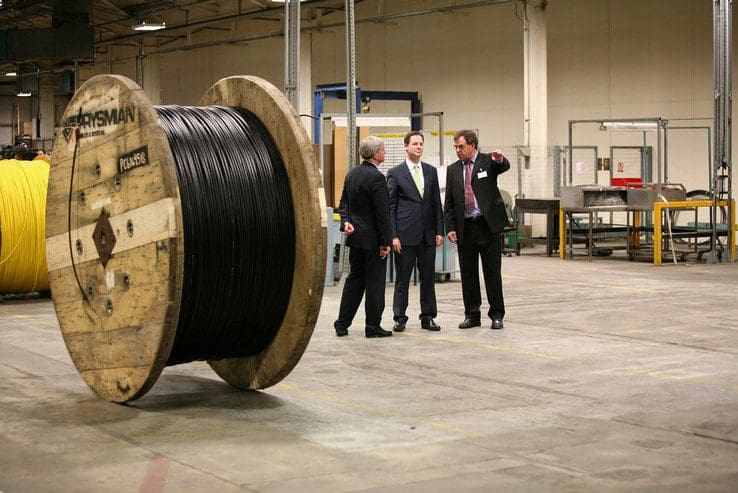
Prysmian Boosts Its Submarine Cable Production

0

Prysmian Group  has announced new investments worth over € 40 million to upgrade production capabilities in its cable plants in Pikkala, Finland and in Arco Felice, Italy. The factories are already the Group’s centres of excellence for high voltage and submarine cable production.

These new investments will enable both plants to be fully equipped to manufacture and test large cross-section 3-core cables up to a voltage of 400 kV AC.

The investments follow the initial € 40 million already invested in Finland in 2012 for the start-up of the submarine cables production unit in Pikkala. In particular, the plant started producing transmission cables for HVDC (High Voltage Direct Current) power systems that allow large amounts of energy to be transmitted over long distances and the expansion of production capacity. In Arco Felice additional € 50 million were invested in the period 2012/2014 to increase capacity for the production of mass impregnated cables (both paper and PPL).

These new investments have been driven by a contract worth approximately up to €730 million, awarded to the company by 50Hertz Offshore GmbH in May 2014, to design, produce and install the power cable systems for the c cluster West of Adlergrund in the German Baltic Sea.

“The realisation of major renewable energy development projects in Northern Europe, involves also the development of suitable new power transmission connections, especially for offshore wind farms”explains Massimo Battaini, Prysmian Group’s Senior Vice President Energy Projects. “Prysmian is world leader in this field and in order to support the demands of this growing industry it is engaged in a major investment programme to strengthen its production capabilities and maintain its technological leadership.”

Source