Home Blog Page 375

Performance of saturation diving emergency hyperbaric evacuation and recovery

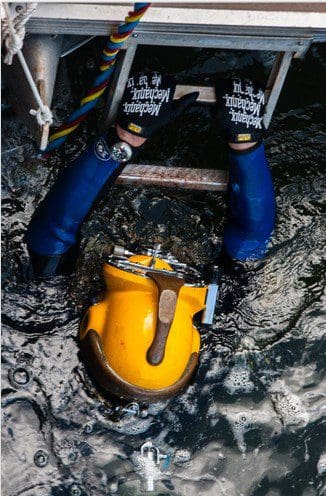
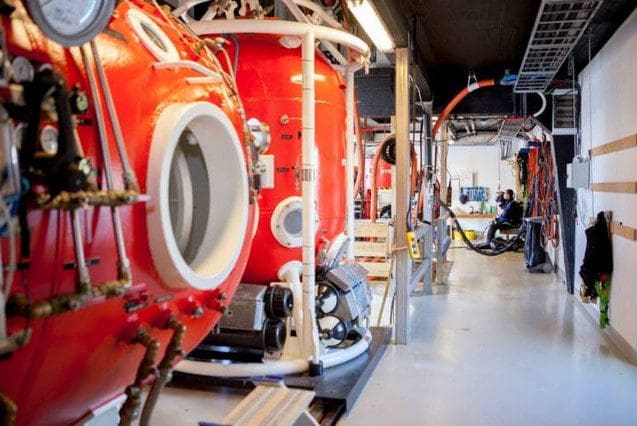
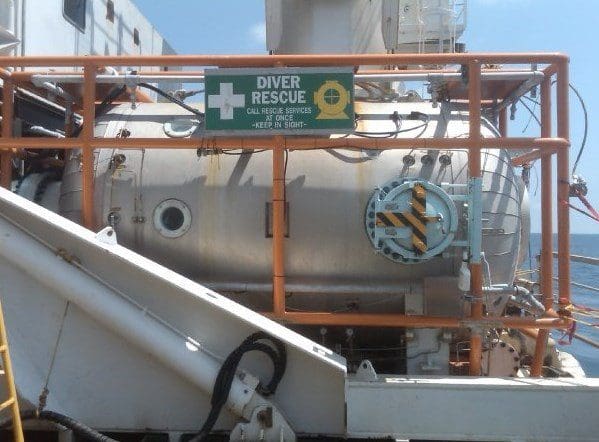
“This recommended practice covers evacuation and recovery of saturation divers on-board a vessel or facility. It also addresses divers’ time in submersible compression chambers (diving bells) and habitats when the need for evacuation is required, including guidance on evacuating divers to places of safety while providing the necessary life support. Saturation diving is a diving technique that reduces divers’ risk of decompression sickness (‘the bends’) when they work at great depth for long periods of time. Hyperbaric evacuation uses pressurized equipment to allow a saturated diver to be evacuated without a significant change in ambient pressure.

An evacuation and recovery operation is considered complete when – under close observation for any symptoms of the bends and application of any necessary therapeutic treatment – divers are safely back at atmospheric pressure.

IOGP’s Diving Operations Subcommittee (DOsc) prepared the report, with input and feedback from diving companies, trade associations, classification societies, regulators and divers themselves.”

You Can download Here


Source

Professional Divers – Branches and Responsibilities

Commercial diving has a broad category depending on the types of work being done, pay range, equipment used and risks involved. People who have interest in dive jobs must understand that a certified commercial diver specializes not only in a single field work but he/she must be familiar with the variety of responsibilities. Here is an overview of each branches of commercial diving including a brief description of usual responsibilities:

Offshore Diving – most common among the branches of commercial diving where divers are deployed anywhere in the vastness of the ocean where there is an oil rig. Fresh certified graduates can find jobs in this particular branch even for entry level positions. Duties include underwater welding, pipeline repair and maintenance. Although the salary is high especially if a diver has sufficient experience, there are some downsides like long work hours (12+ hours) and seasonal contracts.

Onshore Diving – this branch is somewhat similar to normal day jobs where divers get to go home after a day’s work. Some of the responsibilities of onshore divers are vessel hull repairs, maintenance of rivers, lakes and bridges, salvage of vessels to avoid further damage to both the vessel and water. Salary is medium even for experienced divers.

Scientific Diving – for marine life lovers out there, this is a perfect hobby that provides medium range salary and enjoyable work. It focuses on scientific research such as marine biology, geology archaeology and study of marine wildlife habitat.

Military/Police – works for the government and their salary belongs to the medium bracket. Their duties and responsibilities are risky such as defusing underwater mines, search and rescue operations and criminal investigation.

Naval Diving – this is somewhat similar to offshore and onshore diving. Usual assignments are underwater welding, salvage and maintenance of naval ships. Naval divers are military personnel. The pay is low for this type of diving.

HAZMAT Diving – perhaps the most dangerous among the branches of professional diving because it involves diving into hazardous materials such as sewages, chemical tanks and radioactive elements during a plant meltdown. The salary range is high but this requires extensive training due to the risk associated with it.

Underwater Welding Schools!

Worldwide Commercial Diving Schools That Also Teach Underwater Welding

Here is a list of underwater welding schools and diving academies broken up by location. This list has terms that are interchangeable terms such as diving schools, training centers, academies and underwater welding. If you are want to learn underwater welding then what you are really want is a commercial diving school.

Contact the schools that interest you and talk to them. They will be more then happy to give you more information that is accurate and free. Remember they are in the business of dealing with students so the more questions you have the happier they will be to answer them.

United States Commercial Diver Schools, Academies, Colleges and Training Centers

CDA Technical Institute – Jacksonville Florida
91 Trout River Drive
Jacksonville, Fl. 32208
Phone: (888) 974-2232
 
Divers Academy International – Erial New Jersey
Lakeside Business Park
1500 Liberty Place
Erial, N.J. 08081-1139
Phone: 1-800-238-DIVE (3483)
 
Divers Institute of Underwater Welding – Seattle Washington
P.O. Box 70667
4315 11th Avenue NW
Seattle, WA 98107-0667
Phone: (800) 634-8377
 
Hydroweld USA Underwater Welding Classes – Weston Florida
Hydroweld only teaches underwater welding classes. You must have your commercial diver training certificate before signing up. This is a school for experienced commercial divers.114 Dockside Circle
Weston, Florida 33327
Phone: (985) 380-2436
 
International Diving Institute – Charleston South Carolina
1400 Pierside St., Bldg 190,Suite C
Charleston, S.C. 29405
Phone: (843) 740-1124
 
Institute of Welding, Engineering and Diving Technology – Bibra Lake Washington33 Howson Way
Charleston, S.C. 29405
Phone: (300) 958-007
 
Louisiana Technical College Commercial Diving Acedemy
1900 Youngs Road
Morgan City, Louisiana 70380
Phone: (843) 740-1124
 
National University Polytechnic Institute Commercial Diving Classes – San Diego California
10840 Rockley Road
Houston, Texas 77099
Phone: (800) 432-DIVE (3483)
 
Santa Barbara California City College Marine Technology Commercial Diver Training
721 Cliff Drive
Santa Barbara, Ca. 93109
Phone: (805) 965-0581
 
The Ocean Corporation – Houston Texas10840 Rockley Road
Houston, Texas 77099
Phone: (800) 321-0298

Underwater Welding Schools and Commercial Divers Training in Canada!

Holland College, Georgetown Centre Commercial Diving and Underwater Welding School
117 Ken Street
Georgetown Prince Edward Island, Canada COA 1LOT
Phone: (800) 446-5265
 
Seneca College King Campus of Underwater Welding Skills
13990 Dufferin St. King City
Ontario L7B 1B3
Phone: (416) 491-505
 
DiveSafe International -Campbell River, British Colmbia
PO Box 342 1003A Island Highway
Canada V9W 5B6
Phone: (250) 287-3837 or (888)-325-3483
 

Commercial Diving and Underwater Welding Schools in the United Kingdom/England (U.K.)

Hydroweld U.K. Underwater Welding Classes – West Midlands UK
Hydroweld only teaches underwater welding classes. You must have your commercial diver training certificate before signing up. This is a school for expereanced commercial divers.46 Bedford Drive, Sutton Coldfield,
West Midlands B75 6AX, U.K.
Phone: + 44 (0) 121 378 1230
 
Interdive – Commercial Diving Courses, Underwater Welding Training and NDT Testing Certifications – Devon, Great Britain
Stoke Damerel Business Centre
3A Church Street,
Stoke Plymouth,
Devon PL3 4DT,
Great Britain
Phone: + 44 (0)1752 558080
 
Specialty Welds – U.K. – Underwater Welding Training and Supplies
Specialty welds offers underwater welding classes through different schools around the world. They are a underwater welding supply manufacture that also trains people how to use their products.Unit 1
Rawfolds Way
Cleckheaton
West Yorkshire
BD19 5LJ
+44 (0) 1274 879867
 

Scottland Commercial Diving and Underwater Welder Courses

Professional Diving Academy – Scotland
Unit 19 Sandbank Business Park
Sandbank, Dunoon
Argyll
Scotland
PA23 8PB
+44 (0)1369 701 701
 
The Underwater Center Training Divers & ROV Pilots Worldwide – Fort William, Scotland Marine Walk
Carmichael Way
Fort William
Scotland
PH33 6FF
+44(0) 1397 703 786
 

Belgium Underwater Welding and NDT Testing Courses

Dive-Wise Underwater Welder Training and NDT Testing Classes – Belgium
Napelsstraat 51,
2000 Antwerp,
Belgium.
+32.488.40.87.01
 

Nigera Commercial Diver Training

PDS Commercial Dive Center – Nigeria
Broka Shopping Complex,
87 Udu, Road Ovwian Warri,
Delta State,
Nigeria
+234-802-309-1806
 
 
Source

Also, Norway Commercial Diving School

Norwegian School of Commercial Diving
Broka Shopping Complex,
Fagerstrand Brygge,
PB 23
1454 Fagerstrand
(+47) 66 96 58 00
 
*Above photo credit: NYD 
 

Argentina: Best Candidate for Next Shale Boom?

0

A conversation about Argentine shale prospects is rarely loud enough to be heard. Instead, the oil and gas industry discusses at the length the outlook for U.S. shale.

Of course, the key question about shale today is: how it will fare given the slumping price of oil? The answer is of critical importance to energy markets, company fundamentals and the global economy.

Yet one lesson is already self-evident: shale oil, like shale gas before it, has transformed the industry landscape and its core dynamics. Given this fact, it is important to look beyond discussions of the present – of how U.S. shale can create a new oil price orthodoxy and if OPEC budgets can endure at $50 per barrel – and take a moment to consider the candidates for a future shale boom.

THE CANDIDATES

Shale oil and gas development outside the United States and Canada remains in its infancy. Progress in Europe is painfully slow, Russia’s progress has stalled and although China certainly deserves consideration and will experience growth, we believe it is a less-exciting prospect than Argentina.

EUROPE AND RUSSIA: STILL AT SQUARE ONE

A few years ago, European shale gas prospects had policy wonks running from one roundtable to the next, fervently spouting potential revenue numbers. On the horizon, an energy future less dependent on Russia appeared within grasp. Energy security – the buzz phrase of those dealing in the interaction of geopolitics and energy – was there for the taking.

What followed was that geology and economics conspired against policymakers. In Poland, major after major has withdrawn from the country. Meanwhile in Ukraine, Chevron will pull out of its $10 billion shale commitment and Shell’s activity looks at risk. The UK remains in the early exploration phase, with the economic argument overcoming grassroots opposition; the UK government supports exploration activity in light of justifiable concerns about North Sea production declines.

Elsewhere in Europe, however, opposition to the technique of hydraulic fracturing persists despite the potential benefits. The lack of success in Poland has not helped the “potential benefits” argument.

Another focal point, the giant Bazhenov shale formation in Russia, will likely not be developed whilst two factors endure:

  • Western sanctions preventing the supply of goods, technologies and/or associated services for the hydraulic fracturing of shale formations, and;
  • A $50 to $60 per barrel oil price.

CHINA: BREAKTHROUGH MADE, CHALLENGES REMAIN

Chinese shale is a better prospect. Hugely ambitious targets have been set by a Chinese government eager to grow the share of primary energy consumption supplied by natural gas from approximately five percent to 10 percent by 2020.  In 2014, Sinopec made the most notable breakthrough when its Fuling field entered commercial production. In the face of geological challenges, however, the target for shale gas production by 2020 was recently cut by a staggering 50 percent, to 30 billion cubic meters (1.1 trillion cubic feet) per year.

Water stress, land access difficulty and challenging geology – requiring significant adaptation of U.S. technology – mean that there are many hurdles for the Chinese to overcome. In Argentina, there is fresh water abundance, good access and exceptional geology from a commercial development point-of-view.

Last of all, development activity in China is dominated by Chinese NOCs (national oil companies). This means that their technical leadership has less experience developing unconventional resources than the international oil companies in Argentina.

However, rapid infrastructure development is a Chinese speciality. Therefore, challenges will continue to be overcome by well-supported NOCs, driven by the state’s commitment to increasing domestic natural gas production.  This will likely mean higher levels of capital spending on exploration and production in China than Argentina, but it does not make the former the better shale development prospect.

ARGENTINA: ENCOURAGING CIRCUMSTANCES, FAVORABLE POLITICS

The U.S. Energy Information Administration has estimated that Argentinean shale formations possess approximately 27 billion barrels of oil and 802 trillion cubic feet of gas (technically recoverable). The geology has been assessed as excellent, possessing a thickness ideal for the commercial production of hydrocarbons. A combination of existing infrastructure and political interest make these shale prospects the most promising outside of the United States and Canada.

As for the oil price decline, Argentina appears to have a degree of insulation, with insiders saying that the country’s budding shale industry remains viable with West Texas Intermediate at $60 per barrel. Argentina has pipelines that shale developers can use, around 24,500 miles of them (the biggest network in South America). As conventional gas production has declined, such pipelines are underutilized, primed for a hydrocarbon rush from shale. They also provide export market access. In short, existing pipelines lower the capex requirement for shale developers and provide readymade market access.

Favorable circumstances do not end there. The Neuquén province, where the Vaca Muerta shale is located, has been Argentina’s most prolific for conventional natural gas output, producing half of all domestic natural gas in 2011. Associated infrastructure supportive of the development and transportation of hydrocarbons is thus available. Second, water stress is low – hydraulic fracturing uses millions of gallons in every well. This is in stark contrast to China where heavy usage and pollution are affecting fresh water availability. Third, the above-ground for the Vaca Muerta is flat, unlike China’s Sichuan basin. This lowers the cost and risk associated with logistics, site access and further infrastructure construction.

Such factors are not just important today, but are vital if drilling efficiencies – in terms of completion days – are to match U.S. standards in the long-term. The likelihood of making such long-term gains helps support the logic for tight margin E&P activity in today’s $50 to $60 per barrel WTI environment.

Hydraulic fracturing courts political posturing and Argentina is no different. The complex Polish case aside, politicians have tended to adopt dichotomous positions, either banning or actively encouraging E&P activity. As the technique can be used to unlock theoretically vast hydrocarbon resources from source rock, potential revenue numbers inevitably make headlines. Environmental concerns receive similar coverage. The position of the Argentine government has been one of active support for and encouragement of exploration and development activity.

The Repsol asset expropriation in 2012, for instance, sent a message to IOCs: we wish you to invest heavily and expediently in our hydrocarbon potential. Although often portrayed as a deterrent to foreign companies, the expropriation can also be interpreted as underlining the importance of shale development to the Argentine government. 

Energy imports are a major strain on the Argentine economy, costing around $9 billion last year. Inflation was 24 percent (the government figure) and a technical default occurred on some government debt in July. In November 2013, U.S. Dollar reserves were reported as $31.7 billion. Against this backdrop, oil and gas production from shale is a means of accessing greater economic security. It is this opportunity that the Argentine government has sought to grasp through attractive regulatory changes.

In July 2013, Chevron committed to a $1.24-billion drilling program in the Vaca Muerta with YPF, the national oil company. A crucial part of the deal was a promotion regime (see Decree 929/13) that allows for the export of 20 percent of hydrocarbons produced from unconventional formations exempt from export taxes. The Argentine Congress built on these changes in October 2014 by amending the Federal Hydrocarbons Law to create a clearer and more attractive framework for companies looking to invest in shale E&P activity.  Noteworthy aspects of the amendment include:

  • The creation of a special type of concession explicitly for “unconventional hydrocarbon exploitation” with improved permitting terms. The creation of this category means unconventional formations can be provided with special treatment, encouraging their early stage development and acknowledging the different E&P challenges from conventional.
  • The pullback of provincial royalty-setting power, enabling greater federal control and royalty rate consistency.
  • The elimination of state-owned entity block reservation privileges.

Despite the Repsol expropriation, a number of IOCs are active in the country, drawn in by the favourable geology and the government’s supportive message. Leading the pack is Chevron, with a $1.6-billion commitment in 2014. Others with acreage include ExxonMobil, Petronas, Shell, Total S.A. and innovative U.S. shale developer EOG Resources. In September 2014, there were 100 rigs operating in the country, double the number of 2009. 

Challenges remain, such as the need to import equipment and goods (i.e. proppant and chemicals for hydraulic fracturing). The 2015 presidential election represents another uncertainty, yet is but a minor risk to policy continuity given the economic circumstance improvements that can be made via shale exploitation. 

NEVER RULE OUT CHINA

One caveat is required to the conclusion that Argentina is the next big shale development opportunity; namely that China has a track record of achieving rapid development goals and that overcoming high barriers to development is certainly feasible. However, while it will take the willpower of state-backed companies to create a shale boom in China, Argentina has the circumstances to achieve this without such a luxury. Whilst the Saudi’s look for the breaking point of U.S. shale, we would be wise to keep tabs on Argentine progress.


Source

Response Operations Concluded After Tug Sinks Off Oahu

0

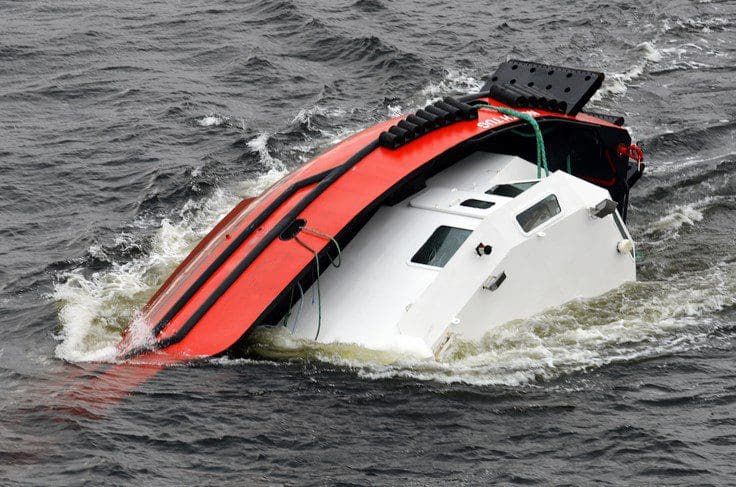
The Coast Guard, Department of Health and responsible party Unified Command transitioned from response operations to an ongoing monitoring and response readiness posture, after the Nalani, a 95-foot towing vessel sank off Barbers Point Harbor, Oahu.

The ship with 75,000 gallons of diesel fuel sank on Thursday in 2,200 feet of water.

Shoreline and near-shore assessments indicate no sheening or smell of diesel, Coast Guard reports.

At the location of the sinking there was a very light sheen coming to the surface and also drifting south that is not recoverable and was dispersing quickly. Resources are ready to respond and attempt to recover product from the water in the event a recoverable amount appears.

No oiled wildlife has been reported.


Source

Top Tips: Applying for Your First Graduate Job in European Oil, Gas

0

Times are tough for young people about to graduate from universities across the European Union. In 2014, the European Commission released figures that showed there were almost 5.4 million EU citizens under 25 years old who were unemployed – equating to some 22.8 percent of all the region’s young adults.

Countries in southern Europe, such as Greece and Spain, appear to be suffering the worst with more than one-in-two young adults currently unemployed.

During the past few years, one industry that has sought out gifted young people with technical skills was the oil and gas sector as it aimed to stem the staff shortages it began to experience amid the Great Crew Change. However, the recent sharp decline in the oil price means that finding a job in oil and gas is going to be a whole lot tougher for young graduates with no prior experience of the industry.

Two companies that have developed and maintained strong graduate recruitment programs in recent years are supermajor BP plc and Austria’s biggest oil business OMV Group. Here, Rigzone talks to the two firms about how university students can best prepare their applications in order to get noticed by the industry’s graduate recruiters.

Both BP and OMV usually require that students applying for entry to their graduate recruitment programs fill out online application forms that can be found on the companies’ respective websites. These application forms involve a set of questions about the candidate’s academic background, extra-curricular activities, work experience and the candidate’s motivations for wanting to work at the company in question.

“We open for applications around mid-September, and the closing dates for applications are: Nov. 24 for Trading; Dec. 15 for all other graduate roles; and Jan. 26 for Interns. However, we may close these applications earlier if we have a strong candidate pipeline, so we would encourage all candidates to apply early,” Suzy Style, BP’s Head of UK Graduate Recruitment, told Rigzone.

KEEP YOUR DETAILS BRIEF AND TO THE POINT

A spokesman for OMV said that although the company usually prefers students to use the application form on its Web site, it will accept CVs (résumés) handed to its recruiters by students at campus recruiting fairs or at other recruiting events.

OMV said that CVs should be no more than two sides of paper.

“Try to keep it informative but quite lean. We are realistic that a graduate isn’t going to have a wealth of experience, so be open and honest about your achievments, qualifications and interests. It should ideally detail, from the top down, your qualifications, synopsis and profile of you as a person (no more than one paragraph), professional experience (internships, part time jobs) and then a little about yourself personally,” OMV’s spokesman said.

Although BP does not accept CVs itself, Style also recommends that students sending them to other oil and gas recruiters should keep them brief: “Two or three pages, ideally.”

BP Launches 2015 Student Insight Initiatives

BP announced in early January that applications are open to undergraduates for a range of student insight initiatives that will be held at BP sites across the UK, from Aberdeen to London’s Canary Wharf. These activities are aimed at providing students with experience of working at BP and in the working world in general. The activities include:

Discovery Days: Discovery Days will provide 125 undergraduates in their first two years at university with the chance to understand BP’s business and a better understanding of how their degree subject could be used in a working environment. The Discovery Days cover a multitude of careers from exploration for oil and gas through to trading energy. Undergraduates will meet recent graduates, hear about the challenges facing the business, tour BP’s operations and take part in an interview/application skills workshop.

Shadow an Intern: In August, BP will run “shadow an intern” days in which a first or second-year student will spend a full day with a current intern in order to better understand what an internship entails, gain insight to roles at BP and meet and ask questions to current interns, graduates and BP employees. Up to 80 students will have the opportunity to take part in these days during 2015.

Widening Participation Programme: The Widening Participation Programme is a week-long event comprising skills workshops (such as CV writing and interview technique), shadowing current BP employees and a visit to a BP operating site. The program, open to all undergraduate STEM (science, technology, engineering and mathematics) students, allows students to find out how their STEM knowledge can apply in a company such as BP. The program takes place in mid-June at BP’s Greater London offices.

DON’T LET LACK OF EXPERIENCE PUT YOU OFF

Students with no direct work experience in oil and gas are very welcome to apply for a graduate position with the BP, according to Style.

“Just because you don’t have experience in the oil and gas sector, it shouldn’t put you off applying. Whilst we recruit a lot of our graduates from our summer internship program, there is a huge variety of roles on offer at BP, not just within engineering. We need graduates to work in HR, legal, accounting, trading, and numerous other disciplines besides,” she said.

A keenness to work at BP and evidence that you have been industrious at university will help.

“As long as you have done your research on the company, are able to demonstrate an interest in the oil and gas industry and a willingness to learn more, and have highlighted any extracurricular activities you have been involved in (clubs, societies, being in a sports team, or playing an instrument, for example) and have some level of work experience, your application will be considered. This work experience can be anything from working in a student union bar to voluntary work.”

OMV aso told Rigzone that it will consider students who do not have qualifications directly applicable to oil and gas.

“Of course in certain disciplines, if we want a junior geologist we are not going to hire a business graduate without any expertise in this field, but for broader areas such as HR, sales and marketing, project management, etc., we would look at a broad range of qualifications,” OMV’s spokesman said.

USE UNIVERSITY ACTIVITIES TO DEMONSTRATE YOUR QUALITIES

Student life affords candidates with plenty of opportunities to demonstrate that they are not just good academically, but that they have other attributes as well.

“At BP, we look for graduates who can demonstrate a host of qualities including initiative, ambition, communication skills, good team-work, as well as a range of technical skills and qualifications,” Style said.

“For the ‘softer’ skills, there are many things besides work experience and academic achievement that help communicate these to a potential employer. For example, being president of a society or captain of a sports team whilst at university shows your ability to lead a team.

“If you have helped to organize an event, undertaken any voluntary or charity work, or even had a summer job, then tell us about it. A lot of applicants will have outstanding academic credentials, and while we appreciate your work experience might be limited at this stage, your hobbies and achievements are an important way of showing us you have the skills and qualities we are looking for.

OMV added that experience of traveling and working overseas is “always interesting to see” and that it illustrates to the company that the candidate “is open minded and culturally aware” – values that it said it seeks in its employees as it is a large, multinational company.

THE ABILITY TO WORK IN A TEAM

Students should be wary of appearing too aspirational at the application stage. BP and OMV want ambitious candidates but first and foremost they need candidates who can fit into their respective work cultures.

“It is important to have ambition and the desire to succeed in your role, but just as important is your willingness and ability to work well as part of a team, as well as having the right skills for your role,” Style said.

“Obviously, work experience or an internship at BP or a similar organization shows a demonstrated aspiration to work in oil and gas, but the main thing to remember is to always be able to provide examples which illustrate the skills you list on your application.”

OMV said: “Some applicants tend to go a little over the top which can come across too strong. Too keen. The best way to present yourself is to be honest.

“This is an opportunity to tell us about you. There is nobody else like you, so explain why you are so unique, so interesting. Being honest does this in a professional manner. We don’t expect people at such stages in their career to be completely polished or the perfect candidate, but they can explain to us what makes them tick, what they want to achieve and their motivations.”


Source
Construction Starts on Italy – Montenegro Subsea Cable

0

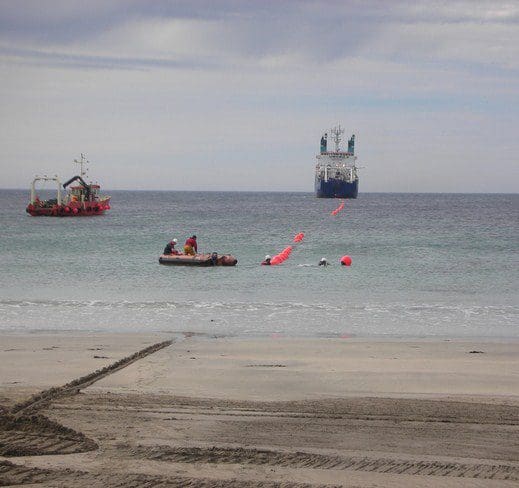
The construction of a submarine cable between Italy and Montenegro has began on Italian side of the Adriatic Sea, Italian Terna S.p.A informed.

In 2010, governments of Italy and Montenegro signed approximately EUR 800 million worth deal to construct the cable, local media report.

The submarine cable will connect Pescara in Italy and Tivat in Montenegro.

The cable will run 390km under the Adriatic Sea and additional 25km will run onshore.

The aim of the cable is to enable Montenegro to export energy from renewable sources to Italy.

The project is expected to be completed by 2017.


Source

Wood Mac: US Onshore Well Count to Fall by 26% in 2015

0

The U.S. onshore well count will decline by 26 percent, from more than 37,000 in 2014 to an estimated 27,000 in 2015, as the decline in oil prices prompted many operators to cut their 2015 spending plans, according to a recent estimate by Wood Mackenzie.

North American drilling and completion expenditures exceeded $140 billion in 2014, but Wood Mackenzie expects operators to commit less than $90 billion to upstream development over the next 12 months.

“Such sizeable cuts will have serious implications across the oilfield services sector,” said Wood Mackenzie in a statement.

Using its North America Supply Chain Analysis Tool, Wood Mackenzie forecasts that rig day rates will decline by 30 percent, while the rig count will drop from an annual average of nearly 1,800 in 2014 to under 1,300 in 2015. This decline will curtail demand in other services sector markets, including tubulars, drilling services, frac proppant and pressure pumping.

Well activity will decline more quickly in oil plays such as the Niobrara and Bakken versus plays such as the Eagle Ford and Marcellus, Scott Mitchell, supply chain analyst with Wood Mackenzie, told Rigzone. While the Marcellus gas play is still more favorable in terms of economics versus the Haynesville, economics in the Marcellus are a struggle too.

As the drilling rig market goes slack, Mitchell sees the potential for older, less efficient rigs to be retired or moved as companies favor using bigger, more efficient rigs. Wood Mackenzie views cost pressures as higher on the drilling side versus completions side. Even if drilling slows, support could continue for pressure pumping market as companies hydraulic refracture existing wells versus new wells. On the completion end, Wood Mackenzie sees a potential cost reduction of 15 percent.


Source

Divers Recover More Bodies from AirAsia Wreckage

0

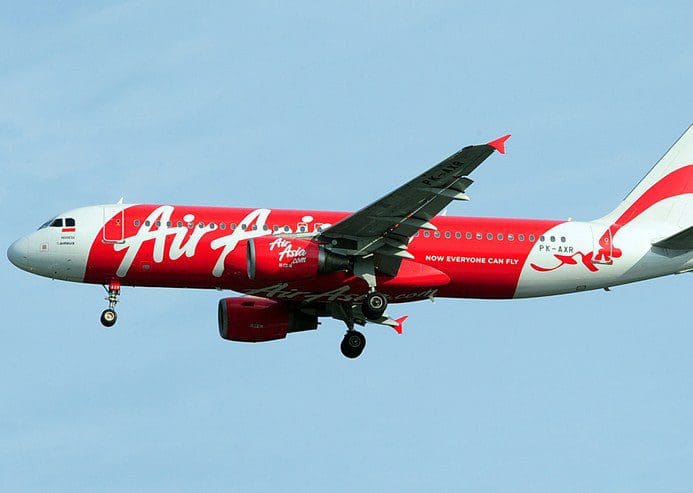
The search and rescue divers have recovered six additional passengers located inside of the fuselage wreckage on the Java Sea floor.

The discovery of the fuselage was in 3000 meters from the point of discovery of the tail, or about 800 meters from the discovery of VDR (Voice Data Recorder).

The SAR operation of QZ 8501 passengers continued this morning, around the primary search area with slightly better weather and sea conditions.

Indonesia’s search and rescue agency has recovered a total of 65 remains of which 50 remains have been identified by DVI POLRI, 13 remains are still being identified and 2 remains have yet to arrive at Bhayangkara Hospital, Surabaya.

The Indonesian SAR vessels and divers on Friday managed to reach the fuselage of an AirAsia plane that crashed on December 28, but bad weather continued to hamper further efforts to check if there were bodies inside.

Nothing more important that finding all our guests and crew to their loved ones. I really really hope weather holds out. Thank you to all involved, said AirAsia boss Tony Fernandes

The plane’s cockpit voice recorder and flight data recorder were recovered last week, and sent to Jakarta for the further analysis.


Source

Liebherr Crane on Its Way to South Korea

0

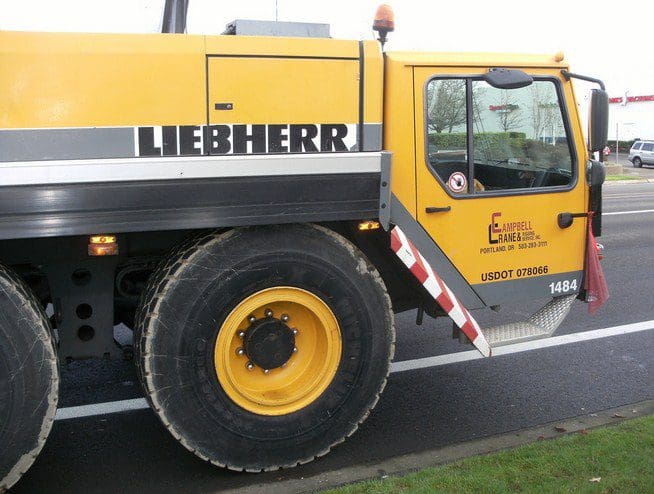
Liebherr has informed that after a single lift of the RL-K 7500 subsea crane last year in September in Rostock,  the crane was now loaded and shipped to Daewoo Shipbuilding & Marine Engineering (DSME). 

Both cranes, the RL-K 7500, together with another model of Liebherr’s range of knuckle boom cranes, the RL-K 4200, are currenty on the way to South Korea, where DSME intends to equip several of its ships with a set of Liebherr cranes consisting of one RL-K 7500 and three RL-K 4200.

Liebherr said it will also deliver another two cranes (RL-K 4200) in their next shipment, during the first quarter of 2015.

In Mid-December a transport ship arrived at the pier of the Liebherr factory in Rostock after which both cranes were loaded and started their long jurney to DSME.

According to the company, with the RL-K 7500 Liebherr offers an innovative crane concept for subsea applications. The RL-K 7500 can be rated both as general purpose offshore crane and as heavy lift crane, being able to hoist loads weighing up to 300 t. It can thus be installed on board drill vessels and heavy lift vessels. The knuckle boom is designed for use in hazardous areas. The crane can additionally be equipped with an Arctic temperature package allowing for operation at temperatures down to -40 degrees Celsius.

The first Liebherr knuckle-boom-crane type “RL-K 7500 Subsea” was successfully tested on Liebherr Rostock`s testbed on the 23rd of January 2013.


Source