Home Blog Page 333

Russian Energy Minister to Discuss Cooperation with Exxon CEO

0

Russian Energy Minister Alexander Novak plans to discuss energy cooperation with the CEO of U.S. oil and gas major ExxonMobil, Rex Tillerson, at their meeting later on Wednesday. Novak also told reporters both planned to discuss the Exxon-led Sakhalin-1 project, which produces over 100,000 barrels of oil per day.

The Kommersant daily reported on Wednesday that Exxon had asked the Russian government to reimburse taxes worth “several billion roubles” it says it overpaid on the Sakhalin-1 project in the far east of Russia.

Kommersant quoted a source as saying that ExxonMobil had threatened to lodge a claim with the Stockholm arbitration court unless Russia cut its taxes for the project in line with a lower profit tax which applies across the country.

Exxon in Moscow declined to comment on Tillerson’s visit and on the Kommersant report. Novak declined to say who Tillerson would also meet during his first official visit to Russia since Exxon halted cooperation with Russia’s Rosneft in the Arctic last year because of Western sanctions over Ukraine.

Kommersant said that Tillerson would meet Finance Minister Anton Siluanov, Deputy Prime Minister Arkady Dvorkovich and Rosneft’s Chief Executive Officer Igor Sechin. 


Source

Oil Flows from Knarr Field Off Norway

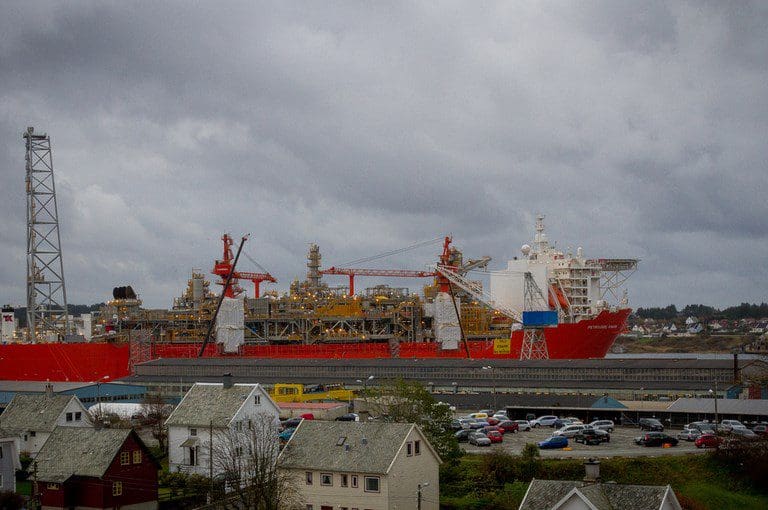
BG Group announced that the Petrojarl Knarr floating production, storage and offloading (FPSO) vessel had started production from the Knarr oil field in the North Sea, offshore Norway.   

The FPSO has been leased from Teekay Corporation and is moored approximately 120 kilometres off the Norwegian coast. It has a production capacity of 63 000 barrels of oil equivalent per day and a storage capacity of 800 000 barrels, BG wrote.

The Knarr field, discovered in 2008, has estimated gross recoverable reserves of around 80 million barrels of oil equivalent with a production life of at least ten years. In 2011 the Knarr field was merged with the Knarr West field into an integrated development. New exploration drilling in the licence area is ongoing, in order to help extend the production life further.

BG Group is the operator of the field with a 45% working interest. Partners include Idemitsu Petroleum Norge (25%), Wintershall Norge (20%) and DEA Norge AS (10%).

Report: Removing US Oil Ban Would Create Jobs Beyond Drilling

Lifting a 40-year-old U.S. ban on crude exports would create a wide range of jobs in the oil drilling supply chain and broader economy even in states that produce little or no oil, according to a report released on Tuesday. Some 394,000 to 859,000 U.S. jobs could be created annually from 2016 to 2030 by lifting the ban, according to the IHS report, titled: “Unleashing the Supply Chain: Assessing the Economic Impact of a U.S. crude oil free trade policy.”

Only 10 percent of the jobs would be created in actual oil production, while 30 percent would come from the supply chain, and 60 percent would come from the broader economy, the report said. The supply chain jobs would be created in industries that support drilling, such as oil field trucks, construction, information technology and rail. Many of the jobs would be created in Florida, Washington, New York, Massachusetts, and other states that are not known as oil producers.

“The jobs story extends across the supply chain, right across the United States,” said Daniel Yergin, a vice chairman at IHS and an oil historian. “It’s not just an oil patch story, it’s a U.S. story.” Record spare U.S. crude oil supplies caused by the drilling boom of the last five years have put pressure on the Obama administration and Congress to lift the country’s ban on oil exports.

Congress put the ban in place after the 1970s Arab oil embargo led to fears of energy shortages, and only a few lawmakers including Republicans Senator Lisa Murkowski and U.S. Representative Joe Barton support lifting the restriction. Many other lawmakers have been hesitant to support relaxing the ban, fearing they could be blamed for any unrelated rise in gas prices.

In New York, a state that maintains a ban on hydraulic fracturing, or fracking, for natural gas, jobs for the drilling business have been created in big data analytics and database management. The number of those jobs would rise if the ban was lifted, said the report.

In Illinois, jobs would be created in durable manufacturing of engines and machine tools and mining for fracking sand. The report, sponsored by energy companies including ConocoPhillips, Exxon Mobil and Pioneer Natural Resources, assumed there would be no slowdown in drilling due to campaigns by environmental or other groups. 


Source

Kraken Gets Funds for Seabed Mapping Development

0

Kraken Sonar Systems (Kraken) has been awarded a non-refundable financial contribution of up to $450,000 from the National Research Council of Canada Industrial Research Assistance Program (NRC-IRAP).

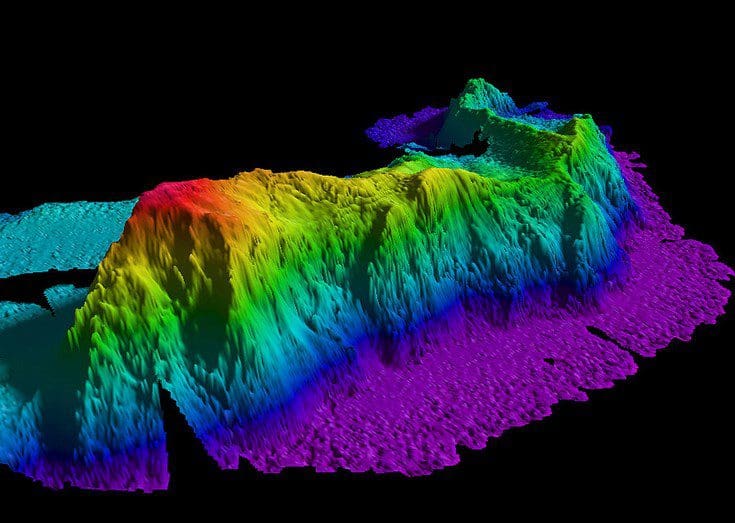
In addition to technical and business advisory services provided by NRC-IRAP, the funding is being used to develop a real-time, ultra high resolution seabed mapping system that is based on Kraken’s Interferometric Synthetic Aperture Sonar (INSAS) technology, real-time SAS signal processing algorithms and coupled with an onboard version of advanced 3D seabed visualization software.

Furthermore, according to the company, Kraken’s existing customer base will be offered the system as an upgrade, and new customers will benefit from the added option. The first system offering is expected to be released at the end of 2015 or in early 2016.

Karl Kenny, Kraken’s President and CEO said: “Knowledge about the seafloor is imperative to better understand our oceans. This NRC-IRAP contribution enables Kraken to accelerate the development of next generation real-time 3D seabed mapping missions that are optimized for unmanned maritime vessels used in both military and commercial applications.”

While conventional sonars are commonly used for seafloor imaging and bathymetry, they suffer from range and resolution limitations. However, these limitations are overcome by using Interferometric Synthetic Aperture Sonar (INSAS) systems such as those designed and manufactured by Kraken.

INSAS uses sophisticated signal processing techniques to compare the multiple observations of the same area of seafloor to calculate its depth. The image resolution of the seabed is significantly increased – often by an order of magnitude – compared to conventional sonar technology. INSAS systems can achieve image and bathymetry resolutions of a few centimeters even in very deep waters and at very long ranges.

In addition to being used for military applications such as naval mine countermeasures, INSAS is a multi-market technology with great potential for offshore oil and gas surveying, hydrographic surveys, underwater archaeology, benthic habitat mapping and deep sea mining. With high resolution INSAS it is possible to use image fusion techniques to combine the bathymetric data with the reflectivity data to create a real-time 3D representation of objects on the seabed. The ability to generate centimetre-scale resolution in all three dimensions has the potential to provide significant improvements in the detection, classification and identification of small seabed objects.

Kenny added, “The proven viability of Kraken’s AquaPix INSAS as a high resolution survey sensor is a logical progression for the industry with the additional benefits of increased data quality, better resolution and a pathway to a deliverable of more integrated data fusion surveys. We are sincerely grateful to NRC-IRAP for their support. We look forward to commercializing our technology into major markets worldwide.”

Conoco To Cut 7% Of Canadian Workforce

0

Oil company ConocoPhillips plans to cut about 7 percent of its workforce in Canada, or about 200 employees, as tumbling oil prices have made its operations in the country less profitable. The company, which operates conventional and oil sands operations in Canada, told Reuters on Wednesday the cuts came as oil prices continue to weaken after falling more than 60 percent since June.

“The challenging economic environment has required us to make some difficult decisions,” Andrea Urbanek, a spokeswoman for the company, said in an email. ConocoPhillips shares were up 4 cents in midday trading on the New York Stock Exchange at $62.05.

The layoffs follow one from Talisman Energy Inc on Wednesday; the company will cut 15 percent of its staff due to low prices ahead of its acquisition by Spain’s Repsol SA .

Other Canadian producers that have already announced job cuts include CNOOC-owned Nexen Energy, Suncor Energy Inc and Royal Dutch Shell. 


Source

Diver Exploits: Fascinating Diving Sites

What’s the most interesting place you’ve ever dived?

I asked this question to several commercial divers and underwater welders, and they gave me a huge variety of answers. From these responses, it’s safe to assume that your perception of diving experiences is highly based on area of passion, interest in international traveling and a little luck.


“Wolf Creek Nuclear Operating facility. Kansas, USA. Zero visibility concrete pour under six inches of ice. -15°F”

– W Ryan Krauss


“The dirty side of a sewage tank. O and a tank full of muller rice.”

Angus Fraser


“Sao Tome back in 2000. Not many people been there! And fresh water, underground res work in Cambridge, never dived in water as clear.”

Richard Durrant


“Antarctica. Welding on an old pier to keep it from falling apart. Had to get out of the water whenever [leopard seals] came around.”

Steve Rupp


“Africa, the experience of a different continent, with my friends”

Robert Cahill


“Mumbai India, killo class E submarine. Salvage and recovery of O2 torpedos and missiles INS SINDHURAKSHAK. Zero visibility and in mud.”

Troy Raats


“Mozambique, cable lay job. Fifty meters+ visibility…and we couldn’t see past 10 meters because there was too much bait fish seeking shelter under the barge.”

Zak Venter


“A sewer line in Biscayne bay. The storm drains next to the tarmac at Miami International Airport. A flooded elevator shaft in an old hotel during a renovation in South Beach.”

Santi Dillon


“Great salt lake. 150′ penetration into a 4′ slippery ass pipe. Had to wear an insane amount of lead to get negative. Even the old gates umbilical was buoyant! Figuring out the dive tables in that dense water was a challenge.”

Steve Rupp


“An underground fresh water channel Chichester England in 15 meters water, depth down a 30 meter vertical shaft; 150 meters into the shaft nobody had been in it since it was cut out by Cornish miners and flooded in the 1890’s. Saw carving of gravity on the cave walls.”


Stevie Allen


Source

GE Lands $850 Mln Order for OCTP (Ghana)

GE has secured an $850 million deal across its oil & gas business for the supply of equipment to the Offshore Cape Three Points (OCTP) block, Ghana.

According to GE, this order incorporates both turbomachinery and subsea elements, with the first shipment planned for Q4 2015.  Further shipments are planned in order to deliver first oil by 2017.

The Turbomachinery Solutions scope, consisting of three LM2500+G4 Gas Turbines for Power Generation and four Centrifugal Compressors Electric Motor Driven, will be delivered solely by GE.  Engineering will utilize multiple areas of the company’s expertise, across its Italian (Florence and Massa) and French (Le Creusot) operations. The four Electric Motors suitable for a floating, production, storage and offloading vessel (FPSO) together with three Electric Generators for Gas Turbines will be delivered to GE Oil & Gas by GE Power Conversion.

The subsea production system will be delivered by a consortium between GE Oil & Gas and Oceaneering and includes the Subsea Production and Control System (SPS) and umbilicals engineering, as well as project management, fabrication, transport and testing.

“This order draws on the full range of GE expertise” said Lorenzo Simonelli, President & Chief Executive Officer, GE Oil & Gas. “It shows the value of our broad technology scope, cutting across two of our business units and leveraging the GE store to deliver innovative, economic solutions for our customers. In addition, it shows the importance of our commitment to local partnership and capacity building in order to deliver the most effective and efficient solutions for our customers. We are committed to partnering with Ghana to help support and build critical skills and infrastructure development for the country’s future growth.”

In order to deliver asset management services to the Offshore Cape Three Points development, it has also established a Joint Venture with an indigenous company. Alongside this, it is funding the development of a local capacity and skills development programme, with the Ghana National Petroleum Corporation and Ashesi University. These investments will help GE grow its employee count in Ghana by 65% and support the training and development of Ghanaian oil and gas professionals over the next few years.

The subsea scope of the order was booked directly with Eni Ghana and its Partners Vitol and GNPC. The Turbomachinery scope has been awarded by Yinson Production (West Africa) Pte Ltd, which is the company selected by Eni and its Partners Vitol and GNPC for the FPSO vessel.

The OCTP block is located in offshore Ghana at a water depth of 500-1100 meters, 60km from the coast. Eni’s partners on the block are Vitol Upstream Ghana Limited (35.556%) and the Ghana National Petroleum Corporation (GNPC) (20%).


Source

SERS solution from local SME a world beater

H.I.Fraser specialises in critical gas and liquid systems with a workforce of about 75 people, split between their Perth and Sydney offices. And they are no strangers to working with Defence on various elements of submarines and other naval platforms, which they have done for the past 60 years, along with their work in the international oil and gas and mining sectors.

Prior to the SERS upgrade project, there wasn’t any diving breathing air pressurization and breathing supply system that met offshore commercial or naval requirements. H.I.Fraser has come up with a solution that provides redundancy and exceeds both the Naval and Det Norske Veritas (DNV) breathing air requirements. In addition the H.I.Fraser low pressure air compressors (LPAC)/DB containerised solution reduces the deck footprint required from in excess of 40 offshore bottle packs to 13.

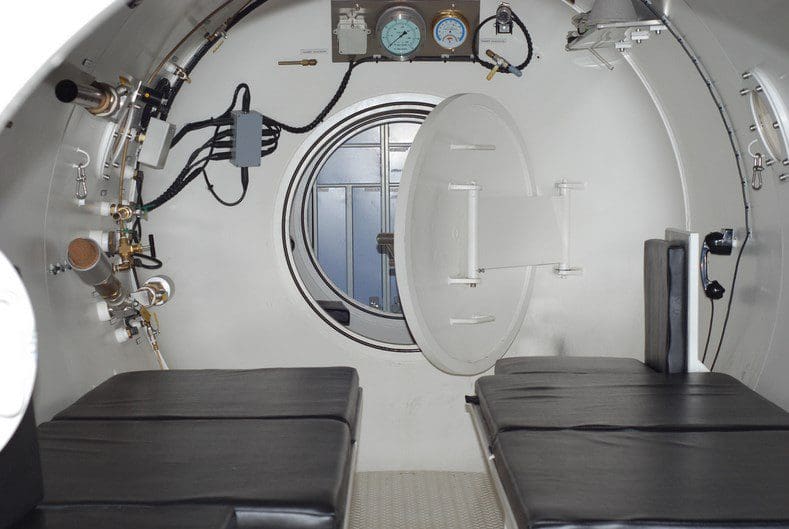
“The SERS equipment that we upgraded under the contract was the deck equipment, which includes the hyperbaric suite,” explained H.I.Fraser’s General Manager East Chris Williams to ADM.

“This consists of two existing deck decompression chambers (DDC), an existing transfer under pressure (TUP) chamber and the ancillary equipment which we designed and manufactured in Australia.”

H.I.Fraser has designed and manufactured a world leading solution for the support of the Australian Navy’s SERS Hyperbaric Suite. The solution consists of two air transportable containers (one supplied from fellow Australian SME, Royal Wolf,) that provides the submariners, in all seven integrated diving locks of the hyperbaric chambers, with an Environmental Control System (ECS) for heating/cooling/humidity control of the internal chamber environment, as well as another for electrical power distribution and diving quality breathing air.


Unique capability


The H.I.Fraser SERS solution is a world first and novel for two reasons:

  1. The ECS meets and exceeds the IMCA offshore diving environmental control standards, despite the sheer volume of gas in the system, number of people being decompressed (72) and number of integrated diving locks (seven).
  2. It addresses the issue of significantly reducing the footprint for traditional Submarine escape systems by using a novel low pressure air compressor solution. The compressor solution exceeds the navy and commercial safety requirements for breathing quality diving air.


“There are two major engineering elements that we introduced into the system,” Williams outlined to ADM. “The first was the ECS which provides heating, cooling and de-humidification to all of the individual locks in the chambers. ”

The proof of the level of achievement of this world leading solution is that two of the four leading international offshore diving companies either failed to develop a solution that worked, or refused to quote due to the complexity of the problem, calling the requirements ‘unachievable’. This is the nature of the work that this SME took on and solved in less than 12 months, complete with internationally recognised certification, once they realised that the work could not be completed externally.

This contract became an R&D project when one of the internationally recognised offshore diving businesses that build ECSs for offshore, saturation diving systems, could not get their ECS to work, and another declined to quote, citing the unachievable contract system performance criteria. The program office, COLSPO (Submarine Branch), would not increase the contract value and hence H.I.Fraser made a conscious decision to complete an R&D project to design, manufacture and test an ECS that met the contract requirements within the contracted budget.

The second major element was the Low Pressure Air Compressor (LPAC) and electrical Distribution Board, an air transportable container. The SERS is unique in that it requires a very large volume of diving quality breathing air, but at relatively low pressures. No other commercial offshore diving system has these characteristics. The diving industry norm is for high pressure air compressors and receivers to be used. HPAC’s cannot be used for the SERS because they do not produce enough air quickly enough to meet the operating cycles of the SERS. The main result of this is that the SERS has it’s gas supplied by high flow rate LPACs . LPAC’s have to be used as there is not enough deck space to hold the number of offshore bottle packs required to pressurise and flush the SERS.  Other offshore diving specialist companies have tried to design and manufacture LPAC solutions to be certified by DNV. To date, all have failed.

Adding an extra layer of complexity is that the complete system was to be certified to DNV and DNV do not have any rules that are specific to SERS. The certification environment that H.I.Fraser faced was complex, in that there was conflicting advice from certifiers about what was covered, what was not, and even if the system could be certified at all, given the military operating environment.

After much negotiation, time, ingenuity and capital investment from the SME, the upgraded SERS system was able to demonstrate:

1.           An ECS that meets the requirements of the contract.

2.           An ECS that has some level of DNV certification.

3.           An LPAC solution that supplies the contracted amount of gas to the SERS at the contracted breathing air quality.

4.           DNV certification for the LPACs.

H.I.Fraser used Professional Diving Services (PDS) an independent commercial diving business to operate and man the Safe To Dives over the three days. It was very important for H.I.Fraser to provide the COLSPO with independent third party verification that the upgrades that we made to SERS were acceptable for a commercial diving business to dive SERS.

The seriousness of the engineering and the potential to do harm if something went wrong during the SERS manned Safe To Dives cannot be understated. During each of the six manned dives the commercial divers were dived to 50 and remained there for a minimum of 20 minutes. The recompression time to come back up was in the order of 1-1.5hours depending on the time the diver spent at 50meters.

“If you really want to play for keeps, engineer and manufacture a system and then test the system using people where the consequences for something going wrong is serious personal harm and even death,” Williams said. “At the end of the manned dives we were very proud to say that the SERS performed very well and everyone went home to their families.

“In the space of just over 18 months, we went from having a system that we understood would be delivered and would be plug and play, to realising that it wouldn’t work and then going out to market to see who could achieve the goal,” Williams said.

“When the reality that no-one could meet the contracted requirements sunk in, we then decided to design, manufacture, test and certify ECS and LPAC systems of our own. The engineering, manufacturing and testing took about 12 months to complete,” Williams summed up.

“The system now has a well understood baseline that is well documented. Whoever next gets the systems will have a complete, up to date 3D CAD drawings and documents.”


Export


Williams admits that there are limited export opportunities for the technology because it is unique and the closed nature of the SERS market will be an issue. The asset has now been delivered to the Commonwealth where it was shipped straight to James Fisher Defence (operators of the wider SERS capability) and H.I.Fraser’s involvement with SERS is now finished.

“This project has really demonstrated what Australian SMEs are capable of,” Williams said. “For example, the LPAC container was completely designed in 3D. The container was a one off from Royal Wolf, who we worked closely with. The container was manufactured and had the penetrator plates and custom doors cut out in China. The container was ready to be shipped back to Australia for mechanical and electrical fit out when it was delayed by two weeks by two typhoons.

“Our schedule was so incredibly tight that we could not afford to wait so we manufactured all the components to go inside the container using the 3D drawings, so that when the container arrived, we were good to go for the mechanical and electrical fit out.

“H.I.Fraser will be leveraging off this experience of unique design, engineering and manufacturing in both Defence and other sectors. SERS is an example of how Australian manufacturing SME’s can achieve some really exciting, amazing and complex engineering solutions in very tight timeframes,” Williams enthused.


Source
Cybersecurity Activity Generating its Own Set of Big Data

0

With more data and more sources of data, cybersecurity analytics in the oil and gas industry is rapidly becoming a big problem addressed by Big Data.

The growing amount of data associated with cybersecurity analysis involves multiple types of data. These sources include structured and unstructured data such as log files, instrumentation data and network data, as well as investments by companies in intrusion detection systems, prevention detection systems, firewalls, data loss prevention centers, servers, and database applications, all which generate a lot of data, said Rene Moreda, who oversees energy and utilities for the Americas at BAE Systems Applied Intelligence, in an interview with Rigzone. Cybersecurity analytics also involves combing through data sources such as email, video surveillance feeds, geospatial information, and physical security data from access readers and logs.

“There is more data and more formats of data speeding across enterprises today,” Moreda commented. “When you look at the Internet of Things and the need by companies to reduce costs and gain greater efficiencies through tools such as automation and wireless, the attack surface for oil and gas companies keeps getting bigger every day.”

Big Data can be viewed from a cyber and a productivity perspective. Companies in the oil and gas industry are still delving in to how to get the most from Big Data, and how are they making themselves vulnerable to cybersecurity. Security for the cloud business model is very different from when a company has physical control over a facility.

“There are additional layers of trust and risk you have to evaluate.”

To address the issue, companies will need an integrated architecture with security at the front end of the design.

Companies across the oil and gas spectrum, from upstream companies to pipelines to refineries, are looking for ways to detect and protect their businesses and assets. As more and more IP-capable sensors are eventually deployed within networks, BAE expects the volume, variety and velocity of data to keep growing.

“The Big Data approach to cyber efforts is way to develop a stronger security posture,” said Moreda. “By harnessing this rich data, companies can garner insights into their vulnerabilities before cyber-attackers do.”

While an exact estimate is not known, Moreda said the company each month is seeing billions of raw events – cyber events before data is analyzed – in its operation centers, and that emails that the company filters to detect cyber-threats involve terabyte and petabyte file sizes.

“The data they own is one of their greatest assets,” said John Cosby, solutions architect with BAE. “A lot of companies are jealously guarding the data science they do and treating it as very valuable intellectual property.”

The oil and gas industry’s history of using very large data sets to guide their exploration and production means that they have developed some very sophisticated models over the years. Companies are expected to continue working their way down the value chain to try and gain a market edge with the data they already have.

The fact that ICS/SCADA monitoring systems, which were previously detached from the network, are being connected to Internetworks, and Internet, unfortunately, for the security perspective, and their data is being captured in existing solutions, industry expert Thomas Quinlan told Rigzone.

While it may take longer than regular ‘Big Data’, Quinlan thinks that ICS data is definitely coming as another source of Big Data, most likely in 2016.

“People are very concerned about security – and rightly so – and are focusing there first. However, they’re soon going to want a data science perspective on all the information they didn’t previously have access to, once they can get around the different protocols and formats.”

OTHER CYBERSECURITY TRENDS IN 2015

Geoff Graham, who oversees mostly oil and gas activity at BAE, is seeing the convergence of physical and cybersecurity risks as companies introduction automation to link business and OT operations. Much of this convergence is very specific and targeted in places such as collaboration centers to allow for subject matter experts to impact operations in a centralized way.

“There are a lot of people starting to look at how to approach physical and cybersecurity risk from an integrated perspective,” said Graham. “You can have as much cybersecurity as you want to protect yourself in the digital realm, but if somebody can walk into your building and steal a laptop, it doesn’t matter.”

The attack surface for oil and gas companies also can be increased if someone brings a data-stick into an area and infects the system.

Until recently, many of the oil and gas companies that John Dickson, principal at San Antonio-based Denim Group, has worked with viewed security through the lens of physical security. He has seen companies struggling with the genuine challenge of cyber-related vulnerabilities and risk struggling to complete with physical safety and security issues inherent in oil and gas.

One example of a severe physical risk facing oil and gas companies is ISIS. A security scan of a company reveled many serious cyber-risks that significant time and resources were needed to address. However, the rise of ISIS-driven conflict in the Middle East meant that executives were solely focused on following ISIS’ march and whether their employees might be in harm’s way, Dickson said.

“ISIS was clearly a severe physical risk that warranted close attention, but leaving a host of cyber vulnerabilities unresolved was also a persistent danger for operations/IT dangers, such as stolen intellectual property, malware that could enter through these holes and erase hard drives. Unlike ISIS, which needed physical contact to harm employees, cyber vulnerabilities could be exploited by anyone with Internet access. Worse, they might be exploited for an undetermined time until management could focus away from the Middle East.

“The level of risk has risen to the point where cyber professionals/consultants in oil and gas always need to not just gather data, but present that data in a way that aligns and influences the total risk picture C-levels must watch.”

Ron Gula, CEO of Maryland-based Tenable Security, is seeing a shortage of cybersecurity personnel, not because of layoffs, but because there aren’t enough to go around. Gula sees this shortage not just for oil and gas, but across a number of industries. This shortage begins at the high school level, with not enough students interested in becoming computer forensics technicians. Local universities in Maryland such as Johns Hopkins University have capitalized on demand for these workers by offering degree programs in this area. But outside of this area, Silicon Valley and New York City, cybersecurity-related jobs aren’t in the vocabulary of the school systems.


Source


EMEC, The Crown Estate Study Performance of Subsea Cables

0

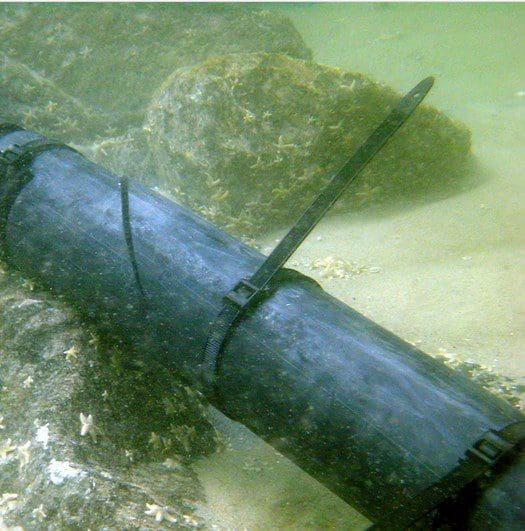
The European Marine Energy Centre (EMEC) and The Crown Estate have published a report on the performance of subsea cabling in high energy environments to support the development of commercial wave and tidal energy sites. 

The key aim of the Sub-sea Cable Lifecycle Study is to improve the industry’s understanding of how best to specify and manage subsea cables for wave and tidal energy projects, by investigating how the cables installed at the EMEC test sites in Orkney have been performing since installation.

With its first cables installed over 10 years ago, EMEC has collected considerable amounts of data with numerous routine remotely operated vehicle (ROV) and inshore dive surveys undertaken to examine structural integrity, alongside comprehensive electrical cable testing, EMEC said.

During the study, this data was reviewed in relation to installation methods, faults, and operational life of the cables.

The study found that the subsea cables installed at the EMEC test sites appear to be in extremely good condition considering the environment in which they are deployed.

Matthew Finn, Senior Business Development Manager explains:

“EMEC has built up a colossal amount of data since we set up the test centre 12 years ago. As well as supporting our own operations, and those of our developer clients, we’re delighted to see our data put to use across other projects that will support the development of the nascent marine renewables industry.

“The strong tidal conditions at our tidal test site – up to 8 knots at peak tide – provide a unique opportunity for people looking to test components, equipment, devices and supporting infrastructure in real sea conditions. We want our infrastructure to be put to good use, and would like to see the cables utilised in supporting other technology testing and demonstration projects in the future as well.”

The report concludes that in sites with high tidal flow the greatest risk to subsea cables is the effect of cable strumming – vibration caused by the flow of water past the cable.

Key recommendations to developers of wave and tidal energy projects include: carrying out calculations to assess the risk of strumming at an early stage; completing detailed site surveys and optimising the cable route to avoid key risks; and protecting the cables with armouring in high energy environments.