Home Blog Page 332

Boskalis Loses Case Over Fugro’s Protective Measures

0

The Dutch court in summary proceedings on Tuesday ruled against marine engineer Boskalis to have a shareholders’ vote at Fugro’s annual shareholders’ meeting scheduled for April 30, 2015 on termination of a defense mechanism used by Fugro.

This was set into action, last week, when Fugro received a writ of summons from Boskalis to, according to Fugro, force a shareholder vote on anti-takeover protections.

According to Boskalis, construction of protective measures is not proportional, not transparent and also contrary to the general principles of good governance that can lead to a situation in which Fugro against its own will might lose control of a significant part of its business.

Fugro rejected Boskalis’ claim, saying that its offer to discuss its protection measures at a shareholder meeting without holding a vote.

Earlier this year, Boskalis increased its holding in Fugro to 20 percent, which Fugro characterized as unsolicited stake building, insisting that the company values its independence and that the company has set up these protective measures in place for many years to safeguard its independent position.

Update; March 18, 2015

Fugro informed that Boskalis has withdrawn its request and accompanying explanation for an agenda item in respect of one of Fugro’s protective measures on Fugro’s Annual General Meeting.


Source

8 JOBS A COMMERCIAL DIVING CAREER MIGHT LEAD YOU TO

Offshore diving: The Gulf and Beyond

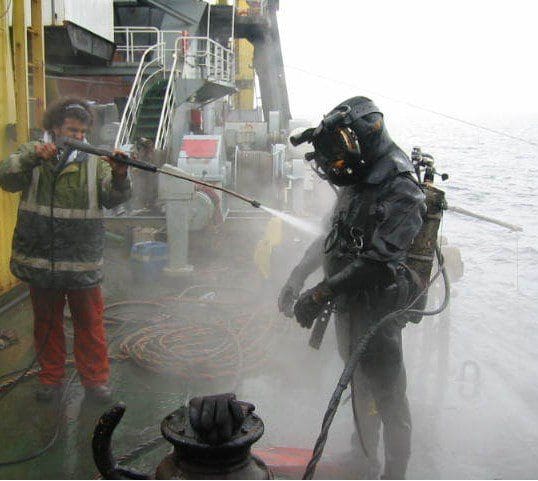
In 2013, 66% of the US’ liquid fuels (crude oil, natural gas, biofuel) originated from oil rig sites not too far off the coast of the Gulf of Mexico. The rugged divers and tenders, who work the underwater and topside shifts inspecting and maintaining these massive structures in the ocean, operate on full schedules and tightly knit teams with a strong work ethic and sense of brotherhood. And the Gulf of Mexico is not the only place to work offshore — offshore diving can take you around the world.

Inland diving: the best of both worlds?

Inland diving can bring together the best of both worlds — land and water, travel and home time. Inland divers can keep their diving restricted to their city or state and stay nearer to their loved ones more of the time, or take jobs around the country and explore this beautiful land. Bridges, piers, dams, water tanks — all of these structures, and many more, require building, maintenance and sometimes cleaning.

Salvage Divers:  In recovery mode

Even if the jobs don’t all involve recovering ancient artifacts, but instead a newly-discovered shipwreck, salvage diving is fascinating. For instance you might be Parbuckling the tragic wreck of Costa Concordia (see more photos here) . In 2014  it required 111 divers working around the clock for months, swimming through rooms upon eerie rooms full of floating furniture and people’s things. The divers worked on teams to build a platform under the boat and to raise it, so it could be towed to a port. Salvage divers cut, weld, demolish and figure their way underwater around sites, and can work for scientific organizations, the Navy, the police force, or private companies to recover whole vessels, evidence, human remains, and sometimes a clearer picture of history.

Saturation diving: Taking it to a whole new level

Saturation divers live under the sea in pressurized chambers with a small handful of other people. For weeks at a time, the crew works rolling shifts, two on, two off, or one on, one off. The logic is this: Living in a pressurized space means that the divers require less time to decompress from a deep dive so these teams venture out into the dark deep seas equipped with lights and tools to work in the lonely ocean. Only even-keeled people need apply; close communal living is not for everyone, but for those who love it, a community of Sat divers exists under the sea – some of them stay in touch and end up on the same jobs once in a while.

Nuclear Divers: Maintaining nuclear power plants

Nuclear divers get suited up and dive in nuclear reactors: inspecting, cleaning and maintaining them. Attached to their dive suits are a number of dosimeters which measure radioactive exposure. These are constantly measured and assessed, and safety practices are so stringent that if even one malfunctions, the dive is called off. If you like warmth, extra dough and thrive on a calm but risky job, this one might be for you.

ROV Tech: An undersea pilot

Like to tinker? Play with electronics? Enjoy video games? An ROV Technician flies around under the sea with a hydraulically-propelled robot that he or she controls from a remote location. These remotely operated vehicles are attached to the controlling vessel by a cable that connects the pilot to the vehicle and to its built-in cameras, lights and mechanical tools. ROVs perform mechanical repairs and operations to massive structures offshore, and are used for scientific exploration, television shoots and military endeavours.

Roughing it in Remote Alaska

Like the cold? Love a rough, hearty, MacGuyver-style job? Divers in Alaska are so remote much of their work is figuring out how to do something on the fly, with what’s on hand. Dive sites can be miles outside of civilization in the brutal cold and without good transport, but the scenery, the slow pace and the invigorating sense of life make it all worth it.

Scientific diver

If you’ve got a leaning towards a science like archaeology, oceanography, geology or biology, you may enjoy working with researchers in the academic and private sectors, exploring, studying and analyzing the deep unknowns of our amazing, vast oceans and the life they host. Scientific dives can take you all over the world and to far-flung spots in the ocean, to see things that most people will never dream of seeing. You’ll see all this not just as a commercial diver but with the insight of generating new knowledge and a sense of adventure.

There are even more avenues down which commercial diving can take you, and DIT’s staff are with you throughout your career to support you and help you find the best fit for you skills, lifestyle and experience.

Written for DIT by Londi Gamedze


Source

Unions To Ballot UK North Sea Oil Workers Over Appetite For Strike

0

Trade unions Unite and GMB are balloting their members working offshore in Britain’s oil and gas industry to gauge appetite for strike action over changes to shift patterns and other grievances. The two unions represent about 3,000 offshore workers, including engineers and scaffolders, in the Offshore Contractors Association.

John Kelley, a regional organiser for the GMB, said the consultative ballots will close on March 27, and the unions would then take a view on whether to proceed, depending on the response. “Regarding forms of action, that is entirely down to the will of the membership, but of course strike action would be on the agenda if the mandate is strong,” said Peter Welsh at Unite.

Kelley said one of the main grievances was around a move to a three weeks on, three weeks off shift pattern at some companies, as opposed to the more traditional two weeks on, two or three weeks off. “People are not happy about it,” he said. “We are talking about some of the remotest parts of the North Sea, and the weather is a big determining factor as to whether helicopters can get out there.”

Some of the biggest operators in the North Sea include BP , Royal Dutch Shell, Total and Apache Corp. Separately, the Rail Maritime & Transport union said it had endorsed a call from members to ballot for industrial action. It cited a range of issues including shift pattern changes, alterations to leave entitlements, reductions of up to 20 percent in staffing numbers, and disputes on sick pay, pensions and pay levels.

The union said the timing of any subsequent industrial action would be arranged to have the maximum effect on operations, and that it would look to work closely with the other offshore unions. 


Source


Aquamarine Power Reveals Oyster Testing Results

0

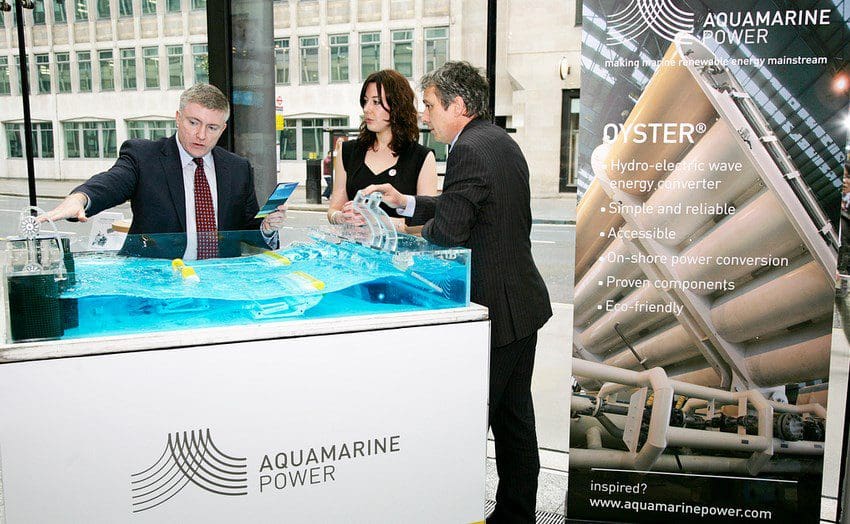
Aquamarine Power has published operational information gathered during months of testing their Oyster 800 wave machine at the European Marine Energy Centre (EMEC) in Orkney.

The academic analysis examines data generated by the Oyster 800 machine last year – which includes operating during major storms with waves reaching eight metres – and verifies that the Oyster flap generates power as predicted in wave tank and numerical tests, the company said.

Commenting on the analysis, Aquamarine Power Chief Executive Officer John Malcom said:

“These exceptional results have been gathered in more than 750 distinct sea states encompassing 94% of Oyster’s power matrix and verify, for the first time, that predictions of the energy Oyster can generate in any given sea state are accurate – and in the case of large sea states is actually greater than our original calculations.

“Very few, if any, other wave energy technologies have been able to verify as much data across as wide a range of sea states, including operations through major storms.

“In simple terms, Oyster does exactly what it says on the tin.

“As a business this gives us confidence in Oyster near shore technology, and confirms that future iterations of Oyster technology can be developed at laboratory and test tank scale – secure in the knowledge that subsequent full-scale machines will perform as predicted.

“Our business plan is to continue to develop the next-generation Oyster at laboratory scale and focus on areas of the technology which are less reliable, in particular the power take off system.

“To achieve this we are working with Bosch Rexroth, Carnegie Wave Energy and others to develop WavePOD – a  sealed sub-sea generating unit which can be used by a range of wave energy technologies, including of course future iterations of Oyster.

“We have already built and are operating a tenth-scale WavePOD prototype at the world-leading Institute for Fluid Power Drives and Controls (IFAS) at RWTH Aachen University, Germany, and we will shortly be publishing our preliminary results.”

The WavePOD consortium already includes project founders Aquamarine Power and Bosch Rexroth, along with Carnegie Wave Energy UK and wave technology developers Albatern and M4 WavePower. It also includes Irish utility ESB, the Offshore Renewable Energy Catapult, IFAS and University College Dublin’s Energy Research Centre.

“We are keen to involve as many industry players as we can in WavePOD, and the consortium is open to all,” Malcolm concludes.

Sonardyne’s Fusion 6G for Moho Nord Field

Sonardyne International Ltd. has been awarded a multi-million pound contract by UTEC, an Acteon company, to supply Fusion 6G acoustic positioning technology for the Moho Nord subsea project situated 75 kilometres off the coast of Congo.

The equipment will be used to support the installation of 230 kilometres of rigid pipeline, 23 kilometres of flexible pipes, 50 kilometres of umbilicals and numerous manifolds, plus over 50 subsea structures and rigid jumpers.

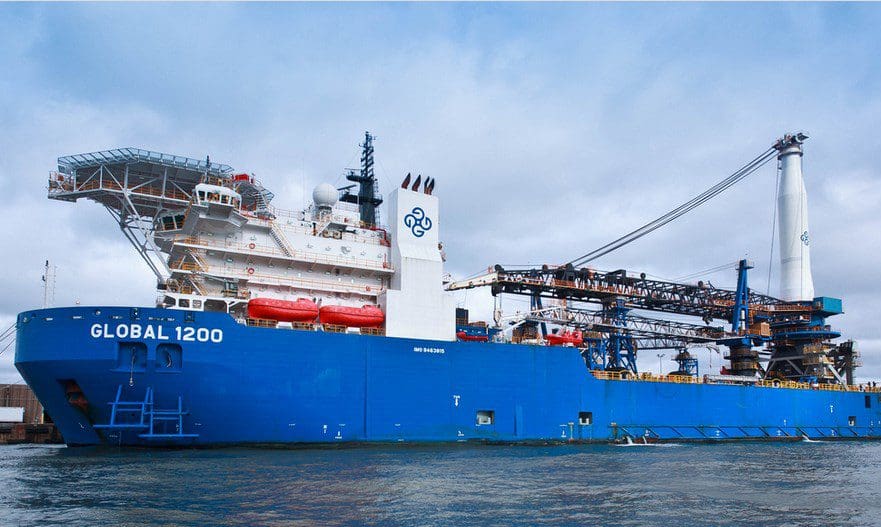
The project’s construction phase will run for the next two years with Technip’s rigid pipe S-lay and heavy-lift construction vessel, G1200, and multi-purpose deepwater vessel, Deep Pioneer, being utilised as the primary installation vessels. First oil is expected during 2015, rising to an estimated 140,000 barrels of oil per day by 2017.

The LBL equipment being supplied to UTEC includes high specification Compatt 6 seabed transponders, ROV-mounted transceivers, associated topside hardware and software, Sonardyne informed.

The Compatt 6s will be employed to create a wide area subsea positioning network within which multiple vessels and ROVs, often working simultaneously in the field, will be tracked. Tasks will include pipeline touch down monitoring, mattress installation and jumper metrology in water depths ranging from 650 metres to 1,100 metres.

Crawford Tennant, UTEC Regional Manager, EMEA said, “Sonardyne and UTEC have partnered together on a number of successful projects and we value this relationship.”

Announcing the order, Sonardyne’s Vice President of Europe and Africa, Barry Cairns said, “Moho Nord joins a premier list of deep water field developments that are benefiting from the technical and commercial advantages offered by 6G. UTEC and their project partners have chosen to invest in the best available subsea positioning technology, technology that will add significant value during the entire life of the Moho Nord project.”

Kuwait: OPEC Has No Choice But To Keep Output Unchanged

0

OPEC has no choice but to keep its market share and shun oil output cuts, Kuwait’s oil minister said on Thursday, reiterating the view from the emirate that the group will hold its course when it meets next in June.

“Of course we are concerned because the price of oil will affect our budget … within OPEC we don’t have any other choice than keeping the ceiling of production as it is because we don’t want to lose our share in the market,” Ali al-Omair told reporters in Kuwait city.

Many OPEC oil ministers, including Saudi Arabia’s Ali al-Naimi, have defended the group’s November decision not to cut production but instead defend market share and curtail the output of more expensive producers such as the United States.

The accord pushed oil prices below $50 per barrel, extending a sharp decline that began in June amid a global glut of crude and weakening demand.

Since the oil price collapse, OPEC officials have said they wanted non-OPEC producers to cooperate with the group but those attempts have made little progress.

“If there is any type of arrangement with (countries) outside OPEC, we will be very happy,” Omair said on Thursday, without elaborating.

Oil prices have recovered slightly since to over $60 a barrel, but have fell again over the past days. Brent crude for May delivery fell towards $55 a barrel on Thursday following a bigger than expected crude stock build in the United States that fueled concerns of an oversupply in the world’s largest oil consumer.

Omair said he expected higher prices by the end of the year.

“There are indications that at end of 2015 the economic growth rates will improve and this would make the prices improve,” he said.

OPEC has said it believes oversupply, as much as 1.5 million barrels per day, will evaporate as oil demand picks up and U.S. oil production growth slows.

However, should U.S. oil producers prove more resilient than OPEC expects, the glut could persist and grow if Western powers and Iran reach a nuclear deal allowing Tehran to increase its oil exports.


Source

Bhagwan Marine Offers DSV Virtual Tour

0

Marine Vessel Operator, Bhagwan Marine, together with VR producer Augmental, have created a virtual reality showcase of their flagship Air Dive Support Vessel (DSV), the ‘Bhagwan Dryden’ for patrons at the Australasian Oil & Gas Expo, held March 11-13, 2015.

Visitors to the major Oil & Gas expo were taken through a real world virtual tour of the Bhagwan Dryden, from being lowered to the deck via a crane, exploring the aft and forward sections, visiting the bridge, diving room and decompression chamber, survey and engine rooms and touring the various vessel facilities such as cabins, galley, mess hall, hospital and client rooms.

Bhagwan Marine Offers DSV Virtual Tour

Utilising the latest Samsung VR Equipment, Bhagwan Marine immersed visitors in the vessel’s surroundings, receiving a great deal of amazement from patrons and industry groups as to how real the experience felt, conveying aspects of the vessel in a new, unique and very personal way that no existing photograph, brochure, 3D walkthrough or corporate video could.

“Giving customers a method of visiting our flagship Air Dive Support Vessel, the Bhagwan Dryden, which is generally inaccessible for the majority of the year, has proven to be a very cost effective, convenient and realistic form of presentation from the armchair anywhere in the world” said Matt Syms, Marketing Manager Bhagwan Marine. “Furthermore the imagery can be made accessible to desktop, tablet and phone apps providing an all-round strong marketing tool from one production shoot in 360 surround,” stated Syms.

virtual-reality-at-aog

Bhagwan Marine was chosen from the hundreds of exhibitors as winners of the Best Stand Award at AOG 2015 and intends to make the Bhagwan Dryden VR footage available to the public for viewing in the higher definition format available via the Samsung VR Gear (lower resolutions to other devices via custom apps for Android and iOS).

CIMC Raffles to Co-Finance Semisub Construction Ahead of Demand Uptick

0

In a vote of confidence towards a recovery of newbuild rig demand within the next three years, China’s Yantai-based offshore builder, Yantai CIMC Raffles Offshore Ltd. (CIMC Raffles) said it is prepared to co-finance the construction of semisubmersible drilling units.

The rig builder, responsible for the bulk of semisubmersible drilling units delivered from China in recent years, aims to conclude talks by June with several parties interested in co-owning the first rig to be built to the BT 5000 design, a CIMC Raffles spokesperson told Rigzone in an exclusive interview.

The BT 5000 design semisub is developed by CIMC Raffles’ 90 percent-owned, Sweden-based subsidiary, Bassoe Technology. The Chinese firm acquired Bassoe Technology in 2013, with Bassoe Group retaining 10 percent interest.

With about 50 engineers on board, Bassoe Technology is spearheading the conceptual studies of new rig designs, while detailed to production design of rig building projects at CIMC Raffles is supported by some 1,000 engineers at the CIMC Offshore Research Institute in Yantai.

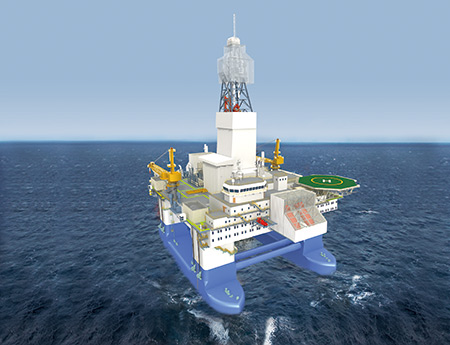
The BT 5000 design semisub is a mid-water harsh-environment offshore drilling unit capable of operating in the UK sector of the North Sea. The North Sea class semisub is designed to drill wells down to 30,000 feet (9,144 meters) deep in water depths of up to 4,921 feet (1,500 meters).

NORTH SEA RIG OPERATORS KEEN ON BT 5000 DESIGN SEMISUB

Seasoned North Sea rig operators the likes of Seadrill Ltd. and Ensco plc have enquired about the newbuild mid-water semisubs, of which replacement demand is widely projected to pick up given a significant percentage of the global operating fleet are built in the 1980s.

Investor interest in newbuild rig, however, has evaporated as offshore drilling contracting activity fell during the last 12 to 18 months.

Since the second half of 2014, rig operating day rates took bigger hits with oil majors and national oil companies unveiling cuts to capital expenditures for upstream activity.

CIMC Raffles views the current downturn as a window of opportunity for consolidation in the offshore marine sector, the spokesperson said.

The yard operator has elected to put its money on an offshore drilling asset class which attracted far less investor interest.

RED FLAG FOR JACKUP BUILDERS

By contrast, between 60 and 70 jackups under construction in China alone were due to enter the market within the next 12 to 24 months.

Against a backdrop of weakening offshore drilling demand even in the shallow waters, Transocean Ltd. and Seadrill are understood to have delayed deliveries of their newbuild jackups under construction in Singapore and China.

Industry observers have warned yards building jackups for first-time rig owners, with no charters on hand, could remain exposed to the risk of contract cancellations in the next two years.

CIMC Raffles has elected to invest in the opportunistic construction of semisubmersible drilling units, of which deliveries can be selectively timed with a recovery in newbuild rig demand, projected to take place in the next two to three years.

CIMC RAFFLES CO-FINANCES OTHER SEMISUB PROJECTS

CIMC Raffles to Co-Finance Semisub Construction Ahead of Demand Uptick
GM4-D Semisub. Source: CIMC Raffles

CIMC Capital has also co-financed three other semisubmersible drilling units being built to its 90 percent-owned GM4-D design for North Sea Rigs AS. The GM4-D semisub is described as an improved design of the GM4000 series CIMC Raffles delivered to China Oilfield Services Limited.

CIMC Raffles to Co-Finance Semisub Construction Ahead of Demand Uptick
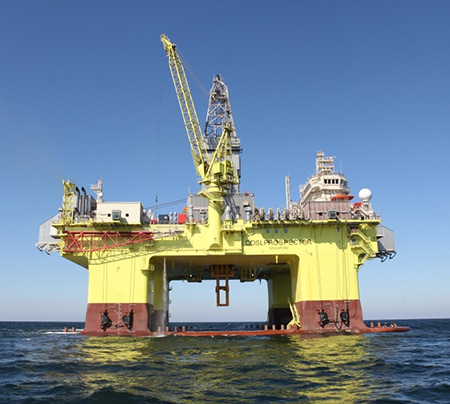
COSLProspector Semisub. Source: CIMC Raffles

Dubbed the North Dragon (mid-water semisub), the first in the GM4-D series was mated in January. The semisub is designed to operate in up to 3,937 feet (1,200 meters) of water and drill wells to 26,246 feet (8,000 meters), according to Rigzone’s Riglogix database.

CIMC Raffles to Co-Finance Semisub Construction Ahead of Demand Uptick
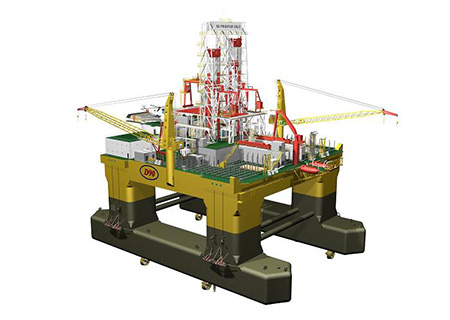
D90 Design Semisub. Source: CIMC Raffles

In May, CIMC Raffles also expects the mating of the first of two D90 design semisubmersible drilling units being built for Norway-based Frigstad Offshore Ltd. The D90 design unit to be mated in April is touted as potentially the first seventh generation semisub to be delivered to a rig owner.

Frigstad Offshore has returned to CIMC Raffles to build two further semisubs after having commissioned the same yard for the first D-90 design unit, subsequently named Scarabeo-9 (UDW semisub) and sold to Saipem S.p.A..

Scarabeo-9 is equipped with Aker Solutions drilling equipment set. By contrast, the pair of D-90 semisubs under construction will come with National Oilwell Varco drilling packages.

Each of the seventh generation semisubs is also designed to drill wells to over 40,000 feet deep in water depths in excess of 12,000 feet.

The CIMC Raffles spokesperson estimates the seventh generation D-90 semisub will cost 30 percent over the BT5000 design unit. The price of the BT5000 design semisub is also likely to come within 85 percent of the GM4D North Dragon, the spokesperson said.

CIMC Raffles has yet to firm up the drilling equipment supplier for the first BT5000 design semisub, although the yard operator is in talks with Aker Solutions over setting up an offshore drilling simulation facility in Yantai.

CIMC Raffles has an outstanding order book of $5 billion lasting through 2017, including five drilling semisubs.

SEVEN JACKUPS ON ORDER

The yard operator has seven jackups on order, including three Friede & Goldman JU2000Es, two Super M2s, a 300-foot jackup for Sinopec and a gas compression unit for Petroleos Mexicanos (Pemex).

The 300-foot jackup on order from Sinopec is being built to a design developed by Sinopec’s Shengli Engineering and Consulting.

Sinopec returned to CIMC Raffles for the Shengli design jackup after acquiring a JU2000E drilling unit. The Chinese yard operator was previously commissioned to build for Malaysia-based Coastal Contracts.

The Pemex jackup is being built to CIMC Raffles’ Taisun 200B design to compress gas for re-injection to improve recoveries from mature oilfields.

CIMC Raffles is also in talks with China National Petroleum Corp. over the sale of a Super M2 jackup.

The yard operator has a riserless drilling and well intervention unit scheduled for delivery in 2017 to Norway’s Norshore Holdings AS.

In May, it aims to strike steel on the third CR600 design accommodation semisubmersible unit, following the delivery of two earlier units to OOS International B.V.


Source

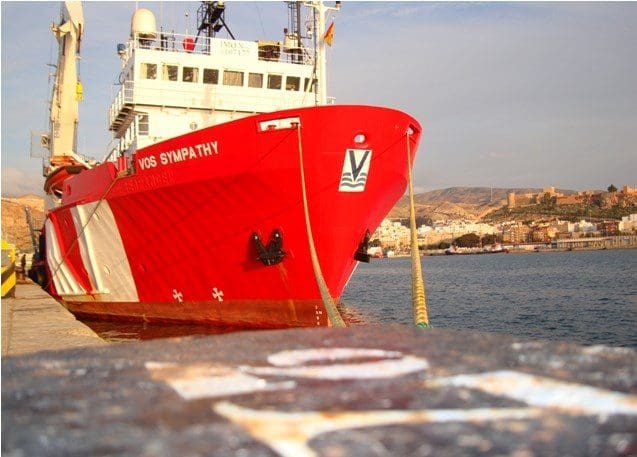
VOS Sympathy Wraps Up Cable Job for LD TravOcean

VOS Sympathy, a subsea-support vessel operated by Vroon Offshore Services Den Helder, has spent the last few weeks laying a power cable between Quiberon and Belle-Ile in Brittany for its client LD TravOcean.

The power cable, from the French mainland to the island Belle-Ile, will be connected to the main electrical grid and provide additional power capacity to the island.

The project lasted three weeks, with transit, cable loading and mobilisation of the lay spread on board the vessel being the most time-consuming tasks. The actual laying of the cable, which took place from the vessel’s starboard side, only lasted three days, partly due to the favourable weather conditions.

With the assistance of small workboats, the cable was transferred from the vessel to shore. In shallow areas, the cable was pulled into the vessel from the shore. At the start of the project, the ferry service to the island had to be suspended for a few hours while VOS Sympathy started its operations.

NOAA to Update Arctic Nautical Charts

0

As commercial shipping traffic increases in the Arctic, NOAA is taking major steps to update nautical charts in the region.

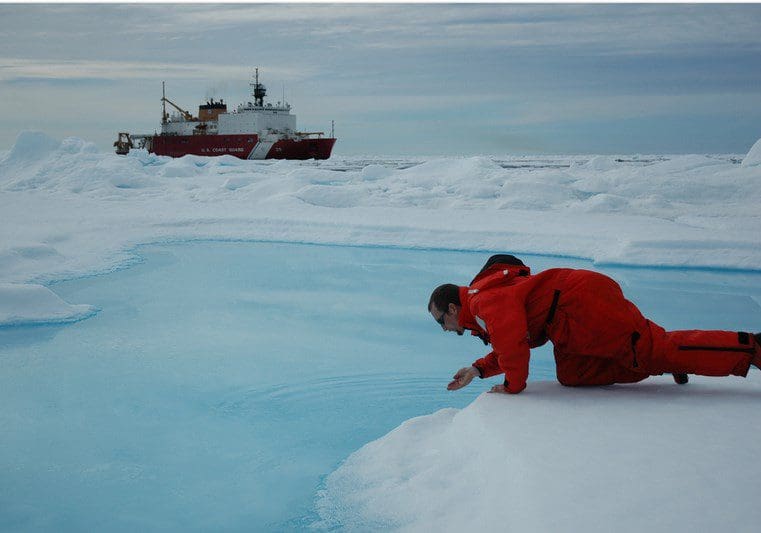
NOAA’s Office of Coast Survey will use data collected by two of its own ships, Rainier and Fairweather, as well as the U.S. Coast Guard cutter Healy and a private sector hydrographic contractor to cover nearly 12,000 nautical miles in the Arctic for use in updating its navigational charts.

The NOAA-led Arctic marine corridor project will work with the Coast Guard to asses the safety of a potential Arctic shipping route from Unimak Island, the largest of the Aleutian Islands, through the Bering Strait to the Chukchi Sea, as proposed in the USCG Port Access Route Study for the region. The Coast Guard will continue to take public comments prior to making a final decision on the proposed route, NOAA informed.

“Much of our charting data in this corridor is from surveys conducted a hundred years ago,” said Rear Admiral Gerd Glang, director of NOAA’s Office of Coast Survey. “So right now, we need to conduct reconnaissance of the seafloor in high traffic areas to make sure they are safe for navigation.”

Over the past several years, Healy has been collecting multibeam echo sounder depth data while travelling to and from its Arctic research projects. NOAA has reviewed the data, archived at NOAA’s National Geophysical Data Center, and has found they are reliable and can support nautical charting.

Last year, Healy worked with Coast Survey to take depth measurements as “tracklines”– straight paths of transit — while at sea. The survey is basing its new work on Healy’s 2014 trackline, along with data collected from 16 transits by the three ships and contractor vessel in 2015, using multibeam sonar. The ships will survey depths in lines that are about a thousand meters apart and a thousand meters wide, as they travel back and forth to major project areas around the Bering Strait and the Arctic.

Altogether, the ships will collect about 12,000 nautical miles of data along the four nautical mile wide corridor. In addition to measuring depths, they will search for seamounts and other underwater dangers to navigation. Although Healy’s primary mission is not hydrography, Coast Survey can use Healy’s data to identify significant differences from current nautical charts, and prioritize future NOAA hydrographic surveying efforts.

Other work planned for this summer includes joint hydrographic surveys by Rainier and Fairweather in the largely uncharted areas of Kotzebue Sound. In addition, Rainier will survey off Point Hope, Alaska, to evaluate a potential shoal area discovered by NOAA cartographers and researchers using commercial satellite imagery. Fairweather is scheduled to survey Port Clarence, a key Bering Strait location that is of potential interest as an Arctic deepwater port.


Source