Home Blog Page 268

Strong Sea Diving: Commercial Diving Courses As Possible Take

Deep sea diving or commercial diving is a profession. That’s not for all people. In this profession, you should really be in a great physical condition, and in addition you have to have a sharp mind. Being a commercial diver is not just about knowing how to weld pipes underwater as well as handle explosives, but there are certainly a much more niche programs that you could concentrate on in.

Today, you’ll see special schools for industrial diving. Here, you will be able to obtain a chance to become a professional professional diver along with just take Niche courses that appeals to you the most.

Fundamentally, most industrial divers take welding classes. By taking the marine welding expert course, you will understand the abilities required to produce top quality fillet welds. Here, you’ll be introduced to ideas concerning the welding process as well as safe work methods while welding underwater.

Within this program, each topic is going to be covered with a session and you may also expect real tests where you’ll be studied underwater for a simulated welding condition. Get more on www.brightsq.com by going to our poetic URL.

Normally, you will be studying 9 different subjects under this program. The first will cover safe underwater welding processes. The second is about welding plant and gear, the next could be the techniques, the fourth is the planning on weld, the sixth is approximately Electrodes, the sixth and weld terminology will be the simple weldability and popular weld problems, the seventh is likely to be check and control welding operations, the eight is get a grip on and quality assurance and last but most certainly not least, the ninth is going to be joining metal plates using the three regular welding practices.

Getting a marine welding class can give you a whole lot of job opportunities in a professional diving career. By being an avowed underwater welder, you will be in demand for shipping, construction, and in-the oil and fuel sectors.

The air mixed gas industrial diver specialist is also still another program available diving industry. Here, you’ll be taught about the different fuel combinations that divers breathe. From standard air, to nitrox, to trimix, you’ll be able to learn how to mix it.

Also, stress tolerance test is one of them certain class. Click here follow us on twitter to learn when to allow for this view. You will also learn about the effects of certain gases for the body when fishing. For case, you’ll be taught about nitrogen and its hallucinogenic effects to the mind when breathed under some pressure, and you’ll also be taught about oxygen toxicity and why helium is just a preferred gas for breathing when diving in very deep waters.

You’ll also be taught about decompression and leap medicine as well as hyperbaric medicine. Security operations planning are still another critical part of the class as well as the industrial applications of scuba.

Marine structure may also be included under this course as well as inland diving and gear preservation, specially the fuel systems. The diver medic expert is also still another specialty course in commercial diving. Here, you will become a dive medical specialist who will be responsible in making safer and better prepared dives.

You’ll be taught concerning the effects of continuous diving around the human anatomy and also in regards to the different ailments that divers may experience, such as decompression vomiting and severe fatigue. You will even be shown how to look after divers who experienced accidents during dives as well as the hyperbaric medicine and treatment.

These are some of the specialty programs as possible take in commercial fishing. While you can easily see, there are certainly a lot of job possibilities in the world of deep sea diving. By choosing the specialty course you need to learn about, you can be sure that you’ll have an enjoyable and much better future on earth of industrial going..



Source

OSHA To The Diving Industry

Worker safety is always given high priority in major industries around the globe. In the commercial diving industry, there are several agencies and associations that govern the standards that companies must comply to in order to operate.

Occupational Safety and Health Administration or OSHA plays a significant role in assuring the safety of employees regardless of the gender and the environment they work in. The agency publish industry standards, regulations and even provide training/education.

Not all countries are subject to OSHA compliance. The agency was established by the US Department of Labor therefore its regulations must be followed within the United States and its territories.

There are four major groupings that OSHA regulations apply to. They are as follows:

  • Agriculture
  • General Industry
  • Maritime
  • Construction

In the commercial diving industry, OSHA regulations are applicable in some areas such as compressed gases, head protection, respiratory protection, diving in confined spaces, first aid, tools and equipment and hazardous materials. However, as time flies and technology advances, some of these regulations become inapplicable or outdated. OSHA realizes this and take steps in revising their requirements. Industry professionals are welcome to provide suggestions that will be beneficial to commercial divers.

These rules are not only helpful to workers alone. It greatly helps employers and companies cost-wise because compliance prevents injuries. CDC references are also being considered by OSHA to determine the lying cause of divers’ accidents in order to improve safety and avoid repeat occurrences.

Obesity and Commercial Diving

In this episode, we sit down with Dr. Brian Bourgeois to talk about the problem of obesity in the commercial diving industry. Dr. Bourgeois tells us how prevalent obesity is, the associated risks divers may face when not working at an optimal fitness level, and what steps might be taken to prevent obesity in working divers.


Hybrid ROV-AUV Technology Could Aid Oil, Gas in Remote Offshore Ops

0

Technology developed by robotics researchers at the Woods Hole Oceanographic Institution (WHOI) allowing an underwater vehicle to switch between remotely operated vehicle (ROV) and autonomous underwater vehicle (AUV) operations could aid the oil and gas industry by enabling a range of robotic interventions in new ways.

Cape Cod, Mass.-based WHOI is eager to partner with the oil and gas industry to insert this technology into oil and gas operations, WHOI Principal engineer Andy Bowen told Rigzone in an interview. The technology, originally developed for ocean research and military use, could be applied for maintenance and intervention work in subsea infrastructure on the ocean floor. Such hybrid vehicles could also be used for operations under ice in the Arctic, which has untapped oil and gas resources.

WHOI research into subsea robotics led to the development of a technology that marries acoustic and optical wireless communication systems, thus enabling a new class of undersea vehicles to fill the void between current AUV and ROV technology. These research resulted from breakthroughs in autonomy and opto-acoustic “wireless” underwater operations and micro-tether technology developed for use in WHOI’s hybrid ROV (HROV) Nereus and other vehicles.

Nereus, the first cost-effective technology for regular and systematic access to the world’s oceans in water depths up to 36,089 feet, was initially designed by WHOI to survey and sample deep ocean trenches of up to 36,000 feet. In 2012, WHOI engineers conducted a field demonstration offshore Guam of the battery-powered Nereus’ capability to take samples and perform complex manipulative tasks with no tether while still under the real-time control of a human operator. These tests showed immediate advantages over existing ROV tethering and control systems.

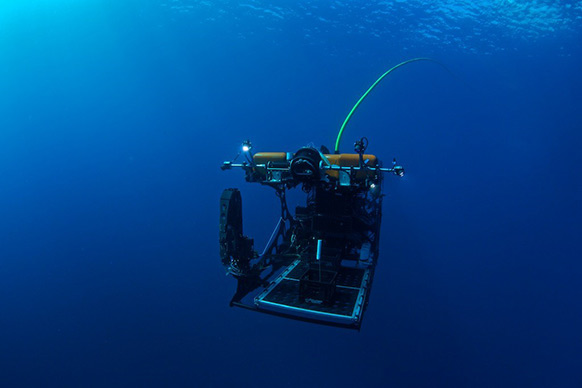
Technology developed by Woods Hole Oceanographic Institute blurs the line between ROVs and AUVs.
Technology developed by Woods Hole Oceanographic Institute blurs the line between ROVs and AUVs. Source: WHOI (Woods Hole Oceanographic Institute)

Woods Hole researchers had developed the Nereus, which was lost in a spring 2014 expedition, to solve the challenges of exploring in the deepest parts of the ocean, or Hadal zone, below 20,000 feet, Bowen said.

Traditional tethering technology for ROVs – which transports power down to the undersea robot and then enables data and video to be transported to the surface – can be a significant burden as undersea robotics go deeper and deeper, Bowen said.

“Removing a dependence on traditional tethers, reduces the footprint of the vehicle system, meaning deepwater operations are possible from less costly platforms. Such vehicle are also adaptable for more advanced applications such as fulltime residence within a complex offshore structure; available for imitate deployment and intervention when needed”  

WHOI decided to take a new view: that all the power for an ROV and AUV be carried on board, not transmitted down to the robot. Improvements in energy storage and battery technology makes underwater vehicles carrying their own power more feasible.

“If you remove the need for copper, you only need to the tether the cable to transmit signals back and forth,” Bowen explained.

Instead of a traditional tether, a thin fiber optic cable was developed to allow real-time control signals to be sent during these deep ocean operations. The fiber optic together reduced the need for large tether handling and management equipment, allowing for long-range excursions up to 12 miles from a launch point. Optical signals can send a high-bandwidth signal that allows real-time control, but only works within a 100-meter radius before the light is absorbed by seawater and the signal lost.

However, this cable – the diameter of a human hair – is fragile and must be discarded after each use. While optical signals can send a high-bandwidth signal that allows real-time control, it only works within a 100-meter radius. Such operating “hot-spots” could enable ROV-like tetherless interventions at suitably equipped undersea facilities.

Acoustic methods, which transmit digital signals through the ocean as sound waves, can operate over long distances. But the nature of sound transmission through  water means that only small amounts of information can be sent, and are unsuitable for control of complex ROV operations in real-time.

“The ocean is opaque in electromagnetic radiation, meaning that its physics don’t allow for the transmission of large amounts of information over extended distances without a physical connection. This means that terrestrial applications such as GPS, Wi-Fi, and cellular services don’t work,” said Bowen.

To address these issues, WHOI researchers are creating control systems that provide vehicles with “adaptive autonomy”, or the ability to switch seamlessly between different communication bandwidths and show varying degrees of automation to perform missions. This software provides a way of negotiating and reconciling the robot’s activities with regard to the way it communicates with its human supervisors, Bowen explained.

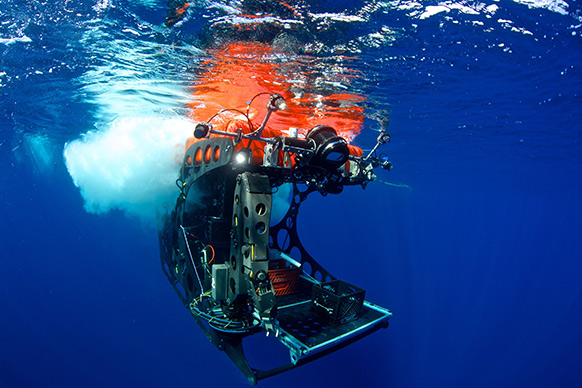
Subsea robotics research at Woods Hole Oceanographic Institute could aid the oil and gas industry in remote ocean exploration.
Subsea robotics research at Woods Hole Oceanographic Institute could aid the oil and gas industry in remote ocean exploration. Source: WHOI (Woods Hole Oceanographic Institute)

WHOI took the communication system technology from Nereus to develop a new class of robots, the Nereid HT [hybrid tether] and the Nereid UI [under ice]. Both vehicles will have the ability to switch seamlessly between a traditional tether cable, fiber optic line, and combined acoustic/optic wireless modem, offering greater flexibility in underwater exploration.

Bowen said that WHOI’s undersea robotics research is fundamentally about bridging the present gap that exists between traditionally tethered vehicles and the emerging class of AUVs that occupy different parts of the undersea robotics spectrum.

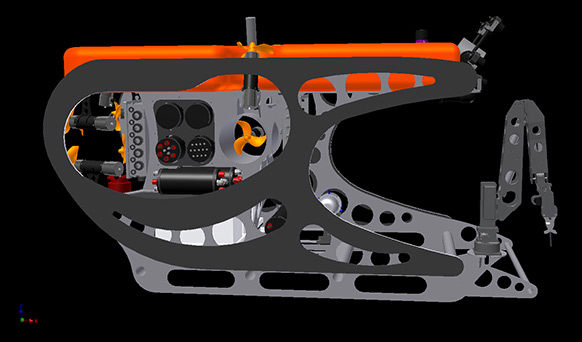
A rendering of the Nereid HT in operation with a reusable hybrid tether.
A rendering of the Nereid HT in operation with a reusable hybrid tether. Source: WHOI (Woods Hole Oceanographic Institute)

On one end of the spectrum are tethered vehicles that require constant physical connection and communication, meaning the human operator has control over every activity, from moving the propellers, turning lights on and off, to zooming and focusing the cameras. At the other end of the spectrum is a robot with the same general characteristics, but enough autonomy on board to effectively provide a layer of automation for low level tasks. This robot can perform high-level commands from the human operator – or what Bowen calls “yellow sticky notes” – to do complex tasks.


Source

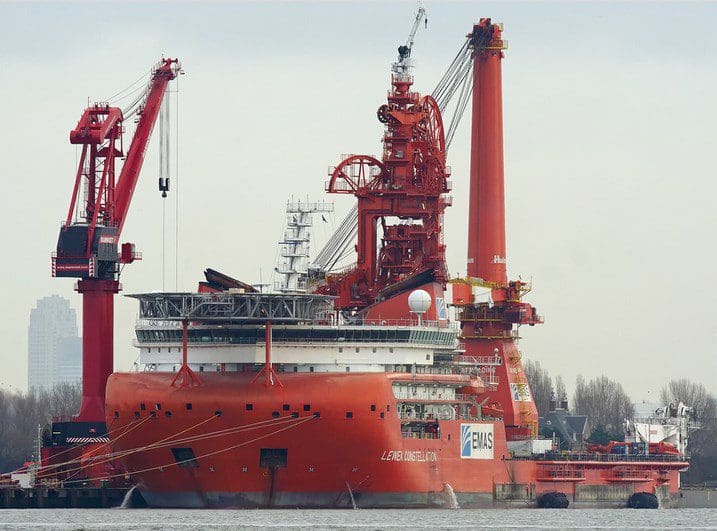
Lewek Constellation Sets Pipelay Record in GoM

EMAS AMC announced that its flagship subsea construction vessel, Lewek Constellation, has established an industry record for pipelay in the U.S Gulf of Mexico.

The Lewek Constellation has set an industry pipelay record in the GOM in 7,368 feet (2,246 metres) of water during her sea trials.

In preparation for the execution of three subsea tie-back projects for Noble Energy, she performed her final pipelay trial in the US GOM and during the deployment of the 3.2 kilometre, 16-inch diameter, 28mm wall thickness pipeline, complete with the second end pipeline end termination (PLET), the tension recorded was 632mT, rendering this the highest tension ever experienced in the history of rigid reeled-lay operations, the company said.

“Successfully laying the test pipe at this record-breaking top tension during pipelay trials is a significant achievement for EMAS and an industry first,” said Lionel Lee, Chairman, EMAS AMC. “It’s a testament to the experience and expertise of our people combined with the quality of our new vessel built by EMAS Group’s subsidiary TRIYARDS in Vietnam. I want to acknowledge the hard work and dedication of our integrated project teams in preparation for this important milestone.”

“What this record means for clients going forward is that we can offer a more efficient pipelay solution in ultra-deep water for pipelines up to 16 inch in diameter when compared to traditional S-Lay or J-Lay methods, even with thick insulation coatings, thereby giving our clients more options to consider,” said John Meenaghan, Vice President Global Operations.

Conoco the Last Global Oil Firm to Quit Polish Shale Gas

0

ConocoPhillips, the U.S. energy company, said on Friday it has stopped its shale gas exploration in Poland due to unsatisfactory results, leaving the rest of the field to Polish state-run firms. Earlier this year another U.S. energy major Chevron Corp gave up looking for shale gas in Poland, following the withdrawal of Exxon Mobil, Total and Marathon Oil over the past three years.

ConocoPhillips said its subsidiary Lane Energy Poland has invested around $220 million in Poland since 2009. It drilled seven wells over its three Western Baltic concessions. “We understand the disappointment surrounding this difficult decision,” Tim Wallace, ConocoPhillips country manager in Poland, was quoted as saying in a statement.

“Unfortunately, commercial volumes of natural gas were not encountered.” ConocoPhillips also said it expected a charge related to the Poland withdrawal of approximately $90 million pre-tax, and around $30 million after-tax. Global oil firms were attracted to Poland a few years ago, sharing a belief that eastern Europe’s biggest economy would repeat the shale gas boom seen in the United States.

In 2011 Poland’s former Prime Minister Donald Tusk said that he expected the first commercial shale gas in 2014, expressing hopes it will help Poland significantly reduce its reliance on gas imports from Russia. A drastic cut in Poland’s estimated shale gas reserves marked a first blow in 2012 and a slump in oil prices in the past year proved a second.

While exploratory drilling has been done, Poland has not delivered a single commercial well. The only companies that declare further drilling are the state-run gas distributor PGNiG and the refiner PKN Orlen. 


Source

Aker Solutions’ Umbilicals for Pemex’ Lakach Field

0

Aker Solutions won its first order for a project offshore Mexico as it secured a contract from Saipem to supply umbilicals for the Pemex-operated Lakach deepwater natural-gas field.

Aker Solutions will deliver electro-hydraulic steel tube umbilicals of about 73 kilometers (45 miles) that will help connect Mexico’s first subsea gas development to onshore processing facilities.

The field is located about 98 kilometres (60 miles) southeast of Veracruz at depths of between 900 and 1,200 meters in the Gulf of Mexico. It is targeted to supply 400 million standard cubic feet per day, the company informed.

“The Lakach field is Mexico’s first deepwater subsea development by Pemex and Aker Solutions is proud to deliver the first umbilical to the Mexican Gulf of Mexico,” said Marc Quenneville, head of Aker Solutions’ subsea business in North America.

The umbilicals will be manufactured in Mobile, Alabama, and the order will be completed in the third quarter of 2016.

The partners have chosen not to disclose the contract value.

Ex-BP Executive Acquitted of Lying About Size of 2010 Spill

0

The highest-ranking BP Plc executive charged in the 2010 Gulf of Mexico oil spill was found not guilty of lying to investigators in a blow to prosecutors as the company awaits word on billions of dollars in potential fines for the disaster.

Other BP employees still have trials to face, with two former well-site managers charged with manslaughter scheduled to have their cases heard starting in February. An engineer charged with destroying evidence had his conviction reversed with a judge ordering a new trial for him.

The New Orleans jury sided with David Rainey, BP’s former vice president of Gulf of Mexico exploration, whose lawyer called the case one of “prosecutors’ overreach.”

U.S. District Judge Kurt D. Engelhardt said Friday he thought the jury had reached “the correct verdict, based on the evidence.”

The jury was already deciding a narrower case than the government initially proposed.

Engelhardt threw out an obstruction of Congress charge on Monday, the first day of the trial.

On Wednesday, Engelhardt blasted the government for basing its prosecution on a federal investigator’s notes instead of a recorded interview of Rainey.

Relying on such evidence is “very dangerous territory,” the judge said outside the presence of the jury. The judge already had been considering a request to throw out the case against Rainey regardless of the jury’s verdict.

EVIDENCE TRASH

Reid Weingarten, Rainey’s lawyer, took up the judge’s concerns in his closing argument to the jury, urging it to reject the investigator’s notes because, he said, the evidence was “a piece of trash.”

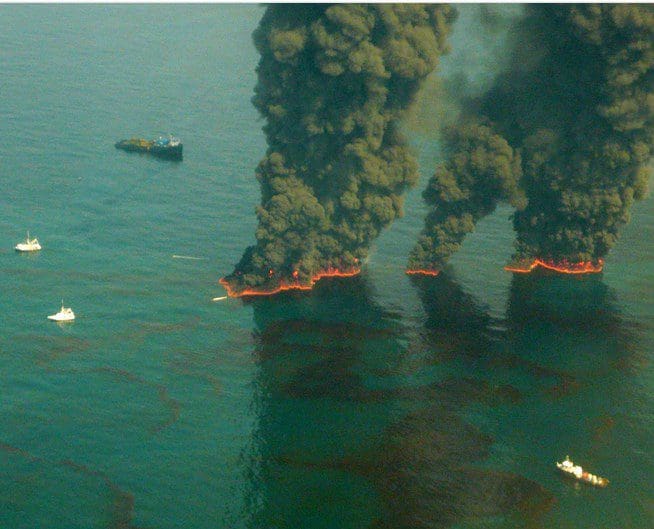
The BP well blowout off the Louisiana coast in April 2010 killed 11 people aboard the drilling rig and set off the largest offshore oil spill in U.S. history.

The London-based company earlier pleaded guilty for its part in underestimating the spill’s size. BP also paid $525 million to the U.S. Securities and Exchange Commission, which alleged it downplayed the size to bolster stock prices.

BP agreed in 2012 to plead guilty to 11 counts of manslaughter for the deaths and two misdemeanor pollution law violations, paying a $4 billion settlement to the U.S.

The company is awaiting a separate court ruling on how much it will have to pay for violating the U.S. Clean Water Act. The government asked U.S. District Judge Carl Barbier to fine BP at least $12 billion.

BP has argued that any fine should be much lower, and that Barbier should consider its efforts to stop the spill. Barbier found in September that BP was grossly negligent in causing the blowout, raising the maximum possible fine.

COMPENSATION PAYMENTS

BP has put aside $43.8 billion to pay for the disaster. The company has already paid more than $28 billion in response, cleanup and compensation, BP said in a regulatory filing in April.

Rainey wasn’t trying to mislead anyone and was scurrying to provide estimates of the flow rate of a spill that was beyond anyone’s prior experience, Weingarten said.

Rainey wasn’t involved in the drilling of the BP well and wasn’t accused of any wrongdoing related to the blast. The U.S. claimed Rainey cherry-picked information from flow-rate reports to make the oil spill seem less catastrophic than it was.

“It was a guess submitted as scientific analysis,” Tsao had told the judge earlier.

Two BP well-site managers, Robert Kaluza and Donald Vidrine, were charged in November 2012 with involuntary manslaughter for the 11 deaths and face trial in February.

The case is U.S. v. Rainey, 12-cr-00291, U.S. District Court, Eastern District of Louisiana (New Orleans).


Source

Fugro Lands Alaska LNG G&G Job

0

Fugro has been awarded a large geotechnical and geophysical (G&G) programme by ExxonMobil Alaska LNG LLC (AKLNG – a consortium of ExxonMobil, ConocoPhillips, British Petroleum, TransCanada and the State of Alaska).

The 2015 G&G programme follows successful completion of a similar but smaller programme carried out by Fugro in 2014.

The geotechnical scope of work includes drilling and sampling of borings for the onshore liquefaction facilities, marine terminal and offshore pipelines. It also includes installation of monitoring wells, seismograph and in situ measurement of soil properties.

The geological and earthquake engineering scope will include assessment of geohazards, source characterisation, probabilistic seismic hazard and site response analyses. Bathymetric, side scan sonar, reflection and refraction surveys and sub-bottom profiling will also be conducted to assist in developing an integrated site model.

According to Fugro, these studies will assist AKLNG and its contractors to proceed with the FEED level design of the LNG terminal and associated offshore pipelines.

National Hyperbaric Centre teams with Danmedical to deliver a step change in medical support and training to the offshore industry

The agreement forms a key part of NHC’s on-going programme of capability enhancements designed to deliver improvements in the quality of medical training and support. Under the agreement DanMedical’s proven D-MAS HyperSat medical monitoring systems will be available for demonstration and training at NHC.

DanMedical’s systems have recently been installed in the hyperbaric chambers of NHC’s facility, allowing real-time medical monitoring of patients. The D-MAS device measures the patient’s heart rhythm and ECG, blood pressure, blood oxygen content and core temperature, thereby allowing specialist doctors to provide real-time, expert medical advice from outside the chamber.

D-MAS has already been deployed by a number of leading offshore energy contractors and medical advisors world-wide. With the equipment now also in place at the NHC’s hyperbaric facility, NHC will provide training and first-line support to Aberdeen-based clients and users of DanMedical’s services and devices.

Alan Green, General Manager of NHC said:

“NHC is committed to improving the safety of subsea operations through the delivery of high-fidelity training and world-class emergency response services. We share this commitment to safety with DanMedical, whose capabilities complement our own. They are a key partner in our mission to advance the services and capabilities of NHC.”

Peter Couldery, CEO of DanMedical added:

“We are delighted to be working with NHC to raise the standard of medical monitoring available to offshore workers. We believe that NHC, with the support of its parent company JFD, can play a key role in training medics, divers and workers in innovative medical practices that can save lives”.

About DanMedical

DanMedical enable better medical support to workers and patients in remote, difficult, or dangerous locations.

Dan Medical’s D-MAS telemedicine solutions allow a First Aider/Medic with a patient at a remote location to obtain, record and transmit vital patient medical information in real-time. This permits unprecedented medical support and better patient outcomes in remote locations.

D-MAS Remote is a complete clinical monitoring and diagnostic device, used by leading Medical practitioners worldwide. D-MAS HyperSat is our specialist device for use by Divers working in Saturation pressure and in Hyperbaric chambers.

About NHC

National Hyperbaric Centre (NHC) provides services and expertise to the subsea and pressure-related industries, offering a wide range of services from commercial diver training, hyperbaric welding, subsea testing, consulting and emergency services to customers worldwide.

NHC’s training centres in Aberdeen and Singapore join JFD’s training facility in Perth, Australia in the provision of industry-respected subsea training courses for commercial and defence divers.

About JFD

In 2015, NHC became a part of JFD.

JFD was formed through the merger of James Fisher Defence and Divex to become one of the world’s leading subsea operations and engineering companies.

JFD has bases in the UK, USA, Australia, Italy, Singapore, South Africa, Sweden, and Germany. The company is perhaps best known for its submarine rescue capabilities; the company offers a range of products and services focused on the underwater domain, from special operations vehicles to commercial salvage work.

About James Fisher & Sons plc

James Fisher & Sons plc is NHC’s and JFD’s ultimate parent company.

James Fisher & Sons plc is a leading service provider in all sectors of the marine industry and a specialist supplier of engineering services to the nuclear industry in the UK and abroad. With offices in the Europe, the Middle East, Singapore, India, Australia and Africa, the company serves both the private and public sectors and adopts a practical approach to the management of assets and provision of high quality services, ensuring an appropriate use of technology and a sound understanding of each customer’s requirements. Building on the experience and expertise gained over more than 160 years of operating in the marine environment, James Fisher brings practical experience, innovation and commercial best practice to all of its clients’ projects and services.

For more information, please visit : http://www.danmedical.com


Source