Home Blog Page 249

Construction Starts at Sandbank OWF

0

Vattenfall and SWM have begun the pile driving on monopile “SB 62″, marking the start of construction of the Sandbank wind farm 90 km off the coast of Sylt.

After the DanTysk offshore wind farm, Sandbank is now the second infrastructure project that Vattenfall and SWM are realizing together.

The sister project, DanTysk, which is around 20 kilometres closer to the North Frisian coast, was officially put into operation on 30 April 2015.

“The Sandbank project is part of our offshore cluster strategy which has the goal of further increasing the marketability of offshore technology. The cost efficiency of the planning, construction and operation of the wind turbines is of the highest priority. In doing so, we want to further advance efficient electricity generation in the North Sea. We are therefore very happy to see Sandbank go offshore,” says Gunnar Groebler, Head of Business Area Wind at Vattenfall.

Christian Vogt, Head of Investment Management at Stadtwerke München: “SWM have highly ambitious expansion plans for renewable energies. By 2025, we want to be generating enough green power to supply all of Munich. Wind energy, particularly offshore, will play a vital role in the implementation of this. It has the most potential and is even able to provide base loads. For this reason Stadtwerke München have become involved with two further offshore wind energy projects in addition to DanTysk and Sandbank. This comparatively young technology has already overcome a huge learning curve and we expect even more significant synergy effects from Project Sandbank as a DanTysk sister wind farm.”

150528_Grafik_Lageplan_Sandbank_quer_englisch.indd

The Sandbank offshore wind farm is part of the Vattenfall Sylt-Esbjerg-Cluster, which is located in German-Danish territorial waters and also includes the Horns Rev 3 and Horns Rev 1 wind farms.

The investment costs for Sandbank are around EUR 1.2 billion. Vattenfall holds a 51% stake in Sandbank Offshore GmbH, which was set up to implement the project, while SWM holds a 49% stake. 72 Siemens wind power plants in the 4-megawatt (MW) class will be constructed, providing an installed capacity of 288 MW. Sandbank is planned to be fully commissioned in 2017.


Source

Successful Completion of IMCA Surface Supplied Diving Assessment for Shanghai Salvage Divers

Successful Completion of Surface Supplied Diving Assessment For Shanghai Salvage Divers in Accordance with the IMCA Experienced Diver Assessment Requirements
Shanghai Salvage Company Divers with KBA Assessment

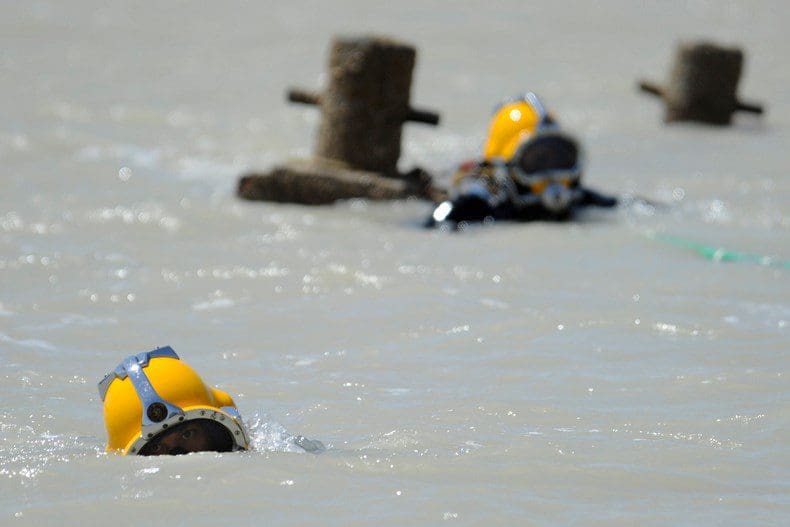
Four groups with a total of 43 experienced divers from Shanghai Salvage Company (SSC) have successfully completed their IMCA Surface Supplied Diver Assessment. The assessment was conducted from the Shanghai Salvage new DP 2 Diving Support Vessel (DSV) ‘Shen Qian Hao’ while in offshore Shanghai area. The assessments were conducted over a 24-day program from 14th May – 6th June 2015 andcarried out in accordance with the International Marine Contractors Association (IMCA) document – ‘Competence Assessment of Experienced Surface Supplied Divers’.

KB Associates Pte Ltd (KBA) is the only company approved by IMCA outside of the UK to conduct the experienced diver assessment program and were contracted by SSC. KBA provided two assessment teams, each comprising of two Assessors, one IMCA Diving Supervisor, and one IMCA Diver Medic to the three groups of 12 divers and one group of 7 divers. The assessment requires every diver to complete a theory review followed by an exam and a range of practical assessments while using an IMCA compliant surface supplied air diving system and support equipment. The practical tasks included the use of airlifts, inspection and photography, a range of u/w tools, emergency diver recovery drills, diver rescue drills, 40msw deep dives and DDC drills as required by the assessment criteria.

SSC had mobilised one wet bell system onto the DSV in support of the built in wet bell system on board. This allowed for two groups to be assessed, one by each assessment team at a time. Having such a large group of divers on board the vessel was an interesting concept for managing and arranging daily assessment tasks, however after a short period of time we established a good routine and the Chinese divers work hard and proved to be very good competent divers in the water. Moreover, I’m impressed with the work ethic of the Shanghai Salvage Divers both above and below the waterline, they are keen to embrace the IMCA standards and procedures.” said Michael Whelan – KBA Lead Assessor, who has over 30 years of experience as a diver, diving supervisor and HSE UK commercial diver trainer.

SSC are in the process of applying as an IMCA approved Diving Contractor member and have an extensive programme to align their operational safety and standards to meet the international market with various training initiatives, one of which is the recent diver assessment to bring the competence level of local divers to international IMCA’s standards and prior to this, their divers attended the Kirby Morgan DSI Helmet Technician (http://www.kbatraining.org/courses/Commercial-Diving/KIRB…) training in February during the Lunar New Year period with KBA Training Centre (a subsidiary of KB Associates), and it is in the pipeline for other diving competence development training such as IMCA Diver Medic (http://www.kbatraining.org/courses/Commercial-Diving/IMCA…), IMCA Trainee Air Diving Supervisor, and similar courses for their personnel.

KBA has been working with Shanghai Salvage for approximately seven years and is pleased to have been associated with the change in operation for their offshore project planning and international alignment.

Darren Brunton, Managing Director of KBA commented, “Shanghai Salvage is committed to train and upgrade their team and required their large group all be assessed at the same period. This involved an extensive planning, auditing and review process so that the assessment project would go safely and without delays. KBA translated the assessment documentation into Chinese, there were 5 members of the assessment team who spoke Chinese and SSC provided 2 translators which all help to ensure the assessment was a success. It was from the DP 2 Diving Support Vessel (DSV) ‘Shen Qian Hao’ that the divers had completed their 300msw saturation dive and some of those divers were being assessed for the surface supplied diver competence. We are pleased to be working with a company who has a mind set to develop, grow internationally and meet new levels of operational standards.’

Peter Kang, Deputy Director of Equipment Management Division of Shanghai Salvage has commented “Shanghai Salvage is an IMCA Marine Contractor member, holding more than 40 professional vessels, including crane vessels, DSV, AHTS and ocean going tugs. We have over 30 years’ experience in the international market. In China, Shanghai Salvage Company is the largest diving company and is in the process of application to become IMCA approved Diving Contractor member soon.

For further information regarding the assessment program, please contact KBA Group Head Office at Tel: +65 6546 0939, email us at enquiries@kbassociates.org or visit our website at www.kbassociates.org

Brazil Clears Shell’s $70B Purchase Of BG

0

Brazil gave the green light to oil major Royal Dutch Shell to buy smaller rival BG, advancing the $70 billion merger – the largest of the past decade – closer to completion in early 2016.

Shell is set to become the largest foreign operator offshore Brazil after it buys BG, so the clearance from the country was a crucial step to complete the merger on time.

Brazil’s competition authority CADE said on Wednesday it had given preliminary approval to the transaction “without restrictions.” BG said that if no appeals were lodged or referrals made in the next 15 days, CADE’s clearance would become final. A spokesman for Shell confirmed the approval and the 15-day appeals period.

BG had previously obtained a green light from United States Federal Trade Commission (FTC) and now only needs pre-conditional approvals from the European Union, Australia and China for the merger to go ahead.

“The filing process for each of these is under way, and the transaction is on track to complete in early 2016,” it said.

Shell and BG produced a combined 212,252 barrels of oil equivalent per day in Brazil in May, or 7.1 percent of the country’s total. Analysts expect this figure to double to nearly 500,000 boepd by 2020.

The two companies have stakes in Brazil’s most exciting oil plays, with BG owning 25 percent of the massive Lula field and Shell owning 20 percent of the Libra prospect.

The deal comes as Brazil’s state-run oil company Petroleo Brasileiro SA is battling with a massive corruption scandal, heavy debt load and lower oil prices. The company, which is the operating partner in BG and Shell’s key offshore projects, is scrambling to sell assets to pay off debts and allow it to invest in ouput growth.

Brazil, itself on the verge of its deepest recession in a quarter century, is keen to ensure new production from giant offshore fields is not hindered by the scandal, which led to 23 implicated service companies having their payments frozen and being banned from bidding for new work.

Shell’s purchase of BG, which followed the near halving of oil prices over the past year, was expected to spark a flurry of mergers and acquisitions in the energy industry, but so far few deals have been announced.


Source

NEEMO Underwater Astronauts Training Due to Begin

0

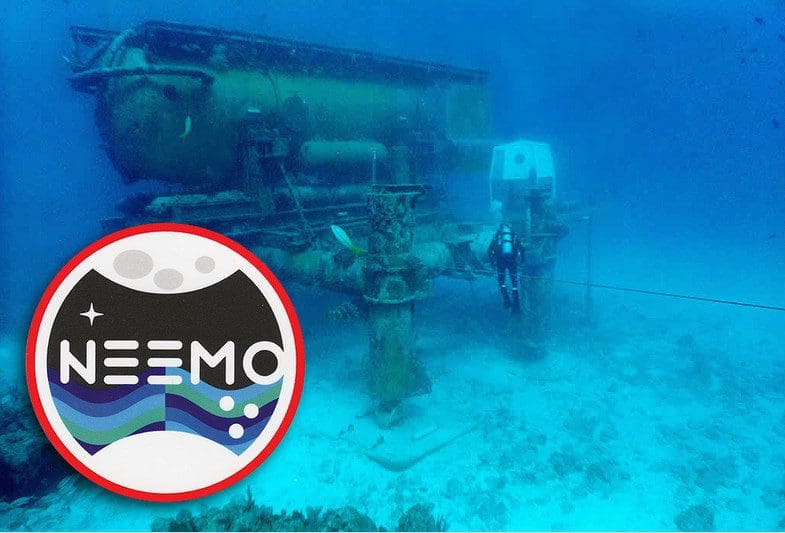
ESA astronaut Luca Parmitano is to lead NASA’s 20th underwater astronaut training mission this month.

Starting on 20 July, the 14-day NASA Extreme Environment Mission Operations sortie, or NEEMO, will see a team of four living and working in the Aquarius underwater research station off the coast of Florida, USA.

Luca’s crewmates will be NASA astronaut Serena Aunon, NASA spacewalk specialist David Coan and Japanese astronaut Norishige Kanai. For two weeks they will live and work almost 20 m underwater to test tools and techniques for spacewalks as they venture outside the base in full scuba gear, ESA wrote.

By adjusting their buoyancy, the aquanauts can simulate the gravity levels found on the Moon, Mars and asteroids.

Luca is an experienced spacewalker who ventured outside of the International Space Station twice during his six-month mission in 2013. His second spacewalk was cut short as water built up in his helmet from a problem in his spacesuit.

Luca commented on the announcement of his commanding role for this year’s NEEMO: “Astronauts and a lot of water – my kind of environment!”

Last year ESA astronauts Thomas Pesquet and Andreas Mogensen spent time underwater and this year’s NEEMO will continue to find ways to improve coping with communication time delays due to the distance of potential destinations.

The aquanauts will further test ESA devices. A wearable ‘mobile procedure viewer’– mobiPV – gives astronauts mobile access to hands-free instructions with audio and video that only they hear and see, while mission control looks over their shoulder and offers advice.

“You could say that this underwater test of mobiPV is a rehearsal for the version that will fly to the International Space Station in September for Andreas Mogensen’s mission,” explains ESA’s Mikael Wolff.

Luca and his colleagues will test mobiPV by running the Skin-B experiment.

‘Emergency Budget’: UK Chancellor Confirms Tax Relief for O&G Investment

0

UK Chancellor of the Exchequer George Osborne confirmed Wednesday tax relief measures for the development of oil and gas fields on the UK Continental Shelf that he first announced in March. Osborne also stated in his ‘Emergency Budget’ – the first Budget from a Conservative government for almost two decades – that the types of investment that will qualify for allowances have been broadened.

In the previous March Budget Osborne announced a new tax allowance to stimulate investment, while the government would also cut both the Petroleum Revenue Tax and the Supplementary Charge – which is paid on ring-fenced oil and gas profits.

In his Budget speech to Parliament Wednesday, Osborne said: “The large reductions in tax on North Sea oil and gas that I announced in March are going ahead and today we broaden the types of investment that qualify for allowances.”

This broadening will see the expansion of North Sea investment and cluster area allowances to include additional activities. The definition of investment expenditure will be extended to include what the Treasury called in a Budget document “certain discretionary non-capital spend and long-term leasing of production units”. The allowance will exempt a portion of a company’s profits from the Supplementary Charge.

Meanwhile, the government also plans to bring forward proposals for a sovereign wealth fund for communities that host shale gas projects.

Osborne’s Emergency Budget received mixed reviews from oil and gas professionals. Permasense Marketing Director Dr Jake Davies commented in a brief analytical statement:

“The industry welcomes continued support from the UK Government. However, operators in the UK North Sea will remain focused on generating maximum return from the information and resources at their disposal. Therefore, we will still see a demand for innovative, cost-effective solutions to safely enhance and maintain production operations for existing assets, without increasing operational risk or compromising safety.”

Scott Lehman, Vice President of Product Marketing & Product Management at Petrotechnics, echoed Davies’ positive view.

“Support from the UK Government for the Oil and Gas industry is welcomed by Petrotechnics. Cost reduction is high on the agenda for the industry but it is important to get the dynamic between cost, risk, activity and safety correct. With an increased focus on understanding and managing operational risk, the industry can improve its operational effectiveness and ultimately unlock higher levels of asset productivity in this time of economic uncertainty,” Lehman said in a company statement.

Other industry professionals were disappointed with Osborne’s plans and believed the government should be doing more to support the oil and gas sector. Air Energi Group Commercial Director Graeme Lewis stated in an analytical comment:

“It’s disappointing to see that there have been no further oil and gas tax breaks announced in the latest Budget. Considering the challenges being faced by the industry in the North Sea, there is a real chance that this approach will risk more jobs in the sector. The government could, and should, have done more to support the industry at this difficult time.”


Source

TMT Ships Final Two ROVs for Sapura’s PLSV

The last two ROVs to leave Australia’s Total Marine Technology (TMT) mark a major milestone in a very significant contract for the company.

Typhoon 28 and 29 were the last ROVs to be built for one of TMT’s most significant jobs, the build, install and support of 12 ROVs for Brazil.

These two ROVs, like the 10 before them, have been shipped to Norway to be installed on Pipe Lay Support Vessels (PLSVs), and then put to work in Brazil. The vessels are operated by Sapura Navegação Marítima (SNM) and will be working for Petrobras. TMT’s build and installation contract which began mid 2012, will run for four years.

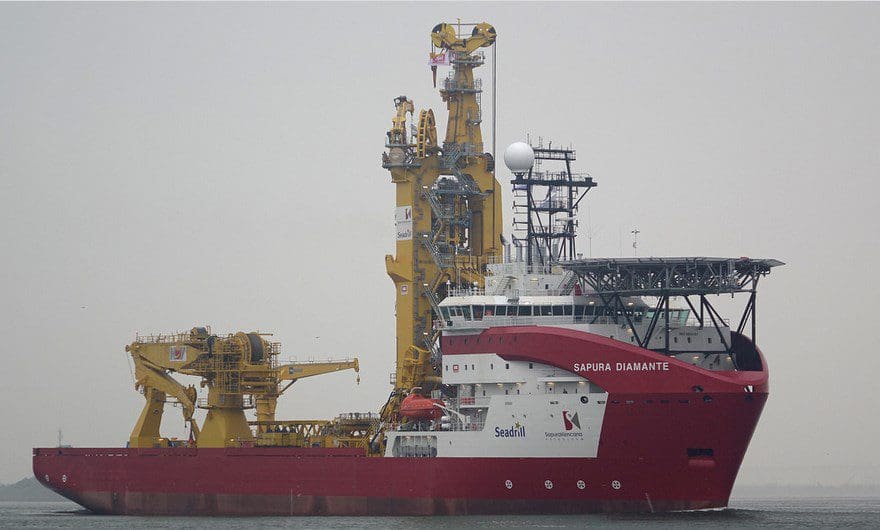
The first two Typhoon MK2 150 ROVs left TMT in late 2013 and were installed onto the PLSV Sapura Diamante at the IHC shipyard in Rotterdam. The last two Typhoons will be installed on board the PLSV Sapura Rubi in January 2016. They should begin working with the other five vessels in Brazil by June 2016. The vessels are contracted to Petrobras by SNM for five years.

TMT will have an active support role in the local region until at least August 2016 and will be building on its local presence. In addition to an office in Rio, TMT has committed to ongoing training and support of local ROV pilots and maintenance crew. Interactive training modules and associated materials have been created by TMT for improving the knowledge and skills of pilots and staff in the region.

OPEC Beware: West Africa Could Lead The World’s Next Production Boom

0

During the early 1970s, Saudi Arabia cut production as a reminder that it held the cards to the world’s petroleum resources. What the swing country did not count on was the slew of development and production that would subsequently take place in the North Sea. As a result, a new oil supply was born far away from the Middle East.

Fast forward to today: With oil saturating the market again, Saudi Arabia has kept its spigots on this time to try and prove once again its place on top of the hydrocarbon pyramid. Despite its effort to slow production – primarily from shale in the United States – there is still room for surprise in the oil marketplace.

The small offshore oilfields of West Africa, if exploited properly, could become the next big economical play even as oil prices hover around $60 a barrel, said Keith Millheim, a director at Atlantis Offshore, an offshore technology company focused on well testing, production and drilling, to Rigzone. And, all it takes is one adventurous company to get the ball rolling.

INNOVATION IN THE NORTH SEA

Entrepreneurs such as the U.S.-owned Hamilton Brothers learned how to make small fields in the North Sea economical in the mid-1970s, specifically the Argyle Field off the coast of Scotland that brought Great Britain its first oil. The company’s game-changing technology was the first Floating Production Storage and Offloading (FPSO) vessel deployed for oil production. It changed the offshore industry forever.

“If you have the money and you can find the technology to make it work, things begin to snowball and other companies come in, just as Hamilton Brothers essentially launched the industry in the North Sea. Entrepreneurs created the small companies that grew the North Sea,” said Millheim, who will be speaking at the 2015 Africa – Small & Marginal Oil Fields Development Conference in London this August.

Small and midsized companies came into the North Sea with a new set of tools, such as FPSOs, to make small fields commercially viable. Their key ingredients were their willingness to take risks, innovative technology and investors willing to back their ideas, Millheim said.

Countries including Norway and the United Kingdom opened their doors to major operators and required them to invest in the countries’ internal research entities and to train their people – thus creating a path to a self-sustaining industry.  

MAKING WEST AFRICA ECONOMICAL

West Africa, particularly its small offshore oilfields, could be the next “North Sea scenario” if played correctly, Millheim said.

“From the typical types of reservoirs encountered offshore to their size and how prolific they are, it’s really a dream,” he said. “There is possibly more oil in the small fields in West Africa than in the reserves in the big fields. How do we change our thinking to make them work?”

Many fields are capable of producing 8,000 to 20,000 barrels of oil a day, Millheim said.

“If you can do it economically, it’s a company maker,” he said.

Unlike the North Sea, which comes with environmental challenges of rough weather and sea ice, the coast of West Africa is a more ideal place to work – more ideal than the Gulf of Mexico, which battles hurricanes and other destructive currents, Millheim said.

Furthermore, the continent is welcoming of international investors, as the majority of its countries have done little to invest in the technology needed to extract their own hydrocarbons.

Over the years, major oil companies have exploited the large oilfields of West Africa as they saw fit. The host countries never required that investments be made in internal technology centers or in research and development activities, Millheim said.

“Nigeria has some of the largest resources and a large population, but they have never really invested in the technology that is driving 80 percent or more of their economy,” he explained. “That’s horrific.”

As a result, West Africa remains ripe for investors who are willing to exploit smaller fields.

“Who will rally? Who will be the leader? The resources are there. Who’s going to pursue them and how long will it take? Those are the questions,” Millheim said.

DYNAMITE COMES IN SMALL PACKAGES

Because the threshold for many major operators is roughly 200 to 300 million barrels of recoverable oil, many, including Royal Dutch Shell plc and Chevron Corp., have abandoned many oilfields considered small or marginal in Africa in search of larger ones, said Sunny Oputa, CEO of Energy & Corporate Africa, to Rigzone.

“They were not worth the economic investment to Shell or Chevron but you know what they say: ‘One man’s meat is another man’s poison,’” Oputa said. “These small fields are good for small, independent and indigenous companies. Some wells could produce for 10 to 15 years. They will make money.”

Investors intrigued by Africa’s small, offshore fields are often wary of two things: the cost and availability of innovative technology that can make exploiting small fields commercial, and the fact that many small fields are located in deep water, Millheim explained.

However, unconventional types of technology can be successfully applied to developing small, conventional deepwater oilfields.

“There are service companies and providers that can do it all,” Millheim said.

Deepwater locations shouldn’t be feared either, especially when some African countries have reputations for insurgency and militancy.

“Deepwater fields are far away enough to avoid problems of groups seizing facilities,” he added.

“Whether they are indigenous companies or small companies that feel strong enough to play in West Africa, that’s where we will get our major activity from,” Millheim said.

NEEDED: TECHNICAL INNOVATION

To make a small play commercial in West Africa, the key will be using existing technology in unconventional ways. Just as horizontal drilling had been used for decades before its combination with hydraulic fracturing made it a powerhouse technology, the same type of application must take place in Africa for lucrative discoveries to be brought on production, Millheim said.

One way to help pave the road to a boom, so to speak, is to lower the cost of operations and infrastructure, Oputa said. An as example, he suggested riser technology that is connected directly to small production vessels called Floating Production Units (FPU) rather than relying on costly FPSO vessels.

For reservoirs with geological challenges, hiring an adept reservoir engineer and implementing an effective reservoir management plan can be a good solution, Oputa said.

“Innovation, innovation, innovation,” he added. “The oil industry will tell you that we are innovative, but that’s not necessarily so for the majors. New technology is often challenged. But at the end of the day it’s all about the profits. And there are profits to be made.”

Just as entrepreneurs launched the discoveries in the North Sea as well as the shale boom in the United States, they also are likely to open the door for developing West Africa’s small fields, Millheim said.

In terms of production threats, Saudi Arabia is more concerned about the United States.

“I don’t think Saudi Arabia considers Africa anything to worry about,” Millheim said.

However, it only takes one company thinking outside the box to change that.


Source
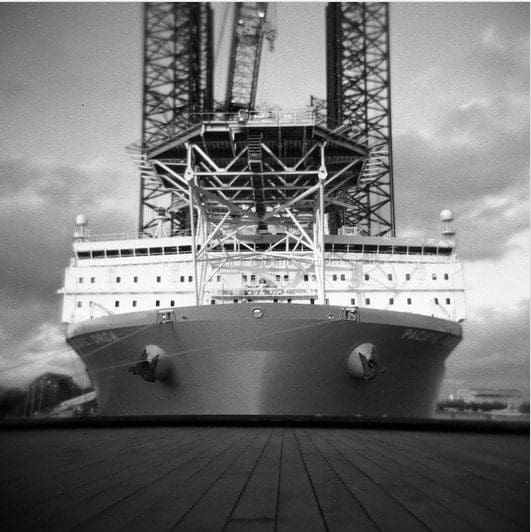
Fugro Americas Delivers First Project

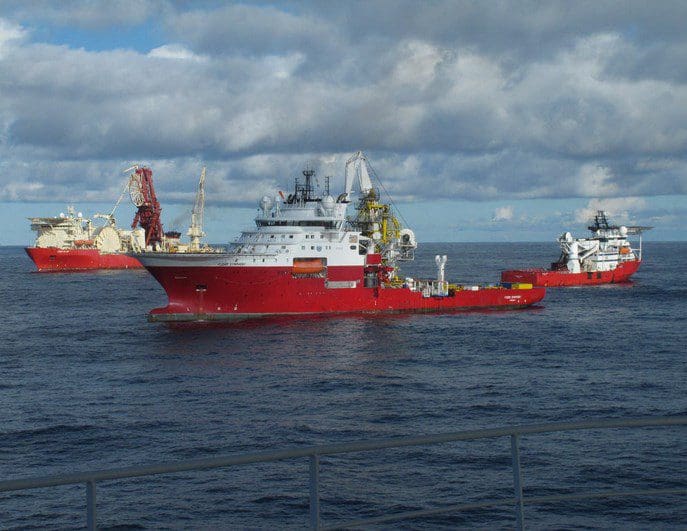
Fugro informed that its geophysical survey vessel, the Fugro Americas, has successfully completed data collection for a geochemical coring campaign in the Caribbean.

The project marks the maiden voyage of the newbuild vessel.

Mobilisation for the campaign immediately followed the vessel’s departure from the construction shipyard in Louisiana in April.

The integrated project comprised 141 piston cores and 7 heat flow measurements that yielded over 1,500 biological and geochemical samples.

In an article discussing the campaign, Caribbean Port Agencies, Inc. asserted: “It was a very successful project, both for the vessel owner and the oil major that contracted her for the work.”

“The Fugro Americas represents a pivotal advancement in multi-purpose geophysical survey operations and, together with Fugro’s comprehensive understanding of the dynamic objectives and constraints of deepwater operations, supports the company’s global commitment to exceeding client expectations,” said the company in a press release.

Scientists Take Closer Look at Eckernförde Bay

0

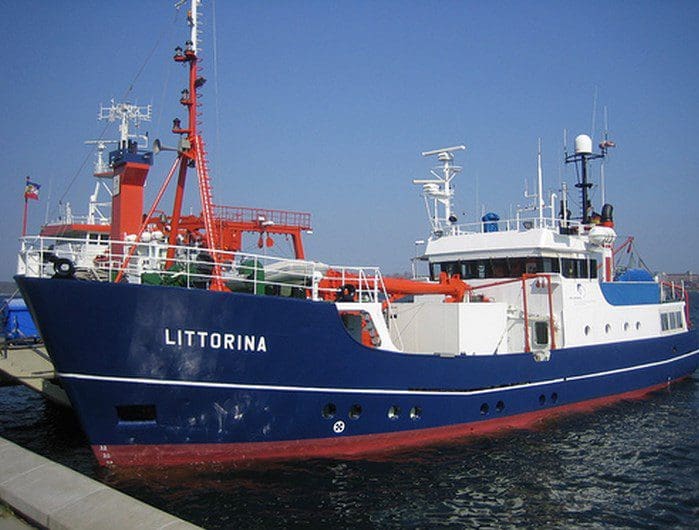
The GEOMAR Helmholtz Centre for Ocean Research Kiel has started a long term monitoring of the Eckernförde Bay and the last three years scientists have obtained high resolution bathymetry using RV LITTORINA and RV ALKOR.

Eckernfoerde Bay comprises a variety of geological, geochemical and biological features that construct a unique underwater landscape. Earlier studies have revealed the large scale geology of the seafloor and its relation to submarine freshwater seepage as well as fine scale features such as pockmarks from which fresh water or gas is being released every day.

Detailed analysis of the seafloor morphology and backscatter show that the area is more complex than previously thought. This month, three main surveys took place simultaneously at the bay. During the first survey the participating scientists mapped in detail the upper ten meters of sediments using a parametric sub-bottom profiler.

“It allows us to see at thin layers beneath the seafloor surface”, says Evangelos Alevizos from GEOMAR. With the second survey MBES bathymetry has been obtained over an area that had been mapped in 2012 already. “So we will be able to compare the results and observe any differences”, says Alevizos. Last but not least the so-called Mittelgrund was surveyed with an AUV. Mittelgrund is an underwater hill in the middle of the bay with different geological layers.

The survey of the Mittelgrund flanks was conducted in collaboration with the AUV Team “Tom Kyle” of the University for Applied Sciences (Fachhochschule, FH) Kiel. Students of the FH Kiel have developed the AUV especially for shallow water surveys and the “Tom Kyle” team has been awarded during the Student Autonomous Underwater Challenge-Europe (SAUC-E) 2014. “We are happy to say that for the first time we obtained data about the geological structure and various benthic habitats of the Mittelgrund using the AUV sonar-video and camera flying at 2 meters above seafloor”, adds Marcel Rothenbeck, engineer in the GEOMAR AUV team, who supported the student-team “Tom Kyle” during the development of their device.


Source

Hydromax secures NK certification

0

Davao firm now extends services to Japanese vessels

AYP Holdings Inc. subsidiary Hydromax has finally acquired a certification from Nippon Kaiji Kyokai or the Class NK, a Japan-based company that maintains a huge line of vessels.
Dr. Albert Y. Pingoy, AYP Holdings Inc. president, on Monday said that with the issuance of the certification on safety standards last week, they can now extend services to all NK vessels, considered a big market.
Hydromax, a commercial diving and salvage company, can now start doing underwater surveys and cleaning on all NK ships.
Pingoy added they had also applied for a certification from Bureau Veritas of France, a world leader in testing, inspection and certification services and are expecting its issuance by August.
“We are confident that we will make it next month,” Pingoy said, adding that Hydromax is the only company in Davao City that was issued certifications on safety standards making it at par with international standards.
Hydromax is engaged in providing world-class quality and efficient underwater survey and repair maintenance services on all types of vessels.
The firm’s services include cable laying survey, hull cleaning, hull inspection, pier inspection, ports and harbor repair, salvaging, underwater CCTV survey and underwater welding.
Hydromax also boasts of the latest state-of-the-art equipment like tools and diving gears, and is well-known in the shipping industry of the region.
The company is also certified by American Bureau of Shipping (ABS) in the United States,, Lloyds Register, Det Norske Veritas (DNV) in Europe, Marina and Philippine Ports Authority (PPA).


Source