Home Blog Page 248

In California, Big Oil Finds Water Is Its Most Prized Commodity

0

California’s epic drought is pushing Big Oil to solve a problem it’s struggled with for decades: what to do with the billions of gallons of wastewater that gush out of wells every year.

Golden State drillers have pumped much of that liquid back underground into disposal wells. Now, amid a four-year dry spell, more companies are looking to recycle their water or sell it to parched farms as the industry tries to get ahead of environmental lawsuits and new regulations.

The trend could have implications for oil patches across the country. With fracking boosting the industry’s thirst for water, companies have run into conflicts from Texas to Colorado to Pennsylvania. California could be an incubator for conservation efforts that have so far failed to gain traction elsewhere in the U.S.

Drillers may have little choice. The state’s 50,000 disposal wells have come under increased scrutiny this year, after regulators said they’d mistakenly allowed companies to inject wastewater near underground drinking supplies. Environmental groups sued the state to stop the practice at 2,500 sites considered most sensitive.

A win for environmentalists could drive up disposal prices and delay drilling by months for Chevron Corp., Linn Energy LLC and other companies, according to a June 12 report by Bloomberg Intelligence analysts Brandon Barnes and Matthew Kerner.

CONSERVATION RISING

Conservation is “suddenly leaping to the forefront,” said Laura Capper, founder of Houston-based CAP Resources, which advises the industry on water use. “You’re going to see a lot of retrofit programs. If they’re not already recycling, they’ll be adapting.”

Sarah Nordin, a spokeswoman at Linn, didn’t immediately return messages seeking comment on the lawsuit. Cam Van Ast, a Chevron spokesman, declined to discuss it.

In central California’s San Joaquin Valley, Chevron piped almost 8 billion gallons of treated wastewater to almond and pistachio farmers last year. California Resources Corp., the state’s biggest oil producer, plans to quadruple the water it sells to growers, Chief Executive Officer Todd Stevens told investors at an April conference.

An environmental group, Water Defense, questioned whether Chevron’s sales to farmers created the risk of industrial chemicals contaminating the food chain. The local water-quality control board ordered the company to conduct tests and Chevron says it has met all the pollution standards in its permit.

WATER FLOW

One of the industry’s biggest headaches is what to do with the torrents of naturally occurring “produced water” that come out of wells along with oil and gas. Members of the Western States Petroleum Association, a group of major drillers including Chevron and CRC, will unearth more than 92 billion gallons of wastewater this year, based on a May survey by the association.

The water’s typically too salty to be potable, although in parts of the state it can be treated enough for use by farmers. The vast majority of the waste is either reused for drilling or injected into disposal wells.

That may change thanks to businesses such as OriginClear Inc., a Los Angeles-based licensor of technology that purifies wastewater by zapping it with electric pulses. OriginClear has run pilot projects for both CRC and natural-gas producer Aera Energy LLC, William Charneski, OriginClear’s senior vice president, said in a Dallas interview.

Other companies are using technologies developed to treat petroleum-contaminated land to better cleanse their wastewater, said Barnes, the Bloomberg Intelligence analyst.

MORE RECYCLING

If California eventually mandates re-use of water at the well, it could energize recycling across the oil industry with other state legislatures following suit, said Chris Robart, a managing director at market-research company IHS Inc. of Englewood, Colorado.

One lesson emerging from oilfields: Operators don’t need to use expensive cleaning techniques to make wastewater suitable for drilling. Instead, less extensive but cheaper treatment is proving good enough, an insight that could help the practice take off elsewhere, Robart said.

“It’s cut out the whole high-end portion of the market,” he said. “They don’t need fancy technology. You need tried-and- true and simple and cheap.”

North of Santa Barbara, Santa Maria Energy LLC has won approval for an $8 million pipeline connecting its oilfields to a local sewage treatment plant. The company will use treated effluent from the plant in drilling operations.

Capper, the Houston consultant, has been hired to boost water recycling in one company’s fields from 20 percent to as much as 90, she said.

“I don’t think they have any choice but to recycle,” she said. “It’s the right thing to do.”


Source

Sinaran Andaman Vessel Sinks Off Thailand, Crew Safe

0

A Cambodian-flagged containership, Sinaran Andaman, sunk in the vicinity of Phuket, Thailand on July 08.

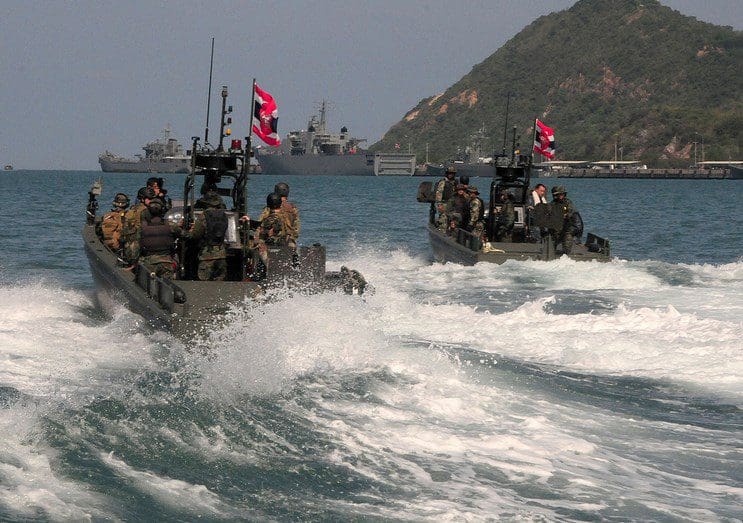
According to media reports, all 10 crew members were rescued by the Royal Thai Navy.

The vessel sank due to engine failure and inability to anchor. It also got caught in the monsoon waves which stranded the vessel on rocks of Koh Hae Island where it sunk.

This is the third accident in the waters of Phuket caused by monsoon. Earlier a fishing vessel and a barge sank in the same area.

The Authorities have prohibited sailing of smaller vessels in the area due to monsoon.

ONC to Build New Arctic Cabled Observatory

0

The University of Victoria’s Ocean Networks Canada (ONC) is partnering with the University of Manitoba to develop, install and maintain the cabled estuary observatory component of a new Churchill Marine Observatory (CMO) in Hudson Bay.

The CMO, formally announced by the federal government on July 6 in Churchill—Canada’s only Arctic deep-water port, will be a multidisciplinary facility where researchers will study the impact of oil spills on sea ice and investigate issues related to marine transportation and resource development in the Arctic.

The facility, led by the University of Manitoba, is funded by the Canada Foundation for Innovation (CFI), the Department of Aboriginal Affairs and Northern Development, and the Province of Manitoba.

The ONC contribution involves a cabled observatory to be built in the mouth of the Churchill estuary, along the main shipping channel across Hudson Bay and Strait, providing a monitoring system designed to strengthen Canada’s ability to protect the Arctic environment.

The collaboration builds on the success of ONC’s NEPTUNE and VENUS cabled observatories and, since 2012, a community observatory in Cambridge Bay, Nunavut.

“We’re thrilled to be part of this ambitious project that will bring real-time ocean observing to Hudson Bay,” says ONC Chief Scientist Dr. Kim Juniper. “This will be our second Arctic observatory, which adds to ONC’s growing network of coastal observing systems in Canada’s three oceans.”

Information from ONC observatories is being used for research, forecasting and monitoring the health of the ocean environment. In the coming years, says Juniper, the Arctic Ocean will face a dramatic increase in human pressures from climate warming, ocean acidification, and increased shipping and resource development.“High-quality scientific data will be critical to understanding these changes and mitigating their impacts on ocean ecosystems and coastal communities.”

EMAS AMC-LTHE JV Signs 6 Year Deal with Saudi Aramco for Offshore Work

0

Singapore’s Ezra Holdings Limited (Ezra or the Group), a leading contractor and provider of integrated offshore solutions to the oil and gas (O&G) industry, announced Wednesday that its Subsea Services Division, EMAS AMC has signed a six year long term agreement (LTA) with one of the world largest national oil company, Saudi Aramco, with exercisable options to extend for another six years (2×3 years), in a consortium with India’s Larsen & Toubro Hydrocarbon Engineering (LTHE).

Under the awarded LTA, LTHE and EMAS AMC will execute offshore projects with Saudi Aramco that include work such as project management, engineering, procurement, fabrication, transportation and installation works (EPCI) of offshore facilities such as platforms, pipelines, submarine cables and other offshore services.

“This long term agreement is the embodiment of our working relationship with LTHE and Saudi Aramco, and is aligned with our subsea strategy of focusing our capabilities and expertise where tendering activities remain robust,” said Lionel Lee, Ezra’s Group CEO and managing director.

“We are grateful to Saudi Aramco for giving us this opportunity to showcase our project enabling assets and operational excellence in the Middle East, and this endorsement will drive the subsea business forward, bolstering our track record as a global solutions provider.

“We are also very excited to partner LTHE in this undertaking. I am confident that between LTHE and ourselves, we will deliver safe and timely projects in the Middle East, and I look forward to a very fruitful long-term partnership.”


Source

PSA Audits Statoil’s Norne Subsea Facilities

0

The Petroleum Safety Authority has carried out an audit of integrity management of flexible risers and subsea facilities and associated safety equipment at Norne.

The objective of the audit was to verify that the integrity management of flexible risers and subsea facilities and associated safety equipment on land complies with the regulations and the company’ own requirements.

PSA informed that no non-conformities were identified.

Two improvement points were identified in connection with Documentation and Responsibilities.

Statoil has been given a deadline of 28 August 2015 to report on how the improvement points will be dealt with.


Source

Four Firms Exit Initial Offshore Tender In Mexican Oil Opening

0

Four companies have bowed out of the initial installment of Mexico’s so-called Round One oil auction, the first step in the country’s historic sector opening, regulator CNH said on Monday. The Mexican units of Noble Energy and Glencore, as well as Colombian national oil company Ecopetrol, have all asked to exit the competition for 14 shallow water oil fields set to be awarded on July 15.

Thailand’s PTT Exploration and Production Public Company Limited also dropped out. The CNH did not specify why the firms decided they would no longer participate in the initial auction for shallow water exploration blocks located along the southern rim of the Gulf of Mexico.

Some oil companies have pointed to tough rescission clauses built into the auction’s production-sharing contracts as a potential problem. Meanwhile, Premier Oil opted to desist from seeking potential opportunities as an individual operator, but will instead join an existing consortium prequalified for the auction.

The July tender now features 18 companies prequalified as individual operators, while the slimmed-down prequalified consortia stand at seven. 


Source

Bilfinger Nets Race Bank Foundations Order

0

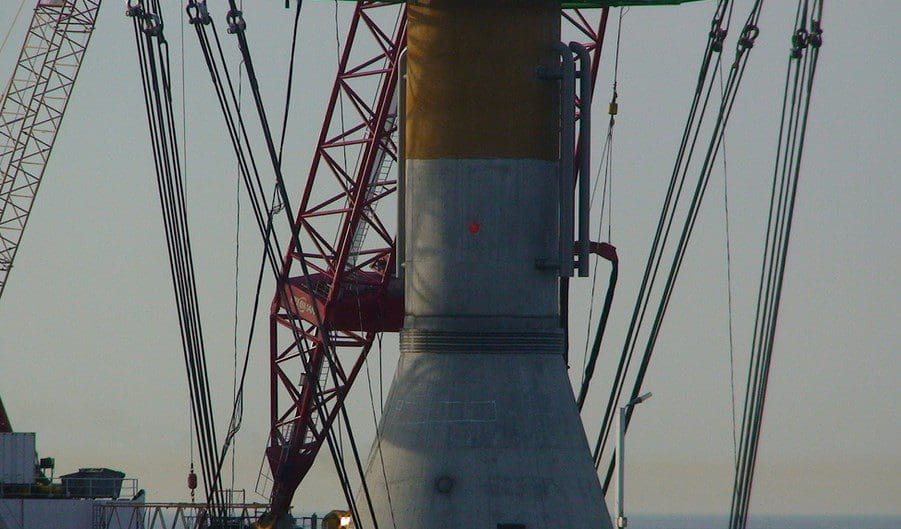
Bilfinger Mars Offshore has won an order for the production of 91 steel foundations for the  North Sea wind park.

The wind park, located 28 kilometers from the United Kingdom’s east coast, will have an output of about 580 MW and will provide 400,000 households with electricity. The client is Danish energy company Dong Energy A/S.

For Bilfinger Mars Offshore, the order is the starting signal for the production of offshore foundations at the new production site in the Polish city of Szczecin, the company said.

“We will begin with the work as soon as the plant is officially opened in October 2015 and will complete production of the steel foundations by the end of the coming year”, says the responsible Member of the Bilfinger Executive Board, Joachim Enenkel.

Succession Planning Critical for Longevity of Oil, Gas Companies

0

In recent months, restructuring has become almost an industry buzzword as oil and gas companies across the globe have adjusted their organizations’ operations in response to the dramatic decline in oil prices that began in late 2014.

In mid-June, Qatar Petroleum, the world’s largest producer of liquefied natural gas (LNG), completed an 8-month restructuring plan which included laying off foreign staff and taking over its foreign investment arm, Qatar Petroleum International. The company is focusing on future international expansion.

And with the current market climate, there are many other companies following suit: restructuring, implementing organizational planning and identifying the necessary changes that will help propel their company through the downturn. Part of that includes preparing for the sudden or voluntary change of a CEO or senior level executive. By taking a strategic approach to succession planning, oil and gas companies will be better equipped to handle the cycles common to the industry.  

WHO SHOULD BE INVOLVED IN SUCCESSION PLANNING

Tobias Read
Tobias Read, CEO, Swift Worldwide Resources
CEO, Swift Worldwide Resources

As a company’s succession planning involves developing internal employees to fill key leadership positions, it seems almost detrimental for a company not to have this process in place. And according to Swift Worldwide Resources CEO Tobias Read, it can be. 

“Companies that don’t look at succession planning are likely to end up failing,” Read told Rigzone. “Many CEOs won’t put succession plans in place very deliberately because they’re paranoid” of losing their job.

The truth is, with the downturn, we’ve seen quite a few CEOs of oil and gas companies come and go. Those who are prepared for the transition stand to fare better than those who aren’t. 

At Swift, Read said he talks often and openly with his board members and management team about building a succession plan. During these discussions, the board is able to report on strengths and weaknesses of employees and discuss possible successors to Read.

“Succession planning is an ongoing process,” said Read. “Sometimes the person you thought was the best thing since sliced bread just doesn’t develop.”

In order to be effective, Read said succession plans should be run by the CEO, but should also include board members and the individuals who will be affected.

Susan Power, owner and CEO of Higher Talent Inc., agrees.

“The current CEO has done the job for a number of years, so getting their perspective is critical”, Power told Rigzone. “Involving the board of directors is often a best practice because the CEO may be reporting directly into that board. Often, organizations will engage a professional third party such as an HR consultant.”

Susan Power
Susan Power, Owner and CEO, Higher Talent Inc.
Owner and CEO, Higher Talent Inc.

Power said 360-degree evaluations are also helpful in determining a CEO’s successor. The concept behind 360 degree evaluation, an assessment tool in which an employee’s boss, peers and subordinates provide feedback about the employee, is to really key in on whether or not the employee would do well in a leadership position.

For example, if senior executives feel strongly an individual would make a good CEO, but he or she doesn’t have the respect and credibility among direct reports, then other candidates should probably be considered.

EXPECTATIONS OF A SUCCESSOR

Expectations for workers in oil and gas are high: they need to come in with the right skill sets and attitude to get the job done efficiently. Many would assume the same applies for those hired in to a CEO position, but should that happen on day one of an employee assuming the role?

“I think it depends on whether a successor is internal or external, because if it’s an external successor, someone hired from outside the company, then it’s an unrealistic expectation,” said Power. “They still need to learn the operation systems, customers and other employees. I don’t think you can be completely ready to hit the ground running.”

Power said internal successors have the advantage of already having good relationships with team members. However, she pointed out that even internal successors probably have experience in only one or two departments in the business or limited experience in nearly all departments, so even they’ll need time to get up to speed.  

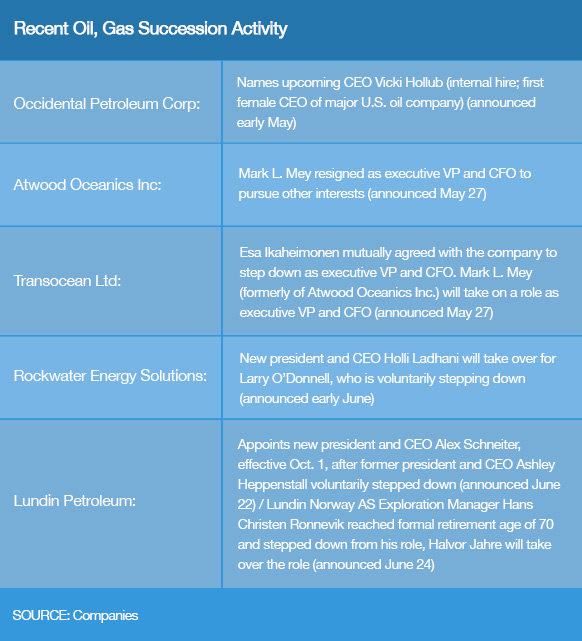
Recent Oil, Gas Succession Activity, Source: Companies

“There are advantages of promoting within an organization because it rewards employees who have tenure and it’s a good retention tool and motivator for other employees,” said Power. “External candidates can bring in new ideas and though it takes more time for them to go through the learning curve, they are often hired because they have excellent experience from other organizations.”

The expectation is that they can help identify new opportunities in the organization, too.

“I think there is an expectation that CEOs make an immediate impact on day one, but I do think that’s short-sighted,” said Read. “They just end up making poor decisions, lots of mistakes and upsetting lots of people.”

Read shared a real-life example of when he hired on a senior-level employee at Swift with plans of having her become a possible successor to him one day. For her first three months, she was not allowed to make a decision. This was by design as Read wanted her to spend the first three months of hire truly understanding the company so she could be a part of its success.

During succession planning, Read said it’s good to have a mix of hiring both internally and externally, though he advised always hiring from the outside kills the motivational factor for employees.

“Hiring from within gives employees hope and a chance for career development,” said Read. “There’s also the fact that they know the customers, they know the operations and they likely won’t come in and make radical changes.”

While Read said he would suggest bringing up someone from the company 70 percent of the time, he also looks for outside candidates to “bring in fresh blood and new ideas,” someone he can “train up and let take over.”

SUCCESSION PLANNING CHALLENGES

Just like any long-term strategic plans, organizations do face some challenges with their succession planning.

One challenge, Power identified, is failing to pay attention to the talent pipeline.

“What I often see in companies is a succession plan in place for the top job in the organization, but no plan for the pipeline positions feeding into the CEO role,” she said. “If you’ve spent several years preparing one person for a role and something unexpected happens, they wouldn’t have any other people in the pipeline to replace other key roles.”

It’s important to identify niche roles and those who possess the skills desired for those roles, Power suggested. Senior executives often leave unexpectedly during a downturn and having a succession plan that includes a pipeline of talent helps mitigate that risk.

Another challenge of succession planning is when there are no internal successors identified for a key role.

“In that case if a CEO unexpectedly departs, it could take months to identify a candidate,” Power said. “You’ll need to put together an external recruitment strategy and plan, and it could take four to six months to effectively recruit for the right person to fill the CEO position.”       

The biggest challenge with succession planning, according to Read: finding people who have the motivation to step up.

“Not everybody wants to be promoted,” he said. “It’s a bit disappointing, actually. I want them all to want my job.”

But, the truth is, moving to a senior level position isn’t the desire for all employees … and companies should take this into account when succession planning.

“Some will say they don’t want to take on the responsibility,” said Read, who stressed the importance of making the right decision when choosing a successor. The wrong decision can be quite costly: a regular employee could end up costing an employer 15 times their annual salary if they don’t work out.

Read has made the mistake of hiring somebody externally for a senior position as managing director and within a 12-month period, the employee did not work well for the company. Read said that costly mistake was in the market of 100 times the employee’s salary.  

DEVELOPING SUCCESSORS

Regardless of the industry downturn, Read said he encourages his company to constantly recruit ahead of the curve and continually build the strength of their team.

It’s important to have a continuous feed of new talent in an organization to ensure there are enough people in the recruiting pipeline, said Read. Though Swift and other companies have frozen recruitment in many areas, Read said his company is still “selectively recruiting.”

“Even during difficult times, we may see some people leave and decide not to replace those positions or we may downscale due to natural attrition,” he said. “But we’ve been selectively hiring. In the last week, we hired two really good senior people we may not have otherwise.”

It’s also necessary for companies to keep an open mind.

“A mistake I often see is when a company has to replace a CEO, they will have a prototype in their head of what they want the new CEO to be like … essentially, they want someone the exact same as they had before,” Power said. “But if you can find someone with different strengths to move the company forward, that’s advantageous. The economy has changed during the downturn so you may need someone with a new mindset. You have to know the market demands to effectively recruit and identify a successor that is right for the role.”

Power said rather than thinking of succession planning as fulfilling a single role, it should be a long-term mindset as it takes between six and 36 months to identify appropriate successors. Companies should focus on constant development of these people so that they’re ready when the opportunity arises for them to move into new roles.

“I think mentorship programs work really well because they provide a successor with more experience and pairs them with someone who has been in senior roles whom they can go to for advice and help with career decisions,” Power said.

A good mentor should be someone you don’t answer to directly, so there’s no conflict of interest. Mentoring also provides employees opportunities to work on special projects, prove themselves and test out their ability to work with senior management before placing them in that type of role.

A real concern for companies who have a succession plan and have identified people to be considered for certain roles is whether or not they let those employees know.

“Their question is ‘what if the position never opens up or we change our minds?’ Then we’re getting their hopes up for nothing,” said Power. “My advice to them is to be transparent with their employees. If they’ve been identified as a potential successor, that can be exciting for employees to know. However, appropriate expectations should be set. Stress that they are being considered and they have potential, but it is a plan and plans can change.”

Power said succession plans should be revisited on annual basis. They should consider things such as the demographics of employees to predict retirements that may happen within the next two to 10 years and forecast vacancies. They can also look at skills and qualifications of existing staff and determine if there are skill gaps in which the company has no choice but to look to hire externally. It also helps to have a “Successor A” and “Successor B” in mind, and sometimes it doesn’t hurt to have a “Successor C.”

“The worst thing is a company that is dependent on one or two individuals,” said Read. “You need to have at least two or three other people that can do the job. The most important thing we do at Swift is create an environment where people want to come to work every day, build a strong team, train people, have contingency plans, and an organization where the employees and company will carry on, regardless if people leave.”  


Source

CCGS M. Perley Joins Canadian Coast Guard Fleet

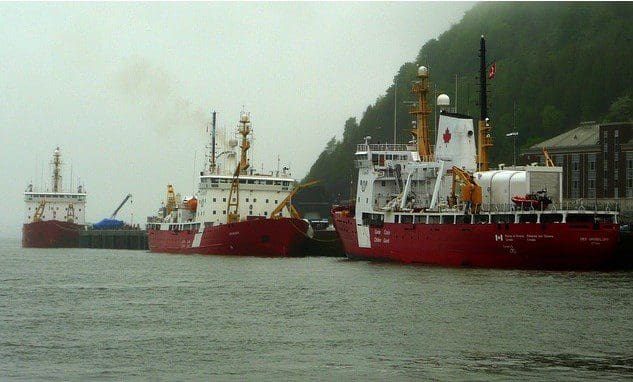
Senator Percy Mockler, on behalf of the Honourable Gail Shea, Minister of Fisheries and Oceans, welcomed the CCGS M. Perley to the Canadian Coast Guard fleet at the vessel’s naming ceremony.

The Senator was joined by sponsors Céline Perley and Peter Perley.

The CCGS M. Perley is named after Moses Perley, a self-taught naturalist in 19th century New Brunswick who did pioneering work on fisheries research in New Brunswick, the Gulf of St. Lawrence and the Bay of Fundy. Moses Perley was an early advocate for Aboriginal rights and was appointed New Brunswick Fishery Commissioner in 1855.

Although primarily designed for fisheries and oceanographic research missions in the Gulf of St. Lawrence, the CCGS M. Perley can also carry out search and rescue and pollution response duties if needed.

“Our Government is proud to invest in the modernization and procurement of new science vessels for the Canadian Coast Guard. In addition to generating economic growth, it will make an enormous difference to our scientists ensuring the sustainability of our fisheries,” said the Honourable Gail Shea, Minister of Fisheries and Oceans Canada.

“We are making strategic investments to help the Coast Guard and the Department’s scientists do their vital work on behalf of those who make their living from the sea,” said Senator Mockler. “I am proud to be part of a government that has invested more in the Canadian Coast Guard than any government in Canadian history.”

Commercial Diving Schools

Commercial diving schools can help you gain the practical skills, technical expertise, and industry-recognized credentials required to pursue the adventurous and exciting career that you have always wanted? If so, this guide to available diving schools and programs could be an ideal place to begin researching your educational options.

By choosing to enroll in professional or commercial dive training, you can have the chance to study everything from hyperbaric chamber operations to underwater digital photography to equipment repair and maintenance. Formal training can also teach you how to dive within a wide range of inland and offshore settings, while following proper diving procedures and safety practices.

Find out how schooling can help you graduate ready to pursue a wide range of exciting sport and commercial diving positions, such as scuba instructor, underwater welder, or dive medic technician. Begin by checking out the training programs listed below!


Featured Schools

CDA Technical Institute

  • Jacksonville, Florida
  • Air/Mixed Gas Commercial Diver
  • DCBC Assessment
  • Dive Medic Technician
  • Emergency Medical Technician
  • Hyperbaric Chamber Technician
  • Sport Diving Instructor
  • Underwater Welding Specialist


International Diving Career Institute at Hall’s

  • Marathon, Florida Keys
  • Divemaster / Boatmaster
  • Diving Accident Response Technician (DART)
  • Diving Equipment Repair
  • Professional Deep Tech Instructor
  • Professional Rebreather Instructor
  • Resort and Dive Business Operations & Sales
  • Scuba Diving Instructor
  • Underwater Digital Photography
  • Underwater Digital Videography

Commercial Diving Career Information

Imagine that instead of heading to the office, your morning commute involved a trip down to the ocean floor. This is a daily reality for many commercial divers.

From oceans and oil platforms to rivers and lakes, they can work in a variety of inland and offshore settings, handling a dynamic mix of tasks and responsibilities. However, there is one consistency: Regardless of the work environment or the task at hand, commercial divers work underwater.

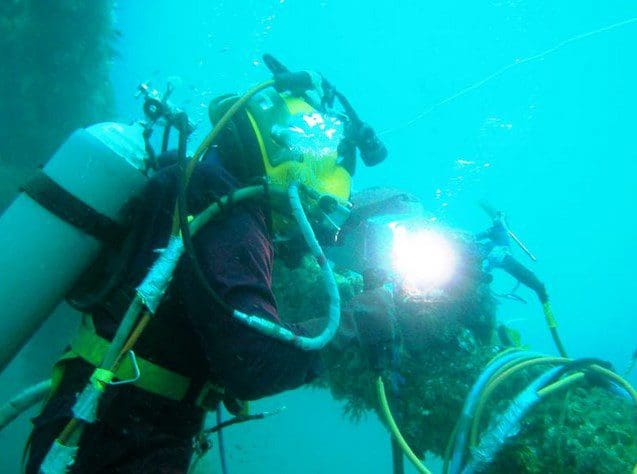
A commercial diver is someone who has been trained as an advanced diver and is able to perform a wide range of tasks related to underwater industrial construction. Many people tend to confuse commercial divers with underwater welders, but, in reality, they are two very different careers. Underwater welders are trained to perform one specialized task, whereas commercial divers can be responsible for many different duties that can include welding, inspecting bridges, and repairing water treatment plants.


What Does a Commercial Diver Do?

]There isn’t one specific job description that can be universally applied to this position because their responsibilities can vary widely depending on whether they choose to concentrate on one area or stick to a more general career that involves multiple areas.

What They Work On

Before adding any sort of skills or credentials, a commercial diver must first concentrate solely on becoming an experienced and talented diver. Once their diving abilities are proven, they can add areas of expertise. Some of the areas encompassed by commercial diving can include:

  • Underwater construction
  • Shipwreck salvaging
  • Underwater structure inspection, maintenance, and repair (including vessels, docks, pipelines, bridges, and more)
  • Oil platform maintenance, construction, and repair
  • Underwater photography (still and video)
  • Underwater welding

Where They Work

In one of two types of categories and environments (although some may spend time dabbling in both):

Offshore:

  • Takes place in oceans
  • Usually encompasses jobs related to oil platforms, exploration and salvaging, pipelines, and more
  • Is widely considered the more demanding area of commercial diving

Inland:

  • Takes place in non-ocean locations like rivers, lakes, harbors, etc.
  • Generally involves more engineering-related tasks such as building or repairing bridges and dams
  • Can allow for more flexible and work schedules

What Are the Education Requirements I Need to Know?

Requirements for work in this field include:

  • A high school diploma
  • Basic recreational and commercial SCUBA certification through an accredited program—usually accredited by the National Association of Underwater Instructors (NAUI) or the Professional Association of Diving Instructors (PADI)
  • First aid and CPR certificates
  • A diving medical examination from a qualified doctor

Commercial Diving Training Programs

Once you have obtained the necessary entrance and scuba diving qualifications, you are free to apply to commercial diving programs. Since certification is often required by employers to work as a commercial diver, it is a good idea to consider any program that can help you prepare to successfully obtain certification upon graduation.


What Can I Expect to Learn at School?

Once you have fulfilled all of the prerequisites, you will be ready to enroll in a training program. Because this career field involves such a variety of tasks, the curriculum for diving programs tends to cover a dynamic range of subjects.

Classroom Subjects

Some of the broad concepts typically found in training programs include:

  • Diving physics
  • Decompression procedures
  • Prevention and treatment of diving-related diseases and injuries
  • Commercial diving technology
  • Industrial and offshore safety concepts

Hands-on Training

Once you have a background in general and theoretical material, you can move on to more hands-on training, learning to work with underwater tools and obtaining practical experience in a variety of areas such as:

  • Operations planning
  • Seamanship and rigging
  • Welding and cutting
  • Blueprint drawing and report writing
  • Marine engine and compressor maintenance and repair
  • Hyperbaric chamber operations
  • Underwater photography
  • Hazardous waste operations and emergency response

Practical Experience

The majority of the time, quality programs will also include opportunities for you to gain experience practicing your skills in a real-world environment and/or within on-site training pools that simulate actual industry settings.

Specialized Training

Some diving schools offer opportunities to pursue more specialized training once you have completed a general program. Some of the typical specialties include:

  • Underwater welding
  • Dive medicine
  • Underwater nondestructive testing

How Long Does Schooling Take?

It depends on the type and length of the program you choose. That being said, a short-term certificate program can typically be completed in as few as six months, whereas an associate degree program may take up to two years or more.

SCUBA Training

It is also important to remember that, before you can enroll in a commercial diving program, you must become certified as both a basic recreational SCUBA diver and a commercial SCUBA diver. However, most accredited recreational programs can be completed in as little as two weekends if you are already an advanced swimmer with some diving experience and are able to complete the classroom portion online. Commercial SCUBA accreditation can normally be completed in five weeks as long as you have already logged the minimum required dives (usually 20) within the past year.


Is Certification Required?

Before you can work in the field, many employers require that you first gain certification. The most common certification in the industry tends to be from the Association of Diving Contractors International (ADCI). The ADCI is a non-profit organization founded in 1968 that has established industry-wide standards for commercial diving to help ensure safety.

Education

The first step in obtaining basic certification is to complete a program from a school with a course of instruction that is comparable to what the Association of Commercial Diving Educators (ACDE) recommends. The ACDE is a non-profit organization overseen by the American National Standards Institute (ANSI). It provides academic and training expertise to some commercial diving schools (as well as military dive schools and other related facilities) that meet or exceed the curriculum and training requirements for ADCI Entry Level Tender/Diver certification. These requirements are categorized into three separate areas:

  • Technical proficiency
  • Field experience
  • Demonstrated proficiency

Other Requirements

Once you have graduated from a program, you may need to meet additional prerequisites before receiving ADCI Entry Level Tender/Diver certification. These prerequisites are listed in the ANSI/ACDE Minimum Standard for Commercial Diver Training and include formal training or experience in:

  • Diving procedures and techniques
  • Emergency procedures
  • Physiology and physics as they relate to diving
  • Diving equipment
  • First aid and CPR
  • Electronics
  • Computer technology
  • Hydraulics
  • Mechanics

Advanced Certifications

Additional standards exist for those who want to perform work within hyperbaric conditions (such as underwater welding within a hyperbaric chamber).

If you wish to obtain certification beyond the entry-level Tender/Diver credential, then additional minimum qualifications apply. Full information on the ANSI/ACDE Minimum Standard for Commercial Diver Training and the prerequisites for its various credentials are available on the ADCI website.


What Is the Average Salary?

Income can be affected by a variety of factors, including:

  • How many years of experience you have in the field
  • The area of the industry you are working in
  • The type of environment you are working in (for example, offshore or inland)
  • The level of difficulty and safety associated with the work you perform

How Much Commercial Divers Make

Salary estimates from a 2012 study conducted by the United States Department of Labor’s Bureau of Labor Statistics show that average salary rates stack up like this: *

  • The mean hourly wage was $26.32.
  • The mean annual salary was $54,750.
  • The annual salary for the highest 10th percentile in the industry was $93,910 or more.
  • The top-paying states were New York, Washington, New Jersey, and California.

What Is the Employment Outlook?

According to a 2011 study by the United States Department of Labor’s Bureau of Labor Statistics, the job outlook for commercial divers varies by industry area and location. **

The industry areas with the highest level of employment were:

  • Civil engineering construction
  • Support activities for water transportation
  • Highway, street, and bridge construction
  • Utility system construction

The states with the highest concentration of commercial diving jobs were:

  • Louisiana
  • Alaska
  • Washington
  • Michigan
  • Texas

What Are the Best Things About the Work?

Commercial diving can be exciting and rewarding. Workers in this industry tend to be passionate about their careers and enjoy upsides like:

  • An active lifestyle—You get to be physically active and are encouraged to maintain good physical health, strength, and endurance.
  • Variety—You will have very little risk of boredom since the job involves such a dynamic range of responsibilities.
  • Travel—You could have the opportunity to travel to many different locations throughout the span of your career.
  • Camaraderie—You will have the chance to meet and work with many different people. Due to the need for teamwork in the industry, close friendships are often forged.


Source