Home Blog Page 247

Brazil Sees $870 Million in Exploration Spending From Auction

0

Oil companies are expected to invest about 2.8 billion reais ($870 million) to complete minimum exploration work at concessions Brazil plans to auction in October, according to the country’s oil regulator. Signing bonuses for the offshore and onshore blocks should reach 979 million reais, Marcelo Castilho, the bidding superintendent at Brazil’s oil regulator, known as ANP, said Thursday at a seminar in Rio de Janeiro.

Brazil will offer 266 blocks – 182 onshore and 84 offshore – in what will be the country’s 13th round. Brazil slowed the pace of oil auctions almost a decade ago after it discovered giant deposits in the so-called pre-salt region in deep waters, and overhauled the country’s oil legislation to increase the government’s control of the resources. Oil production growth in Latin America’s largest economy has fallen short of forecasts.

The regulator expects large and small producers to compete for acreage, which ranges from basins on land near natural gas discoveries to deep-water regions where single exploration wells can cost more than $100 million. 


Source

BASF Eyes Nord Stream II

0

Chairman of the Gazprom Management Committee, Alexey Miller, and Kurt Bock, Chairman of the BASF Board of Executive Directors have met to address further cooperation between the companies and BASF participation in the construction of the Nord Stream II gas pipeline.

In addition, a meeting between Alexey Miller and Sigmar Gabriel, German Vice-Chancellor, Federal Minister for Economic Affairs and Energy, was organized to address the reliability of Russian gas supplies to Europe and the progress with the Nord Stream II project.

The parties pointed out the importance of creating new direct routes for Russian gas supplies to Europe amid the declining domestic production in European countries.

Meanwhile, Gazprom and OMV addressed setting up a joint venture to be responsible for the Nord Stream II gas pipeline design, construction and operation and acquisition of a stake in the joint venture by OMV.

As earlier reported, the Memorandum of Intent stipulating the construction of two strings of the Nord Stream II gas pipeline with an aggregate annual capacity of 55 billion cubic meters, to be laid from the Russian coast to the German coast via the Baltic Sea, was signed on June 18, 2015 between Gazprom, E.ON, Shell and OMV.

COMMERCIAL DIVING IN TEXAS: AN INTRIGUING YET HAZARDOUS PROFESSION

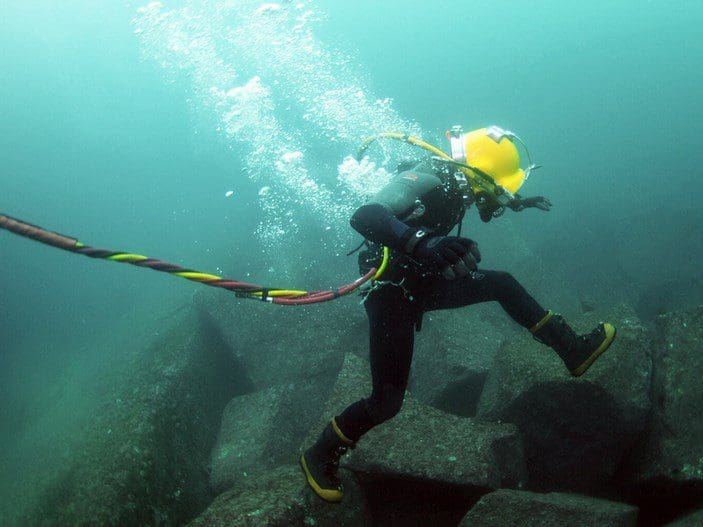
Most people hear the word “diving” and conjure up images of scuba dives around coral reefs or snorkeling through clear waters to see beautiful marine wildlife while on vacation. For commercial divers exploring the depths of Texas waterways, though, the picture isn’t quite as serene. Their jobs, and their very lives, depend upon having a healthy respect for the water, and a keen focus upon their duties.

Unfortunately, even the most prepared and diligent diver can be hurt on the job. The profession of commercial diving is fraught with danger from underwater equipment, incompetent or inexperienced boat captains and dive supervisors, rapidly changing weather conditions topside, rough seas, faulty oxygen tanks, wildlife and other vessels in the area.

Understanding the possible risks – and possible injuries that could happen – can help foster communication between injured commercial divers and the insurance companies or third parties accountable for those injuries (particularly in cases involving complex maritime laws like the Jones Act or the Longshore & Harbor Workers’ Compensation Act).

Possible causes

Some dive boat accidents are just that: accidents. They may happen to an experienced crew who followed all the rules and regulations promulgated by federal and state agencies (like the U.S. Coast Guard and the Occupational Safety and Health Administration) exactly. Other times, though, an injury-causing accident can be pinpointed to a particular negligent act or error on behalf of a boat captain, supervisor, fellow diver, supply manufacturer, property owner, oil company representative or other maritime worker.

For example, the failure of a boat captain to make allowances for rough conditions above – and below – the water line can leave divers in dire straits. Other accidents could be caused by faulty tank gauges giving improper readings, leaving a diver thinking he has sufficient air for a dive but being stranded underwater, unable to breathe. Improperly maintained equipment could create a situation where a diver’s pressurized suit begins to leak, putting him at risk for drowning, getting the “bends” when surfacing and developing hypothermia.

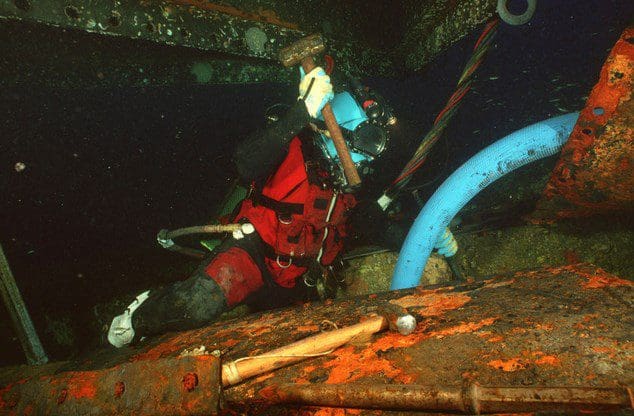
Many divers – particularly those working on huge oil rigs in the Gulf of Mexico, working with a salvage crew or performing underwater construction – also must deal with dangers often seen aboveground on construction sites, such as cutting tools, welding, operating heavy equipment and handling hazardous materials. This type of work is hazardous on the surface; the dangers are magnified in the water, due in no small part to the fact that it may take longer for a diver to reach medical attention.

Potential injuries

Divers face being injured in myriad ways while on the job. They not only face respiratory ailments and the possibility of drowning, but must also contend with more “exotic” injuries like the “bends” (also known as “decompression illness”), the negative effects of differential pressure, brain damage from an incorrect air/gas mixture, heavy equipment/crush injuries, broken bones from being tossed around by waves and injuries from striking propellers or other vessel parts.

Have you been injured in a Texas deep diving accident? Was a loved one killed while working as a commercial diver? To fully understand your legal rights and options you may have to recover compensation under the Jones Act or other maritime laws, seek the advice of an experienced maritime injury attorney in your area.


Source

WATCH: Gina Krog Jacket in Place

0

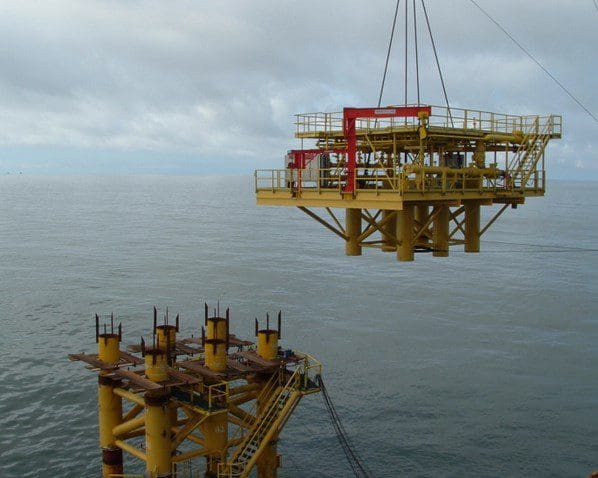
During the last weekend in June the Gina Krog jacket was installed in the North Sea.

Including rigging and buoyancy tanks the jacket weighing more than 17 000 tons was secured to the seabed with 18 more than 90 meter long piles, and it’s ready for the summer drilling campaign.

The Gina Krog jacket left the Hereema Fabrications yard in Vlissingen on June 19 for its final location. The Hermod heavy-lift vessel was used to install the jacket on the seabed.

On Friday June 26, the barge was tilted by trimming the ballast and the jacket was positioned floating horizontally in the water after which the Hermod installed the jacket legs on the seabed in their correct positions.

“The operation was successful and went according to plan and without any incidents,” says Rune Danielsen, head of transport and installation in the Gina Krog project. “This operation has been planned for 2.5 years, and we had to change to a different heavy-lift vessel in the process. It is wonderful to see the jacket installed on the seabed, where it will remain for several decades.”


Source


Biz Wave: Into the Lion’s Mouth: The Story of the Wildrake Diving Accident

Michael Smart, former commercial diver and author of “Into the Lion’s Mouth: The Story of the WildrakeDiving Accident“, takes us through the background and significance leading up to the publishing of his book. We also have a special giveaway – a signed copy of his book! Check the details at the end of this interview to enter.


Why do you believe that out of all the incidents you’ve heard over your commercial diving career, Wildrake stood out to you above everything else?

The Wildrake accident stuck in my mind because it was the first time I came face to face with the fact that divers were actually dying on the job. No one thinks about death when they’re going through dive school. But at the time of the accident, in August 1979, I was on a barge in the Ninian Field when I overheard several men outside the radio room commenting that two Infabco divers had just died in a bell accident in the Thistle Field, 30 miles north. I was new to the industry and didn’t know anything about the circumstances. But the news of that accident had a lasting effect upon me.

Later, I saw a group of experienced divers discussing the accident, and the look on their faces, and the way they reacted, indicated to me that they felt something was not right. Seventeen years later, in the midst of my research, I discovered why these divers were so upset.

From what point of view did you write “Into the Lion’s Mouth”?

During my investigation, as I began to fully understand what had happened to Richard Walker and Skip Guiel, I decided I wanted to attract the largest audience possible to the issues involved, because I believed then, as I do now, that this story really has nothing to do with diving at all. It’s about injustice, right versus wrong, criminal negligence, and people making shameful decisions based upon greed and corruption.

How all of these elements came together at precisely the right moment to kill Richard and Skip is the subject of the book and something that I think people of all walks of life would be interested in, not just commercial divers.


So the general public became my target audience. That meant that I had to introduce the reader to an industry that they were probably not familiar with, so I decided to present the material in a non-technical way from Richard and Skip’s point of view; how they became interested in commercial diving, why they went to the North Sea, and ultimately how they became trapped in a diving bell on the bottom of the North Sea at 500 feet.

What were some of the challenges involved in writing “Into the Lion’s Mouth”?

In the beginning the challenges were overwhelming. I had no formal writing background — no clue what was involved in writing and publishing a book. But I did have one thing going for me: a burning desire to tell this story, which enabled me to keep my ass in the chair for nine years. It’s a complex story, but along the way, through self-education, I discovered the power of words, and that any issue, no matter how complex, can be broken down and explained using clarity.

But clarity came slowly.

For the first six months of writing, I was lost — marooned in my computer chair. I didn’t know how to say what I wanted to say. I had no “Voice.” I had to pinch my nose to read what I had written.

This is because I was too self-conscience about what was rolling around in my mind, and what was pouring out of the keyboard. Emotionally I was compelled.

But subconsciously, I really wanted to write this story anonymously – meaning: I didn’t want anyone to bloody know who I was, what I felt, and what I thought. Holy cow! Ridiculous! What unbelievable bunk! (Childhood phobias were erupting.)

I later learned, after reading a couple of books (by Strunk and Kilpatrick), that it is impossible to write anything without revealing something about yourself. You can’t do it. I now look back on this phenomenon and laugh, but prior to this epiphany, I was terrified. So, eventually, Strunk and Kilpatrick convinced me to lay my anxieties aside and spit it all out. So I did.

I also quickly realized that I had to document what happened; otherwise no one was going to believe what I was piecing together. I learned from Richard and Skip’s relatives that the Scottish Court System had conducted a public inquiry into the accident.

I managed to obtain the judge’s findings of that inquiry, which painted a shocking summary of the accident. It was just a summary, but it was specific enough for me to suspect that Richard and Skip’s deaths were not as a result of a “pure” accident. So I committed myself to the idea of producing a book. Easier said than done.


Because I wanted to write a detailed step-by-step account, I knew I had to have two things: the log of the fatal dive and the verbatim transcript of the public inquiry. A lot of time had passed and I didn’t know if they still existed.

Fortunately, I managed to get both. If I hadn’t then it would have been folly for me to attempt the book. So it was these two crucial documents that enabled me to establish an accurate timeline and describe what happened based upon the dive log and the testimony of the witnesses.

At the same time I began tracking down the Wildrake and Stena Welder rescue divers, many of them in England and the United States. I needed their emotional and professional input to fill the gaps of the official record. There was no real internet in the 1990’s, so finding the divers was a real challenge because nearly all of them had moved.

The relatives of Richard and Skip were very helpful in giving me copies of old Infabco call-out sheets with addresses. So I started with the old addresses and went from there locating those that I could find.

Another challenge was that the scope of the story kept growing.

Initially, I thought I would be reporting on a single diving accident. But, because I was writing for the general public, it became apparent that I had to describe the economic and political situation in Great Britain at the time, and how UK government policy played a role in creating the North Sea oil industry.

I also wanted to bring the reader up to speed on the environmental conditions of the North Sea and the omnipresence of danger in the work environment, so I included other diving accidents that were occurring during those early years. And then, much later, I discovered that a weak regulatory regime contributed to the accident. So I included that material as well, which is why the book continued to grow in length.

This book covers the real story of a saturation diving accident. How did your experience in saturation diving help you write this book?

Looking back, I think my personal experience was critical. I knew about the working conditions in the North Sea; what it was like to dive out of a bell at 600 feet, the smell of the chamber, the claustrophobia, procedures for recovery, and what was considered acceptable practice and what was not.

If I didn’t have this experience I don’t think the relatives, or the Wildrake divers, would have talked to me.

In your preface, you mention the psychological toll taken on commercial divers, given the omnipresent danger they often work in. During your time working in this industry, was it common for divers to receive therapy?

No, not at all.

By the time a diver enters a saturation chamber, he, and his colleagues, knows whether he should be there or not.

Have you authored any other books besides this one, or thought about doing so?

I did actually begin work on the Bradley Westell case, a diver that was dragged through one of the thrusters of the DSV Orelia in 1995. This was another case where a cascade of failures caused a fatality. In the aftermath there was a criminal trial, and I managed to purchase the Transcript of Evidence in London. I spent six months analyzing the testimony to determine what had happened, and even reconstructed a timeline.

Unfortunately, I discovered that the Black Box Video of the dive had been altered (a crucial segment had been erased) which produced a terrific gap in the record. After a lot of thought I decided that that missing information would lead to too much confusion and guess work, so I abandoned the project.

I’m now working on another writing project, which I will announce in about a year (if I can keep my ass in the chair).

How do you believe “Into the Lion’s Mouth” has helped change the way people look at the commercial diving industry?

I wasn’t sure what impact this story would have.

But after nine years, I’d reached the point where I needed an outside opinion of the work I’d done because when a person works alone, without any guidance, it’s quite possible for him to become myopic and lose sight of what he wants to say. So I chose to reveal the story to Mark Longstreath. He was someone I didn’t know, but I did know he was trusted and respected in the diving community.

I established contact with him through his website, Longstreath.com, and he agreed to read the book and offer his thoughts. A few days after I sent it to him I had his answer:

Mike,

I managed to start reading the book this morning and haven’t been able to put it down all day. Wife and kids have been forgotten, while it took me back to the days when I started diving.
Initially I thought I would be objective and try to see if there were any errors that I could pick out and pass on to you, but as I read on I became so wound up in the story that I could not take any notes. I have had emotions ranging from apprehension, incredulity, anger, disbelief and disgust, and I still have not finished. One thing I can say at this point is that this story has to be published, and spread amongst the diving world.

I will gladly help advertise it through my site once it is out. Thanks very much for giving me the privilege of reading it Mike.

Thanks to Mark, people all over the world are reading the story. And from time to time I get comments from readers.

About a year ago I received an email from an Irish diving supervisor who told me how the story affected him, and that, when he goes offshore and feels the pressure is on to cut corners to get the job done, he thinks about Richard and Skip, which puts his mind in the right frame to push back. If their story can have that kind of impact on the people who work at the sharp end, then I’m satisfied.


Michael Smart, author of “Into The Lion’s Mouth: The Story of the Wildrake Diving Accident” is an ex-North Sea diver who worked for Sub Sea International. After leaving the diving industry, he owned his own business and worked all over the world as an AUT weld inspector.  He currently lives in the United States and is masquerading as a goat farmer.

Giveaway

Michael is giving away 1 free, signed copy of “Into The Lion’s Mouth: The Story of the Wildrake Diving Accident”.

Rules: To enter into the giveaway, include a comment or question in the comment section below related to Michael Smart and his book. One winner will be chosen in a drawing and contacted through email.


Deadline: July 10, 11:59 pm (CST).


Source

Pioneer Says Increasing Drilling Activity As Planned

0

U.S. shale exploration and production company Pioneer Natural Resources Co said on Wednesday it is increasing drilling activity in Texas following the sale of its stake in an Eagle Ford shale pipeline and processing business.

The Dallas company’s optimism stands out in a market unnerved by a 15 percent drop in crude prices since late June. Pioneer Chief Executive Scott Sheffield told Reuters in April that his company would start adding rigs this month if market conditions warranted more drilling.

“Our strong balance sheet, combined with a strong derivatives position for 2015 and 2016, provides us with the financial firepower to ramp up drilling activity,” Sheffield said in a statement.

North Dakota oil producer WPX Energy Inc said last month it would add two drilling rigs later this year, a decision that is unchanged despite the recent crude oil price drop.

Half a dozen or so other companies in the crowded U.S. shale industry have indicated they may add rigs but have so far not made definite moves as they wait to see where crude prices settle.

Pioneer said it has already added two drilling rigs in the Permian Basin this month and plans to add an average of two per month during the balance of the year as long as the crude oil price “remains constructive,” the company said.

The increased drilling is not expected to have a big impact on 2015 production, which had been forecast to grow more than 10 percent, but it will push capital spending up $350 million to $2.2 billion, the company said.

More rigs are planned for early next year. Pioneer said it plans to add eight horizontal rigs in Texas shale basins, bringing the total rig count to 36, or the same number it had before the price of oil collapsed by more than half.

Pioneer, which owned 50.1 percent of the Eagle Ford pipeline and processing business before the sale, said its share of the proceeds from Enterprise Product Partners LP is $530 million at closing and about $500 million a year after closing.


Source

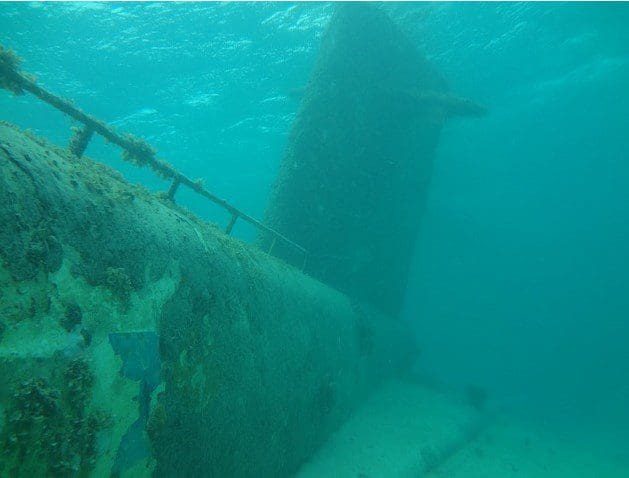
Navy Lifts Moratoriums on Submerged Macro Artifacts Recovery

0

The Navy has eased its moratoriums on recovery of submerged macro artifacts and aircraft, officials with the Naval History and Heritage Command (NHHC) announced on July 08.

While the moratoriums are lifted, existing state and federal requirements, including the prohibitions contained in the Sunken Military Craft Act and associated permitting regimes remain in place.

“I have determined that such a blanket prohibition is untenable and too inflexible given our responsibility to the public. I am lifting the standing prohibitions put in place earlier,” saidSamuel Cox, the director of NHHC, who arrived in his new post in late December 2015.

Cox met with Navy leaders, industry members and curatorial staff members before coming to his decision. His determination to proceed cautiously takes into account the care of the irreplaceable cultural resources.

The moratorium was installed in mid-2014 by the previous NHHC Director, who wanted to verify that reliable, systemic conservation and preservation process measures were in place and adhered to. Those process measures included sufficient resourcing and planning assurance. Previously recovered artifacts still await preservation, conservation, or restoration.

Oceaneering Names Senior Vice President, Subsea Products

0

Oceaneering International announced the appointment of Steve Barrett as Senior Vice President, Subsea Products, with worldwide responsibility for Oceaneering’s Subsea Products segment.

Barrett started his career in the oil and gas industry in 1980.  In 1982 he joined FMC Technologies, Inc., where he progressed from Design Engineer to his most recent role as Global Subsea Services Director.

He holds a B.S. in Mechanical Engineering from Texas A&M University and an M.B.A., Finance and Entrepreneurship, from Rice University.

Rod Larson, President and Chief Operating Officer, stated, “Steve’s leadership and successful track record in subsea products will add depth and capabilities to our management team.  We expect to benefit from his exceptional experience, extensive industry knowledge and perspective as we develop plans to grow our subsea products business, including the expansion of our product line offerings. In his new role at Oceaneering, Steve will report to Senior Vice President Clyde Hewlett.”

Power Outage In North Dakota’s Capital Delays Drilling Rig Data

0

A power outage in North Dakota’s capital on Wednesday brought down computer servers that provide data used to track myriad output statistics across the second-largest U.S. oil producing state. The outage means the state’s daily drilling rig count – a closely watched number that can offer guidance on future oil production – is not available. The count stood at 76 on Tuesday, near where it has been for several weeks.

The rig count is tabulated daily by the state’s Department of Mineral Resources (DMR), North Dakota’s oil regulator. Field inspectors upload data to servers in Bismarck, which aggregates the data and automatically publishes it to a public website every day. The DMR website also provides in-depth data on the depth and length of the state’s nearly 15,000 wells, as well as oil production history.

A mapping function graphically shows much of this data, including the location of each drilling rig operating in the state. “We’re hoping to get power back soon to the servers, but we’re just not sure on timing,” said Alison Ritter, a DMR spokeswoman. MDU Resources Group, which owns the utility for the region, reported that a problem at a substation in northern Bismarck cut electricity to an unknown number of customers.

Crews arrived on the scene at roughly 8:30 a.m. local time (1330 GMT) to assess damage, said Rick Matteson, an MDU spokesman. “They’re not sure what the problem is and they don’t as yet have an estimate for a restoration time,” Matteson said. Utility customers reported waits of more than 90 minutes to contact MDU’s customer service line. North Dakota produces roughly 1.2 million barrels of oil per day, according to the latest monthly report from the DMR.

Production statistics for May are scheduled to be released on Friday. 


Source

ION Wins ‘Lost Profit’ Appeal in WesternGeco Case

0

ION Geophysical Corporation announced that on July 2, 2015, a panel of justices on the U.S. Court of Appeals for the Federal Circuit in Washington, D.C. reversed in part and affirmed in part the patent infringement judgment against ION in favor of WesternGeco granted by the United States District Court for the Southern District of Texas in May 2014.

As previously disclosed by the Company, WesternGeco filed the lawsuit, styled WesternGeco L.L.C. v. ION Geophysical Corporation, in June 2009, alleging that ION’s DigiFIN™ lateral streamer control system infringed numerous method and apparatus claims contained in patents held by WesternGeco U.S. for marine seismic streamer steering devices. In May 2014, the United States District Court entered final judgment in favor of WesternGeco and ordered ION to pay$123.8 million in damages, prejudgment interest and costs to WesternGeco, plus post-judgment interest. ION appealed the judgment to the U.S. Court of Appeals for the Federal Circuit in Washington, D.C.

On July 2, 2015, the U.S. Court of Appeals for the Federal Circuit in Washington, D.C. reversed in part the judgment, holding the district court erred by including lost profits in the final judgment. Lost profits were $93.4 million and prejudgment interest was approximately $10.9 million of the $123.8 million final judgment. Pre-judgment interest on the lost profits portion of the final judgment will be treated in the same way as the lost profits. Post-judgment interest will likewise be treated in the same fashion.The opinion is not a final judgment of the Court of Appeals until the mandate issues and could be subject to further proceedings.

Brian Hanson, ION President and Chief Executive Officer, commented, “We are pleased with the decision of the Court of Appeals to reverse the decision of the trial court on lost profits, and ION will continue to vigorously defend its rights. We are confident that when the mandate of the Federal Circuit issues, ION will have a substantial reduction of the May 2014 judgment, leaving an estimated judgment of only $20-24 million.

“We consider the elimination of the lost profits damages to be a total victory for our Company. This case has been an overhang on our business for far too long, and we are glad to have the focus returned to our core business and its continued success as we move forward.

“The real winners of today’s verdict are our shareholders, who have long suffered from the erosion of value caused by this case. We are excited to get back to our business and to continue to build on this success. While this has been a long and arduous process, we feel it is close to a successful end.”