Home Blog Page 141

DNS and OGUK Join Forces to Streamline Activities

0

UK offshore oil and gas industry trade bodies Oil & Gas UK (OGUK) and Decom North Sea (DNS) are to work more closely together to deliver a more efficient and effective decommissioning agenda for the North Sea.

More joined-up working, but with each body retaining its independence, geographical representation, brand and governance, was announced yesterday (November 18) at the Offshore Decommissioning Conference jointly organised by both organisations and taking place in St Andrews.

The UK offshore oil and gas industry, currently facing significant economic and operational challenges, is striving to improve competitiveness to attract major investments in new fields, manage late life operations and, when the time is right, undertake decommissioning.

This new partnership approach, expected to get underway in the first quarter of next year, has been considered against that backdrop. Both organisations believe alignment of two influential trade associations offers a significant opportunity to streamline cross-industry activities around a clear common purpose.

Karen Seath, Decom North Sea interim chief executive, said: “Working together more closely would be in the best interests of the industry, the regulator and the members of both Oil & Gas UK and Decom North Sea. We already work in tandem in areas such as the publication of guidelines. If we can further align our activities, resources and strengths, I am convinced we will be able to offer all our members a more effective and efficient mechanism to tackle this challenging phase in the life cycle of our offshore oil and gas assets.”

Oil & Gas UK chief executive, Deirdre Michie, said: “Alignment on key areas will help ensure our industry stays focused on maximising economic recovery, while managing late life strategy and timely decommissioning in a safe, efficient and cost effective manner.”

Deirdre Michie added: “Decommissioning spend is likely to rise from £1 billion in 2014 to over £2 billion in 2018, by which time over 50 fields will either be approaching or undertaking decommissioning. This is a key issue for industry to manage and for the market to respond to. Aligning our two organisations at this time is strategically important for the industry and will aid effective preparation for the years ahead.”

Alcatel-Lucent Starts Phase II of ACE Subsea Link

0

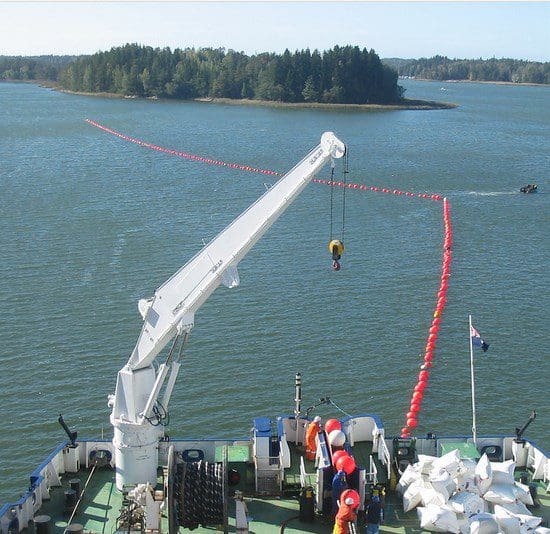
Alcatel-Lucent Submarine Networks is to roll out Phase II of the Africa Coast to Europe (ACE) submarine cable system, a 5,000km extension from the Gulf of Guinea island of Sao Tomé-et-Principe to South Africa.

Phase II will link Namibia, Angola, the Democratic Republic of Congo, Congo-Brazzaville and South Africa, including an extension to Cameroon.

This connectivity is being made possible by Alcatel-Lucent’s 100 gigabit-per-second (Gbit/s) submarine technology, and on completion of the Phase II extension, the ACE system will deliver an overall design capacity of 12.8 Tbit/s, significantly speeding up delivery of broadband services and content, the company said.

Yves Ruggeri, Chairman of the ACE Management Committee said: “The extension of the ACE system to South Africa is a significant milestone that confirms our commitment to address the connectivity challenges facing Africa. ASN’s know-how and technological innovations, which we have recently tested on our existing network, will support us in further developing direct connectivity within Africa and to the overall objective of ACE to reduce communication costs and drive social and economic growth in the continent.”

Philippe Dumont, President of Alcatel-Lucent Submarine Networks said: “We are pleased to continue our collaboration with the ACE consortium, which dates back since the beginning of the project and demonstrates the consortium’s trust in our ability to accompany them in their strategic implementations from end to end. This further development of the ACE system underlines the demand for bandwidth, to broaden opportunities in terms of connectivity, data and information sharing.”

Oil, Gas Cyber Attacks Increasing

0

Cyber attacks in the upstream oil and gas sector are increasing, according to Eric Knapp, the global director of cyber security solutions and technology for Honeywell Process Solutions.

At an annual meeting for Honeywell users in the EMEA region being held in Madrid this week, Knapp told Rigzone that the oil and gas industry is not only seeing more cyber threat activity, but that threats of this nature are becoming more advanced.

“In those sites that we support directly, we have seen that there’s an increase in activity. We can extrapolate from that that globally there’s an increase … Malware creation and the cyber threat as an entity is an organization. Malware changes and evolves … we’re seeing activity increase across the board.”

Over the past 30 years, the oil and gas sector has been the target of well-known cyber attacks. One of the most famous was launched against Saudi Aramco in 2012 by the terrorist organization, Cutting Sword of Justice. The group launched the attack to stop oil and gas production in Saudi Arabia’s largest exporter within the Organization of the Petroleum Exporting Countries (OPEC), according to a white paper by Lockheed Martin Corporation.


Source

Siem Offshore Delays Again

0

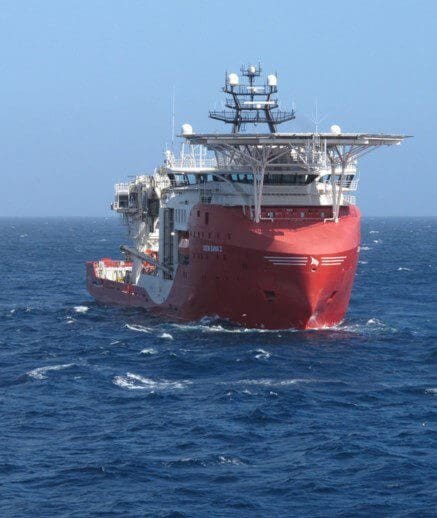
Siem Offshore (SIOFF) has once again agreed to postpone the delivery of the Offshore Subsea Construction Vessel (OSCV) Siem Daya 1 to Daya Materials until December 15, 2015.

This time the cancelling date was set for December 31, 2015.

Other terms and conditions of the agreement will remain valid and in full force and effect, the Oslo-listed company said Thursday.

In April this year, both parties struck a $120-million deal for the sale and purchase of the 120.8 meters long subsea vessel of Vard design.

The vessel was recently engaged in a cable deployment campaign at MeyGen tidal energy project and November 16 was set as the already extended delivery date.


Source

DNV GL in Largest Underwater CO2 Release Study

0

The largest ever controlled release of carbon dioxide from an underwater pipeline is to be conducted at DNV GL’s full-scale Spadeadam Testing and Research Centre as part of an international Joint Industry Project (JIP) called Sub-C-O2.

Scheduled to start in early 2016, the planned release will mark the second phase of experiments at the Spadeadam test site, which is situated in remote Ministry of Defence land in Cumbria, UK. The tests are designed to increase industry understanding about environmental and safety effects of underwater CO2 releases from pipelines, DNV GL explained.

The eventual aim is to develop safety guidelines for offshore CO2 pipelines, which are expected to proliferate as carbon capture, utilisation and storage (CCUS) technology is eventually installed to mitigate CO2 emissions from power plants and large industrial sources. CO2 transported in offshore pipelines is also being used for enhanced oil and gas recovery.

“Combining knowledge of the consequences of underwater release with the probabilities of these events occurring will enable developers to improve designs and reactive measures to manage such events,” said Russell Cooper, technical services manager at National Grid.

The British electricity and gas company has test drilled a subsea CO2 storage site offshore UK. Its work has helped to demonstrate significant storage potential in the southern North Sea, DNV GL wrote.

It is participating in Sub-C-O2 alongside Norway’s Gassnova, Brazil’s Petrobras, the UK government’s Department of Energy and Climate Change, and DNV GL. Italy’s Eni plans to join the DNV GL-led JIP in 2016.

The first experiment at Spadeadam involves small-scale, controlled CO2 releases from a three-inch nominal bore pipeline in a 8.5-metre diameter, three-metre deep water tank. Launched in September 2015, this phase was scheduled to complete by December, the same year, the company noted.

“Underwater cameras and other measurement techniques show us the configuration and characteristics of the plume of released gas, whether it reaches the surface, and what happens there,” said Dr Mohammad Ahmad from DNV GL’s office in Groningen, the Netherlands, who project manages the JIP.

“We also measure water temperature, pressure, water pH and dispersing CO2 concentration. The experiments will provide valuable information on the effects of the plume below the surface, and on the level of any toxic gases in the air above.”

The second experimental phase running for three months from early 2016 will involve releases in a 39-meter diameter, 12-metre deep pond at Spadeadam to study the effects of depth on measured and observed parameters.

“This is a huge pond,” Ahmad said. “It is the largest experimental investigation to date of underwater CO2 releases. It is designed around what is known about underwater natural gas [methane] leaks. We will be curious to see if and when we may get CO2 hydrates collecting on pipework.”

Spadeadam is one of a network of 18 laboratories and testing centres operated by DNV GL on three continents.

“The world class team and facilities at Spadeadam have made DNV GL our ‘go to’ organisation throughout our extensive programme of experiments to understand the requirements of CO2 transportation,” Cooper said.

The JIP was conceived and initiated by DNV GL’s Groningen office, and designed in collaboration with Spadeadam. Other offices in Oslo, Norway, and London, UK, have conducted physical modelling for the project, DNV GL said.

Experimental findings are shared periodically with JIP participants so that next steps can be refined. Testing at Spadeadam will conclude by June 2016. Even larger-scale, controlled testing in the natural environment may subsequently take place. “We are considering a number of locations,” Ahmad said.

The ultimate goal, as with many DNV GL-led JIPs, is the publication of a recommended practice or industry standard. “The evolution of best practice, based on a sound understanding of the consequences of underwater releases, will greatly help the nascent CCUS industry to build public confidence and assist the rollout out of a vital carbon abatement technology,” Cooper said.

“It will be valuable for risk assessment,” Ahmad added. “This sometimes requires adjustments to the assumptions of computer models for gas dispersion, and for that you need data from experiments on this scale. The contribution of data from Spadeadam to improving risk models will be the main input to developing safety guidelines for offshore CO2 pipelines.”

GEOMAR Scientists Embark on GEOTRACES Expedition

0

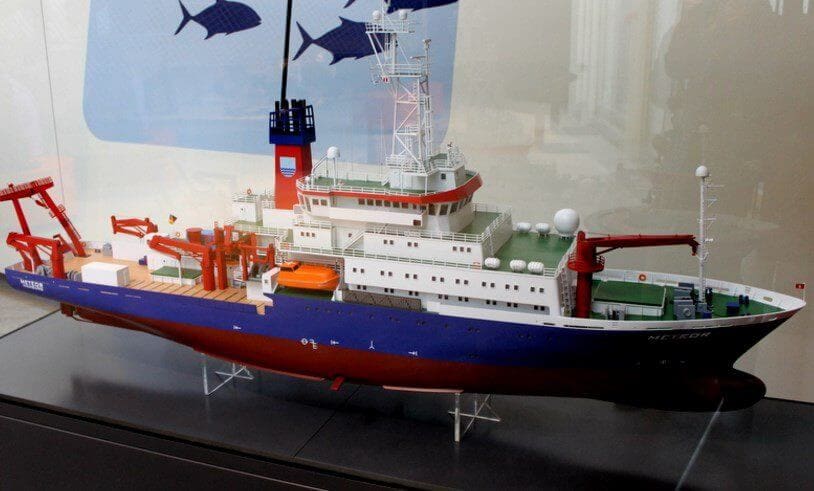
German research vessel METEOR, under the leadership of the GEOMAR Helmholtz Centre for Ocean Research Kiel, is set to take on another GEOTRACES (GA08) cruise in the southeastern Atlantic.

For the past seven years, the international research program GEOTRACES has been investigating the sources, sinks and distributions of trace elements such as iron, cadmium or copper.

GEOTRACES cruise, starting on November 21, will be led by Prof. Dr. Martin Frank and Prof. Dr. Eric Achterberg, both from GEOMAR Helmholtz Centre for Ocean Research Kiel.

The Cruise will be 8500 km long and after leaving the harbour in Walvis Bay, Namibia will first head northwards along the southwest African coast, where elemental inputs from the continents including dust from the Namibian Desert and the large Congo river will be the focus of the investigations. After passing the mouth of the Congo river the cruise will turn west until the Zero Meridian and then head south again in the open southeast Atlantic to 30°S. From there the cruise will turn again back to Walvis Bay, which will be the final destination of the cruise after Christmas.

There are 28 scientists on board from Kiel, Bremen, the United Kingdom, and Angola, who will measure the trace metal concentrations up to a water depth of 5000 metres. It is planned to collect about 15000 litres of water, GEOMAR wrote.

“The main challenge is to cleanly sample the extremely low trace metal concentrations in seawater. It is not possible to obtain reliable iron concentrations in seawater – which are on the order of some billionths of a gram per litre – if you take the water samples with metal wires and metal sampling devices,” explains Professor Frank.

“To avoid contamination we use purpose-built sample bottles made of plastic, which are fixed on a specifically coated frame. Instead of a steel wire a plastic coated cable to lower this frame to the sampling depths,” Professor Frank explains. RV METEOR doesn’t have such a cable, which is why the expedition will use a mobile winch and cable newly acquired by GEOMAR. A container with clean room laboratory is also taken to sea. There, the scientists will prepare the samples exactly according to the guidelines of the GEOTRACES program. “This will enable contamination-free high precision measurements that we can compare with the results of other measurement campaigns around the globe,” says Professor Achterberg.

Like the data of all other GEOTRACES expeditions, the results of the M121 expedition will be transferred to an international data base. There they are accessible to scientists of all disciplines to better understand the geochemical and biological processes in the oceans and to trace oceanic currents or to reconstruct past climatic stages through analyses of the trace elements in the underlying marine sediments, GEOMAR added.

Petrobras in Potiguar Basin Oil Find

0

Brazil’s Petrobras confirmed that the drilling campaign of the Pitu North extension well has discovered oil in Pitu area (Block BM-POT-17) in the deepwaters of the Potiguar basin.

The discovery of oil in Pitu was first announced to the market on December 17, 2013.

The well 3-BRSA-1317-RNS, informally known as Pitu North, is the first well located within the Evaluation Plan of Pitu, approximately 60 km from the coast of Rio Grande do Norte state, and at a water depth of 1,844 metres (m), with total depth of 4,200 m.

The discovery was proved through profile analysis and pre-test results, with fluid samples obtained from the well to be subsequently submitted to laboratory analysis.

Petrobras (40%) is the operator of the exploration Block BM-POT-17, with the remaining stakes being held by BP (40%) and Galp Energia, through its subsidiary Petrogal Brasil.

Fixing dam spillway problems with coordinated divers

0

While some major underwater facility operations can take months to complete, last fall saw a Midwestern dam spillway repaired in less than two weeks. Studying the process reveals the different phases that accompany such work, as well as the different elements that need to be accounted for to meet established goals. This case in particular involved multiple materials, including grout, carbon steel and sheet pile.

Hydro World recently re-examined this project as part of a look at multiple underwater work case studies. As this source describes, the divers were deployed after an inspection discovered “a bulged area of sheet pile.” Addressing this issue forced the crew to contend with punishing low temperatures and poor visibility, among other challenges.

Nevertheless, the divers cut the pile, installed anchor rods and added grout to the hole left behind. The procedure also involved the use of a “geotextile membrane” in the spillway toe, along with custom grout bags, before the final inspection was conducted.

The company in charge of this work, Underwater Construction Corporation, describes the operation in more detail on its own website.

“The bags were filled with a flowable grout mix with 5,000 pounds per square inch (psi) design strength,” it reads. “The grout mix was placed by pump truck using a 3-inch tremie pipe. Once the bags cured overnight, divers pumped approximately 26 cubic yards of the same 5,000 psi grout into the repair area.”

Work this intense may require insurance that fits the duration of work and all associated risks. Firms that specialize in insurance for commercial divers will be ready to provide the right coverage for divers placing themselves into dangerous situations.


Source

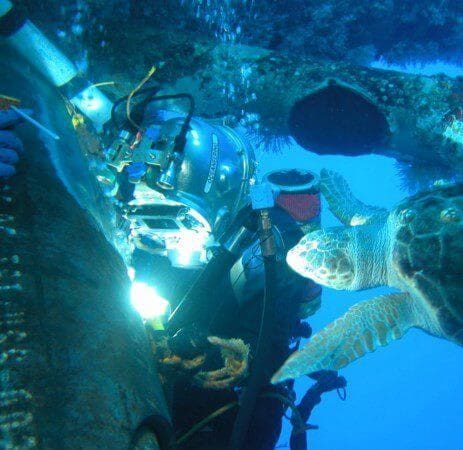
Underwater welding: the allure of a niche job

0

Underwater welding is not for everyone.

There are only about 3,000 people in the United States with the highest level of international certifications, and only two places to achieve it.

The oldest is the Divers Institute of Technology on North Lake Union, founded in 1968. The other is in Florida.

Instructor Jim Bernacki says, “It’s for thrill seekers looking for a skill that’s challenging.”

Former carpenter and now diving teacher Jake Dow says, “We’re slamming iron together, not just looking at fish all day long.”

Combining the challenges of diving with construction skills comes with rewards, including high pay and the allure of a niche job.

Few others will see the work the welders do on oil rigs or bridges, pipelines or piers, and deep sea salvage.

There’s hazardous-materials work in cooling ponds of nuclear- power plants. There’s maintenance, cleaning and inspection of municipal water tanks.

Dow says, “You should be fit and trim.” Fat stores nitrogen, the gas that usually causes the bends, the decompression sickness for divers ascending too quickly.

“We’re not risk takers, we’re risk managers.”

Of the education, says Dow, “you will not find this in books.” And it cannot be learned online.

The 7-month program costs $25,900, plus gear.

More than half of the 160 students are military veterans from around the country.

Students have roll call every weekday at 7 a.m. before a full day of class.

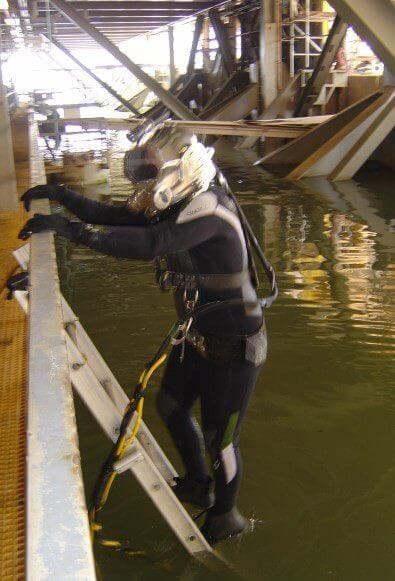
Brandon Hall and Andrew Skrumeda work their way into 140 pounds of diving gear.

They’re suiting up for a welding test in a tank and have up to 80 minutes to display their skills.

Student Christian Holien says, “What’s appealing is the freedom. It’s like being in space.”

As a visiting group of topside welders from Yakima passes by, the tour leader tells them, “This is the Harvard of diving schools.”

Students at the Divers Institute of Technology complete an underwater welding test as a part of their studies. (Alan Berner / The Seattle Times)


Source

Oil Slides 2%, Market Refocused On Global Supply Glut

0

Crude oil futures fell more than 2 percent on Tuesday, resuming their slide after a one-day pause, as oversupply concerns returned to suppress a market briefly lifted by geopolitical worries linked to the Paris attacks.

An updated Reuters poll of analysts forecast that U.S. crude stockpiles rose for an eighth straight week last week, building by nearly 2 million barrels to reach near-record highs above 490 million barrels seen in April.

Industry group American Petroleum Institute will issue its own preliminary report on the stockpile situation at 4:30 p.m. EST (2130 GMT), two hours after market settlement.

Official inventory data from the U.S. government’s Energy Information Administration is due on Wednesday.

Brent crude futures settled down 99 cents at $43.57 a barrel, touching a session low at $43.50. The global oil benchmark is less than $2 from rewriting its 6-1/2 year bottom of $42.23 set in August.

U.S. crude’s West Texas Intermediate (WTI) futures settled down $1.07 at $40.67 a barrel, after an intraday low at $40.58. U.S. crude had sunk to a March 2009 low of $37.75 in August.

“Short term oriented traders may look to establish new bearish strategies,” said Jim Ritterbusch of Chicago-based oil consultancy Ritterbusch & Associates. “We still see a test of the late August WTI lows as a 85-90 percent probability.”

Brent’s premium over U.S. crude <cl-lco1=r>was below $2 a barrel, versus nearly $4 at the start of November. A narrower spread between the two tends to encourage a greater flow of oil from abroad into the U.S. market, as crude grades pegged to the pricier Brent become more affordable.

On Monday, crude prices had gained more than 2 percent on security fears related to Friday’s attacks in Paris, and France’s heavy bombing of Islamic State targets in Syria in the aftermath.

“Yesterday’s rally was a reaction to the likely increase in geopolitical risk despite the fact Syria itself is not a big oil producer,” said Pete Donovan, broker at New York’s Liquidity Energy. “But as emphasis returns to the oversupply in oil, the market is giving back those gains.”

U.S. crude futures have been under $50 longer now than they were during the height of the financial crisis in 2008/2009.

Options on U.S. crude expired on Tuesday, with open interest mostly gathered around put options, which give the seller the right, but not the obligation, to sell U.S. futures at both $40 and $45 a barrel.


Source