Home Blog Page 14

Statoil: Announcement of dividend per share for fourth quarter 2015 in NOK

0

Statoil (OSE:STL, NYSE: STO) announced 4 February 2016 dividend per share of USD 0.2201 for fourth quarter 2015.

The NOK dividend per share is based on average USDNOK fixing rate from Norges Bank in the period plus/minus three business days from record date 13 May 2016, in total seven business days.

Average Norges Bank fixing rate for this period was 8.2277. Fourth quarter 2015 dividend per share is consequently NOK 1.8109.

Under the two-year scrip dividend programme (“Scrip Dividend Programme”) approved by the Annual General meeting 11 May, shareholders will have the option to receive dividend in newly issued dividend shares. Further information about the timeline for the Scrip Dividend Programme will be published in due course.

Cash dividend (net of any costs of newly issued dividend shares elected under the Scrip Dividend Programme) will be paid to shareholders on Oslo Børs on or around 24 June 2016.


Source

Industry Optimistic about Iraq’s Petroleum Future

0

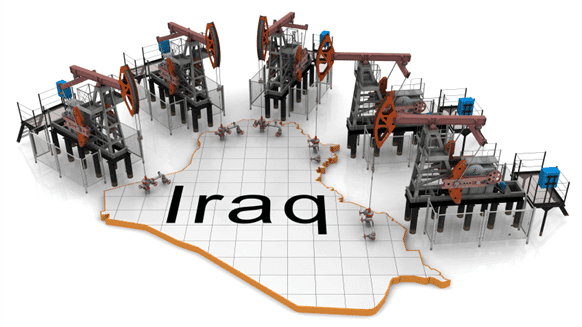
Oil and gas officials were optimistic about Iraq’s petroleum future, despite evident challenges, at the 10th Iraq Petroleum Conference, held in London.

“Despite security and financial troubles, Iraq’s crude oil production has grown significantly over the last five years to reach a record of 4.7 million barrels per day in January 2016,” Salih Husain Ali, the ambassador of the embassy of the Republic of Iraq in London, told delegates at the event, which was attended by Rigzone.

The Ambassador spoke of an upwards trajectory in the country’s production levels, stating that Iraq was moving “towards its production potential of 6 million barrels per day by 2022”.

In an effort to help boost output in the country, BP plc, which is running “one of the world’s largest fields in Southern Iraq…hopes to triple production,” according to the UK’s Minister of State at the Department of Energy and Climate Change Andrea Leadsom. Shell Iraq’s Vice President and Country Chairman Marcus Antonini also revealed at the conference that his company intends to drill more wells at the Majnoon field to add production and that it is working towards helping Basra Gas Company, in which Shell is a shareholder, produce 700 million cubic feet of gas per day by the end of 2016 with a view to reaching 1Bcf per day in the future.

Iraq has been “hit hard” by a conflict with ISIS, said Mohammed Sahib Al Daraji, minister of industry and minerals at the Federal Government of Iraq, and the fall in oil prices over the last couple of years.

“I’m still optimistic about Iraq’s future and still believe that the last barrel of oil will be from Iraq but we all need to work together…to build a proper petroleum industry – upstream and downstream – in Iraq,” Daraji said in a presentation at the event.

Leadsom shared Daraji’s optimism about the future of Iraq’s hydrocarbon industry, echoing the minister’s calls for a united front.

“The energy world is in a period of great transition. Oil prices have fallen drastically, IOCs have slashed capital expenditure and costs and upstream investment continues to fall. These challenges affect us all. Despite these challenges, it is still possible for Iraq to deliver on its huge energy potential but further action will be needed to ensure this,” said Leadsom.

“Success here will require a united effort by the Iraqi government, the Kurdistan Regional Government, all of Iraq’s communities and Iraq’s international partners,” she continued.


Source

Tethys Oil to repurchase shares

0

The Annual General Meeting (”AGM”) on 18 May 2016 resolved to authorize the Board of Directors to decide on repurchase of own shares. The Board of Directors has, based on the authorization, decided to initiate the repurchasing program. The main reason of the repurchasing program is to give the company flexibility regarding its equity and thereby optimize the capital structure of the company. Repurchased shares may also be used as payment for, or financing of, acquisitions of companies or businesses or in connection with handling of incentive programs.

The repurchase of shares may only take place on Nasdaq Stockholm and only at a price within the price interval prevailing at any given time. Purchases may be made at one or more occasions up until the AGM in 2017, and by a maximum of so many shares that the company’s holding of own shares after the purchase amounts to not more than of one-tenth of all the shares in the company.

Tethys Oil currently holds 1,104,169 shares in custody.

Tethys Oil AB (publ)

Tethys Oil is a Swedish energy company focused on exploration and production of oil. Tethys Oil’s core area is the Sultanate of Oman, where the company is one of the largest onshore oil concession holders with a current net production in excess of 12,000 barrels of oil per day. Tethys Oil also has exploration and production assets onshore Lithuania and France. The shares are listed on Nasdaq Stockholm (TETY).


Source

Oil’s Recovery Under Threat as Tankers Run in Circles Off China

0

In late February, the tanker Jag Lok loaded oil from Equatorial Guinea in western Africa and set sail for the Chinese port of Qingdao, the gateway to the world’s newest buyers of crude, a journey of more than 12,000 nautical miles.

After reaching its destination in early April, the ship churned in circles for 20 days before it got a chance to deliver its cargo. That’s because the port in Shandong province was struggling to handle a  record number of vessels arriving to supply the privately held refineries called “teapots” that dot the region, ship-tracking data compiled by Bloomberg show.

The backup illustrates the challenges facing the independent refiners, which have emerged as a bright spot of rising demand amid a global glut. The processors are forecast by ICIS-China to purchase a combined 1 million barrels a day of crude from overseas this year, up from 620,000 barrels in 2015. While small individually, together they account for almost a third of China’s refining capacity. Any curb on imports would threaten oil’s rebound from a 12-year low, according to Nomura Holdings Inc. and Samsung Futures Inc.

“If teapots’ intake of crude slows down, the global oil demand and supply re-balancing might take longer,” said Gordon Kwan, head of Asia oil and gas research at Nomura in Hong Hong. “If demand from teapots is lower, then oil prices might rebound to just $55, instead of $60 a barrel next year.”

From being dependent on state-owned energy giants for their feedstock needs as little as a year ago, teapots are now driving Chinese crude purchases after the government allowed them to buy overseas supplies directly. As of end-February, 27 of the companies had received or applied for annual import quotas totaling 89.5 million metric tons, or about 1.8 million barrels a day, according to Zhang Liucheng, chairman of the China Petroleum Purchase Federation of Independent Refinery, a group of 16 processors.

Total purchases from overseas into the world’s second-largest oil user climbed to a near record 7.96 million barrels a day in April, while shipments to Qingdao surged to unprecedented levels in April.

Still, with infrastructure not developing as fast as oil purchases, imports are at risk of slowing because of the ship traffic and lack of storage capacity, according to BMI Research. Concern about the creditworthiness of companies with no prior experience in international trade is also deterring some sellers. Slowing refining profits mean the plants may have to cut processing rates, weakening their appetite for cargoes from overseas, while the implementation of higher fuel quality standards could force some of them to shut.

Refiner Alliance

To ease purchasing from foreign suppliers, 16 of the refiners banded together in February to form an alliance. Its aim is to better negotiate bulk purchases as the newest buyers in the physical oil-trading market and improve their credibility. Zhang, the chairman, said it seeks term contracts of two to three years.

“When we are dealing with major producers, there is certainly some mistrust in terms of credit lines and unstable demand, which we are seeking to solve,” Zhang said. “Also we could get the cold shoulder because buying volumes can be small.”

The independents’ attractiveness to global producers was highlighted last month when one of the refiners purchased a spot cargo from Saudi Arabia, which broke from its usual policy of selling only under long-term contracts. Yet, they are discovering that it’s not easy to break into the oil market even amid a glut.

“Teapot buying could slow due to logistical constraints which are already stretched to their limits,” said Nevyn Nah, a Singapore-based analyst at consultant firm Energy Aspects Ltd.

Fuel Standards

Apart from the traffic at Qingdao, China’s fight against pollution poses another risk to purchases by teapots. Part of President Xi Jinping’s efforts to tackle the smog that’s shortening lives and has prompted social unrest is a drive to adopt higher fuel-quality standards from January 2017. To comply, the nation’s refineries will need to upgrade with new equipment and technology, which may be beyond the means of some private processors, according to BMI Research, a unit of Fitch Group.

A drop in refining margins amid surging fuel stockpiles and a jump in crude prices this year is another potential dampener. The profit from turning Middle East benchmark Dubai crude into oil products in Asia is at $4.92 a barrel as of the end of last week, about 34 percent lower from late March, data compiled by Bloomberg show.

Brent crude, the benchmark for more than half the world’s oil, traded at $48.96 a barrel at 10:48 a.m. New York time. Prices have surged more than 70 percent from a 12-year low they hit in January.

Margin Drop

“Weakening margins are likely to have a stronger impact on independent refineries in China and this will lead to lower crude imports,” said Hong Sung Ki, a senior analyst at Samsung Futures Inc. in Seoul. “That will result in a downward revision for China demand and this will inevitably have a negative impact on oil prices.”

Meanwhile, ships continue to be held up at Qingdao. At least 16 oil tankers with capacity to carry 21.2 million barrels have stayed near the port for more than 10 days over May 1-23. Half of them were there for more than a month, according to ship-tracking data compiled by Bloomberg.


Source

Statoil Cancels rig contract

0

Statoil has, on behalf of the Aasta Hansteen licence, decided to cancel the contract with Seadrill for the West Hercules drilling rig.

On contract with Statoil since 31 January 2013, the rig has carried out an exploration campaign offshore Newfoundland in Canada for the past 18 months.

According to the original plan the Aasta Hansteen licence was to take over the rig in the second quarter of 2016 for a drilling campaign to be started around 1 July 2016.

In the autumn of 2015 it was decided to postpone the Aasta Hansteen field start-up one year until the last half of 2018, and consequently the field drilling programme will also be postponed. One of the reasons is that it is not preferable to complete the wells too early before production start-up.

The contract for West Hercules was originally to expire on 31 January 2017.


Source

Shell Faces Rising Investor Discontent Over Executive Pay

0

Investor discontent with Royal Dutch Shell over multi-million euro pay packages for its top executives rose sharply at this year’s annual shareholder meeting on Tuesday.

Although Shell’s shareholders approved the oil and gas group’s remuneration report, including chief executive Ben van Beurden’s 5.14 million euros ($5.74 million) package, 14.17 percent of investors opposed it, up from 3.84 percent last year.

Royal London Asset Management, which holds Shell shares worth nearly 1 billion pounds, said it was “disappointed” that van Beurden received very close to the maximum possible bonus in a year when the firm’s overall financial performance was weak.

A slump in oil prices meant Shell reported its lowest annual income in more than a decade in 2015.

Yet van Beurden’s total package, including pension and tax equalisation, was 5.58 million euros, down from 24.2 million the previous year. This was mainly due to a significant fall in pension, which was boosted in 2014 by his promotion to CEO.

Two investor advisory firms recommended opposing Shell’s remuneration report, saying there was a disconnect between its executive pay and that of other employees and its financial performance.

However, Van Beurden was spared the embarrassment faced by BP Chief Executive Bob Dudley last month when shareholders rejected his $20 million pay deal.

More top British corporations are facing shareholder revolts over the way executives are paid, including medical equipment firm Smith & Nephew and miner Anglo American.


Source

Athabasca Oil Corporation resumes operations at Hangingstone

0

Athabasca Oil Corporation (TSX:ATH) (“Athabasca” or the “Company”) has resumed operations at Hangingstone following a shutdown on May 5th due to the wildfires in the Fort McMurray region. There has been no damage to Athabasca’s assets. Prior to the shutdown, production volumes reached in excess of 9,000 bbl/d. The Company expects the reservoir to re-pressurize to normal operating levels over the next several weeks with no anticipated long-term impacts. Athabasca will continue to work closely with the province, region and industry to monitor and manage the fire risk.

About Athabasca Oil Corporation

Athabasca Oil Corporation is a Canadian energy company with a focused strategy on the development of thermal and light oil assets. Situated in Alberta’s Western Canadian Sedimentary Basin, the Company has amassed a significant land base of extensive, high quality resources. Athabasca’s common shares trade on the TSX under the symbol “ATH”.


Source

Iraq Sticks to Oil Output Growth Plan Despite Spending Cuts

0

Iraq is sticking to an aspiration to increase its oil output by up to a third by 2020 despite warnings from some companies working in OPEC’s second-largest producer that projects could be delayed due to spending cuts.

Iraq is pumping about 4.5 million barrels per day (bpd) now and is aiming to boost that to 5.5 million to 6 million bpd by 2020, Falah Alamri, head of Iraq’s State Oil Marketing Organisation (SOMO) said at an Iraq oil conference on Tuesday.

“If there is good investment and the investment is available for the next years, I have no problem with that,” he said in reference to the target. “We will not decrease our production; it will continue growth but slowly.”

A collapse in oil prices, which at $49 a barrel are less than half their level of two years ago, has hit revenue for Iraq and other producers, and last year prompted Iraq to downgrade a more ambitious goal to expand supplies.

The price drop has raised concern that Iraq’s oil output growth could slow, or stall. Indeed, oil companies have warned Iraq that projects will be delayed if the government insists on drastic spending cuts this year.

But Iraq has managed to keep increasing its output so far, despite more pessimistic predictions.

Last year, the country was the fastest source of supply growth in the Organization of the Petroleum Exporting Countries, boosting output by more than 500,000 bpd, despite spending cuts and conflict with Islamic State militants.

With its finances stretched, Iraq has asked foreign oil companies to rein in their budgets for a second year in a row. Royal Dutch Shell, which is in charge of Iraq’s Majnoon field, has been cutting costs by reducing foreign staff.

“We are doing our bit,” said Marcus Antonini, Shell’s country chairman for Iraq, adding that the company had roughly halved its expatriate workforce in Majnoon and planned further reductions.

“This allows us to make significant savings on operating expenditures,” he told the conference, saying the reduction in foreign workers had not hit output at Majnoon, which was producing 220,000 bpd.

Glut Easing

Alamri, who is also Iraq’s OPEC governor, said a glut in the market is easing and Iraq was seeing a rise in demand for the crude it exports from the south – Basra Light and Basra Heavy.

He dampened expectations that OPEC, which meets to set policy on June 2, will agree any steps to support prices, having shifted policy in 2014 to focus on maintaining market share.

“There is a lot of demand in summer, more consumption now than the beginning of the year,” he said. “After two years, the market is starting to balance but it nearly destroyed many countries.”

Oil companies in Iraq have to clear spending with the government each year and are then repaid with oil produced from existing fields. With the price collapse, Iraq has been struggling to find enough oil to repay them.

The companies and the government have so far failed to agree on spending levels. An oil executive who declined to be named said Iraq’s payments to oil companies in 2015 were 30 percent higher than expected and – despite talk about companies exiting Iraq – nothing had happened for now.


Source

Concerned InterOil Shareholders express their disappointment that the Board of InterOil has once again demonstrated their lack of alignment

0

The founding shareholder, former chairman and Chief Executive Officer of InterOil Corporation (“InterOil” or the “Company”) (NYSE: IOC), Phil Mulacek, and Petroleum Independent & Exploration, LLC (together, the “Concerned InterOil Shareholders”), today expressed their disappointment that the InterOil board of directors (the “Board”) had once again demonstrated their lack of alignment with the interests of InterOil shareholders by unanimously approving a proposed bid by Oil Search Limited (ASX:OSH) (“OSH”), supported by a back-in from TOTAL, S.A. (“TOTAL”), for all of the outstanding shares of InterOil.

Commenting on the proposal, Mr. Mulacek said, “After discussions with institutions and other shareholders, we believe the OSH/TOTAL bid significantly undervalues InterOil, and incredibly, wipes out about US$1 billion in future shareholder value from what InterOil was already entitled to receive under the existing PRL15 Sale and Purchase Agreement between TOTAL and InterOil (the “TOTAL PRL 15 SPA”), based on our reasonable 2C estimates of total field size of the world-class Elk and Antelope fields within PRL 15.  The shortfall arises because the new proposal omits the payment TOTAL had already agreed to make after LNG production began, which is a key part of any oil and gas asset sale agreement.  To help resolve this, we propose to maintain the original structure of the TOTAL resource payment by delaying the ‘CVR’ payment until after 2 years of stable LNG production instead of prior to production, so that the resource is fully defined and OSH and TOTAL have the benefit of receiving project cash flows for some time before payment is made.  This preserves what we believe to be significant upside for InterOil shareholders and is nothing more than what was agreed in the original TOTAL PRL 15 SPA.”

Mr. Mulacek continued, “We are also enormously disappointed, but unfortunately, again not surprised, that the InterOil Board announced the bid just before the annual and special meeting to be held on June 14, 2016, where important corporate governance issues will be decided by the InterOil shareholders, including proposals intended to improve disclosure about the Company’s operations and assets to improve transparency and understanding of the value of InterOil’s hydrocarbon resources.  We believe the Board’s action further supports our case that shareholders should sign the BLUE proxy circulated by the Concerned InterOil Shareholders to push for changes in Board membership and the way it operates, to better align with shareholder interests.  The Board has sent a clear message that they do not understand how to surface shareholder value.”

The Concerned InterOil Shareholders believe that by restoring and maintaining the original payment structure of the TOTAL PRL 15 SPA, InterOil shareholders could retain the benefits of mid- and long-term growth in shareholder value from development of the Elk and Antelope fields within PRL-15 and the proposed Papua LNG project.  The shortfall in shareholder value under the OSH/TOTAL bid arises from the fact that the only resource payment InterOil shareholders would receive is the CVR payment based solely on pre-production estimates of field size.  Under the TOTAL PRL 15 SPA, however, TOTAL was required to make both an “Interim Resource Payment” prior to production and a supplemental “Final Resource Payment” after production had been underway for some time based on a “material balance” recertification of the resource size in PRL-15. According to Mr. Mulacek, a material balance recertification is typically more accurate than a pre-production estimate because of the additional available data from production, and can add significantly to estimated resource size.

“The InterOil Board and management allowed the material balance payment from TOTAL to be removed, which represents a significant loss of value assuming an interim certification of 7 tcf and a material balance certification of 12.5 tcf, both of which we believe to be reasonable based on our detailed understanding of the resource.  It is appalling to simply give away a billion dollars when TOTAL had already agreed to pay that amount.  We cannot understand why the Board would believe this to be in the best interests of InterOil’s shareholders.”  Mr. Mulacek noted that based on an assumed material balance of 15 tcf, which is at the top range of some current estimates, the loss for InterOil shareholders is almost US$2 billion.

Mr. Mulacek also recommends that shareholders sign and return the BLUE proxy to support the Concerned InterOil Shareholders.  “By submitting this bid, the current Board and management have effectively resigned and so no longer represent InterOil’s shareholders,” he said.  “Shareholders were told by the InterOil Board and management that all future transactions would be at or above the same pricing as the TOTAL PRL 15 SPA, but that is clearly not true for the current proposal,” Mr. Mulacek continued.  “The nominees of the Concerned InterOil Shareholders are fully aligned with all shareholders, and would not sacrifice future shareholder value just to make a bad deal at the bottom of the market.”

Source

Exxon, Total, Chevron In Talks With Pemex On Gulf Prospects

0

Petroleos Mexicanos is in talks with Exxon Mobil Corp., Total SA and Chevron Corp. as Mexico’s struggling state-run oil producer seeks partners to develop deepwater crude in the Gulf of Mexico.

Pemex may also start discussions with Oslo-based Statoil ASA, according to company press officials who asked not to be named because of policy. Pemex seeks Areas of Mutual Interest agreements to evaluate whether the companies have opportunities to work together in offshore areas.

The talks would indicate the world’s oil majors are interested in partnering with Pemex to produce the country’s underdeveloped crude reserves or bid with Mexico’s state-owned operator in the country’s first-ever deep water auctions in December. Pemex, which deferred investments in deepwater fields this year amid a $5.5 billion budget cut, has reiterated that it seeks to partner with the world’s largest producers to develop Mexico’s crude reserves, estimated by the country’s oil regulator at the equivalent of 10.24 billion barrels of crude at the end of last year.

“They will use the tools in the energy reform to do this,” Nymia Almeida, a senior credit officer for Moody’s, said at a conference in New York, when asked about Pemex forming partnerships and selling assets, which the company intends to do. “Any deal would be better than none, even if it starts little by little.”

Hakon Fonseca Nordang, head of communication for Statoil in the U.S. and Mexico, declined to comment on any discussions, saying that Statoil and Pemex have for years had a General Cooperation Agreement involving research and technology exchange between the two companies. Scott Silvestri, an Exxon spokesman, declined to comment, as did Isabel Ordonez, a spokeswoman for Chevron in Latin America.

Deepwater Auction

Mexico hopes to raise $44 billion in investment in its first-ever sale of deepwater areas in the Gulf of Mexico, scheduled for Dec. 5. The country will auction 10 areas in the Perdido area near the maritime border with the U.S. and in the southern gulf’s Cuenca Salina.

Seventy-six percent of the country’s prospective oil resources are located in the deep waters of the Gulf of Mexico, according to Energy Minister Pedro Joaquin Coldwell. Pemex, Statoil, Chevron and Exxon are among 16 companies that are in the process to qualify to bid in the deep water auctions.


Source