Home Blog Page 12

UAE Sees Oil Market Correcting Itself Ahead Of OPEC Meeting

0

The global crude oversupply that has caused prices to slump since 2014 is correcting itself, the oil minister of the United Arab Emirates said Tuesday on arrival in Vienna ahead of an OPEC meeting this week.

“From the beginning of the year until now, the market has been correcting itself upward,” U.A.E. Oil Minister Suhail Al Mazrouei told reporters in Vienna on Tuesday. “The market will fix itself to a price that is fair to the consumers and to the producers.”

Mazrouei’s comments — the first by an OPEC minister this week ahead of their meeting on Thursday — suggest renewed optimism among producers as oil prices rose more than 85 percent since touching a 12-year low in February on the back of supply outages, lower production outside OPEC and stronger-than-expected demand. The Organization of Petroleum Exporting Countries is unlikely to reach an agreement limiting production this week as the group sticks with Saudi Arabia’s strategy of squeezing out rivals, according to analysts surveyed by Bloomberg.

OPEC Policy

OPEC’s policy of giving the market time to balance itself has proven to work but it still needs some time for proper balance, Mazrouei said on Twitter after his arrival in Vienna. “The market is still in correction mode and the signs are positive.”

The oil market is “doing good,” Emmanuel Ibe Kachikwu, Nigeria’s minister of state for petroleum resources, said on arrival in Vienna on Tuesday. However, it is “too early” to say whether oil prices are recovering.

Nigeria is “absolutely” confident about its candidate to replace OPEC Secretary General Abdulla El-Badri. Nigeria’s candidate, Mohammed Barkindo, briefly headed the Nigerian National Petroleum Corp. and was OPEC’s acting secretary-general in 2006 after serving for a number of years as one of the country’s representatives to the producers’ group.

OPEC will consider whether West African oil producer Gabon should rejoin the group at its meeting on Thursday, according to three people familiar with the matter, who asked not to be identified. Gabon was a member of OPEC from 1975-1994. The country pumped 215,000 barrels a day of crude oil in October, according to the U.S. Department of Energy, which would make it OPEC’s smallest producer.


Source

Saudi, Iran Set To Clash Over OPEC Oil Output Targets

0

OPEC is set for another showdown between rivals Saudi Arabia and Iran when it meets on Thursday, with Riyadh trying to revive coordinated action and set a formal oil output target but Tehran rejecting the idea.

Tensions between the Sunni-led kingdom and the Shia Islamic Republic have been the highlights of several previous OPEC meetings, including in December 2015 when the group failed to agree on a formal output target for the first time in years.

Several OPEC sources said Saudi Arabia and its Gulf allies would propose to set a new collective ceiling in an attempt to repair OPEC’s waning importance and end a market-share battle that has sapped prices and cut investment.

“The Gulf Cooperation Council is looking for coordinated action at the meeting,” a senior OPEC source said, referring to a group combining OPEC’s biggest producer Saudi Arabia and its Gulf allies Qatar, Kuwait and the United Arab Emirates.

Any agreement between Riyadh and Tehran would be seen as a big surprise by the market, which in the past two years has grown increasingly used to clashes between the political foes as they fight proxy wars in Syria and Yemen.

Saudi Arabia effectively scuppered plans for a global production freeze – aimed at stabilising oil markets – in April. It said then that it would join the deal, which would also have involved non-OPEC Russia, only if Iran agreed to freeze output.

Tehran has been the main stumbling block for the Organization of the Petroleum Exporting Countries to agree on output policy over the past year as the country boosted supplies despite calls from other members for a production freeze.

Tehran argues it should be allowed to raise production to levels seen before the imposition of now-ended Western sanctions over Iran’s nuclear programme.

Iranian Oil Minister Bijan Zanganeh said Tehran would not support any new collective output ceiling and wanted the debate to focus on individual country production quotas.

“An output ceiling has no benefit to us,” Zanganeh told reporters upon arriving in Vienna late on Wednesday.

Country Quotas

New Saudi Energy Minister Khalid al-Falih was the first OPEC minister to arrive in Vienna this week, signalling he takes the organisation seriously despite fears among fellow members that Riyadh is no longer keen to have OPEC set output.

At its previous meeting in December 2015, OPEC failed to set any production policy including a formal output ceiling, effectively allowing its 13 members to pump at will.

As a result, prices crashed to $27 per barrel in January, their lowest in over a decade, but have since recovered to around $50 due to global supply outages.

Until December 2015, OPEC had a ceiling of 30 million barrels per day (bpd) – in place since December 2011, although it effectively abandoned individual production quotas years ago.

OPEC currently produces around 32.5 million bpd. Any ceiling below that number would represent an effective cut.


Source

Bibby Offshore announces a move into offshore wind cable installation

0

Bibby Offshore (“Bibby Offshore” or the “Company”) is pleased to announce a move into the offshore wind array cable installation market. The Company has purchased a power cable lay carousel from Ecosse Subsea Systems (“ESS”), which will enable Bibby Offshore to lay power cables for offshore wind projects from its vessels.

Bibby Offshore and ESS have also entered into strategic alliance by way of a framework agreement. Under this strategic alliance, Bibby Offshore will provide commercial expertise supported by subsea project management and engineering experience, while ESS will provide innovation and in depth sector competence through its trenching expertise. Both companies will collaborate to develop other technologies and working methods which will benefit clients by reducing risk and lowering project costs.

The Company’s entry into this new market complements Bibby HydroMap’s offshore survey capability and Bibby Marine Services recent investment in a new build ‘walk to work’ Service Operation Vessel, the Bibby WaveMaster 1.

Fraser Moonie, Chief Operating Officer of Bibby Offshore said: “We are very excited by our entry into the cable lay market which strengthens our renewables offering in the North Sea. We have worked with ESS in the subsea market for more than a decade, and this new strategic alliance will help us further our offshore offering and support our diverse client base.”

Mike Wilson, Managing Director of Ecosse Subsea Systems Limited, said: “We are delighted to be collaborating with Bibby Offshore in the offshore wind arena. This will enable us to tackle much bigger projects and clients with the opportunity to use a genuine UK owned and operated supply chain in this sector.”


Source

With $50 Crude, Signs Of Life Return To West Texas Oilfields

0

As crude prices plummeted last summer, Steve Pruett, chief executive of a small west Texas oilfield developer, idled a drilling rig, opting to pay $21,000 a day to store it rather than dig more wells and risk bigger losses.

Now as oil prices rise again, the third-generation oil man is offering his only rig crew bonuses to drill wells as fast as they can, but says his company, Elevation Resources, will wait until next year to deploy a second rig.

“We’re going to ease back into the activity, not stomp on the accelerator,” Pruett said. “We’ve all sobered up.”

Last year’s rollercoaster when crude prices rallied in the first half of the year only to come crashing down in the second half, burned many producers and Pruett and his peers remain cautious.

But there are signs of guarded optimism that this time the industry has really seen the worst of the nearly two-year downturn that cost hundreds of thousands of jobs, pushed dozens of firms into bankruptcy and led to an investment slump so severe that it weighed on the whole U.S. economy.

With crude prices now nearly double their February lows near $26 per barrel, new wells in the Permian Basin – North America’s richest source of shale oil – are again becoming profitable and producers are taking baby steps to crank up output again.

The number of rigs in the shale oil basin that spreads across more than 50 counties near the border with New Mexico rose by 17 to 146 on May 31 after bottoming in late April, according to data shared with Reuters by Drillinginfo, a consultancy.

The number of drilling permits – a leading indicator of future activity – issued for the Permian region in April, the latest month available, was the highest since October 2015. (Graphic: http://tmsnrt.rs/1WXhUTb)

The Permian rig count remains far below its November 2014 peak of 467 rigs recorded by oil services company Baker Hughes, and many areas and new wells less productive than those in “sweet spots” will need prices to climb further to be profitable again. But the stirrings suggest some relief is on its way. Job losses in Midland and Odessa, the region’s main cities, have slowed, local oil executives talk about plans to drill and some are already arranging new financing.

Edge of Recovery

Keith Moore, president and CEO of West Texas National Bank, a local energy lender, says loan applications are starting to arrive again after a year-long pause. “People were sitting on their projects. It looks like we are on the edge of recovery.”

Pruett says with oil near $50, wells on three of Elevation Resources’ seven fields are already profitable and he expects prices to climb $60 next year, which would call for a second rig.

There are some signs of activity elsewhere. In North Dakota, permit requests rose by 10 to 66 in April, according to the latest readout and the rig count inched up to 28 last month before slipping back to a decade-long low of 27.

To be sure, it will take a broad, lasting recovery to stem the slide in business investment that shaved more than half a percentage point off the U.S. economic growth in the first quarter.

Drillers are also starting from a low base. For example, Elevation Resources has 30 employees now, compared with several hundred during the shale oil boom.

 The fear of another “false dawn” is also keeping expansion plans in check. Last year, when crude prices climbed as far as $60 in late June, rig counts and drilling permits picked up too.
But a few things have changed since then.
At this time of last year, the U.S. crude production was still close to its peak of 9.69 million barrels per day and the global supply overhang showed no signs of abating.
Today, U.S. production is falling and global supply growth is no longer outpacing demand. The U.S. government forecasts domestic output will bottom at 8.1 million bpd in September, then edge up by just 150,000 bpd through December.
The downturn also forced service companies to slash prices on everything from the trailers that house oil workers to lease rates for the drilling rigs. Pruett says he expects to lease his second rig for $15,000 a day, compared with $25,000 it costs him now under a lease signed during the boom.
He also says drilling crews that are still in the game are more experienced and it now takes them half the time to drill a new well as it used to. It means that many producers can find ways to be profitable even if prices do not recover that much.
For Kirk Edwards, CEO of Odessa-based Latigo Petroleum, $55 per barrel will be enough to wade back in and take advantage of a perceived tightening of the market.
“We are looking to buy properties and we are looking to start drilling immediately if we hit our number.” Like many, he remains a bit wary though.
“People are still not convinced there’s a recovery yet.”
Some analysts warn of a repeat of last year’s reversal saying hefty global inventories will keep weighing on prices while temporary factors such as wildfires in Canada’s oil sands might have been behind a perceived tightening of supply.
Stephen Robertson, the executive vice president of Permian Basin Petroleum Association, a trade group, said oil executives are mindful of committing too soon like they did in 2015, but also concerned about missing out on a nascent recovery.
“A lot of people are optimistic about $50 oil,” he said.
“No one wants to be caught flat-footed and miss the jump.”
Karr Ingham, a petroleum economist based in Amarillo, Texas, said another slump was possible, but noted a shift in psychology.
“The fact that we’ve bounced off of that fairly nasty low point and the fact that revenue for their current production looks 100 percent better, that leaves everyone feeling more encouraged.”
Oil’s Emerging Giant Beckons US Wildcatters Who Riled OPEC

0

The casualties of the U.S. shale bust are being offered a new frontier thousands of miles away in India to remake their fortunes.

Prime Minister Narendra Modi is striving to woo investors to develop already discovered but untapped smaller oil and gas fields that hold more than India’s total annual output. The South Asian nation depends on energy imports, a risk Modi is seeking to tackle as the fastest expansion among major economies turns India into a center of global oil demand growth.

“Entrepreneurs who have capped their wells in Alberta or North Dakota will be looking at this kind of a story with a greater amount of interest, as there’s very little to look forward to in their own fronts,” Atanu Chakraborty, the head of oil regulator the Directorate General of Hydrocarbons, said in an interview on Tuesday.

India isn’t fussy about who takes up the challenge — whether foreign wildcatters or local internet tycoons looking to diversify their investments — as long as they’re serious and have the money needed, Chakraborty said. The government is offering incentives such as simpler permits, tax sops and freedom from pricing restrictions to overcome the deterrent that low oil prices pose to boosting production.

For more on India’s surging oil demand, click here.

India’s robust domestic consumption is a buffer against the risk that prices “can fall again or will remain low,” Chakraborty, 56, said in the interview in his office in New Delhi.

State-run Oil & Natural Gas Corp. dominates exploration and production in the South Asian nation. Faced with maturing large fields, the company has struggled to stem the drop in India’s oil output in recent years.

The $2 trillion economy imports about 77 percent of the crude and gas it needs. The 67 already-discovered small fields Chakraborty is trying to develop hold about 625 million barrels of oil and gas, the administration estimates.

Foreign explorers such as Canada’s Niko Resources Ltd. and Edinburgh-based Cairn Energy Plc grew businesses in India after starting with smaller fields. At the same time, the companies have faced challenges ranging from arbitration spats with the government to tax disputes, underscoring the regulatory risks that some investors fear in India.

Roadshows

Chakraborty said he’s planning roadshows in North America, the U.K., Singapore and some Indian cities to drum up interest. Some executives who lost their jobs in the crude slump have shown interest in the fields on offer, he added.

“It’s a good idea to target the smaller companies, not just in the U.S., but globally — they are aggressive and can definitely make a difference,” said Deepak Mahurkar, leader for the oil and gas team at PricewaterhouseCoopers in India.

Saudi Arabia led the Organization of the Petroleum Exporting Countries’ response to the U.S. shale boom by sustaining production, opting to defend market share and drive out higher-cost producers rather than cut output to tighten the market. Prices then tumbled, turning the American boom into a bust.

“We’re looking at people who are able to take risk intelligently,” Chakraborty said. “Those are the kind of nimble entrepreneurs we are looking at. Four to five years down the line, we’ll have at least four to five good companies who would be in a position to take on larger risks.”

India is expected to surpass Japan as the world’s third-largest oil user this year, the Paris-based International Energy Agency estimates. The country will be the fastest-growing crude consumer in the world through 2040, according to the IEA, adding 6 million barrels a day of demand, compared with 4.8 million for China.

The goal is to award the rights for the dozens of discovered small fields by January next year, and the government isn’t going to impose restrictions such as requiring a track record in the sector, Chakraborty said.

“A man with a dog and enough money to invest can take his chances out here,” he said.


Source

Additional information in the market regarding MHI Vestas Offshore Wind and an offshore project in Denmark

0

Today, there is additional information in the market regarding an offshore project in Denmark (ref.  company announcement No. 36/2015 of 29 June 2015).

Vestas can confirm that Vattenfall and MHI Vestas Offshore Wind have entered into a conditional agreement regarding delivery of the V164-8.0 MW turbine for the 400 MW Horns Rev 3 project in Denmark.

If and when the project translates into a firm and unconditional order, Vestas will disclose a company announcement about this.

Vestas discloses this announcement based on Vestas’ obligation as a Danish listed company, ref. the Securities Trading Act, section 27(2).

More information about this announcement can be found at http://www.mhivestasoffshore.com/media/.

MHI Vestas Offshore Wind is a joint venture between Vestas Wind Systems A/S (50 percent) and Mitsubishi Heavy Industries (MHI) (50 percent). The company’s sole focus is to design, manufacture, install and service wind turbines for the offshore wind industry.


Source

Rosneft commences drilling in the Sea of Okhotsk

0

JV of Rosneft and Statoil ASA started drilling the exploration well in the Sea of Okhotsk.

The signal to begin drilling was given by the Rosneft Chairman of the Management Board Igor Sechin during the work at the rig Nanhai-9.

“Implementation of the offshore projects in upstream is one of the Company’s most important strategic goals, a contribution to the whole oil and gas industry. Rosneft is the country’s only company that continues the work on new projects offshore in accordance with its license obligations despite the complicated external environment. We are pleased to commence the key stage of project within the scope of the long-term cooperation with our partner – Statoil – the drilling of exploration wells in the Sea of Okhotsk” – Igor Sechin said.

Well Ulberikanskaya-1 will be drilled at the prospect of the same name in Lisiansky license area one year ahead of the license obligations. The distance from the port of Magadan to the well is about 420 km. The second well of Rosneft and Statoil project will be also drilled during the 2016 season within Magadan-1 section in the Sea of Okhotsk.

Semi-submersible rig Nanhai-9 was delivered by China Oilfield Services Limited (COSL) which signed a contract for drilling with the joint venture of Rosneft and Statoil in September 2015. The rig was transported through the South China Sea, the East China Sea, the Sea of Japan and the Sea of Okhotsk; to reach the point of drilling, the rig traveled a long way of more than 4600 nautical miles. Nanhai-9 was specially modified for the drilling project in the Sea of Okhotsk: in particular, a comprehensive preparation of the rig was implemented to enable its operation at low ambient temperatures, wind protection was installed on the perimeter of the drilling site, a range of services were held to ensure environmentally safe operations. The Sea of Okhotsk lies south of the Arctic zone boundary, the sea depth in both drilling sites is less than 150 m.


Source

Even for BP and Shell, North Sea Remains a Hard Sell

0

When it comes to the North Sea, there is no such thing as an easy sale, even for oil giants Royal Dutch Shell and BP.

More than any other region in the world, the North Sea has suffered greatly over the past two years as a 60 percent drop in oil prices, high operating costs, dwindling reserves and a tough tax regime has hit operators hard.

As a result, producers ranging from Shell and France’s Total to smaller regional players such as Enquest and Tullow Oil have put dozens of assets in the region on the block to boost their balance sheets.

But deals have been few and far apart. Buyers and sellers have found it hard to agree on the value of assets and how to share the costs of dismantling and cleaning up of obsolete fields, known as decommissioning.

With around 30 percent of fields operating at a loss in 2016 and others seeing razor thin margins, “almost all UK North Sea assets are up for sale,” said Fiona Legate, senior UK upstream oil and gas analyst at consultancy WoodMackenzie.

“There is however a limited pool of buyers,” she added.

BP has struggled to sell a stake in its Forties pipeline system, one of the region’s oldest and the main source for the eponymous crude used to price the global Brent crude benchmark.

Talks with Swiss-based chemical giant Ineos recently collapsed after the sides could not agree on how to price the asset, sources close to the negotiations said.

The Forties pipeline has a capacity to deliver over 1 million barrels per day and serves over 50 offshore oil and gas fields in the central North Sea, according to BP’s website.

But declining output has meant the pipeline operated at less than 40 percent of its capacity last year, WoodMackenzie says.

Ineos wanted BP and other producers using the pipeline to commit to a fixed capacity fee that would guarantee revenue even if output continued to decline, industry sources close to the talks told Reuters.

BP however sought to pay on a per-barrel basis, they said.

“Buyers want something to protect them against a drop in throughput,” one source said.

The pipeline system remains on the market.

BP and Ineos declined to comment.

The UK North Sea was a trailblazer for the unlocking of new oil and gas resources deep under the sea. But since hitting peak production in the late 1990s, it has been in steady decline.

Vicious Circle

Shell is starting an ambitious three-year $30 billion global asset sale programme to pay for its $54 billion acquisition of smaller British rival BG Group in February.

In the North Sea, the company is planning to bundle several assets in packages that will include mature fields along with more attractive assets such as the Buzzard field and pipelines, banking sources said.

Bank of America Merrill Lynch will run the North Sea asset sales, banking sources said.

The Anglo-Dutch company held talks in recent months with Neptune, a North Sea-focused investment company headed by former Centrica boss Sam Laidlow and backed by private equity funds Caryle Group and CVC Partners.

Shell, Carlyle and Bank of America declined to comment.

Shell Chief Financial Officer Simon Henry remains confident it can meet its target within around three years. Shell will focus at first on selling infrastructure, refining and retail businesses that are less exposed to oil price fluctuations over production, or upstream assets, he said.

“If the oil price stays at $48 a barrel maybe (the sale programme) will take us a little bit longer. We are not chasing sales of upstream assets at $48.”

Operating in the North Sea remains challenging even after Shell cut costs sharply in recent years, Henry said, adding that within the region, some areas are more profitable than others.

“We’ve taken our costs down hugely and improved our reliability and availability. So the performance today is much better than it was two years ago but it is still not good,” Henry told reporters on May 24.

“In general it is high cost region in which you have to keep spending to stay in business and have significant decommissioning and restoration costs.”

An extended period of low oil prices also leads to an earlier decommissioning of fields, he said.

WoodMackenzie estimates 142 fields will cease production over the next five years. Total UK North Sea decommissioning are expected to reach 55 billion pounds.

 “It is a vicious circle with the low oil price,” Henry said.
M&A activity has not stopped completely and is focusing mostly on consolidating existing positions, Legate said.
The recent recovery in oil prices to around $50 a barrel was nevertheless expected to revive M&A activity in the second half of the year, she added.
BP last month doubled its interest in the Culzean gas field development to 32 percent after buying a stake from JX Nippon.
Shell and Exxon Mobil last year sold a small cluster of fields, including the Anasuria Floating Production Storage and Offloading unit, to two Malaysian firms.

Subsea 7 announces early termination of contract offshore Brazil

0

Subsea 7 S.A. (Oslo Børs: SUBC, ADR: SUBCY) today announced the early termination of the day-rate contract for Subsea 7’s  Pipelay Support Vessel (PLSV), Seven Mar, working for Petrobras, offshore Brazil, effective 31 May 2016. The contract was due to expire at the end of 2016 and as a result the Group backlog has diminished by approximately USD 47 million.

Brazilian maritime law prioritises Brazilian-flagged vessels over international vessels of a similar specification. As a consequence, the operating licence for Seven Mar has expired, which resulted in the early termination of the contract.

Subsea 7 S.A. is a leading global contractor in seabed-to-surface engineering, construction and services to the offshore energy industry. We provide technical solutions to enable the delivery of complex projects in all water depths and challenging environments.


Source

Niger Delta Avengers ‘Blow Up’ Chevron Wells in Nigeria

0

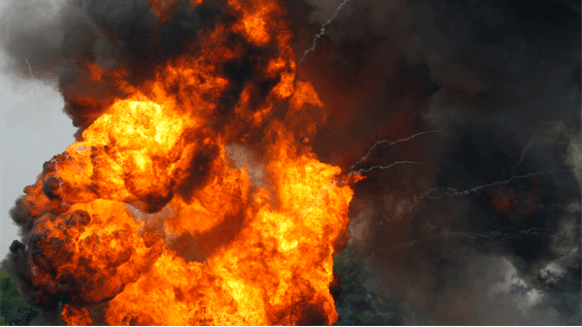
Chevron’s RMP 23 and RMP 24 wells in Nigeria have been blown up, according to a Twitter statement from the Niger Delta Avengers.

With the heavy presence of 100 Gunboats, 4 Warships and Jet Bombers NDA blew up Chevron Oil Well RMP 23 and RMP 24 3:44am this Morning.

The attack was carried out in the presence of “100 gunboats, 4 warships and jet bombers,” said an NDA spokesperson in a Tweet. RMP 24 and RMP 23 were labeled by the group as some of Chevron’s highest producing wells.

RMP 24 and RMP 23 are Chevron Swamp Highest producing Wells. #Boom

Chevron was not immediately available to confirm the attack.

The Niger Delta Avengers claimed responsibility for an assault on Chevron’s Escravos terminal in Nigeria May 26.

NDA used explosives to damage the Escravos tank farm main electricity feed pipeline, which resulted in Chevron’s onshore activities in the Niger Delta being shut down.

The attack followed NDA’s warning to Chevron that no repair works should be carried out to facilities previously targeted by the group, until NDA’s demands are fully met. NDA claimed on its official website May 11 that it suspected Chevron was preparing to carry out repair works at the Okan Valve platform, which was blown up by the group at the start of the month.

In an emailed response to Rigzone last week, a Chevron spokesperson said that the company will not comment on the safety and security of its personnel and operations as a matter of long-standing policy.

The Escravos incident comes after a series of other attacks on oil and gas companies operating in the Niger Delta. These include:

“Despite the heavy presence of military in the creeks, it will not stop us from carrying out our operations. We are ready to destroy more pipelines,” said NDA spokesperson Col. Mudoch Agbinibowe on the group’s website.

“We won’t only destroy pipelines, but will bring the fight to your tank farm and your Headquarters in Lekki, Lagos. If you continue to undermine us and go ahead with the repair works you won’t see us coming but we are coming for you,” the threat continued.

As part of its demands, NDA wants to “free the people of the Niger Delta from environmental pollution, slavery and oppression,” according to a statement on the group’s site.


Source