Home Blog Page 11

BRIEF-Norway’s prime minister: No plans to change oil industry taxes

0

Norwegian Prime Minister Erna Solberg told parliament:

* No plans to change oil industry taxation

* Changing oil industry taxation would likely lead to higher unemployment

* “This would be the wrong time to change conditions. I won’t give the oil industry signals today that we are changing conditions, that would lead to fewer jobs.” (Reporting By Stine Jacobsen, editing by Terje Solsvik)


Source

Nigerian Militants Warn Of ‘Zero’ Oil Output In New Attacks

0

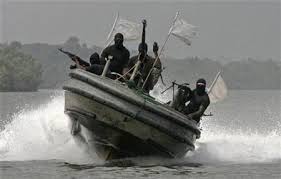
The Niger Delta Avengers militant group claimed three new attacks on the country’s battered oil infrastructure overnight, promising to bring Nigeria’s oil production to “zero.”

Early on Friday, the group said via its Twitter account that it had blown up a pipeline in Nigeria’s Bayelsa state owned by Italy’s ENI, hours after attacks on another ENI pipeline as well as one belonging to Shell Petroleum Development Company of Nigeria Ltd (SPDC).

“At about 3:30am our (@NDAvengers) strike team blew up the Brass to Tebidaba Crude oil line in Bayelsa,” the group said on a Twitter feed it uses to claim attacks.

The pipeline is used to transport Brass River crude, which was placed under force majeure after an attack last month, to an export terminal.

Hours earlier, the group said it blew up the Ogboinbiri-Tebidaba and Clough Creek-Tebidaba pipelines in Bayelsa and a Shell Forcados export pipeline.

That grade has been under force majeure since an attack on a sub-sea pipeline in February.

Because the attacks were on infrastructure for oil streams already under force majeure, the immediate impact on Nigeria’s exports was limited.

The country’s oil minister said on Thursday its production was close to 1.6 million barrels per day (bpd). ENI did not immediately respond to a request for comment.

A spokesman for the SPDC, which operates the Forcados line, said the company was “investigating reports of an attack on its pipeline in the Western Niger Delta.”


Source

Statoil secures additional equity in UK licence for Utgard field

0

On 1 June 2016, Statoil agreed to acquire JX Nippon’s 45% equity share in, and operatorship of, the UK licence for the Utgard field.

On conclusion of this transaction Statoil will increase its holding in UK licence P312 to 100%, having previously acquired stakes from First Oil in October 2015 and Talisman Sinopec in December 2015. Statoil is the operator in NCS licence PL046 with a 62% holding.

Utgard, previously known as Alfa Sentral, is a gas and condensate field spanning the UK-Norway median line. It is planned to be developed as a tie-back to existing infrastructure on the Norwegian Continental Shelf (NCS) for Sleipner, which Statoil operates.

A final investment decision for Utgard is planned before end-2016 with production start-up in 2020.


Source

Oil Slides on US Rig Count Rise, Economy Concerns

0

Oil prices tumbled more than 1 percent on Friday, extending losses after weekly industry data showed U.S. drillers added rigs for only the second time this year.

Drillers added nine oil rigs in the week to June 3, Baker Hughes said.

The closely followed report rekindled fears that U.S. shale drillers would turn the spigots back on as prices flirted with $50 a barrel.

<RIG-OL-USA-BHI> Prices had already dipped in early trade on worries about the U.S. economy, but losses were limited by a weakening dollar, which makes oil less expensive for buyers using other currencies.

“The increase in the rig count as prices near the $50/bbl range is clearly indicative of the elasticity of U.S. production and speaks to the tremendous efficiency gains reaped by the U.S. producer community over recent years,” said Michael Tran, director of energy strategy at RBC Capital Markets in New York.

Oil traders view falling U.S. output as key to reducing a global glut of crude that has pressured prices during a steep two-year slump. Brent crude futures ended the session down 40 cents at $49.64 per barrel.

Brent’s price remained almost double January lows, notching its eighth weekly gain in nine weeks. U.S. West Texas Intermediate (WTI) crude futures settled down 55 cents at $48.62.

For the week, prices fell 1.1 percent, its first weekly decline in four weeks. Oil prices have rallied from the winter’s lows due largely to supply disruptions, particularly in Nigeria, Venezuela, Libya and Canada.

On Friday, militants in the restive Niger Delta region that produces more than half of Nigeria’s oil claimed three new attacks on oil infrastructure, promising to bring the country’s oil production to “zero.”

Still, news that ExxonMobil lifted its force majeure, or suspension of deliveries on exports of Nigeria’s Qua Iboe crude oil because of events beyond its control, looked likely to bring barrels back to the market.

“If you’re starting to see some of those barrels coming back, well, that’s happening ahead of schedule, in my opinion,” Bob Yawger, director of the futures division at Mizuho in New York.

The tone of the Organization of the Petroleum Exporting Countries (OPEC) meeting in Vienna on Thursday supported prices “from the perspective that none of the major players (except Iran) indicated that they would be further flooding the market with oil anytime soon,” said Energy Management Institute analyst Dominick Chirichella. Weaker-than-expected U.S. non-farm payroll data supported oil by sending the dollar index to its lowest since mid-May. However, the weak data also pressured oil prices by raising concerns about U.S. gasoline demand this summer, Yawger said.


Source

Helix finalizes contract negotiations with Petrobras

0

Helix Energy Solutions Group, Inc. (NYSE: HLX) announced today that it has completed its contract renegotiations with Petróleo Brasileiro S.A. and has entered into amendments to its well intervention services contracts for its two chartered vessels, the Siem Helix 1 and the Siem Helix 2, offshore Brazil. The contract for the Siem Helix 1, originally scheduled to begin no later than July 22, 2016, was amended to commence between July 22, 2016 and October 21, 2016, and the day rate under the contract has been reduced to a level acceptable to both parties. The contract for the Siem Helix 2, originally scheduled to begin no later than January 21, 2017, was amended to commence between October 1, 2017 and December 31, 2017; the day rate under this contract was not changed.

Owen Kratz, President and Chief Executive Officer of Helix, stated, “We are glad to finalize this process in a manner that makes sense for both companies, and look forward to a long and productive working relationship.”


Source

Canadian Banks Not Over the Worst Impact from Oil Crunch

0

Canada’s banks are not over the worst of the impact from the oil crunch and face further hefty losses as energy firms struggle to pay back loans and consumers in oil-producing regions suffer, analysts and investors say.

The country’s biggest five lenders, including Royal Bank of Canada, Toronto-Dominion Bank and Bank of Nova Scotia, all set aside more funds to cover bad loans to oil & gas firms in the second quarter but their provisions remain relatively low compared to U.S. peers.

Although Scotiabank, which has the biggest exposure to the oil & gas sector among Canadian banks at 3.4 percent of its total lending, said energy loan losses had peaked in the last quarter, some analysts say it is too early to make that call.

“Just to have losses in these loan portfolios at the levels they’ve reported so far doesn’t seem logical. It seems like they should be higher and I definitely am doubting that this is the end,” said Edward Jones analyst Jim Shanahan.

The banks are basing their optimism on a partial recovery in the price of oil, which has recovered to around $50 per barrel after hitting a 13-year low of $26 per barrel in February on concerns about an oversupply.

“I’m more of a glass half full guy than a glass half empty guy, Scotiabank’s Chief Financial Office Sean McGuckin said in an interview on Tuesday. “Definitely you feel better at a $50 price than you do at a $30 price.”

The banks are still working through semi-annual talks with oil & gas firms to determine how much debt they can continue to hold. The majority are having their credit lines cut, which will make it tougher for some to survive, and the impact of that on banks’ profits will be felt in the third quarter and beyond.

David Cockfield, managing director of Northland Wealth Management, which owns shares in Scotiabank, Bank of Montreal and TD, expects provisions to rise again in the next quarter and said it will take time for a clearer picture of banks’ losses to emerge.

“If the price of oil gets back into the $50-60 range, then at least you’re going to see some of the guys that are in trouble be able to sell properties. I think that will encourage the guys with money in their pockets to step up, but we may not see that until 2017. These are lingering problems,” he said.

Banks also face a secondary impact from consumers in oil-producing regions such as Alberta, where there has been a sharp rise in unemployment, leaving some struggling to repay debt.

Consumer delinquency rates soared by 25 percent in Canada’s biggest oil-producing province last year and analysts say recent wildfires that put a major dent in production will make matters worse, although banks are extending forbearance for those directly affected.

“In Alberta we’ve seen a pick-up in delinquencies for credit cards as well as auto, I think everyone reported the same trend. You may see that flow through in the second half,” said Fitch Senior Director Doriana Gamboa.


Source

Euronav, Diamond S Shipping and Frontline join in Suezmax chartering joint venture

0

Euronav NV (NYSE: EURN & Euronext: EURN) (“Euronav”) announced the formation of a commercial joint venture with Diamond S Management LLC and Frontline Ltd. The aim of the joint venture is to create a single point of contact for cargo owners to access a large fleet of 43 modern Suezmax vessels, including newbuildings, operated on the spot market. The joint venture will be named Suezmax Chartering.

A larger fleet will provide more flexibility and more options for cargo owners, reduce voyage related expenses through optimisation of voyages and thereby reduce greenhouse gas emissions as a direct consequence of using less fuel for cargo movements.

The joint venture will commence operation today from the existing offices of Euronav, Diamond S and Frontline Management AS. Paddy Rodgers, CEO of Euronav, said: “I am delighted to start this exciting marketing venture in the Suezmax sector with Diamond S and Frontline. All three companies’management share a similar vision in bringing greater transparency to what is a highly fragmented industrial structure. We look forward to working closely with our partners in this initiative.”


Source

Qatar Energy Minister: Oil Market Heading Towards Rebalancing

0

Global oil markets are heading towards rebalancing, Qatar’s energy minister said on Friday, a day after the Organization of the Petroleum Exporting Countries failed to agree on a clear oil output strategy at a meeting in Vienna.

“It was a successful meeting, it was full harmony among members. We reviewed thoroughly market’s status of oil supply and demand. The worst was over,” Mohammed Al-Sada told reporters in Moscow.

“The market is heading towards rebalancing.”

Brent oil prices held at around $50 a barrel on Friday although OPEC did not agree on output targets, supported by Saudi Arabia’s pledge not to flood the market with more fuel.

Al-Sada said he saw “huge shrinkage in investments” in the oil industry because of the recent price weakness – down to as low as $27 per barrel in January – “which can lead to shortage down the road.”

“Investment is needed to come back so that we can sustain production and satisfy the market medium to long term,” he said.

On Thursday, OPEC decided unanimously to appoint Nigeria’s Mohammed Barkindo as its new secretary-general after years of friction over the issue.

Russian Energy Minister Alexander Novak, who was meeting Al-Sada on Friday in Moscow as a part of a regular inter-governmental commission, told reporters that he saw the appointment of a new secretary general as a key OPEC decision.

He reiterated that Russia did not expect any new actions from the cartel.

In April, Russia, which is not an OPEC member, and some other oil producing nations failed to reach agreement on freezing oil output levels after Saudi Arabia said it would join the deal only if Iran agreed to freeze output.


Source

Rud Chains’ ultimate heavy duty lifting application

0

RUD manufactures a range of lifting and lashing applications that guarantee ultimate safety when lifting and moving heavy loads. Offering over 500 different tested and certified lifting/lashing points for bolting and welding.

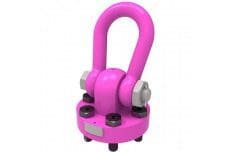
The impressive WBPG 85-200 Tonne hoist ring offers the ultimate solution for many heavy duty lifting requirements such as; offshore, construction, heavy engineering and handling.

The WBPG is loadable from any side in the direction of the pivot meaning it is suitable for lifting and turning of heavy loads. It has the ability to rotate 360° and swivel 180°. The WBPG comes with a detachable suspension ring in the shape of a shackle for the attachment of common lifting means.

Comprising an outstanding heavy duty design with a working load limit capacity of 85-250 tonnes it is no wonder the demand for the WBPG has been high across the heavy duty lifting sector.  The WBPG is ball bearing mounted and can be bolted on plate; on a flat surface, a flange or on a cone.

Across the offshore industry the WBPG has been used to lift heavy cable-laid grommets; the WBPG offers a removable suspension ring in the shape of a shackle to attach the cable-laid grommets to for lifting.

As one of the world’s largest manufacturers of lifting and lashing applications combined with their extensive range of products and knowledge in the market, RUD are continually innovating and developing their extensive product range to stay at the forefront of their customers’ demands.


Source

GE, Saudi Aramco to Invest in Forging, Casting Facility

0

GE Oil & Gas has signed an agreement with Saudi Aramco and Italy’s Cividale SpA to construct the Middle East and North Africa’s first-of-its-kind, high-end forging and casting manufacturing facility to serve the region’s energy and maritime industries.

The companies will invest more than $400 million in the facility, which will be sited at Ras Al-Khair under the Royal Commission of Jubail and Yarbu industrial area. The facility is intended to establish a high-value supply chain that boosts exports and economic competitiveness. Scheduled to start operations in 2020, the facility is expected to create 2,000 permanent, direct jobs in Saudi Arabia once it reaches optimal capacity, and to trigger the growth of Saudi small and medium enterprises, GE said in a June 1 press statement. The production capacity of the plant has yet to be finalized, but is expected to range between 50,000 to 70,000 tons a year, a GE Oil & Gas spokesperson told Rigzone in an email statement.

The memorandum of understanding follows a preliminary partnership between Saudi Aramco and Cividale, a producer in the steel and cast iron sector, to conduct feasibility studies for forging and casting manufacturing services in Saudi Arabia.

“The feasibility assessment study underlines the strong potential for a world-class manufacturing facility for forging and casting services in the Kingdom,” said Antonio Valduga, president of Cividale, in the press statement. “Developing a full-fledged facility through the joint partnership will position Saudi Arabia as a technology and services hub for specialized equipment and services.”

By building a domestic forging and casting production unit, Saudi and regional customers can achieve “greater operational efficiencies in product procurement, repair and service support,” Rami Qasem, president and CEO of GE Oil & Gas, Middle East, North Africa and Turkey, said in a June 1 press statement.

Being a new greenfield integrated shop, the facility will be able to take advantage of newly-designed state-of-the-art furnaces, production lines automation, and press machines, the GE spokesperson said. Normally, casting and forging facilities cater to a narrow span of products. But the facility is designed to cater to a large span of commodity and engineered products, ranging from 60 tons to as little as a few kilograms, including steel and iron-based materials, the spokesperson said.

Unlike typical casting and forging facilities that manufacture rough machine parts, the facility also will be fit with large precision machine equipment. This will allow customers and original equipment manufacturers to offtake fully machined casted and forged components for their final assembly lines, saving them the investment in precision machining equipment, the spokesperson explained.

The spokesperson said that some casting facilities in the region, as well as a handful of forging plants in the Middle East, exist, targeting very specific segments of the markets and mostly focusing on commodity-type products such as manhole covers, crushing materials or small-size pump and value components. The facilities in the region were built as either casting facilities or forging facilities, but not combined.

Source