Home Blog Page 9

North Sea infrastructure deals in the pipeline, says Deloitte

0

The North Sea will see a rise in infrastructure deals this year, with private equity funds playing an increasing role in midstream assets, according to business advisory firm Deloitte.

Against the backdrop of a low oil price, more oil and gas companies are looking to rationalise their portfolios and divest non-core assets in the UK Continental Shelf (UKCS), the firm said – with private equity and specialist infrastructure funds likely purchasers.

Deloitte’s latest European Infrastructure Investors survey found that pipelines, in particular, have provided a solid and steady return over the last five years. The asset class was highlighted by investors as performing well compared with other infrastructure, including fuel storage, ports and renewables; the internal rate of return on pipelines reached 14% in the period 2013-2016.

Deloitte’s report also found that pipelines will remain a strong focus for infrastructure investors in the future, along with gas and fuel storage.

Shaun Reynolds, Director, Transaction Services, at Deloitte, said: “Historically, big oil and gas operators developed and owned what they needed, transporting their major discoveries through proprietary pipelines and refining it in their own processing plants. That’s largely remained the case, until the last two or three years.

“The ownership model has evolved, driven by the maturity of the basin and the low oil price. Established players are divesting to shore up their balance sheets, and infrastructure is comparatively less complex to value and sell, with a ready market at the right price.

“Private equity firms and specialist energy infrastructure funds are likely buyers – specifically those with a solid grasp of the UKCS. They’ll look to take a number of assets under management, create a portfolio, maximise their potential and then look to divest; most likely to a pension fund aiming for steady returns from a stable asset.”

In 2015, BP sold its stake in the Central Area Transmission System (CATS) to Antin Infrastructure Partners in a £324 million deal. Antin had bought BG Group out of its stake the previous year, giving it near-complete ownership of the asset.

The third party ownership model has been employed successfully in the US shale gas market for years, while oil and gas infrastructure in The Netherlands and Norway is commonly owned by private equity or pension funds.

Shaun added that the changing asset stewardship of North Sea infrastructure could be a positive development for the industry, with 20 billion barrels still recoverable in the basin.

Shaun commented: “It’s a positive step for the UKCS. Private equity will provide focussed management of the assets and ensure they are being used to their utmost potential. That can only be a good thing, particularly from a longevity perspective as we seek to make the most of the North Sea.

“Whatever the case, there’s a strong appetite from investors for North Sea infrastructure – but only at the right price. As the oil price continues to take its toll and pressure mounts on balance sheets, more operators will have to look at rationalisation and infrastructure tends to be a logical sale. Deals are brewing in the UKCS – and we’ll see more on the infrastructure front in the short- to medium-term.”
 

Source

China’s oil stockpiling to boost tanker market: owners

0

Moves by China to stockpile oil are providing a further boost to the tanker shipping market which is already buoyant due to global bargain-hunting caused by lower crude prices, shipowners said on Monday.

Rates for supertankers transporting 2-million-barrel cargoes of crude surged to record highs in late December of over $110,000 a day and have stayed close to $60,000 a day in recent weeks, helped by firm appetite for cargoes and a tight supply of ships available for hire.

China is expected to add 70-90 million barrels to its strategic crude oil purchases in 2016 as it takes advantage of low prices, a Reuters survey has shown.

“China still represents good value … and should supply a lot of additional demand,” Paddy Rodgers, chief executive of tanker owner Euronav, told a Capital Link shipping conference in Athens.

“The need for an SPR (strategic petroleum reserves) – essentially there is a real concern about what happens if there is a short-term shock and there is a no spare Saudi Arabiancapacity to meet it. That is the big issue. People are going to take security of supply seriously.”

China is the world’s second-biggest crude importer, importing 32.58 million tonnes (or around 8 million barrels per day) and challenging the United States for top spot.

Last week OPEC failed to agree a clear oil output strategy as Iran insisted on steeply raising its own production, though Tehran’s arch-rival Saudi Arabia promised not to flood the market and sought to mend fences within the organization.

“The fall in the price of oil has helped tanker demand and has helped tanker earnings significantly,” said George Saroglou, chief operating officer with Tsakos Energy Navigation.

“This OPEC overproduction has helped. You had more demand coming out and also you had more demand to store the cheap oil.”

Saroglou said in the first quarter of this year demand for tankers to transport crude was higher “than the historical average”. “Demand is on the rise this year,” he added.

Other tanker players said there was wider appetite for oil in other parts of Asia including India and Indonesia, which was also set to bolster tanker earnings.

“Demand in the East is going to go very well and has an upside,” Vassilis Kertsikoff, vice chairman with Eletson Holdings, told the conference.

“I don’t see many clouds and (tanker) supply is fairly okay.”

(Reporting by Jonathan Saul; editing by Adrian Croft)


Source

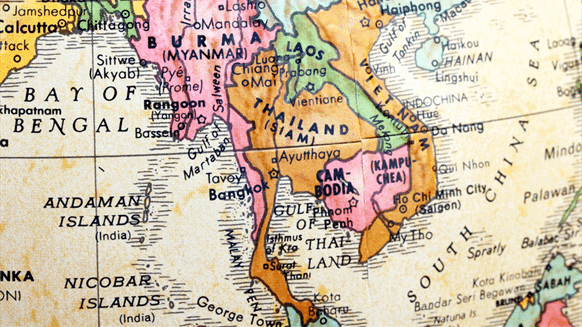
China Plans Oceanic ‘Space Station’ In South China Sea

0

China is speeding up efforts to design and build a manned deep-sea platform to help it hunt for minerals in the South China Sea, one that may also serve a military purpose in the disputed waters.

Such an oceanic “space station” would be located as much as 3,000 meters (9,800 feet) below the surface, according to a recent Science Ministry presentation viewed by Bloomberg. The project was mentioned in China’s current five-year economic plan released in March and ranked number two on a list of the top 100 science and technology priorities.

Authorities recently examined the implementation of the project and decided to accelerate the process, according to the presentation.

“Having this kind of long-term inhabited station has not been attempted this deep, but it is certainly possible,” said Bryan Clark, a senior fellow at the Washington-based Center for Strategic and Budgetary Assessments. “Manned submersibles have gone to those depths for almost 50 years. The challenge is operating it for months at a time.”

So far there are few public details, including a specific time line, any blueprints or a cost estimate — or where in the waterway it might be located. Still, China under President Xi Jinping has asserted itself more strenuously in the South China Sea, one of the world’s busiest shipping routes. Its claims to more than 80 percent of the waters and the creation of artificial islands covering 3,200 acres have inflamed tensions with nations including Vietnam and the Philippines.

Shipping Lane

It has also led the U.S. to send ships from its Seventh Fleet to ensure freedom of passage through an area that carries $5.3 trillion of global trade a year.

To read more about the diplomatic tussle over the South China Sea, click here.

“The deep sea contains treasures that remain undiscovered and undeveloped, and in order to obtain these treasures we have to control key technologies in getting into the deep sea, discovering the deep sea, and developing the deep sea,” Xi said last month at a national science conference.

While China’s appetite for natural resources remains the driving force behind the project, the recent ministry presentation noted the platform would be movable, and used for military purposes. China has proposed a network of sensors called the “Underwater Great Wall Project” to help detect U.S. and Russian submarines, say analysts at IHS Jane’s.

‘Important Strategy’

“To develop the ocean is an important strategy for the Chinese government, but the deep sea space station is not designed against any country or region,” said Xu Liping, a senior researcher for Southeast Asian affairs at the Chinese Academy of Social Sciences, a government-run institute.

“China’s project will be mainly for civil use, but we can’t rule out it will carry some military functions,” Xu said. “Many countries in the world have been researching these kind of deep water projects and China is just one of those nations.”

When analysts look at the South China Sea, they tend to focus on the potential for oil and gas reserves as estimates for mineral deposits are sketchy. The U.S. Energy Information Administration says the area has proved and probable reserves of about 11 billion barrels of oil and 190 trillion cubic feet of natural gas.

China’s estimates dwarf those. In 2012, Cnooc Ltd.’s then-chairman estimated the area holds around 125 billion barrels of oil and 500 trillion cubic feet of natural gas.

Typhoon Challenge

While most of the undiscovered oil lies in coastal regions that aren’t disputed, the contested areas face geological and technological challenges, not least the depth of the waters and frequency of typhoons.

Spearheading the planning for the deep-sea station is the China Shipbuilding Industry Corporation, according to a statement on the website of the science ministry. Once operational, it would host dozens of crew members who could remain underwater for up to a month, the ministry’s presentation separately said.

China Shipbuilding Industry Corporation and the ministry did not reply to faxes seeking comment.

Price Tag

Planning has been under way for a decade and is central to China’s push to become a global technology superpower by 2030, according to the presentation. Completing it would help China close a deep sea exploration gap with the U.S., Japan, France and Russia on underwater technology. China has already logged successes, with its Jiaolong submersible setting a world record by descending 7 kilometers in 2012.

The ministry presentation didn’t give any estimated price tag but Bryan Clark, who formerly served as special assistant to the chief of U.S. naval operations, said the cost could be daunting and its vulnerability to detection would make it less attractive militarily than using a submarine or an unmanned vehicle.

China spent 1.42 trillion yuan ($216 billion) on state and privately-funded research and development in 2015, according to the National Statistics Bureau, while total defense spending this year is projected by the government to increase 7.6 percent to 954.4 billion yuan ($145 billion).

“The kinds of systems that make sense for deep sea are sensor and communication systems,” said Clark. “In the Cold War, the U.S. and USSR spent much effort looking for each others’ communication cables and sensors to disrupt them in peacetime or attack them in war. We can assume those efforts would continue today and into the future.”

Updates with Xi comment in seventh paragraph.


Source

US Top Court Rejects Ecuador Challenge to Chevron Arbitration Award

0

The U.S. Supreme Court on Monday let stand a $96 million international arbitration award issued in 2011 in favor of energy company Chevron Corp in a dispute over the development of oil fields in Ecuador.

The justices declined to hear the South American country’s challenge to an August 2015 ruling by the U.S. Court of Appeals for the District of Columbia Circuit upholding the award in Chevron’s favor issued by The Hague’s Permanent Court of Arbitration in the Netherlands.

With interest, the arbitration award stands at approximately $106 million, Chevron said. Chevron spokesman Morgan Crinklaw said in a statement the company was pleased that the Supreme Court rejected the appeal and that Ecuador “will be held accountable.”

The dispute stems from a 1973 deal that called for Texaco Petroleum Co, later acquired by Chevron, to develop oil fields in exchange for selling oil to Ecuador’s government at below-market rates. Texaco filed several lawsuits in the 1990s accusing Ecuador of violating the contract.

Chevron initiated an arbitration proceeding at The Hague in 2006, claiming Ecuador’s courts failed to resolve the lawsuits in a timely manner, violating a treaty between Ecuador and the United States. A panel awarded Chevron $96 million plus interest, which was subsequently upheld by the Dutch court system.

Chevron then filed a federal lawsuit in Washington, seeking a judgment confirming the panel’s decision in order to collect the award. After a federal judge affirmed the award in 2013, Ecuador appealed to the Court of Appeals for the District of Columbia Circuit.

Ecuador said the arbitration tribunal has no jurisdiction in the case because the bilateral trade agreement took effect five years after Texaco ended operations in Ecuador in 1992.

The case is not part of a separate legal battle brought by a group of Ecuadorean villagers who claim Texaco caused billions of dollars in pollution damage when it began exploring oil deposits in the 1960s.

Chevron continues to fight claims from the villagers, who have filed lawsuits in Canada, Brazil and Argentina seeking to enforce a $9 billion judgment rendered in Ecuador against Chevron.

In 2014, a U.S. judge in New York issued a scathing ruling finding that the villagers’ American lawyer, Steven Donziger, committed fraud in securing that judgment. Donziger, who denies any wrongdoing, has appealed.

(Reporting by Lawrence Hurley; Editing by Will Dunham)


Source

Oil operations restart following northern Alberta wildfire

0

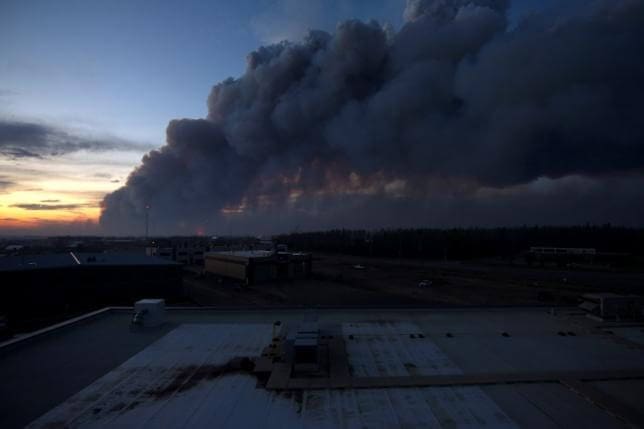
Oil companies are restarting operations in the region around Fort McMurray, Alberta, following a huge wildfire last month that forced many sites to evacuate as a precaution.

At its height, the shutdown at major oil sites cut daily production by more than 1 million barrels, officials said.

At least 400,000 barrels per day production is still offline although in reality that number is likely far higher as many producers are still in the process of ramping back up to normal rates. In addition, Suncor Energy’s (SU.TO) base plant and the Syncrude project still need to finish maintenance turnarounds interrupted by the fire.

In the last few days Imperial Oil Ltd (IMO.TO) said it has returned to normal operations at its Kearl mine, ConocoPhillips (COP.N) restarted production at its Surmont project and Suncor said its operations would return to normal rates by the end of June.

The following is a list of what oil producers and pipeline companies have said about nearby operations:

Operator Asset Status Size of cut Total capacity Date Link to story

Athabasca Oil Hangingstone Resumed 12,000 bpd 12,000 bpd by Q4 24-May

Corp (ATH.TO) project operations 2016

Suncor Energy Base plant mine Operations 350,000 bpd 350,000 bpd at 06-June

Inc (SU.TO) and upgrader, restarted, at base base plant. Was

MacKay River and return to normal plant. Other operating at

Firebag thermal production sites reduced rate

oil sands expected by unspecified before closure

end-June because of

maintenance

Connacher Oil Great Divide Output cut 6,000 bpd 14,000 bpd in Q4 5-May

and Gas Ltd 2015

(CLC.TO)

Syncrude, Aurora bitumen Expects to 315,000 bpd 315,000 bpd. Was 6-June

majority-owned mine, Mildred return to full operating at

by Suncor Lake upgrader production by reduced rate

mid-July before fire

because of

maintenance

ConocoPhillips Surmount Re-started 30,000 bpd 30,000 bpd 07-June

(COP.N) production, will

gradually ramp

up to pre-fire

capacity

Shell Muskeg River and Restarted at 255,000 bpd 255,000 bpd 17-May

(RDSa.L) Jackpine unspecified

reduced rate

Statoil Leismer facility Now producing 20,000 bpd 20,000 bpd 01-June

(STL.OL) 20,000 bpd

Imperial Oil Kearl operation Back to normal Unspecified 196,000 bpd in Q1 03-June

(IMO.TO) production 2016

Husky Energy Sunrise Restarting 30,000 bpd 30,000 bpd 01-June

(HSE.TO) production

Nexen Long Lake Work camps 50,000 bpd 50,000 bpd. Was 24-May

reopening operating at

reduced rate

before closure

because of an

explosion on site

in January

Canadian Horizon Operations Unspecified 17-May Natural stable

Resources Ltd

(CNQ.TO)

(Reporting by Barani Krishnan in New York, Ethan Lou, Euan Rocha and Jeffrey Hodgson in Toronto, Nia Williams and Eric M. Johnson in Calgary; Compiled by David Gaffen and Josephine Mason; Editing by Chris Reese and James Dalgleish)


Source

Engie Brazil Unit Seeks to Sell Bahia, Maranhao Natgas Blocks

0

The Brazilian unit of France’s Engie SA is seeking to sell its natural gas blocks in Brazil’s Bahia and Maranhao states as part of a global strategy to focus on renewable energy, the Brazil-unit’s chief executive said on Monday.

Engie Brazil CEO Mauricio Bahr, speaking at an event in Rio de Janeiro, also said the company has no interest in bidding for the thermoelectric power plants or liquefied natural gas (LNG) assets on sale by Brazil’s state-run oil company Petroleo Brasileiro SA, commonly known as Petrobras.

(Reporting by Rodrigo Viga Gaier; Writing by Jeb Blount)


Source

Oil Up 3rd Day on Supply Worry; Fed Chief Remarks Pare Gains

0

Oil prices rose for a third straight day on Monday, as crippling attacks on Nigeria’s oil industry and fresh draws in U.S. crude stockpiles boosted prices even though gains were pared later on renewed expectations of a U.S. interest rate hike.

Global crude benchmark Brent hit seven-month highs and settled 1.8 percent higher, while U.S. West Texas Intermediate (WTI) crude settled up 2.2 percent, its largest gain in three weeks.

Prices rose as industry sources said output of Nigeria’s Bonny Light crude had fallen an estimated 170,000 barrels per day (bpd) from attacks on pipeline infrastructure. Total crude production in the country, once Africa’s biggest oil producer, is down more than 500,000 bpd.

“At this point, there is no sign that the Nigeria (situation) is getting any better, and it’s looking worse,” said Scott Shelton, energy broker with ICAP in Durham, North Carolina.

Brent settled up 91 cents, or 1.8 percent, at $50.55 a barrel. During the session, it hit $50.83, its highest since November.

WTI rose $1.07, or 2.2 percent, to settle at $49.69. It was WTI’s biggest daily percentage gain since May 16.

Further bolstering oil, market intelligence firm Genscape reported a drawdown of 1.08 million barrels at the Cushing, Oklahoma delivery point for WTI futures during the week to June 3, traders who saw the data said.

U.S. crude stockpiles as a whole likely fell for a third straight week last week, declining 3.5 million barrels, a Reuters poll of analysts showed.

Any spare U.S. refining capacity arising from optimum refinery runs during the summer might not be enough to balance the market without deeper stock drawdowns that would support crude prices more, ICAP’s Shelton said.

Brent and WTI pared gains as the dollar popped up briefly after U.S. Fed Chair Janet Yellen said she still expects gradual interest increases this year despite disappointing U.S. jobs growth in May.

The dollar’s gains did not last, but oil traders remained wary because any near-term gains by the greenback would make it costlier for those holding other currencies to buy dollar-denominated crude. The dollar could rally in coming days if speculation on a rate hike grows, traders said.

“We have advised a shift from a bullish to a neutral camp,” Jim Ritterbusch of Chicago-based oil markets consultancy Ritterbusch & Associates said, projecting headwinds for oil in the near-term as some supply outages are resolved.

“We are viewing WTI as trading near the high side of an expected $45-50 range that could prove applicable through the rest of this month.”


Source

Nigeria to talk with Delta Avengers: oil minister

0

Nigeria wants to talk with the Niger Delta Avengers militant group which has claimed a string of attacks that cut crude output sharply, its oil minister said, trying to stem a tide of violence in the country’s main oil-producing region.

The southern Delta swamps, where many complain of poverty and oil spills, have been hit by militant attacks on oil and gas pipelines which have brought Nigeria’s oil output to a 20-year low, and helped push oil prices to 2016 highs on Tuesday.

President Muhammadu Buhari had appointed a team led by the national security advisor “to begin the process of a very intensive dialogue with those caught in the middle of this,” Oil Minister Emmanuel Ibe Kachikwu said late on Monday, while Buhari was in Britain seeking medical treatment.

“I want to call on the militants to sheath their weapons and embrace dialogue with government,” he said. “We are making contacts with everybody who is involved, the ones that we can identify, through them, the ones that we can’t identify so that there is a lot more inclusiveness in this dialogue.”

“Probably we will suspend the operations of the military in the region for a week or two for individuals in the creeks to converge for the dialogue,” he said.

There was no immediate response from the Avengers group which has been issuing statements through its Twitter account.

Vice President Yemi Osinbajo, who had been expected to travel to London to meet financial investors on Tuesday, met instead in Abuja Niger Delta state governors to discuss ways to end the militancy, an official said.

Adding to the trouble of authorities trying to stem the violence, a group in the southeast calling for secession declared support for the Avengers.

“We support the Niger Delta Avengers,” said Uche Madu, a spokesman for the Movement for the Actualization of the Sovereign State of Biafra (Massob) which wants secession for the region which already fought a 1967-70 civil war.

A former militant group, the Movement for the Emancipation of the Niger Delta, which laid down arms in 2009 under a government amnesty, accused the army of a “disproportionate use of force”.

MEND, which was one of the largest militant groups, also said the Delta Avengers had attracted some of its former fighters. So far it has been unclear who is behind the Avengers.

“Many of whom were MEND commanders and fighters who jumped on the Presidential Amnesty gravy train without knowing why they took up arms in the first place,” the MEND statement said.

Kachikwu also said Nigeria’s oil output was between 1.5 million and 1.6 million barrels a day, down from 2.2 million barrels at the start of the year.

“Over the last two months, we have probably lost about 600,000 barrels from various attacks of militants in the area,” he said.

The U.S. embassy in Abuja said in a statement it was concerned about the violence in the Delta, urging “all parties to resolve their disputes through peaceful means.”

(Reporting by Felix Onuah, Ulf Laessing, Camillus Eboh and Tife Owolabi and Anamesere Igboeroteonwu; Writing by Ulf Laessing, editing by Louise Heavens and William Hardy)

OPEC Optimism Masks Iran Risk to Oil Rally From 12-Year Low

0

Oil’s recovery from a 12-year low may be too good to last as Iranian output rebounds faster than expected.

OPEC last week stuck to its policy of unfettered production, deciding against a new output ceiling as the price rally supported optimism among its members that the oil market is improving. Bijan Namdar Zanganeh, Iran’s oil minister, said fellow OPEC members didn’t give him any negative signals when they met Thursday in Vienna about his nation’s plan to further raise production.

The Persian Gulf nation’s production has surged to the highest since 2011, quicker than the International Energy Agency predicted it could recover to pre-sanctions levels. Meanwhile, prices raced back to $50 a barrel as outages from Nigeria to Canada offset Iran’s return, averting the market apocalypse some were expecting. But a possible recovery of lost output elsewhere in the world risks putting renewed pressure on prices, according to analysts at Commerzbank AG and Barclays Plc.

“The increase was beyond expectations” from Iran, said Eugen Weinberg, head of commodities research at Commerzbank AG in Frankfurt. “We are close to the balance now, but it’s due to presumably temporary disruptions.”

The unplanned supply outages and rising demand from India to China have helped Brent, the global benchmark, surge almost 80 percent since plunging in January to the lowest since 2003. Prices were up 0.6 percent at $49.96 a barrel at 10:33 a.m. in Hong Kong.

For a story on the impact of disruptions on the oil market, click here.

“There’s the possibility of unplanned outages to return and the demand side will probably drive some of the weakness in the third quarter,” said Miswin Mahesh, an oil market analyst at Barclays in London. “We have a bearish view on the third quarter, partly because of some of the unplanned outages returning and partly because of macro issues.”

Iran, which was the second-biggest OPEC producer until sanctions were intensified in 2012, has boosted output 22 percent to 3.5 million barrels a day since penalties were lifted in January, according to estimates compiled by Bloomberg. Higher exports from the Persian Gulf state have been “well absorbed” by the market, the oil ministry’s news service Shana reported before the Organization of Petroleum Exporting Countries met last week, citing Zanganeh.

“Iranian production was generally viewed a few months ago, or post the lifting of sanctions, to take about a year or so to come back onto the market,” said Mark Keenan, the head of commodities research for Asia at Societe Generale in Singapore. At about 200,000 barrels a day short of pre-sanctions levels “that’s perhaps a supportive factor as most of the expected future supply is already in the market,” he said.

Returning Surplus

The market has flipped to a deficit sooner than expected as unplanned output disruptions and sustained demand caused a “sudden halt” to the oversupply, Goldman Sachs Group Inc. said last month. But a return from some of those outages, along with higher production from Iran, as well as Iraq, may tip the market back into surplus in the first quarter of next year, according to the bank.

Iran is seeking to raise output even further, aiming for 4.8 million barrels a day in five years, Zanganeh said before the meeting Thursday. The nation, which is now OPEC’s third-biggest member, has more than doubled exports since the removal of sanctions to above 2 million barrels a day, he said.

Zanganeh wants OPEC, which is pumping at a record 33.2 million barrels a day, to return to a country-quota system. Iran, he said, should account for 14.5 percent of the group’s output, the level it was before the sanctions took hold.


Source

UPDATE 1-India ready to help revive Nagarjuna oil refinery – oil minister

0

(Recasts, adds details)

By Nidhi Verma

Energy-hungry India is ready to revive projects including the Nagarjuna Oil Refinery in the south of the country to boost its oil sector, oil minister Dharmendra Pradhan told a local television channel on Monday.

India, the world’s fastest growing major economy, meets about three-quarters of its oil needs through imports and wants to expand its production and refining capacity to meet soaring demand.

The Nagarjuna refinery, in the state of Tamil Nadu, was in an advanced stage of construction when it suffered severe damage in a December, 2011 cyclone. The firm lacks the financial strength to continue work at the site.

Completion of the facility, with a capacity of 120,000 barrels per day, would help fill a looming shortage in processing capacity but would require a cleanup of the site and extensive renovation work.

“The government will support any project, within the legal framework, to boost the country’s oil sector. The Nagarjuna refinery is also one of these projects,” Pradhan told CNBC’s Hindi-language news channel in an interview.

Nagarjuna Oil Refinery earlier said it was in talks with prospective investors, including state-run firms like Indian Oil Corp, as well as the royal family of Saudi Arabia, to revive the facility.

In other comments, Pradhan played down reports that the country’s biggest explorer, Oil and Natural Gas Corp, would be forced by the government to bail out Gujarat State Petroleum Corp (GSPC). He said it was a commercial matter and the boards of the firms would take a decision.

GSPC has been rapped by the federal auditor for investing about $3.5 billion in an offshore block off India’s eastern seaboard without achieving significant success. (Reporting by Nidhi Verma and Sankalp Phartiyal; Editing by Douglas Busvine and Ed Davies)