Home Blog Page 578

Galoc Phase II Project to Commence Oil Production in Early December

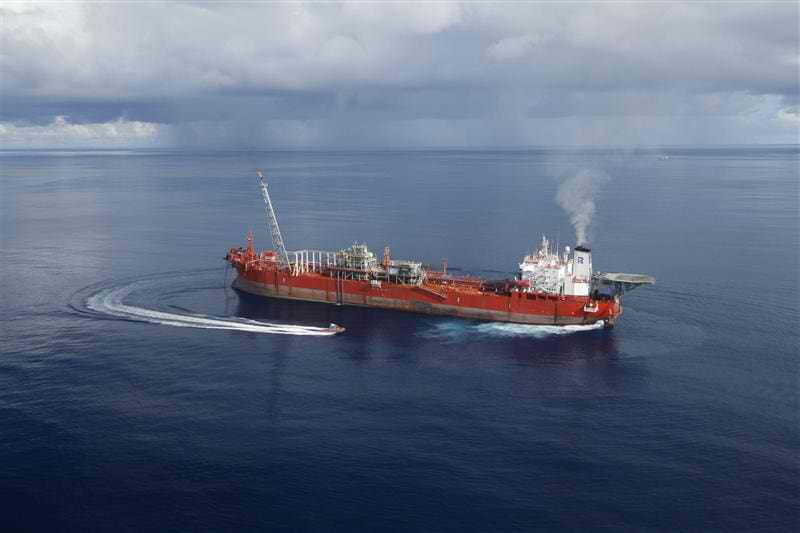
Southeast Asia-focused oil and gas exploration and production company Nido Petroleum Limited reported Thursday that work on the Galoc Phase II development in Service Contract 14C in the Palawan Basin, offshore Philippines is progressing well.

Development work for Galoc Phase II project was disrupted recently when Typhoon Haiyan swept across part of the Philippines a few weeks ago. However, work resumed quickly at the Galoc oilfield to install equipment for the final stages of the Galoc II project.

Subsea installation activities to connect the Galoc 5-H and Galoc 6-H wells into the floating production, storage and offloading (FPSO) Rubicon Intrepid are nearing completion. “The Operator, Galoc Production Company WLL, expects that production from the Phase II wells will commence early next week,” Nido said in a press release.

Source

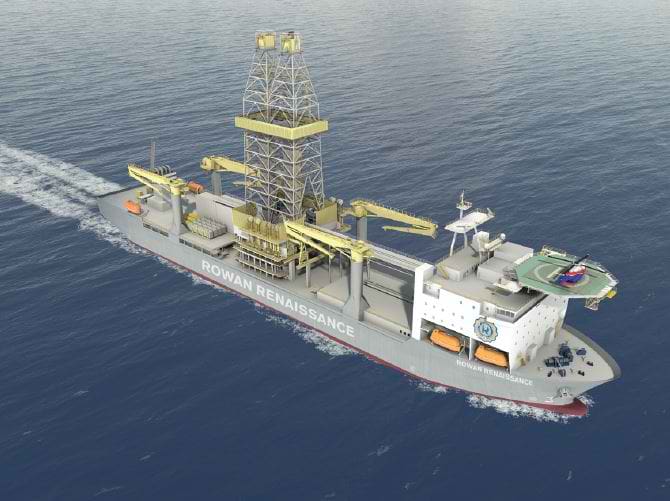
Rowan Renaissance Drillship Arrival in Namibia Delayed One Month

Tower Resources plc (the “Company” or “Tower”), through its wholly-owned subsidiary, Neptune Petroleum (Namibia) Limited (“Neptune”), has received formal notification from Repsol Exploration (Namibia) (Pty) Limited (“Repsol”), the Operator of Namibia PEL0010 (Neptune 30% working interest), that the scheduled arrival of the Rowan Renaissance Drillship in Walvis Bay, Namibia, will be delayed by approximately one month.

The rig is now scheduled to arrive at the well location on 23 March 2014 and it is estimated that the drilling of the Welwitschia-1 well will commence at the end of March 2014.

The Rowan Renaissance is a new build, dual-stack, 6th generation drillship, being constructed in the Ulsan shipyard, South Korea, by Hyundai Heavy Industries and is on a three year, international, multi-well contract to Repsol. The vessel is expected to depart South Korea towards the end of January 2014 after wet testing the Blow-Out Preventers. Following its departure, the rig will then make two scheduled stops in Singapore and Cape Town. These operational “stop overs” also allow the loading of drilling related equipment.

The Welwitschia-1 prospect which is targeting net risked recoverable resources of 496 mmboe to Tower’s 30% interest (based on the updated CPR – July 2013) promises to be one of the highest profile exploration wells drilled in Africa during 2014.

Graeme Thomson, Tower’s CEO, commented: “Whilst we have been aware of the more conservative timing suggested by Rowan’s recent Fleet Status Report the formal notification from the Operator and Rowan is in fact a new development, but it is only a short delay. We and the market are increasingly excited as the drilling of Welwitschia-1 draws closer and will provide further updates as we move towards the spud date of this giant prospect”.

Source

Passenger train derails in New York City, at least four dead

0

Multiple injuries also reported; Four or five cars on the seven-car train derailed near Bronx borough.

At least four people died and 63 were injured, including 11 critically, in a train derailment in New York City, the New York Fire Deparment reported.

The Metro-North passenger train derailed near the Spuyten Duyvil station in the Bronx, police say. The fire department says 130 firefighters are on the scene.

Four or five cars on the seven-car train derailed about 100 yards (90 meters) north of the station on a curved section of the track, said the Metropolitan Transportation Authority. But none of the cars entered the Hudson or Harlem rivers, which are adjacent, the MTA added.

The train was about half full at the time of the crash, with about 150 passengers, the MTA said.

“On a workday, fully occupied, it would have been a tremendous disaster,” New York City Fire Commissioner Salvatore Joseph Cassano told reporters at the scene.

At least one rail car was lying toppled near the edge of a river and police and other rescue workers were searching for survivors along the shoreline.

New York Police Department divers were seen in the water near the scene of the accident, and dozens of firefighters were on the scene helping pull people from the wreckage. None of the passengers were in the water, according to Marjorie Anders of Metro-North.

Edwin Valero was in an apartment building above the accident scene when the train derailed. He says none of the cars went into a nearby body of water, but at least one ended up a few feet from the edge.

Rebecca Schwartz was at a nearby park when the accident occurred. She says she didn’t see or hear the derailment but looked across the water when she heard emergency vehicle sirens. She says numerous emergency vehicles have responded to the scene.

Source

Strategic Marine Secures Two Marine Infrastructure Fabrication Projects

0

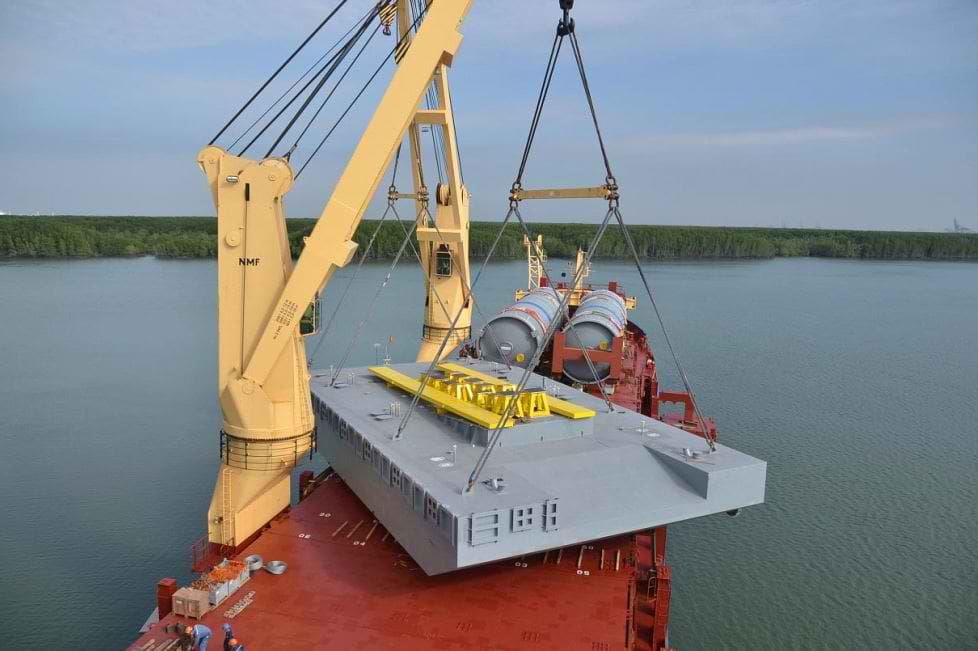
Strategic Marine announced that it is constructing two marine infrastructure fabrication projects in its Vietnam shipyard. Both projects are for Australian clients.

The first comprises three 60-metre pontoons and three 90-metre gangways for application in Gladstone Port Corporation’s new tug base.

The second is for Carnegie Wave Energy and comprises three Buoyant Actuators for a renewable wave energy and desalination project off the coast of Perth.

“We have been developing our general fabrication capability over the last few years,” saidReece Newbold, Group Business Development Manager, “with the clear intention to show our mettle in the construction of modules for the Marine & Civil Infrastructure, Mining, and Oil & Gas markets.”

Strategic Marine’s head office is in Western Australia, and with the Australian mining boom previously in full swing, the decision was made to mount a concerted effort to showcase the cost benefits of building in Vietnam coupled with the use of expert local and Australian project management teams.

In the last two years, the company has secured and successfully completed several projects on both the Western and Eastern seaboards of Australia.

For Woodside, Strategic Marine fabricated, delivered and installed tug pens in North West Australia. For the John Holland – Leighton Asia joint venture, the company designed, fabricated, delivered and installed a ferry terminal to the QCLNG project, fabricated and delivered Ro-Ro intermediate staging pontoons to the GLNG project, fabricated jetty modules for all three Gas projects in Gladstone, and built a 250-tonne surge bin for the WICET coal terminal. For Waterways Construction, for whom the company is now building the Gladstone Port Corporation applications, Strategic has previously fabricated and supplied six ferry terminal pontoons, roofs and associated structures.

“Our successful experience in the demanding Australian marketplace has given us confidence to branch into other markets and regions,” said Newbold. “Our waterfront facilities in Vietnam, Singapore and Australia lend themselves well to the requirements of modular fabrication with Vietnam in particular having a large heavy laydown area and direct access to the onsite load out facility and slipways. With the company historically being a ship builder, there is already a high level of integration capability and knowledge meaning modules can be completely fitted out so when they arrive on site it is essentially a plug-and-play installation. These waterfront yards play an important role in reducing the logistics challenges of large fabrication projects.”

Alongside fabrication facilities in Western Australia, Singapore and Vietnam, the company is supported by staff in Brisbane, Jakarta, Indonesia and Manila. “We are perfectly set up to service the Asia & Australasia regions, and well beyond,” confirmed Newbold.

Source

Search of Sound reveals no trace of wreckage from 1947 crash

0

ON LONG ISLAND SOUND — It’s slow going scanning what lies below the waves, watching an image of the bottom crawl by on a Toshiba monitor in brown and sepia tones.

“The tedious search,” Kirby Kurkomelis, a diver, said Saturday as the 45-foot Formula boat inched along at 4 knots. The boat towed two probes — a side-scan sonar device and a magnetometer that senses metal.

“If we were looking for Captain Kidd’s treasure,” Kurkomelis said, “we’d have to go back and forth, back and forth.”

What the crew of four was looking for had nothing to do with pirate lore — it’s the wreckage of a military training plane that crashed into Long Island Sound near Westchester in 1947.

It has emotional weight for Bob Contreras, a 56-year-old Mamaroneck businessman and New Rochelle resident who has spent almost 400 hours scanning the waters for almost a year.

The airplane was flown by Maj. Owen Allred, a famed and decorated World War II ace who served with the 80th Fighter Group, the Burma Banshees, in Asia. Contreras’ father, Walter, was a mechanic who served with Allred. He died in 1984.

After scanning in two areas Saturday, the searchers made no new groundbreaking finds, despite having discovered obviously human-made structures on the estuary floor where fishermen had talked of an old plane wreck. Returning to the area, not far from Stamford, Conn., halfway between Connecticut and Long Island, they found a mass of metal. But Contreras did not think it was the AT-6 training plane they were looking for.

“There’s too much (for it) to be the plane” Contreras said.

Kurkomelis said fishermen sometimes drop metal objects into the water to expand a reef where fish will collect.

With diver Gene Ritter of Cultural Research Divers and his wife, Beth Ritter, they also scanned an area around Great Captain Island off Greenwich.

Source

Wintershall, Partners Submit Maria Development Concept

0

Wintershall and the two license partners Petoro AS and Centrica Resources (Norge) AS have a preferred solution for the development of the Maria field in the Norwegian Sea: According to the solution, the reservoir would be linked to the already existing infrastructure nearby via an underwater installation.

Wintershall Norge has now submitted a development concept for the reservoir to the Norwegian Petroleum Directorate (NPD). This step does not mean that an investment decision has already been made.

The Maria field is located 20 kilometers east of the Kristin field and roughly 45 kilometers south of the Heidrun field in the Norwegian Sea. The field’s estimated production volume is roughly 130 million barrels of oil and slightly more than 2 billion standard cubic meters of gas.

Connecting to existing infrastructure

After planning has been completed, the reservoir would be linked to the already existing Statoil infrastructure nearby via a so-called subsea tie-back. Based on this plan, the Maria field would be connected with the producing platform Kristin, Heidrun and Åsgard B via two templates located on the ocean floor. A corresponding development concept has now been submitted.

The license partners prefer a underwater installation as the most economical development solution. The project is now entering the technical planning phase, in which several detailed coordination studies will be conducted so that a development and production plan (PDO) can be set up and presented to the Norwegian government by next year.

Subject to the PDO’s approval and a positive investment decision, Wintershall expects the oil and gas to start flowing in 2018.

Source

More Than 17 Human Skeletons Discovered On German WWII Submarine

0

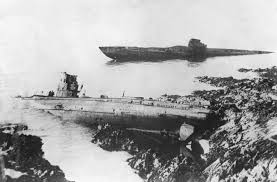
The German boat, which is believed to be an infamous submarine that sank several Allied vessels, was discovered north of Java earlier this month after local divers tipped off officials to the wreck’s existence. Indonesian researchers said on Thursday said the wreck contained at least 17 human skeletons as well as several priceless historic artifacts.

“This is the first time we have found a foreign submarine from the war in our waters,” Bambang Budi Utomo, head of the National Archaeology Center research team that located the sunken vessel, told the Agence France-Presse. “This is an extraordinary find that will certainly provide useful information about what took place in the Java Sea during World War II.”

Divers have reportedly retrieved dinner plates bearing swastikas, batteries, binoculars and a bottle of hair oil from the submarine. According to Fox News, officials say it’s unlikely the wreck will be raised or taken out of the sea anytime soon.

Upon first inspection, Indonesian researchers told Agence France-Presse they believe the wreck to be the German submarine “U-168,” which records show sank numerous Allied vessels, the submarine was later torpedoed by a Dutch submarine torpedoed in 1944 off the archipelago nation’s main island of Java.

The Dutch vessel fired six torpedos from 900 meters, but only one of the explosives detonated. Twenty-three German sailors reportedly died in the attack, and the captain and 26 crew members survived, According to a report by German newspaper Die Welt.

According to Fox News, German magazine Der Spiegel reported 23 of the 50 people on board U-168 at the time of the encounter died in the attack.

Fox News reported the discovered submarine could be that of U-183, another German submarine that also sunk in the Java Sea in April 1945. Both U-boats were reportedly part of World War II Germany’s “Monsoon Group,” which was tasked with intercepting enemy shipping in the Arabian Sea and Indian Ocean.

“We are open to assistance from the German government to research this area of their history,” Budi Utomo told Agence France-Presse.

Source

Divers find Nazi U-Boat wreck, skeleton crew off coast of Indonesia

0

Divers off the coast of Indonesia have discovered the wreck of a World War II Nazi U-Boat with at least 17 skeletons on board.

“This is the first time we have found a foreign submarine from the war in our waters,’ said Bambang Budi Utomo, head of the research team at Indonesia’s National Center of Archaeological Research, the Daily Mail reported.

“This is an extraordinary find that will certainly provide useful information about what took place in the Java Sea during World War II,” he said.

Divers also found dinner plates with swastikas on them, batteries, binoculars and a bottle of hair oil.

The ship, believed to be a U-168, was part of the Monsun U-Boats which were a group of vessels sent from Germany to attack allied ships along trade routes, the Daily Mail said.

Captain Helmuth Pich was its commander on four missions for the Third Reich.

The submarine was torpedoed by a Dutch ship as it was on its way to meet two other German vessels for an operation off Australia in 1944, Haaretz reported. Nearly half of the submarine’s crew were killed.

Source

Cleanup of fuel leaking from sunken boat continues

0

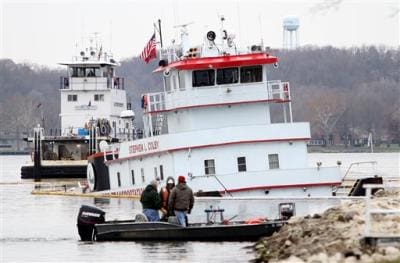
DES MOINES, Iowa—Officials were assessing the environmental damage Tuesday after a towboat carrying 100,000 gallons of diesel fuel and oil sank in the Mississippi River in eastern Iowa, closing the river to barge traffic.

Members of the U.S. Coast Guard, the Environmental Protection Agency, the U.S. Fish and Wildlife Service and other organizations don’t yet know what the towboat struck before it began sinking around 4:30 p.m. Monday. Nine crew members safely escaped.

The river cannot be opened to traffic until the cause of the accident is determined and safe navigation is ensured, Coast Guard spokesman Lt. j.g. Colin Fogerty said in a phone interview from LeClaire.

The boat is still leaking diesel fuel and oil, and the smell of diesel fuel lingers, though air monitors show it’s safe to breathe in the area, Fogerty said.

“It’s anyone’s best guess how much oil has actually leaked into the water,” he said, noting that booms appear to be containing and collecting 90 percent of what’s been spilled. “That being said, right now we’re dealing with hundreds of gallons as opposed to thousands of gallons.”

Officials are developing a plan to raise the boat, named the Stephen L. Colby, that’s stranded in about 14 feet of water and pushed up against the riverbank. The upper portion of the boat’s superstructure is still visible.

The boat was built in 1967 and is 154 feet long and 40 feet wide. It’s owned by Paducah, Ky.-based Marquette Transportation Co. A spokeswoman declined to comment.

Mississippi River barge traffic begins to slow this time of year once the bulk of the Midwest harvest is finished, but traffic continues to move, so opening the river is a priority. Three towboats with 40 barges are waiting to pass, Fogerty said, with one barge the equivalent of about 58 semitrucks worth of cargo.

“We don’t know when we’ll find out what caused it. We could find out instantly or it may be a longer, drawn-out investigation,” he said. “At this point we have to do a sonar survey to see exactly what caused this vessel to go down.”

Fogerty said the river flow at Le Claire is slow this time of year, helping to minimize the water forcing its way into the boat and pushing petroleum products out. Divers closed many of the vents and other openings Monday night to slow the leak, he said.

About 3,000 feet of absorbent booms encircle the spilled fuel and oil, and will be replaced as soon as they soak up the petroleum products, he said. A civilian salvage contractor and an oil spill removal group were sending crews for the cleanup and to begin developing a strategy for raising the vessel, Fogerty said.

No fish kill is evident but representatives of the EPA and Fish and Wildlife Service were en route Tuesday to assess environmental impact.

Capt. Byron Black, the Coast Guard sector commander for the Upper Mississippi River, which includes 11 states, was on his way from St. Louis on Tuesday to assess the situation and determine when it’s safe to reopen the river channel.

Source
A Robot Turtle Will Help Underwater Archaeologists to Inspect Shipwrecks

0

he Robot Safari in London Science Museum will see the world premiere of the underwater robot U-CAT, a highly maneuverable robot turtle, designed to penetrate shipwrecks.

U-CAT’s locomotion principle is similar to sea turtles. Independently driven four flippers make the robot highly maneuverable; it can swim forward and backward, up and down and turn on spot in all directions. Maneuverability is a desirable feature when inspecting confined spaces such as shipwrecks. The robot carries an onboard camera and the video footage can be later used to reconstruct the underwater site.

“U-CAT is specifically designed to meet the end-user requirements. Conventional underwater robots use propellers for locomotion. Fin propulsors of U-CAT can drive the robot in all directions without disturbing water and beating up silt from the bottom, which would decrease visibility inside the shipwreck,” says Taavi Salumäe, the designer of the U-CAT concept and researcher in Centre for Biorobotics, Tallinn University of Technology.

“The so called biomimetic robots, robots based on animals and plants, is an increasing trend in robotics where we try to overcome the technological bottlenecks by looking at alternative technical solutions provided by nature ,” explains Prof. Maarja Kruusmaa, a Head of Centre for Biorobotics.

Underwater robots are nowadays mostly exploited in oil and gas industry and in defense. These robots are too big and also too expensive to be used for diving inside wrecks. Shipwrecks are currently explored by divers, but this is an expensive and time consuming procedure and often too dangerous for the divers to undertake. U-CAT is designed with the purpose of offering an affordable alternative to human divers.

U-CAT is part of an EU funded research project ARROWS, which is developing technologies to assist underwater archaeologists. The technologies of the ARROWS project will be tested in the Mediterranean Sea and in the Baltic Sea, two historically important but environmentally different regions of Europe. “In the ARROWS project, the U-CATs would work in cooperation with larger underwater robots and together with image recognition technologies for discovery, identification and reconstruction of underwater sites, would facilitate the work in all phases of an archaeological campaign,” says Dr. Sebastiano Tusa, an underwater archaeologist from Sicilian Regional Government.

In London Science Museum, the team will show the U-CAT robot as well as its interactive downscaled models u-CATs operating in an aquarium. Robot Safari is open for visitors from 28 November to 1 December.

Source