Home Blog Page 496

Divers Working on Costa Concordia Cable Connection

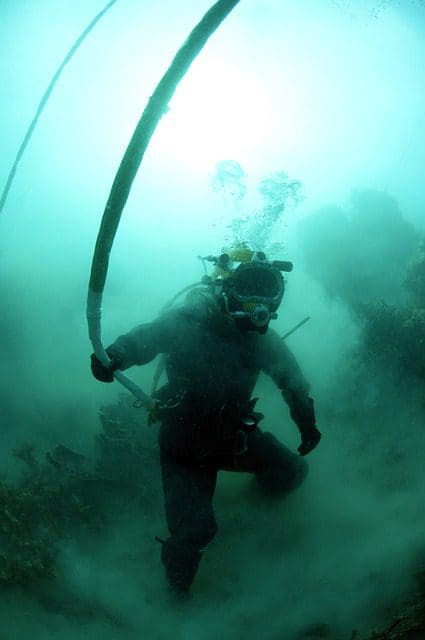
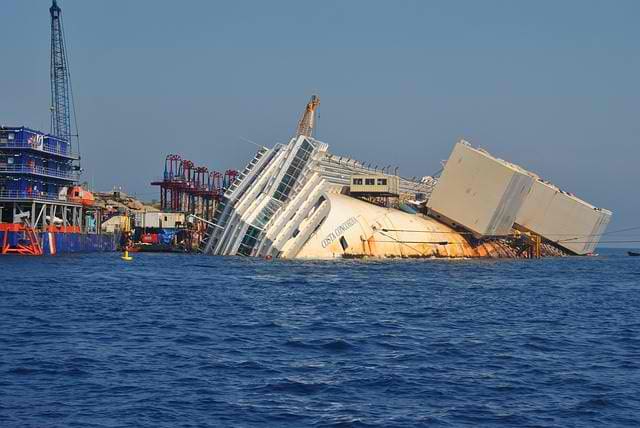
Despite the strong winds have caused an interruption of operations during the night, divers are working to connect the last chains and cables on Costa Concordia.

At the moment, there are still 2 chains and 4 cables to be connected to 3 of the starboard sponsons (S4, S5, S18).

The chain related to starboard sponson S12 has reached its final position and, in the next few hours, the connection will be completed.

Source

Norway’s Aker Solutions Earnings, Orders Miss Forecasts

0

Norwegian oil services firm Aker Solutions posted second-quarter earnings and order backlog figures trailing expectations on Thursday, and said that sentiment in some key markets may not turn positive until after 2015. With oil firms cutting back capital spending plans and delaying or cancelling projects, bidding by contractors will become more “aggressive,” putting downward pressure on prices, said the firm.

Aker Solutions, which is spinning off some of its less profitable assets into a separate company, said exploration and production spending by global oil firms would flatten this year and next, and it would prioritise profitability over its revenue growth aspirations. In the North Sea market, hurt most by the drop in capital spending, the firm expects sentiment to turn more positive after 2015 but the global subsea and ultra-deepwater markets remained strong, it added.

The firm’s earnings before interest, taxes, depreciation and amortisation (EBITDA) fell to 429 million crowns ($69.21 million) in the second quarter, from 786 million in the year-ago period, against expectations for 1.05 billion in a Reuters poll of analysts. However, part of the miss was due to an impairment the company announced earlier this month, related to the loss of a major contract. Still, its order backlog also trailed expectations, rising to just 67.7 billion crowns from 56.8 billion a year earlier, missing forecasts for 69.3 billion crowns.

($1 = 6.1983 Norwegian Kroner)

Source

Sinopec’s Fuling Verified As China’s First Large Shale Gas Play

The Chinese government has verified shale gas reserves in Sinopec Corp’s Fuling field in the southwest of the country, signalling the official launch of the commercial development of China’s first large shale gas field. The Ministry of Land and Resources verified proven reserves of nearly 107 billion cubic metres (bcm) in the Fuling shale gas field in Chongqing municipality, the company said on Thursday. As of June 30, daily output in 29 test wells in Fuling totalled 3.2 million cubic metres.

Accumulated shale gas output from those wells reached 611 million cubic metres, Sinopec said. “Fuling proves to be a high quality marine shale gas reserve,” said the statement, adding that the gas contains as much as 98 percent methane, with low levels of carbon dioxide and no hydrogen sulphide.

Sinopec said in March it was targeting annual shale gas production capacity of 5 bcm from Fuling by 2015 and 10 bcm by 2017, making an earlier government target for total shale gas output of 6.5 bcm for 2015 look more viable. China has struggled in its bid to revolutionize its energy supplies by emulating the frenetic exploration and production of the U.S. shale boom, stymied by the high cost and complexity of drilling to tap shale gas. Estimates indicate China may have the world’s largest shale gas reserves.

Industry experts have cautioned against expecting Chinese companies to be able to quickly duplicate the Fuling success elsewhere in the country, as the geological conditions of the field are considered among the most favourable. Sinopec said it applied new drilling technologies in the Fuling shale field, and manufactured all the production equipment and tools domestically.

Source

Monitor: Ninety Killed By Islamist Attack On Syrian Gas Field

0

Militant group Islamic State seized a Syrian gas field and killed at least 90 people on Thursday in one of the bloodiest clashes between the al Qaeda offshoot and President Bashar al-Assad’s forces, a monitoring group said. Islamic State has made rapid gains in Syria in recent weeks, mostly by seizing territory from rival rebel groups, using weaponry brought in from Iraq where last month it managed to take large areas from government forces.

Activists say the Syrian air force has in recent weeks stepped up attacks on positions held by Islamic State, formerly known as the Islamic State in Iraq and the Levant. On Thursday morning, the group launched an attack against the Sha’ar gas field east of Homs, killing at least 90 of the men guarding it in a “wide assault” from several directions, the Britain-based Syrian Observatory for Human Rights said. It said 21 Islamic State fighters were killed in the offensive.

The Observatory, which monitors violence in Syria through a network of sources in the country, quoted “trusted sources” as saying a further 270 guards, government forces and militia members loyal to Assad were missing, taken prisoner, wounded or killed. “Since the beginning of the year there have been clashes between the Islamic State and the regime in some areas, but these are the largest,” the Observatory’s director Rami Abdurrahman said.

Previous large clashes between government forces and Islamic State usually involved other rebel groups, he said. The two sides have also skirmished continuously in other areas but casualties had been relatively light, Abdurrahman said. It was not immediately possible to verify the report. Syrian state media made no mention of the attack. About 30 people had managed to escape to the nearby Hajjar field, the Observatory report added. Islamic State has previously taken control of oilfields in Iraq as well as in Syria’s eastern Deir al-Zor province.

The group was once the Iraqi affiliate of al Qaeda, but al Qaeda disowned it in February after tensions mounted over its expansion into Syria. Islamic State has declared a “caliphate” in the areas where it operates in Iraq and Syria, which include the Syrian city of Raqqa as well as Iraq’s Mosul. The Observatory says more than 170,000 people have been killed in Syria’s conflict, which started as a peaceful protest movement in 2011 but descended into a multifaceted civil war after a government crackdown. 

Source

Kemp: Peak Petroleum Engineer? Or Still Time To Join The Boom?

0

Petroleum engineers are among the best paid professionals in the United States. Only chief executives and some specialist doctors earned more last year, according to federal government pay data. Petroleum engineers were paid an average of $132,000 a year, with the top 10 percent on more than $187,000, according to the Bureau of Labor Statistics (BLS).

These figures include everyone from the newest graduates to the most experienced engineers with decades of experience, and are based on median earnings in May 2013. Petroleum engineers earned almost four times as much as the average employee across the economy, who was on just $35,000 a year.

Oil and gas specialists in all fields have benefited from the shale boom and the broader energy revolution sweeping the United States and Canada in the last ten years, with engineers leading the pack. Petroleum engineers were already well paid; now they are very well paid. Between 2003 and 2013, pay for engineers with a specialisation in petroleum soared almost 60 percent compared with an average increase of just 25 percent across the whole economy.

Booming demand from employers and sky high salaries are pulling large numbers of extra specialists into the industry. By 2013, there were almost 35,000 petroleum engineers recorded in the BLS Occupational Employment Statistics, up from just 11,600 ten years earlier and fewer than 9,000 in 1997. Enrolments at U.S. universities in graduate and postgraduate engineering programmes with a petroleum focus have more than doubled since hitting a low point in the late 1990s.

Absolute numbers of new graduates remain small, though they are rising quickly, as shown by the enrolment numbers published by the federal Department of Education. The majority of the growth in numbers has come from many older petro engineers postponing their retirement, and engineers from other specialisms are transferring into oil and gas, in response to the strong financial incentives.

The shift is not surprising when petroleum engineers earn so much more than those in other high-paying specialisms like aero engineering ($104,000), computer hardware ($104,000) and nuclear technology ($102,000) let alone those in lower paying areas like chemical engineering ($96,000), electrical engineers ($89,000) and civil engineers ($81,000).

In case you were wondering, in professions outside engineering, lawyers make an average of $114,000, accountants average $65,000, and journalists take home just $36,000, or nearly twice that if they work in television.

MATURING CYCLE

Adam Smith’s invisible hand is gradually working, drawing more people and resources into the sector, albeit slowly and with a delay. Staff shortages and surging salaries have been among the biggest components in cost inflation for oil and gas companies since the start of the boom, together with the rising cost of steel and other raw materials.

But salaries are likely to rise more slowly in future, perhaps even fall, as the skill shortage eases over the next five years. The precise outlook for pay depends on a number of factors. Petroleum engineers have not always been this fortunate. Many petroleum engineers and other oil and gas specialists are fairly old (the average age is over 43 years) and a large cohort is nearing retirement.

The relatively mature age structure of the profession is the legacy of mass layoffs and the shuttering of university programmes during the 1990s when oil prices were stuck in the doldrums. The ageing workforce should keep the supply of engineers relatively tight over the next 5 years.  

Salaries and job numbers also depend on oil and gas output and the amount of spending on exploration and production. The oil and gas industries have always been strongly cyclical, and there is no reason to expect that to change in future. The industry’s expansion, in North America and globally, is now a decade old. With oil and gas markets well supplied, the next phase of the cycle is likely to see more consolidation, including pressure to improve efficiency and control costs.

Still there is no reason to expect the same sort of slump in investment and hiring the industry experienced in the late 1980s and throughout the 1990s. Oil and gas production is becoming increasingly technical on a number of fronts, with deeper wells, at higher pressures and temperatures, more horizontal drilling, and increasingly demanding environmental regulations.

Growing challenges should keep demand for skilled specialists high. The shale boom is slowly spreading to other countries such as China, Russia and Argentina. But the salary gap will continue to attract engineers from other fields, especially those in related disciplines like chemical engineering or even nuclear engineering.

And universities will continue to graduate increasing number of students with training in petroleum engineering, on average 500 per year more than a decade ago, and still rising. So the outlook for petroleum engineers remains good, if not quite as heady as in the last decade.

Source
Baker Hughes Says New Technology To Lift N. American Results

0

Baker Hughes Inc, the world’s third-largest oilfield services company, said it expects strong growth in North America as oil and gas producers turn to its new technologies to reduce drilling time and cut costs. The company, whose services include seismic surveys that determine where oil lies under the earth’s surface and hydraulic fracturing of wells, launched 47 new products and services in the second quarter.

“In North America, the trend of customers spending incremental op-ex towards production-related technologies is unfolding as we expected,” Chief Executive Martin Craighead said on a post-earnings call. “We predict strong growth in this area for the foreseeable future.”

Technologies developed in the last year or two contribute between 35-50 percent to the company’s revenue, Craighead said. Oil and gas companies, under increasing pressure from shareholders, are looking to increase production at lower cost, prompting oilfield service providers to develop more efficient drilling technologies.

Baker Hughes said it expects profit from operations to rise by 15 percent in the third quarter as increased drilling activity and an improving pressure pumping market lift revenue and margins in North America. Pressure pumping business in North America had been depressed for the past two years as new equipment entered the market at a time when drillers pulled out of natural gas basins due to weak prices.

Pressure pumping is used in hydraulic fracturing to extract oil and gas from shale rock.  Baker Hughes said on Thursday that pressure pumping supply was now tightening, but that the market still had about 20 percent of excess supply.

“It does look like the fracking business has definitely bottomed out, it’s just a question of how fast it’s going to improve,” Hodges Capital analyst Mike Breard said before Baker Hughes earnings were released.

“A year ago the question was how bad can it get? The question now is how good can it get?”

Bigger rival Schlumberger Ltd is expected to report quarterly results after market close on Thursday. Baker Hughes shares were down 2 percent at $72.69 in late morning trade on the New York Stock Exchange.

INTERNATIONAL SPENDING

The company’s international customers were spending more on well-construction services in all regions, Craighead said. Revenue from North America increased 6 percent to $2.84 billion while Middle East and Asia Pacific revenue jumped 18 percent to $1.15 billion in the second quarter ended June 30.

Net income attributable to Baker Hughes jumped 47 percent to $353 million, or 80 cents per share. On an adjusted basis, the company earned 92 cents per share. Revenue rose 8 percent to $5.94 billion. Analysts on average had expected earnings of 90 cents on revenue of $5.87 billion, according to Thomson Reuters I/B/E/S.

Baker Hughes shares, which touched a near three-year high of $75.64 earlier this month, have risen about 12 percent in the past three months.

Source

Australian Parliament Repeals Carbon Tax, Emissions Trading Scheme

0

The Australian Senate voted on Thursday to scrap the country’s carbon tax and plans for emissions trading, a major victory for conservative Prime Minister Tony Abbott that leaves uncertainty about how the country will meet its carbon reduction goals. Australia is one of the world’s biggest carbon emitters on a per capita basis and abandoning plans for the world’s third largest emissions trading scheme (ETS) after Europe and Guangdong, set to begin from 2015, is a major setback for global CO2 trading.

Abolition of the carbon tax was a centerpiece policy of Abbott’s 2013 election, but his Liberal-National coalition struggled to repeal the legislation without control of the upper house Senate. On Thursday, the Senate voted 39 to 32 to dump the carbon tax and planned ETS with the support of mining magnate Clive Palmer, whose Palmer United Party (PUP) holds the balance of power in the chamber. The repeal was fiercely opposed by the opposition Labor and Greens Party, who portrayed the vote as a stain on the country’s international reputation.

“This is an appalling day for Australia when a government, rather than lead in the face of what the world is facing up to … is determined to stick with the past,” Greens leader Senator Christine Milne said before the vote.

Abbott, once a climate-change sceptic, has long argued that the carbon tax is a burden on industry and consumers in a country reliant on coal-fired power and does little to cut emissions. The tax saw 348 of Australia’s biggest companies pay A$25.40 for each tonne of CO2 they emit. But Abbott’s plan to replace the carbon tax with an A$2.55 billion Emissions Reduction Fund that would see big emitters paid to cut carbon levels is opposed by Palmer, leaving it unclear how Australia will meet it emissions reduction goals.

Australia’s Renewable Energy Target scheme, which Palmer insisted not be repealed, is designed to ensure that 20 per cent of Australia’s electricity comes from renewables by 2020. Australia has committed unconditionally to reducing its overall emissions by 5 per cent compared with 2000 levels by 2020, but some now doubt it will be able to do that.

“By repealing the carbon pricing mechanism, it is entirely unclear how this may now be achieved,” said Bret Harper, associate director with carbon advisory firm Reputex.

MORE CERTAINTY?

Investors are likely to welcome an end to years of uncertainty on the long-term outlook for carbon pricing and the fact that Abbott has retained the A$10 billion Clean Energy Finance Corporation, another of Palmer’s demands. The government-backed loan agency invests in wind, solar, and bioenergy projects in Australia with a total loan portfolio of over A$700 million since it started in mid-2013.

A spokesman for Aluminum maker Alcoa said the repeal had long been expected and factored into the company’s planning. But AGL Energy Ltd, Australia’s second-largest gas and electricity company, warned the move would curb its earnings before interest and tax in the next financial year by around A$186 million ($174.06 million), partly due to an expected fall in wholesale electricity prices.

Scrapping the carbon tax will be seized on by Abbott as a major political victory, at a time when support for his government has slumped following an unpopular budget in May, but the cost may be high. Last month the Lowy Institute released a poll showing that concern about climate change amongst Australians was up nine points since 2012 and that 45 percent of adults think measures should be taken to prevent it “even if this involves significant costs”.

To gain support from the PUP Senators, Abbott agreed to guarantee that savings from repealing the carbon tax would be passed onto consumers, adding to the government’s fiscal pressures as it tries to rein in growing deficits. ($1 = 1.0686 Australian Dollars)

Source

Croatia: Viktor Lenac Needs More Workers for ‘Cable Enterprise’ Conversion

0

Croatian shipyard Viktor Lenac announced its plans to expand workforce by hiring workers from Bosnia and Herzegovina and Montenegro to conduct the modification work on the cable laying vessel “Cable Enterprise”.

Viktor Lenac secured the EUR 20 million worth contract from Prysmian Group to convert “Cable Enterprise” from a moored cable laying barge into a DP2 cable laying barge able to use its own propulsion within the work site.

The work is due to be completed by mid February next year.

As Novi list reports, Chairman of the Board of Viktor Lenac, Robert Škifić said that the shipyard can’t afford any mistakes during the process.

Since the deadline is so tight, and the EU workforce is too expensive, the shipyard is forced to seek qualified fitters, welders, pipe fitters and other workers in the neighbouring countries.

Besides the DP upgrade, the works will include new decks for accommodation and operation areas purposes and a new cable tank for future HVDC projects.

After the conversion, “Cable Enterprise” will be hired on the project for ExxonMobil in the Gulf of Mexico.

Source

Conquest MB1 Assistance in Concordia Ops Nears Completion

0

Now the disaster ship Costa Concordia floats again, the work of the Dutch Conquest MB1 crane ship and her crew is there almost done. The Dutch company Conquest Offshore has in the recent months, in cooperation with a large group of international companies, installed the sponsoons that will refloat the Costa Concordia.

The unique crane vessel (60 people) is characterized by the 1400 ton full revolving crane (360 degrees), the large (36x136m) and strong (min. 20 ton/m2) deck area and the very small working depth (3.5 m). These features make the Conquest MB 1 suitable for the special assignment in Italy. Conquest Offshore is proud of the exceptional team with whom this complicated task is completed successfully.

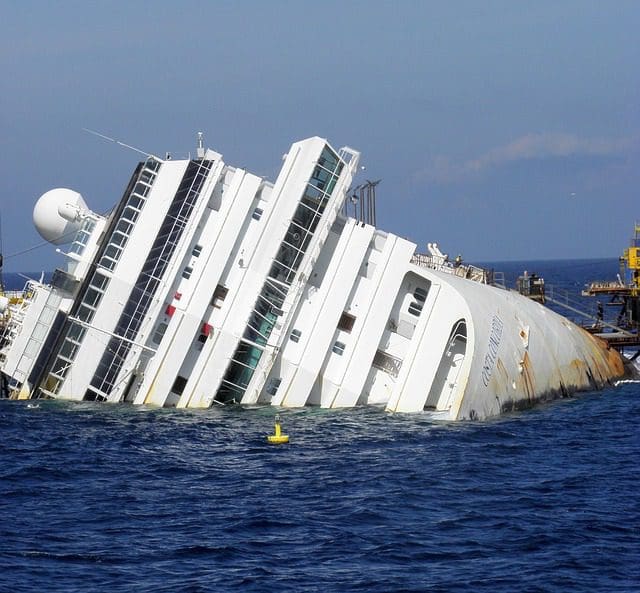
On January 13, 2012 the cruise ship Costa Concordia with 4252 people on board became world news because it capsized in front of the harbor of the island of Giglio and sank against the rocks. The disaster took 32 lives. A disaster rumbled long after in Italy. The first phase is almost over now the ship is floating, and almost ready to be towed to Genoa.

The Italian government is sitting on top of it to see if the protected area of Giglio is not damaged. Environment, safety and reputation of the parties play an important role.

The salvage of the Costa Concordia had a number of alternatives. The preferred option now implemented – to refloat the ship and tow it to the harbor of Genoa – asked for a special crane vessel. The recently completed multi-purpose crane ship  Conquest MB1 is designed for marine and offshore heavy-lift operations. By coincidence, just in time operational to assist in the mega job along the Tuscan island of Giglio.

Offshore Conquest combines the strengths of three Dutch companies. It is a joint venture between Concordia Group, Van Es Holding group of companies (ea Jack-Up Barge) and Zwagerman Offshore Services. By combining the knowledge and skill of these three, a unique crane vessel in the world was created, which could be employed directly on the salvage operations of the Costa Concordia.

During the trip to Genoa from Giglio, Conquest MB1 is nearby and ready for any needed assistance.

Source

VideoRay ROVs Assist in Costa Concordia Salvage

After two and a half years and the most complicated and largest ship salvage operation in history, the Costa Concordia was refloated Monday morning and should soon be on its way to Genoa, Italy for a lengthy scrapping process.

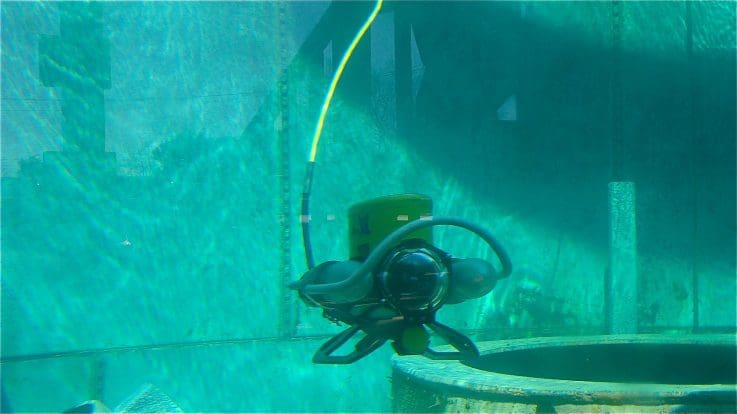
VideoRay Pro 4 Remotely Operated Vehicles (ROVs) played a crucial role in the underwater construction process necessary for the parbuckling, or righting the ship, and the refloating operation.  This operation involved complicated diving operations with over 20,000 dives.  Several VideoRay ROVs observed every minute of diving, directing operations, and surveying and inspecting the wreck, working underwater 24/7.  After 2-1/2 years of near continuous use, the VideoRay ROVs recorded over 45,000 hours of footage during the salvage project.

Experts from Titan Salvage, the marine salvage company in charge of the Costa Concordia project, are certain this was the largest number of ROV hours on one job in the history of salvage.  VideoRay President Scott Bentley, who traveled to Giglio Island to observe and assist, confirms it is the largest use of VideoRays, and maybe of any observation class ROV, in history.

ROV operations were managed by Titan Salvage subcontractor iROV.  Bentley, along with VideoRay expert Steve Van Meter of Van Meter Consulting, have been in Giglio since July 9th and will be there through July 16th to ensure that Titan receives all the support and assistance requested.

Source