Home Blog Page 49

TransCanada To Buy Columbia Pipeline Group For $10.2B

0

TransCanada Corp. agreed to buy Columbia Pipeline Group Inc. for $10.2 billion, expanding its reach in the U.S. natural gas market.

TransCanada will pay $25.50 a share to Columbia holders, representing a 10.9 percent premium to Columbia’s closing price on March 16, and will also assume about $2.8 billion of debt, it said in a statement on Thursday. The Calgary-based company will fund the purchase with proceeds from asset sales and a C$4.2 billion ($3.2 billion) offering of new shares.

The deal gives TransCanada more than 15,000 miles (24,000 kilometers) of natural gas pipelines as well as underground storage and processing facilities owned and operated by Columbia, adding a position in the Marcellus and Utica shale regions. TransCanada may augment its annual dividend growth rate of eight to 10 percent per year with the deal, the company said.

“It’s very complementary to what they already have,” Skip Aylesworth, who manages about $1.5 billion in Boston including the Hennessy Gas Utility Fund, said Thursday by phone. Hennessy holds shares of both TransCanada and Columbia. “They have an east-west superhighway in Canada. This gives them a north-south superhighway.”

Potential Reversal

TransCanada already gets the bulk of its revenue, 48 percent in 2015, from gas shipping. Including its Mainline pipeline system that crosses Canada, the company fully owns 35,200 miles of gas lines and has stakes in another 6,700 miles, supplying about 20 percent of North America’s heating and power-plant fuel, according to its website. It’s also one of the continent’s biggest providers of gas storage, with 368 billion cubic feet of capacity.

TransCanada has been seeking to grow its presence in the U.S. gas market as production rises from Appalachia fields. Vast supplies of cheap gas from the Marcellus and Utica shale plays are pushing western Canadian volumes out of their traditional markets, as U.S. producers seek new buyers for their fuel north of the border. TransCanada, in turn, has been soliciting commercial support for the potential reversal of its Iroquois pipeline, which has been sending western Canadian gas supplies to the Eastern U.S. for more than two decades.

‘Rare Opportunity’

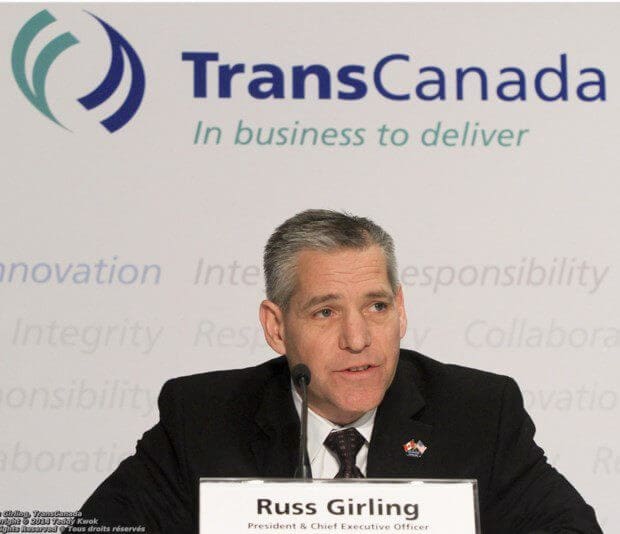
“The acquisition represents a rare opportunity to invest in an extensive, competitively-positioned, growing network of regulated natural gas pipeline and storage assets in the Marcellus and Utica shale gas regions,” said Russ Girling, TransCanada’s president and chief executive officer, in the statement.

The company has had its eye specifically on getting a pipeline into the Marcellus, which stretches across Pennsylvania and parts of New York, Ohio and West Virginia. Girling said last November that the company may consider an acquisition to grow its Marcellus business, and that it’s cheaper for existing players to build capacity.

The acquisition adds to TransCanada’s U.S. deals in the power and utility space, including the $657 million purchase completed last month of a Pennsylvania power plant from Talen Energy Corp. The offer price represents a 29 percent premium to Columbia’s shares on March 9, the day before reports that the companies were in discussions about a deal.

Asset Sales

TransCanada said its planned sale of power assets in the U.S. Northeast, along with its sale of a minority interest in its Mexican gas pipeline business, will add to proceeds from the equity offering to pay for its purchase of Columbia. The offering of 92 million subscription receipts at C$45.75 apiece represents a 5 percent discount to the company’s closing share price of C$48.15 on Wednesday. Royal Bank of Canada and Toronto-Dominion Bank are the underwriters.

The takeover also comes amid heightened merger and acquisition activity in the U.S. pipeline space in recent years. The $58 billion purchase by Energy Transfer Equity LP of Williams Cos., announced last September, is the largest in the last decade and part of $127 billion of U.S. pipeline deals announced in 2015, according to data compiled by Bloomberg. Deals worth at least $2.3 billion in the sector have been announced in 2016.

The spin off of Columbia Pipeline Group by NiSource Inc. was last year’s biggest in the U.S. energy sector. Valued at almost $12 billion, it ranked fourth behind EBay Inc.’s spinoff of Pay Pal Holdings Inc., the HP Inc. separation of its enterprise unit and Baxter Internal’s spinoff of a pharmaceutical unit.

Growth Concerns

TransCanada’s purchase of Columbia may ease investor concerns over TransCanada’s ability to grow over the long term, given that its large pipeline projects have been delayed or blocked. TransCanada has lately been focusing on small- to medium-sized projects to support its annual dividend growth rate of up to 10 percent as it struggles to win political support for big oil pipelines including Keystone XL and Energy East.

TransCanada in January opened one of the largest trade appeals ever brought against the U.S., seeking to recoup $15 billion of costs and damages tied to the Obama administration’s rejection of the Keystone XL oil pipeline. The company also sued the U.S. government over the denial of the $8 billion cross-border project.

TransCanada’s exclusive financial adviser was Wells Fargo & Co., while Columbia’s advisers were Goldman Sachs & Co., and Lazard Ltd. TransCanada’s legal advisers were Mayer Brown LLP, Blake, Cassels & Graydon LLP and Osler, Hoskin & Harcourt LLP. Columbia’s legal counsel was Sullivan & Cromwell LLP.



Source

DNV GL Leads Project to Boost Meshed HVDC Offshore Grids

0

A new project has been launched with aim to investigate the benefits of the meshed offshore transmission grid connecting offshore wind farms to land.

Lead by DNV GL, the project, ‘PROgress on Meshed HVDC Offshore Transmission Networks’ (PROMOTioN), planned to last the next four years, is currently the biggest energy project in the EU’s Horizon 2020 research program.

The goal is to develop and demonstrate three key technologies: diode rectifier offshore converters, multi-vendor high-voltage direct current (HVDC) grid protection system, and the full power testing of HVDC circuit breakers.

Furthermore, a regulatory and financial framework will be developed for the coordinated planning, construction and operation of integrated offshore infrastructures, including an offshore grid deployment plan (roadmap) for the future offshore grid system in Europe.

Elisabeth Harstad, CEO DNV GL – Energy, explained: “Combining new HVDC technologies within present systems is instrumental in bringing large scale renewables into the grid and to ensure a future-proof grid which is affordable, reliable and sustainable. By bringing in our 90 years of expertise in power systems, renewable technologies and experience in leading many joint industry projects I am confident DNV GL can guide the consortium in realizing this important project.”

PROMOTioN is funded under the EU Horizon 2020 research programme (H2020) from January 2016 until December 2019. The project consortium which is coordinated by DNV GL includes 34 partners from 11 countries.


Source

3 tips for responding to Delta P

“Delta P” is an industry term for the differential pressure commercial diving specialists might experience while on the job. When one body of water displaces into another, the rush of pressure could trap divers and subject them to possible damage. If a dangerous situation arises, divers need to rely on their support and best practices to resolve things safely.

A recent issue of Underwater Magazine addresses some of the consequences that can arise when divers do not properly prepare for Delta P: “If a diver is using a scuba tank, has no support staff or communications equipment and is not tethered to the surface—the opposite of the typical scenario involving certified commercial divers—he could run out of air while trapped, or hypothermia could set in.”

The article also notes that these fatal accidents can occur in a variety of sites, including pools, hydroelectric plants and dams. No matter where the contractor is working, there are some universal safety procedures worth keeping in mind to make Delta P less of a concern.

1. Be realistic about the risks 
Both contractors and their clients have to prepare for a possible Delta P situation by making sure divers have adequate support in the event of an emergency. Underwater Magazine advises that everyone involved in the job knows the dangers, not just the divers. Delta P can cause problems in various locations, and workers should know the worst-case scenario response if a diver is trapped between two pressure levels. This can also help clients have a realistic expectation of what the job requires, the source continued.

“There should be a way to quickly extract divers from harm.”

A diving operations document from the United States Army Corps of Engineers says that procedures need to be “site-specific.” That means there should be a way to quickly extract divers from harm and a means for correcting pressure imbalances as they arise. Before the dives begin, supervisors should also have a clear map of the work site ready.

2. Maintain diver contact
Not only should all support staff be able to tell where the diver is, they should also have an easy means of communicating with him or her throughout the job. Equipment should be up-to-date, and divers should be ready to respond as the operation progresses. If the divers are certified and have proper training, they may be better suited to Delta P situations as well and proceed cautiously.

3. Redirect the pressure
To address pressure differentials, the Association of Diving Contractors International suggests installing some sort of device between the two bodies of water where the pull is taking place. This could be a screen or a pipe with different holes in it, which can help prevent divers from being pulled in against their will. Proper lockout procedures are also a necessity.

Commercial diving services may benefit the most from insurance providers that know their industry. This may make it more likely to find a fitting solution when Delta P arises.


Source

OneSubsea R&D Project Creates New Jobs

0

OneSubsea is to invest £1.8 million in a new project for the development of its Standardised Modular Injection System (SMIS).

The project, which will create five new jobs and safeguard a further 35, is being supported with a £434,126 R&D grant from Scottish Enterprise.

It will be delivered from the company’s Aberdeen site.

Energy Minister, Fergus Ewing, welcomed the news saying: “While it is clear the oil and gas sector faces ongoing challenges from a low global oil price, this investment continues to underline the many opportunities that remain in Scotland’s world-class supply chain.

“With 22 billion barrels of oil and gas remaining, the sector can still have a strong future, and I am pleased to welcome this investment.”

Chief executive of Scottish Enterprise and chair of the Energy Jobs Taskforce, Lena Wilson, said: “Innovation is fundamentally important to growing Scotland’s competitive advantage and with it, new opportunities at home and overseas can be realised. That’s why we want to support more oil and gas companies to invest in innovation. Companies like OneSubsea, with strong growth ambition and international opportunity.

General Manager of OneSubsea, Daniele Petrone, added: “We are delighted to announce, in conjunction with Scottish Enterprise grant assisted funding, OneSubsea are progressing with the design, development, prototype and testing of a Standardised Modular Injection System (SMIS) using a novel electrically driven topside deployment system and non-collapsible composite tubing for the subsea intervention market.

“It is anticipated that this will open new markets within some of the most challenging Oil & Gas environments, create some five new jobs and secure employment for a further 35. We further hope to release our new offering to the industry during quarter 4, 2017.”


Statoil Under Probe After Visund Shutdown

0

The Petroleum Safety Authority Norway (PSA) has decided to investigate a well control incident on the Statoil-operated Visund field which occurred on March 17, 2016.

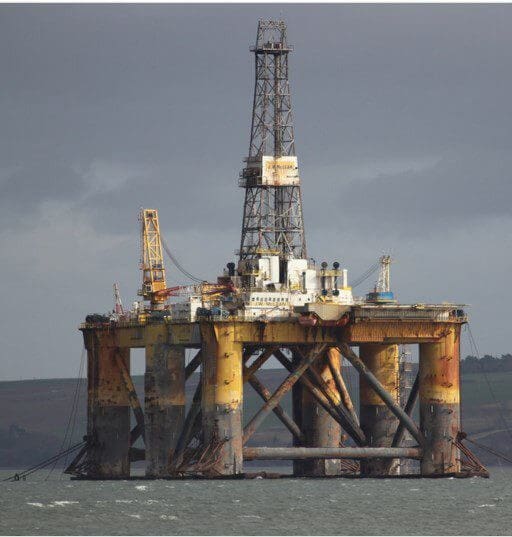
Visund is an oil field located east of the Snorre field in the northern sector of the North Sea. The development comprises a semi-submersible steel production, drilling and quarters platform (Visund A). Water depth in the area is around 335 metres. The northern part of Visund has been developed using a subsea template, around 10 kilometres north of Visund A.

According to PSA, the incident turned out in connection with a well wash during completion of a drilling operation.

Statoil stopped the production and started evacuating workers after an inflow and pressure increase were registered in the well’s annulus.

Reportedly, the BOP was intact, but problems were reported in operating shutoff valves on the top of the drillstring.

The situation was normalised on March 18, and the incident did not cause any hydrocarbon leaks, the PSA said in a press statement.


Job Profiles: Diver

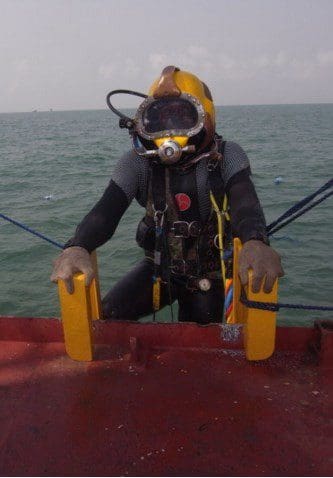
Divers carry out a range of tasks underwater, either inshore (such as rivers or lochs) or offshore (sea and ocean), depending on the type of diving and what industry they work in. This could include engineering, marine science, recreational or armed services.

In Scotland, most professional divers work offshore, primarily in the oil and gas industry.

The Work

There are four types of commercial diving:

  • SCUBA (Self-contained Underwater Breathing Apparatus) – divers wear air cylinders and can dive to a maximum of around 40 metres. This type is mainly used in recreational, media and police work
  • surface supplied – divers air supply is provided through a line or hose from the surface. This is used in inland or inshore diving
  • advanced surface supplied – divers use a hot water suit and wet bell to dive to 21 metres for longer periods of time. This is used in the offshore industry
  • closed bell or saturation diving – divers use mixed gas for their air supply and are submerged to depths of over 100 metres in a closed bell. This is also used in the offshore industry.

As a diver in the offshore oil and gas industry, you could be:

  • diving up to a depth of 50 metres using wet bells (or ‘open bells’) and surface chambers
  • ‘saturation diving’ (also called ‘closed bell diving’) to depths beyond 50 metres
  • doing a range of underwater tasks on oil and gas installations, such as surveying, building and repairing
  • carrying out non-destructive testing (NDT), for example inspecting concrete and metal joints visually, using video and still cameras
  • identifying faults and weaknesses in oil and gas installations and doing repairs and general maintenance
  • cutting concrete and steel
  • welding – both wet and dry – involving manual metal arc welding and using underwater electrodes.

Divers work in various other fields as well as in the oil and gas industry. Their duties vary, in some cases, diving is only a small part of the job, in others, it is a major part.

  • Civil Engineering: this often involves using hydraulic and pneumatic tools in projects such as harbours, bridges, oil rigs, offshore wind farms, canals and sewage out-falls.
  • Marine Science: most of those involved in diving are scientists by training, such as biologists, chemists and geologists. Diving is only part of the work they do, which could include studying the distribution of sea-life, the effects of pollution, or the testing of equipment for use at sea.
  • Media Diving: this could include carrying out underwater photography, video or filming for magazines, television or the cinema. Some divers are from a scientific background (see above); others are qualified photographers.
  • Nautical Archaeology: this could include surveying sunken vessels and other submerged objects, to make sure that they are not a hazard to passing shipping. Occasionally, divers might get involved in salvage work.
  • Police: this could include underwater searching in lakes, rivers, canals and sewers for stolen property or human remains, or searching for explosives for security reasons.
  • Recreational Diving: in this field, diving instructors work mostly in swimming pools or tourist resorts, teaching snorkelling and scuba diving, underwater navigation and safety and care of equipment.
  • Army: divers from the Royal Engineers carry out underwater searches and underwater engineering work.
  • Royal Navy: this could include searching for and dealing with unexploded bombs and mines, and inspecting and maintaining the hulls of ships. Ship’s divers in the Fleet Air Arm could be involved in rescuing people from capsized vessels or crashed aircraft.

Pay

The figures below are only a guide. Actual salaries vary considerably, depending on:

  • where you work
  • the size of the company or organisation you work for
  • the demand for the job.

Divers are usually paid by the day. According to figures from The Underwater Centre, divers can earn as follows:

  • inshore divers carrying out unskilled work can earn around £100 to £120 a day. On average, they work around 180-200 days a year
  • offshore divers in Scotland can earn around £450 a day. On average, they work around 120-150 days a year
  • experienced saturation divers working offshore can earn over £1000 a day.

Conditions

  • The work can be cold, difficult and dangerous.
  • It can also be physically and mentally demanding – you have to be fit to cope with the physical demands on the body and there is limited contact with other people, sometimes only by a communication line.
  • You may have to use specialised equipment in awkward conditions with very restricted vision under water.
  • If working offshore, you would spend periods away from home, sometimes a few weeks at a time.
  • In deep-sea diving, you would have to work from a diving bell which can be cramped, and then spend long periods in a decompression chamber, in communication only with life support technicians.
  • You have to wear protective clothing and breathing apparatus to survive underwater.
  • You are likely to work irregular hours, although the actual time you would spend underwater is strictly controlled.
  • You are likely to work on contracts which can be short-term and at short notice, and which often involve spending nights away from home.
  • Likely locations include the North Sea, the Gulf of Mexico or the Indian Ocean.

Getting In

  • Anyone wishing to dive professionally in Great Britain must gain a relevant qualification approved by the Health and Safety Executive (HSE).
  • Many commercial divers first gain academic or technical qualifications relevant to their chosen industry. For example, they may first train in science, engineering, welding or photography. They would then attend a diving school.
  • There are no set academic requirements for entry to diving training, but you must be physically fit and have good night vision. It can be useful to have experience of diving for recreation, but this is not essential.
  • There are courses for those wishing to become commercial divers in diving schools in coastal centres such as the Underwater Centre at Fort William in the Highlands. These lead to diving qualifications approved by the HSE. The particular qualification would depend on the type of diving work. A full list is available from the HSE. Most courses are private, have significant tuition fees and accommodation costs and last up to 13 weeks, depending on the type of course you take.
  • Before starting any training, you have to pass a thorough medical examination by an Approved Medical Examiner of Divers (AMED). The certificate has to be renewed annually and includes a fitness test.
  • To work offshore in the oil industry you must pass an offshore survival course such as the Basic Offshore Safety Induction and Emergency Training Certificate (BOSIET). Contact Cogent for details.
  • Because of recent developments in the oil and gas industry and in the renewable energy industry there is currently a world shortage of qualified divers.
  • Another area of diving showing a lot of growth is recreational instruction. However, entry is competitive, the amount of work available varies according to the time of year and pay may not be as high as in other types of diving.
  • There is an upper age limit of 32 for entry to diving roles in the Royal Navy.

What Does it Take?

You need to have:

  • excellent physical fitness, stamina and swimming skills
  • relevant practical, technical or professional skills
  • a methodical approach, with attention to detail
  • good concentration to work in difficult conditions
  • a strong sense of responsibility
  • a willingness to work away from home for periods of time.

You need to be:

  • highly safety conscious
  • able to remain calm in an emergency
  • resourceful, able to think quickly and use your initiative
  • able to work alone and also as part of a team
  • able to cope with working in isolated conditions.

Training

  • Commercial divers train at an HSE-approved centre such as the Underwater Centre at Fort William before taking up a diving career.
  • Those in other professions, for example, scientists and archaeologists may also have to pay for their own diving school training. In some cases, however, their employers may sponsor them.
  • The police and armed forces have their own training schemes. Police constables can apply for diver training after their initial two year probation period is over. Royal Navy officers and ratings can train to be Direct Entry Divers or can apply for diver training from another specialisation.

Getting On

  • Many professional divers are self-employed. Some contracts can be very short; others can be long-term.
  • After experience as an air diver you can train in closed bell diving and become a saturation diver.
  • In some areas of employment you may get promotion to posts such as supervisor or underwater inspector.
  • Some divers combine teaching and diving to become instructors.
  • You may need to move around the country to find work. There may also be opportunities to work abroad, although some countries may demand different diving qualifications.

More Information

A recent report by Oil and Gas UK found that more than a third of the UKs diving personnel is aged between 45 and 54 years. With an ageing workforce and existing skill shortage in this sector, there will be a demand for qualified divers over the next few years. 

The Underwater Centre in Fort William conducted a recent survey and found that over the last 12 months 85% of their students had gone into work within the industry.

Contacts

The following organisations may be able to provide further information.

Cogent
Tel: 01925 515200
E-mail: [email protected]
Website: http://www.cogentskills.com
Website (2): http://www.sciencecareerpathways.com

Cogent is the Sector Skills Council for the chemical, nuclear, oil and gas extraction, petroleum and polymer industries.

Energy Institute
Tel: 020 7467 7100
E-mail: [email protected]
Website: http://www.energyinst.org

Health and Safety Executive (Scotland) – Offshore Safety Division
Website: http://www.hse.gov.uk/offshore/

The Health and Safety Executive also has offices in Edinburgh, Glasgow and Inverness. Details may be found at the website given above.

Oil & Gas UK
Tel: 01224 577250
E-mail: [email protected]
Website: http://www.oilandgasuk.co.uk

Scottish Sub-Aqua Club
Tel: 0131 625 4404
E-mail: [email protected]
Website: http://www.scotsac.com/

Society for Underwater Technology (SUT)
Tel: 01224 823637
E-mail: [email protected]
Website: http://www.sut.org.uk/

Underwater Centre
Tel: 01397 703786
E-mail: [email protected]
Website: http://www.theunderwatercentre.co.uk


Source

Ride To The Bottom: US Energy Workers Hit Hard By Company Stock Bets

0

Nearly 15 years since Enron’s collapse decimated the retirement accounts of its employees, hundreds of thousands of U.S. energy workers remain precariously exposed to big, concentrated bets on company stock in their 401(k) retirement plans.

The slide in oil prices to their lowest levels in over a decade wiped out several billion dollars of retirement wealth in the energy sector in the past year. The losses may prove temporary for companies that successfully navigate the crisis, but tens of thousands of employees of struggling firms may see much of their nest eggs gone for good.

In Oklahoma and Texas, workers are delaying retirement plans, surrendering trucks, cars and land in personal bankruptcy cases, or just praying oil prices will recover.

“I just didn’t see it coming,” said John Thompson, 57, who was laid off in February from Oklahoma City-based SandRidge Energy Inc. SandRidge shares, which peaked above $65 in 2008, are now worth 10 cents apiece. “Because of this, I’m not retiring any time soon.”

SandRidge did not return messages seeking comment.

Almost without exception energy company 401(k) plans offered at least 10 different investment alternatives to company stock, their plans show.

Yet company reports and interviews with more than 20 current and former employees at independent energy firms show many employees have not taken advantage of opportunities to switch out of company shares.

Maureen Nelson, who retired from Chesapeake Energy Corp in 2013, said she lost an estimated $100,000 as she watched the company’s shares plunge in value.

Inertia and a strong faith in company leadership played a role in holding on to company stock, but so did company policies.

Many energy firms continued to match employee contributions with company stock, even as most large U.S. companies stopped the practice after the Enron debacle, according to several corporate benefits consultants.

The energy industry followed the lead of heavyweights such as Chevron Corp and Exxon Mobil Corp, which for years provided matching contributions in company stock in worker 401(k) retirement plans while also funding separate defined benefit pension plans for them.

Double Impact

Smaller companies could not afford to do both, but they typically matched employee contributions in stock. And energy workers often plowed some or most of their own contributions into company stock, benefits consultants said.

“It’s not prudent investing,” said Lou Harvey, chief executive of Boston-based financial research firm Dalbar Inc. “But employees tend to clamor for company stock.”

Typically, workers at larger energy companies would have 20 percent to 60 percent of 401(k) assets in company stock, according to a Reuters analysis of such holdings for more than 400,000 employees.

By contrast, the average U.S. 401(k) plan has about 7 percent of assets in company stock, according to Washington D.C.-based Investment Company Institute.

At Chevron, more than 40,000 participants in its 401(k) plan held $8.9 billion, or 47 percent of investment assets, in company stock at the end of 2014, according to the latest annual report. (Graphic: http://tmsnrt.rs/1RwkqYB)

Chevron stopped matching in company stock last year for better diversification, spokeswoman Melissa Ritchie said. Exxon stopped new stock contributions after 2006. Its shares still accounted for $12.9 billion of the 401(k) plan’s $22.3 billion in assets in 2014. Exxon declined comment.

When Texas-based Enron filed for bankruptcy in 2001, employees suffered a one-two punch – they lost their jobs and much of their savings because nearly two-thirds of their retirement assets were in Enron stock.

After Enron’s collapse, companies successfully lobbied Congress mostly against proposals to limit company stock ownership in 401(k) plans, fearing billions of dollars of their shares would be offloaded to meet the caps.

“Caps were a bridge too far for companies,” said Sheila Bair, former chair of the Federal Deposit Insurance Corporation and a U.S. Treasury official who worked on President George W. Bush’s 2002 task force on retirement security.

Still, publicly-traded companies have revamped their retirement plans to make them more balanced, even imposing own limits on company stock ownership, said Rob Austin, director of retirement research at Aon Hewitt.

Follow The Leader

Diversification has yet to reach much of the energy sector, though. Oil and gas workers had more than $32 billion in company stock in their 401(k) accounts, or about 38 percent of plan assets for the 40 companies in the S&P 500 Energy Sector Index, according to 2014 annual reports filed with the U.S. Department of Labor. Since then, the index has lost 21 percent. Smaller independents have been hit about twice as hard, on average.

With about a third of his 401(k) plan in company stock, retired Chesapeake geologist Keith Rasmussen, 61, looks to sell land he owns in Oklahoma and Idaho to shore up his depleted retirement funds.

Chesapeake, once a shale boom darling, now trades 84 percent below mid-2014 levels, hurt by heavy debt and prolonged slump in natural gas prices. Nearly 8,000 participants in its 401(k) are exposed to the reversal of fortune, holding 35 percent of the plan’s $615 million in assets in company stock at the end of 2014, according to the latest annual report.

Some current and former Chesapeake employees said their decisions to hold onto stock were based partly on their reverence for Aubrey McClendon, its legendary former chief executive, who died in a car crash in early March

“You could be the biggest skeptic in the world, and you listen to him in a room for 30 minutes, and you’re ready to hand him all your money,” said Ginni Kennedy, 58, who retired from her engineering job at Chesapeake in 2013. “I had faith that he’d continue to be able to pull those rabbits out of his hat.”

Chesapeake, which declined to comment, stopped matching in company stock last year.

Many workers are now paying a heavy price for failing to heed warnings about concentration risk.

“Our bankruptcy work has quadrupled over the past six months,” said Roger Ediger, an Enid, Oklahoma lawyer who handles personal bankruptcy cases. “Most of them are energy related.”

A U.S. Supreme Court decision in 2014 underscored the risk of offering company shares in 401(k) plans. Its decision made clear that company stock was not automatically a prudent investment.

The ruling also highlighted the potential conflicts of interest for companies in their role as fiduciary of 401(k) plans.

“It was a wake-up call to companies,” said Bill Ryan, chief fiduciary officer at Evercore Trust, the largest U.S. third-party fiduciary.

At Fort Worth, Texas-based Quicksilver Resources Inc , Evercore Trust took a rare step to block further employee investment in the company’s 401(k) plan in October 2014, as fiduciary for the stock plan. The move preserved some value, but not much, given that by the time the stock fund was liquidated company shares have already fallen to about 50 cents from about $3.50 in 2014. Equity investors lost virtually everything five months later when Quicksilver filed for bankruptcy protection.

Bair, now a college president, said companies with heavy stock concentrations in their 401(k)s should follow peers that have caps in place to protect workers and avoid government mandates.

“If we have another failure like Enron, government regulation may be coming.”


Source

Polarcus Snaps Up Dolphin’s Streamer Package

0

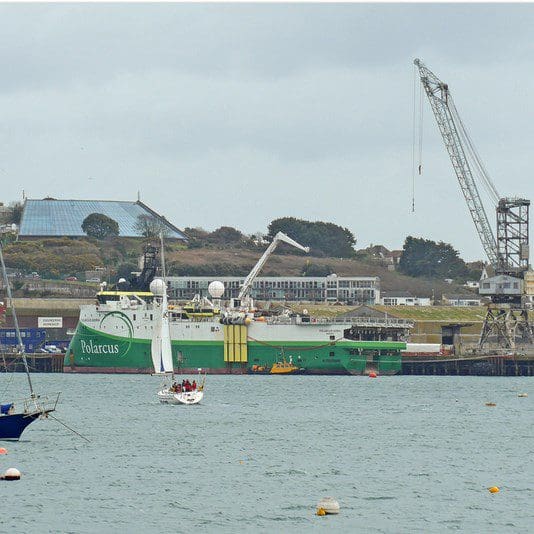
Oslo-listed seismic contractor, Polarcus, has acquired a complete marine seismic in-sea acquisition system from bankrupt seismic player Dolphin Geophysical.

Dolphin filed for bankruptcy in December last year after failing to secure financial support to keep the business afloat. The company’s UK business is still in operation.

Polarcus acquired the streamer package for a price of USD 11.5 million. It comprises 12 x 8100m active streamers and all peripheral in-sea equipment.

According to the company’s Stock Exchange announcement, the purchase provides Polarcus with its planned seismic CAPEX requirements for the next three years, and is within its previously guided CAPEX budget for 2016.

The purchase is partly financed through a loan of USD 8 million.


Source

Would You Name Your Vessel Boaty McBoatface?

NERC (Natural Environment Research Council) has launched a campaign for public to name its new GBP 200 million polar research ship.

The new research vessel is being built at Cammell Laird, and it is set to sail in 2019.

The most popular name chosen by the public has been RRS Boaty McBoatface.

The name was suggested by James Hand, who tweeted an apology for his proposal, being the most popular choice.

According to NERC, the vessel’s name should be “inspirational name that exemplifies the work it will do. The ship could be named after a local historical figure, movement, or landmark – or a famous polar explorer or scientist.”

Universities & science minister, Jo Johnson, has commented on the campaign launched by NERC: “Can you imagine one of the world’s biggest research labs travelling to the Antarctic with your suggested name proudly emblazoned on the side? The polar research ship represents a leap forward in securing Britain’s place as a world leader in marine and climate change science – and illustrates this government’s commitment to invest in research facilities on a record scale.”

NERC informed that the closing date for all entries for the campaign is April 16, 2016. The final name will be selected by NERC.

Once ready in 2019, the ship will be deployed in both Antarctica and the Arctic, and will be able to spend up to 60 days in sea-ice.


Transocean, Schlumberger See Oil Industry Recovery Delayed

0

Leaders of the world’s largest suppliers of offshore drilling rigs and the services that go with them see the oil market recovery taking even longer than expected last year. Transocean Ltd. Chief Executive Officer Jeremy Thigpen expects it will have to wait at least another three years before his company can begin charging higher rates for offshore rigs. Schlumberger Ltd. chief  Paal Kibsgaard sees the oil industry, stuck in the deepest financial crisis ever, in no rush to get rigs back online even after prices recover.

Before rig owners can charge more, they must first see a boost in activity after the worst crude market crash in a generation. Transocean doesn’t expect an increase in rig leases until late next year or sometime in 2018, Thigpen said Monday in an interview at the Scotia Howard Weil Energy Conference in New Orleans. Daily rates, which have fallen by more than half over the past two years, aren’t expected to climb until 2019 or 2020, he said.

“I think ’16 and ’17 are going to be tough,” said Thigpen, who joined the Vernier, Switzerland-based company 11 months ago. “We’re taking the necessary steps to navigate our way through the downturn, but we’re also preparing for that eventual recovery.” Transocean shares sank as much as 5.7 percent in New York trading and were 4.7 percent lower at $10.04 as of 10:22 a.m. Tuesday. Fragile State The fragile financial state of oil explorers means there will be a noticeable lag from when oil prices climb and when exploration and production companies invest again, Kibsgaard said in a presentation to investors at the conference.

Profitability and cash flow are “at unsustainable levels for most oil and gas operators which in turn has created an equally dramatic situation for the service industry,” he said. “Going forward, the industry is likely facing a ‘medium-for-longer’ oil-price scenario, subject to periods of volatility, as the national oil companies within OPEC can still generate significant returns for their owners in such an environment due to the low cost base of their conventional resources.”

Rig contractors have suffered through the double blow of declining customer demand due to tumbling oil prices and a glut of vessels that continue to be built to meet orders made before the rout. Transocean leads the industry in reducing its fleet, with 24 rigs scrapped since the downturn began and another eight to 10 it could retire over the next year to 18 months, Thigpen said. Transocean currently has 61 rigs in its fleet with another 11 under construction.

Financial Liquidity The company reported $2.3 billion in cash at the end of last year. Thigpen said he has “no real concerns” with Transocean’s financial liquidity through the end of 2018, and the company has a number of levers it can pull beyond that if needed. Schlumberger said Monday it expects revenue in the first quarter to fall to $6.5 billion, a 16 percent drop from the final three months of last year.

That’s a larger drop than the $7 billion average of 25 analyst estimates compiled by Bloomberg. The Houston- and Paris-based company said it’s not expecting a meaningful recovery in its own activity until next year. Other U.S. oil-industry executives echoed the cautious sentiment: Anadarko Petroleum Corp.’s CEO Al Walker said in a presentation increasing demand will signal that higher prices are likely to be sustained.

Weatherford International Ltd. plans to reduce headcount by another 6,500 after cutting 14,500 jobs in 2015. CEO Bernard Duroc-Danner said he sees the North American market bottoming in the second quarter of the year. Apache Corp. is unlikely to pursue acquisitions until more companies in the industry have gone through restructuring, CEO John Christmann said in an interview.

Continental Resources Inc. will consider various actions every time oil prices gain another $5 per barrel and hold there, its President Jack Stark said Monday in an interview. Those actions include paying down its debt, finishing its inventory of wells that were drilled but not completed, and then finally putting new drilling rigs online, he said. 


Source