Home Blog Page 48

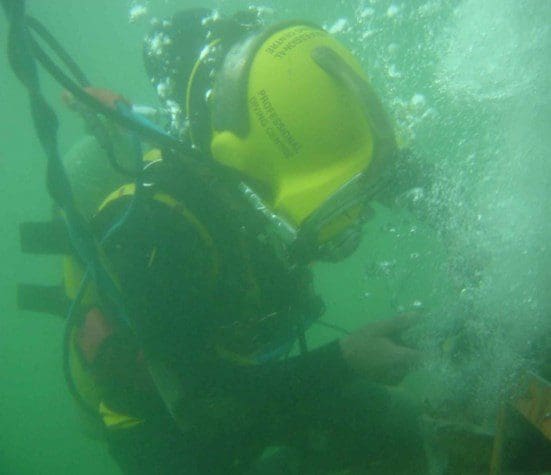
Underwater Welder Job Description and Requirements

An underwater welder is required to demonstrate a combination of welding skills on dry land and commercial diving qualifications is clearly an elite career choice. Underwater welders, also known as offshore welders, are expected to have the ability to manage heavy equipment while performing work in a hazardous work environment. In this article, we will look at the career path of an underwater welder and discuss what an aspiring underwater welder must do in order to pursue their career path.

Responsibilities

Underwater welders are required to work with different procedures and types of equipment. Welder-divers are required to perform various duties that include fitting and rigging, inspection and non-destructive testing, drafting, underwater photography and underwater cutting. Some underwater divers are expected to render assistance to project managers in the field of project planning. Welders are expected to have exceptional communication skills apart from interpersonal skills that will help them work well with the remainder of the team.

Education & Other Requirements

Commercial dive certification is a mandatory requirement of an underwater welder. Dive certification programs are offered by many schools. However, commercial dive certification has some additional requirements to those of common certification that cannot be overlooked regardless of how much prior experience the applicant has. Qualification for certification requires the demonstration of various skills by a diver including the ability to use a variety of commercial grade equipment, hyperbaric chamber operations, underwater inspections, emergency procedures and diving physiology, and diver communication.

Welding skills rated at AWS D3.6 standard are required of welder-divers; encompassing such knowledge and abilities as preparation and weld set-up skills. Many welding courses approved by the American Welding Society are offered at educational facilities across the country. An underwater welder can also benefit from experience as an underwater welding specialist. Internationally recognized training in the field is exclusively given in the United States by the Commercial Diving Academy.

The occupation has no age limits; however, underwater welders are expected to be in good physical condition. Many employers including companies require prospective candidates to pass physical examinations. All underwater welders are required to maintain certification by taking periodic examinations.

Wage Potential

Since there are a large number of factors associated with the occupation, it is not easy to generalize about earnings potential as relating to every welder situation. Underwater welders are typically paid for individual projects and the various factors that influence their earnings potential including dive methods employed by them, project duration and hazard levels, apart from other key factors such as employers and dive grade. Welding has been included as an occupation for commercial divers by the U.S. Bureau of Labor Statistics, which reports the average annual salary earned by commercial divers in 2009 as being $52,540 (source: www.bls.gov).



Source

Offshore Achievement Awards Winners Announced

0

The Society of Petroleum Engineers (SPE) Aberdeen revealed the winners of the 30th Offshore Achievement Awards on March 17, with Dan Purkis of Well-SENSE Technology collecting the Significant Contribution accolade.

Tendeka and Well-Centric were named Great Large and Great Small Companies respectively, whilst Interventek Subsea Engineering, Darcy, N-sea, CETCO Energy Services, TWMA, Peterson and Aker Solutions completed the list of companies collecting awards on the night.

Individual awards were presented to Hayley Pearson of Costain, who was named Young Professional, and to Allan Smillie of TAQA who received the Above & Beyond trophy.

The awards, which are supported by principal sponsor TAQA, took place at the Aberdeen Exhibition and Conference Centre.

A special award was also presented to Trevor Garlick by organisers SPE Aberdeen, in recognition of his long term support of SPE.


Source

What Is An Underwater Welder?

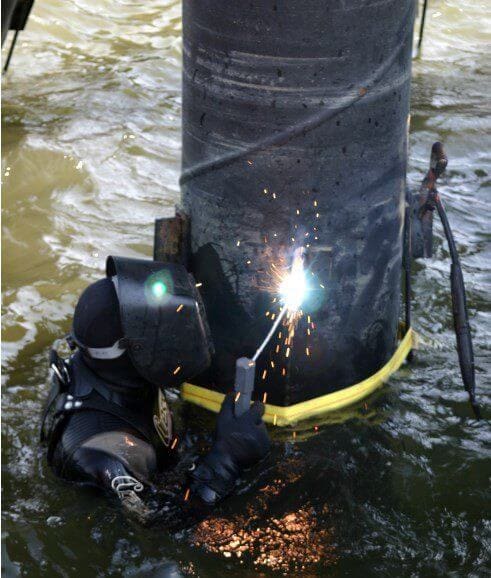
An Underwater Welder uses many common arc welding processes to weld and cut in a wide range of aquatic environments. They must use their welding know-how and intricate knowledge of diving procedures and protocol to effectively lay down strong welds, often in tight spaces and less-than-forgiving surroundings. Hyperbaric chambers and cofferdams are used for dry welding, while wet welding is performed in open waters up to several hundred feet deep.

Why Is This An Important Role?

It’s easy to forget that not all of the essential machines and structures that allow our society and economy to run smoothly are located on land. Underwater Welders help create and repair dams, pipelines, bridges, commercial and military ships, nuclear power plants and oil rigs, and many other important parts of a modern infrastructure.

What Career Opportunities Are Available to Underwater Welders?

Underwater welders can choose to work in one of several different fields and industries. For example, the oil and gas, marine salvaging, and construction industries regularly require the underwater welder’s unique blend of skills to lay pipe, dismantle vessels, and build bridges. Underwater Welders can also use their wide range of knowledge and skills to transition into dive instruction, consulting, engineering, or hazardous material handling.

Jobs in underwater welding are almost exclusively found in coastal locations. Job seekers will need to consider job location, potential time away from home, and the nature and inherent hazards of the work before choosing to accept a particular offer or opportunity.

How Do I Get Started?

Underwater Welders require certifications as both a welder and a commercial diver. Prospective candidates who lack both can attend one of the various institutions that offer underwater welding training and commercial diving certification to participants of varying skill levels, including those with no experience. Attending one of these institutions may be necessary even if you are certified as a SCUBA diver, as many of the tenets of commercial diving are not covered by a SCUBA certification. Visit AWS Underwater Welding Resourcesfor a list of underwater welding schools and institutions.

Naturally, previous experience in topside welding will provide you with a leg up in this field but ultimately, the ability to operate in the water effectively and safely is extremely important. The welding processes, classes of weld, and qualification tests associated with underwater welding are described in the AWS D3.6 Underwater Welding Code. Use this code as a guide to help you determine the procedures and welds you will need to master in order to succeed in the field.


Source

BP, Statoil To Withdraw Staff From Algerian Plants After Attack

0

BP and Norway’s Statoil will withdraw staff from two gas plants in Algeria after an attack by militants on one of the sites in the North African country, the companies said on Monday.

Militants attacked the In Salah gas plant, operated with state-owned Sonatrach, with rockets on Friday, causing no casualties or damage. Al Qaeda’s North Africa branch claimed responsibility for the attack.

Algeria’s energy infrastructure has been heavily protected by the army, especially since a 2013 attack on the In Amenas gas plant, also operated by BP and Statoil, during which 40 oil workers were killed.

“BP has decided to undertake a phased temporary relocation of all its staff from the In Salah Gas and In Amenas JVs in Algeria over the next two weeks. This decision has been taken as a precautionary measure,” the British firm said in a statement.

Statoil said it would also withdraw staff from the In Salah and In Amenas plants, together with staff from its operations centre at Hassi Messaoud.

“It will happen over the next few weeks. Those who are on rotation now will not be replaced when they finish their shifts,” a Statoil spokesman said, declining to say for security reasons how many employees would be affected.

“It’s only been four days since shots were fired at In Salah. The production started again, but in the current situation we believe that this is the right decision to make,” the spokesman added.

According to BP’s website, In Salah started production in 2004 from the Krechba, Teguentour and Reg fields. In February, it announced the start up of development of the Gour Mahmoud, In Salah, Garet el Befinat and Hassi Moumene fields, to bring output to 9 billion cubic metres a year.

Statoil, BP and Sonatrach were due to restart the third and final processing train at the In Amenas gas plant, damaged during the 2013 attack, later this year.

Statoil repeated on Monday the restart of that train would still happen “in the coming months”.


Source

Gabon Extends Bid Deadline for Deep Water Acreage

0

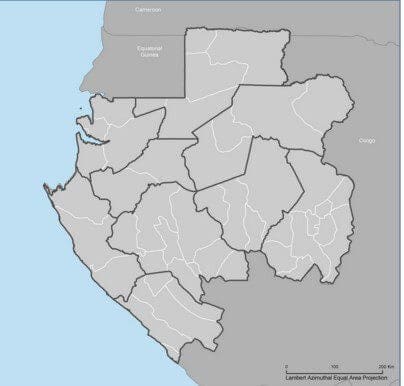
Gabon has extended bid submission deadline for participation in the new 11th licensing round which will focus on five blocks covering the country’s deep water acreage in the South Gabon Salt Basin. 

The round was formally opened on October 27, 2015 by Minister for Petroleum, Etienne Dieudonné Ngoubou at the 22nd Africa Oil Week conference in Cape Town, South Africa, with previous bidding deadline set for March 31, 2016.

French seismic player, CGG, has been appointed to advise the Direction Generale des Hydrocarbures (DGH) on the promotion of this licensing round and has worked directly with the Ministry to acquire over 25,000 km2 of new 3D BroadSeis multi-client seismic data.

CGG completed the survey in 2015, shot simultaneously by its two vessels.

Minister, Etienne Dieudonné Ngoubou, said: “The Oil Ministry has very high hopes for Gabon’s new 11th licensing round and are excited by the opportunities for the successful development of this highly prospective region. New deep-water exploration wells offshore Gabon, such as Shell’s recent Leopard discovery, indicate a significant pre-salt basin and the new 3D multi-client data acquired by CGG greatly upgrades the resolution of the pre-salt image, further enhancing the chances of exploration success.”


Eni Cranks Up Spending Cuts, Asset Sales To Fund Transformation

0

Italy’s Eni is cutting investments and selling down stakes in oil and gas fields to help it prop up dividends and become a leaner exploration-driven player focusing on gas. The state-controlled company said in its 2016-2019 business plan on Friday it would cut overall group capital spending by 21 percent and exploration budgets by 18 percent, while raising 7 billion euros ($7.9 billion) from asset sales.

It also plans 6 billion euros in cost cuts, more than half of which is expected to come from renegotiating contracts. “The disposals will be mainly through the dilution of our stakes in recent and material discoveries,” Eni CEO Claudio Descalzi said, picking out its giant gas fields in Mozambique and Egypt as prime candidates. “We are not far from disposal in Mozambique,” he said, adding Eni was holding talks with “a lot of interested parties”.

The CEO, a trained reservoir engineer, said in recent years a 25 percent drop in exploration costs had not kept pace with a 75 percent fall in oil prices, pressuring explorers’ balance sheets. “Eni is in good shape to align costs with price (given its) ability to work on a time-to-market of 12-24 months,” he said on a conference call with analysts.

Since taking the helm in 2014, Descalzi has refocused Eni on finding more oil and gas, with a preference for projects that are lower cost and faster to market. Since 2008, Eni has discovered 2.4 times what it actually produces, compared with a peer rate of just 0.3 times. “We think gas will be the future,” Descalzi said. Over the next four years Eni expects oil and gas production to grow by more than 3 percent per year, compared with the 3.5 percent growth under its previous plan, with a focus on North and west Africa and the Far East.

Europe’s fourth-largest oil major by market capitalisation aims to tap 1.6 billion barrels of oil equivalent by 2019 and bring down breakeven prices on new projects to $27 a barrel from $45 a barrel now. Zenit fund manager Stefano Fabiani said it was a reassuring plan. “The cut in spending has come without impacting output and the disposals have given more visibility to the dividend which is safe medium term,” he said.

Eni, which became the first Western major last year to cut its dividend, confirmed a 0.8 euro per share payout for 2016. Oil majors around the world are slashing investments to maintain dividends in the face of weak oil prices driven by a global supply glut. At 1617 GMT Eni shares were up 1.5 percent, while the European oil and gas index was down 0.1 percent. ($1 = 0.8865 euros) 


Source

Cathie Associates to Set New MEDIN Geotechnical Guidline

0

Cathie Associates has been appointed by the Marine Environmental Data & Information Network (MEDIN) to create a guideline for offshore geotechnical site investigations.

This guideline will form part of the  framework of specifications that govern best practice in collecting metadata for re-use of UK marine information.

By assisting MEDIN in the creation of this new guideline, Cathie Associates should ensure that the new guideline fully encompasses the needs of the diverse range of geotechnical surveys and addresses the inconsistencies in data collection and recording prevalent in the offshore industry.


Like the Oil Markets, Drillers Are Playing a Game of Wait and See

0

The oil market and energy investors alike have been showing signs of optimism that the industry is potentially emerging from a downturn that commenced in July 2014, when crude prices started to fall from highs of $112/bbl to eventual lows of $26/bbl (seen in January 2016). Since the last week of February, however, oil prices have traded up at the end of each successive week, approaching or exceeding $40/bbl, which has led many to believe we are finally turning the corner.

Talk of a possible oil output freeze among major OPEC and non-OPEC producers, plus data points that U.S. onshore production growth is slowing down, and signals that Iranian crude volumes will be lower than anticipated since sanctions were lifted, have helped propel some relatively bullish market sentiment.

Given this apparent change in the macro environment for the oil industry, what are the prospects for drilling and oilfield service companies over the next 12 to 18 months? The short answer is that it is still not clear whether or not more positive sentiment in the market will usher in a new phase of the cycle, wherein operators are willing to start dipping their toes back in the water and sanction new projects or begin to curtail the pattern of deferring major capital investments.

Too much uncertainty still lingers, though. Despite market anticipation that a freeze is a step in the right direction to possibly coordinate a future output cut, which would be a surefire way to stabilize global oil prices, there are too many downside risks to a deal coming to fruition in the short-term.

Also, the fact remains that there are approximately 1 billion barrels of crude oil in storage globally. With the current supply/demand imbalance estimated by some to be between 1-2 billion barrels, and demand growth forecast by the International Energy Agency (IEA) predicted at around 1.2 million b/d, consensus is that the glut might only start clearing in mid-to late 2017. It appears that the market will have to wait until the next meeting of OPEC – currently set for June 2, 2016 – to receive the most concrete evidence of the willingness of its members to participate in a coordinated output cut, which would also include a major non-OPEC producer, Russia.

Until that point, oil and gas companies will continue to focus on cost-cutting and reaping further operational efficiencies. Companies now, across the board, are rewarded by investors for squeezing supply chains and embracing cost deflation, which has had a disproportionate effect on drillers and oilfield service companies. Energy investors are paying for the adherence to these measures and are deviating from the traditional E&P investment model that sought value from reserves and production growth. Although in 2015, it should be noted, that despite this shifting paradigm, the increase in U.S. onshore production (over 2014 levels) was partially driven by the way company executives had been incentivized – to increase production and reserves growth. In 2016, management targets look more clearly defined by cost reduction – judging from company guidance provided during recent earnings calls.

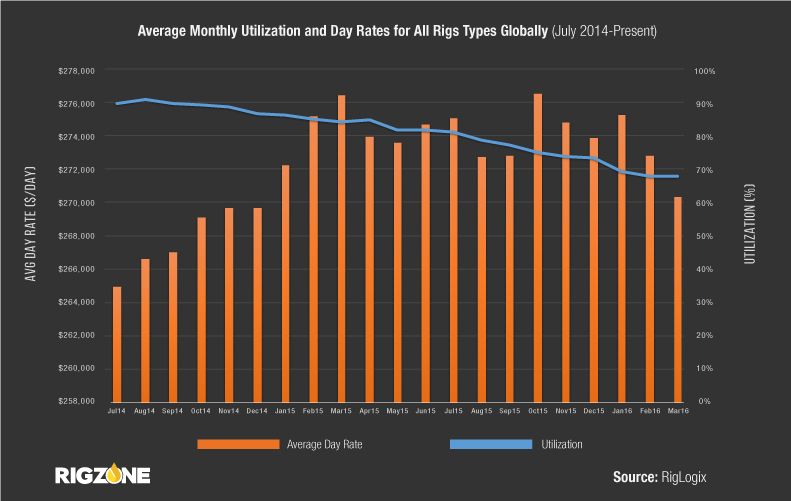
As we have seen since the oil price slide began in July 2014, the offshore drilling sector has seen dramatic drops in day rates and utilization rates for all rig types (drillships, semisubmersibles, and jackups). Apart from a few bright spots around the globe, namely the Middle East, the global drilling market is oversupplied. As a result, day rates and utilization will continue to suffer until there is a clear and decisive signal from the oil markets that prices are on the upswing.

Data taken from RigLogix shows the drop in average day rates and utilization for the global rig fleet (all types) for the period of July 2014 to the present.

Malaysian PM: PETRONAS Has Been Resilient in Dealing with Downturn

0

Malaysian Prime Minister Najib Razak said Tuesday in the opening speech of the Offshore Technology Conference (OTC) Asia 2016 in Kuala Lumpur that the country’s national oil company (NOC) – Petroliam Nasional Berhad (PETRONAS) – has been resilient in dealing with challenges it faced in the current industry downturn, citing the recent unveiling of its floating liquefied natural gas (LNG) facility as a tremendous achievement.

The downturn has already created a negative effect on the sector, with over 250,000 oil and gas personnel having been laid off globally, while multiple multi-billion dollar projects have been delayed, divested or cancelled. PETRONAS “has also been forced to employ tough measures to ride out times that are demanding for us all.”

Still, the Malaysian NOC is “showing that it has the resilience of a truly world-class organization. It continues to chart major milestones, while remaining focused on sustainability, in all its environmental, social and commercial aspects.”

Earlier this month, PETRONAS progressed its Floating LNG Satu project – a first-of-its-kind facility that is expected to come onstream later this year at the Kanowit gas field offshore Sarawak, Malaysia – following a naming ceremony in Okpo, South Korea.

“This is a tremendous achievement for PETRONAS and the nation. The inventive technology and creative engineering that have led to this facility will enable LNG processing to be based offshore, closer to stranded fields, and will drive down costs compared with conventional LNG processing,” Najib said.

PETRONAS President and Group CEO Wan Zulkiflee Wan Ariffin said in his opening address at OTC Asia 2016 that the integrated oil and gas company is focusing on “ideas, people and action to navigate through the current storm and emerge stronger from it.”

“The people behind our ideas are also driven to achieve excellence. Capability development becomes even more critical when times are hard,” Wan Zulkiflee added.

He highlighted the importance of years of investment in the company’s workforce.

“PETRONAS’ many years of investing in diversity, leadership and capability development and knowledge management of our workforce has resulted in a pipeline of industry-ready talents, award-winning learning institutions as well as reputed technology, research and development centers,” the CEO said.

More than 15,000 oil and gas industry participants from over 65 countries are in Kuala Lumpur this week to attend OTC Asia 2016.


Source

Songa Offshore Hits DSME with $65.8 Mln Counterclaim

0

Songa Offshore has submitted its defence in the arbitrations initiated by Daewoo Shipbuilding & Marine Engineering (DSME) in 2015, regarding the first two Cat Ds rigs, Songa Equinox and Songa Endurance.

In November last year, the offshore drilling contractor received claim submissions from DSME related to the above mentioned rigs due to alleged cost overruns and additional work, what DSME alleges were inherent errors and omissions in the design documents (as often referred to as the FEED package).

However, along with its defence, Songa Offshore has now submitted counterclaims in respect of the two rigs for the aggregate amount of $65.8 million, by means of which Songa Offshore intends to recover damages caused by the default of DSME.

The Oslo-listed company considers that DSME is solely responsible for the delays to the Rigs and any attempt by DSME to recover cost overruns has no merit due to the “turn-key” nature of the construction contracts.

The semi-submersible newbuild rigs Songa Equinox and Songa Endurance were faced with BOP-related downtime while working for Statoil in Norway earlier this year.