Home Blog Page 293

Hayward Tyler Inks Production Deal with FMC Technologies

0

Hayward Tyler Group has entered into a global subsea production alliance agreement with FMC Technologies covering permanent magnet motors.

Under the terms of the agreement, Hayward Tyler will manufacture permanent magnet motors for use in FMC Technologies’ 3.2MW subsea pump systems.

The agreement is accompanied by an initial US$2 million commitment by FMC Technologies towards the on-going development of Hayward Tyler’s Luton plant.

The on-going expansion of Hayward Tyler’s Luton manufacturing facility includes a dedicated test facility for its subsea motors.

Ewan Lloyd-Baker, CEO of Hayward Tyler, commented: “The offshore oil & gas market is of long-term strategic importance to Hayward Tyler and underpins our investment into our Centre of Excellence in Luton. The production alliance agreement with FMC Technologies is of cornerstone importance in relation to our subsea activity.”

Jim Pribble, president and general manager of FMC Technologies’ Direct Drive Systems business, added: “Combined, we can now offer the subsea oil and gas segment the absolute latest technology – and then deliver it with best-in-class manufacturing capability. This critical step ensures our customers receive the most reliable subsea boosting solutions available while enhancing the economics for subsea reservoir development.”

South Africa Prepares To Give Shale Gas Go Ahead

0

South Africa will gazette final regulations for shale gas exploration by June, two years after releasing draft rules and as companies reconsider investments due to volatile oil prices and delays in awarding licenses. In March, Royal Dutch Shell said it was pulling back from its shale projects in South Africa’s semi-arid Karoo region which is believed to hold up to 390 trillion cubic feet of technically recoverable reserves.

“We have finalised the regulations… It would be gazetted in a month’s time,” Ngoako Ramatlhodi, minister of mineral resources, told reporters before his budget speech to parliament. Shell had applied for an exploration license covering more than 95,000 square km, almost a quarter of the Karoo. A study commissioned by the company said extracting 50 trillion cubic feet or 12.8 percent of potential reserves, would add $20 billion or 0.5 percent of GDP to the South African economy every year for 25 years and create 700,000 jobs.

Besides Shell, Falcon Oil and Gas in partnership with Chevron, and Bundu Gas have applied for exploration licenses. But environmentalists and land owners in the Karoo, situated in the heart of South Africa, have argued that exploring for shale by fracking, or hydraulic fracturing, would cause huge environmental damage in the water-scarce region.

“We have taken into consideration the issues of water and regulations are going to address this sufficiently, providing proper guidance on how to undertake hydraulic fracturing,” said Thibedi Ramontja, director general in the department of mineral resources. It would take companies about three years of exploration to determine if the Karoo reserves were commercially viable, before moving into possible production, he added. 


Source

EMGS Swings to Loss

0

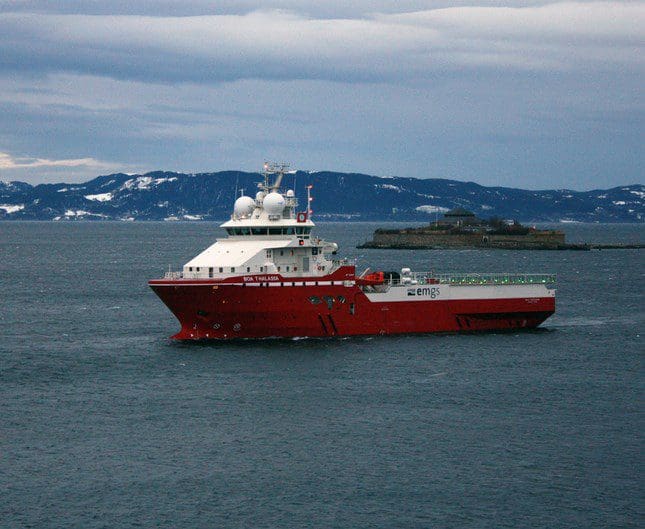
Norway’s Electromagnetic Geoservices (EMGS) has seen its profit slip into the red in the first quarter of 2015 on lower-than-expected revenues due to the weak market.

The company has posted net loss of USD 1.2 million, down from an income of USD 8.2 million in the same period of 2014.

EMGS recorded revenues of USD 32.3 million in the first quarter 2015, a drop from USD 52.5 million in the fourth quarter 2014 and from USD 61.3 million in the first quarter last year.

The contract turnover amounted at USD 22.1 million, while multi-client sales were at USD 10.2 million this quarter.

EMGS experiences delay in sales negotiations, resulting in lower than expected revenues for the first quarter and a limited backlog. The Company has initiated cost reduction measures in the first quarter with expected annual savings of 8 to 10% compared to 2014.

As of 31 March 2015, EMGS’ backlog was at USD 23 million. Of this, USD 14.6 million is related to the PEMEX contract.

“The current market is challenging and our contract revenues for the first quarter is lower than expected. We experience delays in contract negotiations and our backlog is limited. We have initiated cost reduction measures and are prepared to take additional action if necessary. However, we have a unique technology, solid financial position, flexible business model and growing multi-client libraries that we believe position us for future growth in the longer term,” says CEO of EMGS, Bjarte Bruheim.

Indonesia’s Energy Minister Seeks To Rejoin OPEC

0

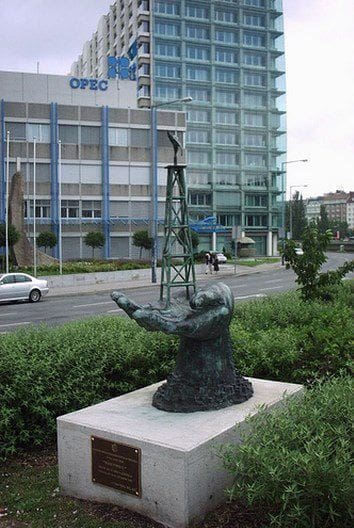
Indonesia’s energy minister said on Thursday he would seek President Joko Widodo’s approval for the country to rejoin OPEC, seven years after leaving the oil exporters’ group.

If it returned, Indonesia would be the fourth-smallest producer in the Organization of the Petroleum Exporting Countries ahead of Libya, Ecuador and Qatar, and bring the number of participants to 13 countries.

Indonesia was the only Asian OPEC member for nearly 50 years before leaving the group in 2008 as oil prices hit a record high, and rising domestic demand and falling production turned it into a net oil importer.

“I will ask the president to consider rejoining as a member of OPEC, so we are close to the market,” Energy Minister Sudirman Said told reporters. “We have been offered (an opportunity) to rejoin.”

OPEC termed Indonesia’s departure a “suspension” and Ecuador, which rejoined in 2007, set a precedent for a return from suspension. An OPEC source said the door was always open.

“If a country fulfils the criteria for membership, of course there is the possibility to join the organization,” the source said.

OPEC’s statute stipulates, however, that any “country with a substantial net export of crude petroleum, which has fundamentally similar interests to those of Member Countries, may become a Full Member of the Organization, if accepted by a majority of three-fourths of Full Members, including the concurring votes of all Founder Members.”

The group allows for associate members, which don’t qualify for full membership “but are nevertheless admitted under such special conditions as may be prescribed.”

The minister said he will attend OPEC’s meeting on June 5 as an observer. Non-members have been observers at OPEC gatherings in the past.

“Membership has levels. At the beginning we can be an observer, but later, if we are given the possibility to be a full member, that is good,” the minister said.

“We are still exporting gas, though only a little bit, so it’s not a problem (to be an OPEC member again).”

OPEC headquarters in Vienna declined to comment on the minister’s remarks.

Indonesia’s 2015 oil output target is 825,000 barrels per day, about half of its early 1990s production peak. While still exporting some crude, Indonesia’s refined products imports make it a net importer.

The minister also said Indonesia would soon be sending a government delegation to Kuwait, Azerbaijan, Iraq, Russia and other oil-producing countries for possible supply deals.


Source

Gazprom, PetroVietnam Discuss Bilateral Cooperation

0

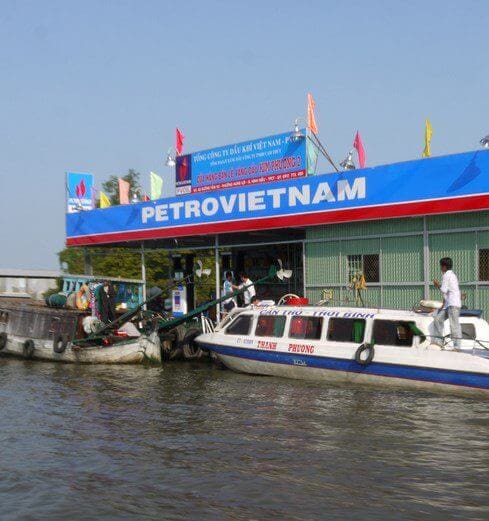
The Gazprom headquarters hosted a working meeting between Alexey Miller, Chairman of the Company’s Management Committee and Nguyen Xuan Son, Chairman of the PetroVietnam National Oil and Gas Group Board of Directors, on May 06, 2015.

The meeting addressed the main issues of the bilateral cooperation in hydrocarbon development, particularly the joint activities in blocks Nos. 129–132 in the continental shelf of Vietnam.

The geological and geophysical data was processed and hydrologic studies were completed at the drilling sites. The drilling of a prospecting well in block No. 129 is scheduled to start in the second half of 2015. It would be the first deepwater well offshore Vietnam with the sea depth exceeding 1,600 meters at the drilling sites.

The participants also paid attention to the progress with the Heads of Agreement on developing the Nagumanovskoye (Orenburg Region) and Severo-Purovskoye (Yamal-Nenets Autonomous Area) fields.

In addition, the meeting touched upon the possible acquisition of a stake in Vietnam’s Dung Quat oil refinery by Gazprom and its participation in the refinery upgrade. It was noted that the Heads of Agreement on the oil refinery stake provided Gazprom with an exclusive right to negotiate the deal.

Havyard CFO to Leave

0

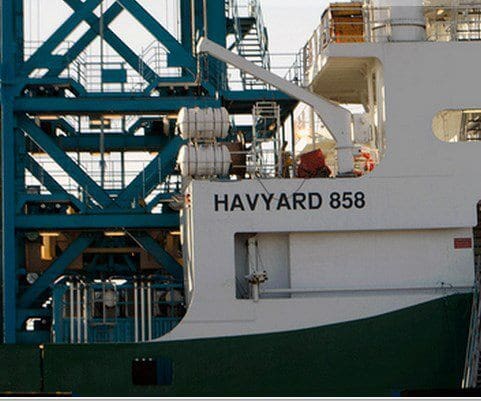
Norwegian ship technology firm, Havyard, informed that its chief financial officer Karl Eirik Frøysa Hansen has chosen to step down from his position.

Havyard is looking for his replacement and according to company’s Oslo Stock Exchange filing, Hansen will stay for additional three months, following his resignation notice.

Hansen was appointed as Havyard’s CFO from his position of chief accounting officer in December 2014 to replace Idar Fuglseth (who continued as Havyard’s part-time senior advisor) as of January 01, 2015.

Hansen has worked in EY and BDO prior to joining Havyard Group ASA in 2012. He holds an MSc in auditing from Norwegian School of Economics( NHH) and is a state-authorized public accountant.

Pemex: Accident At Mexican Offshore Rig Kills Two

0

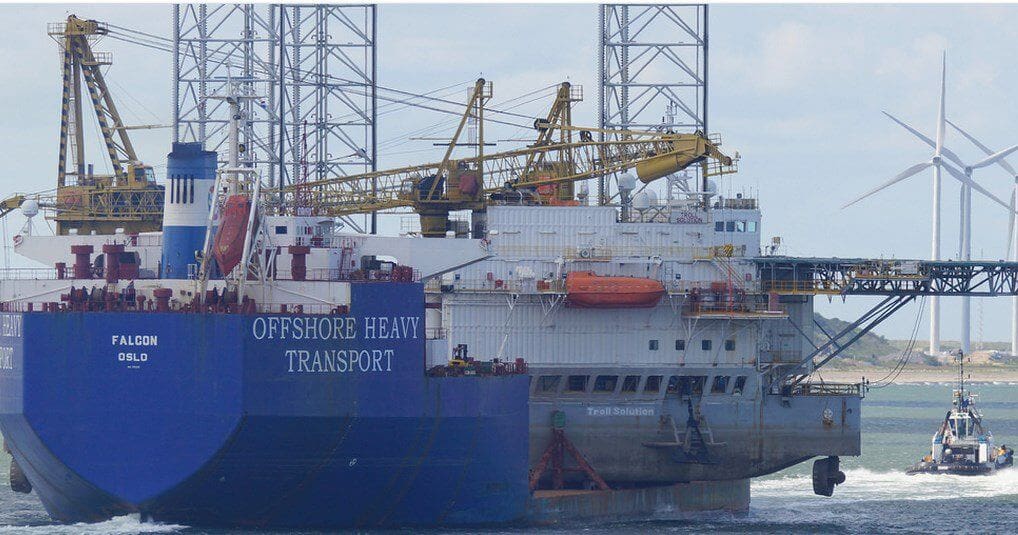
Mexican oil company Pemex said an accident on Tuesday has left an offshore maintenance rig in the southern Bay of Campeche listing, killing two workers, but has not affected crude production. Pemex said the Troll Solution rig, which was contracted to operate in Pemex’s Abkatun-Pol-Chuc shallow water oil field, was positioning itself to carry out maintenance on wells linked to the Caan Alf platform.

It earlier reported that two workers had suffered minor injuries. “The accident on the Troll Solution platform does not affect production because it is a mobile platform dedicated to well maintenance,” Pemex said in a Tweet. Oilfield services firm Typhoon Offshore, owned by Mexican conglomerate Grupo Salinas and operator of the platform, said in a statement that the platform had been completely evacuated and that 10 workers were injured and receiving medical care.

Local media put the injured toll at 28 workers. A Grupo Salinas spokesperson added that there was no oil or gas spilled as a nearby well was closed prior to the incident. Photos circulated on social media showed dark streaks in the water stretching a few hundred meters (yards) from what appeared to be the platform, which was tilting steeply. A Pemex spokesman also said there had been no crude spill but added that the platform probably contained diesel.

“That could have fallen into the water,” he added. The Caan field where the accident occurred produced nearly 12,000 barrels per day (bpd) of crude in March, according to Pemex data. That in turn is part of the Abkatun-Pol-Chuc area, which produced almost 309,000 bpd in March. Pemex said the platform was continuing to lean into the sea, but another spokesman for the company added that the accident had not “compromised” any wells.

The incident was the second platform mishap in barely a month to hit the Mexican oil giant, which made a loss of more than $6 billion in the first quarter of 2015. On April 1, at least four people died at a fire in a separate platform in the Abkatun Pol Chuc complex, which temporarily dented production in the area. Around 70 percent of Pemex’s crude oil output comes from the southern Gulf of Mexico. Pemex said around 100 workers were evacuated. 


Source

PHOTO: Upgraded Cable Enterprise Sails Out

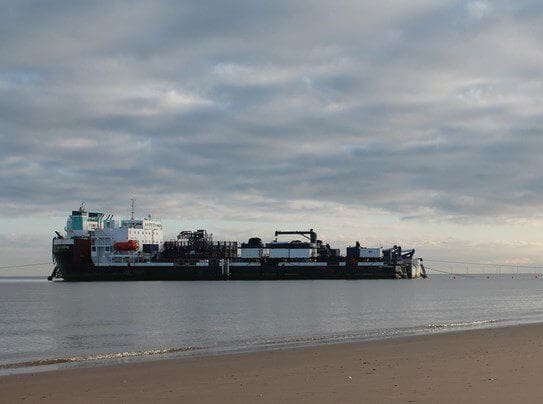
Prysmian Group announced today the official sail out of the newly upgraded vessel “Cable Enterprise” from a moored cable laying barge into a DP2 cable laying barge able to manoeuvre with her own propulsion system at the site of work.

Following major conversion works, the vessel can now operate autonomously without the need of tugs during cable installation activities. With almost 8 MW of power, Cable Enterprise is capable of maintaining her position in DP mode, even in harsher weather conditions. Her powerful propulsion system enables the vessel to undertake lay and burial operations with any type of plough, including HD3 ploughs. Importantly, the vessel maintains her ability to ground out and to operate in very shallow waters, the company explained in a press release.

Cable Enterprise has been equipped with 7 independent positioning systems. Upgrade works also included the addition of new accommodation decks and operational areas, as well as the installation of a new cable tank to increase her versatility for future cable projects. The conversion works were contracted to Viktor Lenac shipyard in April 2014.

“Our objective is to further boost the Group’s submarine project execution capabilities with a powerful and flexible asset that can install the entire range of submarine cables, from interconnectors and export cables to inter-array cables between turbines or offshore oil platform grid connections,” explains Raul Gil, COO of Prysmian Powerlink. “With this newly upgraded vessel Prysmian is now fully equipped to meet this target,” he added.

The first project to be executed by Cable Enterprise in DP mode will be the supply and installation of submarine cables for a section of ExxonMobil’s existing offshore operations in the United States.


Source

Private Equity Seeks Solace in Midstream amid Oil Price Slump

0

Next Wave Energy Partners LP. Nuevo Midstream Dos LLC. Moda Midstream LLC. In addition to being mostly midstream partnerships, the three have emerged in recent weeks with infusions of private equity capital – an unexpected development in a market where oil prices have plummeted by more than half.

But some sectors, especially the midstream, continue to attract private equity, despite the complications of $50 oil.

Billy Lemmons
Billy Lemmons
Billy Lemmons, Managing Partner, EnCap Flatrock Midstream

There is no shortage of energy private equity capital available, David King, managing partner at U.S. Capital Advisors in Houston, said.

Next Wave opened with $500 million from Energy Capital Partners. EnCap Flatrock Midstream has invested $400 million and $750 million, respectively, in Nuevo and Moda.

Strong demand for North American bulk liquids storage infrastructure, especially facilities with import-export deepwater capabilities is the foundation beneath Moda Midstream, said CEO Ken Owen in a statement. EnCap’s faith in the company gives the team financial flexibility to build an integrated logistics platform through greenfield projects and asset acquisitions.

King said there’s a tremendous amount of private equity dry powder, or money that has already been raised, available.

“Certainly more than we’ve seen in a long while. If you look just at the energy and energy infrastructure-focused private equity credit funds that have recently closed or are currently in the market, we get an estimate of $80 billion of dry powder,” he said.

What’s more, that figure doesn’t include the large generalist buyout funds that allocate a portion of their capital toward energy and it also excludes leverage.

Asset data and research company Preqin has estimated that as much as $90 billion in private equity is available to energy projects; $20 billion is targeted specifically for infrastructure.

As for getting all of this capital invested, King said, it could be challenging.

“You haven’t necessarily seen the bargain basement opportunities that many were expecting. The banks have been flexible and the capital markets have remained open for energy companies,” he said. “With access to all of this capital, we are not seeing the number of distressed situations one would expect after such a significant decline in commodity prices.”

ANXIOUS TO INVEST

Private equity funds are anxious to get the capital invested, but it will take time, especially for the large funds because they need to make large investments. Deals in the $300 million and $700 million, for example, have become extremely competitive, he said.

How this war chest of private equity capital impacts the energy public markets is something USCA is watching closely, King said.

This access to capital has allowed certain companies that historically would be in distress at this point in the cycle, to “kick the can” down the road in an effort to shore up liquidity until commodity prices recover, King said.

“These companies don’t need to sell themselves or even shed assets. They’re able to roll their debt, maybe pull in second lien deals. That’s been the biggest surprise to us and many of the investors – how receptive the markets have been and how much capital is available despite the downturn,” King said.

“I think it’s a function of there being a lot of capital that needs to find a home. On the private credit side, we’ve seen a number of large deals price around the 10 percent interest rate level on senior debt or second lien debt. At first blush, that doesn’t sound like a ‘PE’ type return, but funds can lever that to say a 15 percent return. Some of those companies are not going to make it, and these funds are going to end up owning those assets,” King said.

“We’ve also seen private equity funds buy common or preferred equity in public companies, which has provided corporations the opportunity to de-lever themselves.”

For some of the smaller public companies that have done follow-on equity offerings, we think investors have largely been making a bet on a commodity price rebound. So far this year, about 36 U.S. energy companies have done follow-on equity deals, King said.

By the end of April, about $13.6 billion in common equity was raised that way, with issuers ranging from large cap MLP players to smaller companies coming to market. Given the low crude oil price environment, the magnitude of demand for this wave of equity has been unexpected.

“My guess would have been that in this landscape, there would be some real balance sheet problems with companies forced to sell assets,” he said. “But that isn’t happening much. Companies are not willing to sell at the prices that buyers demand and they don’t have to. The bid-offer remains wide and you don’t have much forced selling because they can access capital in either the public or private market.”

What happens next will largely be driven by what happens to crude prices. If they continue to slowly move up, the cycle may be shorter and more muted than many expect.

“It remains to be seen,” King said. “A lot is being driven by institutional investors, primarily pension funds and endowments, which are the largest investors in private equity funds. They sense that the size and speed in the drop in crude will create attractive investment opportunities in energy. If crude prices normalize near-term in the $50s to $60s, which is the reality today, you might not see the valuation discounts that many investors are hoping for.”

Billy Lemmons, managing partner at EnCap Flatrock Midstream in San Antonio, noted that for every dollar spent in upstream investments, somewhere between 15 and 35-cents of midstream infrastructure investment is needed to support production.

“Whether there will be more acquisition opportunities out there and activity between potential sellers and buyers depends on how long and how significantly oil prices remain low,” he said.

BUY LOW, SELL HIGH

Lemmons said the firm is trying to find these next great quality teams that align with EnCap Flatrock’s philosophy and approach. EnCap Flatrock has about $4 billion in dry powder to deploy across the right opportunity sets.

He explained that some high-performing companies and compelling stories can emerge during challenging times in the market. For example, Energy Transfer Partners – now a giant in the industry – began during a time when other energy companies were failing. ETP bought a processing plant in La Grange, along with a series of other assets that helped the company grow.

“The basic elements of what we look for in a team hasn’t changed. They have to be adaptable, able to build a track record consistently through multiple industry cycles. That’s often a matter of the management teams being adaptable to where the opportunity set is moving,” he said. “Organic, greenfield dollars are slowing. A producer that owns midstream assets may be over-levered and compelled to raise cash; there might be an opportunity to buy assets from that producer.”

Lemmons said some midstream companies might be over-levered and need to divest of assets to raise capital. Other existing midstream companies may need a new partner – not just capital – to help them share risk and adapt tactics to new opportunity sets.

“Everyone knows to buy low and sell high, but you’ve got to be careful. When you say high, it’s like catching a falling knife when there is stress in the system, but it’s definitely an opportunity to do some different things,” Lemmons said. “There is still a lot of infrastructure to be built.”


Source

Liquid Robotics Presents Open Oceans Partner Program

0

Liquid Robotics, Inc. announced the Liquid Robotics Open Oceans Partner Program, a global technology program designed to accelerate the creation, integration and deployment of new technologies and applications for unmanned ocean systems.

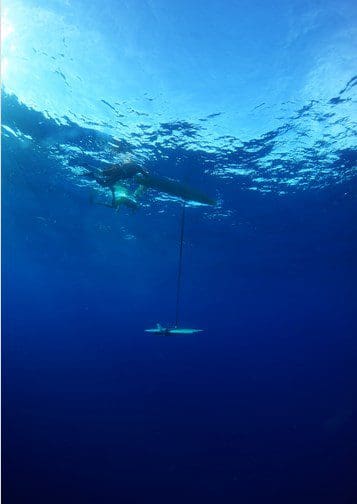
Building upon the Wave Glider®, the “world’s first” wave and solar powered ocean robot, this program offers participating partners a suite of open integration and development tools, web services, APIs, training and services as well as access to the first Open Linux, JAVA based Operating Environment and a scalable IP Backplane designed for unmanned maritime systems, the company informed.

“We are at the forefront of a technology revolution for the ocean,” stated Gary Gysin, president and CEO of Liquid Robotics. “At Liquid Robotics we’re bringing the open systems, rapid innovation model of Silicon Valley to a maritime world of special purpose systems. Working with our partners, we will create entirely new solutions for defense, commercial and scientific customers by opening up access to the world of maritime systems.”

Schlumberger and Boeing Defense, Space and Security are two of the company’s strategic partnerships driving solutions for the oil & gas and defense markets, respectively. For the maritime domain awareness market, Liquid Robotics and Ultra USSI have been collaborating on new unmanned surface vessel detection systems critical to battling illegal poaching and smuggling along the world’s coastlines.

“The combination of the Liquid Robotics Wave Glider and Ultra Electronics USSI’s acoustic sensor technology offers innovative new ways to extend the maritime surveillance and security capabilities of government and commercial organizations worldwide,” said Joe Peters, President of Ultra Electronics USSI. “The Wave Glider’s open systems platform simplifies and provides a greater range of design approaches to apply technology to solving specific customer problems.”

The inaugural Open Oceans Partners are Ultra Electronics USSI (UK), EMS (Spain), OceanTech (South Korea), Sea Technology Services (South Africa), BioSonics, Inc. (US), Fastwave (Australia) and UVS (Australia).