Home Blog Page 266

Diving into science in Ontario

Throughout Canada, if an academic institution is interested in scientific research diving, the Canadian Association for Underwater Science (CAUS) defines the training standards that need to be followed to carry out the work involved. However, in Ontario, the Ontario Ministry of Labour requires by law (Occupational Health and Safety Act, Ontario Regulation 629/94 Diving Operations) that scientific divers be trained to the Canadian Standards Association (CSA) Z275.4 Diving Competency. These CSA standards are designed for traditional commercial diving (e.g., underwater construction, dam or pipe inspection, welding, explosives, vessel recovery). This commercial dive training is a full, one-year program ($13 500 minimally), and constitutes a level of training that is well outside the time and financial constraints of Masters or Ph.D research programs. As a consequence, academic-based research diving in Ontario has either been driven underground or has stopped completely.

To overcome these above constraints, faculty from Carleton University, Guelph University and Queen’s University collaborated to design and run a 2 1⁄2 week practical Restricted Occupational Diving course recently approved by the Ontario Ministry of Labour (July 2013) and accredited by the Diving Certification Board of Canada (January 2014). This new course trains the academic research community (i.e., fourth-year undergraduate students, Master or Ph.D. students, and Lab Technicians and Faculty) to conduct scientific dives in compliance with Ontario regulations. Upon successful completion of the course, including all formative and summative activities, students will be able to design, develop, and illustrate a comprehensive research dive program in accordance to their stated research objectives, and the Occupational Health and Safety Act Ontario Regulation 629/94 Diving Operations.

Specific learning outcomes include:

●  Describe safe diving practices as a (a) diver, (b) safety diver, and (c) dive tender in accordance to the Occupational Health and Safety Act Ontario Regulation 629/94 Diving Operations.

●  Explain diving physics, physiology, equipment, diving hazards, communication and rigging as these relate to the Canadian Standards Association (CSA) Z275.5.

●  Design safe non-decompression multi-day research dive-plans using Canadian DCIEM dive tables.

●  Compare the advantages and disadvantages of various sampling methodologies used by research divers (e.g., transects, quadrats, benthic sampling, habitat profiling, sediment coring, behavioural observations, photo stratification, video transects) to address different research goals.

●  Choose appropriate statistical models to analyze complex data sets typically obtained from scientific research diving activities.

Course Details:

  • Schedule: July 10th – July 26th, 2015. The daily routine comprises morning and afternoon dives (min. 25 required) with evening classes.
  • Location: Queens University Biological Research Station (QUBS) 280 Queen’s University Rd., RR #1, Elgin,ON http://www.queensu.ca/qubs/index.html
  • Accommodations: Registration fee includes accommodation and daily meals at QUBS, and airfills for the duration of the course.
  • Registration fee: $2200/participant (estimated)
  • Equipment: Participants are required to provide personal dive gear including: a cold water wetsuit or drysuit, dive knife, weight belt & weights (sufficient for drysuit diving), mask, snorkel, fins, dive flashlight, bottom timer (e.g., dive watch or dive computer), dive compass, 2 tanks, and regulator and BCD (serviced within 6 months of course beginning). A sleeping bag and pillow is also recommended. A laptop is also required.

Prerequisites
To register for this course, participants must have:

  • Received medical clearance to dive through completion of an occupational diving medical.
  • Achieved at minimum, an open-water sport diving certification from a recognized sport diving organization.
  • Minimum of 20 dives and 10 hours bottom time logged.
  • Current First Aid and CPR.
  • Current Oxygen Provider certification.

For more information on the course and to register, contact Dr. Nigel Waltho, Carleton University, tel: 613-520-2600 x8764, email: [email protected], or Dr. Geof Hall, Queen’s University, tel 613-533-3412, email: [email protected].


Source

Statoil Makes Small Gas Find Near Aasta Hansteen Field

0

Norwegian energy firm Statoil made a small gas discovery near the Aasta Hansteen field in the Norwegian Sea, the Norwegian Petroleum Directorate said on Tuesday.

The well, 12 miles west of Aasta Hansteen, encountered a total gas column of about 230 feet and the firm estimates the find to be between 35 and 105 billion standard cubic feet of recoverable gas.

Statoil operates the licence with 40 percent while other shareholders include state holding firm Petoro (20 percent), Centrica (20 percent), Atlantic Petroleum (10 percent) and BASF subsidiary Wintershall (10 percent.) 


Source

Statoil Makes New Appointments

0

Norway’s Statoil has elected Øystein Løseth as its new chair and Roy Franklin as a new member and deputy chair of the company’s board of directors.

Øystein Løseth has been a member of Statoil ASA’s board of directors since 1 October 2014 and is a member of the board’s audit committee.

Roy Franklin was a member of the board of directors of StatoilHydro from October 2007, and Statoil’s board of directors from November 2009 until June 2013. He has previously been the chair of both the board’s safety, sustainability and ethics committee and the board’s audit committee.

Chair of the board Svein Rennemo and board member Jim Mulva had in advance informed the nomination committee that they did not wish to stand for re-election in 2015.

10Jun_Loeseth_225b (1)
Øystein Løseth, new chair of Statoil board.

Bjørn Tore Godal, Jakob Stausholm and Marjan Oudeman were re-elected as members of the board of directors. Board member Rebekka Glasser Herlofsen, who was elected to the board from March 19, 2015, has been elected until the ordinary election of shareholder-elected members to the board of directors in 2016.

The election enters into effect from July 1, 2015 and until the ordinary election of shareholder-elected members to the board of directors in 2016. All candidates were elected in accordance with the proposal from the nomination committee.

10Jun_Franklin_225b (1)
Roy Franklin, new member and deputy chair of Statoil’s board of directors.

Furthermore, the corporate assembly re-elected Lill-Heidi Bakkerud, Ingrid Di Valerio and Stig Lægreid as employee-elected members of Statoil’s board of directors. Per Steinar Stamnes, Per Gunnar Stavland og Kjetil Hansen Melvær (with this priority) were elected as deputy members for the employee-elected board members.

The employee-elected members have been elected for a period of two years.


Source

Services Through the Downturn: Q&A with FTS International CEO

0

One of the largest private oilfield services companies in North America, Fort Worth, Texas-based FTS International has focused on operational excellence, technology and safety to stand apart from the competition.

CEO Greg Lanham, a regional finalist for Ernst and Young’s Entrepreneur of the Year award, said the company has used that trio to propel the business forward. And, since FTS’ inception in 2006, its evolution since has impacted and been a product of the unconventional oil and gas industry.

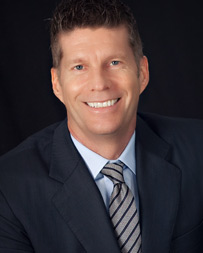
Greg Lanham
Greg Lanham, CEO, FTS International
CEO, FTS International

But the feast-or-famine nature of the energy industry has hit FTS, too. Low commodity prices and delayed drilling has impacted the services industry particularly hard, with industry leaders such as Schlumberger Ltd. laying off thousands of workers. FTS, too, has cut costs by consolidating offices and reducing their workforce.

Lanham took time recently to address Rigzone’s questions about the industry and FTS’ future in it.

Rigzone: Tell us about your career in oil and gas. What appealed to you about the industry?

Lanham: I worked for Anadarko Petroleum Corp. for 20 years in various capacities, working first in the United States and then as president and general manager of the Asian subsidiary. Then I worked with Temasek as global head of energy and managing director of investments. I’ve been fortunate to live and work all over the world, including Africa and Asia. The oil and gas industry has always appealed to me. It is constantly evolving, with lots of opportunity for innovation. Our industry employs some of the hardest-working men and women I know, and they are helping to develop vital energy resources.

Rigzone: Singapore’s state-owned investment company, Temasek Holdings, made a $2 billion investment with FTSI, formerly known as Frac Tech, in 2011. What made FTSI interesting to Temasek?

Lanham: FTSI was born out of the emergence of the U.S. unconventional oil and gas industry, and the company played a material and strategic part in contributing to the evolution of the industry. The opportunity to take the unconventional approach and technology to other countries to develop their resources also made FTSI attractive.

Rigzone: What have been some of the challenges – and how did you overcome them – during your tenure at FTSI?

Lanham: When I first came to FTSI, I was faced with several challenges. First, an influx of competitors entered the market around the same time supply began to outpace demand, creating significant margin compression and overcapacity. Second, the buyout financing was comprised of debt with prohibitively restrictive covenants. So, one of the first things I tackled was improving the balance sheet and our resilience to industry cyclicality, ensuring the company had a sustainable capital structure. We also created a competitive niche by building a horizontally integrated business model, focusing on the services that customers demand instead of carrying the entire supply chain. This included selling our proppant and rail logistics business lines and increasing our wireline capacity tenfold.

Rigzone: How has the low price of oil impacted FTSI?

Lanham: Unfortunately, FTSI hasn’t been immune to the drop in oil prices. We’ve seen operators scale back on their completions plans, so we’ve adjusted accordingly. We have had to make tough decisions to maintain our financial health. The positive news is that we prepared for the down cycle during the last upswing, and we’re focused on delivering service quality and safety that exceeds our customers’ expectations, so I think we’ll emerge from this cycle an even stronger company.

Rigzone: How do you stay ahead of the competition?

Lanham: Operational excellence, technology and safety are three key areas that keep us ahead of the competition. We focus on customer service and delivering the highest possible value to our customers. Our size also plays a part in that – we are nimble and able to quickly adjust based on our customers’ needs. In addition, our technology sets us apart from most other providers in the industry. We have a world-class corporate technology center in Houston, where our experts are focused on developing the methodologies, fluid technologies and fracture designs that are helping our customers achieve outstanding results. Last but not least, our current safety record is at least two-thirds lower (better) than the industry average. That record didn’t happen by chance, but rather by design. Safety is a primary focus for all of our employees and we’ve implemented numerous programs to keep our people safe. Some examples include our comprehensive 21-day training programs for equipment operators and innovative engineering, such as our Remote Actuated Manifold (RAM) which keeps our people out of the high-pressure zone. 

Rigzone: FTSI completed its most recent acquisition in December when the company acquired substantially all of the assets of J-W Wireline. What might interest you in other acquisitions? Are you more interested in purchasing assets or acquiring other companies?

Lanham: The wireline acquisition was definitely strategic for us, helping to round out our horizontal business strategy. We would evaluate future acquisitions against that same strategic model.

Rigzone: What kind of growth pattern do you plan for FTSI in the next five years? Will growth at FTSI be more organic or acquisitive in nature?

Lanham: SinoFTS, our 15-year joint venture with Sinopec, will play a part in our growth as we expand internationally. We are excited play a significant part in the development of China’s shale resources. We are custom manufacturing the equipment ourselves here in the United States and our first fleet is expected to deploy later this year.

Our technology continues to set us apart. As more operators discover how they can optimize their completion results by having more insight into their formations and developing more complex fracture designs, we will be well positioned to capture additional market share.

Rigzone: In your view, what are the primary challenges in the industry?

Lanham: Certainly commodity pricing is the biggest challenge at the moment. That is putting pressure on the industry as a whole. Preparing for down cycles when the market is up and vice versa is key to creating a sustainable organization. I think the challenge is to adapt and stay ahead of the trends. We need to challenge status quo and come up with even more innovative and efficient ways of doing business.

Rigzone: How likely is it that FTS would one day trade on the public market, and why?

Lanham: If market conditions supported a public offering, that is something we would consider.

Rigzone: What is the best business advice you’ve ever heard?

Lanham: I think that one of the best pieces of advice I’ve heard is to build a leadership team that is diverse in thought, position your people to be successful and allow them to perform their roles. That’s the culture we’ve built at FTSI, and it allows each of us to play to our strengths and achieve our vision to make FTSI the preferred well completion partner.


Source

NOAA Expands Two National Marine Sanctuaries

0

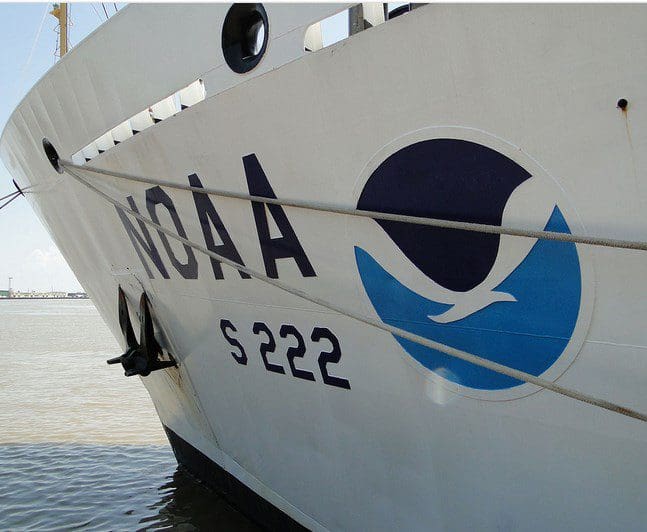
The expansion of Cordell Bank and Gulf of the Farallones national marine sanctuaries off northern California takes effect today, following a 45-day period of Congressional review, NOAA announced.

The expansion will help protect the region’s marine and coastal habitats, biological resources and special ecological features.

As a result of the expansion, Gulf of the Farallones National Marine Sanctuary now will be known as Greater Farallones National Marine Sanctuary. The name change reflects the sanctuary’s new geographical boundaries and expanded opportunities for stewardship, research and education.

“We are very excited about the expansion of our sanctuary, and the opportunity, through our name change, to be more inclusive, and to bring greater public awareness to the fact that these waters represent an extraordinary marine ecosystem, one of the richest on our planet,” said Maria Brown, Farallones superintendent. “Our new name will be one that encourages partnerships in science, education, technology, management and community beyond our previous geographic and demographic area.”

“This expansion represents the culmination of a multi-year effort to protect an important part of the ocean,” said John Armor, acting director of NOAA’s Office of National Marine Sanctuaries. “We look forward to working with our partners in these sanctuaries’ communities.”

The expansion of the two national marine sanctuaries, which both more than doubled, wasapproved in March. Cordell Bank National Marine Sanctuary, located 42 miles north of San Francisco, expanded from 529 square miles to 1,286 square miles. Greater Farallones National Marine Sanctuary grew from 1,282 square miles to 3,295 square miles of ocean and coastal waters.

The expansion was based on years of public comment and research by NOAA and its scientific partners that identified the nutrient-rich upwelling zone originating off Point Arena and flowing south into the original sanctuaries as one of the most productive in North America.

During a review of both sanctuaries’ management plans, NOAA received comments from the public in 2001 expressing interest in expanding the boundaries north and west. In response, the revised management plans published in 2008 included a public process to consider possible expansion and ensure that sanctuary boundaries were inclusive of the surrounding area’s natural resources and ecological qualities.

From December 2012 through June 2014, NOAA conducted a public engagement process to allow the public to weigh in on the proposed expansion. The agency received more than 1,300 comments, most in support of the proposed expansion.

A celebration of the expansion of both sanctuaries is planned for Sunday, June 28, at Gualala Arts Center, California.

Millennials: Job Hopping or Advancing Careers?

0

While many HR professionals have seen the oil and gas industry’s downturn as an opportunity to acquire some highly-skilled workers, the industry is still challenged with a shortage of STEM-capable people in the pipeline. And once the industry is back on the uptick, oil and gas companies will have to rehire – probably rather quickly – to remain competitive.

So HR has some important decisions ahead.

And while one can never determine how long an individual will stay with a company, Chris Melillo, managing partner and energy practice leader for Kaye/Bassman International Corp., recently told Rigzone it was a very “realistic fear” for employers right now whether or not employees hired on during the downturn would remain loyal to their companies.   

But company loyalty has changed over the years and today, on average, an individual stays at their job for 4.6 years, according to the Bureau of Labor Statistics (BLS). That is lower than in the past, but people now have different reasons for staying – or leaving – a company.

Results from the Federal Reserve Bank of New York May 2015 Survey of Consumer Expectations (SCE) reveal that bachelor’s degree graduates are more likely to voluntarily leave their jobs than their counterparts who have some college, a high school diploma or less. Additionally, the survey found that those under age 40 were more likely than their older counterparts to voluntarily leave their job.

Millennials have been known to switch jobs frequently, a term many have referred to as “job hopping.” But, their reasons for working are different than generations of the past. Millennials prefer meaningful work over a high salary and are motivated by career advancement.

In essence, some millennials switch jobs frequently, not because they are unhappy at their current company, but because they are constantly seeking out new opportunities. According to the same CSE survey, nearly 65 percent of those under age 40 believe they will find a job in the next three months if they were to lose it today; compared to about 52 percent of those aged 40 to 60 and nearly 31 percent over age 60. Many millennials see new job opportunities as a way to advance their careers.

Oil and gas recruiters and HR professionals have identified there will be a great need in the industry for future leaders who are tech-savvy and innovative. Millennials stand a good chance at filling that void.    


Source

Celtic Explorer Reveals Atlantic Ocean Mountains

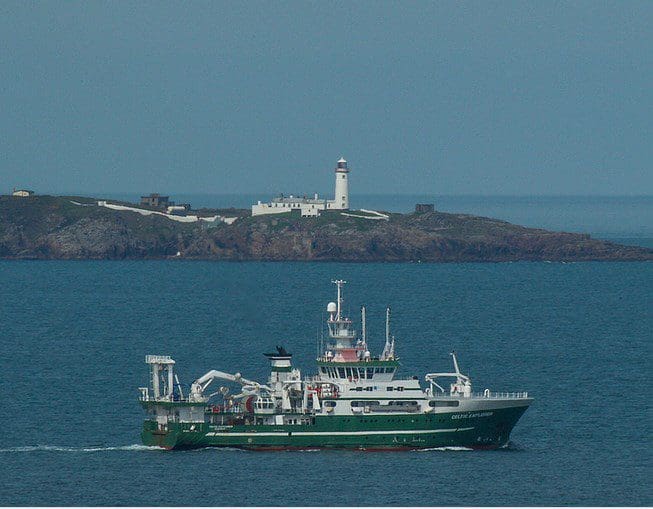
A multi-national team of European, Canadian, and American ocean exploration experts lead by Thomas Furey, Marine Institute, has revealed previously uncharted features on the Atlantic seabed including mountains and ridges taller than Carrauntoohil, Ireland’s highest mountain.

The survey onboard Ireland’s national research vessel, the RV Celtic Explorer, is one of the first projects to be launched by the Atlantic Ocean Research Alliance formed following the signing of the Galway Statement on Atlantic Ocean Cooperation between Canada, the EU and the US in May 2013.

The team from Marine Institute and Geological Survey of Ireland (INFOMAR -national seabed mapping programme), the Fisheries and Marine Institute of Memorial University of Newfoundland, Canada, the United States’ National Oceanic and Atmospheric Administration (NOAA), and the Portuguese Institute for Sea and Atmosphere (IPMA), used the multi-beam echo sounder technology on the Celtic Explorer to create high resolution images of dramatic seabed features.

They uncovered 235km2 of iceberg scarred seabed, ancient glacial moraine features, and buried sediment channels on the Newfoundland and Labrador shelf. They charted a 15km long down-slope channel feature on the western Atlantic continental slope, most likely formed by meltwater run-off associated with ice cap grounding during the last glaciation, approximately 20,000 years ago. They crossed the Charlie-Gibbs Fracture Zone on the Mid-Atlantic Ridge creating a 3D visualisation of a 3.7km high underwater mountain.

The survey route included an area off Newfoundland and Labrador where cold water corals and sponges are known to occur and crossed the OSPAR designated Marine Protected Area.

“This survey marks the beginning of an exciting Atlantic research mapping collaboration between the US, Canada and Europe. It shows what can be achieved when we pool our resources, sharing knowledge, infrastructure and technology. And we hope to build on this next year, when Ireland’s R.V. Celtic Explorer will be joined by research vessels from Norway and the USA, and in subsequent years,” said Dr. Peter Heffernan, Marine Institute, Ireland.

“Seeing dramatic seabed features reveal themselves for the first time was a real highlight of the survey” said Tommy Furey, Chief Scientist, Marine Institute, Ireland. “We need to better understand the features that make up the ocean seabed. With global population and seafood demand spiralling, we need to map our seabed to define favourable habitats for fishing, key sites for conservation, and safe navigation for shipping. Map it, manage it, and mind it.”

The survey was part funded by the Government of Newfoundland and Labrador which has invested approximately $5 million in RV Celtic Explorer expeditions since 2010 to support fisheries science activities. The vessel had just completed the annual fisheries survey in Newfoundland and Labrador, which provided the opportunity to embark on the trans-Atlantic mapping survey on the return journey to Ireland.


Source

MMT Changes Organizational Structure

0

MMT Group has made strategic changes to existing organizational structure.

One of this changes is to form a new Management team with a strong focus on sales and operational efficiency.

The new Management team is now in place after a process of recruiting key players for senior management positions.

The Management Team will lead and push the organization forward to secure new business, the company noted.

Stefan Eliasson, CEO, comments upon the release: “We have the best team of competent coworkers, we have a game-changing survey ROV on the market and returning clients. We will prove for the industry that we are a company that is beneficial to work with and whom deliver the highest resolution survey data and the latest marine mapping technology – and this time with an even more cost efficient, reliable and innovative approach!”


Source

Government-funded project looks to clean up tire reef

In the 1970s, hundreds of thousands of tires were dumped off of the coast of Florida in an effort to create a “tire reef.” This project, located near Fort Lauderdale, was supposed to be a home for fish and aquatic life. However, as the Los Angeles Times recently reported, the tires have become more of a menace than a habitat, and the Florida government has contracted commercial divers to clean up the refuse.

According to the source, the local Industrial Divers Corporation will work over the course of the next two years to remove 90,000 tires from the ocean, almost an eighth of the amount of tires originally used to establish the artificial reef. A biologist quoted by the source says that the tires are piled up “five deep” on top of each other, and the divers assigned to the project will work 70 feet deep to remove them using a crane.

The tires will eventually be burned for fuel near Tampa. The divers hired for the cleanup will be tethered to a special supply vessel while they work.  In the Reuters article on this recovery effort, Allison Schutes from Ocean Conservancy described some of the danger that the tires pose to the environment. “The ocean has ever-changing currents and storms, and they’re moving around and smothering and killing natural coral,” she said.

While the source notes that tire reefs have been used around the world, it also says that there are many other cases in which the projects were abandoned. Commercial workers responding to failed projects may require in-depth operations that involve diving suits, equipment and other vessels needed to help them. Commercial diving insurance can help recover financial losses when there are unexpected threats to service. 


Source

Midnight Deadline Approaches for Oil Spill Settlement Claims

0

A midnight deadline looms for people and businesses claiming economic harm or property damage resulting from the 2010 BP oil spill in the Gulf of Mexico.

The Monday night deadline is for filing a claim under a 2012 settlement arising from the spill. Claims administrator Patrick Juneau says there has been an uptick in the number of filings as the deadline approached.

He said claims centers in Florida, Mississippi, Alabama, Louisiana and Texas will be open until midnight to handle claims. Juneau said in an interview that more than 328,000 claims have been filed so far. 


Source