Aker Solutions has notified employees at its subsea services facility in Ågotnes, Norway, that it has become necessary to adjust the plant’s workforce capacity because of a decline in activity in the Norwegian market.
Between 150 and 200 positions in Ågotnes may be affected. Adjustments will be made through normal employee turnover, reassignments to other parts of the company and dismissals.
“Our Norwegian subsea services unit has had a slow start to the year as oil companies reduce spending and delay some projects,” said Per Harald Kongelf, head of Aker Solutions in Norway. “This makes it necessary for us to adjust capacity in this area.”
Aker Solutions had about 8,000 own subsea area employees at the end of the first quarter of 2015. Approximately 3,000 of these were in Norway and the rest were in countries including Brazil, Angola, Congo-Brazzaville, Malaysia and the UK.
USI’s Bridge Inspection team recently completed 245 hours of ASCE (American Society of Civil Engineers) Diver Training Standard for Underwater Investigations through on-site instructional courses and Surface Supplied Air training (SSA).
Three members of USI’s bridge inspection team represented USI in the NACDS (National Association of Commercial Dive Specialists) program, all of whom have previous underwater bridge inspection experience.
Starting with 175 hours of in-class curriculum, topics covered a wide range of professional diving and water safety subjects including but not limited to: CPR, Diving Physics, Human Anatomy and Physiology, Diving-Related Illnesses and Injuries, Emergency In-Water Decompression, Environmental Hazards and Workplace Safety.
Next, the USI Underwater Bridge Inspection team participated in a 70-hour Surface Supplied Air on-site diving instructional through Omni Divers Underwater Services, L.L.C.. In this intensive training, the team received under-water “real-life” dive experiences at the Natural Springs Resort in Southern Ohio and spent a day running training scenarios at the Philips Quarry Outdoor Educational Center in Muncie, IN.
USI’s Bridge Inspection team strives for excellence and clean safety record. Along with in-class education and underwater live scenario dive training, USI received further training with our O2 Emergency Oxygen dive kit, to be ready in case any future Diving-Related emergencies were to arise.
USI is prequalified by INDOT in all Bridge Inspection categories and can inspect all types of bridges with our underwater, confined space, complex and fracture critical training certifications and experience. No matter what the size or complexity of a bridge inspection, USI is first class in response, accuracy, dependability, and most of all – SAFETY.
Teledyne Bowtech, a subsea vision systems provider, has recently supplied LED-V-20K lamps, a Surveyor-HD-Pro camera and a 3D-HD system to Curtin University and the Western Australian Museum to survey the shipwrecks of Australian warship HMAS Sydney II and the German raider HSK Kormoran in the Indian Ocean 200 km west of Shark Bay, Western Australia.
An array of 10 LED-V-20K lamps, emitting up to 20,000 lumens each, were used on each of two ROVs to illuminate the wreckage which was filmed using a Surveyor-HD-Pro camera and a 3D-HD camera system all supplied by Teledyne Bowtech as part of a suite of equipment used on the project.
The Surveyor-HD-Pro is an HD camera with full 1080p 50/60. It has a water corrected fused quartz hemisphere window and Titanium housing rated to 6,000 m.
The 3D-HD is a high definition stereoscopic camera, also rated to 6,000 m operating depth. 3D imaging is invaluable for ROV manipulation tasks; the perception of depth enables the operator to carry out difficult and time-consuming operations faster and more safely. In all operations subsea, and especially important to marine archaeology, 3D provides a tremendous spatial awareness that is not achieved through normal 2D vision.
Dr Andrew Woods, Research Engineer at the Centre for Marine Science & Technology at Curtin University, reported: “The lights performed really well providing some rich colours and wonderful lighting effects. The Surveyor-HD-Pro camera operated flawlessly. We’ve captured some amazing footage.
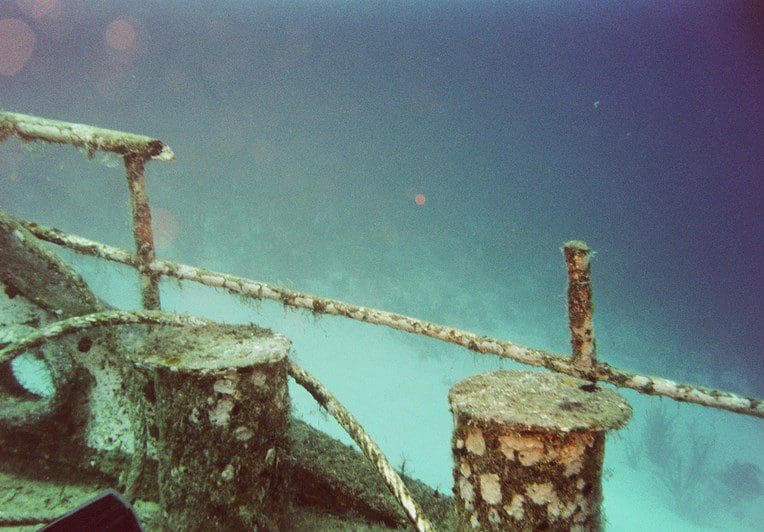
The Sydney and the Kormoran were destroyed in battle on 19 November 1941 off Western Australia. For many years the fate of the Sydney and her 645 crew was a mystery until both wrecks were found in 2008. Photographs taken at that time did not explain how Sydney could have been so comprehensively disabled, however, new images taken by Dr Woods and his team clearly show damage which supports the theory that the bridge was destroyed and the ship’s command structure lost early in the battle, as reported by a survivor from the Kormoran.
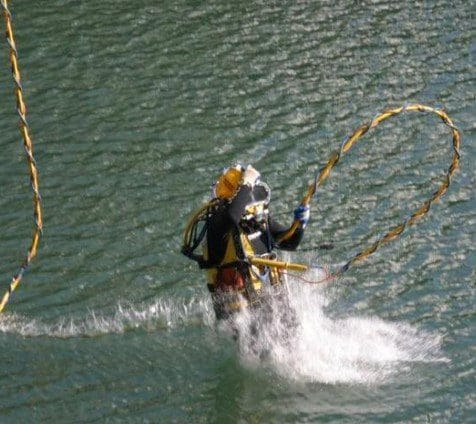
Commercial divers are not in the business of training recreational divers, but rather are involved in completing job-specific tasks. Commercial divers complete these complex tasks in waters that can be rather deep and murky, making the job a challenging one. Many businesses call us for commercial diving services to dredge ponds, inspect pipelines, and help with underwater construction.
In order to conduct these jobs, they require specific training and education in addition to dive training. Usually, this type of training takes place at educational facilities that are strictly dedicated to commercial diving services, and are organized under national boards for commercial diving.
Where Do Commercial Divers Work?
Construction divers typically work in harbors, bridges, ponds, or in other locations where construction companies build structures that are maintained in water. These divers also conduct underwater surveys to report on what’s happening in certain bodies of water, and even work on coastal protection. Many commercial divers are responsible for working on laying, inspecting, and maintaining cables and pipelines underwater.
The Importance of Dive Training
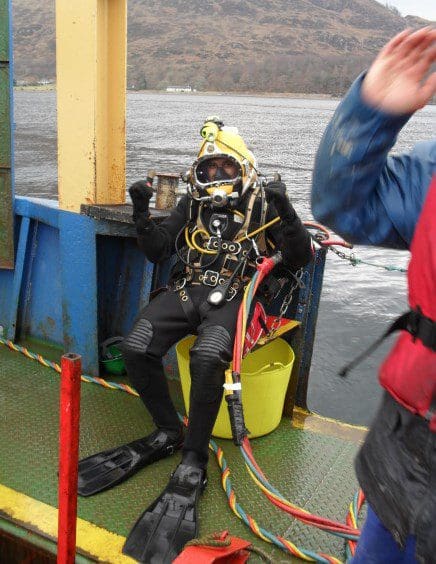
This type of diving requires specific training, and the use of specialized equipment. We use both scuba units and surface-supported equipment, in addition to a variety of tools and techniques, including welding.
The Expertise of Commercial Divers
Commercial divers can descend in waters up to 600 feet deep. For this reason, extended decompression times are necessary. Saturation diving is often used when these divers spend a long amount of time at great depths. In these situations, once their tissues are entirely saturated with nitrogen, their decompression time will not increase unless they go to a greater depth. After they’ve completed their shift — which can be upwards of 12 hours — the divers are brought back up to the surface and decompressed in a chamber.
If you are in the construction business and are building structures in or around certain bodies of water, contact American Underwater Services to find out how commercial divers trained in the construction realm can help you.
Hackers have made the energy industry a favorite target.
A study conducted in April by Symantec Corp., the world’s biggest cybersecurity firm, found that computer-system invaders attacked 43 percent of global mining, oil and gas companies at least once last year. In a separate survey the same month, conducted for the Organization of American States by another security company, Trend Micro Inc., 47 percent of energy organizations reported attacks, the highest among all corporate sectors and surpassed only by governments.
“Nowadays you have computers running everything,” said Alvaro Cardenas, a computer-science professor at the University of Texas at Dallas and a member of the Cyber Security Research and Education Institute. “You can create blackouts or oil spills and hurt a lot of people.”
As if the last year’s oil-price drop wasn’t enough, costs for energy companies rose faster than the U.S. average over the last five years, according to a study by the Poneman Institute for Hewlett-Packard Co. Cybercrimes cost energy and utilities companies an average of $13.2 million each a year for lost business and damaged equipment, higher than in any other industry, according to Poneman’s survey of 257 businesses.
Spending worldwide on cybersecurity for oil and gas infrastructure will reach $1.9 billion by 2018, according to ABI Research, a technology data company with offices worldwide.
‘OPERATION PETROL’
Brent crude, a global marker, lost 15 cents to $65.55 a barrel on the London-based ICE Futures Europe exchange at 2:04 p.m. Singapore time on Thursday.
Like all big enterprises, energy companies want to protect sensitive data. But they have another dimension to worry about — the potential for hackers to cause physical damage to equipment such as drilling rigs or power stations. While the industry has long prioritized physical security, with electric fences and cameras typically standing guard at refineries and power plants, cyberdefenses are only recently getting similar attention.
Last year’s attacks on the energy sector included Anonymous hackers’ “Operation Petrol” and the “Sandworm” attack by Russian hackers trying to infiltrate North American utilities in order to control it at a later date. In 2012, Saudi Arabian Oil Co., the world’s largest crude exporter, said it suffered an attack that affected 30,000 computers.
Energy companies face all the usual threats from hackers who want to make a political point or snoop on confidential data to get an investing edge, according to Tom Kellerman, chief cybersecurity officer of Trend Micro, a Tokyo-based software provider. But their strategic and economic importance also makes them a target.
UNLIKELY SOURCE
The vulnerability of U.S. companies has an unlikely source. After the 2003 East Coast blackout, power companies connected infrastructure to the Internet to make it more reliable, according to Kellerman.
Those weaknesses could multiply as technology companies market Web-connected home appliances, sometimes called the “Internet of things,” he said. Depending on how these devices are secured, they could create more openings for hackers to enter networks.
“It’s a double-edged sword,” Kellerman said. “Currently the energy sector is woefully unprepared for protecting itself from cyberattacks.”
Susceptibility is also a problem overseas. The Kuwait National Petroleum Co. disconnected the computer network that runs its three refineries from the Internet after hackers with the Anonymous collective announced plans last year to target Middle Eastern oil companies, according to Abdul-Aziz Duaij, the company’s top technology officer. The network wasn’t compromised, he said.
NEEDS PERMISSION
The KNPC uses software that prevents anyone from installing any program without permission to make it tougher for hackers, Duaij said.
“We consider everybody a threat, even insiders,” Duaij said.
Last week, U.S. officials revealed that hackers breached U.S. Office of Personnel Management computers, stealing confidential records of as many as 4 million current and former government employees.
While sources of attacks can be difficult to identify, U.S. companies such as Mountain View, California-based Symantec point to activity coming from Russia, China, North Korea and Iran. Documents made public by U.S. National Security Agency contractor Edward Snowden suggested the NSA spied on Petroleo Brasileiro SA, Brazil’s state-run oil-company, according to a report by Globo TV.
MONITORING NETWORKS
U.S. Director of National Intelligence James R. Clapper acknowledged that the country does gather information on “economic and financial matters” but doesn’t steal trade secrets and share them with U.S. companies.
Companies can protect themselves by monitoring network traffic for unusual activity and training employees to recognize suspicious e-mails. Still, no matter how secure a company makes its technology, state-sponsored hackers almost always gain access by manipulating people, said Antonio Forzieri, a Symantec strategist.
“I’d love to have a patch to deploy to the humans, but you can’t do that,” he said. “These attacks are not science fiction, they are every day.”
Prysmian was hired by Australia’s FirstPath to build and install the highest capacity underwater cable possible.
The cable was installed under the Sydney Harbour Bridge, providing two separate cross-harbour links to add to FirstPath’s fibre network.
The project required the collaboration of multiple R&D centres within Prysmian. In six months, after initial consultation, Prysmian was able to design, manufacture and deliver the project.
FirstPath needed a new underwater solution. The cable needed to be small and light-weight for easy installation but also offer the highest possible fibre capacity. Prysmian’s design combined its BendBrightXS fibre with advanced Flextube cable technology, to create a fibre dense underwater cable.
“This installation is a major step forward for FirstPath and further expands our network infrastructure enabling us to tackle the challenges of increasing fibre demand” says FirstPath CEO Stephen Carter.“The ability to more than double the installed fibre capacity for almost the same installation cost of the typical 312 fibre underwater cable was a very attractive offering from Prysmian. Their outside of the box thinking was a perfect fit for our companies needs.”
The installation presents a first for both companies. FirstPath’s first underwater cable deployment and Prysmian’s highest fibre-count underwater cable. “This innovative approach provides 720 fibre cores in the same form factor as a conventional 312 fibre solution. This lowers the total cost of ownership, providing over double the fibre capacity per cable for the same installation costs. This way we can provide even more value to our customers” says Alice Codenotti, Telecom Account Manager at Prysmian.
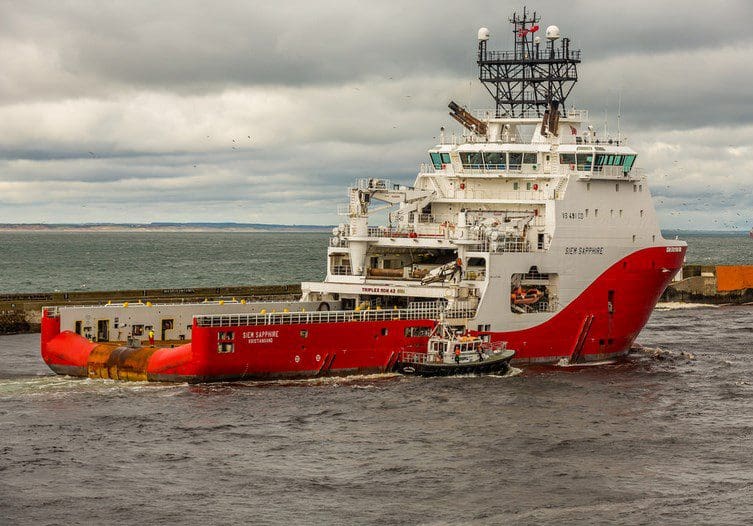
Norway’s Siem Offshore (SIOFF) intends to carry out a rights issue, with a share capital increase providing gross proceeds of the NOK equivalent of approximately USD 100 million.
SIOFF’s board of directors is of the view that the company’s debt leverage is too high in the current environment and has therefore resolved to propose a rights issue of USD 100 million to an extraordinary general meeting of the company’s shareholders.
“Due to the significant changes in the oil service industry as a result of the fall in oil price and the increased supply of offshore support vessels, the rates obtainable for offshore support vessels have fallen significantly over the last few months. The Board of the Company is of the view that the depressed situation is likely to continue for some years. With the current charter-rates and level of vessel utilization the company will not generate sufficient cash from operations to pay all scheduled capital instalments on the company’s debt without further capital injection,” said the company in a statement.
The finance plan also includes an extension of the SIOFF’s NOK 2.5 billion credit facility for six anchor handling tug supply vessels, which was due to expire in November this year, as well as an easing of certain covenant requirements to the company’s banks for the next years. The finance plan will allow the company to serve interest and instalments on its debt in accordance with the original repayment schedules and thereby continue to reduce the Company’s debt leverage.
The new shares will be offered with preferential rights to existing shareholders at a subscription price of NOK 1.80 per share. The preferential rights will be tradable.
The largest shareholder of the company, Siem Europe Sarl., has indicated willingness to fully underwrite the share issue at a guarantee commission of 1%. The underwriting is subject to the approval of the board of directors of Siem Industries Inc., which is the parent company of Siem Europe Sarl.
Siem Offshore said that the proposed rights issue is subject to shareholder approval at an extraordinary general meeting of the company, notice of which is expected to be sent out shortly. Existing shareholders will be allotted tradable and preferential subscription rights in proportion to their shareholding in the company. Oversubscription will be permitted. The subscription period is expected to start mid-August.
Oil and gas operators and contractors are much less confident about their activities on the UK Continental Shelf than they were a year ago, according to a survey released Thursday by the Aberdeen & Grampian Chamber of Commerce. The news comes during the same week that a senior Total executive told the Society of Petroleum Engineers’ London Annual Conference that his firm was do everything it could to bring costs down in order to continue to operate its UK assets profitably.
The AGCC’s 22nd Oil and Gas Survey found that two-thirds of North Sea operators have been forced to cancel projects due to the fall in the price of oil, with 50 percent stating that they have been forced to reduce staff training. Meanwhile, 76 percent of contractors stated that they were less confident about their UKCS activities than they were a year ago.
The survey also found that the number of contractors working at, or above, optimum levels has fallen by 47 percent compared to the previous survey.
AGCC Research and Policy Director James Bream commented in a statement:
“Once again we have a set of results that give us clear signals that new opportunities exist and tells us that actually, contrary to what people say, we haven’t been here before. Confidence levels are at an all-time low and we are now experiencing our first recession of confidence, and it looks gloomy in the year ahead too. However, we have seen positive tax changes, the OGA [Oil and Gas Authority] team is bedding in and in the Queen’s Speech the new UK Government has committed to legislating for the Infrastructure Bill.
“There is lots to build on and just perhaps it is possible that we are seeing the start of the next phase in our role at the frontier of the oil and gas sector. Can we grasp the opportunity to lead the way in decommissioning practices and become a new high efficiency basin as we mature faster than others? This is a mid-life crisis in the UKCS but as some people say life begins at 50.”
Operators are taking action in order to keep producing fields commercially alive on the UKCS, however. On Tuesday this week, Gunnar Olsen – business development director at Total E&P – told delegates to the SPE’s annual conference in London that the firm has been focusing on measures to reduce costs while maintaining the same level of activity.
Olsen said that Total believes that oil prices will go back up but that prices of $80 to $100 per barrel might take 10 years to achieve. In the light of this, the old model whereby by inflation in development and operating costs (OPEX) were compensated for by rising oil prices “is no longer the case”, Olsen said.
“We do not take investment decisions based on going back to $100 anymore. This is one of the key challenges that we are now faced with. We can talk about $100 in 2025, maybe 2030, we can talk about CO2 quotas and prices and so on. But in the mature basin of the UK we don’t have that time.
“It’s not a question of what we’re going to do in five years’ time or 10 years’ time. It’s a question of what we are going to do today in order to prolong… production life.”
This means that Total has been renegotiating contracts and reducing contractor rates while also discussing changing the rotas that offshore workers use in the UK.
“We are going through absolutely everything to see if there is money to be saved,” he said.
“We expect from this exercise to reduce our OPEX by around GBP 150 million [$230 million] in 2017 based on exactly the same activity.”
HSBC TELLS SPE IT REMAINS COMMITTED TO OIL, GAS
At the same conference on Wednesday HSBC Bank Global Technical Director for Oil and Gas Christophe Requin announced the bank retains “a very strong appetite to fund the oil and gas business”, despite an increase in regulatory controls.
Requin conceded that it is more difficult to fund projects these days, but confirmed HSBC’s desire to back the industry.
“There are much more regulatory controls…now it’s very difficult to be able to fund these projects…We have still an appetite, we still see a lot of good projects but we are more selective,” Christophe Requin said in a panel discussion at the SPE Conference.
Requin’s comments came after news emerged earlier in the week that HSBC is considering leaving the UK due to a disagreement on Chancellor George Osborne’s bank levy, which will see the bank pay the Treasury $1.5 billion this year.
ITW teams have successfully completed the last grouting operation at Amrumbank West Offshore Wind Farm in Germany.
The connections between transition piece and monopile have been grouted with the cementitious-based material Ducorit.
According to the company, for the Amrumbank project (80 connections), ITW delivered another turnkey grouting solution including Ducorit, its newly developed equipment and with the installation of the product performed by its own supervisors.
In 2014 the first 19 connections were grouted while the rest of the 61 connections were completed in the period April 19 to May 21, 2015 with an average of 2 grouting operations per day.
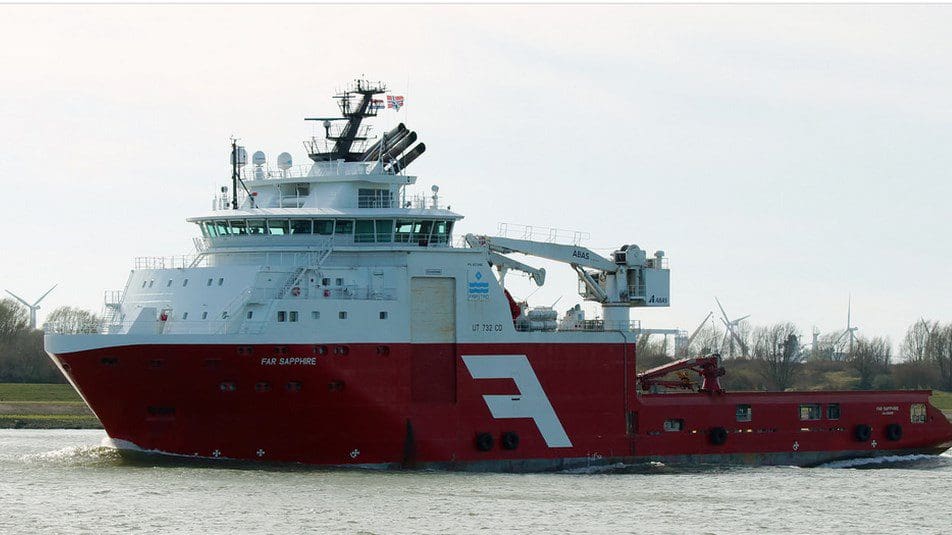
The installation of the monopiles and transition pieces was performed from the jack-up crane vessel MPI Discovery and the grouting part executed from Far Sapphire a DP2 grouting vessel equipped with an Ampelmann system.
“We do not prefer one solution rather than the other but at this project it has really worked out well”, says Soren Munk, ITW Supervisor and he continues, “It has been a pleasure working on the Amrumbank project. The setup allowed us to work very intensively for a shorter period.”
Amrumbank West is a 288MW offshore wind farm being developed in the North Sea, Germany. The wind farm will include 80 Siemens SWT-3.6-120 wind turbines rated at 3.6MW each. The turbines will be installed over an area of 32km² in water depths ranging from 20m to 25m. It is located 35km north of Helgoland and 37km west of Amrum .
Fresh from the 84th session of the Texas Legislature, Texas Railroad Commission chairwoman Christi Craddick took some time to talk with Rigzone about money, impact and the future of legislative action on the industry.
Rigzone: Every legislative session has a set of marquee issues. What do you think were the key oil and gas agenda items for the 84th Legislature?
Christi Craddick
Chairwoman, Texas Railroad Commission
Craddick: First and foremost, it is obviously the budget. Last session, we were able to get additional dollars for salaries and IT upgrades, so this session, one goal was to maintain those additional dollars from the last session, and make sure we had ability to hire more pipeline safety inspectors.
In September of this year, we will become the safety inspector for an additional 150,000 miles of gathering lines, 200,000 miles of intrastate lines and 160,000 interstate lines – of which we have primacy on 40,000 miles of lines–and we needed 20 additional inspectors. We were [appropriated] $2.2 million and then we get federal matching dollars because those are PHMSA
. All told, we will oversee almost 400,000 miles of pipelines.
Another thing that was important was we needed new microfiche readers. We use them daily, but we couldn’t even buy toner for some of them because they’re so old. That was $150,000. It’s not much overall, but it is a lot for us.
These issues were key for us to maintain [services] and to add dollars so we can continue down the trajectory because we expected the industry to pick back up. We expect the industry to continue to grow.
Rigzone: What were the challenges of the session, and how were they overcome?
Craddick: Always first and foremost, it’s educating people about what the Railroad Commission does so they can understand why we’re important. I joke that we’re the most important agency in the state, but other agencies might take issue with that. People need to understand where the dollars go when we’re asking for them.
Just as it happens in the industry, we want to make sure we have good quality people and that we’re being responsive on issues that are of concern to them. I think we do a good job explaining the rules, that we regulate oil and gas production [in Texas], and that we take water issues seriously. I think it’s an overall education process that is always the biggest challenge we have.
Rigzone: Technology updates have been important to the commission during previous sessions. What did the Railroad Commission specifically need from the Legislature this year, and how did lawmakers address those issues?
Craddick: We’ve actually made some really great strides, and I hope we continue moving forward. Two years ago, we got ability to spend $24.7 million available to us to work on IT upgrades. We’ve gotten rid of the green screens. We are up-to-date on completion reports. And, we’re in the process of rolling out an updated GIS mapping system that is almost as good as Google maps. [Technology upgrades] have allowed us to be more efficient and more transparent.
A year ago, if someone tried to get a drilling permit, it took 45 days because of process inefficiencies. By November before the downturn, it only took two days. That’s made a huge difference for us internally, we will continue our long-term goal of upgrading our IT to put forms online and offer more data.
Getting rid of micro film is a long-term goal – we have more data than we know what to do with – get it in good shape and continue that as dollars become available and drilling goes back up.
We try to be efficient so [producers] can be more efficient and save dollars. The long-term goal for our agency is to make sure it’s as efficient as possible because it does cost money to have a rig idle if [producers] are waiting. We don’t want to be the cause of a rig sitting idle.
Rigzone: What is the unfinished business that lawmakers will have to tackle with the energy industry in 2017?
Craddick: Our budget is always a concern. If we’re not fully funded at appropriate levels, we can’t make sure we’re protecting the environment, getting permits out efficiently and that we’re transparent to the public and can educate them. Those issues are our priorities.
We’ll be up for sunset next session, so we will start working with the [Sunset Commission]. That will be our second priority to come through [the Sunset process] as a whole agency. People don’t always understand what we do.
Long-term challenges across the state, we will continue working with the Legislature on environmental issues like water and fresh air. Even though those are [regulated] at TCEQ, we all come together on water usage issues, whether it’s in oil and gas, a city, state agency or anybody else in between.
I think the other challenge is workforce development and higher education issues. We need the appropriate people in this agency to continue working in this vibrant industry and make sure we can be helpful. It’s one of the fastest-evolving industries and we need to be ready for what other challenges there could be.
Rigzone: There was another push to change the name of the Texas Railroad Commission to one that better reflects its jurisdiction in the oil and gas industry. What’s your position on that idea?
Craddick: My biggest concern has been that if we change the name without a constitutional amendment, we want to make sure we don’t lose regulating authority from [Environmental Protection Agency]. We don’t want the feds in our business.
Rigzone: Did House Bill 40, which rendered the Denton fracking ban unenforceable, play out in the Legislature the way you expected?
Craddick: I didn’t have preconceived ideas about it. In fact, we didn’t even testify on it because it doesn’t affect [the commission] directly. It does clarify [issues] between cities and the state, and certainty in regulation is always a plus when you’re trying to do business.
Rigzone: What is going to characterize the interim for the TRC? Are there particular issues the agency will be watching?
Craddick: We will continue to develop best practices and rules. With a dip in the industry, it’s given us the ability to catch our breath and catch up on drill permits and completion reports. Making sure we’re up to date–that will be first and foremost.
[Oil and gas] is a fast-changing industry in a lot of respects, and it is an important part of our economy across the state and frankly, across the country. Understanding the day-to-day of it and why it’s important to the economy and national security, people generally don’t understand that. We will continue to communicate good facts and information, and we urge people to ask the questions and not always believe what you read on the Internet … unless it’s on Rigzone.