Home Blog Page 194

Turkish Stream Launch Postponed

0

Russian gas giant Gazprom will have to take a rain check on its initial plan to start up the Turkish Stream gas pipeline at the end of 2016 due to current political situation in Turkey.

In December 2014, Gazprom and Turkey signed a memorandum of understanding for the construction of Turkish Stream which is to replace the South Stream project to deliver Russian gas to Southern Europe.

In May this year, Gazprom announced an agreement with Turkey to bring onstream Turkish Stream and to start gas supplies in December 2016. An intergovernmental deal on the pipeline was expected to be signed following the establishment of the new Turkish government in November.

However, in a press conference given today, Alexander Medvedev, Gazprom’s Deputy Chairman of Management Committee, said that the projected opening for TurkStream in late 2016 has been postponed to a later date due to the political crisis in Turkey.

Furthermore, in an email statement for Subsea World News, TurkStream spokesperson said: “We aim to start pipe laying shortly after Turkey and Russia have finalized the Intergovernmental Agreement on the Project. As stated by Alexander Medvedev there is currently no Turkish government in place to facilitate this process and therefore completion of the first line could indeed go beyond 2016.”

Medvedev was additionally quoted saying: “Due to the fact that the installation did not begin as planned, we are no longer speaking of December 2016.”

To remind, Gazprom has through its South Stream Transport BV, terminated Saipem’s contract for the construction of the first line of the offshore section of the pipeline, signed in the framework of the project South Stream in 2014 and is yet to announce a new contractor for the project.

RouteAs earlier announced, the offshore section of Turkish Stream was planned to consist of four strings, each with a throughput capacity of 15.75 billion cubic meters. The gas pipeline will stretch for 660 kilometers within the existing corridor of South Stream and for 250 kilometers within a new corridor towards the European part of Turkey.

Subsea World News; Image: Gazprom

Philippines Says South China Sea Not on APEC Energy Meeting Agenda

0

Energy ministers from the Asia-Pacific Economic Cooperation (APEC) group will discuss climate change and business opportunities at a meeting in the Philippines next month but not the South China Sea, Philippine officials said on Monday. China claims most of the potentially energy-rich South China Sea, through which $5 trillion in ship-borne trade passes every year.

The Philippines, Vietnam, Malaysia, Taiwan and Brunei also have overlapping claims. The Philippines has filed a case with an international arbitration tribunal over rival claims in the South China Sea but China has rejected the proceeding and says disputes must be handled bilaterally. China is a member of APEC. Zenaida Monsada, officer-in-charge at the Philippine Department of Energy, said the South China Sea issue was not in an APEC energy ministers’ declaration that Manila has drafted and which would be tackled during the Oct. 12-14 conference on the resort island of Cebu.

“It’s not on the table because the contending parties will be there. It’s a sensitive issue, it’s not purely an energy issue,” she said at a press briefing, referring to the territorial disputes. “The target is to have everybody come and sit down and talk on issues,” Monsada said.

The draft Cebu declaration focuses on pushing for an energy resilient APEC economy, with sub-themes such as improving energy trade and investments, promoting clean energy and building climate change-proof energy infrastructure, Energy Undersecretary Loreta Ayson said. APEC members include the United States, China, Japan, South Korea, Indonesia and Canada, and together account for 60 percent of world energy demand.

“We see energy resiliency very vital to APEC economies considering the natural and man-made disasters that the different countries in the APEC region have experienced in the past,” Ayson said. Territorial disputes could be discussed in Cebu but not during the ministerial meeting, she said. 


Source

Polarcus Alima Wraps Up The Gambia Shoot

0

Polarcus has, on behalf of Erin Energy, completed acquisition of a new 3D seismic survey off the coast of The Gambia.

Polarcus was contracted by the Erin Energy to carry out the survey using the Polarcus Alima, 12-streamer 3D/4D seismic vessel.

The survey covered approximately 1,613 square kilometres on Erin Energy’s A2 and A5 blocks.

Erin Energy said it will now begin processing and interpretation of the data, with results expected to be available during the second quarter of 2016.

Segun Omidele, Chief Operating Officer of Erin Energy, said: “We are pleased to report that the acquisition has been completed on time and within budget. We look forward to receiving the processed seismic data, which will allow us to build upon our understanding of the prolific plays in this emerging basin, and will assist our team in determining exploration activities on the blocks. We would like to thank Polarcus and our contractors for their professional and efficient work.”


Source

Mexico Sets Minimum Bid Values For Upcoming Offshore Oil Auction

0

Mexico’s finance ministry on Monday announced the minimum fiscal terms companies will be required to meet to win development rights in an upcoming oil auction, as the country seeks to lure investment despite slumping crude prices. The ministry set the minimum value of pre-tax profits for the five offshore extraction contracts up for grabs at a range of between 30.2 and 35.9 percent.

The National Hydrocarbons Commission, known by its Spanish-language acronym CNH, is the oil regulator that will run the September 30 auction, the second such auction to date in Mexico’s so-called Round One tender following a historic energy overhaul finalized last year. The minimum amount of profits required to win development rights varies slightly by contract.

At the high end, the second contractual area, which covers the Hokchi field, is set at 35.9 percent. Bids for the fifth contractual area on offer, covering the Mision and Nak fields, will require at least 30.2 percent of pre-tax profits for the government. The five production-sharing contracts covering nine oil and gas fields will be awarded by the CNH based on which company or consortium offers the biggest share of pre-tax profits to the government via a weighted formula that also includes an investment commitment.

The share of profits is 90 percent of the formula, while the investment commitment accounts for the remaining 10 percent. However, the newly released terms do not require bidders to offer a additional minimum work program investment, although previously established taxes and royalties will also apply. The contracts are for shallow water exploration and production of tracts located along the southern rim of the Gulf of Mexico near the country’s best-producing offshore fields, Ku-Maloob-Zaap and Cantarell.

Mexico’s first Round One oil auction in July offered 14 shallow water exploration blocks but awarded only a few, missing the government’s own modest expectations. The minimum values for that auction were revealed the same day as the tender, despite previous finance ministry assurances that the values would be made known “weeks” earlier to allow companies time to ensure their own bids met the minimum criteria.

The decision to reveal the minimum values ahead of time for the auction later this month is seen by analysts as a way to boost the number of contracts awarded despite a slump in international crude prices that has eroded the appetite of oil companies to take on new projects. 


Source

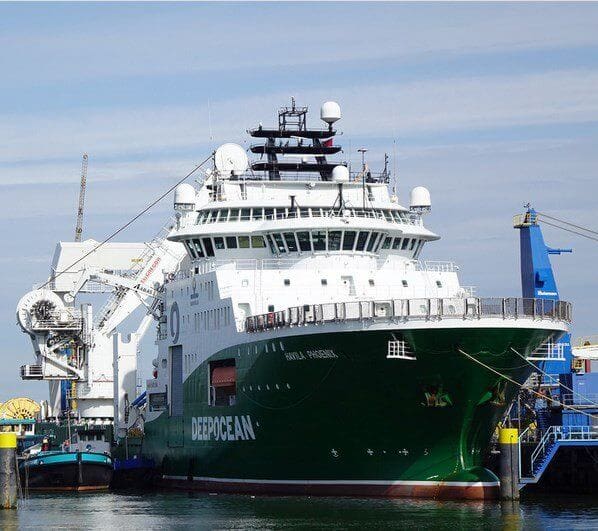
DeepOcean Bags Shell North Sea Survey Gig

0

DeepOcean AS, a subsidiary of DeepOcean Group Holding BV (DeepOcean), has been awarded a call-off contract for provision of ROV based Survey Services by Shell in the North Sea.

According to DeepOcean, the contract is for three years plus options.

“Shell in the Greater North Sea has been on our Client target list for a while now, and we are very pleased to receive this award. Also, we are keen to introduce our new generation high speed survey ROV vehicle – The Superior.

“By pushing survey speeds far beyond today’s standards for acoustic and visual data capture and processing, we expect Shell and our other Clients to see a direct effect on their overall survey cost in years to come,” says Ottar Maeland, DeepOcean’s EVP Greater North Sea.

Cable Works Start at Sandbank OWF

0

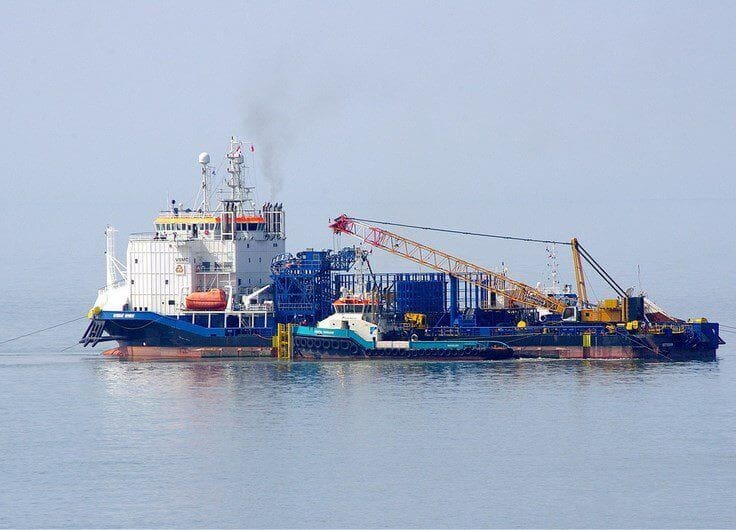
By laying in the first power cable between the monopiles “SB 28C” and “SB 29C” Vattenfall and Stadtwerke München (SWM) have started the so-called inner park cabling of the offshore wind farm Sandbank, 90 km west of the coast of Sylt.

The inner park cables are the “veins” of the wind farm, transporting the electricity from the 72 wind power plants to the farm’s offshore substation. Nine wind turbines are each connected to the offshore substation by a cable string. Each two strings can be connected to one another so as to ensure the operation of the turbines even in the case of cable damage.

All in all, approximately 96 km of cable are to be installed within the wind farm. In this process, two different cross-sections are employed: 630 mm2 and 185 mm2. The cables are produced by JDR Cables in Hartlepool, Great Britain. The main contractor of the inner park cabling is VBMS, based in the Netherlands. Further, the cables contain an optical fiber that not only allows for the data exchange between each wind turbine and the offshore substation, but also the remote control and surveillance of the wind farm by the Vattenfall Control Center in Esbjerg, Denmark.

To begin with, the cables are placed on the seabed and later they are injected at a minimum depth of 0.6 meters up to more than a meter into the bottom of the North Sea. This work is implemented by the cable-laying vessel “Stemat Spirit”. The vessel further undertakes the transport of the cable from Great Britain to the sea construction site at Sandbank.

The investment costs for the offshore wind farm Sandbank are around EUR 1.2 billion. Vattenfall holds a 51% stake in Sandbank Offshore Wind GmbH, which was set up to implement the project, while SWM holds a 49% stake. 72 Siemens wind power plants in the 4-megawatt (MW) class will be constructed, providing a total installed capacity of 288 MW. Sandbank is planned to be fully commissioned in 2017. This will give them a combined portfolio of 576 MW of installed wind capacity, making Vattenfall and SWM some of the largest operators of offshore wind farms in Germany.

Kemp: Decline Rates Will Ensure Oil Output Falls in 2016

0

“It takes all the running you can do to keep in the same place. If you want to get somewhere else, you must run at least twice as fast,” the Red Queen told Alice in Lewis Carroll’s novel “Through the Looking-Glass”.

Oil companies have to invest heavily simply to offset the impact of natural decline rates on their existing fields, and even more if they want actually to increase production.

The need for continued investment and drilling to maintain output as a result of the rapid decline rates on shale wells has been widely discussed.

But decline rates on conventional oil fields are even more important because they account for more than 90 percent of global production.

Decline rates on conventional fields will play a critical part rebalancing the oil market and determining where oil prices settle in the longer term.

Decline rates will cut output by several million barrels per day each year in 2016 and 2017 unless oil producers invest to maintain production levels from existing fields and develop replacement fields.

But with oil prices below $50 per barrel, almost all companies, from the super-majors to national oil companies and independents, are slashing exploration and production budgets hard to conserve cash.

Cuts will hit sustaining expenditure on existing fields as well as frontier exploration. In a typical example, Iraq’s oil ministry wrote to contractors on September 6 warning it will cut exploration and field development spending next year (“Iraq warns oil companies of spending cuts” Sep 14).

“Because of the drop in oil-sales revenues, the Iraqi government has sharply reduced the funds available to the Ministry of Oil,” the ministry told operators. “This will reduce the funds available for the reimbursement of petroleum costs to our contractors.”

Some of the cuts in spending reflect a successful efficiency drive and efforts to squeeze the costs of supplies and oilfield services. But there are also real cuts in exploration and development programmes which will have a direct impact on the replacement of declining output.

“Spending curbs are accelerating decline rates,” the International Energy Agency (IEA) cautioned in a recent editorial (“Oil Market Report” Sep 2015).

The agency predicts non-OPEC oil supply could decline as much as 500,000 barrels per day (bpd) in 2016 because of the capital strike, which would be the biggest annual fall in 24 years.

FIELD PROFILE

Production from a conventional field follows a well-defined pattern, ramping up quickly, then stabilising near the peak for a few years, before entering a long slow decline.

Output rises initially as the field is developed from a single well to a full array of producing holes deployed to drain the reservoir efficiently.

But as the oil, gas and water contained in the producing formations is depleted, pressure falls and the reservoir’s natural energy declines.

Eventually, production starts to fall as the wells flow more slowly and produce a higher proportion of water rather than oil.

Field operators employ a variety of strategies to prolong production as long as possible and delay the onset of natural decline or at least reduce the decline rate.

Associated gas brought to the surface with the oil can be re-injected to help maintain field pressure or gas can be pumped in from other sources.

Fields can be placed on artificial lift with the installation of surface beam pumps (the famous nodding donkeys) or more commonly these days the installation of downhole electric submersible pumps (ESPs).

And water, natural gas, carbon dioxide or special polymers can be injected into the fringes of the field to drive the remaining oil towards the producing wells (“Enhanced oil recovery: field case studies” 2013).

Field management plans can increase the ultimate amount of oil recovered significantly, but eventually the fate of all wells and fields is the same: they produce mostly water and are eventually shut down.

The operating costs of running the pumps and injecting water, gas or other materials eventually become greater than the value of the oil and the field becomes marginal and is abandoned.

DECLINE RATES

Based on an analysis of the production history of more than 1,600 conventional fields between 1950 and 2012, the IEA has estimated decline rates for a range of fields.

For fields which have passed their peak, observed output declined on average by 6.2 percent per year, according to the IEA (“World Energy Outlook 2013”).

Decline rates for offshore wells, especially in deepwater, are faster than for onshore fields because the greater upfront cost of drilling them encourages operators to develop them more aggressively to earn their money back.

Decline rates on smaller fields tend to be faster than those for larger ones, where different sections of the field can be developed over time.

And decline rates on non-OPEC fields tend to be faster than for OPEC fields, mostly because of the different mix of fields.

OPEC members in the Middle East and North Africa produce mostly from very large onshore fields which they have developed slowly to maximise and long-term revenues.

Non-OPEC production contains a much larger share of small and offshore fields which are depleted relatively quickly for commercial reasons.

Most of the fields within the IEA database have received some investment to offset the impact of natural decline rates.

The agency estimates this sustaining capital investment has typically reduced the decline rate by around 2.5 percent per year.

Without investment, the production from a mature oil field would decline by around 9 percent per year on average according to the IEA.

RED QUEEN’S RACE

The precise impact of decline rates on the 90 million barrels per day global oil industry is hard to calculate because some fields are still ramping up, while others are declining at different rates depending on age and type and the amount of sustaining investment.

In its 2013 World Energy Outlook, the IEA assumed an actual decline rate of 2 percent per year across all current conventional fields, rising to 4 percent per year in the 2020s.

But that projection was produced when oil prices were averaging well above $100 per barrel and expected to remain at that level throughout the second half of the current decade and into the 2020s.

In a world where oil prices are expected to average just $50-$70 per barrel over the next few years, actual decline rates could easily reach 3 percent or even 4 percent per year.

Under a range of plausible assumptions, decline rates could easily cut between 1.4 million and 3.6 million bpd from the output of existing fields in 2016 and again in 2017.

Some of that will be replaced by new fields discovered and given the go-ahead for development during the years of high prices and are scheduled to come into production in 2016 and 2017.

Beyond 2017, however, the pipeline of new fields scheduled to come onstream will remain very thin unless oil prices rise substantially.

In the meantime, oil companies must be induced to invest enough in existing fields to stem the impact of the remorseless decline from current wells.

But with oil prices stuck at less than $50 per barrel, and almost all companies cutting capital expenditure plans for 2016, it looks like decline rates will take over in 2016.

Unless prices recover, non-OPEC output is set to fall in 2016, and the IEA’s forecast 500,000 bpd cut could end up looking conservative.


Source
ROVs Remove Dangerous Fishing Nets from Deep Waters

0

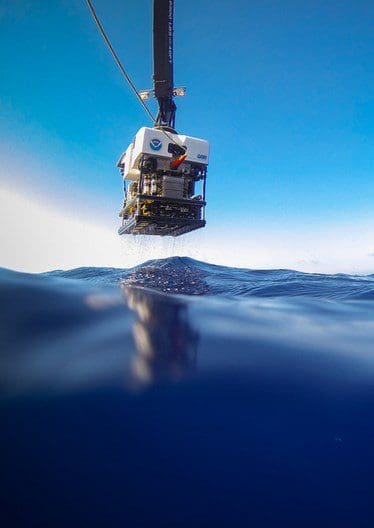
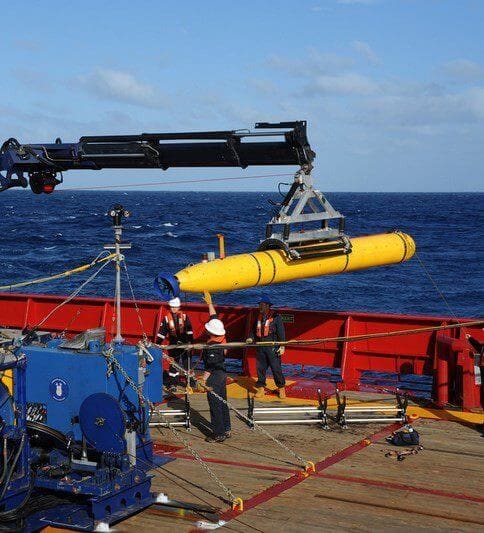
The Northwest Straits Foundation, based in Bellingham, Washington, in conjunction with Global Diving & Salvage has used a Saab Seaeye Cougar XT ROV and supporting Falcon ROV to remove derelict fishing nets  from deeper waters without adversely affecting the habitat.

The Foundation has already removed over 5,600 of these derelict fishing nets from the Puget Sound by employing skilled divers whose work is restricted to shallow areas of up to 105 feet in depth.

The project involved the design and fabrication of special tooling and the development of procedures and protocols to remove the nets.

Early in 2015, Global Diving and the Foundation’s field operations manager, Natural Resource Consultants, conducted a series of trials where the Cougar, supported by the Falcon, tested various procedures and tools necessary for working in diverse habitat conditions.

They found that recovery from the seabed was fully successful, whereas disentangling nets and gear from rocks is a challenging task.

In particular it is difficult to work in a sediment-disturbed environment where visibility is poor and where there is a risk of loose strands and segments of netting getting tangled with the Cougar – although using the Falcon to observe the task helps considerably.

Whilst it is possible to remove a whole net using the Cougar to secure lifting straps and winching it up to a vessel, this technique is not favoured as the net could rip apart into multiple pieces and need extended recovery.

The best solution found was to replicate the technique successfully used by divers in shallow waters: cut or untangle the net into manageable pieces before removal to the surface.

The recovery procedure starts with topside pilots using the Cougar’s navigational software and ultra-short baseline tracking to guide the ROV to a pre-determined derelict net site where a careful survey of the area is undertaken.

Then, using the various tools designed and fabricated by Global, the recovery team manoeuvres the Cougar into a safe position to utilise the two manipulators mounted on the vehicle ready to cut or untangle the nets before attaching a surface retrieval line, one section at a time.

During the procedure the Falcon provides video coverage, giving the Cougar operator an additional vantage point and an awareness of the surroundings, and is ready to assist the Cougar during recovery as needed.

Together with Global Diving and Natural Resource Consultants, the Foundation plans more tests to evaluate the feasibility of this method and determine the best tools and method needed for the task.


Source

OPEC Says The World Will Want More Of Its Oil Next Year

0

OPEC on Monday predicted higher demand for its crude oil next year, sticking to its view that a strategy of letting prices fall will tame the U.S. shale boom and cut a global surplus. The monthly report from the Organization of the Petroleum Exporting Countries also said a weaker outlook for China would contribute to slower global oil demand growth next year. “U.S. oil production has shown signs of slowing,” OPEC said in the report.

“This could contribute to a reduction in the imbalance of oil market fundamentals, however, it remains to be seen to what extent this can be achieved in the months to come.” OPEC said it expected demand for its crude next year to average 30.31 million barrels per day (bpd), up 190,000 bpd from last month, despite the slower demand growth overall due to a weaker outlook for Latin America and China Oil is trading below $50 a barrel, less than half its level of June 2014.

But OPEC has refused to cut output, seeking to recover market share by slowing higher-cost production in the United States and elsewhere that had been encouraged by OPEC’s former policy of keeping prices near $100. OPEC expects oil supply from non-member countries to increase by 160,000 bpd next year, a sharp slowdown from growth of 880,000 bpd in 2015. The predictions are, respectively, 110,000 bpd and 70,000 bpd less than forecast last month.

The 2016 forecast for U.S. tight oil production, also known as shale, was reduced by 100,000 bpd. OPEC’s move follows the U.S. government’s downward revision of domestic output announced in August. But OPEC did not go as far as the International Energy Agency, which on Friday said lower oil prices would force non-OPEC to cut output by the steepest rate in more than two decades next year.

OPEC also expects the recent strength in oil demand growth to moderate. It sees world oil demand growth slowing to 1.29 million bpd in 2016 – down 50,000 bpd from last month, from 1.46 million bpd in 2015. “For 2016, projections for oil demand development in China are slightly lower than anticipated in last month’s report amid expectations of slower economic activity than previously assumed,” OPEC said.

The report said OPEC members continue to boost supplies. According to secondary sources cited by the report, OPEC pumped 31.54 million bpd in August – up 13,000 bpd from July and 2.19 million bpd more than its prediction of the demand for its crude this year. Despite the higher demand it expects for OPEC crude in 2016, the report points to a 1.23 million bpd supply surplus in the market next year if the group kept pumping at August’s rate.

Saudi Arabia, the driving force behind’s OPEC’s refusal to cut output, told OPEC it trimmed production to 10.27 million bpd in August, a further decline from June’s record rate. 


Source

GUT in Need of AUV (Poland)

0

The Department of Ocean Engineering and Ship Technology, Gdansk University of Technology in Poland has issued a tender invitation for the delivery of an autonomous underwater floating vehicle (AUV).

The AUV should be fit for acoustics testing, and will be used under the framework of the project “Development of modern technical infrastructure for the implementation of a training programme of Engineers of the Future at the Technical University of Gdansk”.

The Faculty of Ocean Engineering and Ship Technology at Gdansk University of Technology (GUT) is the only ocean engineering faculty in Poland which has been educating ship engineers continuously since 1945.

The project is scheduled to last for 42 days, with potential value of $82K.

The deadline for the submission of tenders is October 13, 2015.


Source