Home Blog Page 19

Great Australian Bight May Generate $765M in N/T Exploration Spending

0

The Australian Petroleum Production & Exploration Association (APPEA) indicated Thursday that the development of a new oil province in the Great Australian Bight would deliver significant long-term economic benefits for Australia and South Australia.

APPEA South Australia – Northern Territory Director Matthew Doman said hearings of the Senate Environment and Communications References Committee “Inquiry into oil or gas production in the Great Australian Bight” in Adelaide today were an opportunity to answer questions and address concerns about the industry’s activities.

Doman said the economic case for the safe and sustainable development of a new oil province was clear.

He said finding a major new oil source would help address Australia’s widening trade deficit in a vital commodity.

“About 80 percent of the oil we use in Australia is imported, costing us around $26 million (AUD 34 billion) a year,” he said.

“Local production has been falling steadily. Australia has less than 10 years of proven domestic crude oil reserves left.

“The Great Australian Bight could be the new oil province that boosts our energy security for decades to come.”

Doman said the oil and gas industry was one of Australia’s highest value-add industries, generating highly-skilled, and high-wage jobs.

“Besides the thousands of people directly employed in upstream exploration and production, the industry employs many more people, directly and indirectly, in downstream processing, engineering and other services,” he said.

Doman said Australia’s regulatory regime had been transformed in the last five years to be truly world class. Its strengths included:

  • A single, independent regulator with deep expertise in the offshore environment
  • An unambiguous focus on rigorous risk assessment, free from political or other influences
  • A very conservative approach which requires risks to be reduced to as low as reasonably practicable; and
  • An objectives-based approach which is more flexible than prescriptive regulation and promotes continuous improvement

Doman said that if current plans were approved, the industry would spend more than $765 million (AUD 1 billion) on near-term exploration work.

“With proper regulatory oversight, there is no reason a safe, sustainable offshore petroleum industry should not be possible for South Australia, and that residents of the state should not benefit from the investment that will be made and jobs created,” Doman said.

“The industry’s record of safe, sustainable operations offshore in neighboring Victoria show that similar development could occur in the bight with minimal risk to the environment.”


Source

Cambodia Terminates Petroleum Agreement for CPHL-Held Offshore Block D

0

Mirach Energy Ltd. referred Thursday to its annual report dated April 1, and full year results announcements dated Feb. 29 and March 23; as well as the announcement dated Aug. 6, 2015 in relation to Cambodia Offshore Block D (Block D), held by our associate company CPHL (Cambodia) Co. Ltd. (CPHLC). We had subsequent to our annual general meeting held today received a letter from the Ministry of Mines and Energy (MME) of Cambodia. MME noted in the letter to CPHLC that it had terminated the Petroleum Agreement of Block D with immediate effect. Notwithstanding it also mentioned that MME would hold Block D for CPHLC for a six month period and will not allow any other investor to bid on Block D. CPHLC is given priority to apply for a new petroleum agreement for Block D on certain terms and conditions, including that of getting new investment partner(s) to bid for Block D under a joint venture. As CPHLC were only notified of such a decision today, the Company and its associate would explore and discuss the options viable for the Company before making a decision on the steps to be taken going forward. The Company will update shareholders on the outcome of negotiations with MME as it develops.


Source

Syncrude Says Alberta Oil Sands Mine Shut Down Because of Wildfire

0

The Syncrude oil sands project has completely shut down extraction at its Aurora bitumen mine and is operating other facilities at minimum levels, the result of the Fort McMurray wildfire, Chief Executive Mark Ward said on Friday. Syncrude in northern Alberta, majority-owned by Suncor Energy, is a mining and upgrading project that produced 315,000 barrels per day in the first quarter. It was on turnaround before the fire broke out, meaning production volumes were already reduced.


Source

Oil Drillers Dig for the Bottom for Rig Counts

0

For the past year and a half, a chart of the number of U.S. oil rigs in operation has resembled a death-defying ski slope – but soon it may be time to get back on the chair lift. The U.S. rig count may finally be bottoming out as U.S. oil companies look for oil prices to rally just a bit more, a signal that the time has come to deploy more capital and get production moving again, analysts say. The number of active oil rigs in the United States has fallen for seven consecutive weeks, as of data released Friday. Some believe the rig count will start to rise, as drillers plan to ramp up production if benchmark U.S. crude reaches the trigger level of $50 a barrel. U.S. crude prices hit a year-to-date high of $46.78 last week. In the past two weeks, oil producers including Anadarko Petroleum Corp and Pioneer Natural Resources have cited an improving outlook for oil prices, executives said on calls discussing earnings. Dave Lesar, chief executive of oilfield services provider Halliburton Co, said he believes the rig count has hit a bottom and likely will rise this year. The U.S. rig count generally reacts to prices with a three or four-month lag, so following the nadir for crude in February, it should bottom in the next month, Morgan Stanley’s head of energy commodity research Adam Longson said in a report this week. “The same analysis also suggests a notable increase in rig activity may be ahead – potentially reversing much of the decline over the past several months,” he wrote. Some companies are already resuming drilling on wells that had been put on hold, known as drilled-uncompleted projects, and planning to drill new wells. “Our estimates are that at $45-$50 WTI some of the light tight oil goes into production,” said Mark Routt, Chief economist in the Americas for KBC Advanced Technologies, referring to a technical name for the type of oil in shale formations. “When you have the front of the market lift, as it has done, it makes it that much easier to justify coming back on.” U.S. crude prices, after hitting their year-to-date high on April 29, have gained support from output disruptions in Canada during the past week, indicating that the market is becoming more responsive to fundamental supply concerns that have often failed to elicit a price response during the rout. Companies are expected to be cautious as they redeploy rigs, so the count will not rapidly accelerate and blunt the impact of the increase in crude prices. The current count of 332 rigs is unlikely to surge back to the 668 seen a year ago, to say nothing of 2014’s peak north of 1,600 rigs. Exploration and production companies have planned for capital expenditures at about half of last-year’s levels. If companies stay consistent with this guidance, the rig count should remain fairly flat, said Bob Brackett, a senior research analyst at Sanford Bernstein in New York. Brackett cited an analysis of drilling data from Texas showing a six-month lag between the time when rigs are deployed and when the well pad hits peak production. So even as rig counts increase slightly, “we still see a six-month lag with supply response,” Brackett said. Companies also are likely to be highly selective in which rigs they deploy as they increase drilling operations, said Fadel Gheit, senior energy strategist at Oppenheimer & Co. Companies are likely to only drill top wells as they will be wary that prices could decline again, he said. “It’s easier to cut than to redeploy,” said Gheit. “The companies have very little wiggle room, there is no room for error. You miss you’re dead.”


Source

CEO: EOG Can Post ‘Strong Returns’ at $40 Oil

0

EOG Resources Inc has the ability to post strong returns with oil prices around $40 a barrel, and would post triple-digit returns should prices spike to $60, Chairman and Chief Executive Bill Thomas told investors on Friday. Houston-based EOG, considered one of the most efficient U.S. drillers, has a $15-$20 per barrel cost advantage over the rest of the industry, which needs a “sustained $60-$65 oil price and 12 months of lead time” to deliver modest growth, Thomas said on a call to discuss first quarter results. Thomas said the company was focusing on “premium drilling,” which he defined as wells that can generate a return of at least 30 percent after taxes at $40 oil. The company also said its efforts at “enhanced oil recovery,” or getting more output from existing wells with relatively low investments, had been successful, particularly in the Eagle Ford shale play in South Texas. “It will get more efficient as we move forward, and lower-cost,” Thomas said. After falling 70 percent between mid-2014 and early 2016 amid a global glut, U.S. oil prices have recovered to trade above $45 per barrel on Friday, as a huge wildfire in Canada prompted substantial production cuts. The rout had prompted sharp declines in drilling and output in the United States, as prices fell below heavily indebted shale drillers’ breakeven costs. Prices will likely continue their rebound, Thomas said, as those declines in U.S. production along with strong gasoline demand help the market rebalance. But continuing cost reductions by U.S. horizontal drillers like EOG have fueled speculation that substantial U.S. production could come back online even without a sharp uptick in prices. Rival drillers, as well as service companies, have indicated that a price rise above $50 a barrel could fuel a resurgence in the U.S. shale industry. EOG posted a net loss of 83 cents per share in the quarter, beating Wall Street estimates for an 84 cent-per-share loss. EOG shares were down 2.7 percent at $79.04 on Friday morning.


Source

Oil Pares Weekly Drop as Wildfire Disruptions Battle Oversupply

0

Oil pared its first weekly decline in more than a month as oil-sands disruptions in Canada and lower U.S. output offset rising stockpiles and OPEC production.

A wildfire in Alberta has shut more than one million barrels a day of oil-sands output capacity after workers were evacuated, while production sites have so far escaped damage. U.S. crude inventories rose to the highest since 1929 while output dropped the most in eight months last week, a government report on Wednesday showed. OPEC output climbed in April amid gains from Iran and Iraq, according to data compiled by Bloomberg.

“The market is internalizing how much outage it may have in Canada versus the increases in production elsewhere,” Harry Tchilinguirian, head of commodity markets strategy at BNP Paribas in London, said by telephone. “You have some of these unplanned outages being offset by increases in OPEC production.”

West Texas Intermediate for June delivery rose 34 cents to settle at $44.66 a barrel on the New York Mercantile Exchange after reaching an intraday high of $45.34 a barrel following a report that showed U.S. employers in April added the fewest workers in seven months. Prices declined 2.7 percent this week, the first weekly drop since the week ended April 1.

Brent for July settlement climbed 36 cents, or 0.8 percent, to end the session at $45.37 a barrel on the London-based ICE Futures Europe exchange. Prices dropped about 6 percent this week. The global benchmark was at a premium of 5 cents to WTI for July.

Prices remain about 60 percent below their peak in mid-2014 as the global oversupply persists. U.S. stockpiles swelled to 543.4 million barrels last week, according to the Energy Information Administration. Citigroup Inc. predicts inventories will expand further to a record before starting a seasonal slide. The Organization of Petroleum Exporting Countries pumped 33.22 million barrels a day last month, according to data compiled by Bloomberg. Iraq increased output by 160,000 barrels, while Iran boosted production by 300,000 barrels to the highest level since December 2011.

Canadian Wildfire

Suncor Energy Inc., Royal Dutch Shell Plc and Husky Energy Inc. are among companies that shut plants or reduced production due to the wildfires in Alberta. The fire has caused the evacuation of more than 80,000 people in Fort McMurray, the town at the heart of the Athabasca deposit, one of three large bitumen reserves that make up Alberta’s oil sands.

The number of active oil rigs fell to 328 this week, the least since October 2009, according to Baker Hughes Inc. U.S. production slid by 113,000 barrels a day to 8.83 million last week, the biggest weekly drop since August 2015, according to the EIA report released on Wednesday.

More oil-market news:

Chevron Corp. said about 90,000 barrels a day of production had been affected by an attack on its Okan facility in the Niger Delta. Halliburton Co. has joined rival Schlumberger Ltd. in curbing activity in Venezuela due to lack of payment during the oil industry’s worst financial crisis. The odds of a Libyan oil revival are diminishing amid intensifying conflict between factions that is crippling production and exports. Damage to South Sudan’s oil fields after more than two years of civil war will hamper plans to boost output, Petroleum Minister Dak Duop Bischok said.


Source

Statoil Scraps Plans to Reduce Helicopter Turn-around Times Along with Other Proposed Cuts

0

Top executives at Norwegian oil company Statoil have responded to workers’ concerns and even fears over their helicopter transport to North Sea oil and gas fields.

After Friday’s fatal crash of a helicopter near Bergen, Statoil has decided to delay implementation of proposed cutbacks in its helicopter program that were aimed at making it more efficient.

Workers, and not least the leaders of their labour unions, had claimed the efficiency efforts could undermine safety. Both Statoil and the helicopter firms bidding for new transport contracts have strongly denied that, but Statoil has decided to wait with putting what it now stresses were mere “proposals” into effect.

They included cutting helicopters’ “turn-around” time between flights by half, and demanding financial compensation from helicopter companies that don’t maintain flight schedules. Newspaper Dagens Næringsliv (DN) reported Wednesday that Arne Nylund, in charge of Statoil’s North Sea oil fields, seemed to have listened to workers who felt Statoil’s cost-cutting and efficiency programs had gone too far.

‘Won’t be implementing (changes) now’

Nylund downplayed the cutbacks Statoil had demanded of helicopter companies during negotiations for new contracts due to take effect next year. He told DN the proposed cutbacks were “a possibility we have looked at in connection with the contract process, but it’s (just) a possibility and it’s not impemented. It’s important to stress that we won’t be implementing something like it now.”

Nylund told DN Statoil would also discuss the proposals with employee representatives before a new helicopter contract takes effect on May 1, 2017.

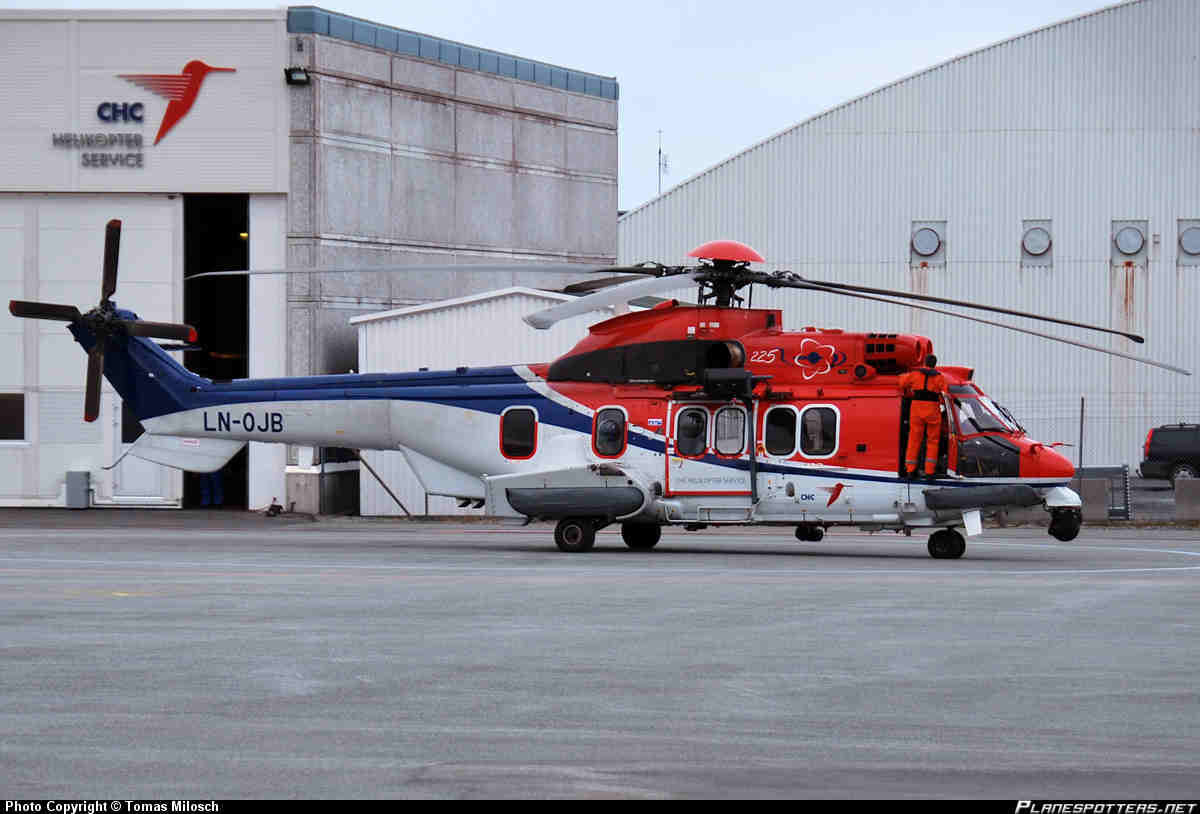
The new contract in question won’t be with CHC Helikopter Service, the company that operated the Airbus Super Puma EC225 helicopter that crashed at Turøy while on approach for landing at Bergen’s Flesland airport on Friday. CHC lost that contract in the bidding against Bristow Norway AS, which will take over all offshore transport from Bergen and Florø for five years from the middle of next year. Bristow doesn’t use the controversial Super Pumas either, with Sikorsky S-92 helicopters making up its fleet. They’re reported to be widely preferred by workers commuting to their jobs on offshore oil and gas platforms. Statoil officials pointed out, though, that both the Airbus EC225s and the Sikorskys were “accepted helicopter models” during the bidding process.

‘Super Puma’ helicopters still grounded in Norway

The Airbus EC225s were immediately grounded worldwide by Airbus itself, but it withdrew the grounding order just two days after the crash in Norway that killed all 13 people on board. Even though accident investigators have concluded that the crash was the result of technical and not human error, Airbus claims the accident doesn’t involve “systematic” technical failure and that the Super Puma EC225s are safe to fly.

Norwegian aviation authorities at state agency Luftfartstilsynet, however, have retained a grounding order for the EC225s in Norway. “For us, it’s important that we have as certain information as possible about the flight capabilities of this model before we lift the ban on flying them,” Tor O Iversen, communications director for the authorites, told DN.

Friday’s crash occurred after eyewitnesses saw the helicopter’s rotary blades separate from the aircraft itself. Investigators said it may take more than a year to examine the badly mangled wreckage and pinpoint the cause of the technical malfunction, which they said happened so quickly that neither of the two pilots onboard managed to send out a mayday signal or give any indication of an emergency situation.

Nylund and other Statoil executives have been stung by harsh criticism from union officials who have suggested the company’s extensive cost-cutting programs, initiated even before oil prices started to dive, can affect safety. While acknowledging efforts to use fewer helicopters that will be in service more often, and therefore reduce costs, Nylund claimed there would be no reduction in actual security checks of aircraft. The halving of “turn-around” times applies only to baggage handling, passenger boarding and refueling, he said, claiming it was “out of the question” to reduce security checks.

“The pilots shall not feel any pressure to compromise safety,” Nylund said. “A captain is the master and has complete authority over whether a helicopter is ready to fly or not. We respect that.”

Nylund stressed that efficiency will not come at the cost of safety. With the company in mourning, after losing one of its own employees on Friday along with 10 others working on Statoil’s Gullfaks B platform, Nylund stated that “no one benefits from more accidents, on the contrary. Efficiency should make operations more reliable. There should be no conflict between efficiency and safety.”

Top executives at Norwegian oil company Statoil have responded to workers’ concerns and even fears over their helicopter transport to North Sea oil and gas fields.

After Friday’s fatal crash of a helicopter near Bergen, Statoil has decided to delay implementation of proposed cutbacks in its helicopter program that were aimed at making it more efficient.

Workers, and not least the leaders of their labour unions, had claimed the efficiency efforts could undermine safety. Both Statoil and the helicopter firms bidding for new transport contracts have strongly denied that, but Statoil has decided to wait with putting what it now stresses were mere “proposals” into effect.

They included cutting helicopters’ “turn-around” time between flights by half, and demanding financial compensation from helicopter companies that don’t maintain flight schedules. Newspaper Dagens Næringsliv (DN) reported Wednesday that Arne Nylund, in charge of Statoil’s North Sea oil fields, seemed to have listened to workers who felt Statoil’s cost-cutting and efficiency programs had gone too far.

‘Won’t be implementing (changes) now’

Nylund downplayed the cutbacks Statoil had demanded of helicopter companies during negotiations for new contracts due to take effect next year. He told DN the proposed cutbacks were “a possibility we have looked at in connection with the contract process, but it’s (just) a possibility and it’s not impemented. It’s important to stress that we won’t be implementing something like it now.”

Nylund told DN Statoil would also discuss the proposals with employee representatives before a new helicopter contract takes effect on May 1, 2017.

The new contract in question won’t be with CHC Helikopter Service, the company that operated the Airbus Super Puma EC225 helicopter that crashed at Turøy while on approach for landing at Bergen’s Flesland airport on Friday. CHC lost that contract in the bidding against Bristow Norway AS, which will take over all offshore transport from Bergen and Florø for five years from the middle of next year. Bristow doesn’t use the controversial Super Pumas either, with Sikorsky S-92 helicopters making up its fleet. They’re reported to be widely preferred by workers commuting to their jobs on offshore oil and gas platforms. Statoil officials pointed out, though, that both the Airbus EC225s and the Sikorskys were “accepted helicopter models” during the bidding process.

‘Super Puma’ helicopters still grounded in Norway

The Airbus EC225s were immediately grounded worldwide by Airbus itself, but it withdrew the grounding order just two days after the crash in Norway that killed all 13 people on board. Even though accident investigators have concluded that the crash was the result of technical and not human error, Airbus claims the accident doesn’t involve “systematic” technical failure and that the Super Puma EC225s are safe to fly.

Norwegian aviation authorities at state agency Luftfartstilsynet, however, have retained a grounding order for the EC225s in Norway. “For us, it’s important that we have as certain information as possible about the flight capabilities of this model before we lift the ban on flying them,” Tor O Iversen, communications director for the authorites, told DN.

Friday’s crash occurred after eyewitnesses saw the helicopter’s rotary blades separate from the aircraft itself. Investigators said it may take more than a year to examine the badly mangled wreckage and pinpoint the cause of the technical malfunction, which they said happened so quickly that neither of the two pilots onboard managed to send out a mayday signal or give any indication of an emergency situation.

Nylund and other Statoil executives have been stung by harsh criticism from union officials who have suggested the company’s extensive cost-cutting programs, initiated even before oil prices started to dive, can affect safety. While acknowledging efforts to use fewer helicopters that will be in service more often, and therefore reduce costs, Nylund claimed there would be no reduction in actual security checks of aircraft. The halving of “turn-around” times applies only to baggage handling, passenger boarding and refueling, he said, claiming it was “out of the question” to reduce security checks.

“The pilots shall not feel any pressure to compromise safety,” Nylund said. “A captain is the master and has complete authority over whether a helicopter is ready to fly or not. We respect that.”

Nylund stressed that efficiency will not come at the cost of safety. With the company in mourning, after losing one of its own employees on Friday along with 10 others working on Statoil’s Gullfaks B platform, Nylund stated that “no one benefits from more accidents, on the contrary. Efficiency should make operations more reliable. There should be no conflict between efficiency and safety.”

Source

Anadarko Strikes Oil Off Ivory Coast

0

The U.S. independent oil company Anadarko has hit net pay at its CI-103 block, offshore Ivory Coast.

In its quarterly results presentation on Monday, the company revealed it struck approximately 100 net feet of vertical pay in the company’s first horizontal deepwater well at Paon-5A, offshore the West African country. The company is using the Bolette Dolphin drillship for the operations in Ivory Coast.

Furthermore, the company, which operates the block with a 65 percent stake, said it plans to drill the Paon-3AR sidetrack well in the second quarter, followed by a drillstem and interference testing program.

The company says that the data from these operations are expected to provide insight on reservoir connectivity, deliverability, fluid properties and reservoir size, moving the Paon discovery toward commerciality.

To remind, Anadarko made the Paon discovery back in 2012. The discovery proved that the Upper Cretaceous fan system present offshore Ghana also extended westward into Ivory Coast.

Anadarko owns an operated working interest in four blocks offshore Ivory Coast totaling approximately 1.0 million gross acres. The CI-103 block, where the Paon prospect is located, is operated by Anadarko with a 65% working interest. In each CI-527, CI-528, and CI-529 the company has 90% working interest.

As announced on Tuesday, Pelican (CI-527) and Rossignol (CI-528) exploration wells, both operated by Anadarko, are planned for drilling after the Paon appraisal program.

Following the completion of drilling in Ivory Coast, the Bolette Dolphin drillship will go back to Colombia to conduct additional exploration drilling activities for Anadarko.


Source

Shell Sees Sharp Drop in Profit

0

Oil major Royal Dutch Shell on Wednesday posted a sharp drop in its first quarter 2016 earnings over low oil prices and weaker refining industry conditions. The company is planning to reduce its spending in 2016 to $30 billion.

The results are the first that Shell has posted after the acquisition of its rival BG Group in February.

Royal Dutch Shell’s first quarter 2016 current cost of supplies (CCS) earnings attributable to shareholders were $0.8 billion, compared with $4.8 billion for the same quarter a year ago.

Excluding identified items, Shell’s first quarter 2016 CCS earnings attributable to shareholders were $1.6 billion, compared with $3.7 billion for the first quarter 2015, a decrease of 58%. According to Reuters, analysts expected $1.04 billion.

Compared with the first quarter 2015, Shell said CCS earnings attributable to shareholders excluding identified items were impacted by the decline in oil, gas and LNG prices and weaker refining industry conditions. Earnings benefited from lower operating expenses, as steps taken by Shell to reduce costs more than offset the increase in operating expenses associated with BG, the oil giant said.

Royal Dutch Shell Chief Executive Officer Ben van Beurden commented: “We continue to reduce our spending levels, to capture cost opportunities and manage the financial framework in today’s lower oil price environment. The combination with BG is off to a strong start, as a result of detailed forward planning before the completion of the transaction. This will likely result in accelerated delivery of the synergies from the acquisition, and at a lower cost than we originally set out.

“Putting all of this together, capital investment in 2016 is clearly trending toward $30 billion, compared to previous guidance of $33 billion, and some 36% lower than combined Shell and BG investment in 2014.

“Annual operating expenses excluding identified items are trending towards a run rate of $40 billion compared with 2014 combined spend of around $53 billion.

“In practice, we expect to absorb BG’s capital investment and operating expenses during 2016, with no net increase overall, compared with Shell stand alone in 2015.

“We will continue to manage spend, through dynamic decision-making across the organisation, taking advantage of opportunities from both the deflating market and the two companies coming together.”


Source

Jobs Lost in Shake-up at Industry Body Oil and Gas UK

0

Jobs have been lost at industry body Oil and Gas UK as the organisation cuts back on staff and services.

The group has made a “small number” of people redundant as the result of a shake-up which it says will allow it to support its members better.

Oil and Gas UK has also reduced the number of work groups it runs by 40% as it shifts its focus towards supporting a maturing North Sea.

Since the start of 2015, the number of people employed there has fallen from 62 to 53.

Chief executive Deirdre Michie said: “The new model, which has been endorsed by Oil and Gas UK’s audit committee and board, allows us to deliver a membership focus with a clearer value proposition.

“It will also enable us to work even more effectively with industry to develop policy in support of the sector’s specific needs and issues.

“Our vision is to ensure that the UK Continental Shelf becomes the most attractive mature oil and gas province with which to do business and we have revised our organisation and identified objectives to help us realise that aim.

“We will continually review the effectiveness of the new business model to ensure that it remains fit for purpose.”


Source