Home Blog Page 18

Sevan Marine: Continuation of FLNG feasibility study with US oil major

0

Reference is made to the paid FLNG feasibility study announced in Q3 2015 for the use of Sevan Marine’s cylindrical hull for a specific FLNG development. Sevan Marine is pleased to announce that it has agreed a continuation of this work. Sevan Marine has been awarded a follow up study focused on the marine aspects of Sevan Marine’s unique cylindrical design. The study is expected to generate approximately 9,000 hours of paid engineering work through 2016. This positive endorsement of Sevan Marine’s technology represents yet a further milestone in the development of Sevan Marine’s FLNG concept.

Sevan Marine ASA is specializing in design, engineering and project execution of floating units for offshore applications, based on its patented cylindrical floater technology. Sevan Marine ASA is listed on Oslo Børs with ticker SEVAN.


Source

Direct-drive permanent magnet shaft generator solution for world’s first LNG fueled handysize bulk carriers

0

WE Tech Solutions (WE Tech), a leading energy efficiency solutions provider in the marine industry, has received an order to deliver its direct-drive permanent magnet shaft generator solution to two new 25,600 dwt dual-fueled handysize bulk carriers, with an option for two more. The Switch, a technology specialist of megawatt-class permanent magnet (PM) machines for advanced marine drive trains, will deliver the PM shaft generators to be used in the solutions provided by WE Tech. The vessels are owned by the Finnish ship owner ESL Shipping Ltd., and built at Qingshan Shipyard of Sinotrans & CSC SBICO in China. ESL Shipping Ltd. is the leading carrier of dry bulk cargoes in the Baltic Sea region. The ship owner chose PM shaft generator technology to support its sustainability strategy and start a new era in green shipping within pollution-sensitive seaways.

These new, ice-class 1A ships will be the first LNG dual-fueled handysize bulk carriers in the world, representing the latest in technology and innovation. The aim of these new-build vessels is to raise the bar when it comes to energy efficiency and sustainability. Thanks to the focus on environmental benefits and cost savings that the advanced technology can provide, the vessels will also be more profitable for their owners. “With the active front-end low harmonic drive technology (WE Drive™) and the permanent magnet shaft generator technology in our solution, the energy efficiency of the machinery reaches unmatched levels in the marine industry,” says Martin Andtfolk, Sales Manager of WE Tech.

Using the Power Take Out (PTO) mode, WE Drive™ enables propulsion machinery to operate in combinator/variable speed while the direct-drive permanent magnet shaft generator produces electrical power up to 700 kW for the vessel’s electrical network. Significant savings can be achieved by drastically decreasing the operating hours of the auxiliary generators, as well as reducing the need for maintenance. Using the Power Take In (PTI) mode, WE Drive™ converts auxiliary generator power to propulsion power by employing the direct-drive permanent magnet shaft generator as an electrical motor. The solution is utilized to boost the propulsion system with 1250 kW mechanical power when operating in demanding conditions.

According to Mika Koli, Business Development Manager from The Switch: “The market has now recognized that a PM shaft generator is the most energy-efficient way to generate power in a vessel.” The choice of The Switch PMM 1000 shaft generator, the most common type delivered to date, is very suitable for this type of bulk carrier vessel. It is installed directly on the propeller line and allows extremely high energy efficiency, especially in part loads.

The delivery from WE Tech is scheduled for March 2017. The vessels will begin operation in the Baltic Sea in early 2018. “Our vision is 30% less fuel consumed in the global shipping industry by 2030,” says Mårten Storbacka, Managing Director of WE Tech. “This is a perfect example of implementing advanced drive train solutions for green shipping. ESL’s goal of operating extremely energy-efficient LNG-fueled bulk carrier vessels is further supported by the choice of The Switch PM shaft generator.”


Source

Rosneft deliver its first LNG shipment

0

Rosneft Trading SA, a company of Rosneft Group, delivered its first LNG shipment as part of its contract with Egyptian Natural Gas Holding Company. The delivery of the cargo was made by the GOLAR ICE tanker to the Ain Sukhna port within the Master LNG Supply and Purchase Agreement signed in August 2015.

The delivered cargo of LNG is the first one in Rosneft’s operational history. This result demonstrates the elevated level of trading expertise of the Company (the LNG cargo was acquired within an efficient international spot contract).

Transformational changes in the global LNG-trading market, consisting of rising volumes of spot deals, open extensive prospects for the growth potential of the Company’s trading arm. The combination of Rosneft group’s spot and long-term contracts will allow maximizing the economic efficiency of its deals whilst guaranteeing a stable LNG-marketing outlet.


Source

Africa Oil announces significant increase 2C Oil Resources

0

Africa Oil Corp. (“Africa Oil”, “AOC” or the “Company”) (TSX:AOI)(OMX:AOI) is pleased to announce that an independent assessment of the Company’s Contingent Resources in the South Lokichar Basin located in Blocks 10BB and 13T in Kenya has been completed by DeGolyer and MacNaughton Canada Limited (“DMCL”).

The estimated gross 2C unrisked resources in the South Lokichar Basin, Kenya have increased by 150 million barrels (or 24%) to 766 million barrels of oil (Development Pending: 754 million barrels and Development Unclarified: 12 million barrels).

Keith Hill, President and CEO, commented, “DMCL’s independent assessment confirms a significant increase in Contingent Resources for the South Lokichar Basin in Northern Kenya. Based on the continuing drilling and testing program over the past year our best estimate is now that the Company’s discoveries in the South Lokichar Basin contain gross unrisked Contingent Resources of 766 million barrels of oil (2C estimate) (Development Pending: 754 million barrels and Development Unclarified: 12 million barrels), an increase of 24% on previous estimates, and may contain as much as 1.63 billion barrels of gross oil Contingent Resources (3C estimate), an increase of 26%. The level of these resources gives us confidence that we will exceed the threshold required for development and we continue to push forward for development sanction during 2017.”

The effective date of this resource evaluation is December 31, 2015. Subsequent to this date, AOC completed a farmout transaction with Maersk Olie og Gas A/S (“Maersk”), whereby Maersk acquired 50% of Africa Oil’s interest in Blocks 10BB and 13T, amongst others. Accordingly, the net contingent resources described below do not represent AOC’s current working interest of 25% in these blocks nor its actual Net Entitlement volumes under the terms of the Production Sharing Contracts (“PSCs”) that governs the asset, which would be lower.

The independent assessment of the Company’s Contingent Resources in the South Lokichar Basin located in Blocks 10BB and 13T in Kenya has been completed by DMCL in accordance with the standards established by the Canadian Securities Administrators in National Instrument 51-101 Standards of Disclosure for Oil and Gas Activities with an effective date of December 31, 2015.

Project Description

AOC and its JV partners have completed a substantial exploration and appraisal program across eight discoveries within the South Lokichar Basin, northwest Kenya. The high quality sweet, waxy crude is reservoired in the fluvial and lacustrine sands of the Auwerwer and Lokone reservoirs. The South Lokichar Basin fields have been subject to an extensive data acquisition and analysis program including a large number of production and inter-well interference tests to demonstrate productivity and reservoir connectivity.

Pre-FEED engineering studies have been completed on the production facilities and crude oil pipeline export route. The main fields of the South Lokichar Basin will be developed using wells drilled from multi-well pads and using a secondary recovery waterflood scheme. Given the waxy nature of the reservoir fluids, heated water injection will be required in addition to artificial lift on the production wells to maximize oil recovery efficiency. A heated, insulated export pipeline will be required to transport crude oil to the loading facilities at the port of Lamu.

A draft field development plan was submitted to the Kenyan regulatory authorities in December 2015. An update to the field development plan is expected in 2016 with a target for government development approval and Final Investment Decision (“FID”) in 2017.

Contingencies

The key contingencies associated with the development of the South Lokichar Basin by Africa Oil Corp. and its joint venture partners are as follows:

Regulatory Contingencies

All of the Kenyan discoveries are located within Exploration Contracts; the Government of Kenya has extended these Exploration Contracts, per the terms of the Block 10BB and Block 13T Production Sharing Agreements, to allow further exploration and appraisal. Conversion of these permits to production permits has yet to be agreed.

Regulatory support and approval will be required for the commercialisation of the Company’s Kenyan Contingent Resources to proceed. In accordance with the Company’s Production Sharing Contracts and joint venture agreements, field development plans must be agreed by the Company and its joint venture partners before submission for approval by the government. Oil production from the South Lokichar Basin development will be the first commercial production in Kenya. A draft Field Development Plan has been submitted to the regulatory authorities in Kenya in December 2015, primarily to facilitate discussion between the Block 10BB/13T joint venture partners and the government as the development moves towards sanction. An update to this draft Field Development Plan is expected to be submitted during 2016 prior to government approval for the development.

The probability of removing Regulatory Contingencies has been assessed as 95%.

Market Access Contingencies

Kenya has limited oil infrastructure and no export facilities currently in place. The discoveries in Blocks 10BB and 13T are remote and cannot be delivered to market without significant infrastructure investment. The Lokichar Basin is in a remote part of Kenya, approximately 850 km from the most likely point of export at Lamu. New build pipeline infrastructure and road upgrades will be required to permit field development and production export for these resources. Although technical work has been completed by and on behalf of the Block 10BB/13T joint venture partners on crude oil export route options, there are presently no commercial agreements in place facilitate the pipelines construction or operation.
Pipeline tariffs have been estimated for the purposes of the economic evaluation based on pre-FEED cost estimates and forecasted production volumes for a regional export pipeline system. Pipeline tariffs may vary depending on achieving a regional or Kenya standalone pipeline solution.

The chance of removing Market Access Contingencies has been assessed as 90%.

About Africa Oil Corp.

Africa Oil Corp. is a Canadian oil and gas company with assets in Kenya and Ethiopia. The Company is listed on the Toronto Stock Exchange and on Nasdaq Stockholm under the symbol “AOI”.


Source

Global market for fracking water treatment equipment driven by increased demand for treating wastewater from oil wells

0

The rising demand for water and increasing scarcity of fresh water supplies are considered as the major factors propelling the global market for fracking water treatment equipment. In addition, the conflicts related to the water have further augmented the growth of the market and have resulted in the development of water recycling equipment. These increasing demands are further developing the fracking market across the globe and offering new and innovative recycling technologies.

The centralized approach adopted in order to treat wastewater has offered treatment for the full life cycle of wells, resulting in potential opportunities for the global market for fracking water treatment equipment. The adoption of this technique assists in saving several gallons of water and is expected to gain traction in the North America market in the next few years.

The major companies operating in the global market for fracking water treatment equipment are spending huge amounts on research and development activities in order to introduce new and innovative equipment for efficient wastewater treatment. In addition, the oil and gas drillers across the globe are pushed by the regulation and increasing competition over water, which have led to on-site water treatment and the growing demand for hydraulic water treatment equipment. Moreover, the stringent regulatory aspects regarding the use of such equipment have further created several growth opportunities for the global market for fracking water treatment equipment.

Get free research report PDF for more Professional and Technical insights:http://www.transparencymarketresearch.com/sample/sample.php?flag=B&rep_id=2906

Furthermore, the research studies the major players operating in the global market for fracking water treatment equipment and provides a detailed vendor analysis for the same. The company profiles, product portfolio, financial overview, SWOT analysis, business strategies, and major merger and acquisitions have been included in the research report. Some of the leading players mentioned in the study are Total Separation Solutions, GASFRAC Energy Services Inc., Altela, Inc., Oasys Water, Inc., Schlumberger Ltd., and Halliburton Co.

A new market research study by Transparency Market Research offers a detailed analysis of the global market for fracking water treatment equipment. The study, titled “Fracking Water Treatment Equipment Market – Global Industry Analysis, Size, Share, Trends, Analysis, Growth and Forecast 2014 – 2020,” further talks about the major growth drivers, barriers, major geographical segments, product segmentation, and competitive landscape of the market.

The study has also made use of several analytical tools to determine the growth opportunities in the global market. The historical data and future statistics of the market have also been mentioned in the research study with the assistance of tables, charts, graphs, and infographics. The global market for fracking water treatment equipment has been segmented on the basis of product type, technology, and application. The market share for each segment has been included in the research report.

Research Report:http://www.transparencymarketresearch.com/fracking-water-treatment-equipment.html

About TMR

Transparency Market Research (TMR) is a market intelligence company driven by high-pedigree consultants and researchers. TMR leverages its Syndicated Research, Custom Research, and Market Consulting expertise to help businesses make accurate decisions. TMR’s exclusive blend of quantitative forecasting and trends analysis draws on proprietary data sources and techniques, while their data repository is continuously updated to reflect the latest trends.

Contacts

Transparency Market Research

Mr. Sudip S, +1-518-618-1030

USA-Canada Toll Free: 866-552-3453

sales@transparencymarketresearch.com

http://www.transparencymarketresearch.com/


Source

Forum Subsea Rentals invests in multi-million rental order

0

Forum Subsea Rentals, a subsidiary of Forum Energy Technologies, Inc., has further strengthened its global offering of state-of-the-art rental equipment by placing a multi-million dollar equipment order with subsea technology provider, Sonardyne International Ltd.

This order demonstrates Forum’s commitment to long-term growth and continued investment in new equipment to ensure customers are offered the latest, cost-effective rental solutions coupled with assurance of reduced downtime by utilising new assets.

Some of the equipment ordered will deployed within Forum’s global rental pool, however the majority is committed to secured field development projects in West Africa and North Africa. I

Included in the order are multiple Ranger 2 GyroUSBL acoustic positioning systems which combine Sonardyne’s 6G acoustic positioning transceiver technology and a Lodestar AHRS sensor in the same mechanical assembly. These systems are ideally suited for quick deployments on vessels of opportunity as without need for a USBL calibration to determine the alignment of the ship’s motion sensors to the acoustic transceiver, they provide significant saving in vessel time and operational costs.

Richard Main, Operations and Global Asset Manager for Forum Subsea Rentals, said: “Our continued investment in new products is essential to ensure the long term reliability and dependability of the Forum Subsea Rentals global fleet. Even given the downturn in the industry, demand for Sonardyne 6G equipment remains high and this further investment in the technology will ensure that we are well placed to meet our customers’ requirements and position us well when the market recovers.”

Alan MacDonald, Sales Manager for Sonardyne, commented: “Forum Subsea Rentals has long been a rental supplier of Sonardyne equipment and we’re delighted with the continued demand for 6G to support important field development projects. This latest investment demonstrates continued commitment to providing its customers with the best available and lowest risk subsea technology for all their survey and construction campaigns.”


Source

Kosmos Energy announces significant gas discovery offshore Senegal

0

Kosmos Energy (NYSE: KOS) announced today that its Teranga-1 exploration well offshore Senegal has made a significant gas discovery.

Located in the Cayar Offshore Profond block approximately 65 kilometers northwest of Dakar in nearly 1,800 meters of water, the Teranga-1 well was drilled to a total depth of 4,485 metres. The well encountered 31 meters (102 feet) of net gas pay in good quality reservoir in the Lower Cenomanian objective. Well results confirm that a prolific inboard gas fairway extends approximately 200 kilometers from the Marsouin-1 well in Mauritania through the Greater Tortue area on the maritime boundary to the Teranga-1 well in Senegal. Kosmos has now drilled five consecutive successful exploration and appraisal wells in this fairway with a 100 percent success rate. In the process, the company has discovered a gross Pmean resource of approximately 25 Tcf and estimates the fairway may hold more than 50 Tcf of resource potential.

Andrew G. Inglis, chairman and chief executive officer, said: “Our continuing exploration success demonstrates we have opened a super-major scale basin offshore Mauritania and Senegal with world-class resource potential. Given the scale and quality of the gas resource discovered along the inboard trend, our focus is to move this resource through to development. Our forward exploration plan is to mature the two independent tests with oil potential in northern Mauritania and in the outboard of Mauritania and Senegal for drilling in 2017.”

Kosmos holds a 60 percent interest in the Teranga-1 well, along with Timis Corporation Limited at 30 percent and Société des Pétroles du Sénégal (Petrosen) at 10 percent. Since 2014, Kosmos has held rights to conduct exploration in the St. Louis Offshore Profond and Cayar Offshore Profond license areas under production sharing contracts with the Government of Senegal.

About Kosmos Energy

Kosmos Energy is a leading independent oil and gas exploration and production company focused on frontier and emerging areas along the Atlantic Margin. Our assets include existing production and other major development projects offshore Ghana, as well as exploration licenses with significant hydrocarbon potential offshore Mauritania, Portugal, São Tomé and Príncipe, Senegal, Suriname, Morocco and Western Sahara. As an ethical and transparent company, Kosmos is committed to doing things the right way. The Company’s Business Principles articulate our commitment to transparency, ethics, human rights, safety and the environment. Read more about this commitment in the Kosmos 2014 Corporate Responsibility Report. Kosmos is listed on the New York Stock Exchange and is traded under the ticker symbol KOS.


Source

Low oil prices, global economic uncertainty and domestic consumer debt worries weighing on Canadian economy

0

The decline in commodity prices, subpar global economic growth and overstretched Canadian consumers will limit Canada’s real GDP growth to 1.6 per cent in 2016, according to The Conference Board of Canada’s Canadian Outlook: Spring 2016. While modest, this is an improvement over last year’s growth of 1.2 per cent.

“The decline in energy prices has stripped more than $50 billion in export revenues from the economy, and it will take time to recover,” said Matthew Stewart, Associate Director, National Forecast. “Further dampening Canada’s outlook is the fact that Canadian consumers are stretched due to mounting household debt levels, while softer global growth will take some of the steam out of exports.”

HIGHLIGHTS

  • The Canadian economy is forecast to grow by just 1.6 per cent in 2016.
  • The current global forecast is a key concern for Canada as it is expected to hurt Canadian export growth.
  • The decline in energy prices alone has removed more than $50 billion in export revenues from the economy.

The impact of low oil prices is most apparent in investment expenditures, which fell by $17 billion last year. With commodity prices expected to remain low, investment in the energy sector is expected to fall by $11 billion in 2016 and remain flat in 2017. Oil and gas investment is not expected to post any growth until 2018, when oil prices start to reach profitable levels for Canadian companies once again.

Non-energy investment has also been disappointing, and the lack of spending to expand capacity will soon limit the ability of manufacturing firms to increase production—a key factor holding back growth in exports this year.

The tepid global growth this year will also be an impediment to the long-hoped-for acceleration in Canadian export growth. The U.S. economy—the destination for 77 per cent of Canada’s exports—will experience slower growth this year, and this will limit demand for Canadian exports. The eurozone will continue to manage only moderate growth, while the U.K. economy will experience solid but slightly slower growth than last year. At the same time, demand from China is weakening. In sum, Canadian export volumes are forecast to expand at a slightly slower pace than last year, increasing by just 2.7 per cent in 2016.

Consumer spending has been one of the main drivers of economic growth over the last several years. However, record debt levels and sluggish job creation will restrain household spending in 2016. The economy is expected to add just 110,000 new jobs this year, with the gains concentrated in health and education. Given the modest employment gains and a rising unemployment rate, wage increases are also forecast to be weak. Overall, real consumer spending is expected to rise by 1.8 per cent this year.

Economic growth should accelerate to 2.2 per cent in 2017 boosted by the non-energy sector.

The forecast does not include the economic impact of the Fort McMurray wildfires.


Source

Kemp: Saudi Arabia’s Oil Policy Could Become More Transparent

0

The appointment of Khalid al-Falih as Saudi Arabia’s new energy minister to replace veteran oil minister Ali al-Naimi is likely to bring a big shift in style even if the substance of policy remains largely unchanged.

Naimi has served as the minister of petroleum and natural resources since 1995 and has long indicated a wish to retire (“Saudi considers Naimi’s successor as oilmin,” Reuters, 2010).

Plans to name a successor as part of a cabinet reshuffle in 2011 were postponed when unrest spread across the Arab world, including neighbouring Bahrain.

Now he has been replaced as part of a wide-ranging reorganisation of ministries and senior officials intended to implement Vision 2030, the kingdom’s economic transformation programme.

Saudi Arabia has had just five ministers in charge of oil policy since 1960. In the past, changes in the ruler have normally been associated with a change in oil minister.

King Faisal replaced Abdullah Tariki (1960-62) with Zaki Yamani (1962-1986). King Fahd replaced Yamani with Hisham Nazer (1986-1995). Crown Prince and de facto regent Abdullah replaced Nazer with Naimi (1995-2016).

Naimi was identified with the previous administration led by King Abdullah so it was always likely King Salman and his son Deputy Crown Prince Mohammed bin Salman would want to make their own appointment to one of most important positions in the kingdom.

Naimi already appeared to have lost control over policy in recent months. He was sidelined at the Doha summit in April when the royal court scuppered an international agreement on a production freeze.

Policy Continuity

For the last two decades, Naimi has led Saudi Arabia’s strategy on oil prices and production in consultation with the king and royal court.

The question arises whether Naimi’s replacement by Falih will see a continuation of the existing policy or be used as an opportunity to adjust or evolve it.

Naimi was the principal architect of the decision to maintain output, defend market share and allow prices to find their own level in the second half of 2014.

The strategy has taken longer to work and proved much more costly than Saudi Arabia’s policymakers seem to have anticipated.

But the strategy finally appears to be working, with production from U.S. shale and other non-OPEC sources in steep decline and oil prices up by more than $20 from their recent low.

Even if Naimi was the principal architect of the production policy, it has been enthusiastically supported by both Falih and Deputy Crown Prince Mohammed bin Salman.

If anything, the deputy crown prince has appeared to favour an even more hawkish approach to production and price policy.

In the run up to Doha, the prince appeared to want to use low oil prices as a weapon in the broader diplomatic confrontation with Iran (“Saudi Arabia turns oil weapon on Iran,” Reuters, Apr 18).

In an interview, the prince claimed to be unconcerned whether oil prices were at $30 or $70 per barrel as “they are all the same to us” (“The $2 trillion project to get Saudi Arabia’s economy off oil”, Bloomberg, Apr 21).

Falih, too, has insisted the kingdom would defend its market share and allow prices to find their own level, a position he reiterated on Sunday (“Saudi Arabia says to maintain stable petroleum policies,” Reuters, May 8).

So there is no reason to expect a significant change in the substance of Saudi production policy from either the new energy minister or the deputy crown prince.

But the style of policymaking seems set to change in a number of important respects.

Modern Communications

Falih is likely to enjoy far less autonomy than predecessors like Naimi and Yamani.

The deputy crown prince has made clear that he has overall control of oil policy and intends to take a more active interest than previous rulers. Falih will be a respected adviser but the ultimate decisions will be taken by the royal court.

In other respects, Falih is likely to usher in a more modern, technocratic and professional approach. Falih comes from a younger generation but modernisation is also very much in line with the new approach being pushed by consultants from McKinsey and encapsulated in the government’s Vision 2030 plan.

One of the biggest changes, and most welcome, could come in the energy ministry’s communications with the media and the markets.

For decades, the kingdom’s price and production strategy have been communicated through non-attributable briefings given to favoured journalists and analysts by “a senior Gulf OPEC source.”

The result of this selective briefing system, which is unlike any practiced in other commodity and financial markets, has been confusion and a lack of clarity, with much dissatisfaction on both sides.

An entire cadre of “OPEC watchers” has grown up to help interpret Saudi policy, similar to the old “Kremlin watchers” and “Fed watchers” of the 1980s, with all the attendant uncertainty and lack of clarity.

In the last two years, under Naimi and his advisers, the Saudis have already taken some tentative steps towards greater openness, for example releasing transcripts of important ministerial statements. Falih will probably push this effort much further and bring a more modern and professional approach to communications, which could include the appointment of a proper press spokesman and upgraded website. Falih has already proved to be more willing to speak openly and at length about oil market developments and Saudi strategy, offering a lengthy and candid analysis at the World Economic Forum in January 2015 (“Saudi Aramco CEO speaks at World Economic Forum 2015,” Saudi Aramco, Jan 2015). Under Falih, Saudi policies could become clearer and more consistent which should in turn improve confidence and remove one source of instability in oil prices. As Saudi Arabia prepares for the part-privatisation of Aramco, more data on exploration, production and reserves will have to be published for investors. Falih is likely to help accelerate that transition to greater openness and accountability.
Libya’s Oil Output Slashed as Export Row Rages

0

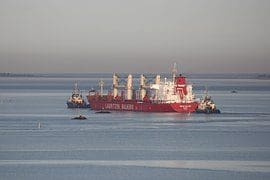
Libya’s crude oil output has fallen to a trickle amid a standoff over export rights that prevented trading giant Glencore from loading a tanker. Libya is producing around 200,000 to 220,000 barrels per day (bpd) after the largest National Oil Corp (NOC) subsidiary, AGOCO, was forced to slash its output by more than half, an NOC official in Tripoli told Reuters. Production from AGOCO’s Messla and Sarir fields has been cut to less than 100,000 bpd from 230,000, as crude loadings at the Marsa el-Hariga port in eastern Libya remain suspended, a spokesman for AGOCO said. The spokesman, Omran al-Zwai, said there were no technical or administrative problems with production at the two fields. The dispute over exports is between the internationally backed NOC in Tripoli and a parallel version of the NOC created by a rival Libyan government in the east of the country. The eastern NOC made an unsuccessful bid to export oil last month and since then has prevented a tanker from loading at Marsa el-Hariga port for the Tripoli NOC. AGOCO is mediating indirect negotiations between the two NOCs in an effort to resolve the dispute, the Tripoli NOC official said. The dispute is part of a broader, complex power struggle between factions in eastern and western Libya. The Tripoli NOC is keen to work with a new U.N.-backed unity government to revive Libya’s oil production, but the government has faced continued resistance from groups in the east. The unity government is designed to bring together two rival parliaments and administrations that have been operating in Tripoli and the east since 2014. The eastern NOC shipped a cargo of 650,000 barrels from Hariga last month, but the United Nations blacklisted the tanker and it was forced to return to a western Libyan port to unload. The authorities in the east then prevented Glencore tanker Seachance from loading at Hariga. The tanker, which was scheduled to load on April 26-28, was still waiting near the port, according to a Hariga port official and Reuters tracking. Glencore was not immediately available for comment. The eastern NOC issued a statement late on Sunday saying there was no plan to stop crude exports from Hariga, but it was concerned about a contract signed by the Tripoli NOC and Glencore, which it called “totally unfair.” Glencore sealed an export deal with NOC Tripoli last year allowing the trader exclusively to lift crude from Hariga.

Eastern NOC marketing manager Almabruk Sultan said the board of directors was trying to check whether the contract with Glencore complied with international trade laws, but they had not received a copy of the contract yet.

“The Glencore issue has nothing to do with politics,” he said.

The eastern NOC has been in touch with the unity government in Tripoli as it tries to reunite the eastern and western branches, but “the process is slow,” Sultan added.

“We are for the unity of both NOCs and the unity of Libya, but it has to be done in a fair and just way.”

Prior to the latest dispute over exports from Hariga, Libya’s oil production had already fallen to less than a quarter of the 1.6 million bpd it was producing before the 2011 uprising that toppled leader Muammar Gaddafi.

Source