Home Blog Page 8

Mexico’s Pemex Approves Trion Field as First Farm Out

0

Mexican state oil company Pemex has picked the deep-water Trion field near the U.S. border as the first one it will farm out to other operators to help it develop untapped resources, the firm said on Friday.

The search for private capital to boost areas previously discovered by Pemex is a major step in the opening up of Mexico’s oil and gas industry, a process enabled by an energy reform that ended the company’s monopoly in 2013.

Pemex Chief Executive Jose Antonio Gonzalez Anaya told a news conference the company’s board had approved the step and that Trion would likely be operated by a company other than Pemex.

“It’s a big, important field,” Gonzalez said.

The Trion field, located in the Perdido area, will require about $11 billion worth of investment and more farm outs will follow, Gonzalez said. In total, the Trion field contained some 480 million barrels, he added.

Pemex did not have a specific number of investors in mind for the Trion field, he said. The companies involved in the farm out should be announced in December, when Mexico has scheduled its first auctions for deep water fields.

Speaking at the same news conference, Energy Minister Pedro Joaquin Coldwell said the Trion farm out would be in the form of a license and that the field was 2,500 meters (8,202 feet) deep.

Two years of falling crude prices have hurt Pemex, which wants partners to boost output and improve margins.

In the first quarter of this year, Pemex ran up its 14th consecutive quarterly loss at about 62 billion pesos ($3.6 billion), as both crude prices and output fell.

Earlier, Pemex announced that Luis Rafael Montanaro Sanchez had been named as the new director of Pemex’s ethylene unit.


Source

Divestment of Ben Rinnes jack-up drilling unit

0

Leading global drilling and engineering contractor, KCA Deutag, today announces that it has sold its jack-up drilling unit, the Ben Rinnes, to an integrated energy and services company for an undisclosed sum.

Built in Clydebank, Scotland in 1973 and acquired by KCA Deutag in 2005, the Ben Rinnes was under contract offshore Angola until February of this year.  The ABS Classed Marathon Le Tourneau MLT 53-S enhanced rig has been stacked in Gabon since then.

Norrie McKay, KCA Deutag CEO said: “Whilst the sale of the Ben Rinnes is an important milestone for KCA Deutag as it is our last asset in our mobile offshore drilling fleet, we continue to maintain the competence and experience required to support offshore drilling unit operations.  This expertise is currently supporting the construction and start-up of two Category J jack-up rigs which will commence operations on the Norwegian Continental Shelf next year.”


Source

Tech Research Partnership to Advance Innovation in Oil, Gas

0

Despite the oil price downturn, investment in technology will remain critical to the oil and gas industry. Helping the oil and gas industry increase the efficiency, productivity and safety of its operations is the goal behind the expansion of a technology research partnership.

The Research Partnership to Secure Energy for America (RPSEA) and consulting firm HBW Resources are  working together to develop and deploy safe, environmentally sensitive technology to help oil and gas operators develop U.S. energy resources.

The two organizations have been collaborating for about a year. Through the expanded partnership, HBW will help RPSEA look for research opportunities beyond its existing research focus on deepwater, unconventionals and small producers, Jack Belcher, executive vice president of HBW, told Rigzone in an interview.

Founded in 2002, RPSEA brings together producers, service companies, academia and national labs to collaborate on technology research and development. To meet a requirement for funding under the Energy Policy Act of 2005, RPSEA’s research program must focus on three areas: unconventional, deepwater, and smaller producers. HBW is getting involved as the 10-year funding stream for RPSEA’s initial areas of research, and its initial projects, wind down, said Belcher.  RPSEA has received approximately $37.5 million from the U.S. Department of Energy’s (DOE) National Energy Technology Laboratory. RPSEA also receives funding from membership dues and from initiating joint industry projects, which enable companies to access more research and development for lower investment. This funding source will remain as the DOE funding wanes.

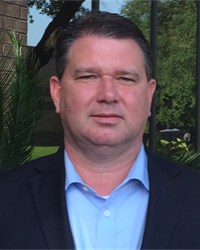
Jack Belcher
Jack Belcher, Executive Vice President, HBW Resources
Executive Vice President, HBW Resources

Specific goals of the expanded partnership will be rolled out in August; through these goals, RPSEA and HBW will seek to address the big technical challenges of today. These goals include increasing recovery efficiency, well control, and environmental and safety challenges, said Belcher. For onshore oil and gas, RPSEA and HBW will address technology that can mitigate natural gas flaring. The two organizations also will pursue research and development in metocean (the ocean conditions near an offshore platform) modelling and data; alternatives to water use in hydraulic fracturing; induced seismicity; promoting habitats for endangered species; habitats and ecosystems; carbon capture and sequestration; and pipeline, transportation and infrastructure.

RPSEA has focused a number of projects on technologies that address safety and environmental issues, said Belcher. While being able to meet technical challenges in a lower-cost environmental is critical, Tom Williams, former RPSEA board member and former DOE official, said that there is an even stronger focus now on safety and environmental issues than when RPSEA was first founded. The need for technology that also can address these issues is critical for both onshore and offshore exploration and production. In terms of efficiency, both Belcher and Williams agree that Big Data will play a huge role in this area of technology.

Companies’ budgets are obviously being impacted by oil prices and revenue, said Belcher. This includes research and development in general. Pooling research dollars, particularly in a time of budget cuts due to low oil prices, allows everybody to benefit. The consortium’s non-competitive environment also offers a place for industry to come together, said Williams, who has institutional knowledge of the program and industry. HBW has retained Williams for the expanded partnership.

Tom Williams
Jon Mainwaring, Editor-in-Chief, Rigzone
Former Board Member, RPSEA, and Former Department of Energy Official

To date, RPSEA has been involved in the development of a number of remarkable technologies, Williams said.  RPSEA has managed over 120 projects, including several that are already commercial. One example of a commercial technology developed through RPSEA is the Remote Ocean Current Imaging System (ROCIS). Offshore engineering services provider Fugro and Arete Associates developed ROCIS to economically provide ocean current data in short order for improved operational planning, such predicting loop current activity, mitigating oil spill activity, and search and rescue operations.

RPSEA’s work has created jobs, with a direct impact on the oil and gas industry of more than $150 billion. Technology developed through RPSEA also mitigated environmental damage of more than $40 billion, Williams noted. In its deepwater research, RPSEA has managed projects to develop intelligent blowout preventers, improved well cementing practices, and controlling corrosion, said Belcher.

For onshore, RPSEA has been involved with documenting hydraulic fracturing water usage and flowback, and developing the zipper frac concept and refracture orientation evaluation process to improve reserve recovery. RPSEA also has assisted small producers by testing methods to reduce the footprint of oil and gas development in desert ecosystems.

Most of RPSEA’s work has traditionally been upstream, but in its collaboration with HBW, it will start focusing on midstream and downstream projects as well, Williams stated.

“We have learned in the past few months that RPSEA’s credibility as a not-for-profit organization has provided an objective way to get technology out,” Williams told Rigzone.

This technology is viewed as good sound science and is more likely to be quickly accepted by regulators. The fact that RPSEA does not own or develop intellectual property – unlike universities and service companies – also is attractive to the oil and gas industry.

RPSEA was born out of a roadmapping exercise conducted in 2001 by DOE. DOE had always conducted energy research, but was not effective at engaging with industry, and was weak in technology transfer. Williams, who worked at DOE under the Bush 41 administration, said that DOE lacked access to subject matter experts in some areas, and a process didn’t exist to facilitate that access. To address these issues, Williams and other participants in the road-mapping exercise decided to form RPSEA.

HBW works with a wide range of oil and gas companies, including supermajors, independents, pipeline and liquefied natural gas project owners, as well as downstream, to navigate state and federal regulations that impact their businesses.

“Obviously, there is a cost associated with more stringent regulations,” said Belcher. “The industry is constantly facing those pressures.”

By finding the right technologies and processes, and working with regulators to develop realistic laws, companies can meet regulations in a cost-effective manner.


Source
Tekmar trial proves successful at the Underwater Centre

0

Tekmar Energy, which supplies cable protection systems (CPS) to the offshore windfarm industry, has successfully carried out a full-scale demonstration of its products at The Underwater Centre, the subsea training and trials facility based in Fort William.

The objective of the demonstration was to prove the ability to rapidly and reliably remove a CPS without the need for divers. This is particularly key for the future as offshore windfarm projects are being installed in increasingly deeper waters where diving becomes more dangerous and costly.

With numerous offshore wind industry leaders in attendance – including DONG Energy, VBMS, Jan de Nul, and CWIND – Tekmar and The Underwater Centre carried out the installation and removal of a CPS from mock-up offshore foundations.

Cable protection systems are designed to be maintenance free for the full service life of the windfarm. However, for decommissioning purposes and in order to reduce risk within the industry it is important that any equipment that is installed subsea has a proven and robust method of removal.

The Underwater Centre provided a Workclass Remotely Operated Vehicle (WCROV) which was launched from an offshore vessel and carried out the operations in Loch Linnhe.

The demonstrations were carried out over a two day period in March 2016. On the first day the removal operation was performed on a mock-up j-tubeless monopile foundation, whereas the second day was reserved to carry out the same operation on a mock-up j-tube. Both demonstrations were considered successful with operations being completed considerably quicker than expected.

Steve Ham, Commercial Director of The Underwater Centre, said: “In today’s market, it’s increasingly important that new technologies and techniques are developed more quickly, and in a cost effective way; the facilities we have on offer at the Centre help achieve this by providing an alternative to having to test offshore.”

Jack Simpson, Senior Manager for Offshore Wind at Tekmar said, “We were impressed with the extensive and realistic set up that the Underwater Centre provided. The equipment and conditions were fully representative to what would be expected offshore and the team there were extremely knowledgeable and supportive of the operations.”

With more than 30 years’ experience, Tekmar is a market leader in the design, manufacture and supply of subsea cable, umbilical and flexible protection systems for the renewable energy and oil & gas industry.

The Underwater Centre is a purpose-built subsea training and trials facility and is based on the shore of a seawater lake, Loch Linnhe, well sheltered by the surrounding mountains.  The Centre’s unique location allows it to provide year-round training and testing in an open-water environment, while still being centrally located in the largest town in the Scottish Highlands.
 

Source

India Overtakes Japan as World’s Third Largest Oil User After US, China

0

India, Asia’s second biggest energy consumer since 2008, has overtaken Japan as the world’s third largest oil consuming country in 2015, supported by an 8.1 percent year-on-year increase in daily consumption to 4.159 million barrels, data released Wednesday by BP Statistical Review of World Energy 2016 showed.

The South Asian nation, now Asia’s second largest oil consumer, accounted for 4.5 percent of daily global oil demand last year, marginally higher than Japan’s 4.4 percent, which was equivalent to 4.15 million barrels.

The region’s economic powerhouse China retained its position as Asia’s top oil consumer last year, registering 6.3 percent growth to 11.968 million barrels per day and accounting for 12.9 percent of global demand despite a slowing economy as well as a shift from an industrial to a service-driven economy.

“Chinese consumption slowed further, but still recorded the world’s largest increment in primary energy consumption for the fifteenth consecutive year … China once again accounted for the largest increment to (oil) demand, while India surpassed Japan as the world’s third-largest oil consumer,” the Review said.

In 2008, India surpassed Japan as Asia’s second largest energy user after China, consuming 515.2 million tons of oil equivalent (MMtoe) compared to 469.0 MMtoe for the region’s second largest economy. The growth in Indian energy use has been impressive. The gap in energy use between India and Japan widened further last year, with the former consuming 700.5 MMtoe compared to 448.5 MMtoe for the East Asian nation.

Elsewhere, the Review said the U.S. remained the world’s top oil consumer with a daily demand of 19.396 million barrels in 2015, up 1.6 percent from a year ago. The U.S. consumption made up 19.7 percent of global demand of 95.008 million barrels per day in 2015, up 1.9 percent from 93.109 million barrels in 2014.

Strong growth in domestic energy consumption has already prompted India to seek ways of boosting supplies, including from local sources.

The Ministry of Petroleum and Natural Gas launched May 25 a new bid round for investors to conduct exploration and production from discovered small oil and gas fields in the country. Investors have been invited to submit bids to commence hydrocarbon production from 46 Contract Areas, comprising 67 different onshore and offshore oil and gas fields in India.


Source

GE Oil & Gas launches new subsea connector to enhance reliability of high-voltage operations on the seabed

0

GE Oil & Gas has completed the qualification of its upgraded 36kV high voltage wet mate connector. MECONTM WM 36/500 offers far more reliability and predictability in subsea power system connections, and can be used with equipment such as transformers, switchgears, variable speed drives and motor loads. By improving the reliability of subsea power transmission and distribution, MECON™ WM 36/500 supports the ambitions of oil and gas operators to develop cost-efficient subsea production and processing facilities.

“Our MECONTM Wet Mate 36/500 connector is designed to provide highly reliable connections of subsea high voltage equipment. Unlike conventional stab-type connectors, we deploy a unique connection process that ensures that we are in full control of the electrical environment inside the connector before completing the electrical connection” said Alisdair McDonald, Subsea Power & Processing Leader at GE Oil & Gas.

GE uses the same patented technology for all its MECON Wet Mate connectors. A unique in-situ flushing process enables the verification of a benign electrical environment. The flushing process is performed after the connector halves are brought together and before the electrical connections are completed. Firstly, the connector is flushed with seawater to remove any contaminants, then by fresh water, alcohol, and finally dielectric fluid. The dielectric fluid is analysed to verify a benign electrical environment before the electrical and mechanical connection is completed. The process is enabled by a closed-loop flushing tool mounted on a conventional ROV and takes less than 20 minutes in total to complete and no fluids are released to the environment.

In addition to offering greater control and predictability compared to conventional stab-type connectors, MECONTM WM 36/500 can act as an isolation switch at rated system voltage and can be used to verify system health prior to commissioning or to find faults after failure.

MECONTM 36/500 has undergone more than a year of extensive testing to comply with the latest industry-wide standards. The connector has been certified for operation up to 36 kV and 500 amperes in water depths down to 10,000ft or 3,000m.


Source

UK Subsea Services Recruitment Falls amid Oil Price Drop

0

Ninety-two percent of UK subsea companies will recruit less people than they did 12 months ago, according to a survey by industry body Subsea UK.

Almost 70 percent of companies surveyed were not actively recruiting and 28 percent were recruiting fewer people than they were in 2015. More than 20 percent of respondents said that they were still employing apprentices to support their business, however recruitment on the whole has dropped, with just 8 percent of companies stating that they are looking to employ more people than they were 12 months ago.

Around 90 percent of respondents have seen sales decrease in the last 18 months. Of those, 28 percent saw sales drop by 30-40 percent and a further 28 percent have lost half their revenues with sales decreasing by 50 percent or more. Although 80 percent felt that the financial institutions had lost faith in the sector, only 5.7 percent were looking to refinance and 7.7 percent were actively seeking new investment.

Driving Growth in New Markets

Around 80 percent of respondents hope to drive growth by increasing overseas sales and exploring new markets with a focus on Asia, the Middle-east, North America and Africa. Other countries of interest are Australia, China, Brazil and Norway, according to the survey.

More than 44 percent of respondents said that the ‘lower for longer’ oil price environment has led to the industry becoming more receptive to new ways of working and adopting different techniques and innovations. Almost 80 percent of those asked are still investing in new technology and see this as an area of focus in the long-term to secure future growth.

“Our survey shows that subsea companies are increasing their export efforts, exploring new geographic markets where their services and technology are in demand,” said Subsea UK chief executive, Neil Gordon, in a statement sent to Rigzone.

“The industry is more receptive to new ways of working and new technologies and we are starting to see the benefits of real collaboration towards reducing costs and driving efficiencies. It is encouraging that, against this backdrop, subsea companies are continuing to invest in the development of new technology,” he added.

The majority of respondents believe that technologies which lower cost and risk, while increasing efficiency are vital for the future. Respondents believe that technologies that will have the most impact in the future will relate to subsea processing and storage, condition monitoring/inspection, repair and maintenance, decommissioning, data gathering and interpretation.

Subsea Companies “Well-Placed” For the Future

“The decline in oil price and subsequent industry-wide downturn has seen a massive reduction in CAPEX and OPEX budgets worldwide which have impacted on the subsea sector where we are seeing job losses and the collapse of companies, putting the UK sector’s enviable world-leading position under threat,” said Gordon.

“The findings from our survey underline the negative impact on revenues and recruitment but they also reveal positive signs of the sector adjusting and adapting to the lower for longer oil price environment which will ensure we are well-placed for the future,” he concluded.

Following an oil price crash which saw Brent drop from over $100 per barrel in 2014 to under $30 per barrel a few months ago, the value of oil has steadily increased over the last few weeks. At the time of writing, Brent hit 2016 highs of $52.51 in a development which FirstEnergy stated would “hold”.

The $13 billion UK subsea industry, which has been helping recover more hydrocarbons from the North Sea since the 1980s, employs around 50,000 across the country. Subsea UK’s 300-strong membership represents the majority of the subsea companies in the supply chain.


Source

EDF Energy Renewables starts work on the Blyth offshore wind farm

0

EDF Energy Renewables is to build a new offshore wind farm off the coast of Blyth in Northumberland.

Construction work for the project has begun onshore and offshore work will start in 2017 to install five turbines of 41.5MW in capacity. The turbines, will provide enough low carbon electricity to power 33 000 homes. The project has permission for a maximum total generating capacity of almost 100 MW.

The power generated by the wind farm will be supplied to an electricity substation at Blyth which will be built by Balfour Beatty, for transmission to the National Grid. At its peak there will be around 200 people working on the project.

Wholly owned by EDF Energies Nouvelles, the Blyth Offshore wind project will be built by EDF Energy Renewables, a 50-50 UK joint venture between EDF Energies Nouvelles and EDF Energy. Working with their suppliers, it plans to complete construction of the first five turbines in 2017.

The project will use the latest generation of offshore wind turbines manufactured and installed by MHI Vestas Offshore Wind and this will be the first project to use 66Kv cable technology which will be installed by VMBS who specialise in subsea power cable installation. The standard voltage for cables has been 33Kv until now but with turbines growing in power a higher specification has been developed.

The concrete gravity base foundations are the first of their kind to be built in the world and the new installation method of ‘float and sink’ will be used for the project. This is the first time this method has been used for wind turbines. The foundations will be designed and built by Royal BAM Group in the Neptune dry dock on the Tyne and will then be floated and sunk in position using tugs.

Matthieu Hue, EDF Energy Renewables CEO, said: “As a company, we already have a strong presence in the North East, in low carbon electricity generation and serving customers including our first offshore wind farm at Teesside so we’re pleased to be able to add another project to our portfolio in the region.

“We are delighted that the gravity based foundations will be made in Newcastle. The Port of Blyth will be used for operations and maintenance and the blades for the turbines will be made on the Isle of Wight.”


Source

Shell Resumes Iranian Oil Purchases

0

Royal Dutch Shell has resumed purchases of Iranian crude, becoming the second major oil firm after Total to restart trade with Tehran after the lifting of sanctions, trading sources said and ship tracking data showed.

Shell declined to comment.

According to shipping data, Shell fixed Suezmax tanker Delta Hellas to bring 130,000 tonnes of Iranian crude from Kharg Island on July 8 to continental Europe.

Trading sources said the cargo would unload in Rotterdam.

Shell repaid its outstanding debt to Iran from the pre-sanction times earlier this year.

Besides Total, European purchases of Iranian crude have gone to refineries in Spain, Greece and Italy since the sanctions were lifted in January this year.

(Reporting by Olga Yagova; editing by David Clarke)


Source

World oil reserves stable despite drop in investment: BP

0

The world’s oil reserves were unchanged in 2015 despite a sharp drop in investment and exploration after the collapse in crude prices, BP said in its benchmark industry report.

Proven oil and gas reserves that can be technically pumped out of the ground typically fluctuate with oil prices as production becomes more or less economically viable.

But in 2015, when Brent oil prices fell by nearly 50 percent to $52 a barrel, reserves declined by only 0.1 percent to 1,698 billion barrels, according to the BP Statistical Review of World Energy, first published in 1951 and considered an industry handbook.

Investment in oil and gas fell in 2015 by around a quarter from a year earlier to $160 billion, according to BP Chief Economist Spencer Dale.

“You’ll have to go back to the late 1970s to see such a sharp fall in investments,” Dale told reporters.

Oil production last year rose by 3.2 percent to 91.67 million barrels per day, driven by increased output from U.S. shale oil production and Iraq and Saudi Arabia increasing production to record levels, the data showed.

BP estimated that the shale revolution in North America increased technically-recoverable oil and gas resources up by 15 percent. U.S. oil reserves were unchanged last year at 55 billion barrels but were nearly double 2005 levels.

“This is truly the age of plenty,” Dale said.

INDIAN DEMAND

The drop in oil prices nevertheless sparked a sharp rise in consumption of 1.9 percent, nearly double the historical average, as drivers from the United States to India and China drove more and in bigger cars.

India stood out, overtaking Russia as the world’s third largest energy market, and Japan as the third largest oil consumer, as oil demand there rose by 8.1 percent, the data showed.

China’s oil demand growth of 6.1 remained the largest in volume.

Overall energy consumption increased by 1.1 percent in 2015, a similar rate to a year earlier, though much slower than the 10-year average of 1.9 percent, BP said.

The modest growth was due in large part to China’s slowing demand growth, which reached 1.5 percent compared to an average of 5 percent over the past decade. The shift was a result of the first decline in decades in output from energy-intensive industries such as iron, steel and cement, Dale said.

Global gas consumption rose by 1.7 percent, up from a 0.6 percent growth in 2014 but still below the 10-year average of 2.3 percent, a result of mild winter weather in North America and Europe.

Non-fossil fuel production rose by 3.6 percent in 2015, with renewable energy in the power sector growing by 15 percent, even though its overall share in the global energy mix remains small at 2.8 percent.

Coal recorded its biggest fall in consumption and production since BP’s records start in 1980, with China accounting for a third in the fall as it shifted towards gas.

(Editing by William Hardy)