Home Blog Page 583

Costa Concordia trial: Captain’s lover was on bridge

0

A Moldovan dancer who was on the bridge of the Costa Concordia with Captain Francesco Schettino has admitted she was his lover at his trial.

Domnica Cemortan testified that she was in a romantic relationship with the captain and was with him when the cruise ship ran aground off the north-west Italian coast.

Capt Schettino faces multiple charges of manslaughter and abandoning ship.

The January 2012 tragedy killed 32 people.

The captain faces up to 20 years in prison if convicted.

Ms Cemortan has been the subject of intense media interest, says the BBC’s Alan Johnston in Rome. On the night the Costa Concordia ran aground, she had dinner with the captain before he invited her to join him on the bridge as he oversaw what was meant to be a close sail-past of the little Tuscan island of Giglio.

Local press have speculated the captain may have been distracted by her presence, or even showing off.

In court, Ms Cemortan acknowledged after being pressed that they had been romantically involved. She had boarded the ship as a non-paying passenger hours before the crash, she said, adding: “When you are someone’s lover, no-one asks you for a ticket.” She subsequently dismissed the remark as a joke to her translator.

She said she had worked for the company that operated the Costa Concordia for about three weeks in December 2011, and had met Capt Schettino on a previous cruise.

Capt Francesco Schettino blamed his Indonesian helmsman for steering the ship onto rocks

After the ship hit the rocks, Ms Cemortan said the captain urged her to “save herself”.

She told court that she helped other passengers to abandon ship before getting into a lifeboat herself.

Trial to take weeks

The court is expected to hear evidence from about 1,000 surviving passengers and crew during Capt Schettino’s trial.

In testimony earlier in the day, ship maitre d’ Antonello Tievoli told the court in Grossetto, Tuscany, that he had asked the captain if he could sail close to the island of Giglio because he has family there, the news agency AP reported.

The captain obliged on 6 January, but was apparently disappointed with the result, and ordered the ship’s helmsman to plot a closer route for next time.

A week later, the ship ran aground on rocks after veering too close to the island, with 3,206 passengers and 1,023 crew aboard.

The captain has acknowledged fault in the tragedy, but his defence team is arguing the ship sank in part because watertight doors did not function on the ship.

He also told the court in late September that his Indonesian helmsman was to blame for steering the ship onto rocks and ignoring orders to slow down.

However, an Italian naval expert told the trial these were not crucial factors and the crash would have happened anyway.

The helmsman, Jacob Rusli Bin, is one of five employees who were granted plea bargains in return for mild sentences in a separate proceeding. He was given a sentence of one year and eight months.

The 290m-long vessel was righted last month in one of the largest, most complex salvage operations ever that took 18 hours and followed months of stabilisation and preparation work by a team of 500 engineers and divers.

That operation allowed divers to retrieve the remains of one of the two people still missing in the disaster, believed to be an Italian passenger, Maria Grazia Trecarichi. An Indian waiter, Russel Rebello, is still unaccounted for.

Plans are now being made to attempt to remove the wreckage of the boat next year.
Source

Bluestream Takes Delivery of Third ROV from Saab Seaeye

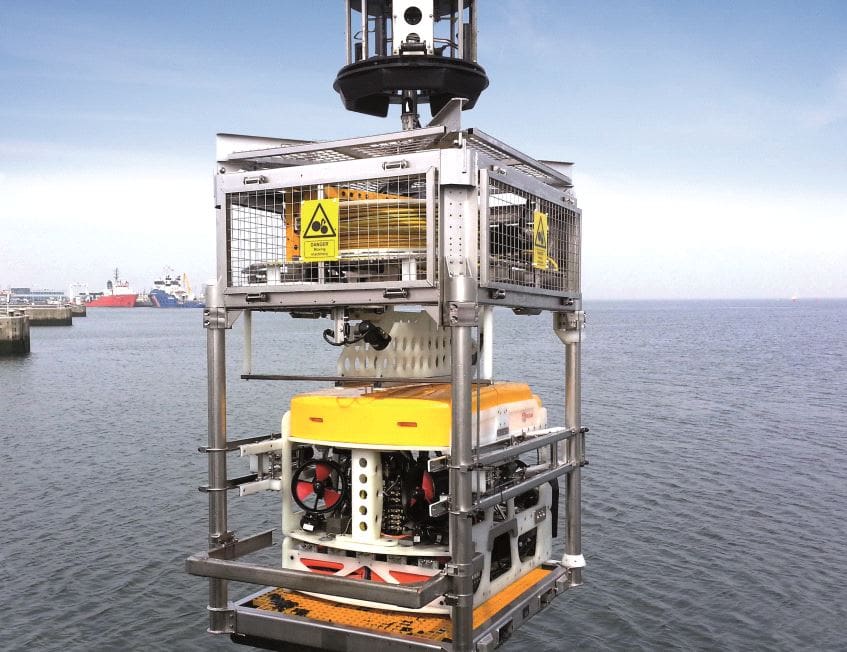
Bluestream has taken delivery of the third of four ROVs ordered from Saab Seaeye in the last twelve months.

Their new 2000 metre-rated Cougar XT is the second of this model to be added to the 11 strong ROV fleet operated by the Netherlands-based Offshore services company.

Managing director, Rolf de Vries, sees the Cougar as further investment in Bluestream’s ROV resources and its commitment to remote technology.

We are ready to meet the needs of diverse clients across different market sectors,” he says.

He added that the Cougar XT was chosen as a proven system that is ideal for light work-class jobs and survey tasks. It can also be adapted to receive a wide variety of sensors, ancillary equipment and tooling.

Bluestream’s model comes with an array of cameras, sonar, five-function manipulator and hydraulic disk cutter. A detachable bare skid is also supplied ready for different tooling options.

“We invest heavily in tooling to offer multiple services across the offshore oil and gas industry, and the renewables sector,” says Rolf de Vries.

He goes on to explain: “Tooling options are a vital resource for undertaking a wide number of tasks, ranging from drill support, HP cleaning, grinding, salvage, intervention and non-destructive testing – to pipeline survey work, pipe-tracking, IRM, and tailor made solutions”.

Bluestream has a reputation for finding imaginative tooling solutions to cut operating costs and improve safety – they were first to adapt a Saab Seaeye Surveyor ROV for Christmas Tree installation work.

Their solution included an innovative torque tool that could operate delicate needle valves within torque tolerances without needing the dexterity of a diver’s hand.

“Using a compact ROV with in-house developed smart work-class tooling capabilities avoided any diver intervention at 30 metres,” explains Bluestream’s project engineer, Job Biersteker. “It made huge savings in manpower costs, and avoided risking diver safety – and it can work almost 24 hours a day”.

Source

WW2 Explosives to be Detonated Safely from Solomon Islands

0

World War 2 explosive remnants will be safely detonated from the Solomon Islands through Operation Render Safe to be conducted from Oct 29 to Dec 7 by 200 personnel from the Australian Defence Force, New Zealand Defence Force, United States Navy, Canada and Solomon Islands.

The WW2 explosives date as far back as 68 years ago.

Lieutenant General Ash Power, chief of Joint Operations, explained that the removal of the explosive remnants off the Solomon Islands involved vigilant identification, assessment and disposal of unexplored explosives.

“The Solomon Islands saw some of the fiercest fighting of World War II, so it is hardly surprising that a great deal of unexploded ordnance still litters many of the islands to this day. These remnants of war are an enduring and unpredictable threat to the safety of the locals. We are pleased to be able to play an active role in making the Solomon Islands area safer for all,” Mr Power explained.

Commander Doug Griffiths, the commander of the Joint Task Force for Operation Render Safe, acknowledged that the involvement of international personnel will provide a room for the ADF to compare training and skills with their international counterparts.

“The cooperation between the participating nations will provide a great service to the people of Solomon Islands as well as providing Defence personnel an opportunity to work side-by-side. Working closely with the local communities to recognise and identify items of unexploded ordnance will be a key part of the operation,” Commander Griffiths said.

As early as Oct 10, 2013, The Royal Australian Navy had announced its participation in the Operation Render Safe.

Maritime assets will be HMA Ships DiamantinaTarakan and Labuan and with Clearance Divers from HMAS Yarra and AUSCDT One, the Mine Warfare Geospatial Deployable Support Team (MGDST) with a REMUS 100 Autonomous Underwater Vehicle (AUV) and a Solomon Islands Pacific Patrol Boat.

“Successful community engagement is our priority. Historically, the locals know where the ordnance is located and in many cases have lived with the threat in their villages for years. The Solomon Island Government has identified the locations we’ll work in, and we rely on residents to narrow down the ordnance sites,” Mr Griffiths said.

Source

Explore the Mary Celestia wreck – without getting wet!

0

The wreck of the famous Mary Celestia has been mapped by Google for the world to see.

The paddle steamer sank off the coast of Bermuda in 1864 and has become a popular site for local divers.

But now wreck enthusiasts will be able to navigate their way around the wreck from the comfort of their home without getting wet.

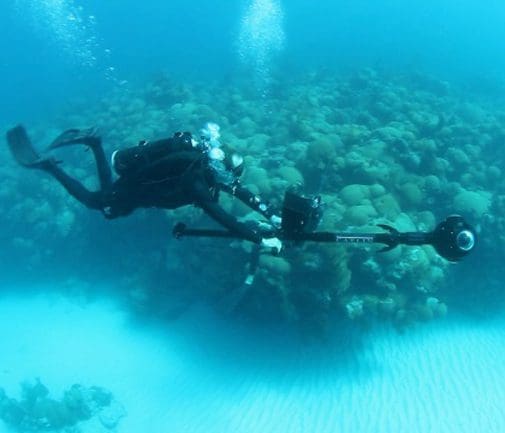
Google has used images from the Catlin Seaview Survey to create the virtual dive site.

And the firm has catalogued the ship’s remains, which lie 55ft under the waves, as part of Google Street View.

The Mary Celestia sunk on a mission to run ammunition and supplies to the Confederate forces during the American Civil War.

She had previously played a vital role in running goods between Bermuda, Nassau and England.

The ship left Bermuda on September 14, 1864 full of meat and ammunition bound for Wilmington in North Carolina.

But it is thought the vessel hit the reef and sank just after leaving port.

Take a look here: https://www.google.com/maps/views/view/streetview/oceans/mary-celeste-wreck/i1i4NPuJaqkAAAQJOJMqGw?gl=us&hl=en-us&heading=174&pitch=89&fovy=75

Source

Mystery of the world’s largest bell continues to lure treasure hunters and Burma’s elite

0

For more than 400 years the Dhammazedi bell bell has supposedly lain at the bottom of a Burmese river, luring adventurers and treasure-hunters from near and far.

Their inability to recover what is reckoned to be the world’s largest bell has added to stories the 270 tonne treasure must be protected by spirits.

Now, a leading Burmese businessman and politician has announced his plan to fund another hunt for the bell, spending more than $10m if that is what is required to locate it and return it to the glittering Shwedagon pagoda, from where it was originally looted.

“We’ve already hired big ships to salvage the bell.  If we can salvage the bell, we will put it on display at Shwedagon,” Khin Shwe told a local journal, according to the Irrawaddy website.

He added: “One foreign expert predicted that salvaging the bell will cost between $5m and $10m. Whatever the cost – I’m ready to spend any amount.”

The story of the Dhammazedi bell seemingly fuses legend and documented evidence. Originally cast in 1484 by King Dhammazedi, a Mon ruler who capital was located in the city of Bago, the bell was given to the monks at Rangoon’s Shwedagon.

One hundred years later, a gem merchant from Venice, Gaspero Balbi, visited the pagoda and wrote in his diary of seeing the bell, engraved with writing he was unable to understand. “I found in a hall a very large bell which we measured, and found to be seven paces and three hand breadths,” he said.

In 1608, Filipe de Brito e Nicote, a Portuguese mercenary who controlled an area on the southern banks of the Rangoon river, seized the bell and tried to carry it back to his base. While transporting it across the river, the bell slipped into the water, sinking a barge and a Portuguese warship.

Khin Shwe, the man behind the project, is a member of the upper house of Burma’s parliament and part of President Thein Sein’s Union Solidarity and Development Party.

His firm, the Zay Kabar Company, is one of Burma’s leading construction and real estate businesses and reports suggest it did a lot of work for the military junta that previously ruled the country. More recently his company has been involved in a controversial land rights dispute with farmers on the northern fringes of Rangoon.

Aung Naing Oo, a spokesman for Mr Shwe, said on Friday that the tycoon was in Thailand and would not be able to comment about his reported plans until he returned to Burma.

If the 61-year businessman does proceed to try and try recover the bell, he will hardly have been the first person to do so. Over the years, a series of both Burmese and international projects have tried to locate and raise the massive bell, believed to be cast from copper, gold, silver and tin.

Most of the searches have concentrated the place where the Rangoon river is joined by the Bago river, close to a place called Monkey Point and opposite the township where Filipe de Brito e Nicote had established his base.

In 1995, an American diver, Jim Blunt, searched for the bell in conjunction with the Burmese authorities, carrying out 116 dives over two years and telling of his experiences in a documentary film. He claimed he banged his fist on the bell and was rewarded by a metallic sound.

Mr Blunt, who lives California, said in an email: “I began diving for the King Dhammazedi bell in December of 1995. After 10 dives, I was informed that the bell search area was cursed.”

He added: “Several divers had already died looking for the great bell,  including two Myanmar Navy divers who became trapped inside a wreck and died horribly. Consequently, the search [began] for outside expertise.”

The most recent international effort to locate the bell was headed by Australian filmmaker Damien Lay, who had previously searched in Burma for the Lady Southern Cross, the plane of lost Australian aviator Sir Charles Kingsford Smith.

Speaking from Sydney, Mr Lay said he had looked at a different location to where most of the searches had been conducted and was convinced that he had found the spot where the bell lay. “We have exceptional data,” said Mr Lay, who said he had tried to pass his findings onto the Burmese authorities. He added: “All luck to them. It needs to be found.”

Khin Shwe, the businessman, is reportedly being advised by the abbot of Kyaik Htee Saung pagoda in northern Mon state. “King Dhammazedi was born on a Tuesday and so was the abbot,” he told the Snapshot journal. “So, I’m 100 per cent confident that this project will be a success.”

Source

DMR divers will check out metal hazard in Biloxi Bay

0

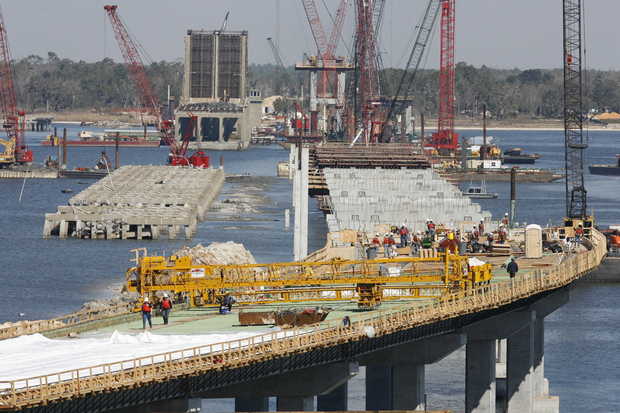
A thick steel bar, the type that’s used to reinforce large pieces of concrete, is sticking out of the water at low tide on the north side of the Biloxi Bay Bridge, about 200 yards off the Biloxi shore.

At high tide, it’s underwater, which makes it even more dangerous to boaters.

A reader alerted the Sun Herald to the hazard this week, and a Department of Marine Resources spokeswoman said the agency plans to send divers out today to check it out.

It’s about five-eighths inch in diameter and protrudes at a 30-degree angle between the Biloxi Bay Bridge and the new Point Cadet Fishing Bridge, but much closer to the Biloxi Bay Bridge.

When the Sun Herald checked it out this week, it found another metal rod as well, about 3 feet long but not as thick, about 100 feet from the first. That one also looks like rebar.

The thicker metal rod had been marked in makeshift ways with a float and PVC pipe, some of which has broken off. The other was not well marked.

A reader said he discovered the thicker rod a year ago and after investigating believes it’s embedded in a huge chunk of concrete possibly coming out of the floor of the bay. And fearing it would tear up the bottom of a boat or throw a driver if he hit it, he cut up an orange life vest and marked the bar. He said he reported it to marine officials and went back and marked it again with PVC and found it had been marked by other people.

He wanted to know if pieces of the old Biloxi Bay Bridge — demolished after Katrina while the new bridge was being built — had been left behind. And what could be done.

Who’s responsible?

Melissa Scallan, DMR spokeswoman, said her agency sent someone out to look at it in late August or early September.

She said the DMR also marked it then.

When asked Thursday what else the state agency might do, she said, “We just had a meeting about it.”

She said the DMR divers will try to see how big an underwater structure the rebar is attached to.

“If it’s big, it’s going to cost a lot of money to get it out of there,” she said.

She said it could be part either of one of the old bridges demolished after Katrina or something washed up by a storm.

“What we do depends on what’s down there,” Scallan said.

And as far as who might be responsible for it, “That’s going to be hard to tell.”

Tale of two bridges

Because the Coast needed the vital Biloxi Bay Bridge rebuilt as soon as possible after Katrina, MDOT’s Kelly Castleberry said the state allowed the contractor, which was actually a group of contractors, to begin building the new bridge while it tore down the old one.

Castleberry said when the old bridge was demolished and the pilings cut off several feet below the bottom of the bay, the state did a visual inspection over two to three months to make sure all the debris was removed. He said the material from the old bridge was used to build up a reef near Deer Island.

Castleberry said they ran sonar of the channel under the bridge to make sure there was no debris there — the rest was a visual but thorough method of checking.

“When we closed the project out, everything was cleaned up,” he said. But if they determine it is left from that project, MDOT would make an effort to remove it.

He suggested the obstacles in the bay now may have been forced up or washed in by the wave action of subsequent storms.

Vincent Creel, Biloxi’s public affairs director, said the city was responsible for the removal of rubble from the old Point Cadet Fishing Bridge, “and that rubble was successfully removed as confirmed through side sonar scans” conducted by the DMR.

Scallan pointed out the Biloxi Bay Bridge was demolished in 2006 and the fishing pier rebuilt more recently. And the DMR has no idea how long the protruding rebar has been in the water.

She said rather than use side-scan sonar to check it out now, they have determined to send the dive team.

“The DMR didn’t demolish those bridges or carry off that debris,” she said. “But we do feel a responsibility for public safety in the water.”

Source

Missing body of N.B man recovered by RCMP divers

0

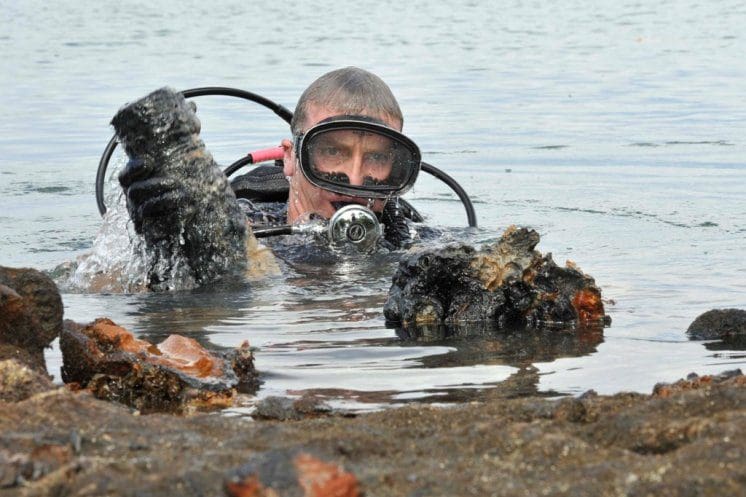
After the reported incident of a missing 83-year-old Jean-Louis Mallet by his family on October 22,2013,  his body was found in Sainte-Marie-Saint-Raphael, N.B.

RCMP divers conducted underwater searches of the area. His body was recovered around 5:30 pm on October 23,2013. In addition, his vehicle was also found near wharf in Sainte-Marie-Saint-Raphael.

While incident remains under investigation, according to police, foul play is not suspected.

Oil service firms rush to Saudi for busy drilling year ahead

0

Global energy service giants are banking on a boom in Saudi oil and gas drilling over the next few years to revive profits that are being squeezed by overcapacity in the North American market.

Schlumberger (SLB), Halliburton (HAL) and Baker Hughes (BHI) have all singled out Saudi Arabia as a major growth market for next year as they search the globe for better returns than the saturated U.S. and Canadian markets offer.

Dozens of offshore and onshore rigs are being lined up for drilling in Saudi Arabia in 2014, and service companies are expanding their Saudi operations to meet buoyant demand.

“We have a very close relationship with Saudi Aramco, and the plans that we see for next year are talking about 200 rigs,” Gabriel Podskuba, area manager for the eastern hemisphere at steel pipe maker Tenaris SA (TEN.MI), told analysts earlier this month.

Industry sources in the Gulf said at least 160 rigs are currently deployed in Saudi territory and that the world’s top oil exporter plans to raise its rig count to 210 by the end of 2014. Aramco (SDABO.UL) declined to comment.

Sources said earlier this year that Aramco was planning a sharp rise in rig use to look for unconventional gas, while increasing oil drilling to help keep its spare production capacity at comfortable levels.

The rigs will be used for exploration, development and maintenance work across the kingdom, the sources said. Aramco is also ramping up drilling in offshore oilfields such as Safaniyah, along with the Arabiyah and Hasbah offshore gas fields.

It is not clear where all the rigs will be deployed because Aramco has yet to issue the tenders.

Aramco is still appraising unconventional gas prospects in the southeast of the kingdom but has already announced plans for a shale-gas-fired power plant in the north.

To rebalance its crude supply mix and extend the lifespan of mature fields, Aramco also plans to increase light sour crude output from two fields – Shaybah and Khurais – by 550,000 barrels per day (bpd) in 2016-2017.

SPARE CAPACITY

The world’s largest oil exporter has been pumping over 9 million bpd since early 2011 to make up for supply disruptions in other countries, and production has exceeded 10 million bpd since July, according to official government figures.

Under pressure to make up for supply losses from Libya, Iran, Nigeria and Yemen over the past few years and to meet growing domestic demand, Aramco is investing heavily to preserve the world’s largest spare oil production capacity cushion at more than 2 million bpd.

Saudi Arabia is the only country able to produce much more oil than it needs to. The size of that capacity cushion, which helps dampen price volatility, is a frequent subject of speculation in the global oil market.

“In the past two years alone, we have swung our production by more than 1.5 million bpd in order to address market supply imbalances,” Saudi Aramco Chief Executive Khalid al-Falih told the World Energy Congress in South Korea in mid-October.

Saudi government officials fear that very high oil prices could destroy long-term demand for their biggest export product. Saudi Oil Minister Ali al-Naimi reiterated last month that the kingdom has an oil production capacity of 12.5 million bpd.

SAUDI SHARE

While Saudi Arabia is already a significant market for many oilfield services companies, the latest ramp-up in activity has caught the attention of the biggest players.

Baker Hughes Inc forecast an “exceptionally strong” year ahead for the Middle East, underpinned by new contracts from the Gulf OPEC heavyweight. It forecasts the international rig count overall to increase by 5 percent to average 1,300 rigs in 2013.

By contrast, it expects the U.S. rig count to fall 9 percent from 2012 to 750 as the oil industry drills about 6 percent more wells per rig.

Halliburton Co. recently won a three-year contract to drill and complete new wells in an existing Saudi field, while rival Schlumberger Ltd. said last week it was transferring more people and equipment to Saudi Arabia to keep pace with the extra workload.

Last Wednesday, drilling contractor Nabors (NBR.N) said it had been awarded deals to build 11 new rigs for deployment in the kingdom next year, increasing its Saudi fleet to 43 rigs.

In offshore drilling, Rowan (RDC), which already has nine rigs leased to Aramco, said last month it believed the Saudi offshore fleet would expand.

Rival Ensco Plc (ESV) also announced that one of its rigs currently off the Indian coast would head to Saudi Arabia next year on a three-year job.

Roger Hunt, a veteran marketing executive at offshore contractor Noble Corp (NE), said the industry should watch Aramco closely in the coming months, because it was in the market for contracts of up to 10 years for shallow-water rigs.

“That alone sends an interesting signal,” Hunt said. “They have always been opportunistic consumers of rig time.”

Source


5 Vitamins You Might Be Overdoing

0

Part of being a  successful commercial diver is maintaining a healthy body. In order to achieve this, it is essential to take food supplements, eat right, and exercise. According to an article in Yahoo health, supplements can be helpful, but getting nutrients in a pill rather than food is not always the best way to improve your health. In some cases, it can even hurt.

Here’s the list of vitamins and minerals you may be overdoing:

Iron and Copper

The risks of getting too much iron include a condition called hemochromatosis, which can damage your organs. Further, a 2010 study linked excess iron and copper to increased incidence of alzheimers disease and heart disease.

Beta-carotene

Beta-carotene and vitamin A — which is formed by beta-carotene — is easy to consume. If you have a bowl of cereal for breakfast, anything orange (carrots, sweet potatoes) for lunch and then a multivitamin or supplement for eye health, you’ve probably consumed too much. Too much beta-carotene has been associated with increased risk for lung cancer and overall increased risk of death.

Vitamin C

When most people think of vitamin C, they think of oranges. But if your first thought is a vitamin C pill, you may be overdoing it. A recent study found that men who took vitamin C pills had higher risk for developing kidney stones.

Calcium

While calcium is important for strong bones, data suggests getting too much of it can strain your heart. Studies have suggested that women who take high amounts of calcium increase their risk of cardiac death and moderately increase their risk for heart attack.

Source


DNA test confirms missing Sicily victim on wrecked Costa Concordia

0

The identity of one of the two missing victims on last year’s shipwrecked Costa Concordia has been confirmed by DNA tests.

Italian authorities said the remains of Maria Grazia Trecarichi of Sicily, which were found by scuba divers inside the cruise liner three weeks after the incident, were confirmed, News.com.au reports. Trecarichi had booked a holiday on the Costa Concordia to celebrate her 50th birthday.

The cruise liner had struck rocks and partially sank off the Italy’s Giglio Island in the Tyrrhenian Sea in January 2012, killing 32 of 4,200 people on board. The 114,000-ton cruise liner was moved to an upright position and stabilized after remaining in partly capsized state for 20 months.

Indian waiter Russel Rebello is the only victim whose remains have not yet been found, the report added. According to the report, the search for his remains might resume once it is taken to port for dismantling next year.

Source