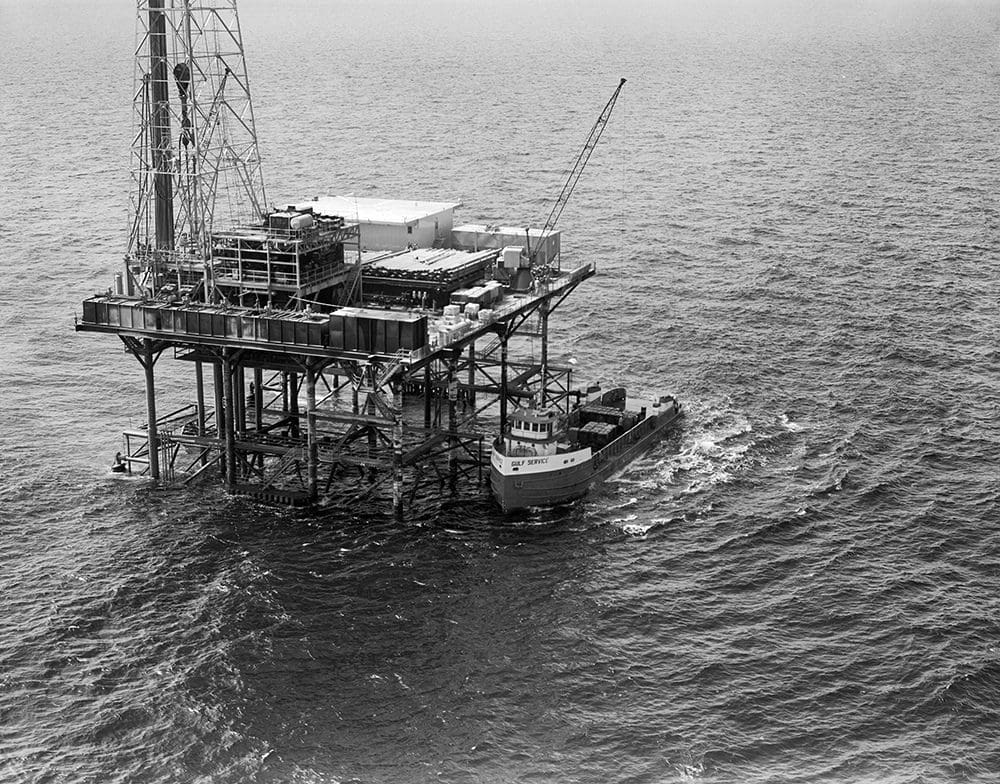
Commercial diving in Texas is a hazardous profession with many opportunities for on-the-job accidents.
Most people hear the word “diving” and conjure up images of scuba dives around coral reefs or snorkeling through clear waters to see beautiful marine wildlife while on vacation. For commercial divers exploring the depths of Texas waterways, though, the picture isn’t quite as serene. Their jobs, and their very lives, depend upon having a healthy respect for the water, and a keen focus upon their duties.
Unfortunately, even the most prepared and diligent diver can be hurt on the job. The profession of commercial diving is fraught with danger from underwater equipment, incompetent or inexperienced boat captains and dive supervisors, rapidly changing weather conditions topside, rough seas, faulty oxygen tanks, wildlife and other vessels in the area.
Understanding the possible risks – and possible injuries that could happen – can help foster communication between injured commercial divers and the insurance companies or third parties accountable for those injuries (particularly in cases involving complex maritime laws like the Jones Act or the Longshore & Harbor Workers’ Compensation Act).
Possible causes
Some dive boat accidents are just that: accidents. They may happen to an experienced crew who followed all the rules and regulations promulgated by federal and state agencies (like the U.S. Coast Guard and the Occupational Safety and Health Administration) exactly. Other times, though, an injury-causing accident can be pinpointed to a particular negligent act or error on behalf of a boat captain, supervisor, fellow diver, supply manufacturer, property owner, oil company representative or other maritime worker.
For example, the failure of a boat captain to make allowances for rough conditions above – and below – the water line can leave divers in dire straits. Other accidents could be caused by faulty tank gauges giving improper readings, leaving a diver thinking he has sufficient air for a dive but being stranded underwater, unable to breathe. Improperly maintained equipment could create a situation where a diver’s pressurized suit begins to leak, putting him at risk for drowning, getting the “bends” when surfacing and developing hypothermia.
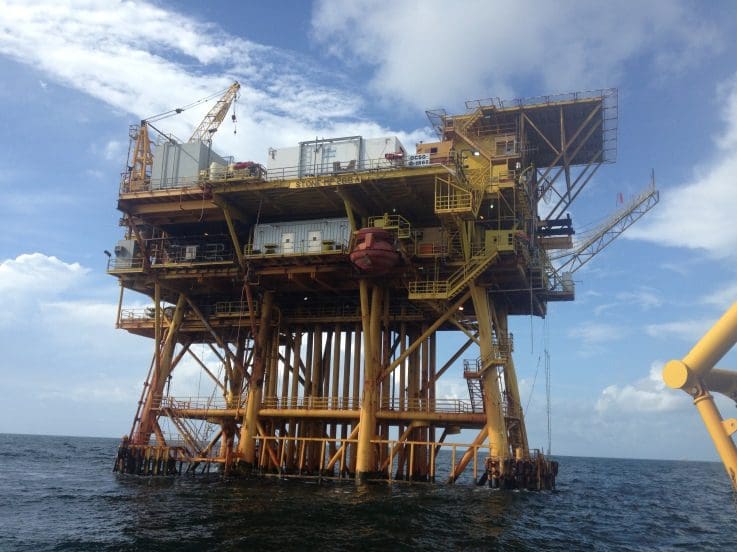
Many divers – particularly those working on huge oil rigs in the Gulf of Mexico, working with a salvage crew or performing underwater construction – also must deal with dangers often seen aboveground on construction sites, such as cutting tools, welding, operating heavy equipment and handling hazardous materials. This type of work is hazardous on the surface; the dangers are magnified in the water, due in no small part to the fact that it may take longer for a diver to reach medical attention.
Potential injuries
Divers face being injured in myriad ways while on the job. They not only face respiratory ailments and the possibility of drowning, but must also contend with more “exotic” injuries like the “bends” (also known as “decompression illness”), the negative effects of differential pressure, brain damage from an incorrect air/gas mixture, heavy equipment/crush injuries, broken bones from being tossed around by waves and injuries from striking propellers or other vessel parts.
Have you been injured in a Texas deep diving accident? Was a loved one killed while working as a commercial diver? To fully understand your legal rights and options you may have to recover compensation under the Jones Act or other maritime laws, seek the advice of an experienced maritime injury attorney in your area.
Tower Resources plc confirmed that the Rowan Renaissance drillship arrived, as expected, in Walvis Bay, Namibia, yesterday.
This new build drillship will now undergo the scheduled preparation and final acceptance testing by Repsol, to whom it is being hired on a three year contract.
It is still expected to begin its operations for the Welwitschia-1 well, operated by Repsol and in which Tower has a 30% interest, on or around 11 April, with the spud being approximately one week later.
The Rowan Renaissance is a new build, dual-stack, 6th generation drillship, constructed in the Ulsan shipyard, South Korea, by Hyundai Heavy Industries.
[dropcap][/dropcap]Career in commercial diving can be both rewarding and challenging. Aside from professional training it requires right skills, commitment, flexibility and common sense. Experienced commercial divers can tell stories about their daily hard work, typical day, and life’s challenges.
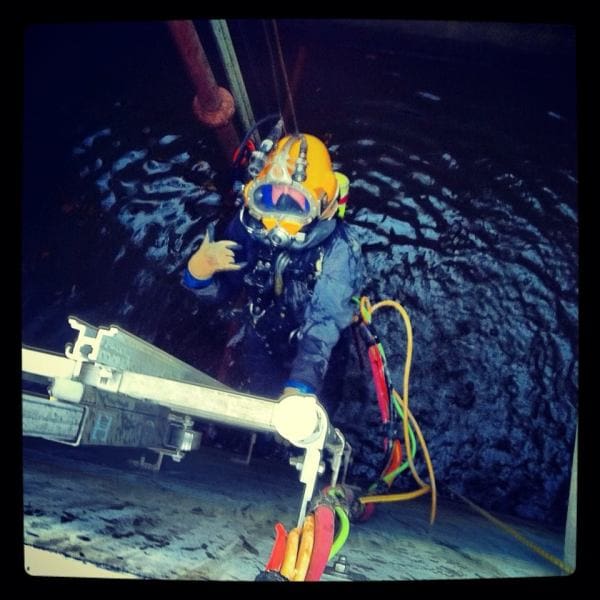
photo from community member – Kiriakos Boukas
Last week we asked the professional divers in the community about their most unforgettable experience in their diving career. We decided to share their stories to give you a glimpse of commercial diving life.
Lets see what they say about it.
“Standing on bottom at 120′ in the gulf , and still able to see the DSV.” – Michael Allen Ryan
“Leave surface, head down the down line, about ready to yell for slack, looking over and seeing the reason my hose is tight, is that it’s being sucked towards the spinning props.” – Pat M
“The current washed me up to a ten foot sturgeon in the Kennebec river here in Maine.” – D Grimshaw Worcester
“Getting paid the exact amount I invoiced” – Neil Kewn
from Craig ‘ballbag’ Barwick submitted for photo contest on January
“Inspection of fishfarms in Norway, while it was under attack by hundreds of sharks (spurdog) we were sewing holes in the net at 45 meters at night. The ships above us had a lot of lights, so the view we had above us with hundreds of Sharks circling around us was Stunning!! – and their eyes lights up when the light hits them!” – Daniel Jensen
“First day working at a marine farm in South Australia, we’d been grounded for a week due to a big storm and we took the boats out to inspect the damage. We drive up to one farm ring and find a juvenile humpback whale trapped inside it, swimming in circles. A WHALE. We ended up cutting the headlines on one side of the ring to create an exit then all the divers went round the other side and splashed and made noise to try to herd the whale through it, and eventually willy was free without any apparent ill effects… the boss was shitting bricks about it though!” – David Mir
“Doing an inspection under a 85 m X 25 m barge during low tide near shore. As the tide gets lower the barge crush down on me, pressing me deep into the muddy sea bed. I had to LITERALLY dig my way out….” – Desumondo Deseumondeu
“Had a 1500 pound-ish stellar sea lion push me with his head 10′ along the bottom then he did mid water fly bys a foot over my head, the swirling water from him passing so fast would almost knock me down. He did that for about twenty minutes then took off.” – Blake Herr
“Surveying gravel bed under 10000 tonn lockgate floating just above my head when i was stood up. 3hrs later go to stand and only got a foot above my bailout bottle whilst i was horizontal. Tide dropped and i forgot. Messy drysuit time.” – Guy Morris
“Feeling the warm burn from a failed hot water system in a hot suit at 50 metres. Disconnect hose and remove glove and watch the skin on my hand float away. Water was at 6 degrees so did well for it. Into decom and oxygen. Burnt hand, hip and leg, healed up well from the oxygen and freezing water I think! No scars.” – Raphe Carbins
“Left surface at 3 a.m. and saw the airplane at the ground in 80 m at 3:05 a.m. in the shine of the rov beams. Unreal clear water in norway.” – Frank Mettbach
“Hole in coveralls+jellyfish=horrible dive and swollen twig&berries. always wear at least a skin.” – Skyler Pittman
“Having the downline part while on deco after a SurDO2 dive, being ripped to surface omitting all my decompression, having my umbilical severed and being drug 400 ft through the water by a boat towing a floating crude oil pipeline, having to ditch all my gear to bottom and swim back to the dive site (monobuoy) to be immediately treated on a table 6.” – Joel Belliveau
“Contaminated blackwater diving, feel like a blind searching for a missing space for diffuser and reinstalling it…” – Abel Gainza Lemos
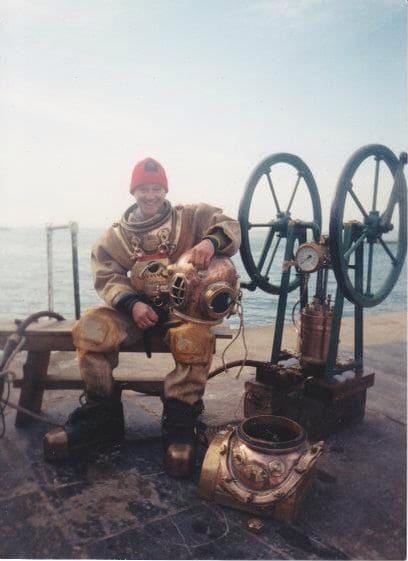
from Neil Friday, submitted for photo contest on January
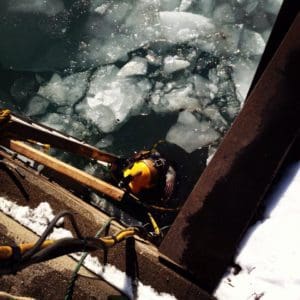
“Block froze up on my hat in icy water.” – Thomas Cox
“Getting dragged 150 feet or so a crossed bottom by an initiation cable in a matter of seconds with 450′ of umbilical out.” – Josh Bamford
“Having a hat failure with 260 feet of umbilical out while on flat bottom of a super tanker drafting at 50ft. Never moved so fast in all my life.” – Corey N Bryanna Cox
“Getting my knee pinned under a couple hundred pound boulder in New England’s cold waters” – Craig Overlock
“Watching the company man take our 130` four point anchor boat and try to spin it around in morgan shitty. He almost took out the dock with the fluke of the anchor and got stuck in the mud a few times. After about two hours he somehow managed to get a line on the dock and was able to park the boat….all this happened while our capt. Was at wally world!!” – Cristhian Mendez
“Getting screwed out of 2500′ of penetration pay.” – Rob Love
“My experience was the most beautiful diving in antarctica, was one of the best buecear at these temperatures and under the ice, greetings to all divers in the world!” – Seba Conejero
“110′ clear, warm water, buddy bashed a trigger with a hammer wrench… Good times in the GOM” – Glenn Thompson
“While checking the stop log track at a Dam, my umbilical got fouled because the seal busted and delta-p at 42′. Had to wait for standby to secure me for a safe ascent.” – Kyle Schmidt
“Hearing dolphins around me in pitch black dark” – Stephen Rice
“I have seen a lot of sad and terrible things including feeling them rarther than seeing them in black water an high sediment flows as a police diver recovering the missing, dead and sometimes parts of people in diving accidents, vehicle and helicopter crashes, suicides and boating incidents which I don’t being up here in order to scare, brag or challenge anyone as to who’s done what but to highlight my next point which is when I was diving on a new job recently doing civil construction when the “supposed lead diver” came down the work line towards me and started helping prep the job with his umbilical unattached to his harness and in the current being pulled this way and that by the head without picking up on the problem just fighting against the pull and acting like “I’ve got this”… Check your own kit, know your surroundings, check your umbilical periodically and work as a team. I sorted him out and clipped him off after 5 minutes or so not that he was grateful or thankful just resenting and a prick!!! Dive safe people it’s your life at the end of the day and enough things can kill you without yourself being a lead contributor” – Simon Lindroos
entry for January photo contest from Eric Tomlinson
These brief stories came from real divers and we hope that it inspires and helps our readers, aspiring divers, and commercial divers in any way.
BP announced the start-up of Na Kika Phase 3, a project supporting BP’s strategy of growing high-margin production at four BP-operated hubs in the deepwater Gulf of Mexico.
The first Na Kika Phase 3 well began oil production on February 19, with a second well expected to start up in the second quarter.
The project includes the drilling and completion of the two new wells, the addition of subsea infrastructure to tieback to the Na Kika platform and new equipment to allow increased production from an existing well at the site. It will utilize available production capacity at the Na Kika hub.
Na Kika Phase 3 is BP’s third new major upstream project to begin production so far in 2014, following the earlier start-ups of the Chirag Oil project in Azerbaijan and the Mars B project in the Gulf of Mexico. BP expects to start-up a further three upstream projects through the rest of 2014.
“The Na Kika Phase 3 project demonstrates BP’s ongoing commitment to the deepwater Gulf of Mexico and highlights our portfolio’s ability to unlock value for investors while also delivering vital energy resources to the United States,” said Richard Morrison, Regional President of BP’s Gulf of Mexico business.
The Na Kika semi-submersible platform is located about 140 miles southeast of New Orleans in over 6,000 feet of water. BP is the operator of Na Kika and holds a 50 percent working interest, with Shell holding the remaining 50 percent stake. Production from Na Kika first began in 2003.
BP currently has a multi-billion investment program underway in the deepwater Gulf of Mexico. It plans to concentrate future activity and investment in the Gulf on growth opportunities around its four major operated production hubs – Thunder Horse, Na Kika, Atlantis and Mad Dog — as well as on significant exploration and appraisal opportunities within its leading leasehold position in the US offshore region. BP also plans to continue investment in its non-operated production hubs, including Mars, Ursa and Great White.
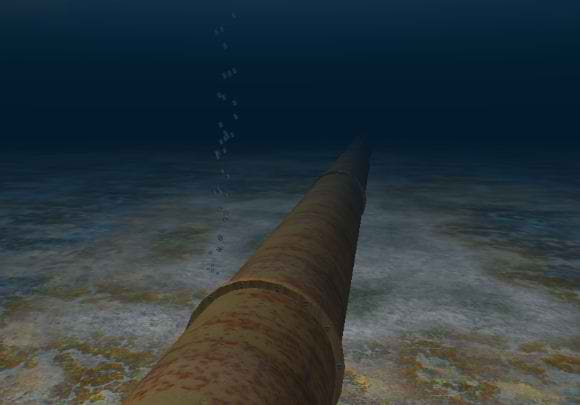
Iran, India and Oman start official negotiations for delivery of the Iranian natural gas to the Indian market through a deepwater pipeline.
Iranian Foreign Minister Mohammad Javad Zarif, Indian Foreign Minister Salman Khurshid, and Omani Foreign Minister Yousuf bin Alawi bin Abdullah have met in the Indian capital, New Delhi, on Friday afternoon to discuss the issue.
This is the first time the negotiations on the project were held at the ministerial level.
In December 2013, Iran generally agreed to establish the deepwater pipeline, which is planned to cross the Sea of Oman.
India’s South Asia Gas Enterprise Pvt. Ltd. (SAGE) has conducted feasibility studies for the planned 1,400-kilometer pipeline, which is estimated to cost USD 4-5 billion and would carry 31 million cubic meters (mcm) per day of gas to India.
The envisioned pipeline will carry gas from Iran’s gigantic South Pars gas field.
India is among Asia’s major importers of energy and resorted on Iran to meet a portion of its energy demands.
Ashtead Technology, a subsea equipment solutions specialist, has donated nearly £20,000 of specialist kit to SARbot, the UK’s only underwater search, rescue and recovery charity.
Ashtead Technology, which is headquartered in Aberdeen and delivers state-of-the-art subsea products and support across the globe, has donated a CDL minivision long-rage, full-colour video telemetry system; a Bowtech near SIT aluminium camera, designed for use in low light level conditions, and a powerful underwater lamp.
SARbot’s small volunteer rescue team operates across the UK, searching for missing people on any inland waterway or out at sea, using sophisticated sonar that has been specially developed to identify human forms under water and quickly locate victims.
Allan Pirie, CEO of Ashtead Technology, said: “SARbot is an exceptional charity, offering vital 90-minute rescue to those in peril in waters across the UK but also peace-of-mind and closure to families of missing persons. We are delighted to be able to support it and hope that our donation will allow the charity to continue its crucial work.”
Christian Cooper, director and trustee of SARbot, said: “The equipment from Ashtead Technology will make a huge difference to the way we view and review live footage from a search.
“The camera will be a valuable tool for searching confined spaces such as wells. There have been occasions this year when the emergency services have struggled to search a well used to discard the remains of murder suspects. We can use the camera to locate people before deploying an ROV for rescue or recovery.”
SARbot’s response team searches using powerful sonar, lights, cameras and a specifically designed robot with a grab arm that can cut through wire and attach to a body allowing recovery to the surface without the need for a diver.
The charity also has two trained water search dogs, Max and Vitton, who are capable of identifying human scent on water.
More than 700 drownings occur in the UK each year, but medical evidence shows that people can survive near drowning in water below 21c without permanent damage if they are recovered from the water in less than 90 minutes.
SARbot’s aim is to have at least one fully trained team in every county or region of the UK, which can work alongside the emergency services.
Mr. Cooper added: “We are a unique charity that offers a wide range of underwater search, rescue and recovery solutions. Sadly, we lack the funding we need to move forward and develop. We feel we can work with the subsea industry to do this and the generous donation of equipment from Ashtead Technology takes us another step forward.”
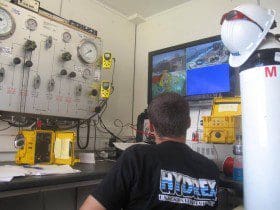
Recently a team of Hydrex diver/technicians performed a propeller blade operation on a 300-meter container vessel in Singapore. All six blades of the vessel’s propeller were damaged and needed to be cropped.
Having developed different procedures for different kinds of damage, Hydrex is equipped and trained to make the best of a bent or broken propeller. Ideally, the in-house developed cold straightening technique is used. This procedure enables Hydrex to straighten damaged blades in-water, allowing commercial operations to continue without the need to drydock.
In the following example cropping was the only option as the damage to the propeller blades was too great to allow cold straightening. This kind of repair is carried out with the propeller blade cutting equipment developed by the Hydrex research department. In cases where there is an even number of blades an identical piece will be cropped from the opposite blade to restore the hydrodynamic stability of the propeller. By doing so, the best possible efficiency is obtained.
The six blades of a container vessel’s propeller were severely bent. An on-site solution was needed to restore the propeller’s balance and efficiency. A Hydrex diver/technicians team was therefore rapidly mobilized to the ship’s location to restore the damaged blades to as close to their original condition as possible.
Because the ship could be trimmed enough to bring the blades above water, a scaffolding was installed around the propeller. This allowed the team to perform the operation in the dry.
The operation started with a detailed survey of the affected propeller blades. The inspection revealed that the six blades were bent over angles of up to 90 degrees. The team then used the information acquired during the inspection to calculate and determine the correct measurements needed to modify the trailing edges of the propeller blades. Next the divers cropped the blades one by one to give them the correct radius. When the cropping was complete, the blades were polished to make sure that any remaining loss of efficiency would be minimal.
The success of the operation was confirmed by the customer. After the operation the vessels completed sea trial and “managed to increase RPM up to 93 and developed 21 knots,” saidMaxim Bolduev, Deputy Fleet Manager Southern Shipmanagement. “Before propeller trimming we got 53 RPM and only 14 knots.”
Despite more than 25 years of efforts to reduce fossil fuel consumption and boost renewable energy use, fossil fuels will keep dominating the global energy consumption mix, said International Energy Agency (IEA) Chief Economist Fatih Birol.
In 1987, a number of countries kicked off a major effort to reduce their consumption of fossil fuels and increase use of renewable energy resources. This global effort came after Norway’s then Prime Minister Gro Harlem Brundtland, issued a report on sustainable development at the request of the United Nations World Commission on Environment and Development, Our Common Future, also known as the Brundtland Report.
At that time, fossil fuels comprised 82 percent of the mix if energy resources used. Despite 25 years of subsidies and government policies, however, the percentage of fossil fuels in the global energy consumption mix remains at 82 percent.
“This tells us that economic effects are stubborn, and may be more powerful than policy drivers,” Birol noted.
However, the amount of fossil fuels consumed might have even been higher with efforts to curb fossil fuel consumption. Birol believes that fossil fuels will continue to heavily dominate global energy consumption.
Natural gas consumption will grow to a level greater than oil and coal put together. Renewables also are forecast to grow significantly, primarily due to government policies. However, renewables will shrink without government subsidies to promote their use.
IEA sees continued growth in carbon dioxide (CO2) emissions, meaning the world remains perfectly on track for a temperature increase above a level accepted by scientists. World leaders will try again to address climate change in Paris this year after their failure in Copenhagen in 2009, Birol noted, adding that he believes carbon capture storage should be part of the equation for addressing climate change.
CO2 emissions from the United States, the second largest source of CO2, have improved since 2009. The United States and China are working closely to reduce emissions, and Europe continues to push its climate change agenda. Given these factors, Birol said he wouldn’t be surprised to see positive news on CO2 emissions in the future.
Nearly all countries agree that climate change is an issue that needs to be addressed, Birol said. But who should take on the largest burden of the clean up? China and other developing countries say they shouldn’t get all the blame, pointing out that the amount of coal burned by these countries during the Industrial Revolution still lingers in the atmosphere. However, this argument does not hold water, given the fact that emissions levels from OECD and non-OECD countries are now more or less equal.
China also has argued that emissions can be measured only by megatons, but on a per capital basis, and that China’s 1.3 billion population is much larger and not comparable with other nations. While China may have a point on the per capital basis argument, this argument also is not valid, given that China’s CO2 emissions are overtaking Europe and will overtake that of OECD countries if things don’t change. But Birol believes that “able French diplomats” will help world leaders to reach an agreement with China’s CO2 emissions at the United Nations Climate Change Conference in Paris in 2015.
Chinese renewables capacity will grow larger to that than all of the United States, Japan and Europe combined. Hydropower will serve as a main source of renewable energy resources in China and other emerging countries. While strong growth will be seen in renewables, all renewable sources except for hydropower will have difficulty competing with fossil fuels without generous government subsidies.
Birol noted that Germany, Spain and Italy are cutting renewables due to financial difficulties, which in turn have boosted renewable energy prices. As a result, some countries are switching back to burning coal.
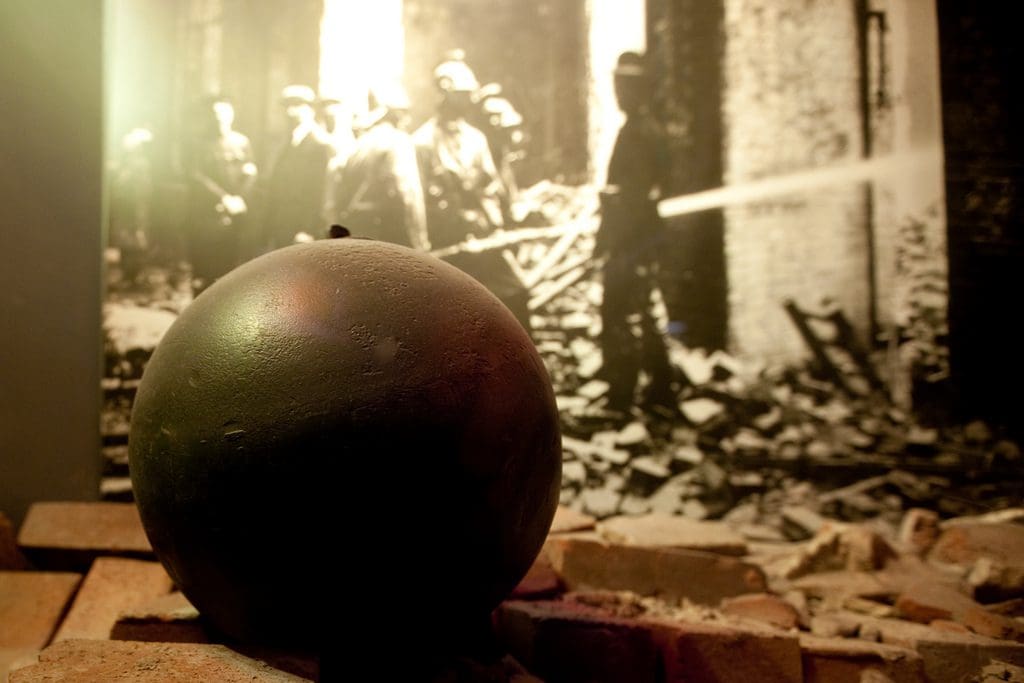
There has been a dramatic increase in the number of wartime bombs unearthed because of the winter storms and flooding.
Bomb disposal teams in the South West have dealt with double the number of unexploded ordnance than in the same period last year.
Since mid December, the Royal Navy’s Southern Dive Unit has recovered or disposed of 244 items of ordnance.
During the same period last year, they dealt with just 108 items.
Almost 70 years after the end of WWII, one legacy of that conflict continues to turn up on beaches and harbours around Britain.
Unexploded shells, bombs and mines continue to be discovered every year, and the Royal Navy’s Southern Dive Unit is tasked with making these devices safe.
Its area of responsibility stretches for some 2,250km (1,400 miles). It begins from the highwater mark in Hull and proceeds seaward to the territorial limit, and then runs clockwise around the British Isles – including the Isle of Wight, Channel Islands, and Isles of Scilly – to finish in Liverpool.
Thanks to the unremitting storms and wild weather that have hit the UK since mid-December, these divers have been busier than ever.
The unit has been responding to emergency calls almost every day.
The divers have had to deal with a British anti-submarine mine discovered by surfers in Haverfordwest in Pembrokeshire, and a rare WWI German mine that was found on a beach near Newquay in Cornwall.
“The explosive is normally of very high quality,” said Chris O’Flaherty, the commanding officer of the Fleet Diving Squadron.
“The Germans were very good engineers. A number of them aren’t viable but an awful lot of them are, and we prove that regularly by the manner in which we dispose of them.
“The explosive deteriorates and the main charge is usually relatively stable. It’s the detonator that’s the dangerous part.”
I ask him why so few people have been injured by unexploded ordnance. He replies: “Good fortune.”
The unit was called out to Braunton in Devon last weekend to defuse a live shell found by local couple Phil Naylor and his wife Sue. The storms have scoured away the sand dunes where they normally walk.
“Sue pointed at something, and it was definitely suspicious,” said Phil. “It looked like the tip of a bomb or a missile. I went a bit closer to make certain that’s what it was. I used to be an RAF armourer and recognised it to be an artillery shell.”
Phil’s grandfather, born in Braunton, would have trained on this very beach for the D-Day Landings.
“This shell would have been one of thousands fired here to simulate what the poor guys would find when they hit the beaches [in France],” said Phil.
“It’s quite weird to think that he might have seen that shell flying over his head.”
Old ordnance can remain dangerous for many years
It’s not just walkers that need to be careful.
Coastal engineer Andy Bradbury walks over the ribbon of shingle that makes up Hurst Spit in Hampshire. The crunching sound of his feet is muted by the grumble of diggers and other heavy machinery at work on the beach. New Forest District Council has a lot of rebuilding and reinforcing to do.
“It’s been a very rough winter,” he says. “During the storms there were about 100,000 tonnes of material redistributed around the beach. When this happens, it unearths all kinds of bits and pieces that you really don’t want to see.”
At a key point at the opening to the Solent, Hurst Castle was built by Henry VIII to guard the approaches to Southampton. It has been used as a military base on and off ever since.
Andy points towards the castle. “We know they used to practice firing from there. We have found items spanning several hundred years. Explosives used back in the late 1800s are often more dangerous than more recent devices.”
He explains that when “lyddite”, an early type of high explosive, dries out it can become very unstable.
Just the night before, the unit dealt with a shell uncovered on the beach. Seven more had been found over the weekend.
He looks down into the crater left by the ordnance. “All of the machine drivers are briefed on what they do,” he says. “They are told not to touch anything. It may be dangerous.”
The first Na Kika Phase 3 well began oil production on February 19, with a second well expected to start up in the second quarter.
The project includes the drilling and completion of the two new wells, the addition of subsea infrastructure to tieback to the Na Kika platform and new equipment to allow increased production from an existing well at the site. It will utilize available production capacity at the Na Kika hub.
Na Kika Phase 3 is BP’s third new major upstream project to begin production so far in 2014, following the earlier start-ups of the Chirag Oil project in Azerbaijan and the Mars B project in the Gulf of Mexico. BP expects to start-up a further three upstream projects through the rest of 2014.
“The Na Kika Phase 3 project demonstrates BP’s ongoing commitment to the deepwater Gulf of Mexico and highlights our portfolio’s ability to unlock value for investors while also delivering vital energy resources to the United States,” said Richard Morrison, Regional President of BP’s Gulf of Mexico business.
The Na Kika semi-submersible platform is located about 140 miles southeast of New Orleans in over 6,000 feet of water. BP is the operator of Na Kika and holds a 50 percent working interest, with Shell holding the remaining 50 percent stake. Production from Na Kika first began in 2003.
BP currently has a multi-billion investment program underway in the deepwater Gulf of Mexico. It plans to concentrate future activity and investment in the Gulf on growth opportunities around its four major operated production hubs – Thunder Horse, Na Kika, Atlantis and Mad Dog — as well as on significant exploration and appraisal opportunities within its leading leasehold position in the US offshore region. BP also plans to continue investment in its non-operated production hubs, including Mars, Ursa and Great White.