Home Blog Page 547

Ohio Links Fracking With Earthquakes, Announces Tougher Rules

0

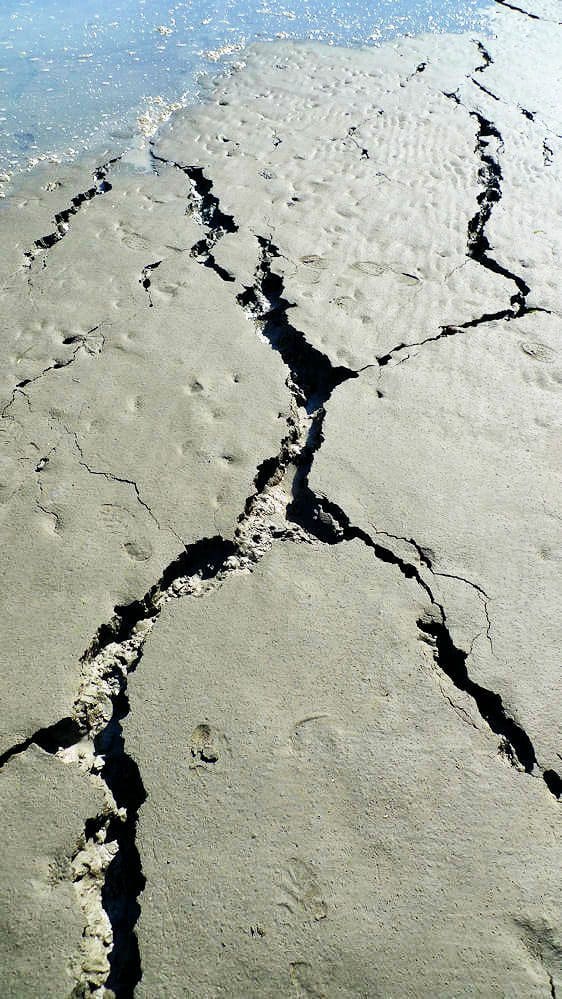
Recent small earthquakes in Ohio were likely triggered by fracking, state regulators said on Friday, a new link that could have implications for oil and gas drilling in the Buckeye State and beyond.

In the strongest wording yet from the state linking energy drilling and quakes, the Ohio Department of Natural Resources (ODNR) said that injecting sand, water and chemicals deep underground to help release oil and gas may have produced tremors in Poland Township last month.

The statement, in which the department announced stricter rules for oil and gas exploration in areas where seismic activity has occurred, comes after a steep rise in earthquakes in Ohio and other areas where intense drilling has taken place.

Most earthquakes occur naturally, but scientists have long linked some smaller tremors to oil and gas work underground, which can alter pressure points and cause shifts in the earth.

Last month, drilling and fracking was suspended near the site of two earthquakes in Poland Township in the northeast of the state, 70 miles (110 km) southeast of Cleveland, the first of which was magnitude 3.0, enough to be felt for miles around.

Earthquakes rattled residents in Oklahoma last weekend, the latest in a series that have put the state on track for record quake activity this year, which some seismologists say may be tied to oil and gas exploration.

“Regarding the seismic events in Poland Township, ODNR geologists believe the sand and water injected into the well during the hydraulic fracturing process may have increased pressure on an unknown microfault in the area,” ODNR said in a statement.

Friday’s statement could have impacts not just for a state where a drilling boom is under way, but in other regions where concerns have emerged about the impact of fracking on fault lines. The new rules require a company to install seismic monitors if it is drilling within three miles of a known fault or an area which has recently experienced quakes, the ODNR said. It is unclear how much drilling will be affected by the new rules.


Hilcorp Energy, the company that was drilling near the quakes in Poland Township in March, cannot resume operations until it submits a new plan convincing regulators that drilling is safe, an agency spokesman said. Hilcorp was not immediately available to comment.

The department had not previously linked earthquakes to fracking, which involves fracturing rock by creating a series of small blasts thousands of feet below the surface, but the new data gave it “reasonable certainty” that fracking was the cause, the agency spokesman said.

“It is significant that they have acknowledged that there is a connection between fracking and earthquakes,” said Ray Beiersdorfer, professor of geology at Youngstown State University in Ohio.

The disposal of drilling wastewater in rockbed deep underground has been linked by geologists to earthquakes, sucah as the 4.0 magnitude one experienced on New Year’s Eve 2011 in Youngstown, but opinion is divided about whether fracking itself can cause quakes, and if it can trigger more than just small tremors.

While there are concerns about the environmental impact of injecting chemical-laced water into the ground, including on freshwater supplies, they are spreading to include the effect on fault lines than run beneath the surface, often undetected.

Worries surrounding seismic activity emerged in Ohio in 2011 when a spate of small quakes followed the beginning of intensive drilling in the Utica shale. More than 800 wells have been drilled in the Ohio portions of the Utica and the Marcellus shales, two major gas deposits that have helped transform the U.S. energy market. Once a regular importer of gas from overseas, the United States is set to export gas for the first time to countries across the globe.

“The steps announced today to protect communities from seismic events are reasonable precautions,” said Scott Anderson, a policy advisor at the Environmental Defense Fund. “Although there is much uncertainty regarding what causes earthquakes … the state’s decisive action is based on the best information available.”
Source

Norway to Boost Oil Project Oversight after Cost Overruns.

Norway is growing increasingly intolerant of delays and cost overruns at offshore oil projects and plans to keep a closer eye on operators, intervening when necessary, the head of the oil directorate said. A growing number of inexperienced firms are working on projects, which is a big risk for the government because it offers big development subsidies, regulator Bente Nyland said on Tuesday. As a result, the directorate will start to get involved earlier and stay involved throughout, she said.

“This regulatory tightening is a signal that we’re watching you,” Nyland told Reuters on the sidelines of the conference. “With the tax regime, the state is a big risk taker … so we need to have better control.” The entire global oil sector has suffered from cost increases, but Norway has fared worse than most. Nyland earlier estimated that the per unit development and production cost in Norway has risen by 10 times over the past 10 years.

Last year the government commissioned a report to find out why so many projects were delayed. It also cut both the amount and the time limit for cost write-offs. “First and foremost the well costs must be reduced,” Nyland said.

“We believe that much better preparation is needed. Do your homework better.” “We may go in earlier and point out when a project takes a wrong turn … and ask for mitigating measures.” Nyland said that 16 of the 22 oil firms working on developing new projects are considered to have minimal experience on the Norwegian continental shelf.

To mitigate risk, the oil directorate may ask for more mature development plans, prequalification of contractors and detail on contracting strategy. It will also keep close watch on development plans and require operators to improve their monitoring, which has slipped as more work is outsourced to contractors. Statoil is Norway’s biggest oil producer, and most global majors are also present. But tax credits and outright subsidies on exploration and development have also attracted a string of smaller players in recent years.

Source

Aquaterra Energy delivers CSP solution offshore West Africa

0

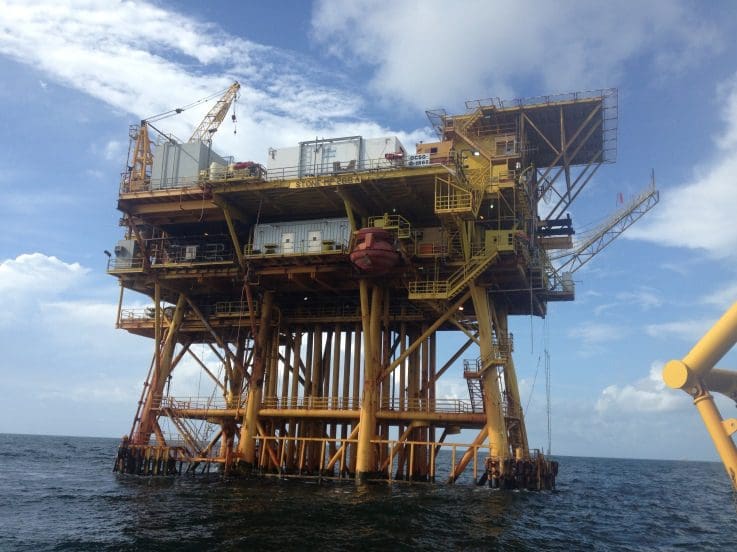
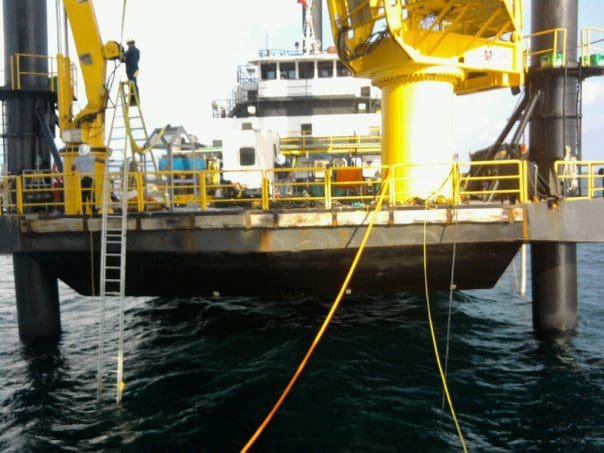
Following successful conclusion of a design competition, work is well underway at Aquaterra Energy to design, fabricate and install a minimum facilities Conductor Supported Platform (CSP) for South Atlantic Petroleum Benin S. A. (SAPETRO), off the West African coast.  The contract was awarded following completion of a detailed pre-engineering design study by the Aquaterra Energy team, which resulted in development of a fully rig-installable solution to meet the customer’s timeline and budget.

Patrick Phelan, Managing Director of Aquaterra Energy, said: “We are very proud to be responsible for delivering this critical project which encompasses the full scope of our in-house expertise, including design, 3D modelling, procurement, manufacturing, inspection, construction, and installation, with full supervision.  Installation of the Sea Swift CSP commenced at the end of March.”

The Sea Swift CSP will be located in 26 metres water depth and will connect three planned wells with an onshore processing facility located 15km away.  It will consist of integrated deck topsides, riser guides, boat landing and a subsea jacket structure.  Equipment will be controlled from the onshore facility via an integrated fibre optic communication and power cable.

Patrick Phelan continued: “Offshore operational expertise is at the very heart of our business.   Utilising our team’s knowledge at the early stages of the analytical and design phases means that the final product is optimised for field use.”

The topside structure will comprise cellar and production decks.  The wellheads and Christmas trees will be accommodated on the production deck and the conductors will be used to support the topsides using Aquaterra Energy’s proprietary connection mechanism.

Riser guides, providing support and protection to the export riser and power cable, will be located on two well conductors and will be installed using Aquaterra Energy’s field proven technologies.

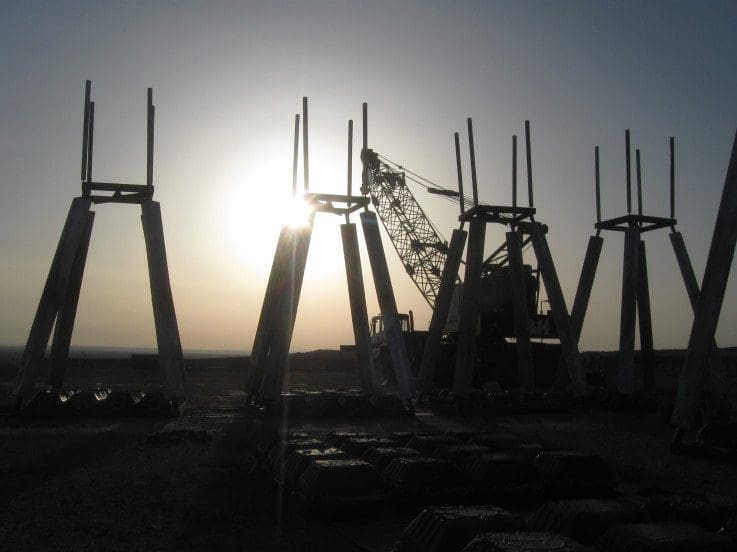
The free standing structure of the Sea Swift CSP will utilise four 30 inch well conductors tied together by the subsea structure providing structural support to the topsides, while also housing the well casings.  The platform is being fabricated in Africa and will be installed using the Jack Up drilling rig, eliminating the need for a heavy lift vessel.

James Larnder, Director at Aquaterra Energy said: “At each stage of the design process, careful consideration was given to optimise the solution from structural, analytical, constructability, design and installation perspectives. This has resulted in a light weight structure, a footprint optimised to house the topsides equipment that can be easily fabricated and installed by the drilling rig.

“Sea Swift is an innovative conductor supported platform concept, which offers a tried and tested solution that is versatile and flexible, enabling drilling projects to be completed cost effectively and with maximum efficiency.”

Source

Shell, CNPC to Cooperate in Deep-Sea Exploration, Shale Gas

0

Royal Dutch Shell and the China National Petroleum Corp (CNPC) have signed a deal to boost cooperation in sectors like deep sea exploration as well as liquefied natural gas (LNG) and unconventional gas sources like shale, CNPC said on Wednesday.

The two companies had agreed to join forces in the development of both upstream and downstream energy businesses, CNPC said on its website. Ben van Beurden, in his first overseas visit since becoming Shell’s chief executive, told CNPC Chairman Zhou Jiping that both sides have set up deep and wide-ranging ties and have huge room for further cooperation.

The Anglo-Dutch firm is already one of the biggest overseas investors in China’s energy sector, and it could be well-placed to take advantage of Beijing’s plans to grant foreign enterprises more market access. It is already partnering up with CNPC, the country’s top energy group and parent of PetroChina, to explore and develop shale gas in China’s western regions.

Shell hopes to benefit from the operational and technological experience gained during the development of shale gas in North America, while CNPC holds the country’s premium oil and gas acreage. Shell also plans to partner CNPC to build a $12.6 billion refinery and petrochemical complex in eastern China, a project that could become the single largest foreign investment in the country. It is also major supplier of LNG to China, securing gas from its global gasfields in Australia, Qatar and elsewhere.

Source

Gas2Grid Prepares for Extended Production Test at Malolos-1 Well in Cebu

0

Gas2Grid Limited reported Friday on the status of the Malolos-1 extended oil production test operations aiming to confirm the commerciality of the Malolos Oil Field in Cebu in the Philippines. The selected small crew has been mobilized to the site during the week to prepare Rig-2 for the operations.

Early next week the well clean-out will commence and the swabbing unit will arrive to be readied to swab liquids for a period of about 2 weeks from the well and produced from one of the two oil bearing sandstone.

This extended oil production test will be followed by a shut-in period to assess the reservoir pressure build-up. Each of the two oil bearing sandstones at depths of 7,280 – 7,308 feet (2,219 – 2,227.5 meters) and 7,152 – 7,207 feet (2,178 – 2,195.4 metres) will be individually placed on this extended pump test followed by a shut-in period.

Oil was produced on short term test in June Quarter 2013 at indicative production rates of between 100 to 200 barrels of oil per day (bopd) from the upper sandstone section. Oil from the lower sandstone also flowed to just below surface.

The extended oil production testing program aims to gather sufficient technical information to confirm commerciality of the Malolos Oil Field to justify the Department of Energy awarding a 25 year production period leading to full field appraisal and development. Proving commercial production at Malolos Oil Field will have a very significant impact on the value of the Company and will benefit the Philippine economy.

Oil produced from the extended oil production test will be sold in Cebu as a fuel source providing working capital. On Jan. 29, the Company reported a “Contingent Resource” of oil in the two productive sandstones for the Malolos Oil Field between a “Low Estimate” (1C) of 6.8 million barrels and a “High Estimate” (3C) of 68.1 million barrels, with a “Best Estimate” (2C) of 20.4 million barrels of “Total Oil Initially in Place”.

This Contingent Resource is in addition to the Unrisked Prospective Resources released to the ASX Jan. 29. The “Unrisked Prospective Resource”* (in accordance with Clause 7.3 of ASX Guidance Note 32) calculates recoverable oil in the range from a Low Estimate of 14 million barrels to a High Estimate of 601 million barrels with a Best Estimate of 104 million barrels within Service Contract 44, located onshore Cebu in the Philippines.

Source

Statoil Discovers up to 75M Barrels at Valemon Nord

0

Norway’s Statoil reported Friday that it has made gas and oil discoveries at the Valemon Nord prospect in the North Sea, some 100 miles northwest of Bergen in the North Sea. Statoil estimates the total volumes found at Valemon North to be in the range of 20 to 75 million barrels of recoverable oil equivalent.

The main well (34/10-54 S) proved a gross 538-foot gas/condensate and oil column in a Middle Jurassic Brent Group reservoir. The sidetrack well (34/10-54 A) proved a 328-foot gas/condensate column in the Brent Group and in sand of unspecified Jurassic age as well as an additional gross 460-foot gas/condensate column in the Statfjord Group.

Gas/condensate was also found in the Middle Jurassic Cook Formation. “We are very satisfied with making a new discovery in the close proximity of the Valemon gas and condensate field currently under development,” Irene Rummelhoff, Statoil Senior Vice President of Exploration for Norway, said in a company statement.

“By proving additional volumes in the area we increase the reserves base in the Valemon Unit area and add value to the Valemon field development.”

The Valemon field, discovered in 1985, is one of Statoil’s largest ongoing development projects on the Norwegian Continental Shelf, with recoverable resources estimated at 206 million barrels of oil equivalent.

The Valemon Nord wells were drilled by the Transocean Leader (mid-water semisub) rig. Statoil is the operator of the Valemon Unit area, with a 53.775-percent interest. Partners include Petoro, Centrica Resources and A/S Norske Shell, which hold 30 percent, 13 percent and 3.225 percent respectively.

Source

Lukoil Begins Iraqi Seismic Survey

0

Russia’s Lukoil reported Friday that it has started a 2D seismic survey over Block 10 in southern Iraq. Approximately 1,240 linear miles of seismic survey will be completed on behalf of Lukoil by geophysical specialist BGP over the next 16 months.

Block 10 has a total area of 1,930 square miles and is located in the Dhi Qar and Mutanna provinces 74 miles to the west of Basra. The seismic survey is part of a mandatory geological exploration program on the block that is required by Iraq.

This five-year program also includes the drilling of one exploration well. Lukoil was granted rights over Block 10 in June 2012. Its service contract over the block gas a duration of 25 years, with the potential to extend this for a further five years. Lukoil is the operator of the Block 10 project, with a 60 percent stake, while Japan’s Inpex Corporation holds a 40-percent interest.

Source

Arctic Gas Project Backs Political Strategy as Russia Turns East

0

On the Arctic tundra far to the north of Moscow, Russia is charting a course away from the West and towards Asia. In Yamal – which in the local Nenets language means “the end of the earth” – a $27 billion liquefied natural gas (LNG) scheme is assuming major political as well as economic significance.

The project fits well with a more aggressive eastward push by Moscow since the United States and European Union imposed sanctions over its annexation of Crimea from Ukraine last month. Instead of sending gas by pipeline to long-standing EU customers, Russia aims to ship LNG from the remote Yamal peninsula by sea largely to Asian buyers such as China, which has avoided confronting Moscow since Russian troops took control of Crimea.

Yamal will eventually involve the drilling of more than 200 wells through the permafrost and building facilities to liquefy the gas. Construction at the port of Sabetta, more than 2,000 km (1,200 miles) north of Moscow, is well under way. For those working in Yamal, the Western sanctions seem a remote threat even though one of the U.S. targets is Gennady Timchenko, a co-owner of gas producer Novatek which holds a 60 percent stake in the project.

What matters is support from Russian President Vladimir Putin and foreign investors. “We are confident. The port and the plant are under the protection of the president and government,” said Vladimir Voronkin, deputy head of Yamal LNG, standing on what has become a vast construction site in the frozen tundra.

Voronkin noted that French energy group Total and China National Petroleum Corp each have 20 percent stakes in Yamal LNG. “Foreign investors put up money here – why would they want to lose it?” he asked.

Russia’s reserves of Arctic gas are estimated at more than 30 trillion cubic metres and it hopes to convert a quarter of this into LNG, under a long-term plan to diversify away from the European market.

With the EU and Ukraine discussing ways to cut their reliance on Russian gas, Moscow has courted its Asian partners more aggressively, hoping to capitalise on record prices for LNG in Japan, China and South Korea.

Putin has hailed the Yamal LNG project and wants no expense spared. Russia now has just one LNG plant, controlled by state-run top gas producer Gazprom, on the Pacific island of Sakhalin with an annual capacity of 10 million tonnes.

Companies, including Sakhalin LNG shareholder Shell , have urged Russia to speed expansion of its LNG facilities or risk missing the peak in gas prices.

ELUSIVE CHINA DEAL

The head of state-owned energy company Rosneft, Igor Sechin, visited Asia last month and deputy prime minister Arkady Dvorkovich was quoted this week as saying from Beijing that talks on a gas deal with China had made some progress.

A deal between Gazprom and China has been in the works for at least 10 years. If one is finally struck, Putin could hold this up as proof that Western attempts to isolate Russia are destined to fail.

Brussels has imposed visa bans and asset freezes on several Russian officials over Crimea but it was the punitive measures from Washington that affected Timchenko, believed to be a long-term acquaintance of the Russian president. Timchenko reported he had sold his nearly 50 percent stake in Gunvor, the world’s fourth-largest oil trader, hours after his place on the U.S. blacklist was announced. But he has kept his 23 percent shareholding in Novatek. At Sabetta, a site worker who gave his name only as Viktor said U.S. threats would not stop or slow the project.

“Do you think the government’s seats are taken by fools, not knowing what to do? Do you know how interested Putin is in this project?” said Viktor, who is helping to build orange and blue pre-fabricated accommodation for thousands of workers due to move to Sabetta for at least some months of the year. “Whatever the U.S. might say, all will be in place here,” he said, showing newly painted rooms. More than 10,000 people will eventually work at the project, producing 16.5 million tonnes of super-cooled gas by the end of this decade – enough to supply the world’s fastest-growing energy consumer, China, for around a year. Russia plans to double that over the next decade as additional fields start production.

BREAKING THE ICE

But first they must ensure LNG carriers can use the port at Sabetta all year round, even when it is ice-bound. This will involve using compressors to pump air under the ice, ensuring it breaks up more easily as ships push through.

The Arctic cold means that ships can travel from Yamal to the Pacific Ocean via the Bering strait only during five to seven months a year.

For the rest of the year, the LNG can reach the Pacific the long way round via the Suez canal but that more than doubles the distance to Shanghai, raising transport costs.

Novatek has also agreed to sell some of its LNG to Spain.

For now the port at Sabetta, built last year and this, is used for bringing in food, machinery, building material and firewood for saunas for the workmen.

Five thousand are employed at Sabetta, working for 45 days and then breaking for the same number and earning wages that range from 70,000 to 100,000 roubles a month – much more than the Russian average of 30,000 ($850).

“It’s pretty comfortable when you are working like a dog for a month and a half and then having a rest for the same amount of time,” said Viktor. “We will build it whatever.” ($1 = 35.5008 Russian Roubles)

Source

Congo Republic State Oil Firm Seeks To Revive Oilfields

0

Republic of Congo’s state oil company SNPC said it hopes to develop a strategy to pump more oil from fields under-exploited by foreign investors as part of a plan to revive oil production. Societe Nationale des Petroles du Congo (SNPC) said in a statement in Congolese newspaper La Semaine Africaine on Friday that it had completed two geological surveys since December in the Mengo-Kundji-Bindi (MKB) permit to assess their potential.

“SNPC is using hydraulic fracturing on the Kundji field allowing improved production of compact reserves…which constitute the oil reserves on the MKB permit. It will use the same technique on the Mengo field,” the announcement stated.

The Kundji field is currently being exploited by SNPC in collaboration with Ivorian state oil company Petroci and Canada’s Orion Oil and Gas, SNPC said. It was previously abandoned by now dissolved French oil company Elf. The Mengo field was similarly abandoned by Elf in the 1990s. SNPC also carried out a survey of the Mayombe licence, not currently being exploited, to assess its potential for drilling.

Oil production in Republic of Congo has been in decline for years due to maturing fields and is down from around 310,000 bpd in 2010, according to data from the U.S. Energy Information Administration. The country projects output of 242,000 barrels per day this year, up slightly from 242,000 bpd in 2013.

Oil revenues make up more than 70 percent of the state’s budget. New discoveries have piqued investor interest and Congo plans a licensing round this year for around 10 onshore and offshore oil blocks. The region is thought to contain oil concealed below a layer of salt on the ocean bed and some expect reserves comparable to the billions of barrels found in fields off Brazil.

Source

Enegi Oil Restructures Marginal Fields Unit

0

Junior explorer Enegi Oil announced Thursday a restructuring of its ABT Oil & Gas (ABTOG) subsidiary that is developing innovative production systems aimed at making marginal fields commercial.

The firm also provided an update on its Fyne field development in the North Sea. ABTOG will now consist of two businesses: ABTOG Equity Co. and Marginal Field Development Co. ABTOG Equity will seek to acquire hydrocarbon interest that it will develop in conjunction with its partners, while Margin Field Development will provide production buoy solutions to potential partners.

Enegi said that this restructuring of ABTOG will enable partner companies to become aligned to field equity risk, service and solution provision or an integrated model depending on their own risk profile and business model.

“The restructuring of ABTOG has been arrived at after engagement with industry at all levels including operators, service providers and financiers. Its adoption will create a structure better aligned to the industry enabling us to maximize the potential of ABTOG,” Enegi CEO Alan Minty commented in a company statement.

Meanwhile, Enegi said that the development of the North Sea’s Fyne field – which Enegi farmed into with partner AB Technology for a 50-percent stake in July 2013 – is continuing in line with expectations.

Enegi and Antrim Energy, the operator, submitted a new Environmental Statement to the UK Department of Energy and Climate Change at the end of March. Enegi said this was a “key milestone” in the development of the field, with the next major step being the submission and approval of the field development plan (FDP).

Enegi also pointed out that the production buoy concept originally proposed for Fyne has been altered to a self-installing floating tower (SIFT) solution that has been made available to ABTOG through a strategic partnership with GMC.

Enegi said the need to switch to the SIFT solution was anticipated by management towards the end of 2013 but the final decision was taken recently as part of discussions with DECC regarding the FDP and reflects both the particular engineering complexities of the Fyne Field and the fact that using the production buoy solution would have required reliance upon the provision of long-lead time, subsea equipment. The firm emphasized that the strong returns from the field originally anticipated from the production buoy concept remain unaltered as a result of the change in the development solution.

Source